Week 8: Abnormal behaviour, stress and welfare
 Call Kai
 Learn
 Practice Test
 Spaced Repetition
 Match
 Flashcards
 Knowt Play
1/80

There's no tags or description
Looks like no tags are added yet.
81 Terms
How has our understanding of animal welfare changed?
Early animal keeping: Focused on preventing escape and maintaining health and survival.
Production and performance: Emphasized productivity, growth, reproduction, speed, and appearance.
Changing perspectives (1960s–1970s): Researchers began recognizing behaviour as an important component of animal welfare
Normal behaviour:
Behaviour shaped by evolution that supports survival, health, and reproduction in a particular environment
____ shape behaviour, resulting in natural variation among individuals.
Evolution and learning shape behaviour, resulting in natural variation among individuals.
Three sources help us understand normal behaviour in domesticated animals:
Wild ancestors
Feral populations
Domestic animals in environments resembling ancestral habitats
Abnormal behaviour:
Behaviour that falls outside the typical range observed in a species under natural or appropriate conditions.
What to consider when evaluating abnormal behaviour
Individual differences do not automatically indicate abnormality.
Common does not mean normal: A behaviour may be widespread in captivity but still reflect poor environmental conditions.
Example: Abnormal behaviours associated with restrictive cage housing may occur in many laying hens.
Assess behaviour in relation to the species’ evolutionary history and natural behavioural needs.
Behavioural frequency alone cannot determine whether a behaviour is normal or abnormal.
Stereotypies
Repetitive, unvarying movements with no obvious goal or function
Characteristics of stereotypies
May be conspicuous or subtle and can occupy a substantial portion of an animal’s waking time.
Often develop when animals are unable to perform strongly motivated natural behaviours.
Commonly associated with restricted environments and limited behavioural opportunities.
Examples: Repetitive pacing, chewing, bar biting, and tongue rolling.
Potential causes of stereotypies
Restricted opportunities for feeding and foraging
Limited environmental stimulation
Inability to perform species-typical behaviours
Common stereotypies in animals
Animals often develop stereotypies related to their natural feeding or activity patterns.

Stereotypies relation to animal welfare
Stereotypies can indicate that an animal has experienced reduced welfare.
They may persist even after environmental conditions improve, once the behaviour becomes habitual.
Their presence does not necessarily mean the animal’s current welfare is poor.
What should welfare assessment reconsider from stereotypies
The number or proportion of animals displaying stereotypies
How much time animals spend performing them
Other behavioural, physiological, and environmental indicators
Cannibalism
Consumption of an individual by another member of the same species.
Is cannibalism always normal
Not necessarily abnormal; it can occur naturally when nutritional benefits or reduced competition outweigh the costs.
In the wild, victims are often younger, smaller, or weaker individuals
In captivity, cannibalism risk may increase with:
Crowded housing and high stocking density
Barren environments and limited stimulation
Food shortages or nutritional deficiencies
Stress and other interacting factors
Cannibalism is not necessarily caused by aggression. Cannibalism is often multifactorial, and its causes depend on the species and environment
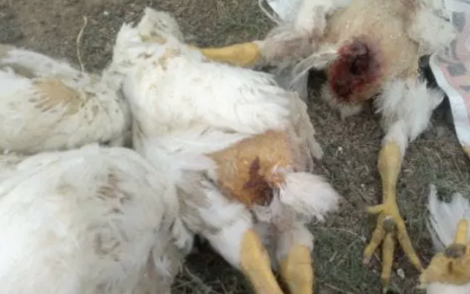
Cannibalism in poultry
Severe cannibalism in laying hens may involve pecking around the cloaca.
Skin damage from an initial peck may encourage further pecking, potentially reinforced by the reward of blood.
Lack of litter and high stocking density can increase risk
Cannibalism in pigs
Tail biting is more common in crowded, barren pens.
Limited opportunities for exploration and chewing contribute to risk.
Nutritional deficiencies, including salt deficiency, may increase chewing in some circumstances.
Cannibalism in rodents
Pup cannibalism may occur under stress or when offspring have little chance of survival.
In some contexts, consuming young may provide nutritional benefits or reduce competition
Methods of cannibalism prevent
Environmental enrichment: Provide straw for pigs and suitable litter or pecking substrates for poultry.
Appropriate housing: Avoid excessive stocking density and provide opportunities for species-typical behaviour.
Nutrition: Ensure a balanced diet and investigate potential deficiencies.
Genetic selection: May reduce cannibalism, although the underlying mechanisms remain unclear.
Consider multiple interacting factors rather than assuming a single cause
Aggression purpose
is a normal behaviour used to establish dominance relationships and resolve competition
in established groups, aggression is generally low
When does aggression become a welfare concern
when it causes injuries or other significant problems
Common management-related triggering aggression include:
Mixing unfamiliar animals
Frequent changes in group composition
High stocking density and restricted space
Limited space may prevent subordinate animals from withdrawing or signalling submission effectively
Aggression examples in horses
Frequent changes in paddock groups can increase aggression compared with stable, established groups.
Aggression examples in pigs
Mixing unfamiliar animals is a common trigger for fighting.
High stocking density can prevent subordinate animals from escaping aggressive encounters.
Aggression examples in dogs
Aggression may reflect behavioural tendencies, context, or the owner's perception of acceptable behaviour.
Even low levels of aggression may be considered problematic in households with young children
Aggression management implications
Maintain stable social groups where possible
Provide sufficient space and opportunities to withdraw
Consider the animal’s social behaviour and the context in which aggression occurs
Stressors
Stimuli perceived as potentially threatening or harmful
The standard stress model by Walter Cannon and Hans Selye, describes two main physiological responses
Sympathetic nervous system activation
Increased heart rate and blood pressure
Reduced gastrointestinal activity
Increased release of catecholamines (adrenaline and noradrenaline)
Hormonal response (HPA axis)
CRH stimulates the pituitary gland to release ACTH.
ACTH stimulates the adrenal cortex to release corticosteroids, such as cortisol.
Corticosteroids mobilize energy by increasing the availability of glucose and fatty acids.

Consequences of prolonged stress
Stomach ulceration
Cardiovascular disease
Changes in immune-system function
The duration and context of a stress response matter; persistent activation can compromise health and welfare.
Allostasis - “stability through change”
Physiological changes can help animals anticipate and respond to future challenges.
These adjustments may support adaptation to the environment.
Predictability and controllability of stressors: Describe the Weiss (1971) Rat experiment
Rats were exposed to electrical shocks delivered to the tail.
Two rats received identical shocks through a shared electrical circuit; a third rat received no shocks.
One rat received a warning sound before each shock, making the shocks predictable.
In a further condition, a rat could turn a wheel to stop or postpone the shocks, giving it control over the stressor.
Weiss rat experiment key findings
Predictability reduced the development of gastric ulcers.
Controllability produced an even greater protective effect.
Rats able to predict and control shocks showed ulceration levels approaching those of rats that received no shocks.
The same physical stressor can have different physiological consequences depending on whether it is predictable and controllable.
Implications for animal stress and welfare
Stress responses depend not only on the intensity, duration and frequency of a stressor, but also on the animal’s perception of it.
Predictability: The animal can anticipate when a stressor will occur.
Controllability: The animal can perform a relevant behaviour to influence, stop or postpone the stressor.
Controllability can reduce the harmful effects of stressful experiences.
In animal management, opportunities to perform effective, relevant behaviours may improve an animal’s ability to cope with challenges
Individual differences in stress responses can reflect:
genetic, physiological and behavioural variation
Historical human research described differences in sympathetic reactivity:
Type A: Greater sympathetic activity; often described as more active, extroverted and aggressive.
Type B: Lower sympathetic reactivity; often described as less active in response to stressors
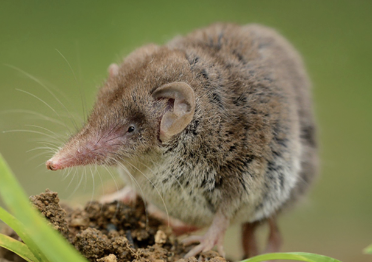
Evidence of individual differences in tree shrews
Subordinate males displayed either active or passive submissive behaviour.
When housed near a dominant male, passively submissive individuals lost weight and died relatively quickly, whereas actively subordinate individuals survived and coped bette
Evidence of individual differences: Mice (resident-intruder test)
Some resident males attacked intruders almost immediately; others did not attack.
Researchers identified distinct behavioural patterns with few intermediate responses.
Selective breeding for short or long attack latency demonstrated a strong genetic contribution to these differences.
Mice Resident-intruder test: response to novelty
Both mouse lines learned a food-rewarded maze task similarly.
When a small novel object was introduced, short-attack-latency mice continued the task, whereas long- attack-latency mice became distracted and explored the object
Proactive coping
Relies on established routines and previously successful behaviours.
Tends to maintain familiar behavioural patterns when challenged.
Physiological response involves greater activation of the sympathetic nervous system.
Example: Short-attack-latency mice largely ignore a small environmental change and continue a learned task
Reactive coping
Behaviour is more flexible and adjusted to the specific challenge.
Individuals assess or explore new situations before responding.
Involves less sympathetic nervous system activation than proactive coping.
Example: Long-attack-latency mice become distracted by a novel object and explore it
Is stress physiological or behavioural?
Stress has traditionally been studied as a physiological phenomenon, focusing on bodily responses to stressors.
The impact of a stress also depends on:
How the animal perceives the situation
Whether it can perform relevant behaviours
Whether those behaviours achieve their intended functional outcome
Behavioural perspective
Stress may arise when an animal is motivated to perform a behaviour but is prevented from doing so or from achieving its functional consequence.
Example: In Weiss’s rat experiment, shocks motivated escape behaviour. Rats able to control the shocks experienced less harmful effects.
Behavioural motivation and stress — The sow example
Nest-building before farrowing
Hormonal changes motivate pregnant sows to build nests before giving birth.
Nest-building motivation is driven largely by internal physiological signals.
When sows are prevented from performing nest-building behaviours, such as when confined in a tethering crate:
→ Cortisol levels increase more than in sows allowed to move freely.
→ The inability to perform motivated behaviour may contribute to stress.
Animal welfare - In 1965, the Brambell Committee made important contributions by:
Highlighting the importance of behaviour beyond physical health.
Promoting the scientific study of animal welfare.
Recognizing that animals have feelings.
The committee proposed basic freedoms, later developed into the Five Freedoms by the Farm Animal Welfare Council
Five freedoms
Freedom from hunger and thirst — access to adequate food and water.
Freedom from discomfort — appropriate shelter and a comfortable environment.
Freedom from pain, injury and disease — prevention, rapid diagnosis and treatment.
Freedom to express normal behaviour — sufficient space and appropriate facilities.
Freedom from fear and distress — conditions and treatment that minimize negative experiences.
Broom’s definition (1996) of animals welfare as biological functioning
“The welfare of an animal is its state as regards its attempts to cope with its environment.”
Welfare is assessed by examining how successfully an animal copes with its environment.
Possible indicators
Health: disease and injury
Behaviour: abnormal behaviour patterns
Physiology: stress-related changes
Growth and reproduction
Advantages and Limitaions of Broom’s definition
Advantages: Many established techniques are available to measure health, behaviour and physiology.
Limitations
Different indicators may conflict.
It can be difficult to determine how much weight each measure should receive
Duncan’s definition (1996) of animal welfare as a subjective experience
“Welfare is all to do with what the animal feels.”
Welfare depends on the animal’s subjective experiences, including negative states such as pain, hunger and fear, and positive states such as pleasure.
Feelings may have evolved to promote survival and appropriate behaviour.
→Pain can discourage use of an injured limb.
→Frustration may motivate an animal to change its situation.
→Pleasure may reinforce beneficial behaviours.
•- In domestic animals, outward health or physiological measures may not always reflect how the animal feels.
Emotional states cannot be measured directly; researchers rely mainly on indirect evidence, especiallybehaviour.
Advantages and limitations of Duncan’s definition
Advantages: Focuses on the animal’s experience and quality of life.
Limitations: Emotional states are difficult to measure objectively
Two major approaches to welfare assessment emphasize:
Subjective experiences: what the animal feels.
Biological functioning: how well the animal copes with its environment.
Common welfare assessment measures include:
Health and injury
Production performance
Physiological indicators
Behavioural indicators
Health as an indicator of animal welfare
Physical injury and disease can indicate reduced welfare.
However, the relationship between health and welfare is not always straightforward:
The boundary between health and disease can be unclear.
Some health problems may not cause immediate pain or distress.
Certain conditions may create a future risk of pain or injury
Poor health can indicate current or future welfare problems, but good health alone does not guarantee good welfare.
Production performance on animal welfare
High production has traditionally been considered an indicator of good welfare.
However, production traits have been strongly influenced by selective breeding and management.
Production varies among breeds and strains and can be affected by diet, lighting and other environmental factors.
Poor production may indicate a welfare problem, but high production does not guarantee good welfare
Examples of high production contributing to welfare problems:
Dairy cows: udder inflammation (mastitis)
Fast-growing broiler chickens and fattening pigs: leg problems
Physiological measures commonly used to assess welfare include:
Heart rate
Heart Rate Variability (HRV)
Corticosteroid levels (e.g., cortisol)
Adrenal gland weight
Physiological measurements can be collected using:
Remote monitoring, such as radiotelemetry
Non-invasive sampling of saliva, urine or feces
*Minimizing disturbance during measurement is important, especially for rapid responses such as changes inheart rate
Limitations of stress as a welfare indicator
A common assumption is that greater stress means poorer welfare, but this is not always true. Stress responses vary depending on:
Duration: Acute and chronic stress can produce different physiological responses.
Adaptation: Chronic exposure may lead to physiological adjustment or down-regulation.
Emotional state: Physiological arousal may occur during positive experiences, such as excitement.
Alternative approach to assessing stress
To assess the consequences of stress for biological functioning.
Examples of potential consequences:
Suppressed immune function
Reduced reproductive success
Entry into a prepathological state
Characteristics of behavioural indicators
Behavioural indicators are often easy to observe and can reveal early signs that an animal is struggling to cope with its environment.
Behavioural changes may appear before physical health problems, making them sensitive indicators of welfare risk.
Examples of behavioural indicators
Huddling together: may indicate that animals are experiencing low temperatures.
Vocalizing when hungry: may indicate unmet feeding needs
Challenge when using time budgets to determine animal welfare
Differences in behaviour do not automatically indicate differences in welfare. Reduced occurrence of a behaviour may mean:
The environmental triggers for the behaviour are absent.
The animal is prevented from performing a motivated behaviour.
Absence of behaviour example: alarm vocalization in poultry
Under extensive conditions, poultry may give alarm calls when potential predators are present.
These calls may be absent in confined environments because the triggering stimuli are missing.
Their absence does not necessarily indicate poor welfare.
Absence of behaviour example: Roosting in chickens
Chickens naturally roost on elevated perches during darkness.
Without perches, they may roost on the floor.
Research has shown that chickens are motivated to access perches for night-time roosting.
Key distinction when determining absence of behaviours
Behaviour not triggered: Its absence may be harmless.
Behaviour prevented: Its absence may indicate an unmet behavioural need
Examples of how comparing modern breeds with their ancestors or different envrionments can help interpret behaviours in captivity
Laying hens: Restlessness before egg-laying may be related to nest-building motivation.
Sows: Restless behaviour before farrowing is better understood through observations of nest-building in natural conditions
How can testing different environments be applied to welfare research
Observe behaviour in different environments.
Identify potentially important behavioural differences.
Test experimentally whether animals are motivated to perform the behaviour and whether providing opportunities improves welfare
Frustration studies and example in chicken:
Frustration may occur when an animal is prevented from performing a motivated behaviour.
In chickens, responses may include displacement preening under mild frustration and increased aggression or stereotyped pacing under more intense frustration
Purpose of using controlled situations to investigate an animal’s response to a specific physical or emotional state
These studies help researchers identify behavioural indicators of states that are difficult to measure directly
Purpose of controlled experiments
help us interpret observed behaviour and identify potential indicators of pain, frustration and other emotional states.
Anticipatory behaviour and emotional states
Animals can develop expectations about future events, including positive and negative experiences.
Signals predicting an upcoming event can trigger anticipatory behaviours.
These responses may provide clues about whether an animal expects a rewarding or unpleasant experience.
Researchers can use these behavioural indicators to investigate how animals perceive particular procedures or situations.
Preference testing:
Animals are offered two or more resources or environments, and researchers record their choices.
The underlying assumption is that animals tend to choose options that benefit them
Reliable tests require careful experimental design, so we must consider:
Provide equal familiarity with each option.
consider age, strain, previous experience and time of day.
Recognize that animals may prioritize immediate rewards over long-term benefits.
Interpreting results of preference testing
Animals may show partial rather than complete preferences.
Differences may reflect individual variation or changes in the animal’s current state.
Time spent using a resource can provide additional information, but does not fully establish its importance.
Preference tests reveal what animals choose, but choices must be interpreted in context
Limitations of preference tests
Choices are relative: an animal may prefer one option even if both options are poor for welfare.
A preference does not necessarily reveal how important a resource is to the animal.
Operant conditioning approach to preference testing
Animals learn to perform a response, such as pecking a key or pushing a lever, to gain access to a resource.
Researchers measure how much work the animal is willing to perform.
The more effort an animal makes, the greater the inferred importance of the resource, under appropriate test conditions.
Consumer demand theory purpose
Consumer demand theory can be used to assess how important a resource is by increasing the effort required to obtain it.
As the “price” of a resource increases, researchers measure how much work the animal continues to perform to obtain it.
Two types of consumer demands:
Inelastic demand: Consumption changes relatively little as the price increases.
Example: Food is often used as a resource with relatively inelastic demand.
Elastic demand: Consumption decreases substantially as the price increases.
The animal becomes less willing to work for the resource as the required effort rises.
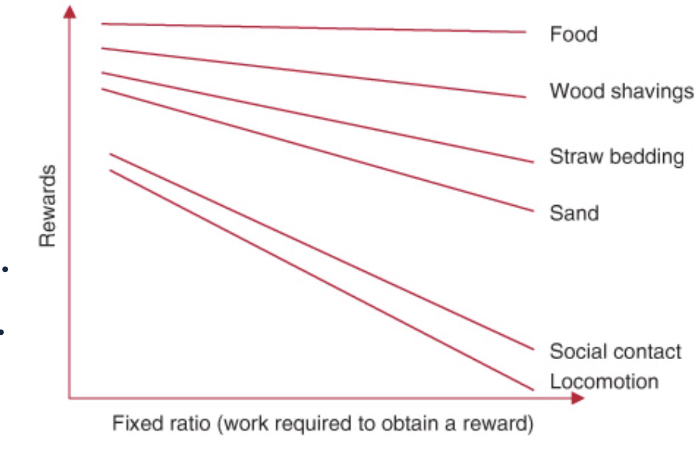
Interpreting demand curves
A relatively flat curve indicates that demand remains high as effort increases.
A steeper downward slope indicates that demand declines more rapidly.
Comparing demand curves can help researchers rank the relative importance of different resources.
Benefits of using behaviour to interpret welfare
Behaviour is often an animal’s first response to its environment and can provide early indicators of welfare.
Physiological and health measures are valuable, but they can be difficult to interpret without behavioural context.
The same physiological response may have different meanings depending on the situation. Example: Elevated corticosteroid levels may reflect positive activity, such as play, or a potentially harmfulstress response.
Behavioural observations can help identify pain, illness, distress and difficulties coping with the environment.
Science and ethics play complementary roles:
Science provides objective evidence about animals’ welfare.
Ethics helps determine what treatment of animals is acceptable.