mh exam 2
 Call Kai
 Learn
 Practice Test
 Spaced Repetition
 Match
 Flashcards
 Knowt Play
1/106

There's no tags or description
Looks like no tags are added yet.
107 Terms
ages 2-6: effortful control
learning to control intense reactions
ages 2-6: executive function
cerebral cortex matures into adolescence
planning + foresight
delayed gratification
early age (3-7yo) understanding of death
reversible/temporary → honest explanations + fantasy play
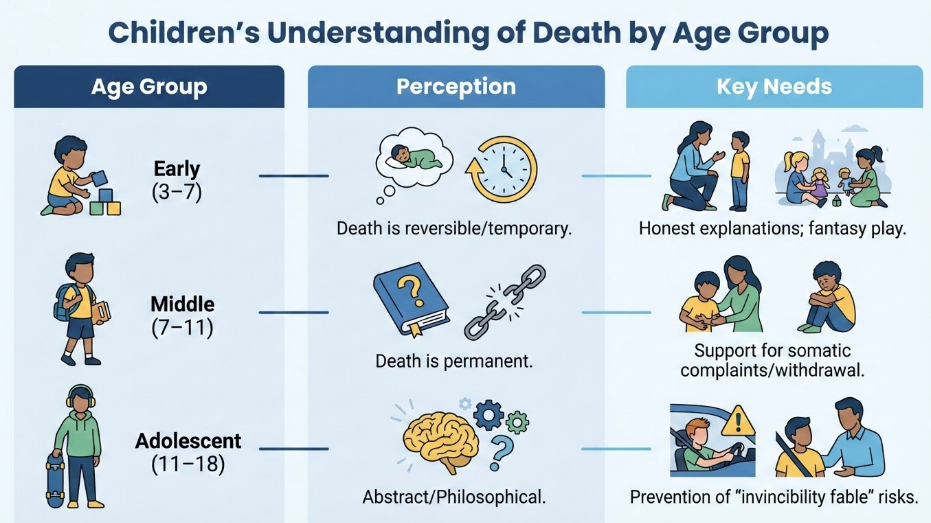
middle age (7-11yo) understanding of death
death is permanent → support

adolescent age (11-18yo) understanding of death
abstract/philisophical → prevention of “invincibility fable” risks

vulnerable child syndrome
overprotective parent following a health crisis that hinders independence
foster care: Bowlby’s Stages of Seperation
Protest
Despair
Detachment
young & midde adulthood health changes
Skin → loss of moisture/tone
Cardio → max CO at 20-30 y/o; BP + cholesterol rise; respiratory capacity declines after 30 y/o
Sensory → visual lens elasticity decreases around age 30 y/o; gradual high-pitched hearing loss

chronologic age
literal # of days alive
biologic age
measure of time elapsed combined w/ biological + physiological factors

stages of old age (3)
Young-old: 65-74
Middle-old: 75-84
Old-old: 85+

old age transitions
Body comp: ↑ incr. body fat (18-35%), ↓ total body water (10-15%) & muscle mass
Organs
↓ Renal decline in filtration, secretion
↓ Liver decr. blood flow & enzyme activity
↓ All 5 senses acuity decrease
Sexuality interest/enjoyment continue (hindered by stigma, lack of privacy)
Some cognitive decline expected; accumulated lifetime knowledge compensates
Gradual decline in mental processing/reaction time

old age risk factors
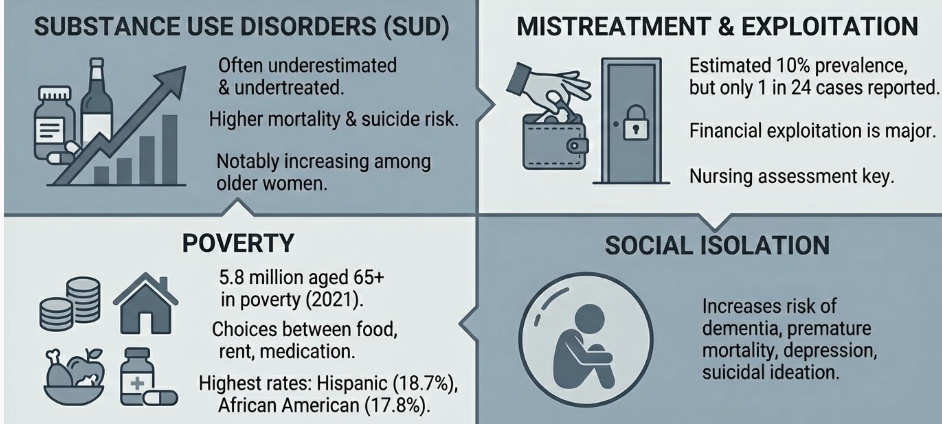
Chronic conditions - 95% older adults have 1+ chronic condition
Polypharmacy risks - taking 5+ meds ↑ risk of adverse drug rxn
Pharmacokinetic changes ↑ risk of med-induced delirium
Erikson’s Stage (integrity vs despair)
reflecting on life leads to either wisdom/aceptance of death or feelings of failure
Disengagement theory
withdrawal btwn. individual & society
Gerotranscendence theory
maturation emphasizing personal growth & relationships over material/superficial concerns
Perception of time
time feels faster b/c of life stability
old age protective factors
Marriage effect - married ppl experience lower mortality rates, better support
Education/income - linked to longevity, lower dementia risk
Religion & spirituality - reduce death anxiety associated w/ longevity

stress
process arising from real/perceived internal/external environ. demands

appraisal
evaluative process/appraisal of determining significance of a stressor
adaptation
capacity to survival/flourish
allostatic load
cumulative physiological load resulting from chronic stress
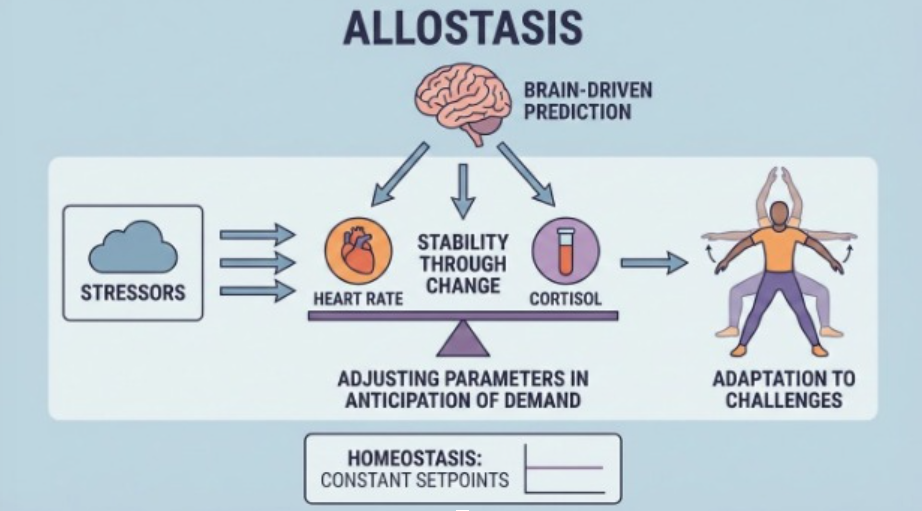
homeostasis (stability)
body’s tendency to resist physiologic change + maintain stability
blood glucose, o2, pH
allostasis (adaptation)
dynamic regulatory process that maintains stability through adaptation to stimuli
ANS, HPA axis, CV, metabolic, immune sys
life change units
Major - death, divorce, pregnancy, loss
Minor - shifts in sleeping/eating habits, vacations, school/work transition
emotional response types

coping types
Problem-focused - focus on stressor (ex. Leaving toxic environment)
Emotion-focused - reinterpret situation or change its meaning (ex. Shifting perspective on a difficult task)
social support types
Emotional support
Tangible support (loans, gifts, services)
Informational support (advice, guidance, feedback)
maladaptive anger
Outward-directed → diabetes, heart disease
Inward-directed → guilt, depression
Suppressed → chronic pain, postpartum depression
anger biological frameworks
Brain structure - aggression strongly linked to limbic system & cerebral cortex (frontal + temporal lobe)
Neurocognitive impairment - risk increases w/ brain dysfunction + social history of abuse
Hormones - higher testosterone lvls show association w/ aggressive behavior

anger psychosocial frameworks
General Aggression Model (GAM) - aggression is interaction btwn personal traits, beliefs, situational provocations
Frustration-Aggression Hypothesis - anger arises when goals are blocked/frustrated
Social Learning Theory - aggression learned thru observation, reinforced w/ rewards
Psychoanalytic Theory - modern views focus on reenacting childhood conflicts
crisis
time-limited disruption; customary problem-solving fails → disequilibrium, tension, anxiety
Developmental/Maturational
Situational
Traumatic

bereavement
healing/mourning after loss
suicide risk medications
Clozapine → suicide risk in schizophrenia
Lithium → BPD/depression
Ketamine → treatment-resistant depression
SSRIs → nonlethal antidepressants
suicide risk intervention
ECT (Electroconvulsive therapy) → severe depression, suicidal drive cases
violence theories/models/factors
Social learning theory → violence is learned
Social-ecologic model → violence results from intersecting individual, family, community, societal contexts
Gender-based influences → traditional gender norms tolerate violence to maintain dominance
Neurobiological factors → brain injuries, SUD, psychopathology
cycle of violence
Tension-building
Acute battering
Honeymoon - remorse/kind behavior from abuser to maintain relationship
Batterer intervention programs (BIPs)
court ordered 8 month outpatient grps
Cognitive behavioral
Psychoeducational
Power/control models
Goals → define abuse, accept responsibility, understand impacts
Limitations → Little reliable evidence, personal trauma histories
schizophrenia diagnostic
DSM-5-TR
Mix of positive/negative symptoms
Must be present for 1 month (significant portion)
Continuous signs of disturbance must persist for 6+ months
schizophrenia clinical course
Anosognosia = lack of awareness of symptoms/illness
Prodromal Period = stage of early changes
Symptoms in 50%+ PT
Hearing voices/seeing things
Can begin in childhood
Acute illness phase
Late adolescence/early adulthood
Subtle/bizarrely disruptive symptoms
Deteriorating function
Loss of ability for basic needs
Stabilization & recover
Meds
Relapses caused by failure to adhere to meds
schizophrenia POSITIVE SYMPTOMS
POSITIVE SYMPTOMS = Distorted Perceptions
Hallucinations = 1+ of 5 senses; command hallucinations can be dangerous/harmless
Delusions = distorted thoughts, grandiose (exceptional power), nihilistic (belief one is dead), persecutory (being watched/harmed beliefs)
schizphrenia NEGATIVE SYMPTOMS
NEGATIVE SYMPTOMS = Diminished Function/ Loss of normal function
Avolition = lack of motivation for daily activities
Anhedonia = inability to enjoy activities
Flat affect = little/no emotion
Alexithymia = difficulty identifying/ describing emotions
avolition
lack of motivation for daily activities
anhedonia
inability to enjoy activities
alexithymia
difficulty identifying/ describing emotions
schizophrenia neurocognitive impairment
Disorganized
Thinking - word salad, echolalia, loose associations, neologisms
Behavior - aggression, agitation, catatonia
Disruption in sense of self - difficulty differentiating internal/external thoughts/experiences
schizophrenia neurobiological
Reduced total brain volume
Larger lateral/third ventricles
Low dopamine → cognitive dysfunction
Mesolimbic tract (dopamine-releasing) hyperactivity → positive symptoms
Gut-brain axis → ↑ inflammatory cytokines, neuronal damage
schizophrenia epidemiology + risk factors
Typically onset during late adolescence-early adulthood
Risk factors: genetic (10x higher), environmental stressors, cannabis use
Ppl may die 20 yrs earlier
Physical injury risks: CVD, metabolic syndrome, T2DM
Suicide rate 4.5x higher
50% of PTs attempt suicide
Untreated psychosis, young age, history of attempts
antipsychotics indication
schizophrenia
antipsychotics 1st gen
Haldol (1-15mg/d), chlorpromazine
Block dopamine (D2) receptors → reduce positive symptoms (hallucinations, delusions)
High motor side effect risks
EPS
Parkinsonism - resting tremors/rigidity
Acute dystonia - muscle spasms (neck/jaw/tongue) occurring early in treatment (onset 1-5d)
Akathisia - intense internal restlessness/can’t sit still (onset 1-30d)
Tardive dyskinesia → irreversible involuntary movements (mouth, face, tongue) from long-term dopamine blockage
Sedation
anticholinergic effects
Monitor for EPS, NMS, manage fall risk
antipsychotics 2nd gen
2nd generation (atypical)
Olanzapine (10-20mg/d), Risperidone, Clozapine
Block dopamine & serotonin receptors → broader effectiveness, lower risk of motor effects
BUT higher metabolic risks
MONITOR: weight gain, high cholesterol, diabetes, QT prolongation
CLOZAPINE = SEIZURE & AGRANULOCYTOSIS RISK
Agranulocytosis: life-threatening drop in WBC
200-600mg/d
antipsychotics nursing
Monitor for EPS, NMS, manage fall risk
clozapine risks?
CLOZAPINE = SEIZURE & AGRANULOCYTOSIS RISK
Agranulocytosis: life-threatening drop in WBC
200-600mg/d
neuroleptic malignant syndrome (NMS)
NMS = Neuroleptic Malignant Syndrome = LIFE THREATENING
Confusion, muscle rigidity, tachycardia, LOP, hyperthermia
Hypertension, tachypnea, diaphoresis, mutism, incontinence
STOP med
MONITOR I&O, ‘lytes
RISK = injectable/higher doses of neuroleptic drugs, concurrent use of lithium
schizoaffective disorder
Both psychosis + mood disturbances (depression/mania)
Outcomes usually better than schizophrenia but worse than pure mood disorders

depression diagnostic
DSM-5 D/X = 5+ present during 2+ weeks
CORE REQUIREMENTS:
Depressed mood
Loss of interest or pleasure (anhedonia)
ADDITIONAL:
Insomnia/hypersomnia
Excessive guilt/worthlessness
Suicidal ideation
Fatigue/no energy
Weight/appetite change
Psychomotor agitation/retaration
Decreased concentration/thinking
depression biological
Deficiency/dysregulation of neurotransmitters → depression
Norepinephrine
Dopamine
Serotonin
Glutamate
Genetics
Neuroendocrine
High HPA (stress) axis activity + glucocorticoids (cortisol) → harmful to neurons
Increased cytokine chemical messengers → inflammation
Altered gut microbiota + stress-induced inflammation
depression meds: SSRIs
SSRIs (Selective serotonin reuptake inhibitors)
Fluoxetine, sertraline
Incr. serotonin lvl by blocking reuptake
S/X: Nausea, sedation, sexual dysfunction
Takes weeks to work
depression meds: SNRIs
SNRIs (serotonin-norepinephrine reuptake inhibitors)
Duloxetine, venlafaxine
S/X: increased BP, headache, insomnia, nausea
MONITOR BP
TAPER
depression meds: TCAs
TCAs (tricyclic antidepressants)
Amitriptyline
S/X: drowsy, anticholinergic, orthostatic hypotension
Monitor ECG
Fall risk precaution
depression meds: atypicals/NDRI
Atypicals / NDRI (norepinephrine-dopamine reuptake inhibitor)
Bupropion
S/X: agitation, insomnia, headache, lower seizure threshold
AVOID IN SEIZURE DISORDERS
GIVE TRAZODONE AT NIGHT
managing depression med sx
MANAGING S/X:
Dry mouth → sugarless gum, lozenges
Nausea → take med w/ food
serotonin syndrome risk
RISK: SEROTONIN SYNDROME = too much serotonin, life-threatening
Confusion, agitation, myoclonus (MUSCLE TWITCHING), ataxia (INVOL MOVEMENT), fever, sweating, diarrhea
other depression interventions+safety
CBT
Spiritual
Psychoeducation
Support groups
Suicidal ideation → 1-on-1 observation protocol
other depressive disorders
Persistent depressive disorder (dysthymia) = symptoms 2+ yrs for adults (1 in children)
Premenstrual dysphoric disorder = luteal phase (mood swings/sadness)
Improves after menses
Disruptive Mood Dysregulation Disorder (DMDD) - severe irritability + temper bfr age 10
biopolar disorder types
Bipolar I Disorder = manic episodes and 1+ depressive episode
Chronic
Progression stages: prodromal, symptomatic, residual states
Bipolar II Disorder = hypomanic episodes + major depressive episodes
Cyclothymic Disorder = chronic (2+ yrs) fluctuating mood disturbances, less severe than BPD
Mixed episode = mania and depression occur simultaneously → extreme anxiety/suicide risk
bipolar I disorder: mania
Mania
Mood = elevated, expansive (overvalue self-importance, lack of restraint, irritable
Elevated → can manifest as euphoria (exaggerated well-being) or elation (on top of the world)
Cognition = grandiosity, flight of ideas, pressured speech
Behavior = increased goal-directed behavior, excessive energy
Impulsivity
Can be influenced by sleep deprivation + season

bipolar medication: lithium
Lithium carbonate - mood stabilizer
Salt excreted almost entirely by kidneys
Low sodium/dehydation → increased renal lithium + toxicity risk
S/X: metallic taste, tremor, weight gain, polyuria, polydipsia, renal impairment
! Monitor serum lithium; consistent sodium, fluid intake
Monitor adherence (prevent relapse)

bipolar medication: Divalproex Sodium
anticonvulsant effective for pure mania
Requires baseline LFT + CBC
bipolar medication: carbamazepine
for PT unresponsive to lithium
Boxed warning for aplastic anemia + agranulocytosis
bipolar medication: lamotrigine
effective for depressed phase + maintenance t/x
Needs vigilance for serious rash (SJS)
other mania interventions/meds

therapies for bipolar disorder
ECT (Electroconvulsive therapy) → for severe mania + high suicide risk
TMS (Transcranial magnetic stimulation) → for bipolar depression
CBT (cognitive behavioral therapy) - reframes experiences, reduces emotional responses
Interpersonal & social rhythm therapy - stabilizing daily routines & understanding link btwn. mood & social rhythm
Psychoeducation - for pt & families to recognize early warning signs of relapse
panic disorder
Panic Disorder = extreme anxiety
Women twice as likely to be affected
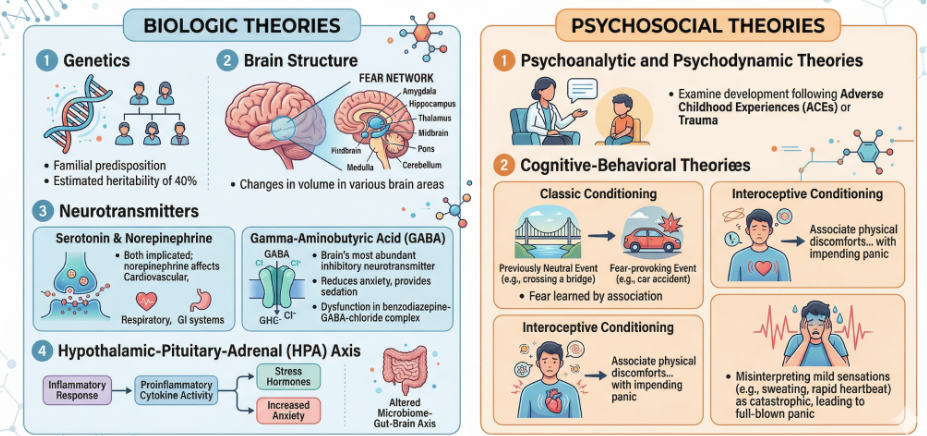
Biologic theories
Genetics, brain structure, neurotransmitters
Serotonin and norepinephrine affect CVD
GABA (Gamma-Aminobutyric Acid) - abundant inhibitory neurotransmitter
Dysfunction in benzodiazepine-GABA-chloride complex
Hypothalamic-Pituitary-Adrenal (HPA) axis
Inflammatory response → proinflammatory cytokine activity
→ stress hormone + increased anxiety
panic disorder psychosocial theories
Psychosocial theories
CBT = 1st line
Exposure therapy
Teach 4-square method or abdominal breathing

panic disorder meds
SSRI F/X: nausea, insomnia, sexual dysfunction
SNRI F/X: increased BP, headache
Benzodiazepine F/X: sedation, dizziness

generalized anxiety disorder
6+ months of excessive worry
Unlike specific phobias, concerns real life activities/events instead of a specific situation

phobias
Agoraphobia = fear triggered by situations where escape may be difficult
Blood-injection-injury = vasovagal rxn (BP/pulse drop), 75% pt faint
obsessions & compulsive
Obsessions (thoughts) - recurrent/persistent/intrusive unwanted thoughts/urges/images
Compulsive (acts) - repetitive behaviors (ex. handwashing) or mental acts (counting) to reduce anxiety/prevent feared event

OCD D/X
Time consumption = 1 hr+/day
Distress
Insight - good/poor/absent insight
Exclusions - symptoms cannot be caused by substances/med/disorders
OCD evidence based assessment tools
YBOCS (Yale-Brown Obsessive Compulsive Scale) - 16 items
SDS (sheehan disability scale) - brief 3-item self-rated scale
FASSR (Family Accommodation Scale) - track fam response
BABS (brown assessment of Beliefs) - measure insight/conviction of obsessive beliefs
OCD meds
SSRIs = #1
Fluoxetine, fluvoxamine, sertraline
TCAs (Clomipramine) - more side fx than SSRIs
SNRIs (venlafaxine)
OCD behavioral care
CBT
Exposure & Response Prevention - exposure to triggers w/o performing compulsion
ocd sub disorders
Trichotillomania (hair pulling disorder)
Self-destructive hair pulling
Hair ingestion (tricophagia) → intestinal obstruction/peritonitis risk
T/X: CBT/habit reversal training
Excoriation (skin picking disorder)
Body dysmorphic disorder
Hoarding disorder
PTSD def
PTSD - diagnosed following exposure to death, injury, sexual violence
Symptoms persist for 30+ days
Delayed onset develops up to 6 mo later
complex PTSD
Subgroup of PTSD from severe, chronic, repetitive trauma (long-term domestic abuse, human trafficking, childhood neglect)
PTSD → threat & avoidance, CPTSD → betrayal of trust
S/S: affective dysregulation, negative self-concept
Lifespan
Children (6 under) - trauma expressed through play
Adolescents - automobile accidents major trauma threat
PTSD biological
Biological
Increased noradrenergic function (limbic sys) → anxiety
Increased dopamine activity → sense of being threatened

PTSD cognitive behavioral therapies
Cognitive Behavioral Therapies
Exposure therapy
Cognitive restructuring - reframe bad memories
Cognitive processing therapy - focus on how trauma changed thoughts/belies
Stress inoculation training - anxiety reduction to view memories in healthy way
PTSD therapeutic interventions
Eye Movement Desensitization & Reprocessing (EMDR) - review disturbing memories under relaxation while focusing on lateral movement to desensitize
Virtual reality exposure - use virtual environment for emotional processing
PTSD meds
SSRIs: Sertraline, Paroxetine
Prazosin → off-label for nightmares/sleep (normally treats high BP)
Zolpidem → insomnia
Benzodiazepines (Lorazepam) → acute anxiety but not recommended for long term PTSD
other PTSD related disorders
RAD (Reactive Attachment Disorder)
DSED (Disinhibited Social Engagement Disorder)
Acute stress disorder
Adjustment disorder
personality disorder
Personality disorder = enduring pattern of inner experience & behavior that deviates from cultural expectations
Pervasive, inflexible, stable over time
Adolescence / early adulthood
Higher among ppl w/ psychiatric disorders
Many don’t seek t/x
DSM-5-TR
10 diff personality disorders
Cluster A personality disorders
odd/eccentric

Cluster B personality disorders
dramatic, emotional, erratic

Borderline Personality Disorder (BPD)
Pervasive pattern of instability in relationships, self-image, and affect
Marked impulsivity by early adulthood
Frantic efforts to avoid abandonment + unstable relationships
Recurrent suicidal or self-mutilating behavior
Behavioral pattern:
Emotional vulnerability
Self-invalidation
Active passivity
Apparent competence
Cognitive dysregulation - dichotomous (black/white) thinking

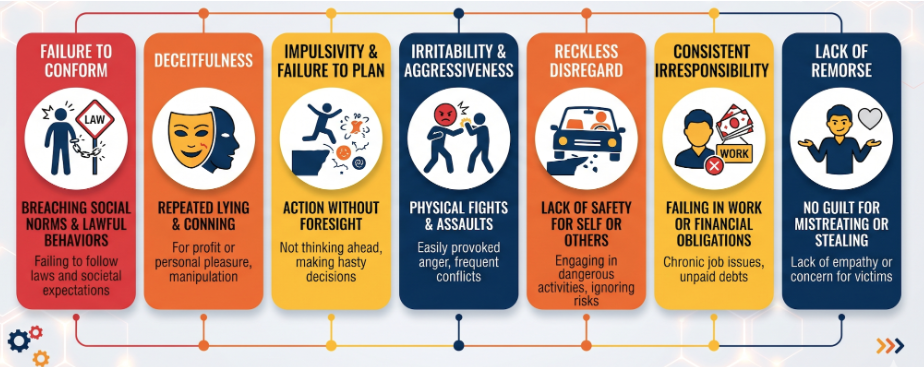
Antisocial Personality Disorder (ASPD)
Pervasive pattern of disregard for & violation of rights of others
Behaviors occurred since age 15 & must be 18+ w/ evidence of conduct disorder onset before age 15
3+ diagnostics
Cluster C personality disorders
anxious, fearful
Avoidant (AVPD)
Depdenent
Obsessive-Compulsive (OCPD)

personality disorders nursing/interventons
Safety = priority
Trauma-informed approach necessary
Dialectical Behavior Therapy (DBT) - reduces med use + self-injury behaviors
meds for personality disorders
Meds = symptom management
Mood stabilizers → for emotional dysregulation
Atypical antipsychotics → for cognitive-perceptual issues
Avoid benzodiazepines b/c risk habituation
Substance-induced disorders (SIDs)
intoxications & withdrawal caused by substance’s effects