BIO 330/530 - Plant Systematics
 Call Kai
 Learn
 Practice Test
 Spaced Repetition
 Match
 Flashcards
 Knowt Play
1/96

Earn XP
Description and Tags
Must know species, families, and key characteristics
97 Terms
Geraniaceae key characteristics
5-merous, knobby nodes, long beaked style, fused stamen
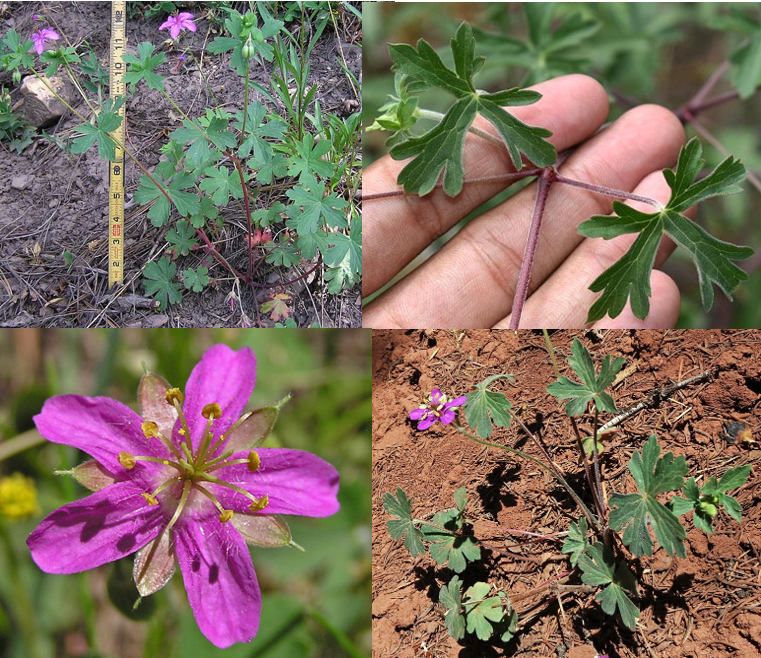
Geranium caespitosum - caespitose meaning “grows in clumps” (lacking single stem). Family Geraniaceae.
Onagraceae key characteristics
4-merous, inferior ovary, long hypanthium, fruit (capsules) containing many seeds & hairs (coma)
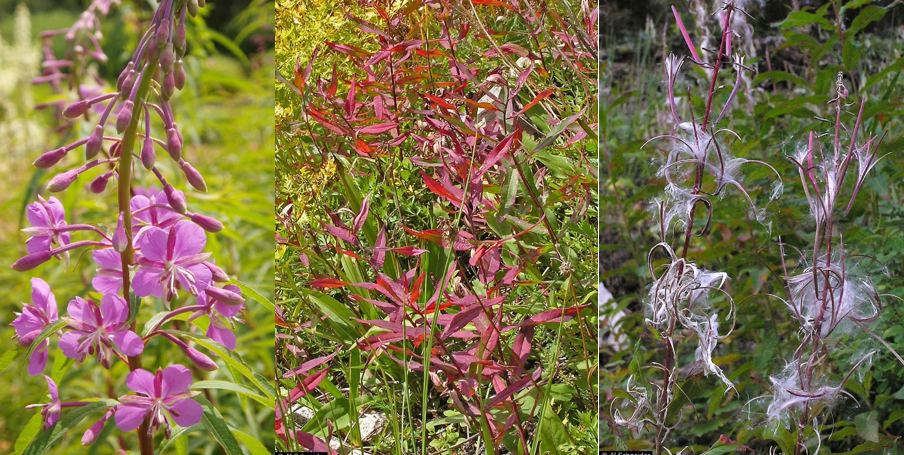
Chamerion angustifolium - “narrow-leafed". Family Onagraceae.
Brassicaceae key characteristics
4-merous, tetradynamous stamens, cruciform flowers (clawed), pod fruits w/ replum
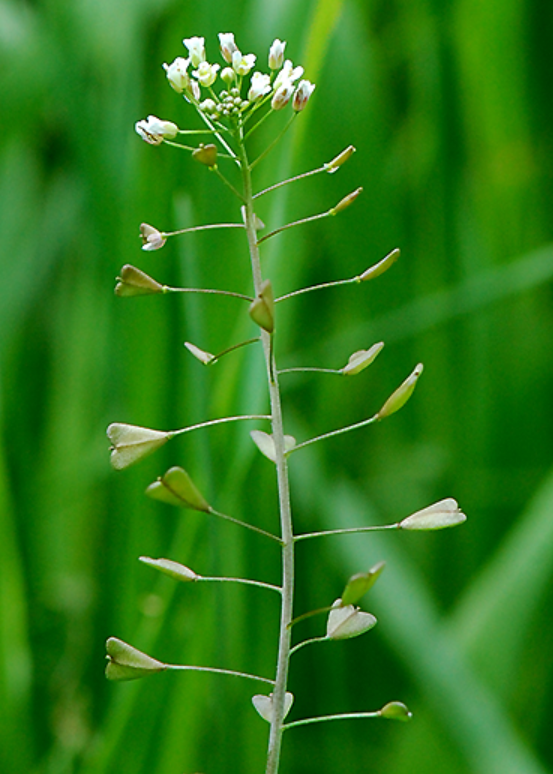
Capsella bursa-pastoris, “Shepard’s purse.” Family Brassicaceae.

Lepidium densiflorum - “little scale, densely-flowered.” Family - Brassicaceae.
Malvaceae key characteristics
Epicalyx, stellate hairs, monadelphous stamen
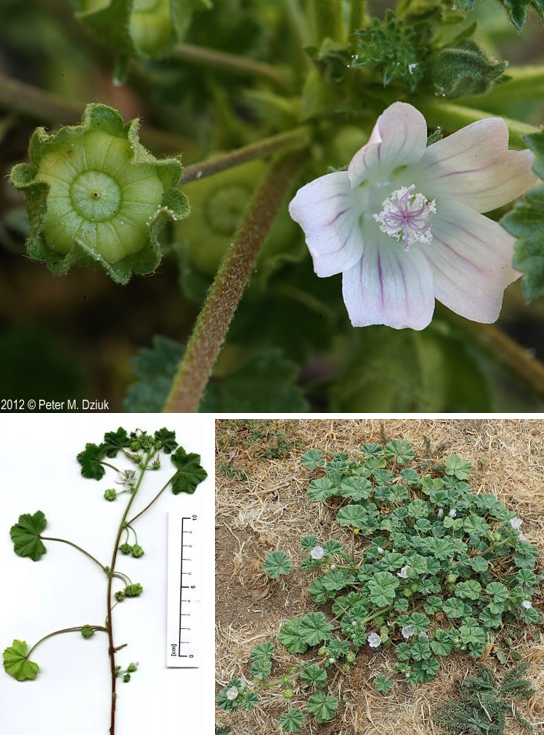
Malva neglecta - Family Malvaceae.

Sphaeralcea coccinea - Family Malvaceae. “Coccin” Latin for scarlet.
Anacardiaceae key characteristics
Resin canals (milky or black, aromatic resins), fleshy drupes, alternate compound leaves, small flowers
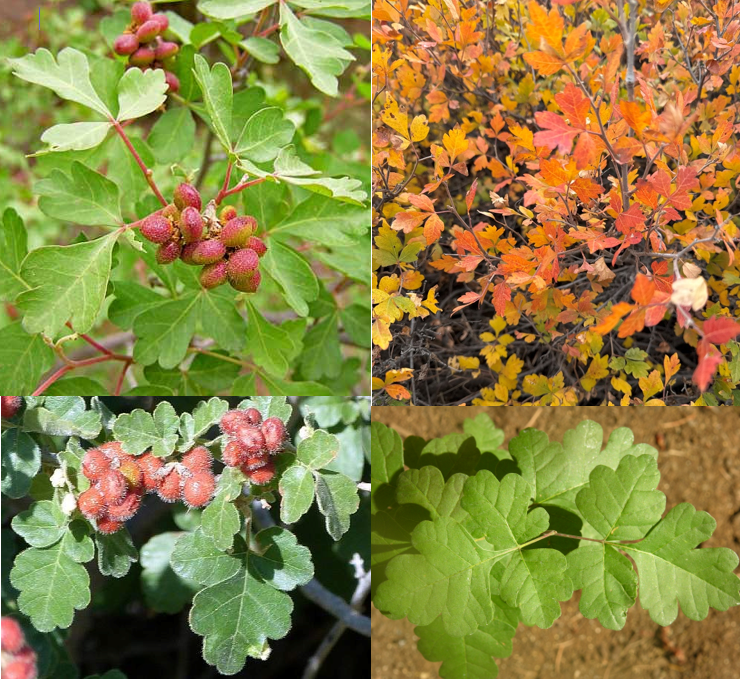
Rhus trilobata - “three-lobed sumac.” Family Anacardiaceae.
Sapindaceae key characteristics
Woody, odd opposite leaves, imperfect flowers with whorled stamen, two-winged schizocarp fruit

Acer glabrum - Rocky Mountain maple. “smooth (hairless) maple.” Family Sapindaceae.
Fagaceae key characteristics
Catkins, capped nuts, lobed leaves, woody

Quercus gambelii - Family Fagaceae. Gambel’s oak.
Betulaceae key characteristics
Woody, catkins, simple toothed and pinnately veined leaves, samaras w/ foliaceous involucre

Alnus incana - Family Betulaceae. Literally Grey Alder.
Rosaceae key characteristics
5 petals & sepals, shallow hypanthium, numerous stamens, stipulate

Rosa arkansana - Family Rosaceae. Prairie wild rose, originating from Arkansas river in CO.

Cercocarpus montanus - Family Rosaceae. “Tailed fruit of the mountains.” Genus has distinct spiraling achene fruit with hairs.

Prunus virginiana - Family Rosaceae. Chokecherry.
Fabaceae key characteristics
Papilionaceous flower, diadelphous stamen (sometimes mono/distinct), legume fruit (no replum).

Lupinus argenteus - Family Fabaceae. Silvery lupine. Monadelphous stamen.

Trifolium pratense - Family Fabaceae. Red clover - “three-leaved, of the meadows.” Pointed red stipules with veins and pale chevron markings on leaves.
Elaeagnaceae key characteristics
Stellate/pinnate hairs (giving silver shimmer), woody, thorns
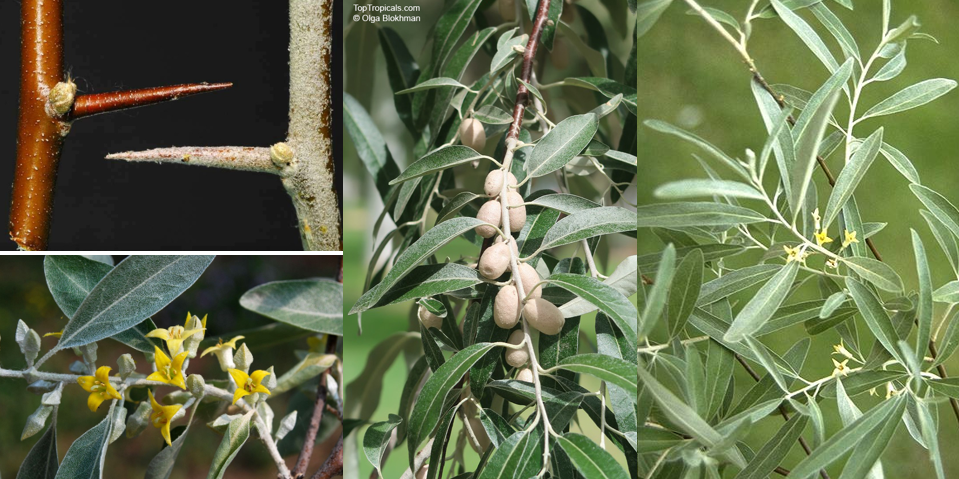
Eleagnus angustifolia - Family Elaeagnaceae. Russian olive - “wild olive, narrow-leaved.”
Salicaceae key characteristics
Woody, catkins, comose seed

Populus deltoides - Family Salicaceae. Eastern cottonwood. Deltoides meaning triangle-shaped leaves.

Populus tremuloides - Family Salicaceae. Trembling aspen; because petiole is flat, the leaves tremble in even a slight breeze.
Euphorbiaceae key characteristics
Cyathium, milky juices
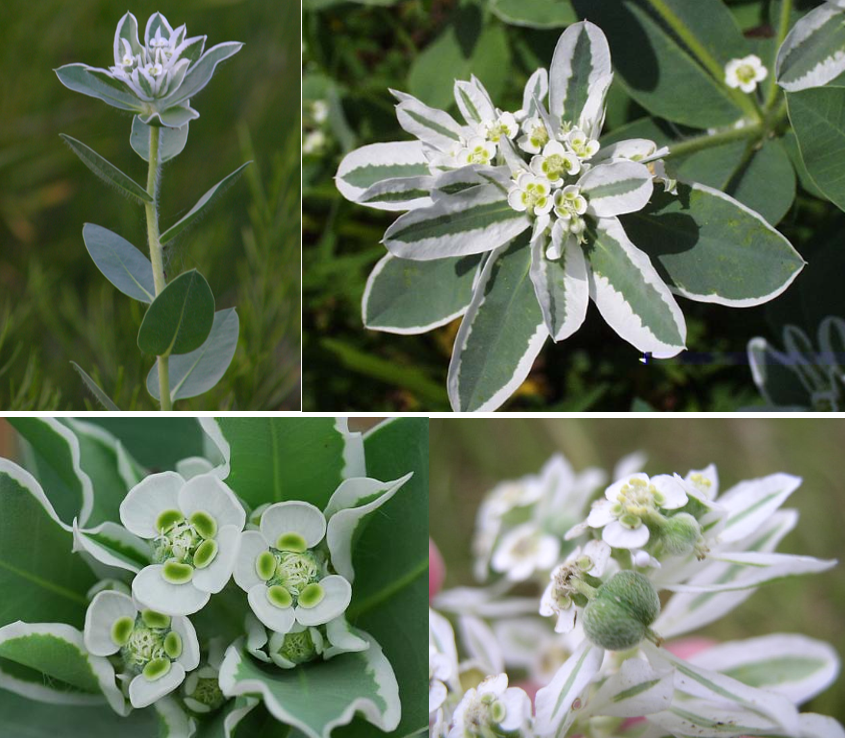
Euphorbia marginata - Family Euphorbiaceae. Snow-on-the-mountain. Named for its white margined leaves.
Crassulaceae key characteristics
Succulent leaves, epipetalous stamen, nectariferous appendage

Sedum lanceolatum - Family Crassulaceae. Lanceleaf stonecrop. Lance-shaped leaves.
Grossulariaceae key characteristics
Woody, petals smaller than petaloid sepals, fascicled leaves (unique shape), persistent perianth
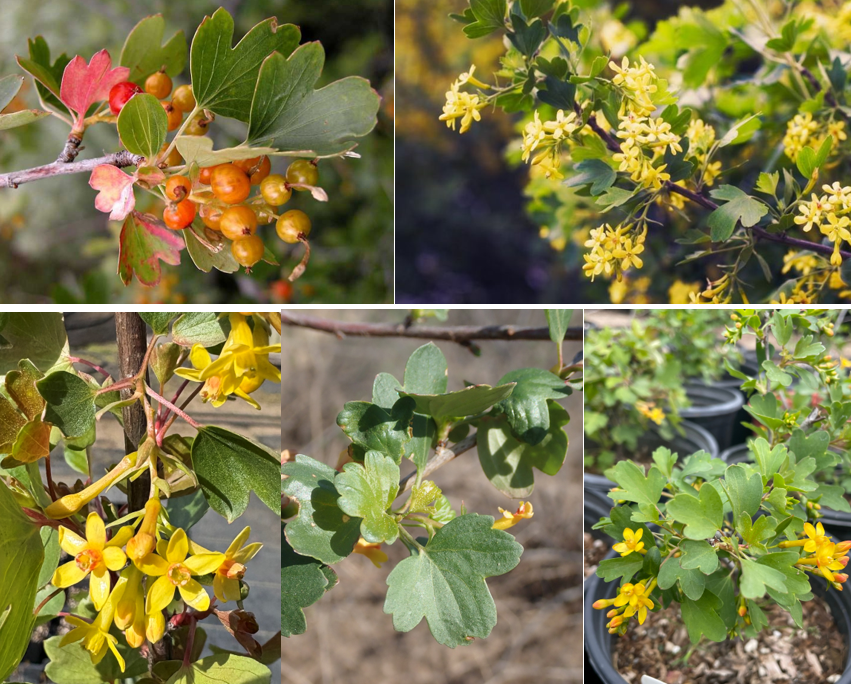
Ribes aureum - Family Grossulariaceae. Golden currant, Greek aureus meaning “gold” for its golden flowers.
Boraginaceae key characteristics
Rough hairy, epipetalous, funnel-form fused petals, gynobasic style, nutlets w/ persistent calyx

Lappula occidentalis - Family Boraginaceae. Western stickseed - occidens = west, lappa = bur, sticky seeds.
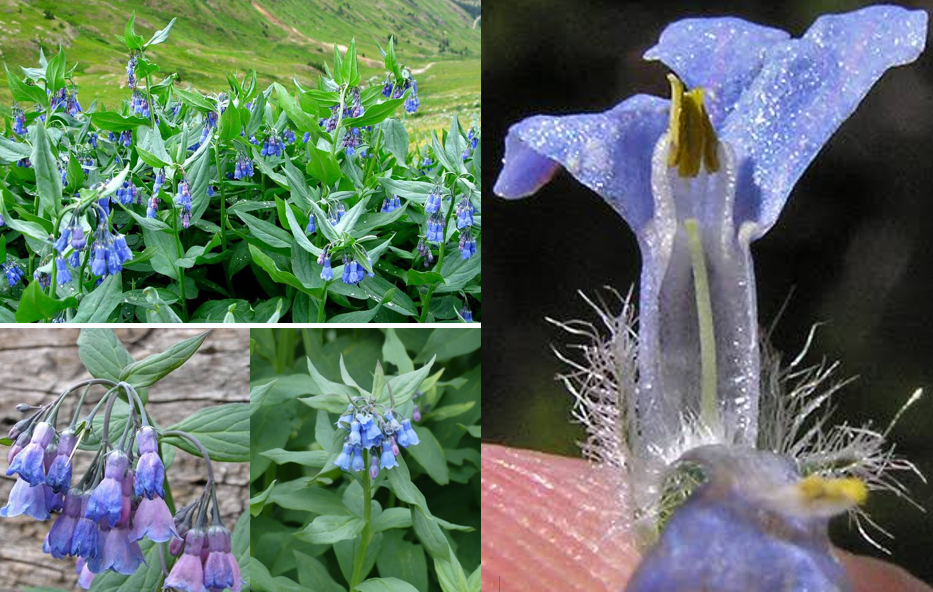
Mertensia ciliata - Family Boraginaceae. Mountain bluebell.
Solanaceae key characteristics
Epipetalous (alternate with petals), funnel-form fused petals, plicate corolla, connivent stamen

Solanum rostratum - Family Solanaceae. Buffalo bur or horned nightshade. “Rostratus” = beaked, named for shape of pistil.
Convolvulaceae key characteristics
Epipetalous, viney, plicate funnel-form fused petals

Convolvulus arvensis - Family Convolvulaceae. Field bindweed. “Arvum” = field or cultivated land.
Lamiaceae key characteristics
Square stems, opposite or whorled leaves, aromatic, bilabiate flowers

Monarda fistulosa - Family Lamiaceae. Wild bergamot - “fistulosa” meaning hollow, referring to the hollow tubular stems.
Plantaginaceae key characteristics
Ignoring plantains: bilabiate flowers, didynamous stamens, 1 sterile staminode (penstemons)
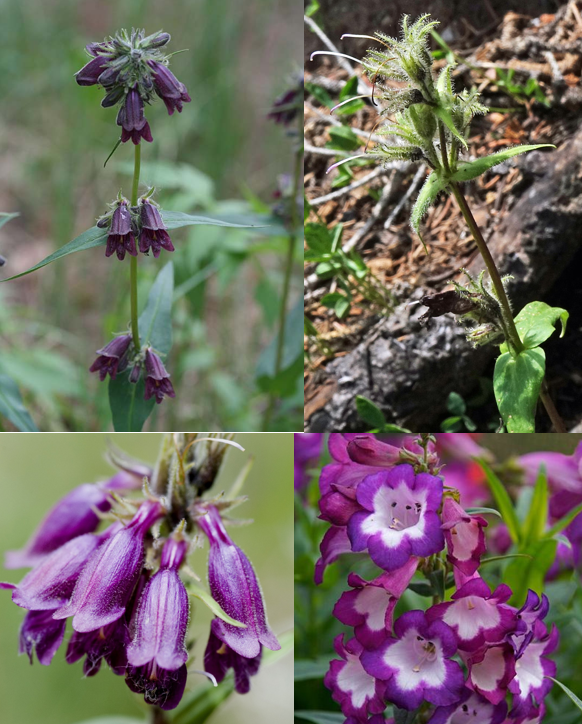
Penstemon whippleanus - Family Plantaginaceae. Whipple’s beardtongue.
Orobanchaceae key characteristics
Parasitic and lacking chlorophyll, bilabiate flowers, didynamous stamen

Castilleja miniata - Family Orobanchaceae. Giant red Indian’s paintbrush. “Miniata” Latin for “colored red.”
Apiaceae key characteristics
Umbels, hollow stalks, stylopodium

Heracleum maximum - Family Apiaceae. Cow parsnip. “maximum” meaning one of the largest in the family.
Campanulaceae key characteristics
Campanulate flowers, milky juice

Campanula rotundifolia - Family Campanulaceae. Little bell, round-leaved. Round leaves are basal and tend to fall off as the plant matures.
Asteraceae key characteristics
Head/capitulum inflorescence.

Achillea millefolium - Family Asteraceae. “Thousand leaves,” fern-like leaves.
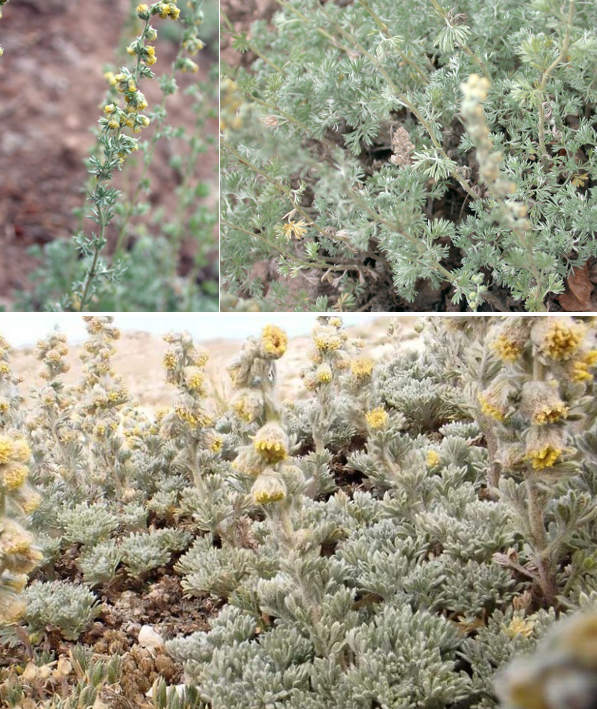
Artemisia frigida - Family Asteraceae. Growing in cold climates.

Helianthus annuus - Family Asteraceae. Common sunflower, “annual.”

Chrysothamnus viscidiflorus - Family Asteraceae. Rabbit sagebrush. Sticky flowers/leaves.

Ratibida columnifera - Family Asteraceae. “bearing columns,” Mexican Hat flower/coneflower.

Solidago missouriensis - Family Asteraceae. Missouri goldenrod.
Ericaceae key characteristics
Leathery leaves, woody, urceolate (urn-shaped) flowers

Arctostaphylus uva-ursi. Family Ericaceae. “Bear grape” gives the common name bearberry, or Kinnikinnick, an Algonquian word meaning "smoking mixture", reflecting the historical practice among Native Americans and early pioneers of smoking the plant's dried leaves.
Polemoniaceae key characteristics
Phlox. Salverform (long tubed corolla with flat face), three-lobed stigma, contorted buds, hyaline sinuses on calyx (ribbed and webbed)

Ipomopsis aggregata - Family Polemoniaceae. Scarlet Gilia or skyrocket. Aggregata describes the flower clusters.
Amaranthaceae key characteristics
Pigweed. Apetalous or tepals, tiny flowers, utricle (fruit), scurfy

Atriplex canascens - Family Amaranthaceae. Fourwing saltbush. Canascens meaning hoary.

Salsola tragus - Family Amaranthaceae. Prickly Russian thistle - tragus means “he-goat” because goats eat the young shoots. Becomes tumbleweeds!
Cactaceae key characteristics
Cactus. Succulent, spines & glochid, abundant tepals.
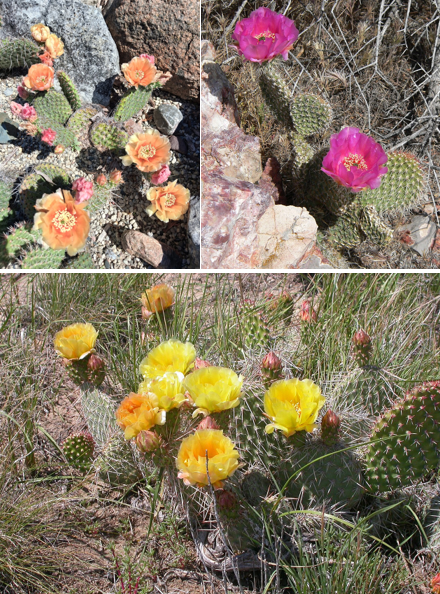
Opuntia polyacantha. Family Cactaceae. Plains pricklypear. “Many-spined.”
Polygonaceae key characteristics
Milkwort/Buckwheat. Reduced perianth, tepals, ocrea (papery sheath around nodes, some without), “ugly” flowers, inflated tubercle in fruit.

Persicaria pensylvanica - Family Polygonaceae. Pennsylvania smartweed. Lanceolate leaves.

Eriogonum umbellatum - Family Polygonaceae. Sulphurflower buckwheat. “Wooly-knee umbrella.”

Rumex crispus. Family Polygonaceae. Curly dock. Wavy leaf margins.
Ranunculaceae key characteristics
Petaloid sepals, numerous stamen, showy flowers, NO hypanthium, exstipulate
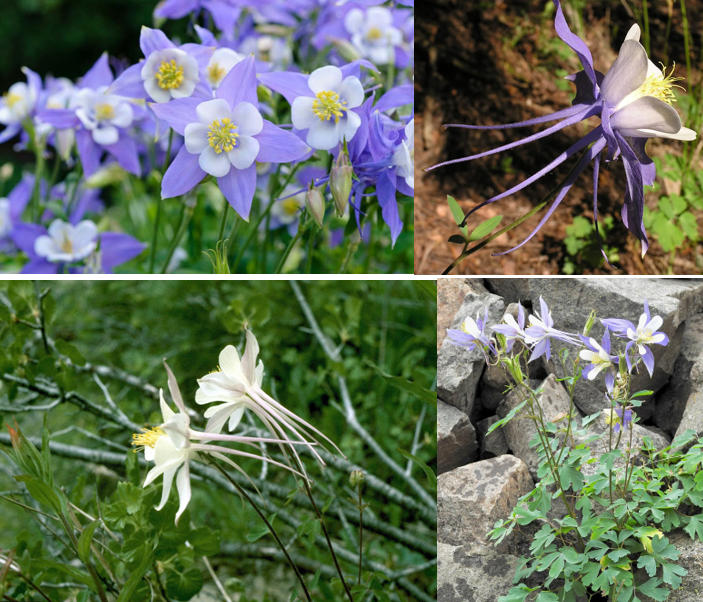
Aquilegia coerulea - Family Ranunculaceae. Colorado Blue Columbine. State flower!
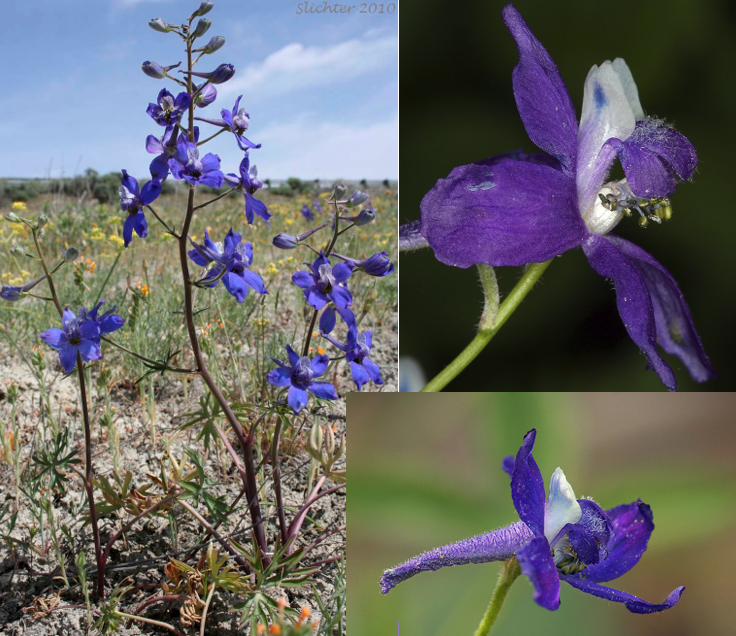
Delphinium nuttallianum - Family Ranunculaceae. Nuttal’s larkspur.
Poaceae key characteristics
Round hollow stems, 2-ranked leaves with open sheaths, ligule, 2 glumes, palea & lemma, perianth reduced to lodicules, fruit a caryopsis
Juncaceae key characteristics
Rush family. Round solid stems, basal leaves with closed sheath, no bracts, 6 tiny leathery tepals, fruit a capsule.

Juncus hallii - Family Juncaceae. Hall’s rush.
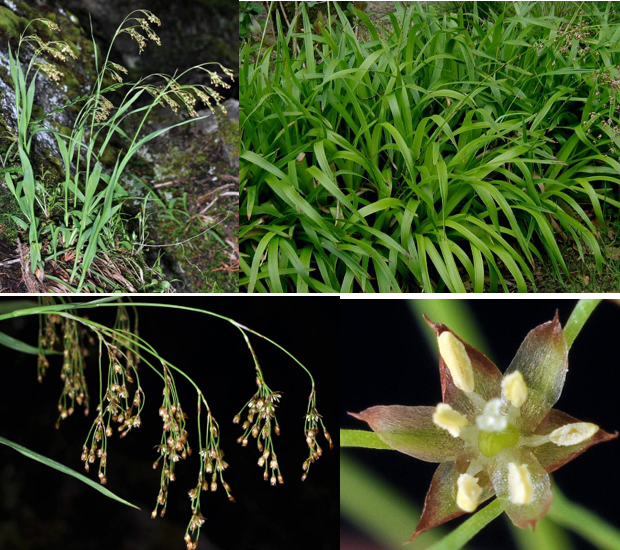
Luzula parviflora - Family Juncaceae. Small-flowered woodrush. Nodding inflorescences, linear basal leaves.
Cyperaceae key characteristics
Sedge family. Triangular stems, leaves 3-ranked, closed sheath, bracts are a scale, perianth absent or bristles, fruit an achene.
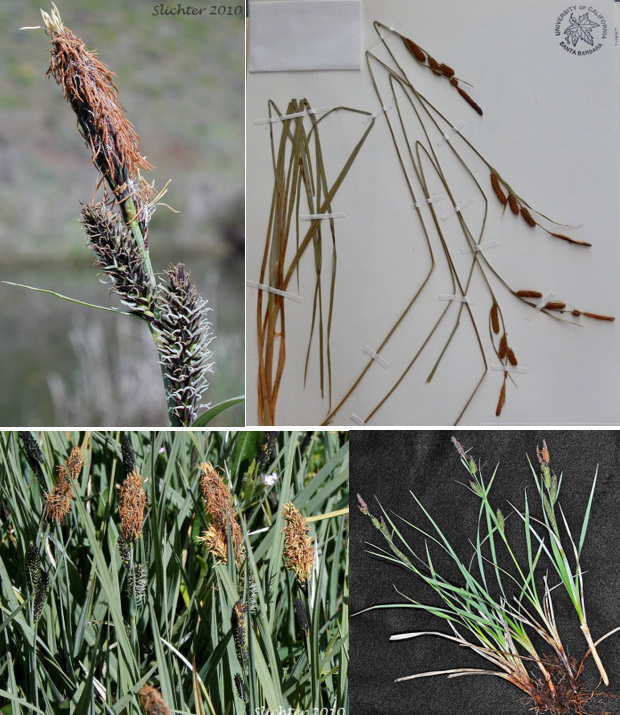
Carex nebrascensis - Family Cyperaceae. Nebraska sedge.

Eleocharis palustris - Family Cyperaceae. Common/creeping spikerush. Both genus/epithet refer to marsh habitat. Stems basally red,

Eriophorum angustifolium - Family Cyperaceae. Common cottonsedge. Name means narrow-leaved.
Typhaceae key characteristics
Cattail family. Round solid stems, leaves 2-ranked with open sheaths, no flower bracts, perianth persistent bristles, fruit an achene.
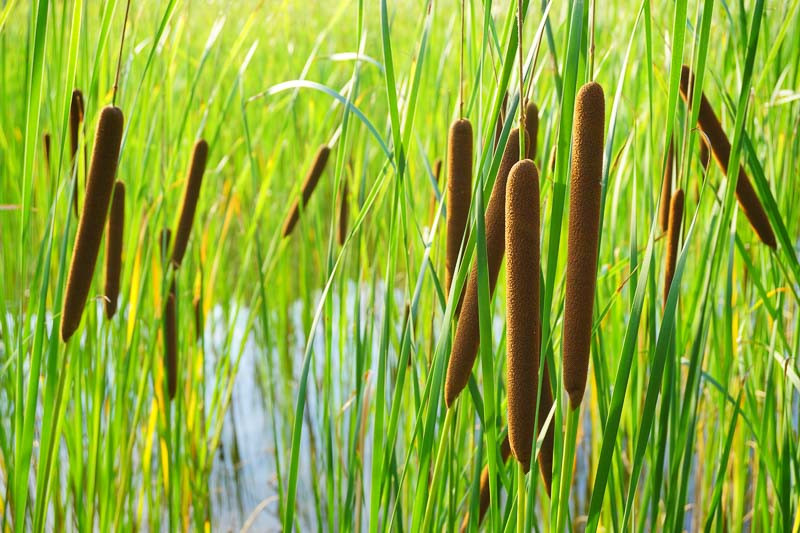
Typha latifolia - Family Typhaceae. Broadleaf/common cattail.
Asparagaceae key characteristics
Asparagus family. Fleshy/succulent, 6 tepals

Yucca glauca - Family Asparagaceae. Great Plains yucca.
Liliaceae key characteristics
6 tepals, 6 stamen, mostly basal leaves
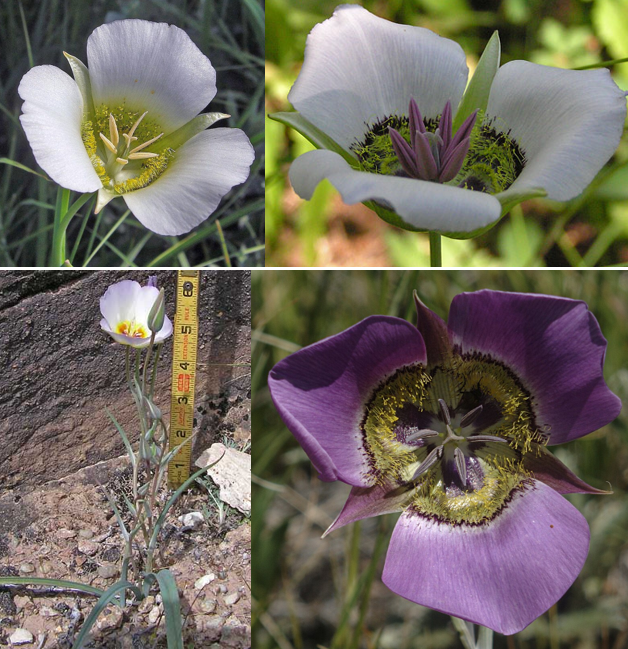
Calochortus gunnisonii - Family Liliaceae. Rocky Mountain mariposa lily.

Streptopus amplexifolius - Family Liliaceae. Clasping-leaved twisted-stalk, wild cucumber, scootberries.
Amaryllidaceae key characteristics
Onion-like bulbs (contains Allium genus), umbellate inflorescence, scapose (leafless flower stalks)

Allium cernuum - Family Amaryllidaceae. Nodding onion.
Iridaceae key characteristics
Iris family. Flower with standard, bearded falls, spathe, 3 stamen, leaves in flat plane (distichous, equitant)
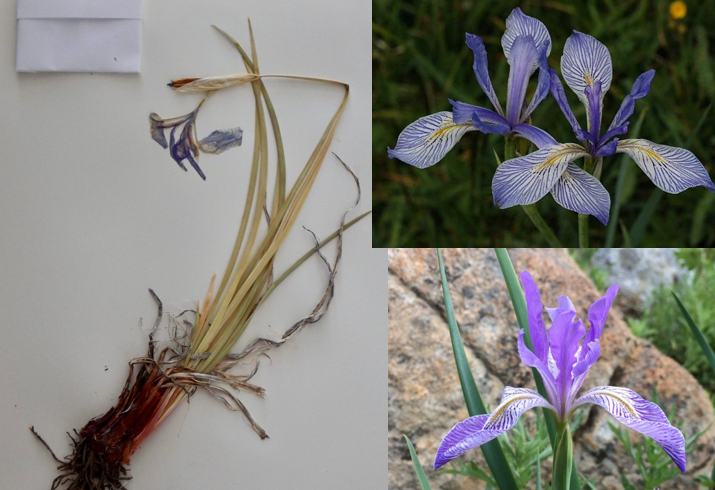
Iris missouriensis - Family Iridaceae. Rocky Mountain iris.
Orchidaceae key characteristics
Pollinia, spur, rostellum (fused gyno+andro), corolla “lip”
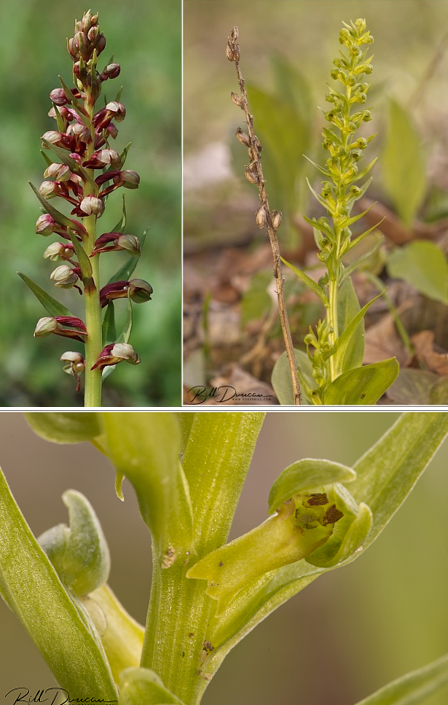
Dactylorhiza viridis - Family Orchidaceae. Long-bract frog orchid.