Modern Art In Europe and the Americas | Slide ID quiz #2
 Call Kai
 Learn
Learn Practice Test
 Spaced Repetition
 Match
Match Flashcards
 Knowt Play
1/43

Earn XP
Description and Tags
Sam Siegel, OCT 2026
Name | Mastery | Learn | Test | Matching | Spaced | Call with Kai | Chat |
|---|
No analytics yet
Send a link to your students to track their progress
44 Terms
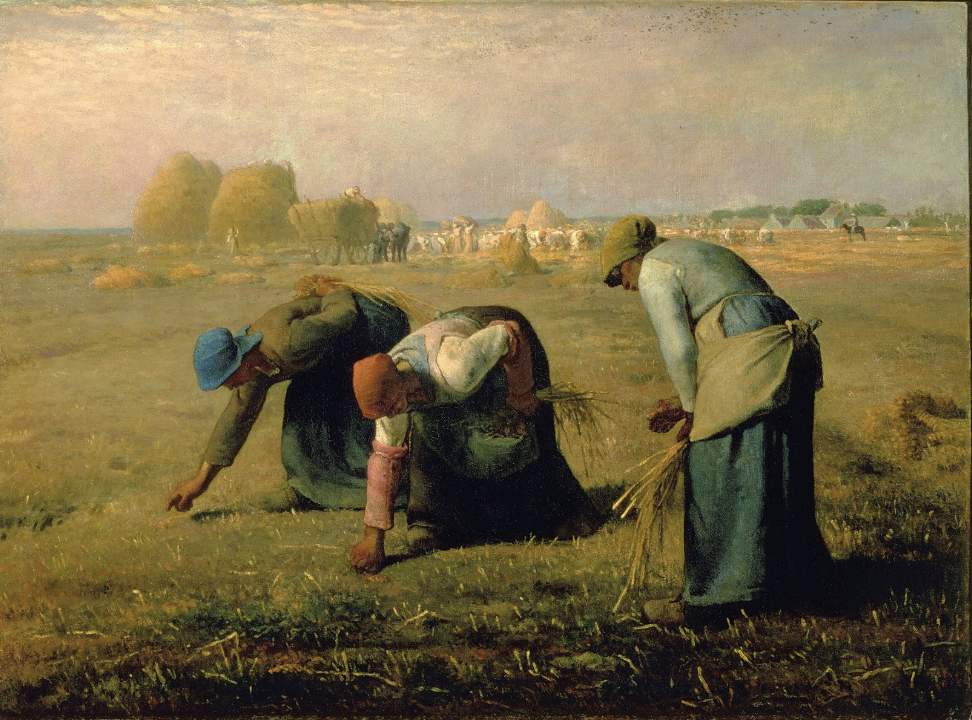
Jean-François Millet (France). The Gleaners. 1857
Shift to realism, the world is not blurry it is the point of the image. The people are in focus but we dont see their faces. We project onto them

Jean-François Millet (France). The Sower. 1850
Rural working class highlighted, realism showed people at work. Darkness on face allows us to put ourself into that world. Burning in backround showed reality of france as the second empire took over

Gustave Courbet (France). The Stonebreakers. 1850
Gustave Courbet (France). The Village Maidens. 1851
Comparing them (same painter), shows a world of realism.
Slice of life,
photography like.
Could be anywhere, want peole to feel the painting, feel for the world, the people
NO royals, not idealic, real, harsh light

Gustave Courbet (France). Burial at Ornans. 1849-50
Large / grand panting shpwing the realisty of people. Scale with important people as normal folks and NOT royals
His friends in painting
Shadow to show sad reality

Titian (Italy), Venus of Urbino., 1538 . Édouard Manet (France) . Olympia. 1863 (Janson 25.11)
Much more mystc on right, showed REAL (darker) ppl
So much unrealistic light in left image (older), painting a fake world. Right image is darker, more realism
BOTH looking INTO viewer, breakign 4th wall and inviting them to join their world. NOT letting us project into their world, but letting us view it.

Edgar Degas (France). Ballet Rehearsal. 1874
Light used to seperate people. Loneleness of time in zones of shaddow
playig with color and darkness to show transformation of life. ups and downs
world was gettign more real, darker. People wanted to be able to project into something their understood because they wanted to escape to realism

Honoré Daumier. The Third-Class Carriage c. 1863-65
Mid 19th centruy - relaism
Shows the realities of being in space with one and other
No luxury of extra space on the canvas. Painting a real and cramped world.
Shaddows seperating main character showed that even in big space ppl felt lonley.

Marcantonio Raimondi (Italy). Judgment of Paris (after Raphael) 1520 OLD
Édouard Manet (France). Luncheon on the Grass. 1863
19th century (right) showed REAL ppl. they used new trains to go to conuntry side
NOT elite gods (left), but real people going to country to relax (right)
Shows the relaity shown in time. Manet harkned back to this style (1520’s) {grand work, posed, not a photo, idealic world}, but with real people showing realism and bold colors (older style)
Some shaddow used to show real life, but a MIX of older style (pozing and colors) and real people and place (realism)

Charles Garnier. Paris Opera House. 1861-74
Paris as physical space begain to resemble realism
Paris was rebuilt with long straights made for spectatorship. ABout making it the peoples place
About meeting your neighboors. all ppl equal
People mvoing to paris to meet people.
Opera house had an older, anchient magnifacent style, but it was built in a city that was changing. About spectatorship and knowing your neighbors. Looking at it as a work with people

Edgar Degas (France). Viscount Lepic and his Daughters. 1875
Gustave Caillebotte (France). Paris: A Rainy Day. 1877
SIMILAR
rize of photography, pictures seem like photos
Mass made clothing also brought a sense of equality to people
Work (painting) was about showing the REAL world. about bringing people into a real version of their world, giving them an idealized reality.
This era was good, republic in france, post war. So wanted to see a chaging time represented.
PURE realism
Inviting audience IN
Compaired to older realism, same vibe of photo-esc, wanting to show real people in their own world. Some older use shaddow to show sadness.
Throughout realism 19th century, more color meant more Romantacism and impressionism
realism showed time as it WAS (really)
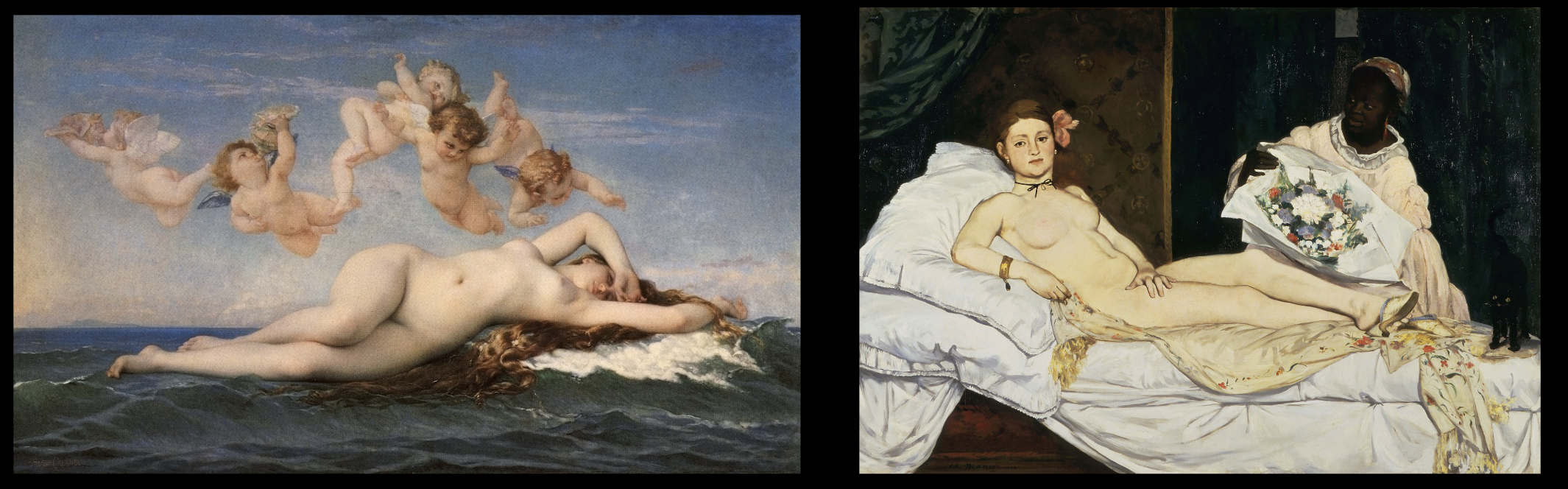
Alexandre Cabanel. Birth of Venus. 1863
Edouard Manet. Olympia. 1863
Japanize influence created a more flat image, one that is meant to tell the story of the subject
showing gods
CONTRAST:
Typical style (left) is acadmeic, paint gods in an UNREAL way where they look bigger than life
Atypical style (right, Monet) used painterly style to show gods as people. Shadow gave depth, more reality, lets us into the world of the painting. Playing with shaddow to make gods real
Begginging of impressionism
“act of looking is the art”

Édouard Manet. Copy after Velazquez. 1865
flat backround (Japan)
More shaddow on person, HE is the clear subject
Manet is intrested in work done by older artists
Japanize prints had no backround FLAT. SO much about subject and our interaction with building that subject. We create their character.
This work showed Menet combined the lack of shaddow and flatness from Japanize work, with the subject focused nature of realism in his Olympia work. Japan PLUS relaism
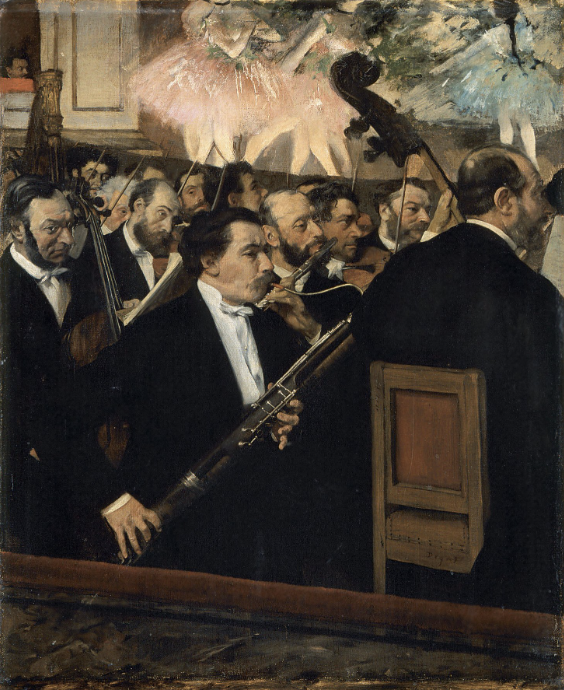
Edgar Degas. Orchestra of the Paris Opera. 1868-69
Japanize style
Flat (action on top of itself)
color pops
floating figures
Relaism mentalisty (slice of life), but with japanize style
New types of spaces shown (rehersal room)

Édouard Manet (France). Luncheon on the Grass. 1863
Claude Monet (France). Luncheon on the Grass (study). 1865-68
Manet (left) is a pivitoal figure in realism and the start of impressionism. Created reality in his work
MONET (right) started to see things MORE realistically.
Use brush stroaks as shading.
Shaddow as color
Got away from older idea of shaddow as diffrence between color and light, use color to create gradient in shaddow
THey both painted what they saw, more monet
COMPAIR
Both used real people and added to the concept of realism
Both have darkness and a deep backround that added to reality
MONET (right) used more modern shadding and brush stroke control. SHowed nature with light and control from obsecurity. Influenced to be using darkness in nature

Claude Monet (France). House at Argenteuil. 1873
Claude Monet. The Magpie. 1869
Monet told landscape with color as shadding
Not black and white, but gradient of space
Enplenair, painted what he saw
darkness and reality, but birth of impressionism with new style leving a deeper (sadder) impression on viewer

Claude Monet (France). Sunset in Vetheuil. 1895
He was color obsessed under diffrent lighting conditions
used more color and shadding as shaddow
Impressionism let us understand that a tree s not just brown, but a combo of color.
HIS WORK BUILT WORLD WITH COLLOR - FULLY

Claude Monet (France). Boulevard des Capucines.1873-74
Claude Monet (France). Impression, Sunrise. 1872
his 1870’s workused color to tell shaddow. Brush strokes and gradient told shaddow
He put people BACK in background, departure from realism. MOVE into impressionism
COMPAIR
SAME
His work built a world and made the viewer do the work of looking at it (style of impressionism)
Art is the art of looking at his work
People needed an escape, good time, but rise of impressionism where we are more focused on having to work for a takeaway
MONET is painterly because his brush stroakes are lose and they tell story. His work is myteaq and tells story. It is not the SAME as older paintly as that was more about smoothing out a backround, and this is telling shaddow with color and stroaks.
Old Painterly showed art as masses of shape. Monet does this, but while his work is less in focus and more about watching it, it is not paiterly in that it Monet is more about it looking human and less about it looking smooth / inforcing subject.
OVERALL: Old painterly was about makign it look nice, Monet painterly was about making us THINK as viewers. Art is the act of watching art

Pierre-Auguste Renoir (France). La Grenouillère (The Frog Pond). 1869
Claude Monet (France). La Grenouillère (The Frog Pond). 1869
COMPAIR
Same time period, but shows Monet more fuzzy less people focused style. Shadding with color
Searching for natural order (key idea) in people, had many people to find order
BOTH IMPRESSIONISM
Playing with the way we precieve a painting
Studying same area at same time,
BOTH Impressionism, Money has more depth, leftover of Japanize influence?

Claude Monet (France). Gare Saint Lazare: Arrival of a Train. 1877 Claude Monet (France). Gare Saint Lazare in Sunlight. 1877
Monet studied the same place in diffrent lighting conditions to see how it effected the consumption of the painting .
Used science to find reality and natural of image
Used color and brush stroaks to paint shaddow
Vusable world starts to disapear

Claude Monet (France). Rouen Cathedral. 1894
studied spaces over time.
Brush / color to show shaddow
Part of impressionism that was about studying how audience interacts with painting
Art of looking is art
*By showing space at diffrent time, was forcing the viewer to enegage with the work and dive into it as a study of themselves and place. Art as academia
Observabale world starts to disapear.
Search for natural structure through repatition
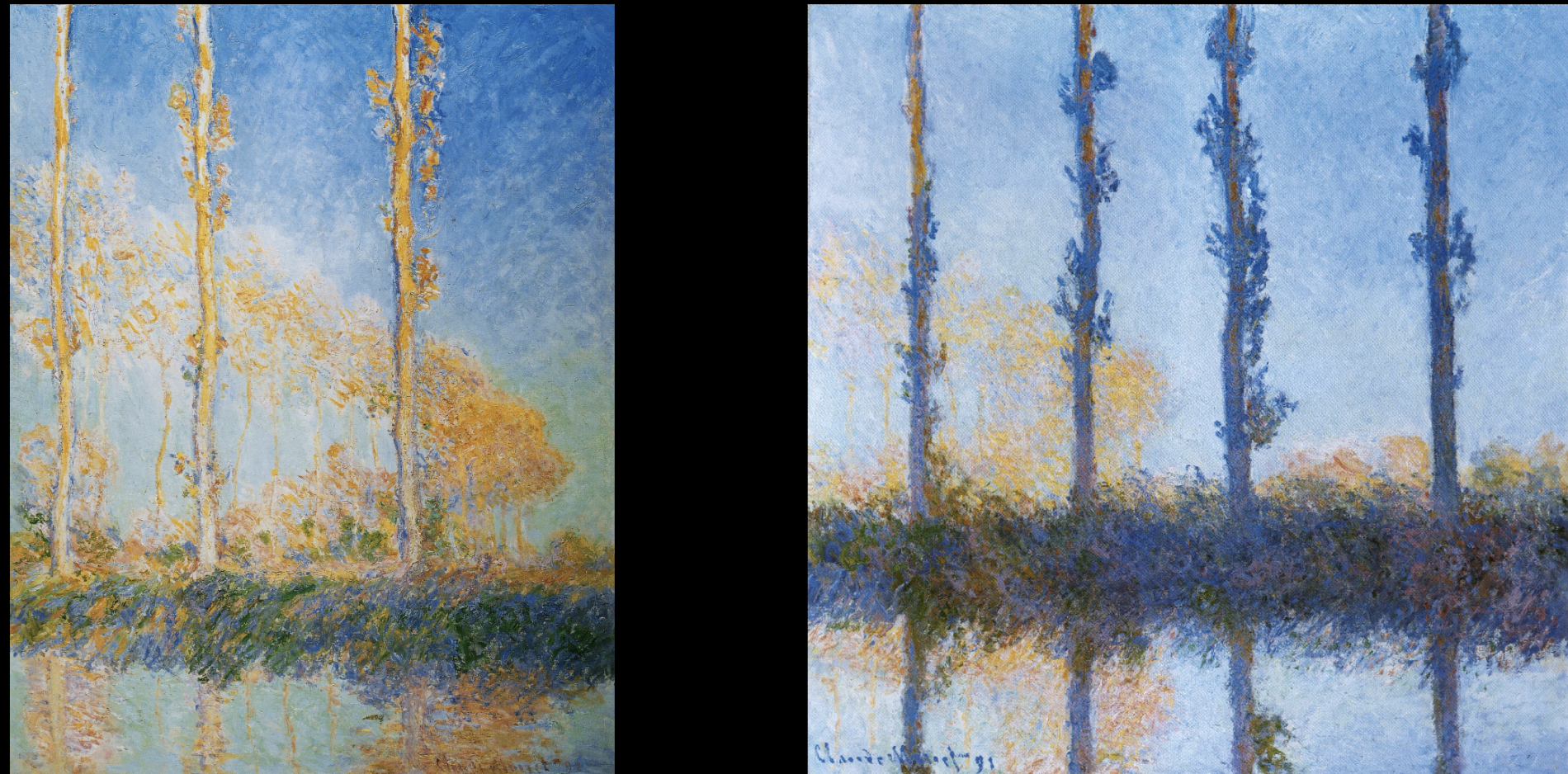
Claude Monet. Three Poplars. 1891
Claude Monet Four Poplars. 1891
Studeied space in diffrent times. Nature changes lighting. An acadmeic study
collow as shaddow
bluury and real, far away
Leading lines breaking up painting
Adding in the 4th changes world over time.
Search for natural structure through repatition. Vertical bars are natures order

Claude Monet. Morning on the Seine.1896
Claude Monet. Morning on the Seine.1896
color as shaddow
Optical sensation of looking (the art of watching art) was goal of emulating the mystiq of natural world
Moving away from realism, about wathcing
Sensory experience
Compairing shows change in feeling / emotion over time

Claude Monet. Water Lilies. c. 1920
Combination of sky and ground, observing how we WATCH. Wathcing the situation become a memory because we dont differenchate between sky and ground in memory
color as depth and shaddow
Natural world as ONE
Act of watching
No clue where we are. Ultimate idea of having to watch and look, to find the order ourselves

Georges Seurat (France). Sunday Afternoon on the Island of La Grande Jatte. 1884-86
Same time as Monet, BUT diffrent approch
Every stroak is throught about, ecientific art, NOT abotu feeling but art of construction
Color placed next to other color changes how we see that color (new idea)
optical pointalist color
Scince and Art

Michel Chevreul. Chromatic Color Wheel. 1864
New approch to art, scienticic
Color placed next to other color changes how we see that color (new idea)
Shows working with color

Paul Cézanne (France). Orchard, Côte St. Denis, Pontoise. 1877
Quest to find structural order
POST realism, in pointalism and impressionism
Wanted to show feeling of place
Use repatition of shapes to create the feeling of movment
Compared to other work his has more flow and moves more.
blur shows movment, movment is human

Paul Cézanne. Mont Sainte-Victoire. 1885-95
Paul Cézanne. Mont Sainte-Victoire.1902-04
His works were not respected, they were laughed at
COMAPIR (similar)
Over time he goes into his practise MORE
His work gets more movment, it is faster
Light = play between 2D and 3D

Paul Cézanne (France). The Black Clock.1867-68
Paul Cézanne. Basket of Apples. 1895
Comapir
Both him but over time
His work got more and more about movment general shapes
Later shows more about subject, and watchign ONLY that
Construct 3D world in 2D, using movment in storkes and fast movment of pieces
Backround is Japanize
Perspective shift, apples feel uneasy, leading to weird places.
Consider lines and perspective. Supposed to be imperfect, lets us see the movment of our world.

Paul Cézanne. Cézanne in a Yellow Chair. 1888-90
women are unproportional
NOT about telling real life
wanting to show story of HER, not a fake picture
unlike older pictures where propotions are perfect

Paul Cézanne. The Large Bathers. 1898-1905
Perspective is off
HUGE people in it meant to show vibe of life NOT real life
FAR from realism
movment in brush storkes and perspective.
a 2D of 3D event

Vincent van Gogh. Open Bible. 1885
Vincent van Gogh. Shoes. 1886
Vincent van Gogh (Holland/France). Self-Portrait with a Felt Hat. 1886
His early carrer
focused on bringing his style to everyday items
NO people (other than him), not exposed to reality. Simply testign out his style
Japanize influence in lack of backround
weird perspective (pointalism) and leading lines that do not add up, all about perspective and drawing the viewer in
New idea of painterly

Vincent van Gogh. The Potato Eaters. 1885 (Janson 26.9)
He moves to Paris and gets exposed to art and new people (lower class)
Also gets exposed to older realism that forces him to paint with shaddow and darkness
Became intrested in people and how to show real lives
Detailed backround and people paint a realistic picture, one that seems lived in and draws ppl in

Vincent van Gogh. The Potato Eaters. 1885 (Janson 26.9)
Constantin Meunier (Belgium) The Puddler 1887
Paris gave him more infuence, and showed him ppl
Compair
use of person and space in character.
Expression to tell story
NO brush stroke style

Vincent van Gogh Self-Portrait with a Felt Hat 1886
Vincent van Gogh. Self Portrait with a Gray Hat. 1887
Vincent van Gogh. Portrait of Père Tanguy. 1887-88
Shows the devolpment of his style over time
Always about subject, but over time WHO that subject is changes and the perspective and size of them changes aswell
Effected by pointalism and speed of painting
track his mental state with his size in painting and shape

Jean-François Millet (France). The Sower. 1850
Vincent van Gogh. The Sower. 1888
simialr concept
Diffrent use of color, diff time, diff stroke style
BUT takes concept of animating backround
Tkaes concept of animating the work, giving liffe!
Mkaes subjects HUGE, influenced by japanize style
Van Gough makes us uneasy, use of lines, crookid size and yellow color to use thoery

Vincent van Gogh.
Starry Night.
1889 (Janson 26.11)
Vincent van Gogh.
Olive Orchard.
1889
Learned by now that his paintings could be a perspective NOT a window
confrentation, huge subject. realism influence
sky falling onto church. crushing it
Color, form, and falling sky show his personal prision
lived in countryside now, no ppl
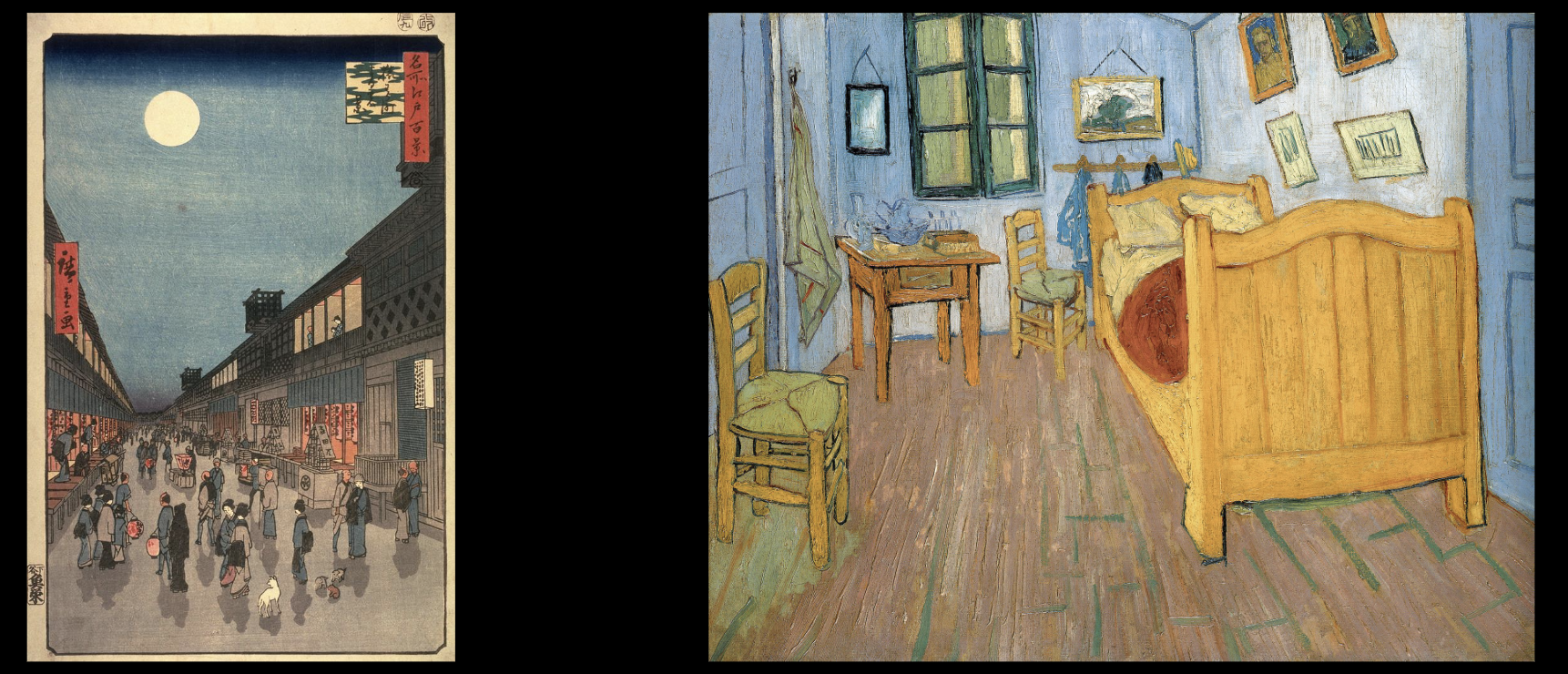
HIROSHIGE Utagawa (Japan).
Night View of Saruwaka Street.
From 100 Views of Edo. 1856
Vincent van Gogh.
The Artist’s Bedroom at Arles.
1888
His late life
Perspective and HUGE subject gotten from japanize work
no subject showing his loss of self
flatness influenced him
Wanted picture to tell a full story

Paul Gauguin.
Still Life with Three Puppies.
1888
Paul Gauguin (France).
Still Life with Fruit.
1890
Went looking for the whole of europe, imagineing it would be simple
But he found a complex world, to represent it colonized
Some gapanize style but focused mainly on devolping a backround
High-key lighting that was popularized by japanize

Alphonse Legros (France).
The Calvary.
1874
Paul Gauguin.
The Yellow Christ.
1889
Paul Gauguin.
Self-Portrait with Yellow Christ.
1889
Compair:
Gauguin’s work was much flatter
Much more high-key light
NO realism
Older work has depth and backround
His work has busy yet flat backrounds
NO realaism, no darkness
Worlds fair brought massive influence

Jules Bastien-Lepage.
Joan of Arc.
1879
Paul Gauguin.
Vision after the Sermon.
1888 (Janson 26.12)
Gauguin has flat but busy backrounds
japanize influence
used complex colors for skin tones
NO realism in paintings
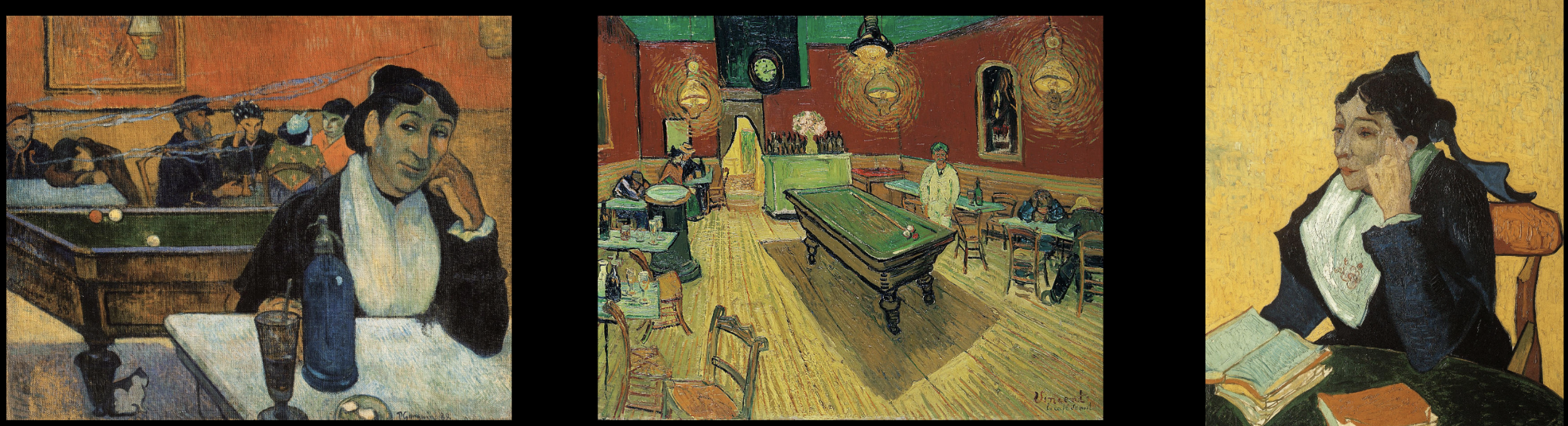
Paul Gauguin.
Night Café at Arles.
1888-89
Vincent van Gogh.
The Night Café.
1888
Vincent van Gogh.
L’Arlesienne
(Woman of Arles).
1890
Use of perspective
COMAPIR
very similar
flat but busy backrounds
Japanize style
Focus on subject
A slash back of realism, but these people were painted to be huge
BIG medatations of place and space, perspectives

Vincent van Gogh.
Dr. Paul Gachet.
1890
Vincent van Gogh.
Church at Auvers.
1890
Vincent van Gogh.
Crows over a Wheat Field.
July 1890
End of van gough’s life
Sky falling onto him
perspective warps and shifts
leading lines crumble
non-realism because his suffering is too great

Gauguin.
Aha oe feii? (What, are you jealous?).
1892
Paul Gauguin.
Spirit of the Dead.
1892
complex colors for skin tone
His view was a judging colonizer

Paul Gauguin. Where Do We Come From? What are We? Where are We Going? 1897
Moves here and dies in less devolped island
Still his view as colonizer
Trying to medatate on place. Closing place off to those who’s place it is
HIS perspective
Japanize influence (flat, colors)