2.4 Applications and Implications of Organic Chemistry
 Call Kai
 Learn
 Practice Test
 Spaced Repetition
 Match
 Flashcards
 Knowt Play
1/40

There's no tags or description
Looks like no tags are added yet.
41 Terms
Name the 3 dangerous properties of organic compounds
Flammability
Combustibility
Volatility
Define volatility
How readily a substance vaporizes
Why can organic compounds as liquids (at room temperature) be dangerous?
They can evaporate easily
Easily ignite in the presence of an ignition source (e.g., cigarette, flame)
What are some examples of dangerous invisible gases?
Natural gas
Butane
Propane
Flammable means-
Easy to ignite
Combustibles are-
More difficult to ignite
What are 3 examples of flammable liquids?
Gasoline
Ethanol
Propane
What are 2 examples of combustible liquids?
Acetic acid
Kerosene
What is the main ingredient of the sugar substitute “Splenda”?
Sucralose
Are artificial sweeteners good?
Yes: satisfy sugar craving without calories
No: cause harm when over-consumed
What are the pros and cons of plastic packaging?
Pros: made modern life more pleasant, inexpensive, keeps food fresh
Cons: derived from fossil fuels, serious environmental effects
What is the North Atlantic Garbage Patch?
Hundreds of kilometres across
Dense, floating mass of garbage
Hazardous to fish, aquatic life
What is the symbol you see on plastic recyclables?
Society of the Plastics Industry resin identification code
What do the symbols mean on recyclables?
A code for the type of raw material used in the construction of the plastic
Going back to biology, what are plastics made of?
Plastics are long hydrocarbon chains of the repeating unit called a monomer
Many monomers bonded together form a molecule called a-
-polymer
What does PVC stand for?
Polyvinyl Chloride
What is polymerization?
The process by which many monomers are linked together to produce a long-chained polymer that can be moulded to produce the vast array of plastic containers
What is the polymerization process for PVC?
Many vinyl chloride monomers are linked together to produce polyvinyl chloride
What group of organic compounds used to make PVC flexible and soft may be dangerous?
Phthalate esters
What is the down side of using phthalate esters?
In lab-based experiments, has been shown to be detrimental to normal development

Give two examples of this type of plastic
Soda bottle
Salad dressing container

Give two examples of this type of plastic
Liquid detergent bottle
Plastic 4L milk container
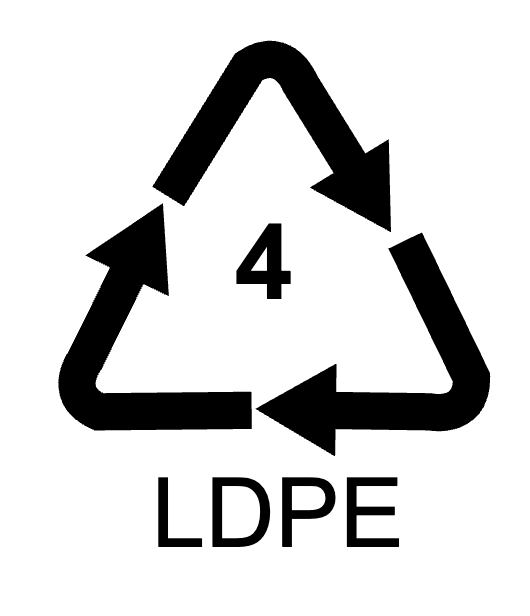
Give two examples of this type of plastic
Grocery bag
Wire and cable insulation

Give two examples of this type of plastic
Yogurt container
Margarine container

Give three examples of this type of plastic
Compact disc case
Plastic utensil
Grocery store meat and produce tray
Define fractionation
A process for separating a mixture into its components
Mixture is divided up in a number of smaller divisions (fractions) that have similar physical properties
Define fractional distillation
Method used to separate crude oil into its many components
What kinds of stuff does fractional distillation make?
Plastics
Fossil fuels
Detergents
Commercial alcohols
Fractional distillation is based on the principal that-
-the boiling point of a hydrocarbon is dependent on the length of the carbon chain
Hydrocarbons with _____ chains evaporate more easily than those with _____ chains
Shorter
Longer
In order to separate the crude oil mixture into fractions, the entire mixture is _____ and then sent to _____ chambers
Heated
Cooling
What are fractions?
Divisions that contain similar-sized hydrocarbons

What is happening here?
Crude oil is heated and fed into a fractional distillation tower
The (mostly) gaseous mixture rises and cools
Each component is separated based on its boiling point
Crude oil fractionation produces fractions that primarily contain _____, _____-_____ hydrocarbons
Long, straight-chained
To actually make stuff we need short-chained branched hydrocarbons. How do we get these?
Cracking
Convert from long and straight → short and branched
What is the process of cracking?
Hydrocarbons are mixed with a catalyst and heated to a high temperature
What is cracking also used for? Give an example
To break apart substances (where there’s not much consumer demand) into smaller molecules
Kerosene → ethane, ethene, propane, propene
Describe liquid versus slime
Liquid: if polymer chains slide past each other easily, the substance acts like a liquid because the molecules flow
Slime: if the molecules hook together at a few places, then the substance behaves like a rubbery polymer called an “elastomer”
What are some common artificial sweeteners?
Aspartame
Sucralose
Saccharin
Stevia
What are some safety risks associated with artificial sweeteners?
Cardiovascular risk: clotting, heart attack, stroke
Digestive distress: bloating, gas, diarrhea
Blood sugar effects: increased risk of type 2 diabetes
Possible carcinogenic effect