Medication Administration
 Call Kai
 Learn
 Practice Test
 Spaced Repetition
 Match
 Flashcards
 Knowt Play
1/77

There's no tags or description
Looks like no tags are added yet.
78 Terms
Medication Administration
Core nursing function
involves skillful technique
consideration of safety principles
consider the patient’s developmental state, individual characteristics, and health status
Nurse ____ needs to have knowledge of drugs
drug names, preparations, classifications, adverse health effects, and physiologic factors affect drug action
Nurses must have sufficient knowlege about drugs being administered to safely care for their patients
Joint commission made several recommendations regarding safe practices when administering
Assessment, Diagnoses, Patient-centered outcomes
Nursing process on med administration
_____
comprehensive med history
awareness of patient’s allergies
vitamins and herbals matter too
patient ____
ongoing ___of the patients’s response during and after med administration
what does the med do
____
are developed and problem identification stems from the assessment data
____
are evaluated after implementation of the plan of care
are tailored to patient’s needs
Drug Nomenclature
Generic name (acteamiophin) vs Trade name (tylenol)
the systematic naming system used to identify pharmaceutical drugs
Drug Preparations
Enteral (oral)
entering mouth
capsule, pill, tablet, extended release, elixir, suspension, syrup
Topical (suppository, drops)
entering skin, blood, eyes, ears
Liniment, lotion, ointment, transdermal patch
suppository
solid or semi-solid medication dosage form designed to be inserted into a body orifice (rectum and vagina)
Parenteral (injection, infusion, implantation) administration
Need a needle (don’t play with needles, ask parental units)
delivery of medications or fluids directly into the body through injections or infusions, completely bypassing the gastrointestinal (GI) tract and liver first-pass metabolism
Injectable, infusion, implantation

Drug Classification
Classified by effect on body system, chemical composition, clinical indication or therapeutic action
Pharmaceutical
what is it doing in your body
Describes how the drug works at a molecular or cellular level, including its mechanism of action
Refers to the mech of action MOA, physiologic effect PE, and chemical structure CS of the drug
Therapeutic
Describes what the drug does clinically or the condition it treats
Refers to the clinical indication for the drug or therapeutic action (eg. analgesic, antibiotic, or antihypertensive)

Drug indications
Pharmacotherapeutics
why the pt is taking, what is the med doing, effect on the body
study and clinical use of medications to prevent, diagnose, and treat diseases, as well as to alter normal bodily functions.
combines pharmacology with patient-specific medical knowledge to optimize drug therapy
Pharmacokinetics
what the body does to a drug
takes drug to where it needs to go,
Absorption
Distribution- relies on bloodstream and proteins
Metabolism- how it gets filtered and broken down (biotransformation = how much of the drug is available for you), OLDER people have slower metabolism (lower med doses)
Excretion
Pharmacodynamics
What a drug does to the body, including receptor interactions, agonists, antagonists, potency, and efficacy
Drug action
Factors affecting ___
developmental concerns
body weight
biological sex
cultural and genetic factors
psychological factors
pathology
environment
timing
Drug blood level monitoring
therapeutic range
want to find the happy medium
half life
Cpertinent US drug legislation
Chemical name
Identifies drug’s atomic and molecular structure
generic name
assigned by the manufacturer that first develops the drug; derived from the chemical name
Official name (monograph)
name by which the drug is identified in official publications (typically generic name)
Trade name
brand name copyrighted by the company that sells the drug
absorption
factors affecting ___ of meds
route of administration
lipid solubility
pH
blood flow
Local conditions at site of administration
Drug dosage
Distribution
Occurs after a drug has been injected or absorbed into bloodstream, the drug molecules are transported throughout the body to where they take action Metabolism and excretion occur after ____
Depends on
adequacy of blood circulation
protein binding, which affects the drug’s ability to leave the blood stream or storage areas (such muscle, fat, or other tissues) and enter the cells
selectively permeable BBB that protects the CNS with its capillary wall but can also limit the passage of drugs intended to act on CNS
be careful with pregnancy
Metabolism
Biotransformation is the change of an active drug from its OG form to an inactivated or new form
The liver is the primary site for drug ____. Various processes and enzymes are involved ____. Most drugs are inactivated by the liver and transformed to inactive substances for excretion
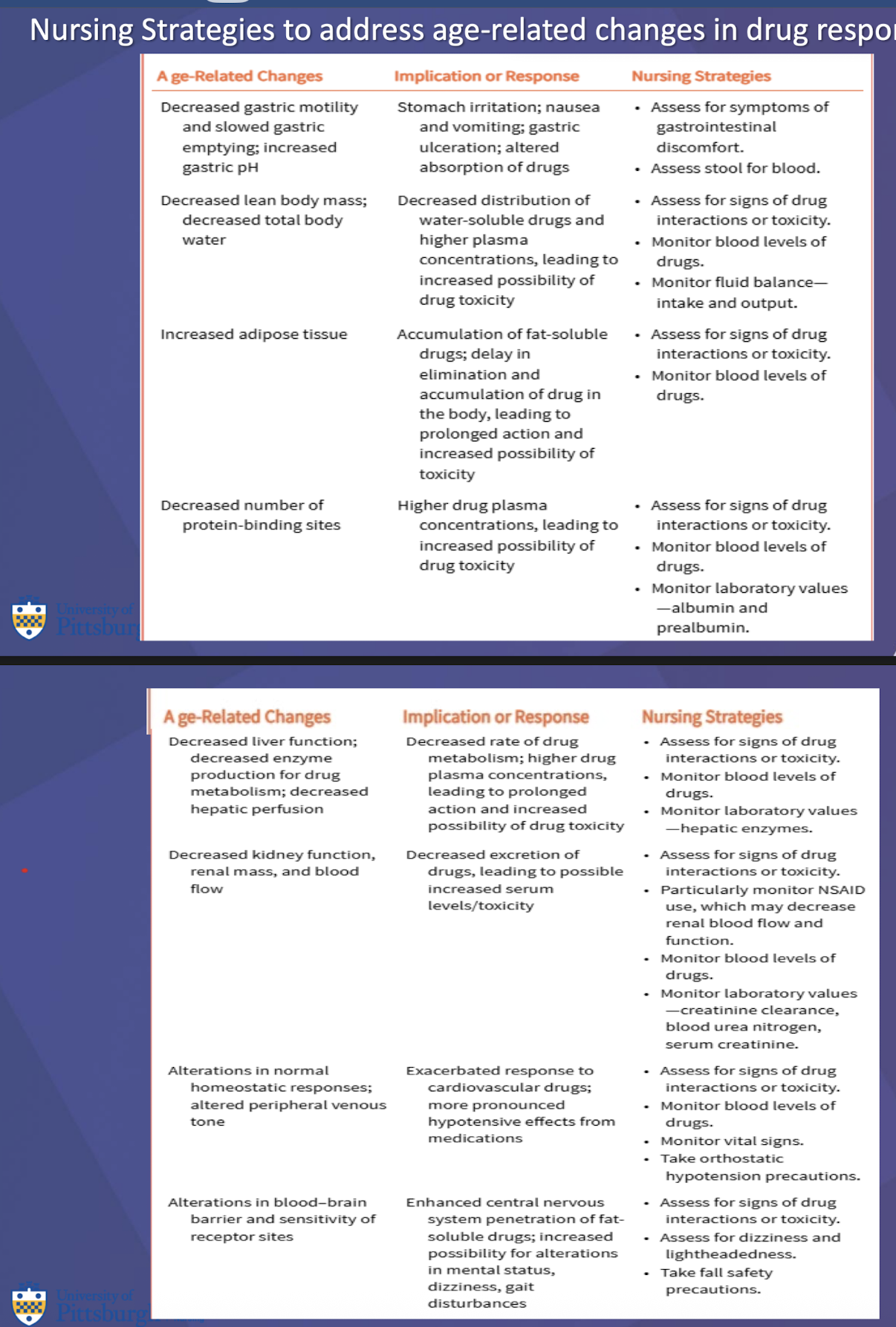
physiologic changes associated with aging, the presence of liver disease, or other factors that impair functioning of liver decrease its ability to metabolize drugs
GI tract, lungs, kidneys also have role in drug metabolism
Drugs given orally move from the intestinal lumen to liver by way of portal vein
some drugs are extensively metabolized in the liver and do NOT make it to systemic circulation. This reduction in bioavability is referred to as the first pass effect or pre systemic metabolism
such as nitroglycerin are not given orally b/c most of the durg would be detroyed by the liver with little or no drug left to work in body. It is only given via sublingual, transdermal, or IV routes
some drugs are metabolized by liver to inactive form, reducing amount of active drug left in body
other drugs may be metabolized to active drug metabolite (another form) and may be more active than the OG drug
Excretion
Process of removing a drug, or its metabolites (products of metabolism) from the body
kidneys excrete most drugs through urine
Lungs are the primary route for excretion of gaseous substances such as inhalation anesthetics
Bile- either directly through feces or returned to liver and then eventually excreted by kidney
skin has minimal excretory function
Some meds may be contraindicated or dosages may need to be adjusted
if renal ___ is impaired, Changes associated with aging, disease or presence of other factos that impair the functioning of the kidney can decrease their ability to excrete drugs
Manufactures are required by law to include specific info regarding implications for specific populations, including geriatric or prego patients, on the package inserts of prescription drugs and bio products
Of particular concern are details concerning the ___ of these drugs in older adults whose renal function has declined
Pharmacodynamics
Process by which drugs alter cell physiology and affect the body
Drugs turn on, turn off, promote, or block responses that are part of the body’s processes
Drug receptor interaction occurs when the drug interacts with 1 or more cellular structures to alter cell function
Drugs may also combine with other molecules in the body to achieve their effect
other drugs act on cell membrane or alter cellular environment to achieve their effect
Adverse Drug Reactions ADRs
Side effects: ADRs
allergic effects: anaphylactic reaction
drug tolerance
toxic effect
idiosyncratic effect
rare, unpredictable, and severe adverse reaction that occurs in only a small percentage of people taking a medication or treatment
Drug interactions: antagonistic and synergistic effects
Adverse Druge Events ADEs
According to FDA criteria, serious ADE is defined as an action that is life threatening, requires intervention to prevent death or permanent impairment and/or leads to death, hospitalization, disability, or congenital anomaly
must be documented
report to a national database like MedWatch
Allergic Effect
Immune system response that occurs when the body interprets the administered drug as a foreign substance and forms antibodies against the drug
drug allergy manifests differently depending on the drug, allergy, and patient
Clinical manifestations of allergic reactions range from mild to severe
the rxn can occur immediately after the patient receives the med or be delayed for hrs to days
Symptoms may become more severe each time the drug is introduced into the body
IV
Med that does NOT go through liver, is 100% all drug
Allergic Reaction
Signs and symptoms of a drug allergy
rash, urticaria (raised, red, or skin-colored welts (wheals) that are typically very itch), fever, diarrhea, nausea, vomiting
Anaphylactic rxn (anaphylaxis)- most serious allergic effect
Anaphylaxis is life threatening and results in resp distress, sudden severe bronchospasm, and cardiovascular collapse
This rxn is treated with vasopressors, bronchodilators, corticosteroids, oxygen therapy, IV fluids, and antihistamines
Drug tolerance
Occurs when the body becomes accustomed to the effects of a particular drug over a period of time
Larger doses of the drug must be taken to produce the desired effect
For ex: patients using morphine for extended period of time become tolerant to drug’s therapeutic effects and eventually need higher and higher doses to control their pain
Toxic Effect
Toxicities are specific groups of symptoms related to drug therapy that carry risk for permanent damage or death
nephrotoxicity or damage to the kidney
Toxicities can occur from a cumulative effect, A mismatch between absorption and excretion means that each new dose increased the total quantity in the body
Older adults are especially at risk for experiencing cumulative effect
this is related to altered drug metabolism and elimination due to impaired hepatic metabolism and renal clearance related to normal changes in these systems associated with aging
Idiosyncratic Effect
Paradoxical effect is any unusual or peculiar response to a drug that may manifest itself by overresponse, under response, or even the opposite of the expected response
Related to a patient’s unique response to a drug and are though to be the result of genetic enzyme deficiencies that lead to an abnormal mech of drug breakdown
Term may become obsolete as ADR reporting continues and specific mechs of ADRs are discovered
Older adults often have unpredictable or erratic responses to meds
Drug Interactions
Occur when 1 drug is affected in some way by another drug, food, or another substance that is taken at same time
Meds are given together when their actions are synergistic or when one drug potentiates (increases) the therapeutic effects of another drug. Or decreases the therapeutic effect and/or increases the adverse effects
Additive effect - drugs with similar pharmacologic actions, results in an increase in the overall effect
Synergistic effect= drugs with different sites or MOA; results in greater effects when taken together (one drug potentiates the other)
Antagonistic effect = combined drugs alter the overall sum effect or negate each other
results in an effect less than that of each drug alone, interference = one drug interferes with the metabolism of another
Leads to the buildup of a med (that cannot be metabolized) and can result in toxicity or an ADR displacement = one drug binds to protein binding sites and forces another drug to be displaced
Results in the released drug becoming pharmacologically active and can lead to an increase in effect of the unbound drug
Dietary supplements, herbs, and other natural remedies are another potential problem area for drug interactions
when asking pt. if they are taking any meds, ask if they are taking any herbal or natural supplements
health care providers need to identify viable resources and be aware of the intended benefits, possible adverse effects, potential drug interactions, and perioperative implications related to these types of supplements
enteric coated, extended
Can NOT crush ___ meds or ____ release meds
Therapeutic Range
Concentration of drug in the blood serum that produces the desired effect without causing toxicity
Provides the desired medical benefit without causing severe toxicity or side effects
Peak level
Highest plasma concentration of a drug
measured after a dose is administered
Trough level
point when the drug is at lowest concentration, indicating the rate of elimination
Typically drawn 30 min before the next dose is scheduled to be administers
Half-life
amount of time it takes for 50% of blood concentration of a drug to be eliminated from the body
When a drug is given at consistent dose, it takes 4 or 5 half lives to achieve a steady concentration and develop balance between tissue and serum concentrations. This is when max therapeutic effects occur
Calculations
Dimensional anlysis

Standing Order
Routine order
Carried out until cancelled by another order
PRN
___ order: as needed
Single or one-time order
prescription instruction to administer or dispense a drug just once at a specific time
Stat
___ order: carried out immediately
emergency,
laxatives/diretics often used for severe edema
Parts of med order
Patient’s name
Date and time order is written
Name of drug to be administered
Dosage of drug
Route by which drug is to be administered
Frequency of administration of drug
Signature of person writing the order
Always do read back when taking verbal orders
Medication Supply Systems
Stock supply
Individual unit dose supply
med cart
computerized automated dispensing system
Bar code- enabled med cart BCMA
NEED TO SCAN, errors happen if not and you can get in trouble with Pharm
3 checks of med administration
Read the label
when the nurse reaches for the container or unit dose package
After retrieval from the drawer and compared with the eMAR/MAR or compared with the eMAR/MAR immediately before pouring from a multi dose container
Before giving the unit dose med to the patient or when replacing the multi-dose container in drawer or shelf
_____
1. First Check
When it happens: As you take the medication out of the storage drawer, automated dispensing cabinet, or supply bin.
What to do: Compare the label of the medication directly against the MAR or physician's order to verify the right patient, drug name, dose, route, and expiration date.
2. Second Check
When it happens: While preparing, pouring, drawing up, or opening the medication (outside the room or at the prep station).
What to do: Recheck the medication label against the MAR to ensure the dosage, calculation, and form are exact.
3. Third Check
When it happens: At the patient’s bedside just before administering the medication (or when returning the stock/unused container).
What to do: Verify the patient's identity using at least two unique identifiers (such as name and date of birth) against the MAR and allergy band, and perform a final comparison of the medication label against the MAR
Rights of med administration
Right med
Right patient
Right dosage
Right route
Right time
Right reason
Right assessment data
Go back after 60 min and reassess pain
Right documentation
Right response
Right to education
Right to refuse
Required info
___ for controlled substances
Name of patient receiving controlled substance
Amount of substance used
Hour controlled substance was given
Name of prescribing provider
Name of nurse administering substance
Identifying
____ the patient
checking the ID bracelet
Validating patient’s name (first identifier)
Validating patient’s ID number, med record number, and/or birth date (2nd identfier)
Comparing with the EMAR or MAR
Asking patient to state his or her name if able
Documentation
Med record ___
name and dose of med
route and time of administration
name of person administering med
site used for injection
location of topical or transdermal application
Naris, eye, or ear used for those administrations
Intentional or inadvertently omitted drugs
document reason it was not given
Refused drugs
document the refusal
med errors
sometimes they happen, not going through career w/o med error
CHECK PATIENT 1st! then notify dr.
med errors
Types of ____
Inappropriate prescribing of the drug
Drs prescribe, you unsure what it is and give too high a dose
NOT SURE = Look it up
Extra, omitted or wrong doses
administration of drug to wrong patient
administration of drug by wrong route or rate
Failure to give med within prescribed time
incorrect preparation of drug
improper technique when administering drug
Giving drug that has deteriorated
If ___ occurs
Check patient’s condition immediately, observe for adverse effects
tell the pt. what is happening
Notify nurse manager and primary care provider
Complete form used for reporting errors, as dictated by facility policy
special event, event, unusal occurrence report
Ways to prevent ___
Med reconciliation
Read labels at least 3X and compare to MAR
Prepare meds for 1 patient at a time
use at least 2 patient identifiers
Follow your rights of administration
Review and verify allergies
Reporting
Educate and involve patient when administering meds
Errors occur when nurses “work around” tech (overrides or BPA)
Double check calculations of high alert meds and verify with another RN: insulin, heparin, infusion
Question unusually small or large doses
probably wrong
Patient Teachings
Review techniques of med administration
Remind patient to take med as prescribed for as long as prescribed
Instruct patient NOT to alter dosages without consulting physician
Caution patient NOT to share meds
WARRIORS card; always educate
teach about med when you give it
address key info, what is it? why prescribed? how long will they have to take it? when?
provide easy to read education sheets
provide schedule (pill box)
provide care giver with same info
allow time for questions
Oral
Routes of administration:_____
solid form: tablets, capsules, pills
Liquid form: elixirs, spirits, suspensions, syrups
Oral route: having patient swallow drug
Enteral route: administering drug through enteral tube
Sublingual administration: placing drug under tongue
Buccal administration: placing drug between tongue and cheek
PO
Oral abbreviation: most common, slower onset
given with fluid or food
Absorbed in GI tract
need to assess ability to swallow, do they have gag reflex, persistant N/V?, LOC?
NPO?
Check med was really swallowed
some “pocket it” in cheeks
Difficulty swallowing alternatives?
Don’t just leave med at bedside, watch them take it
Make sure patient is sitting up to prevent choking
Some patients like to hand them one pill at time or put i their mouth.
Tell them what pills you are giving them and what it’s for, open in front of them
Sublingual
Placed under the tongue
Nitroglycerin, some ped meds
Buccal
in between back teeth and cheek— very vascular
some opioids/seizure meds
Rapid absorption into blood stream by avoiding GI tract
Do NOT give any liquid
Liquid
___ meds: available in syringe, multi-dose vial with dropper, single dose
Should be shaken before pouring dose (if applicable)
remove cap and place facing up
cover label to avoid destruction in case of spill
place med cup at eye level before pouring
If you go over the intended dose, correct it. do NOT pour it back into the bottle-discard it
make sure bottle is clean before recapping
Enteral
Gastric tube or naso-gastric tube (GT or NGT) meds should say GT
Med administration through an artifical tube (NG tube, gastrostomy tube, etc)
EnFit connectors
Topical
Application to skin has slow absorption b/c of physical makeup of skin
Meds placed on the mucous membranes and resp airways are absorbed quickly b/c these tissues contain many blood vessels
Inhalation
Metered Dose Inhaler MDI
Rapid absorption and relief for breathing difficulties and anesthesia
Given during inhalation. Spacer may be used for patients that have difficulty
If multiple inhalers: give bronchoDILATOR first. want to give corticosteroids last and rinse out mouth after. This will prevent fungal infection
Nebulizers: liwuid med placed in dispenser and inhaled through mask
Nasal
___ drops
gloves
tilt head back flat or supine
stay for 1-2 mins
not sterile but maintain asepsis
clean tip off after use
___ sprays
sitting up or with head tilted
spray during inhalation
Otic
Ear drops
treats ear infections or softens wax
Drops should be room temp
Side-lying, ear up, drops alongside canal
gently massage the tragus to move med if needed
stay on side about 5-10min

Transdermal
skin
absorbed through skin
Rotate sites- include date, time and initials on patch
Do NOT place on abrasions unless ordered that way
Ophthalmic
Eye drops
gloves
tilt head back
wipe eyes if secretions
apply drops to conjunctival sac
Apply pressure to naso-lacrimal duct
If ointment: apply from inner canthus to outer canthus
Apply pressure (or have patient) to inner canthus for a minute to stop it from going into tear duct
Wipe away any excess on the outside of eye
Do NOT touch the tip of applicator/dropper to eye
Multiple meds: wait 5 mins in between
Rectal
____ meds (PR): suppositories-antipyretic (fever), laxative or stool softener
given b/c relief is needed quickly. Vascular area
Postion patient on Left side with upper leg flexed (gravity helps here towards the colon)
You WILL wear gloves and unwrap the suppository
Add lubricant to rounded end of suppository
Patient can take a deep breath and exhale 1st
Proceed to insert into the rectum at least 1 in past the anal sphincter
Vaginal
Foams, creams, liquids, gels, suppositories used for infection or contraception
Gloves! May have to perform peri-care 1st. Position in lithotomy position on pad in case of secretions
Best to do at bedtime to allow med to remain in place
do NOT use tampons
Enteral Tubes
Name these

NG
____ tube
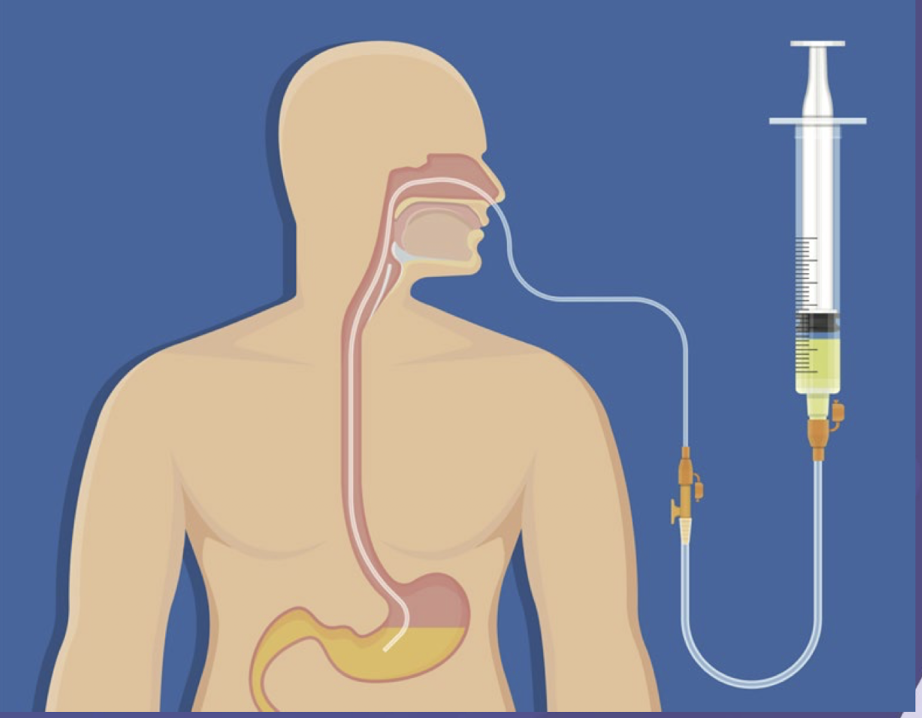
Levin tube
Flexible rubber or plastic single lumen
You can add connector for feeding and med administration
These tubes are INflexible and cause patient discomfort
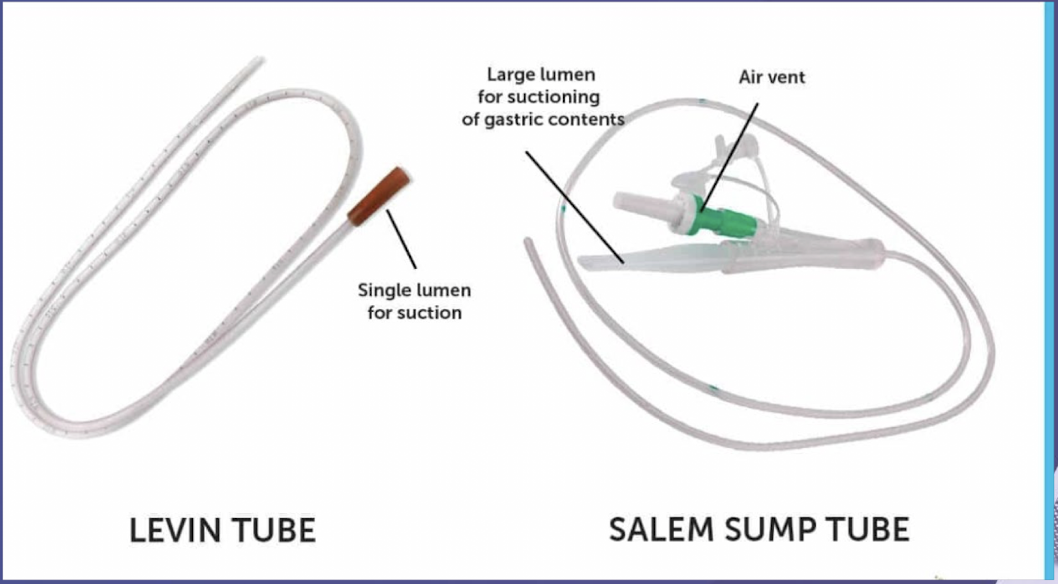
Salem Sump Tube
Flexible double-lumen tube
Allows for air to escape and suction to occur
You can add connector for feeding and med administration
These are NOT for long term use

Single
Nasogastric (____ lumen) Sobhoff
Verify correct placement prior to use
nose to ear then ear to xiphoid process
Med administration
enteral feedings
Has a single, narrow internal channel.
Best for: Long-term enteral feeding and nutrition, where gastric suction is not required
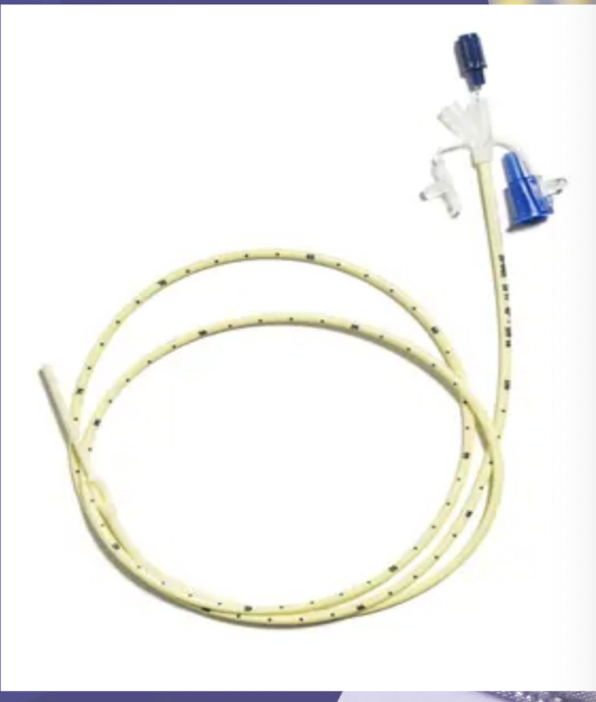
Nasto-intestinal
Duo tube
It features two separate channels inside a single nasal entry path:
Gastric Lumen (wider bore/sump): Siphons or suctions fluid and gas from the stomach to reduce gastric pressure, prevent vomiting, and lower aspiration risk.
Intestinal/Jejunal Lumen (narrower bore): Extends past the stomach down into the duodenum (nasoduodenal, ND) or the jejunum (nasojejunal, NJ) to deliver liquid nutrition or medications directly into the small intestine.

PEG
flexible feeding tube placed directly through your abdominal wall into your stomach to deliver nutrition, fluids, and medications
Percutaneous Endoscopic Gastrostomy

J or GJ tube
Feature | J-Tube (Jejunostomy Tube) | GJ-Tube (Gastro-Jejunostomy Tube) |
|---|---|---|
Where it goes | Bypasses the stomach entirely and ends in the jejunum. | Enters the stomach and threads a thin tube further down into the jejunum. |
Number of ports/lumens | Single port/route for feeding into the intestine. | Dual ports: a G-port (in the stomach) and a J-port (in the jejunum). |
Stomach access | No direct access to the stomach for venting or medications. | Allows simultaneous stomach venting/drainage (G-port) and intestinal feeding (J-port). |
Best used when | The patient needs direct intestinal feeding and does not require stomach access. | The patient needs jejunal feeding plus the ability to vent air/fluid or give specific meds via the stomach. |

Kangaroo Pump
medical device used for enteral nutrition (tube feeding) to deliver liquid formulas, water, and flushes directly into a patient's stomach or small intestine

Tube administration
Enteral
Each med should be crushed separately and administered separately
Checking placement of NG tube
X-ray
marking at nose after confirmation
Checking residuals
Flush orders
Patient elevated in Semi-Fowlers or Fowlers position for at least 30 min
suction
Patient is on fluid restriction
Make sure you document on I&O
Suggestions
___ for preparing and administering meds through enteral feeding tube
___ have been consistent for the past 10-15yrs
Verify current feeding tube’s placement (distal location) and patency- note tubes that terminate in stomach can tolerate larger boluses than tubes in intestines
verify dosage form, drug, formulation, and any preparation steps with the prescription/order
Use liquid meds if they are appropriate for enteral administration
in liquid med not specifically formulated for enteral administration, sugars, preservatives and agents that thicken solution may cause GI disturbances and impact med absorption
Dilute thick suspensions as needed typically with equal parts med and water
Certain immediate release solid dosage med can be crushed and made into slurry. grind meds to fine powder and mix with 30mL of purified water immediatly before administration through tube
certain capsules may be opened, powder emptied into water and med administered through tube check manufacter recs and pharmocy
attach clean oral/enteral syringe for administering flushes and meds
flush tube with at least 15ml of water before each med and after med to maintain tube patency
give meds seperatly and flush with water between each, may not be physcially or chemically compatible
keep med adminstration awasy from suction and clamped for 30min after adminstartion of med to allow absorption
check compatability of med with tube feeds, may need to discontiune feeds
document total water and liquid med volume on intake and output record
adjust water if intake restrictions, follw policy on enteral feeding tube med adminitster
collaborate with other IPs
(Desired / Have) X Supply = x
What is the formula to calculate how much med to give
Syringe
Parenteral
equipment
____: single use, appropriate size
use smallest possible
sizes range .5ml to 60ml
accuracy
maintain sterility while filling
hand-operated device that holds, pushes, or draws in fluid,

Needle
Parenteral
equiptment
____: single use, appriate size
different sizes and lengths for areas of body
3 parts
hub
shaft
bevel or slanted tip
sharp, hollow metal instrument attached to it that actually pierces the skin or tissue

Routes
Parenteral ____ of administration
Intradermal
shallow into dermal layer (just under epidermis)
Subcutaneous
subcutaneous tissue, just below the skin
Intramuscular
into muscle of adequate size

Vial
Preparation of med: ____
hand hygiene
___ contains single or multiple doses
Withdraw med with filter needle of blunt needle (rubber stopped dull needle)
Remove cap (discard), scrub with alcohol wipe
Inject air into ___ equal to amount of fluid to be withdrawn (inject air into air_
Invert ___ and remove amount of med (keep needle in solution)
Tap syringe to remove air
Replace cap (scoop method) and remove filter needle and apply needle for injection. Keep needle hub and tip of syringe sterile

Ampule
Prep of med: ___
hand hygiene (wear glove)
USe filter needle to prepare the med and replace when adminstering (removes glass from___)
Tap top of ___ (ensures all fluid is in the bottom)
Wrap alcohol wipe or gauze around neck of ___ and snap neck
Remove med (can invert to remove the med or keep flat surface)
Tap syrine- causes bubbles to rise toward needle
Recap (scoop method), reomve filter needle, replace with approatiate needle for injection
Discard ___ and filter needle in sharpes

SQ (subcutanous)
Prep of med: ___
___ injections
Sites
abdomen- 2 inc away from umbilicus, incisions, stoma, wound
Lateral aspect of upper arms
Thigh (hand from grown and knee)
Scapula and upper gluteal areas (less commonly used)
Needles
1-3mL
gauge 25-27, length 1/8-5/8in
Insulin syringe for administration of insulin only
Don gloves
choose appropriate site for administration
Cleanse skin with alcohol and allow to dry
Inject, dart like action, slowly inject med
Withdraw needle
engage safety over need and discard in sharps
remove gloves, hand hygiene
injection angle 90-45
thin 45
average size or obese 90

IM (intramuscular)
Administration of a med
Sites
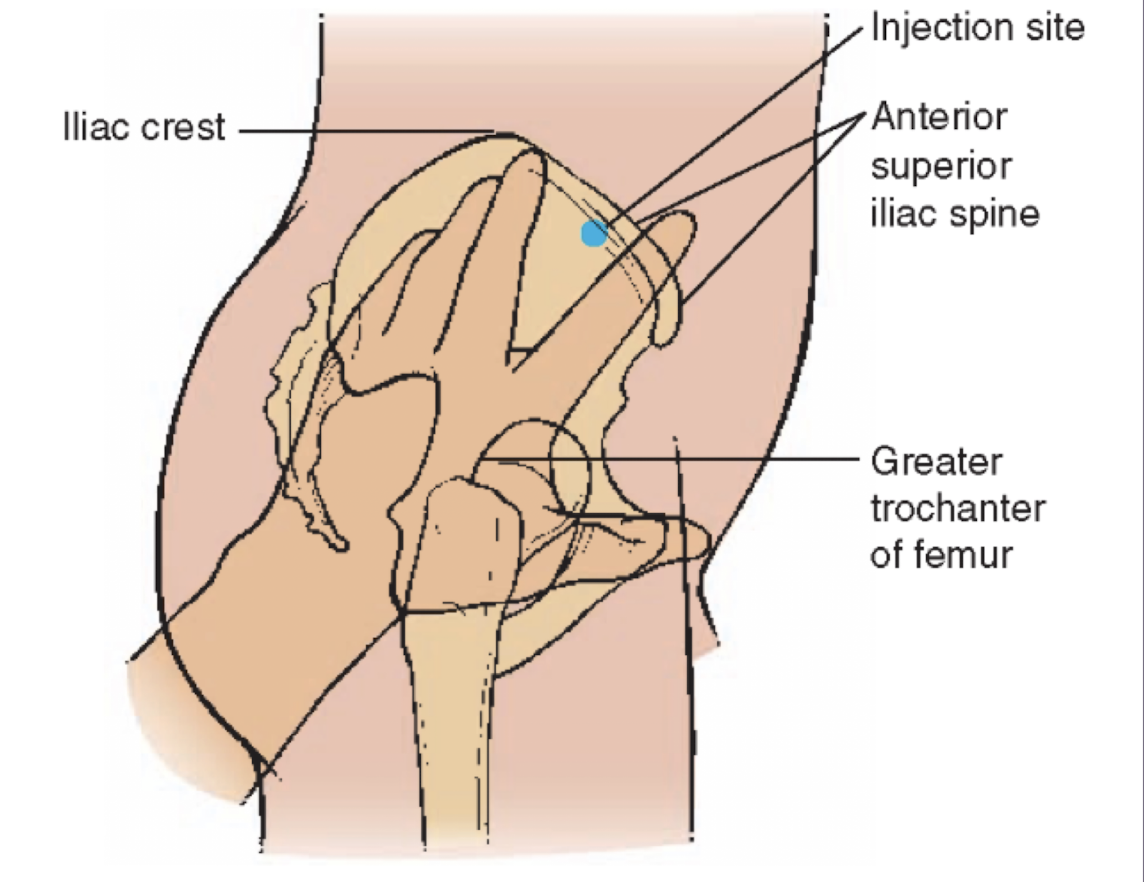
Ventrogluteal
preferred site for adult
safe: away from major blood vessels, nerves
position on side, knees bent
Locate greater trochanter (head of femur) and anterior superior iliac spines
Place palm of hand on greater trochanter (non-dominant)
Index finger-anterior superior iliac spine. Thumb toward grown fingers toward head
Spread middle fingers along iliac crest toward buttocks. Site, center of triangle (middle and index finger)
Vastus lateralis
Preferred site for infants, small kids and some adults
selecting appropriate injection site
one hand above knee
one hand below greater trochanter
Middle third of muscle (midline of thighs top to midline of thigh’s outer side)

Deltoid
If muscle is not well developed, injury risk
can be used for immunizations for adults, older kids
small volume, .5-lml
selecting appropriate injection site
palpate lower end of acromion process. Place 3 fingers below acromion process
inject in center of triangle

Z-Track
Used for injecting irritating substances (will dec pain, irritating, staining at injection site)
Technique:
pull skin and SC tissue laterally to side
inject at 90 angle
aspirate with 1 hand
Inject med, needle remains inserted for 10 sec (allows med to disperse evenly)
Withdraw needle, release skin


ID (intradermal)
Administration of med: ___
shallow injection just under epidermis into dermal layer
Use, TB, allergy testing
Prep
1 ml syringe, 25-27 gauge, 1/8-5/8 in
Site
forearm
scapula
Don gloves, cleanse site with alcohol, air dry
pull skin
inject needle at 5-15 angle, bevel up, advance needle 3mm
Slowly inject med, see a bleb (like mosquito bite)
withdraw needle slowly
engage safety, place in sharps
remove gloves, hand hygiene

Non-Adherence
Asses for ___
too many meds
poor patient education
fear of addiction
perception that meds not needed
depression
cognition
functional ability
dislike side effects
busy lifestyle
financial