12 - Influence of Others 2
 Call Kai
 Learn
 Practice Test
 Spaced Repetition
 Match
 Flashcards
 Knowt Play
1/29

There's no tags or description
Looks like no tags are added yet.
30 Terms
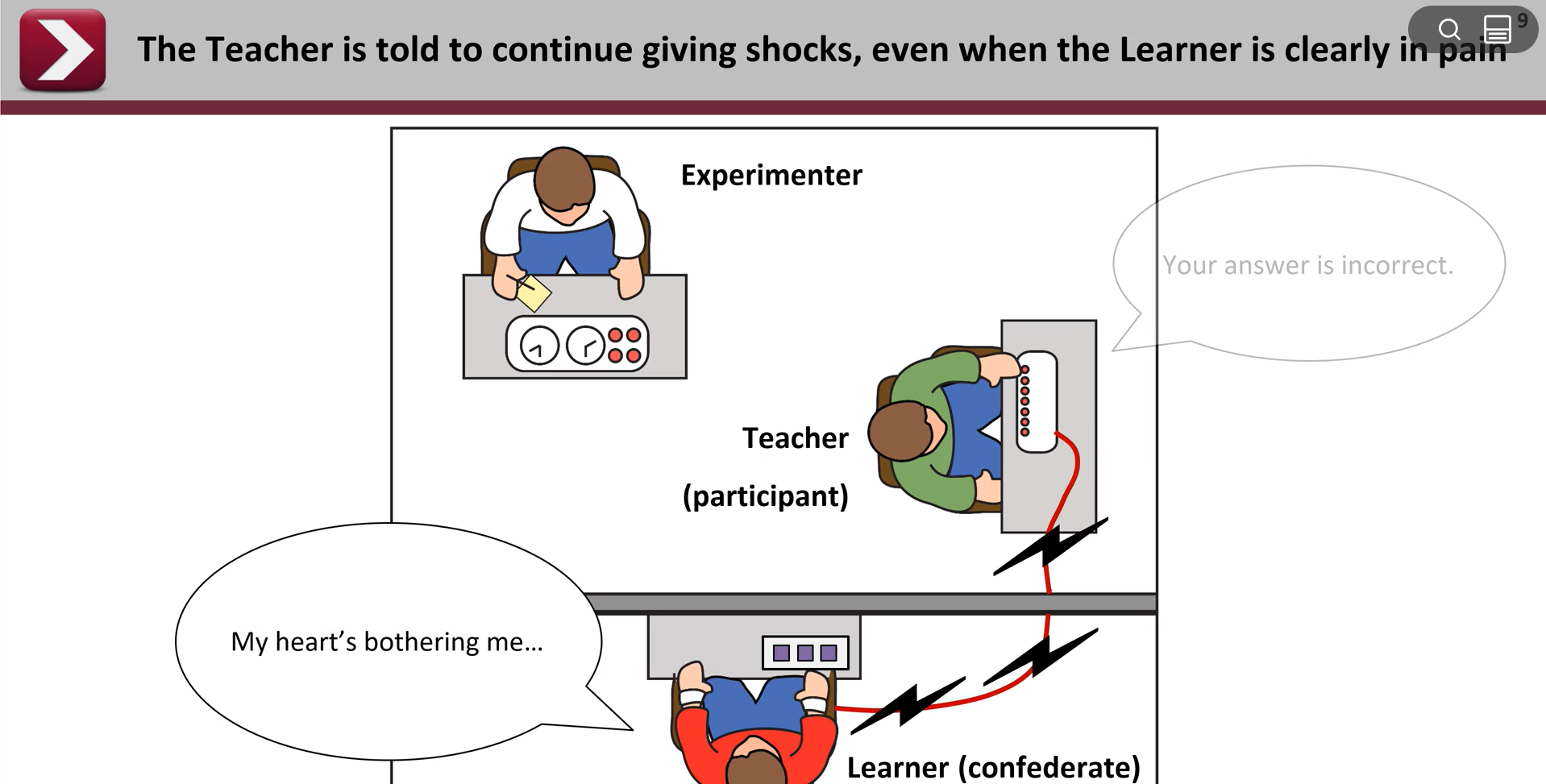
milgram experiment
participant is the ‘teacher’
fake participant is the ‘learner’
casually mentions they have a heart condition
teacher has to shock the learner if they give an incorrect answer, increasing the voltage each time, until eventually the learner is screaming in pain (obv acting)
learner eventually stops responding
__% of all participants in the milgram study continued to the very end of the experiment (highest voltage)
65
people display strong/weak obedience to minimally powerful figures of authority
strong; even to minimally powerful figures of authority, people display strong obedience
are we good judges are predicting our own behaviour?
no

does the prestige of an institution influence the level of obedience in participants (milgram experiment)
no

does clothing of the experimenter influence the level of obedience in participants (milgram experiment)?
yes; if the confederate (experimenter) dressed casually, the participants were more likely to disobey and stop the experiment early
in some cases, they even got into physical confrontations w/ the confederate

how does the proximity b/w teacher and learner influence obedience levels in participants?
the bigger the distance, the higher the obedience

how does the proximity b/w experimenter and teacher influence obedience levels in participants?
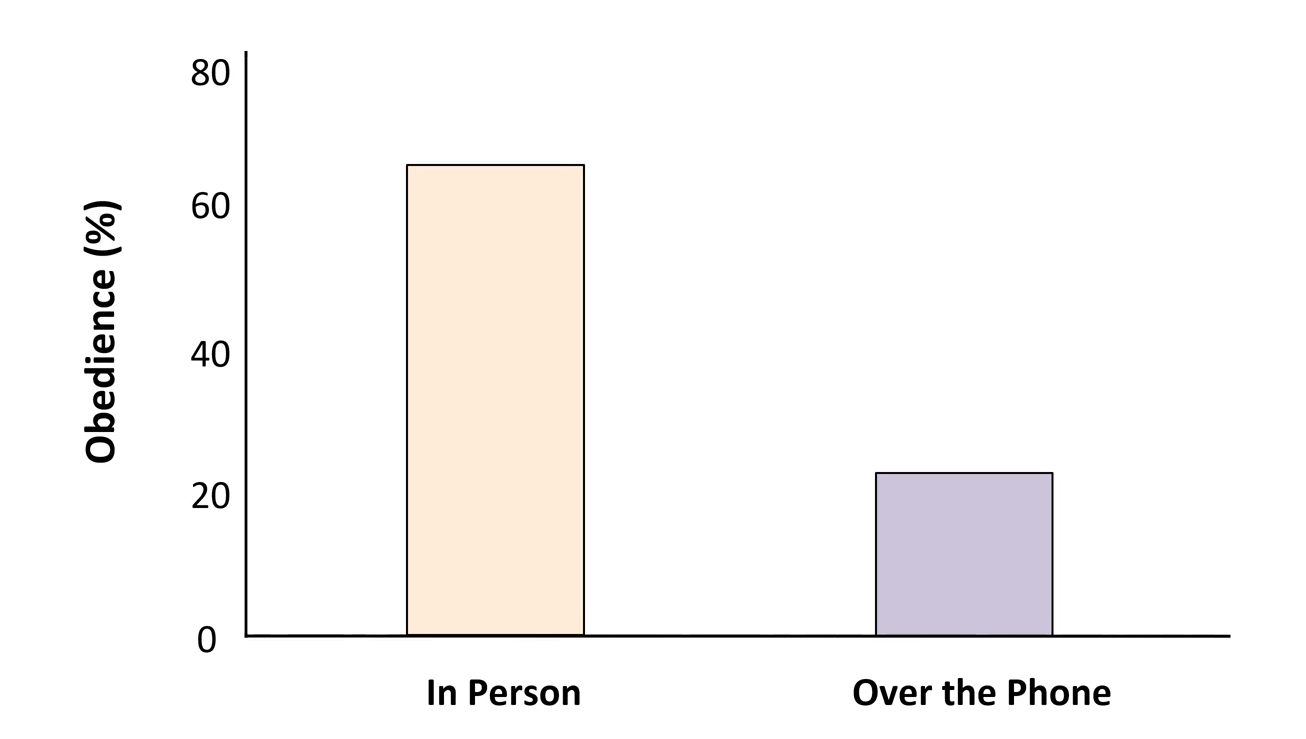
experimenter right next to teacher = higher obedience
experimenter giving orders over phone = lower obedience
nurse study
nurse asked by a doctor to give a large dose to a patient (confederate) that would break a lot of rules
when asked, 95% of nursing students said they would not obey
in actuality, 95% (21/22) of the nurses obeyed the order
what lessons does the nurse study demonstrate
tendency to obey can be irresistible under a variety of circumstances
you never know how you’ll act until you’re placed in the situation
cognitive dissonance
state of psychological discomfort brought on by conflict b/w a person’s attitudes and their behaviour
aka insufficient justification for a behaviour in conflict w/ attitude
how is cognitive dissonance resolved?
when a person adjusts their beliefs to justify the action that they have made in the past
festinger and carlsmith study (boring study)
participant is told the experiment is very exciting; then proceeds to do a very boring task for an hour
experimenter tells u this experiment was to see how expectations influence performance
the next participant has to believe the experiment is exciting
experimenter offers participant $1 or $20 to make the next participant excited about the experiment
participant then completes a questionnaire to get their true opinions of the experiment
participants offered $1 to lie were more likely to rate the experiment higher than those offered $20 to lie AND a control group who didn’t have to lie
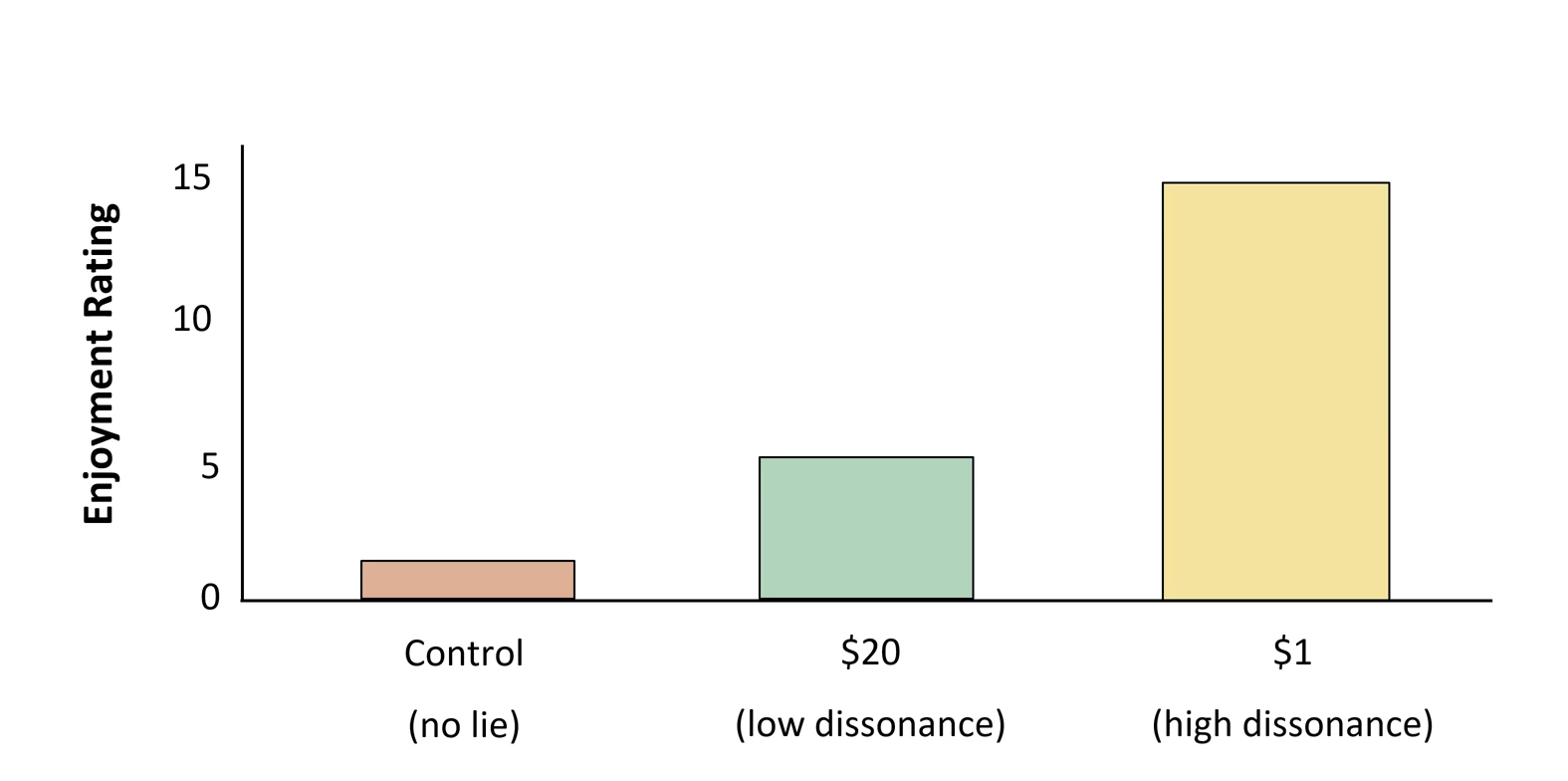
explain why the $1 group rated the experiment the highest [festinger and carlsmith study (boring study)]
attitude: thinks experiment was boring af + behaviour: says experiment was exciting (lie) = large cognitive dissonance
to resolve the dissonance, participants changed their attitude on the experiment (it was boring → it was exciting)
the $20 group don’t have a large cognitive dissonance bc they can say they did it for the money

overjustification effect
resolution of cognitive dissonance as conflict in behaviour and attitude are justified by some external means
attitudes are more/less likely to change when external motivations over justify the behaviour
less

Stanford prison experiment
participants passed checks on criminal background, psychopathology screening and anti-social behaviour screening
participants treated as prisoners (mock arrested, fingerprinted, photographed, given uniforms, driven to mock prison)
some prisoners suffered extreme depression, crying, rage and anxiety, beginning as early as the 2nd day of the experiment
some participants were also assigned as guards
guards referred to prisoners by #s, forced them to wear face coverings, and made prisoners get up in the middle of the night to walk around naked
some guards were xtra cruel, while others were more passive
study was supposed to be 2 weeks, but cancelled after 6 days because of guards’ sadistic tendencies
deindividuation
in a group setting; group members are no longer seen as individuals due to perceived anonymity → leads to loss of responsibility and restraint

criticisms of stanford prison experiment
guards may have been coached to behave cruelly
results of experiment may have been predetermined
experiment cannot be replicated (hard to say whether results are valid)
population was 24 male college students over 6 days → hard to generalize
the most persuasive communicators have what traits
high credibility
high physical attractiveness
high relatability
is having similarity or credibility more persuasive?
similarity: more persuasive for matters of personal lifestyle choices
credibility: more persuasive for matters of objective fact
how to be persuasive
straightforward + concise speech style
eye contact
faster speed of speech
how you frame the message (one-sided or two-sided argument)
when to use one-sided vs two-sided argument
one-sided: use if audience initially agrees with u
two-sided: use if audience initially disagrees with u
one-sided vs two-sided arguments
one-sided: only argue for one side
two-sided: argue for both side (but obv argue for your side harder)

central appeal
well-reasoned, factual, two-sided arguments
effective for academic audiences
peripheral appeal
well-presented, easy to understand messages
effective for non-academic audiences
foot in the door technique
initially start with small requests, then gradually increase demands

true or false: requests are considered in relation to the previous request, rather than the first
true

low-ball technique
an escalation of the terms of an agreement after someone has already agreed to comply

foot in the door vs low-ball technique
foot in the door:
target agrees to small request
once target complies, you can ask for something larger
low-ball:
target agrees to deal
once target has agreed, you change the terms of the og deal