peripheral nerves
 Call Kai
 Learn
 Practice Test
 Spaced Repetition
 Match
 Flashcards
 Knowt Play
1/33

There's no tags or description
Looks like no tags are added yet.
34 Terms
3 nerves of the UE + neuropathy
issues can happen at any point, but typically where the nerves travel through tight spaces— these problems with the peripheral nerves are called neuropathy
trauma (cut, tear) and also prolonged pressure can result in nerve damage
a common occurrence with nerve damage is also demyelination (degeneration of the protective coating of nerves)
3 nerves
radial
ulnar
median
paresthesia
weird sensations when sensory input returning (burning, tingling, etc.)
normal
protective sensation
minimal acceptable level of sensation to be able to protect yourself (e.g., from heat, sharp/dangerous objects); sensitivity to touch as well as temperature
monofilaments
2-point discrimination
hot/cold testing
nerves are responsible for autonomic responses as well, i.e.,
problems include
loss of sweating,
loss of wrinkle response in water,
abnormal nail/hair growth, and
sensitivity to temperatures (e.g., cold sensitivity)
tests: Semmes Weinstein monofilament
a set of thin plastic filaments of different widths gets pressed against someone’s skin— testing light touch
if you cannot feel a certain width (a thicker one), you may have lost your protective sensation in a specific area
tests: two-point discrimination
touch with 1 or 2 points (that can come in varying distances)— testing light touch and possible loss of sensation
tests: O’Riain wrinkle test
keep hand submerged and observe lack of wrinkles
radial nerve
+ names for radial nerve injuries at different levels:
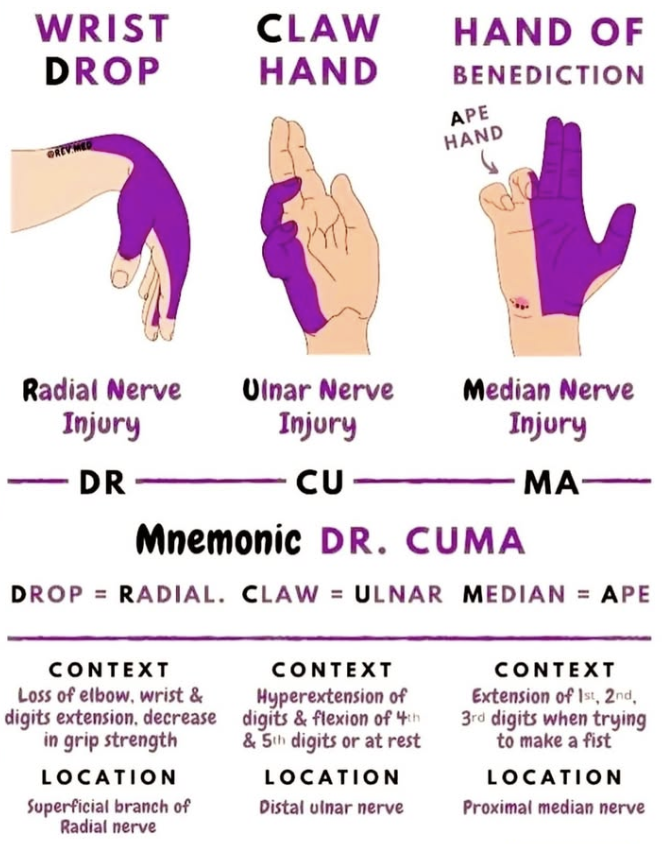
drop wrist
crutch palsy
saturday night palsy
Posterior Interosseous Nerve Syndrome
radial tunnel syndrome
mostly posterior + radial parts of the arm + hand, allows extension at the…2/2 innervation of the extensor-supinator group of muscles of the forearm
elbow
wrist
MP
names for radial nerve injuries at different levels
“you’re gonna need a DR AND CRUTCHES AFTER SATURDAY NIGHT am I right?”
“DR CUMA == Drop wrist 2/2 Radial nerve” at low lesion
or “can’t keep the radiant bracelet on 2/2 radial nerve injury (it keeps falling off 2/2 wrist drop!)”
crutch palsy at high lesion (radial nerve injury at the axilla)
loss of triceps, leading to difficulty with elbow extension
e.g., when you use crutches for too long
saturday night palsy
e.g., after falling asleep with your arm over the back of your chair— your mid-humerus getting compressed
Posterior Interosseous Nerve Syndrome— PINS
where nerve gets pinches/compressed in your posterior interosseous area
radial tunnel syndrome
pain at lateral forearm 2/2 radial nerve compression
—> long arm splint

most common splint for radial nerve
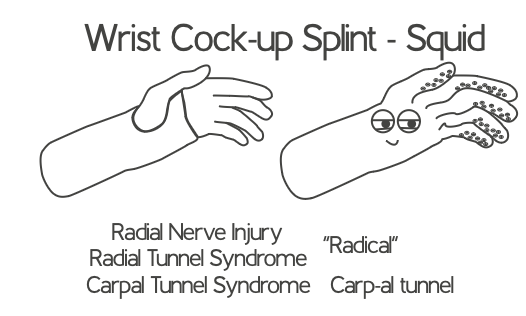
wrist cock-up splint (supports wrist, but leaves fingers free), though an elbow flexion orthosis might be needed for a high-level injury
limit tension on the area of repair/injury (i.e., give some slack during positioning for the nerve to heal)
or dynamic extension splint (also positions wrist in extension, like ^, to…)
protect extensor tendons from being over-stretched during healing
position in functional use
ulnar nerve
+ names for ulnar nerve injuries:
claw hand
cubital tunnel syndrome
Guyon’s Canal Compression
+ common functional issues
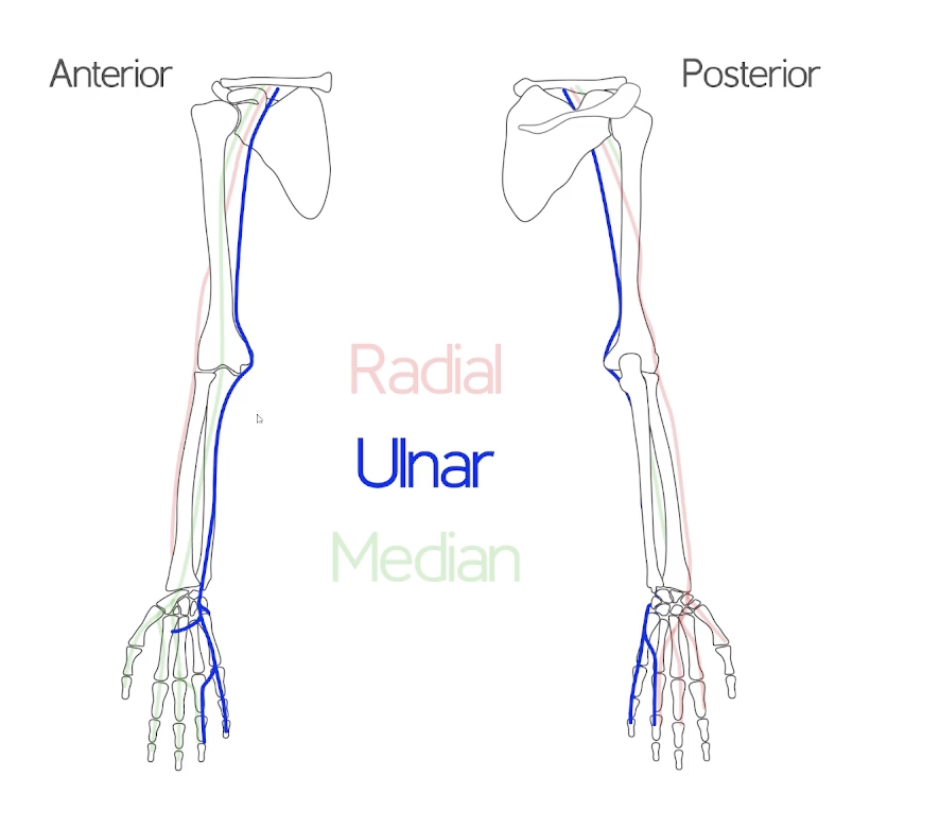
travels down the ulnar half of the ring and little fingers + 1 branch innervating the thumb; needed for (1) *power grip, (2) strong wrist flexion, and (3) key pinch
names for ulnar nerve injuries…”CU, CU, GU— CUma, CUbital, GUyon”
Claw hand, Ulnar == “DR CUMA”
hyperextension of MCP + flexion of IP joints on 4th and 5th digits
CUbital tunnel syndrome
pain at your elbow
numbness/tingling on the ulnar side of the forearm and hand
positive tinel’s sign
treatment: elbow splint, often used at night, to prevent elbow flexion
GUyon’s Canal Compression— asks Ulnar Canal
ulnar nerve compression in the anterior, ulnar side of your wrist
positive tinel’s sign
treatment: neutral wrist splint
common functional issues…”The CLAW is the KEY”
loss of grip strength
especially power grip 2/2 heavy assist by your 4th and 5th digits
loss of key pinch
unable to hold objects in hand
Froment’s sign/Jeanne’s sign
ulnar nerve test
have person hold onto a piece of paper as you pull away
positive sign ==> indicative of ulnar nerve injury
if they are unable to hold onto the piece of paper; it slips out
if they display compensatory movmenets, i.e., bending their finger (image)
“I’m Jeanne Froment, key pinch specialist” *hands you business card*
“Froment == “meant for me”

Wartenberg’s sign
ulnar nerve test showing involuntary abduction of the 5th digit
fingers make a “W”— wants to get away from the “warty” 4th digit

common treatments for ulnar nerve
to address MCPs in hyperextension, you’d want an MCP dorsal flexion-block splint to counteract and keep MCPs in a more flexed position
to address cubital tunnel— which is at the elbow— use a nighttime splint to limit elbow flexion
e.g., towel duct-taped around the elbow
median nerve
+ names for ulnar nerve injuries:
ape hand
sign of benediction
pronator teres syndrome
anterior interosseous syndrome
+ common functional loss
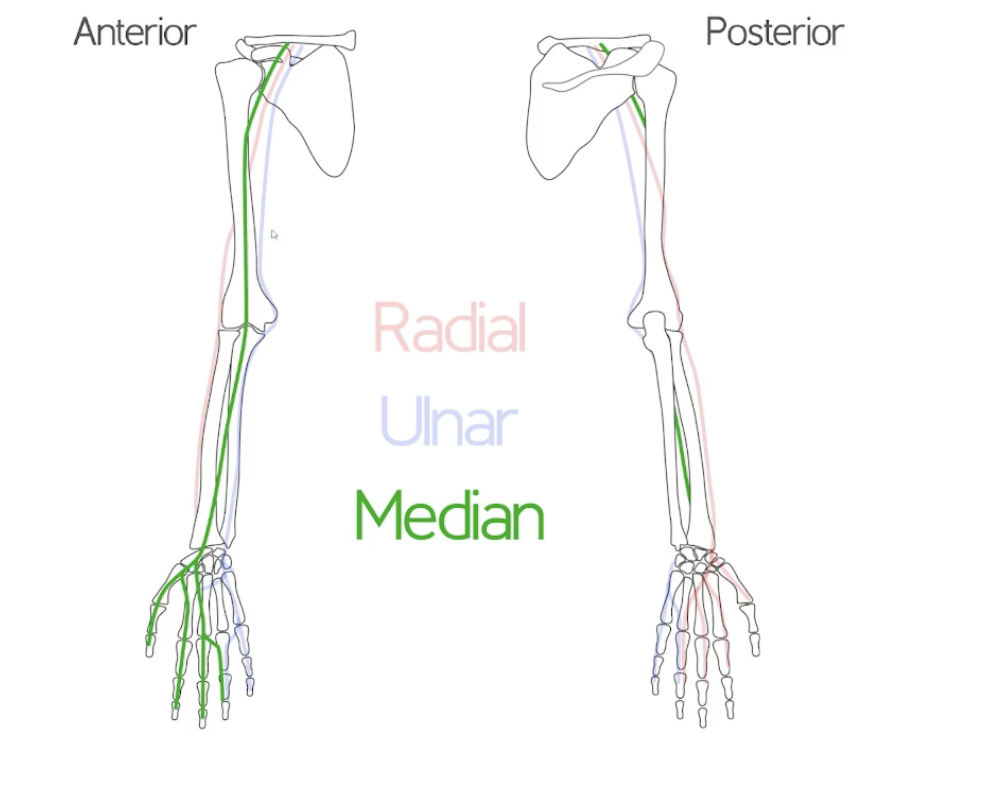
mostly anterior part of the arm, innervating 1st 3 digits and half of the 4th digit; important for *fine motor and sensation of 1-3 digits, basically the lumbricals and opposition of the thumb
Median, Ape Hand == “DR CUMA” at low lesion
flattening of the thenar eminence + thumb adduction
also slight flexion of index and middle fingers
sign of benediction at high lesion— or the “high almighty God”
problems with flexing 1st 3 digits, when trying to make a fist, 2/2 issues with the proximal median nerve innervating finger flexors)
names for median nerve injuries…“straight shot up into the carpal tunnel”
pronator syndrome (anterior forearm)
like carpal tunnel (same symptoms) but occurs at the elbow
—> splint would be elbow splint
90 degrees flexion
forearm neutral
anterior interosseous syndrome (anterior forearm)
common functional loss
loss of thumb opposition and palmar abduction impedes grip formation for tasks that require pinch or grasp
*fine motor is mostly done with 1-3 digits
carpal tunnel syndrome (CTS) + signs and symptoms
compression of the median nerve at the wrist
cause: increased pressure in the carpal tunnel
edema
trauma
repetitive movement
vibration
poor/awkward posture (e.g., side-sleeping with flexed wrists)
conditions that cause fluid retention or inflammation
obesity
diabetes
rheumatoid arthritis
hypothyroidism
pregnancy
signs and symptoms
paresthesia: numbness & tingling, often described as pins and needles
muscle weakness
—> clumsiness
—> difficulty with fine motor difficulties
advanced CTS— muscle wasting or atrophy of thenar eminence

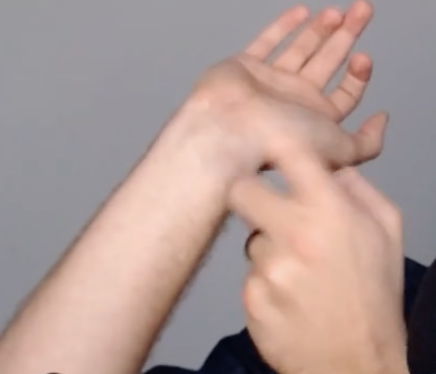
tinel’s sign
median nerve test involving percussion along the median nerve (on the volar wrist) to elicit a response
if it causes uncomfortable sensations (e.g., shooting pain and paresthesia), it could be positive sign of carpal tunnel
“rain on a TIN roof”— ~tap, tap tap
Moberg Pickup Test
median nerve test involving picking up objects from the table (e.g., coins, screws, etc.) with first 3 digits
Moberg Pickup = Median Pickup
Phalen’s
median nerve test, testing for carpal tunnel— “FAILING” to pray
flexed position puts pressure on the median nerve
if you start to feel symptoms after being in that ^ position for a few mins
==> positive test

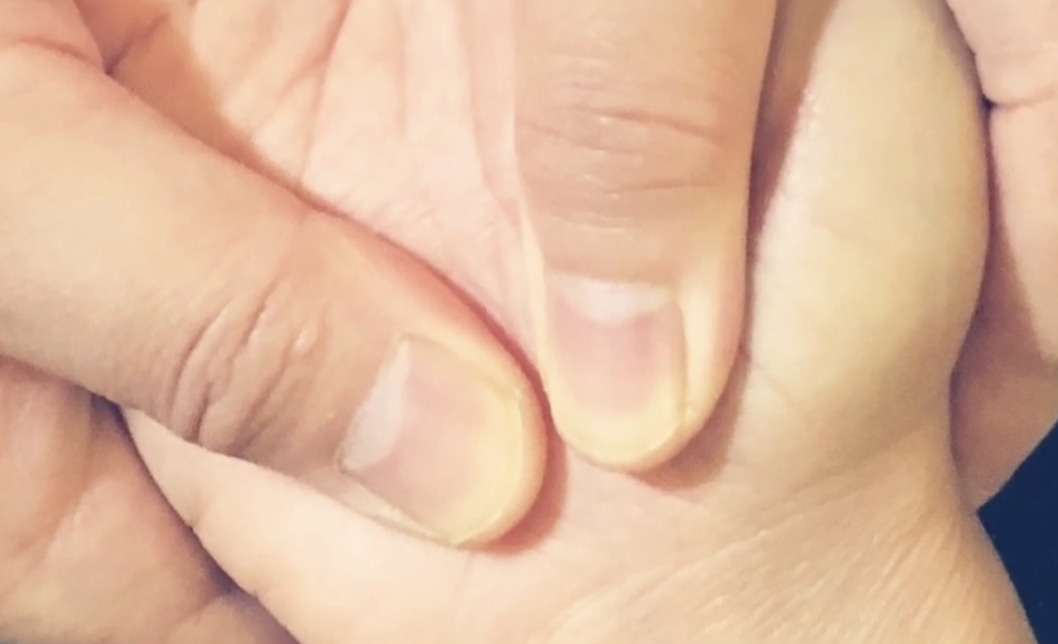
Durkan’s test
median nerve test, involving holding and pressing the carpal tunnel for ~30 secs
pain or paresthesia —> positive sign of carpal tunnel
conservative treatment for mild carpal tunnel syndrome (CTS)
icing
activity modifications
resting and avoiding painful activities (e.g., repetitive movements, forceful gripping)
splinting
splint the wrist in neutral; extreme flexion or extension could increase pressure in the carpal tunnel
also mostly worn at night
semi-flexible and soft > hard, rigid splint
may be paired with corticosteroids/cortisone injection
to help reduce inflammation and relieve pain
iontophoresis and phonophoresis
enhanced delivery and absorption of topically applied anti-inflammatory medication (e.g., hydrocortisone, dexamethasone, NSAIDs)
difference
iontophoresis= transmission via electrical current
phonophoresis= transmission via ultrasound
safety considerations
medication allergies
contraindications (e.g., pregnancy)
once CTS is more controlled (less pain and inflammation), you can do some exercises; introduce slowly!
always start with stretching
nerve and tendon gliding
strengthening
resistance

surgical option for advanced mild carpal tunnel syndrome (CTS)
+ post-operative care
carpal tunnel release
cut the ligament that goes over the carpal tunnel (transverse carpal ligament) to make more space for the tendons of the median nerve to pass + release pressure on the median nerve
*common complaint post carpal tunnel release
= pain on either side of surgery site for several weeks, making grasping objects difficult during recovery
post-operative care
edema control
AROM
nerve/tendon gliding
sensory re-education (protective sensory re-education is essential for peripheral nerve damage)
strengthening exercises, particularly for thenar muscles
activity modification
most common splint for median nerve
wrist cock-up splint with wrist in neutral (good to wear at night too for carpal tunnel syndrome); MP, thumb, or elbow support might also be necessary
e.g., c-bar to maintain web space and prevent thumb adduction contracture— splint thumb in palmar abduction and slight opposition
e.g., opponens splint to maintain thumb in a functional position, in which the thumb opposes the index and middle fingers
e.g., elbow in 90-degree flexion for a high-level injury
***splinting may be combined with cortisone injection to reduce inflammation

concepts: proximal vs distal
peripheral nerve injuries will vary based on the location + severity of the injury, but proximal is worse than distal
e.g., a radial nerve could have a lesion or impingement in the…
axilla,
mid humerus
elbow
or any 1 of several forearm locations, with impairments ranging from
limited sensory loss to
complete motor/sensory loss of muscles innervated by the radial nerve
OT role
manage/prevent complications including pain and further injury
maintain function— ROM and nerve gliding
facilitate regaining function
non-surgical treatments
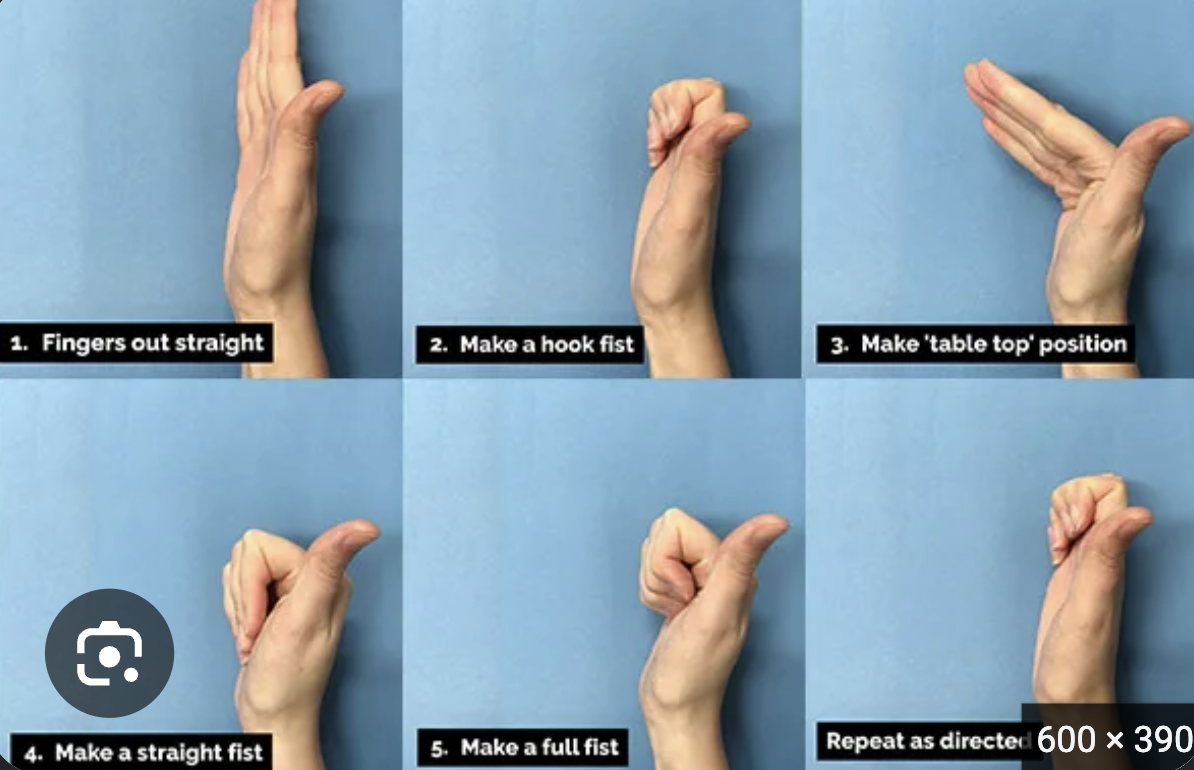
nerve gliding
to prevent adhesions and contractures
a moving nerve is a healthy nerve!
sensory re-ed
continue to make sensory connections + organize input
pain management
education
desensitization
modalities
nerve gliding
goal: maximize movement, minimize strain— don’t apply force at the end of the movement; it increases strain
keep proximal part relaxed/on slack for the ideal ~gliding motion (floss example)!
“motion is lotion”
sensory re-ed
help healing sensory system to reorganize correctly
1st: emphasize protection (compensate for loss of hot, cold, pain)
use vision or protective clothing/orthoses— compensatory techniques for safety!
then discriminatory sensation:
QoL > safety
stereognosis— what’s in my pocket? (using just sensation/touch alone to use the hand functionally)
pain management
body ramps up pain sensitivity following injury
can lead to CRPS (chronic regional pain syndrome)
== a rare and severe chronic pain condition that usually affects an arm, leg, hand, or foot; it causes intense pain that is much stronger and lasts longer than what would normally be expected after an injury, surgery, stroke, or heart attack
education on the source and minimizing fear is important
pain is an experience in the mind— is heightened by fear
educate patient on this process; help them decrease fear
desensitization
sensory system is oversensitive; one can become permanently fixated on all stimuli being noxious (beginning stages of CRPS)
having client touch around or on the sensitive areas with a cloth or toothbrush while relaxing to train sensation as non-noxious
grade up with more and more sensation
modalities
will depend on whatever is effective and safe for the client
CAUTION: if the protective sensation is compromised do not use superficial heat or cold
post-surgical treatments
orthosis to limit tension/stretch on nerve (why a lot of the splints have the wrist at neutral); follow up with surgeon regarding progression of therapy
brachial plexus
position of the injury in the brachial plexus corresponds fairly well with the location of the deficits
upper and lateral == upper arm
upper brachial plexus injury —> will affect the upper part of the arm
lower and medial == lower arm
lower brachial plexus injury —> will affect the lower, distal part of the arm/hand
posterior is radial
posterior brachial plexus injury —> posterior nerve/radial type of injury

nerve injuries of the hand, call…
“DR. CUMA”
Drop Wrist— Radial nerve
palm side down, your wrist is unable to hold against gravity
(ulnar) Claw— Ulnar nerve
your 4th and 5th digits at rest will have
MCPs in hyperextension
PIPs/DIPs in flexion, which is what creates the ~hooked look
Ape hand (and *sign of benediction)— Median nerve
problem with the muscles that pull your thumb forward (i.e., loss of palmar abduction and opposition), resulting in a cranked-back thumb at rest that is in line with all the rest of your fingers
*when making a fist, only the 4th and 5th digits will flex down and your 1st 3 digits stay up
happens when your median nerve injury is more proximal, resulting in an affected forearm + flexors

claw hand vs hand of benediction
claw hand
injury to ulnar nerve
low level ulnar nerve injury: loss of innervation to
—> interossei muscles
—> ulnar lumbricals (which allow our MCP to flex and IPs to extend; without lumbricals, long extensor muscles hyperextend the MCPs)
==> clinical sign: at rest, MCP hyperextension + PIP/DIP hyperflexion on 4th/5th digits
splinting:
MCP flexion block splint or
dynamic ulnar nerve splint
hand of benediction
injury to median nerve
high level median nerve injury: loss of innervation to
—> many flexor muscles
==> clinical sign: when actively attempting to make a fist, flexion of only the 4th and 5th digits