Surgery of EQ male repro tract
 Call Kai
 Learn
 Practice Test
 Spaced Repetition
 Match
 Flashcards
 Knowt Play
1/40

There's no tags or description
Looks like no tags are added yet.
41 Terms
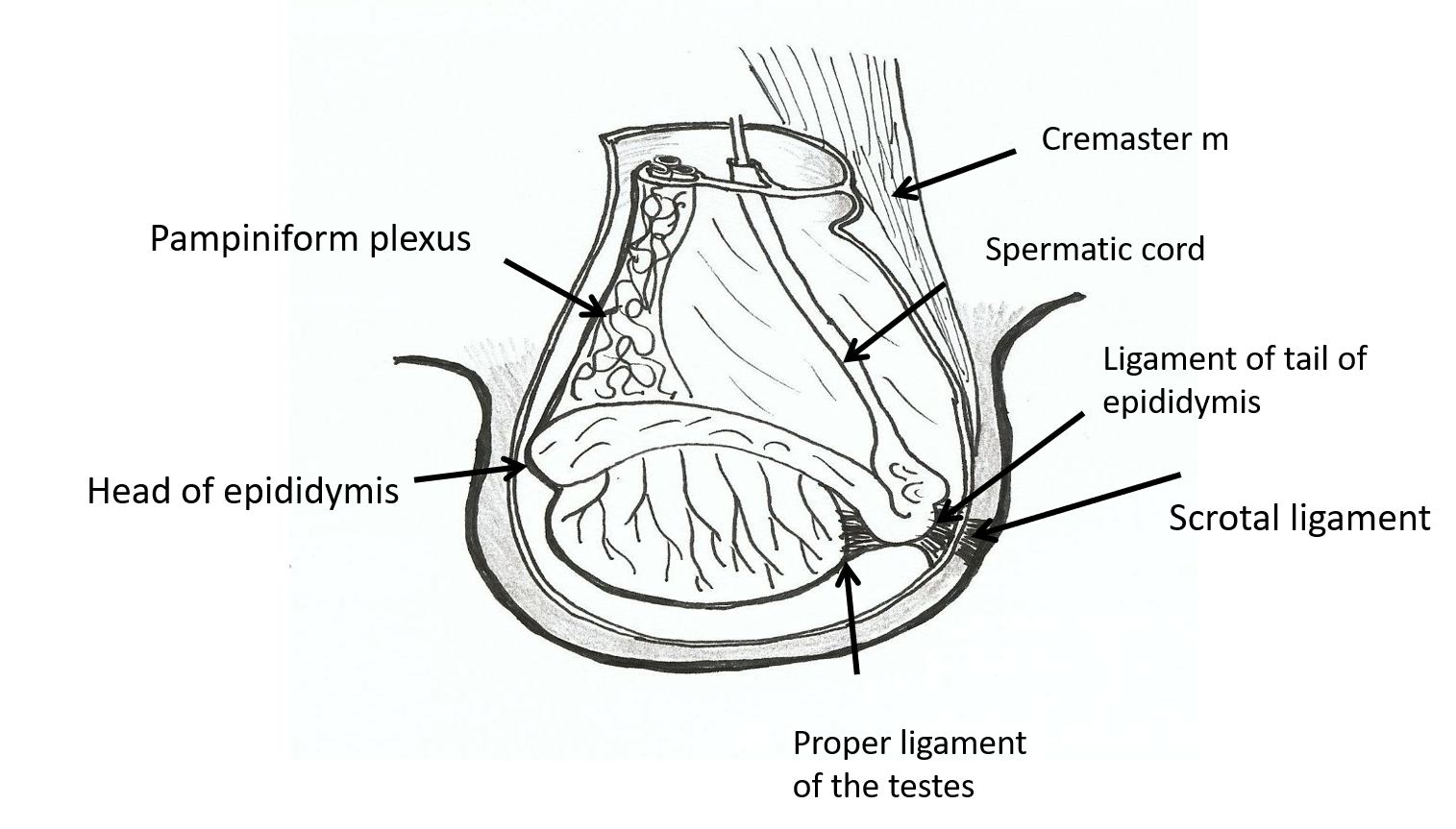
Label the parts of the testis

When do testis pass into the inguinal canal?
270-300 days gestation
So descended @ birth
What do the different parts of the gubernaculum become?
Cranial —> proper ligament of the testis
Middle —> ligament of the tail of the epididymis
Caudal —> scrotal ligament
When is castration indicated?
Prevent breeding
Modify behaviour
Neoplasia / inguinal hernia
What needs to be considered during castration?
Age (older = bigger inguinal rings, more BVs = more challenging)
breed / size
temperament (standing vs GA)
season (consider flies)
What are the features of the pre-op assessment of castration?
Hx —> prev scrotal / inguinal hernia
Good restraint
Clin exam incl auscultation of heart
Palpation —> both testes palpable? Any hernias palpable?
hernias —> risk of intestines coming out
What are the options for castration anaesthesia?
Standing sedation vs GA
Field anaesthesia vs GA under theatre conditions (esp. in presence of hernia)
How do you prep for standing castration?
Sedation (alpha 2 agonist and opiate)
Bandage tail away from sterile surgical site
NSAIDs & ABs
Aseptic prep of scrotum
LA infiltration into testicle in direction of spermatic cord (10ml min) + bleb under skin of testicle
Repeat scrub of scrotum
Castrate in similar manner to castration under GA
What considerations do you need to make to perform field anaesthesia?
IV catheter placed —> easy to top up if need be
Lateral recumbency
Elevate upper HL
Castrate lower testicle first (so blood doesn’t run distally and make lower testicle harder to find)
PALPATE 2 TESTICLES before starting
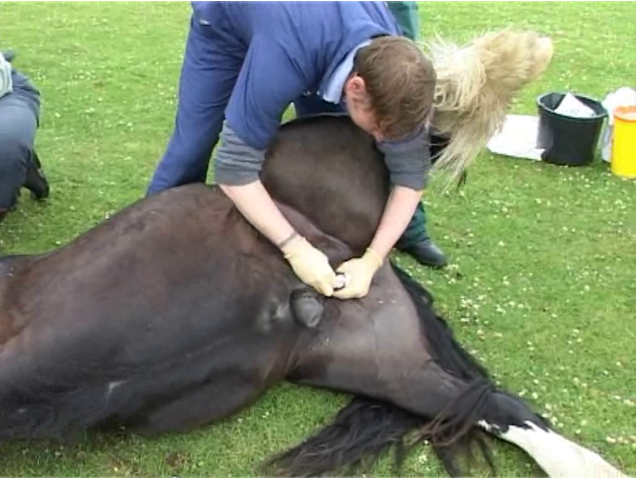
bold incision, open castration (opens tunica), emasculators put on
vasulature on cr aspect
How do you place a emasculator?
'Nut to nut' —> squeeze rachet all the way & hold for few mins (longer for older horse)
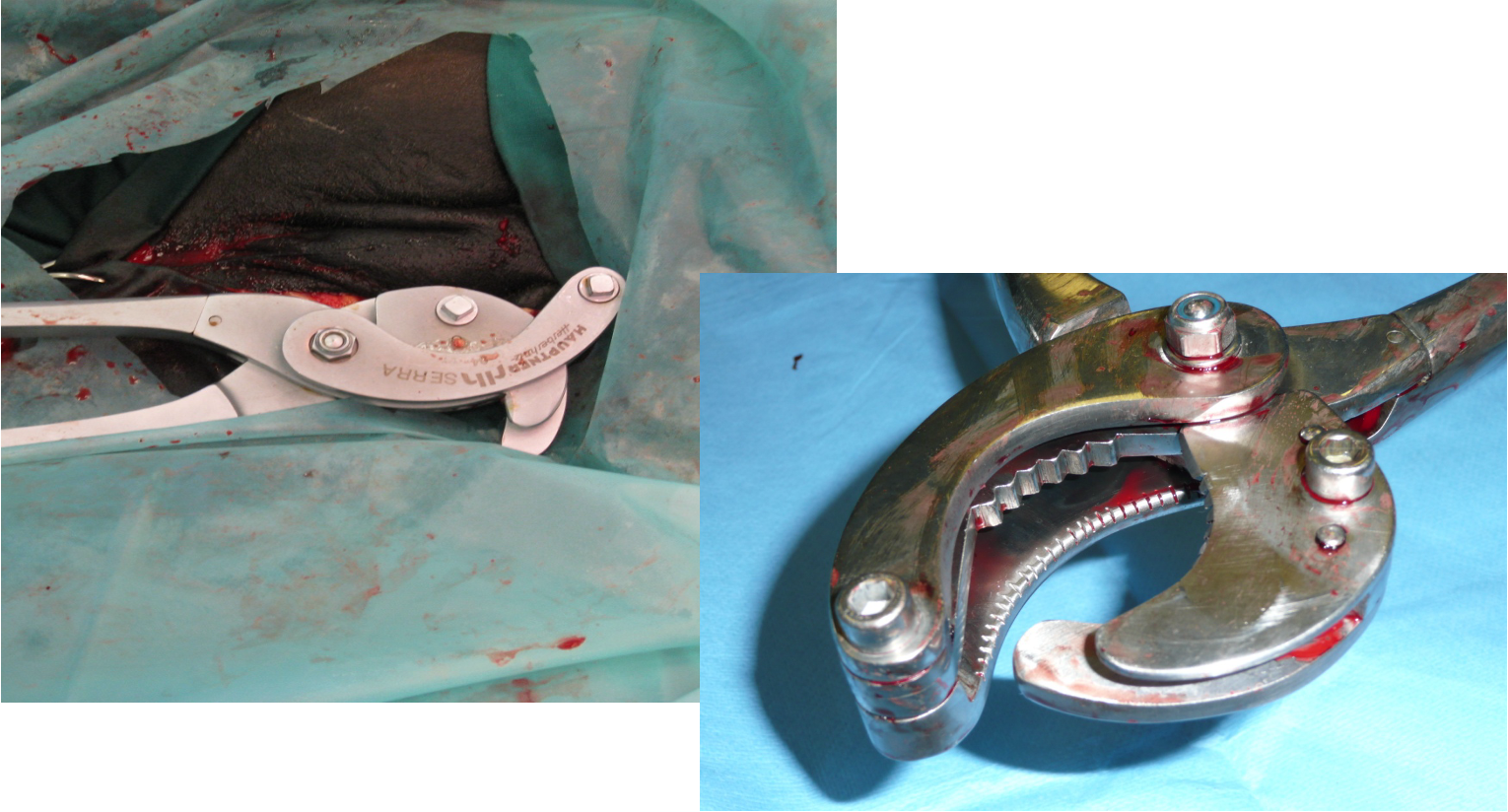
^Serra emasculators —> cutting portion & crushing portion
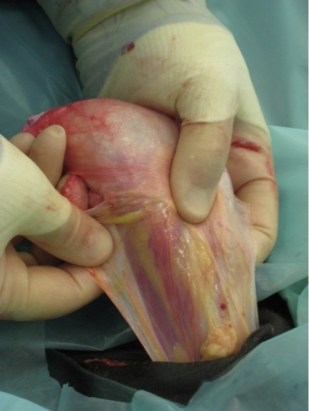
Recall what an open/closed castration refers to?
Whether or not the vaginal tunic has been incised
Open:

Closed: (often involves placing ligature but not always)
List some circumstances where your approach to castration may be slightly different
Large cords
Emasculate vascular & fibromuscular portions separately
Donkeys (large inguinal rings buried in fat)
Hx of scrotal/ inguinal hernia
Ligature around vaginal tunic +/- suture superficial inguinal ring
What aftercare should you provide with a castration?
Check tetanus status
Antibiotics
TMPS inj not used if sedated → fatal cardiac signs
NSAIDs
Box rest for 24hrs followed by controlled exercise —> reduce swelling
Keep away from mares
When would you advise the owner to contact the practice post castration?
Dripping from incisions persists > 4hrs or if steady stream of haemorrhage
count drips —> slow dripping is okay but go out to any haemorrhaging horse (triage)
Evidence of tissue hanging from incision
Marked swelling of scrotum / stiffness that persists >3 days
Depression, inapp or colic
poss light peritonitis
List some of the complications following castration
Swelling (superficial infection or failure of site to drain —> make decent incision)
flush ± ABs if superficial infection
Haemorrhage
testicular a. (more severe —> re-emasculate / re-ligate) or superficial vessel (less severe —> pack with long gauze bandages tied together —> remember to remove)
Evisceration
intestine comes out —> pack & suture + refer to clinic
Omental prolapse
direct route to abdo —> ABs
pull more out, emasculate, get rid of hanging, pack, refer to clinic
Septic funiculitis
infection of testicular cord itself (few wks after procedure) —> remove testicular cord & re-emasculate under GA
drugs don’t help (discharge returns)
Clostridial infection
Septic peritonitis
Penile damage
Hydrocele
vaginal tunic left behind so fills w/ fluid —> re-emasculate under GA
Continued masculine behaviour
Incomplete cryptorchid castration
What are the different 'classifications' of a crytorchid?
Complete
Incomplete
Inguinal
(horses often referred to as rig —> retention of one testis / both testes along normal path of descent)
How is crytorchidism diagnosed?
Hx —> behaviour, prev. surgery (look for scars)
External palpation —> sedation (so doesn’t suck testicles back up into abdo), any testicular structures palpable, which side?, castration scars palpable?
Hormone analysis
AMH
Horses <2 yo and donkeys of any age = hCG stimulation test
Horses >3yo = oestrone sulphate assay
U/S

Transrectal palpation
What should you ensure when performing a cryptorchid castration?
Always open tunic to ensure whole testicle removed —> weird shape of cryptorchid testicle
Always remove cryptorchid testicle first
hormone producing & poss tumour causing
Can use laparoscopy
What are some other miscellaneous dxs?
Anorchidism / monorchidism
Torsion of the spermatic cord —> esp. if stallion colicing
Testicular neoplasia
What are the two types of inguinal herniation?
Direct (hole made in horses muscle)
Indirect (hole that is meant to be there e.g. inguinal canal)
When would you perform surgery for an inguinal hernia in foals?
Usually conservative management unless:
Increasing in size (if vaginal tunic ruptures → intestine enters site)
Strangulating (non-reducible)
How is inguinal herniation diagnosed in adult horses?
Palpation
U/S
Strangulating hernia considered in all stallions/ colts that present with colic
How is strangulating hernia treated?
Free entrapped SI —> can feel intestine going into and then out of inguinl ring
Castration (uni / bilateral)
Label the anatomy of the penis
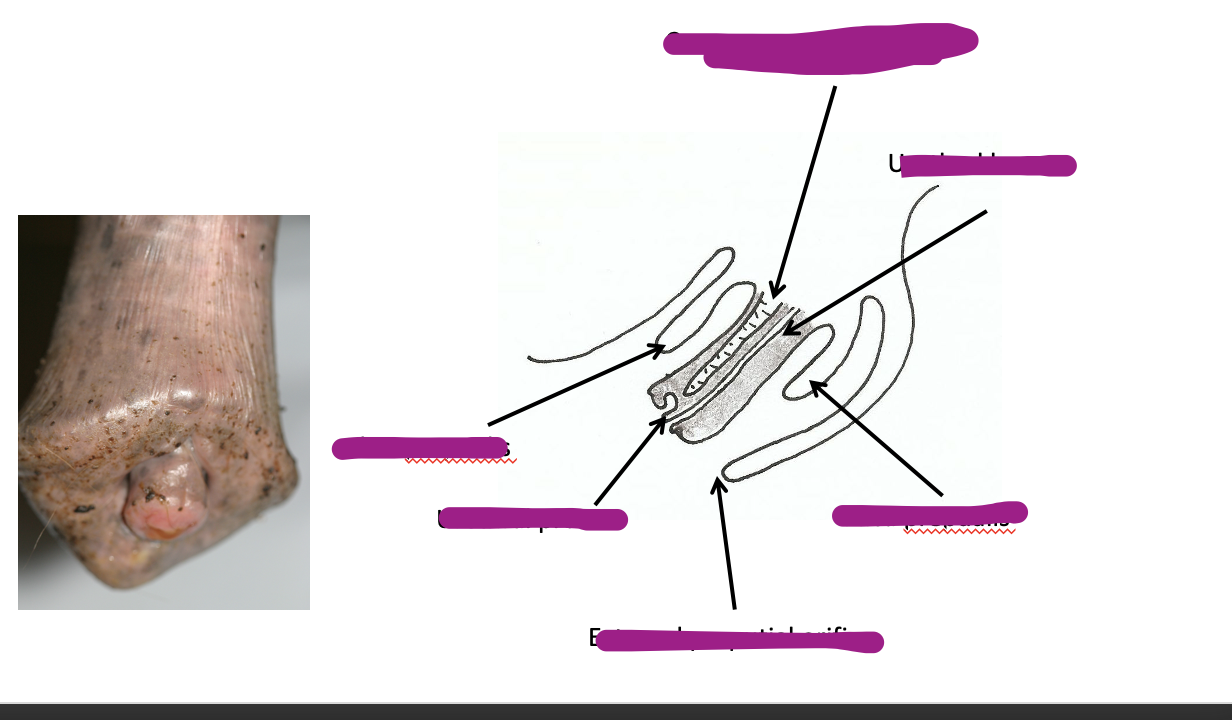
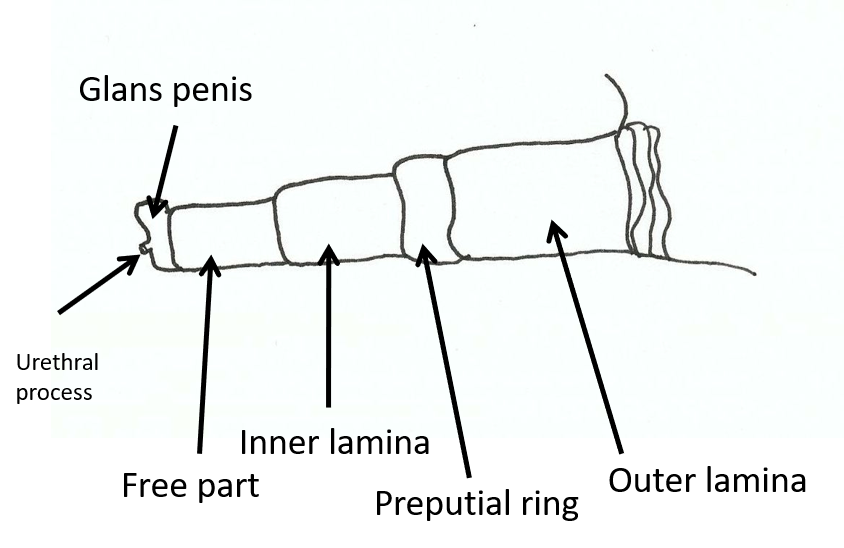
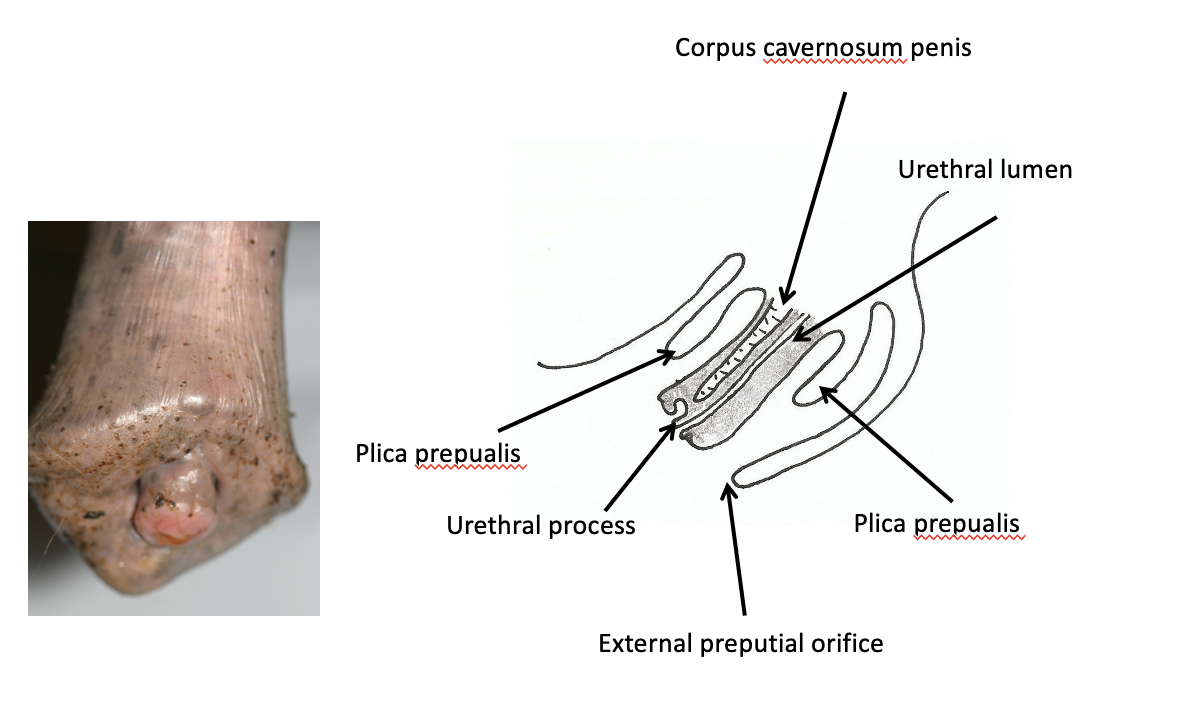
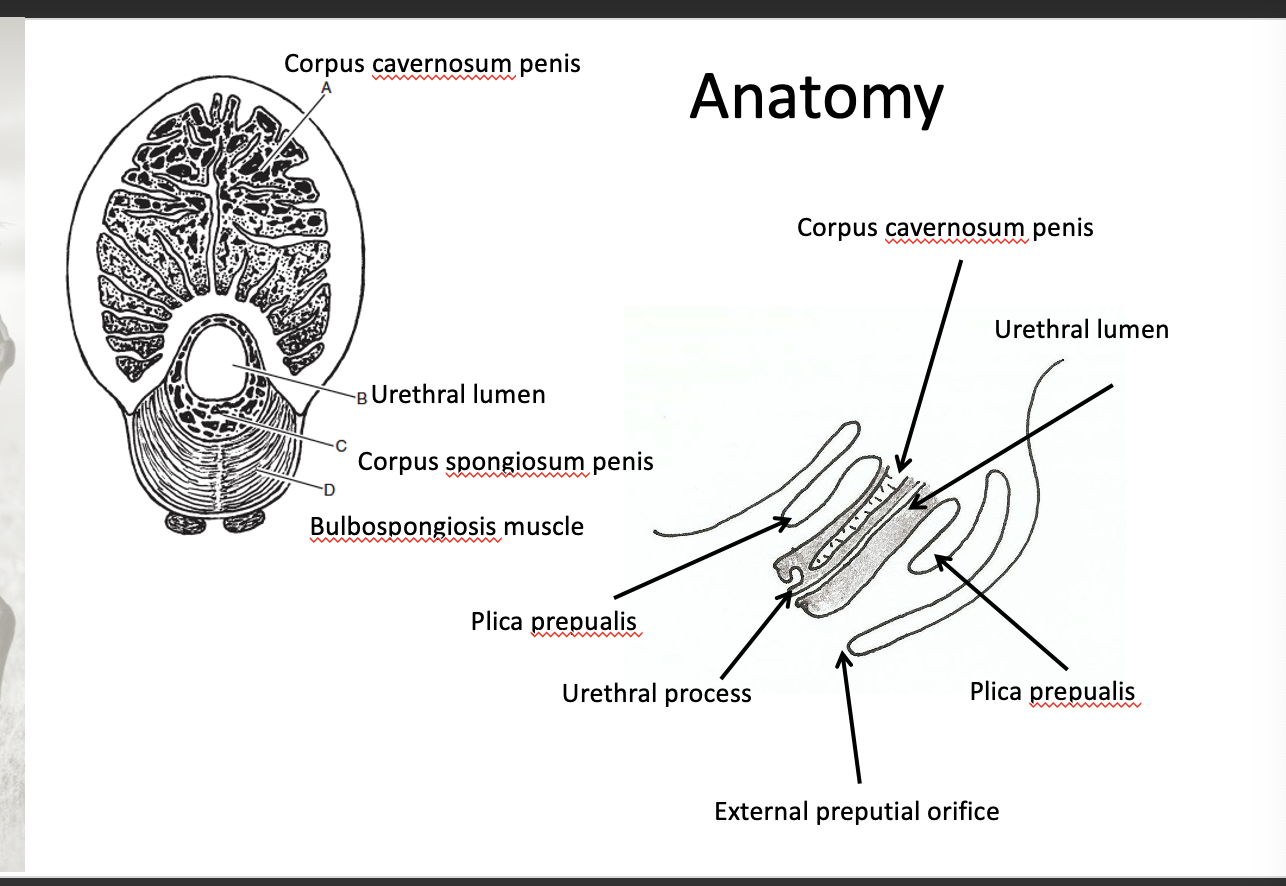
corpus cavernosum penis --> blood containing --> injury = bleeds a lot
urethra surroudned by corpus spongiosum penis
What is the most common penile and preputial neoplasia?
SCC most common
squamous papillomas pre-neoplastic
smega = carcinogenic

Melanomas and sarcoids can occur on sheath
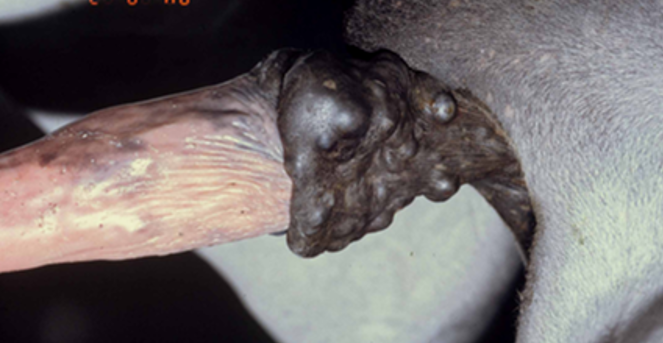
How is SCC diagnosed?
Hx & presenting signs
Visual appearance
Proliferative
Ulcerative
+/- biopsy
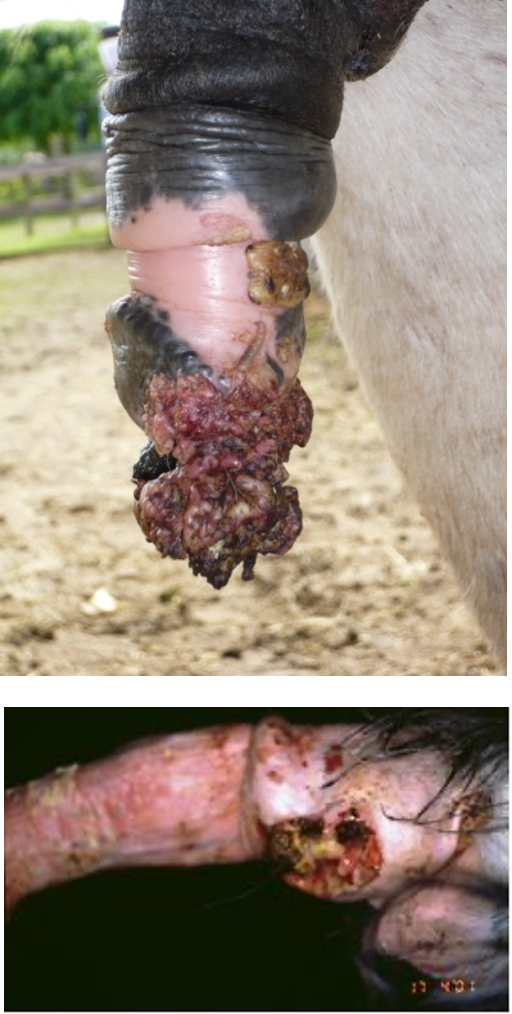
act quick in terms of tx
How is SCC treated?
Medically —> cryotherapy (not very successful), topical chemo
Surgery —> local excision, 'reefing' (remove large area of prepuce), partial or en bloc phallectomy (removal of partial / whole penis then give way to urinate still)
Euthanasia —> suspected metastatic spread
Segmental posthetomy (reefing)

What are the different techniques of distal phallectomy (penile amputation)?
Visnot, williams, scott

En bloc resection
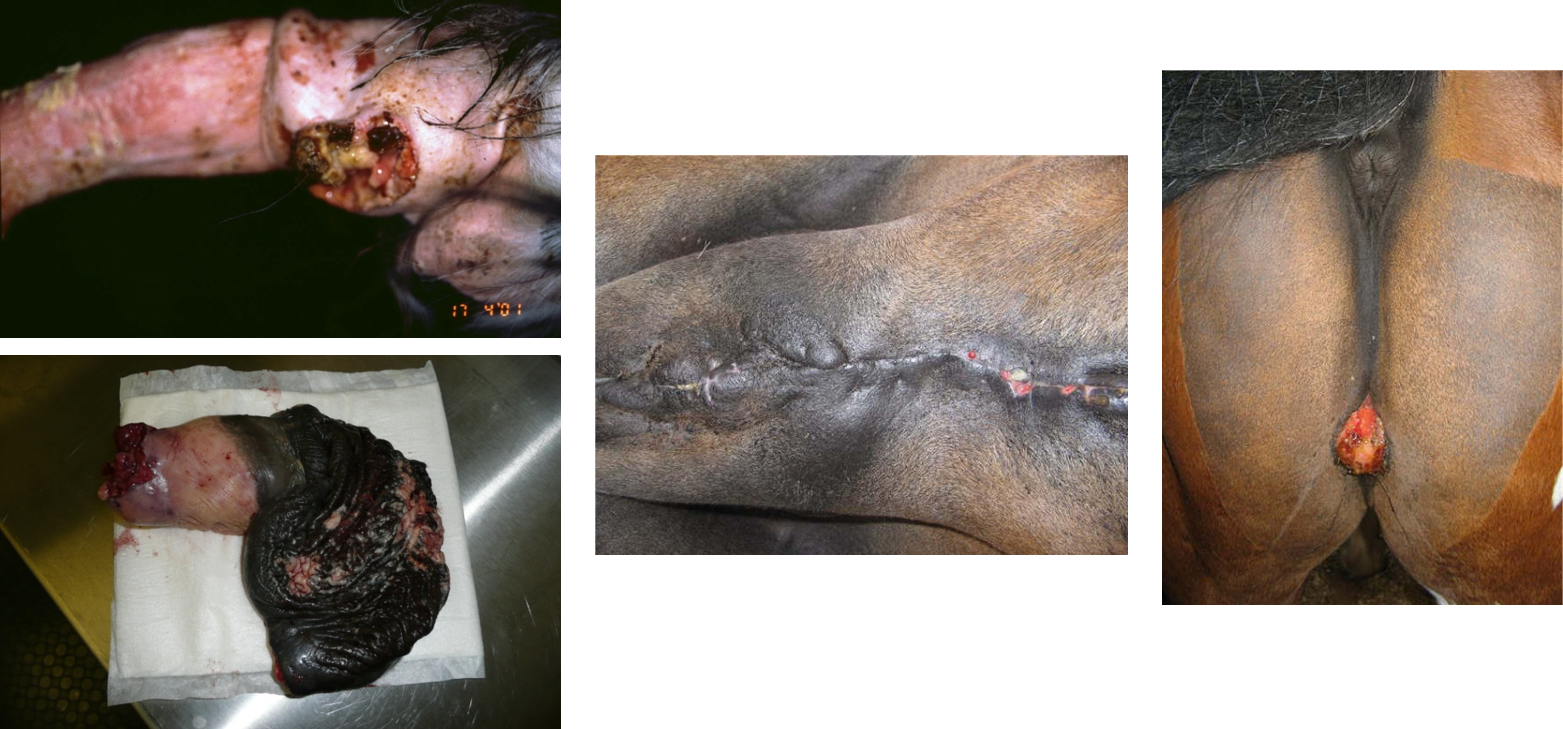
What is the prognosis and prevention for a SCC?
Good if treated early & appropriately
Prevention —> owner education, clean sheath regularly, examine as part of routine yearly check up in older geldings
Which horses is penile trauma seen in?
Uncommon but seen in colts & stallions
What causes penile trauma?
Lacerations
Blunt trauma
Leads to severe swelling, haematoma / haemorrhage

How do you treat penile trauma?
Ice packs / cold hosing
NSAIDs +/- ABs
blood good medium for bacteria
+/- referral
high value stallions esp.
Provide support —> strap ventral penis to abdo
Suture within sheath w/ umbilical tape → compression
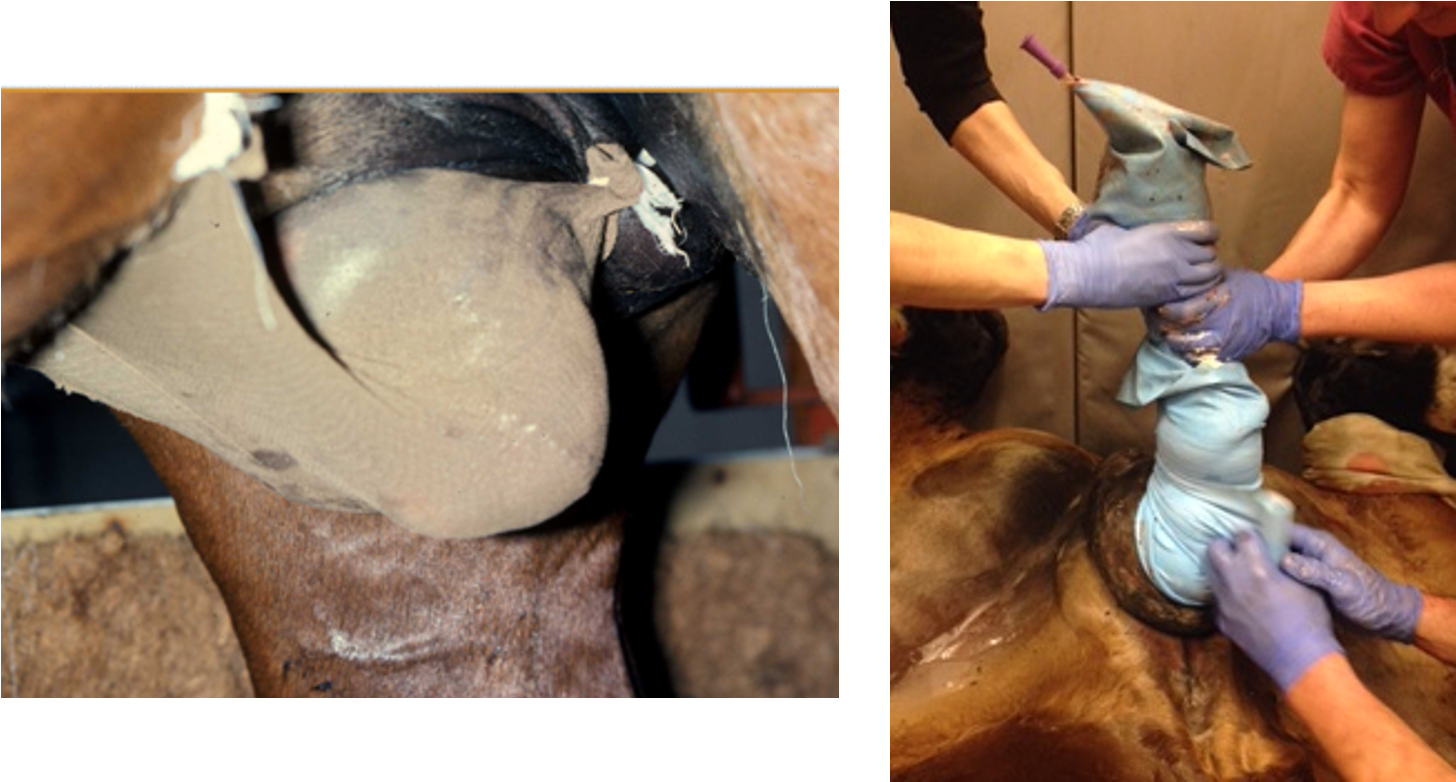
What is priapism?
Persistent erection w/o sexual excitement
What drug can priapism occur 2° to?
Acepromazine
How is priapism treated?
Emergency in breeding stallion
IV clenbuterol
Intra-corsum cavenosum penis (CCP) phenylephrine
Lavage CCP
What is paraphimosis vs phimosis?
Paraphimosis —> Inability to retract penis into the prepuce
can happen post-surgery
pressure on pudendal n. → swollen & heaving penis etc. etc.
Phimosis —> inability to protrude penis → treat surgically
What can prolonged paraphimosis lead to?
Pudendal n. injury
How do you treat paraphimosis?
Support /suture in prepuce w/ umbilical tape
NSAIDs
Massage
List the abnormalities of the ejaculate
Pyospermia
urethral injury most common cause
ext. infection
cystitis
epidydimitis
seminal vesiculitis
Haemospermia
infectious as above
ext. injury —> skin / urethral process
urethral injury
Urospermia
as above
neuro dysfunction