Seizing the Light: Photography History, Techniques, and Movements (Chapters 9–14)
 Call Kai
 Learn
 Practice Test
 Spaced Repetition
 Match
 Flashcards
 Knowt Play
1/107

There's no tags or description
Looks like no tags are added yet.
108 Terms
PH Emerson
Believed in enduring art made from nature, emphasized soft focus, embraced naturalism, opposed combo printing

Platinum Print
‘Life and Landscape,” 1885 by Emerson

Platinum Print
“Suffolk Dyke,” 1887 by Emerson
Platinum Print Process
Uses platinum, wide tonal range, resistant to fading, fine details
Pictorialism
A photographic movement that sought to establish photography as a fine art, appears more painterly, more artistic than mechanical, images typically have soft focus and atmospheric effects
Pictorialists
Photographers who stressed beauty over fact, inspired by paintings
Frederick Evans
Master of architecture photography, best known for his photographs of English and French cathedrals
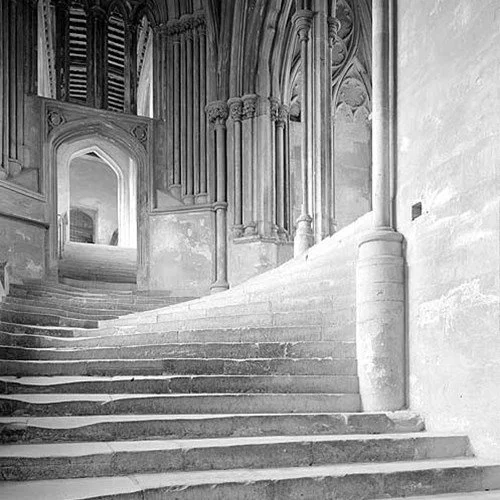
Platinum Print
“Sea of Steps,” 1903 by Evans
Photogravure
A photographic process that turns a photograph into an ink print allows the photographer to physically alter images
Gum bichromate
a photographic printing process in which the image is created directly on paper using chemicals, can manipulate the process by choosing pigments, controlling exposure, or brushing and washing the gum, gives image a painterly, textured appearance
Alfred Stieglitz
one of the leaders of American pictorialism, early works emphasized atmosphere and soft focus, later prioritized sharpness, abstraction, and the visual possibilities of the camera rather than imitating painting, published an influential journal titled “Camera Work”, pioneered use of hand held camera for serious art making

Platinum Print
“The Terminal,” 1892 by Stieglitz

Platinum Print
“Winter Fifth Avenue,” 1893 by Stieglitz

Platinum Print
“Spring Showers,” 1900/01 by Stieglitz

Platinum Print
“The Steerage,” 1907 by Stieglitz

Platinum Print
“Equivalents,” 1925/27 by Stieglitz
Edward Steichen
Early 20th century photography pioneer, best known for pictorialist and modernist works, directed photography at MoMA, “Family of Man” exhibition became one of the most influential photography shows
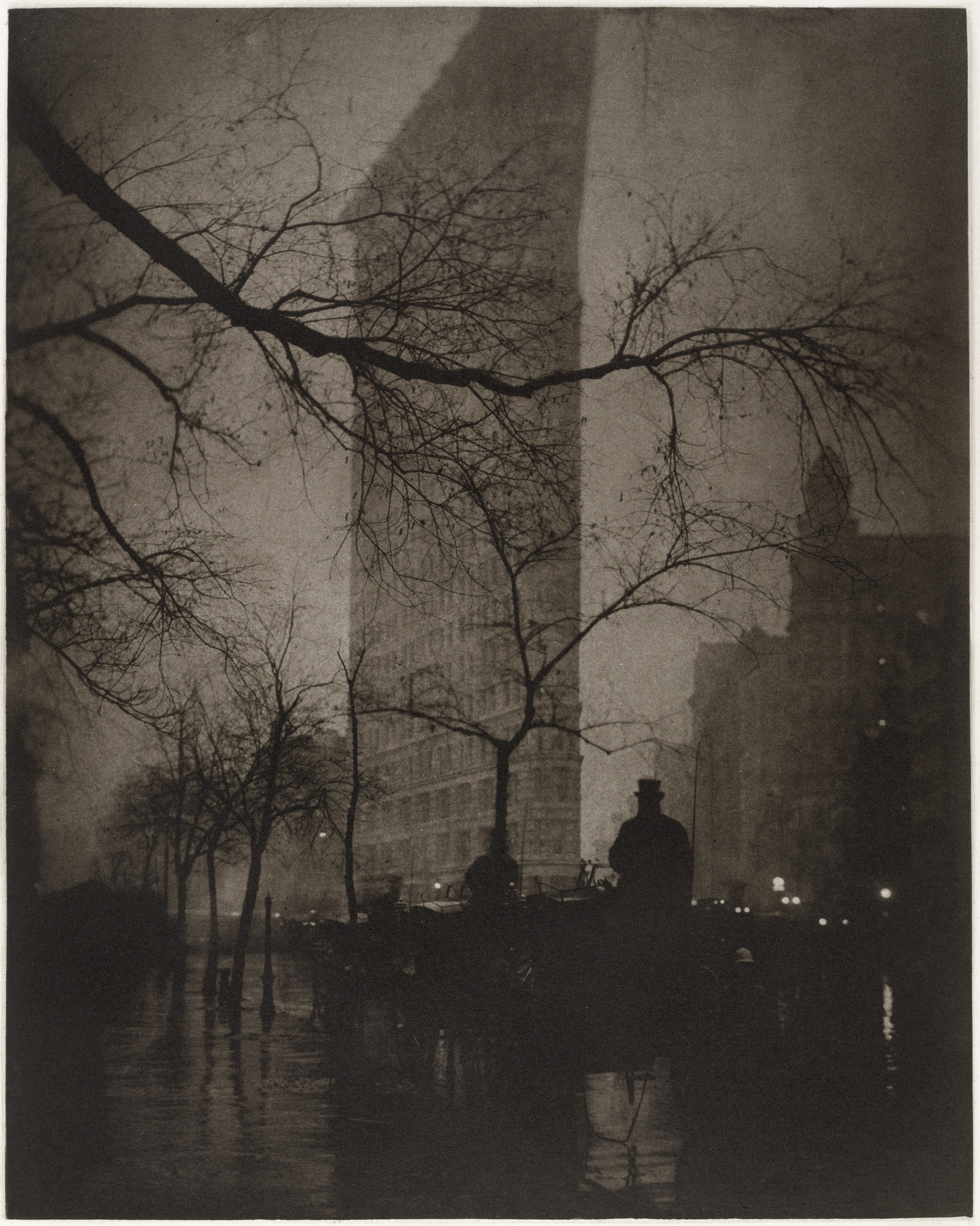
Platinum Print
“The Flatiron,” 1904 by Steichen

Platinum Print
“Moonrise, Mamaroneck,” 1904 by Steichen
Clarence White
Founding member of photo-succession movement, emphasized soft focus, opened influential photo school
Platinum Print
“Reflected Nude,” 1909 by White

Platinum Print
“The Bubble,” 1898 by White
F. Holland Day
Experimented with symbolism, mythological, and religious themes, dramatic and controversial self-portraits

Platinum Print
“Crucifixion,” 1898 by Holland Day
Gertrude Kasebier
One of the most prominent 20th century women photographers, known for sensitive portraits of women and children

Albumen Print
“Blessed art thou among women,” 1899 by Kasebier
Anne Brigman
Photographer of photo-succession movement, allegorical images of women in natural landscapes

Albumen Print
“Cleft in the rock,” 1907 by Brigman

Albumen Print
“The Big Cedar,” 1909 by Brigman
Cubism
An art movement where objects are broken into geometric shapes and shown from multiple viewpoints at once, instead of a single perspective
Futurism
An art movement that celebrates speed, technology, machines, and modern life, rejects the past and traditional art, prioritizes dynamic compositions convey movement and energy.
Abstraction in Painting
A style of art that does not attempt to represent reality accurately, but instead uses shapes, colors, lines, and forms to achieve its effect
Paul Strand
Practitioner of “straight photography,” works emphasize sharp focus and precise composition, influenced by modernism, visuals without borrowing painting aesthetics

Platinum Print
“Wall Street,” 1915 by Strand
Alvin Langdon Coburn
Creator of Vortagraph, experimented with unusual and abstract perspectives, multiple viewpoints and geometric forms

Platinum Print
“The Octopus,” 1912 by Coburn
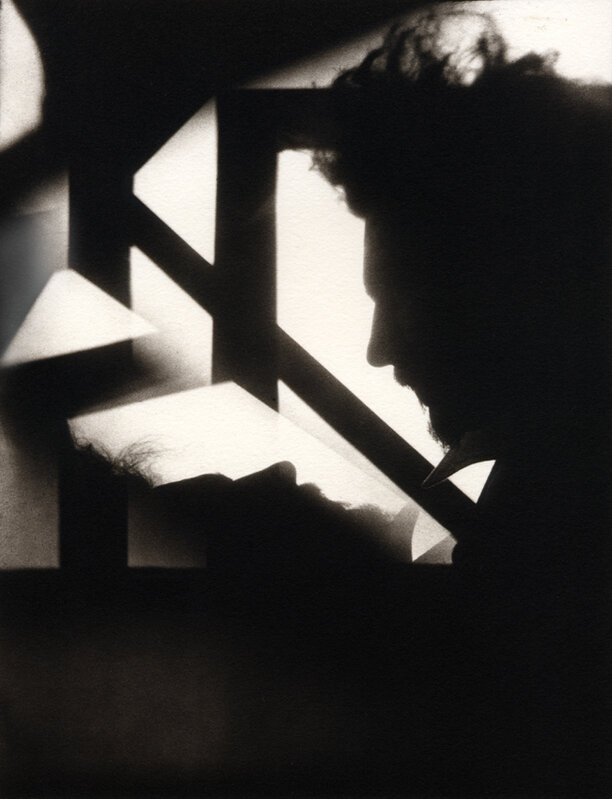
Vortagraph
“Ezra Pound,” 1917 by Coburn
Russian Suprematism
Founded by Kazmir Malevich, the belief that that art should transcend subject matter— that the truth of shape and color should reign 'supreme' over the image or narrative, feeling of art above all
Constructivism
the belief that art should be used for social and political construction rather than personal expression, uses geometric shapes, bold typography, and dynamic compositions
Alexander Rodchenko
Revolutionized composition with extreme angles, represents energy, movement and tech of Soviet society, established idea that photography should offer new ways of seeing

Platinum Print
“The critic Osip Brik,” 1924 by Rodchenko

Platinum Print
“Fire escape with man,” 1925 by Rodchenko
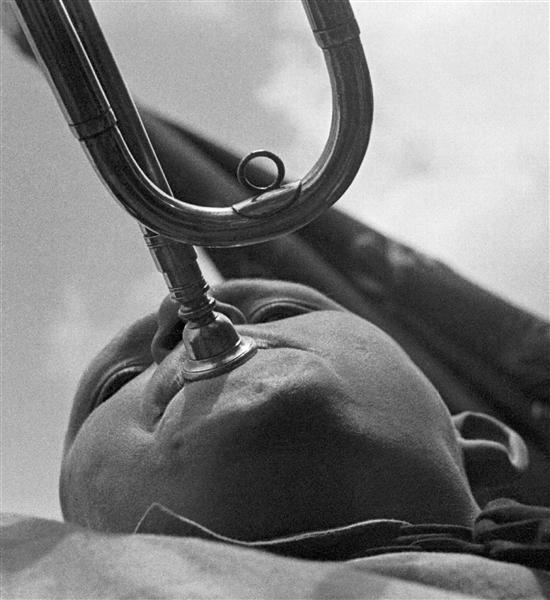
Platinum Print
“Pioneer with a horn,” 1930 by Rodchenko
Laszlo Moholy Nagy
Works primarily expirimented with light, shadow, transparency, and movement, created photograms which exposed objects onto paper without camera, used extreme angles and perspectives

Platinum Print
“Berlin Radio Tower,” 1928 by Moholy Nagy
Surrealism
Outlandish, uncanny, or perplexing imagery meant to jolt audience out of their comfort zone
Man Ray
Used photography to influence reality, heavily associated with surrealist and dada movements, used chance, absurdities, dreams, and unexpected combinations, created camera-less photographs by placing objects directly on to paper

Halftone Production
“Observatory time- the lovers,” 1936 by Man Ray
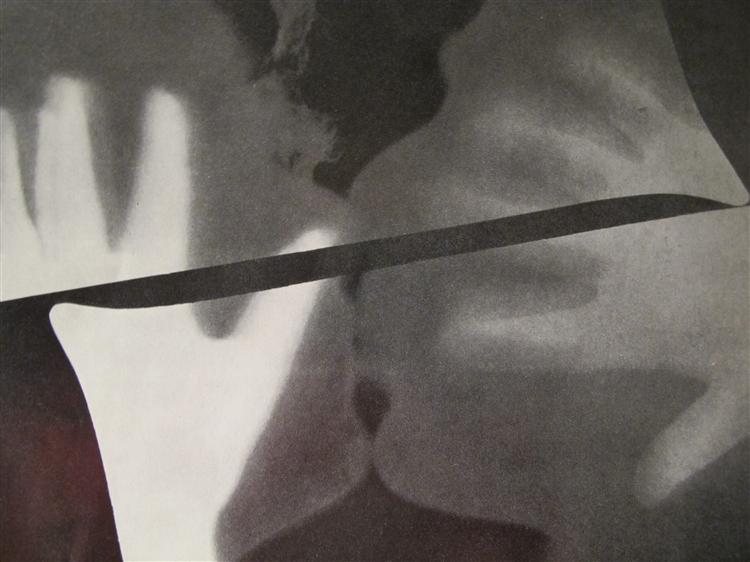
Halftone Production
“The Kiss,” 1922 by Man Ray

Gelatin Silver Print
“Fingers,” 1930 by Man Ray
Andre Kertesz
Pioneer of modern photographic vision, emphasized everyday life, ordinary people, spontaneity, and unusual perspectives, used mirrors to warp and transform images, candid approach inspired future of photojournalism and street photography

Platinum Print
“Cyclist, Paris,” 1948 by Kertesz

Gelatin Silver Print
“Distortion No.4,” 1933 by Kertesz
Edward Weston
Pioneer of American modernist photography, rejected pictorialisms soft focus and painterly aesthetic in favor of photographic previsualization, emphasized formal qualities of ordinary objects such as peppers, shells, vegetables, landscapes, and bodies, one of the first advocates for “straight photograhy”
Platinum Print (W)
“Nude,” 1936 by Weston

Platinum Print
“Two Shells,” 1927 by Weston

Platinum Print
“Pepper #30,” 1930 by Weston
Ansel Adams
Noted for his meticulous and precise craftsmanship, developed the zone system, a scientific approach to film exposure which allowed for previsualization of tonal information by the photographer.

Platinum Print
“A clearing winter storm,” 1944 by Adams
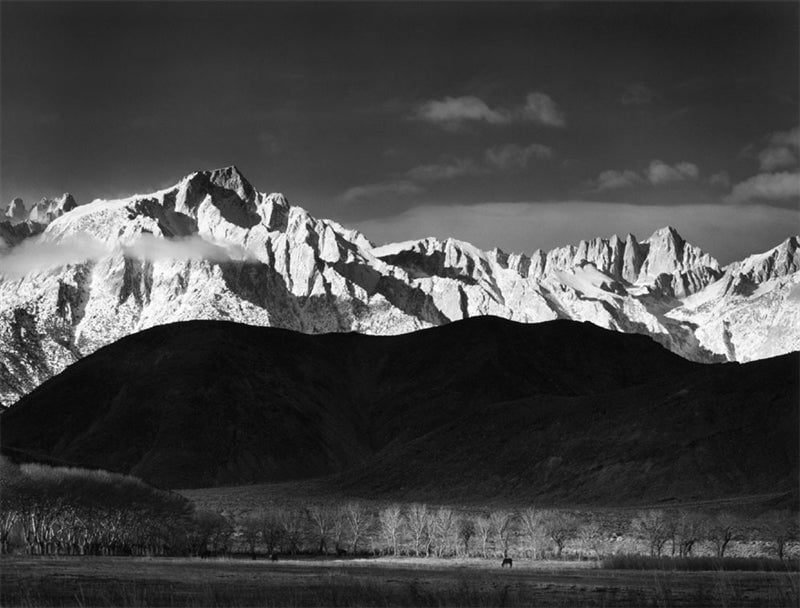
Platinum Print
“Winter Sunrise,” 1944 by Adams

Platinum Print
“Calla Lily,” 1929 by Cunningham

Albumen-silver print
“Magasin,” 1925 by Atget

Albumen print
'“Self Portrait,” 1928 by Calhun

Albumen Print
“Untitled,” 1928 by Calhun

Wood, metal, and papier mâché
“Doll,” 1935 by Bellmer
New objectivity in Germany
Movement that aimed to expose moral degredation they witnessed in German society, preferred more static compositions rather than dynamic ones, rendered their subjects with great precision

Platinum Print
“Echevaria,” 1922 by Patzsch
Jacob Riis
Police reporter who documented living conditions of poor people, received criticism due to lack of consent, worked with Roosevelt to institute reforms within NYC

Platinum Print
“Five cents a spot,” 1889 by Riis
Lewis Hine
Sociologist who used photography to combat prejudice and unethical labor practices.

Platinum Print
“The high cost of child labor,” 1915 by Hine
Daguerreotype
“Jack,” 1850s by Zealy


Albumen Print
“Hopi girl,” 1922 by Curtis
Tina Modotti
One of the figures of Mexican Modernism, pictures focused on workers, poverty, left-wing politics, and social inequality

Platinum Print
“Mexican sombrero with hammer and sickle,” 1927 by Modotti
James Van Der Zee
Best known for portraits of black life during Harlem Renaissance, carefully staged and retouched his portraits that challenged racist stereotypes of African Americans, presented subjects as they wanted to be seen

Platinum Print
“Couple, Harlem,” 1932 by Van Der Zee
Dorothea Lange
Worked with FSA to document poverty, displacement, and migrant laborers, photographs combined social documentation with powerful emotional and psychological portraits, believed that photography could bring social conditions to public attention and encourage political action
Platinum Print
“Migrant Mother,” 1936 by Lange
Walker Evans
Best known for photographs during Great Depression, favored a restrained, detached, objective style, Photographed sharecroppers, rural poverty, architecture, storefronts, signs, advertisements, and everyday objects

Platinum Print
“Burroughs Family Cabin,” 1936 by Evans
Gordon Parks
African american photographer, filmmaker, producer, and composer who’s work confronted racism, poverty, and inequality within the Unted States

Platinum Print
“American Gothic, Washington D.C.,” 1942 by Parks
Leica I
First successful 35mm camera
Brassai
Night photography innovator, mastered artificial light and long exposures to reveal Parisian nightlife

Platinum Print
“Monastic Brothel,” 1931 by Brassai
Henri Cartier Bresson
Coined idea of “decisive moment” in photography where form and meaning align in perfect instant, Leica master
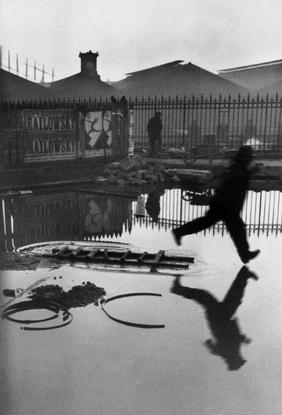
Platinum Print
“Place d’Europe,” 1932 by Cartier Bresson
Lisette Model
Known for bold, confrontational portraits of ordinary people in NYC, used close framing and flash

Platinum Print
“Gambler,” 1937 by Model
Helen Levitt
Known for her poetic observation of urban life, especially children of NY streets, early user of color film

Color Film
“N.Y. Phone Booth,” 1988 by Levitt

Platinum Print
“Motorcyclist, Budapest,” 1923 by Munkácsi

Platinum Print
“Beekeeper,” 1981 by Avedon
Weegee
Worked as freelance photographer, always used police radios to arrive on scene first
Robert Capa
Worked in multitude of wars as a photographer, believed “If your pictures aren't good enough, you aren't close enough”

Platinum Print
“Fallen Soldier,” 1936 by Capa

Platinum Print
“Omaha Beach on D-Day,” 1944 by Capa
Lee Miller
Former NYC Model turned fashion and fine art photographer, acted as a WWII correspondent covering major battles and horrors of concentration camps

Platinum Print
“Buchenwald Concentration Camp,” 1945 by Miller