chem unit 3
 Call Kai
 Learn
 Practice Test
 Spaced Repetition
 Match
 Flashcards
 Knowt Play
1/116

There's no tags or description
Looks like no tags are added yet.
117 Terms
what do strong IMFs (intermolecular attractions) have
higher boiling/melting points
lower vapor pressures
higher viscosity
viscosity
how early liquid flows (highly viscous liquids flow slowly)
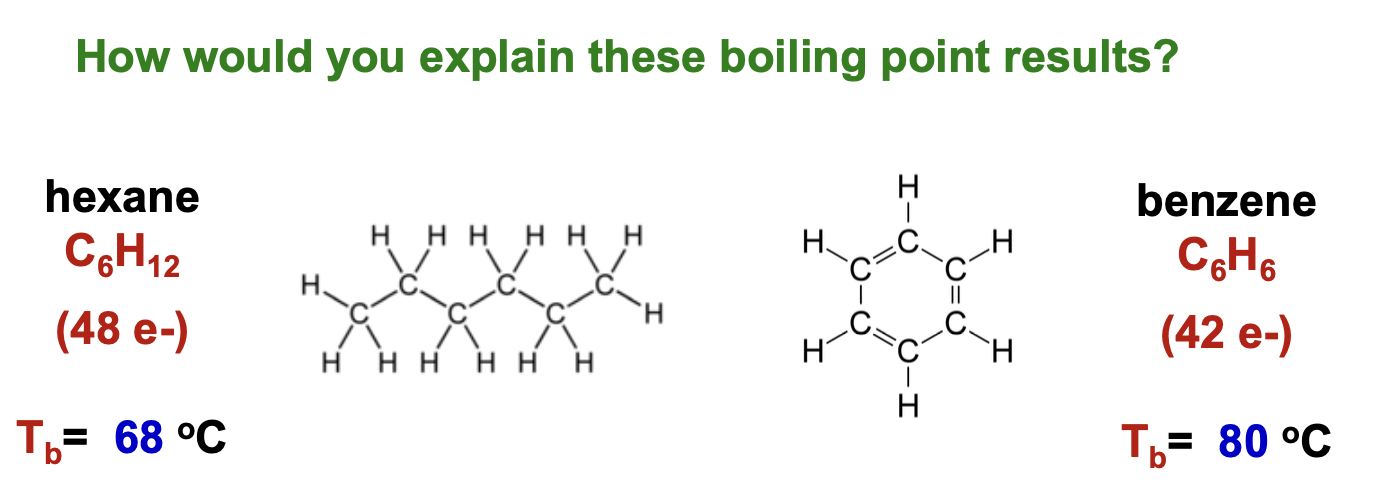
what are differentiating molecular characteristics responsible for different boiling points in different molecules
bond/molecular polarity
atomic radii
shape/geometry
number of electrons
polarizability
measure of how electrons in any atom, molecule, or ion are affected by (attracted/repelled) the presence of other atoms, molecules, or ions in their vicinity
induced dipole moment
when the presence of other charged regions polarizes a molecule, creating or strengthening an existing dipole
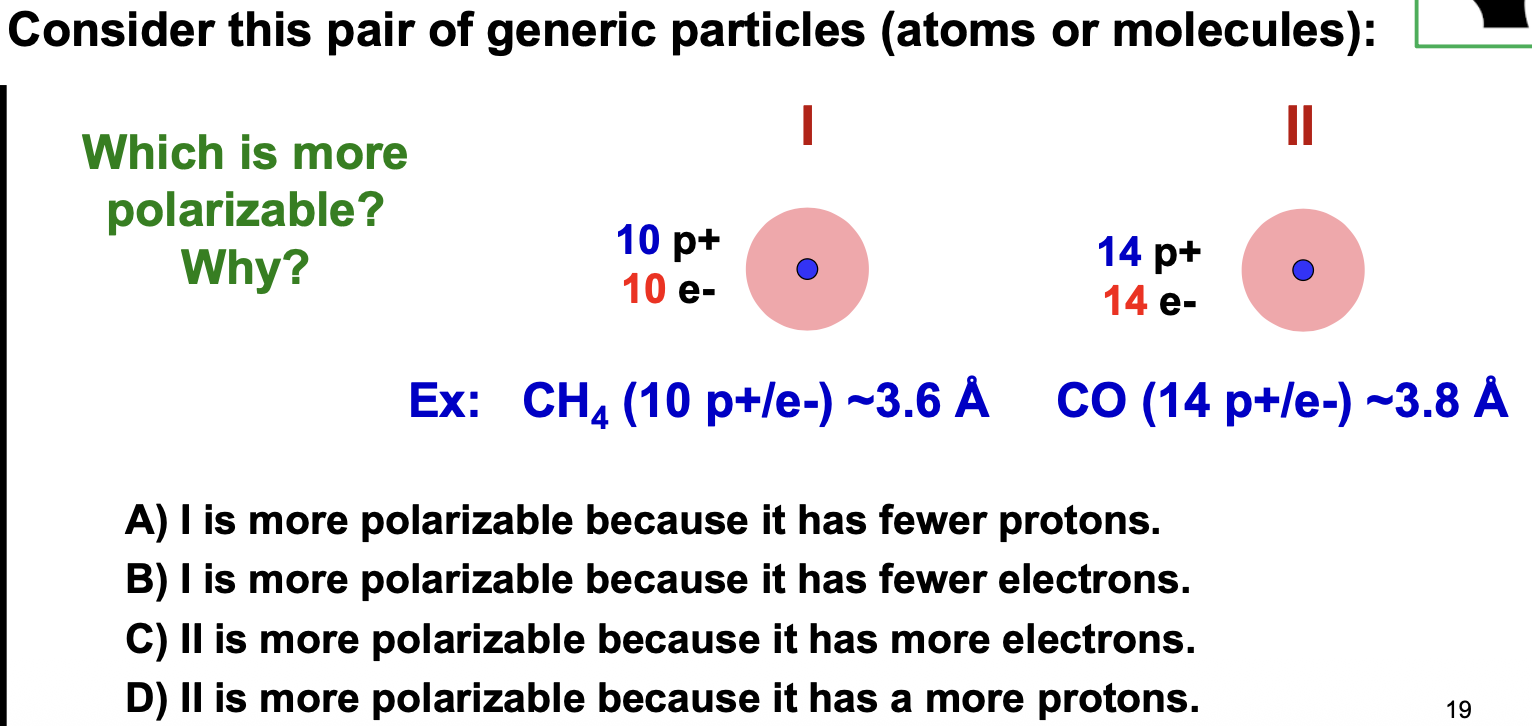
C because more electrons with the same size are easier to polarize electron clouds into regions
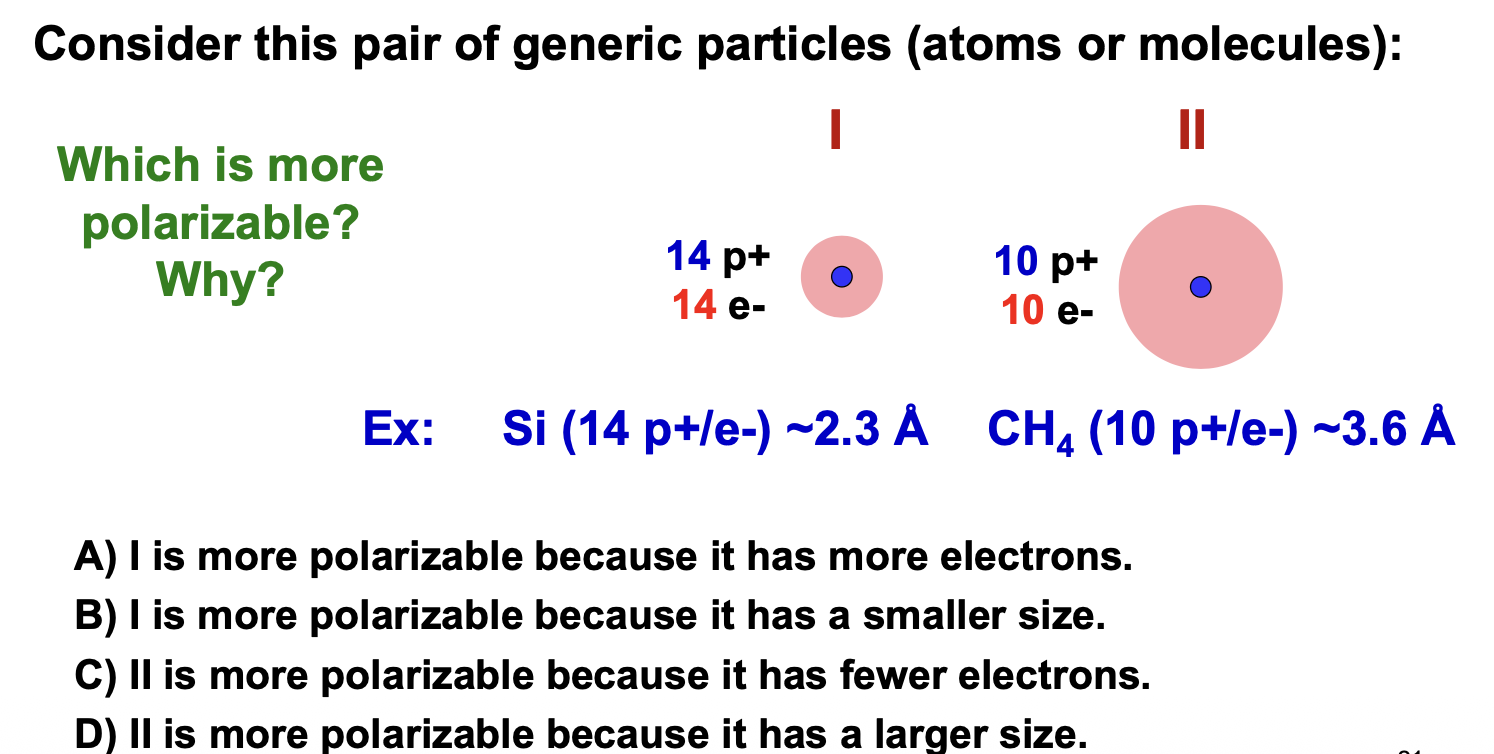
D because larger sizes with same elctron count make it more distortable

II because a larger sized molecule has electrons more spread out, weakly held, and easier to polarize
polarizability trend
generally increases with more electrons, greater atomic size, and a more exposed shape area
what happens to boiling points as polarizability increases
boiling point increases
dispersion forces
when two atoms or molecules get close together, the IMF interactions between electrons and protons induce instantaneous dipole moments (temporary polarization) that cause the particles to attract to each other
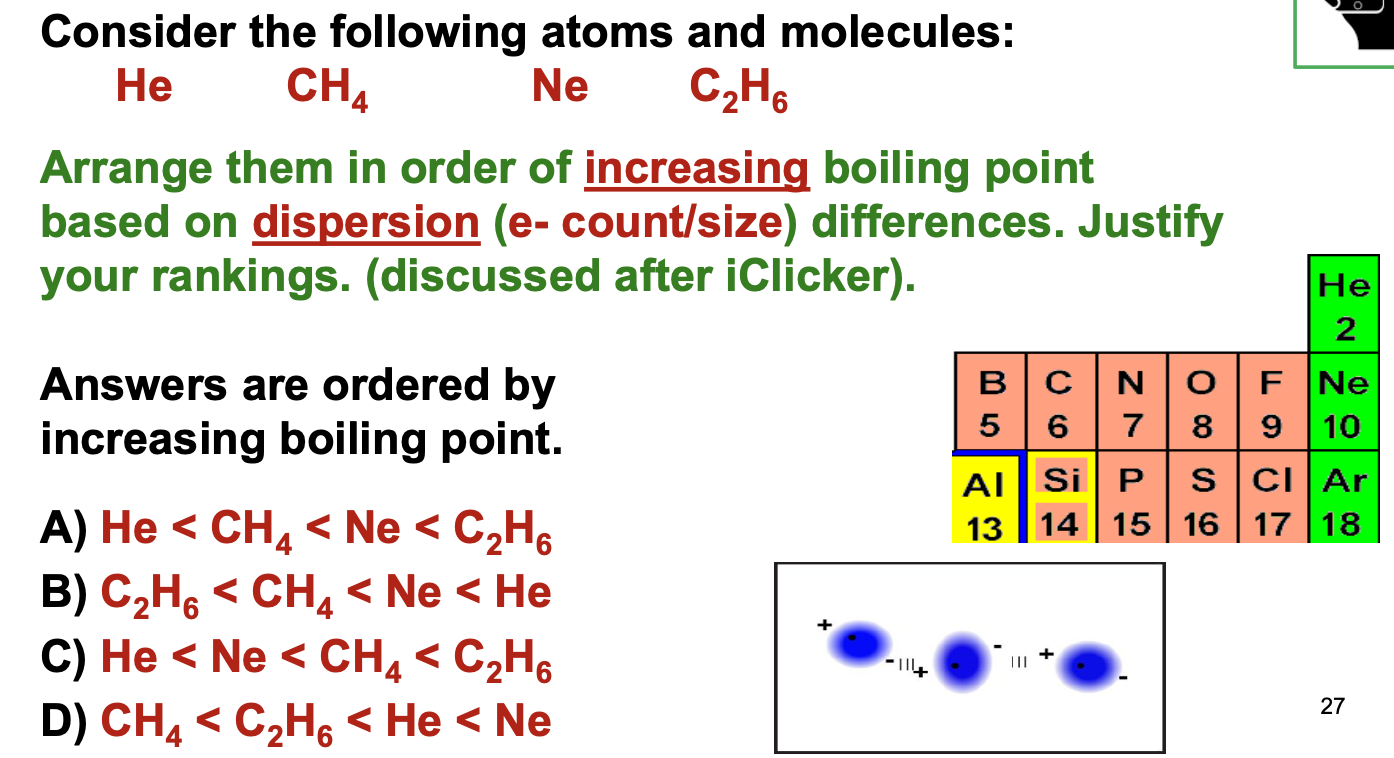
C because higher boiling points are based on dispersion (bigger sizes and electron counts)

A because high boiling points have low volatility/vapor pressure making CF4 the highest volatility
how to determine boiling points
total number of electrons
molecular size/shape and intermolecular contact area
low bp=low dispersion
strong IMFs have…
bigger sizes with more electrons to achieve higher dispersion forces
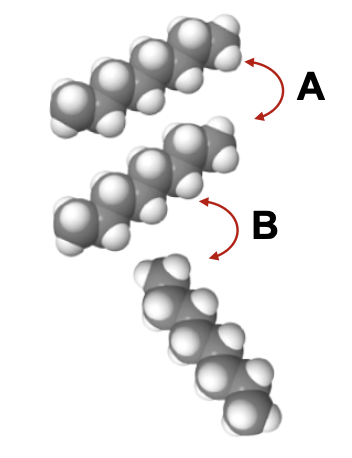
which molecular orientation has higher dispersion interactions
A because of its flat and elongated geometry which is more polarizable
branching effect of IMFs
reduce effect contact areas over which molecules interact, decreasing IMFs
lower IMFS lead to…
lower melting points, boiling points, and viscosities
high volatilities
too much branching

how does molecular polarity influence IMFs
additional contribution through permanent molecular dipole moments (dipole-dipole forces) in the molecule leading to higher boiling points and IMFs

what would the graph look like for these


because 2 and 4 are polar you must use dispersion (size and electron count) as the baseline, then ADD the dipole moments for higher boiling points

A because more dispersion forces overcome the dipole leading to a higher boiling point
hydrogen bonding
an IMF polar (not covalent) bonding interaction between H and N, O, or F


polarizability summarization
dispersion
molecular polarity summarization
dipole-dipole
bond polarity summarization
hydrogen bonding
why is energy required to overcome IMFs smaller than to overcome a covalent bond
because it’s easy to break IMF but not bonds when boiling water
what do the configurations and potential energy of IMF interactions in mixtures look like
low potential energy (IMF interactions are strong) and more configurations (mixed particles have more options to adopt more states)
PEC diagram that always mixes

PEC diagram that doesn’t mix

PEC diagram that mixes slightly and more with higher temperatures

endothermic
energy taken in
exothermic
energy released
a.) will these mix
b.) endothermic or exothermic
c.) does mixing increase with temperature
yes, mixing has lower PE and more configurations
exothermic because PE is lowered which releases energy
no, adding heat won’t improve miscibility because lower PE
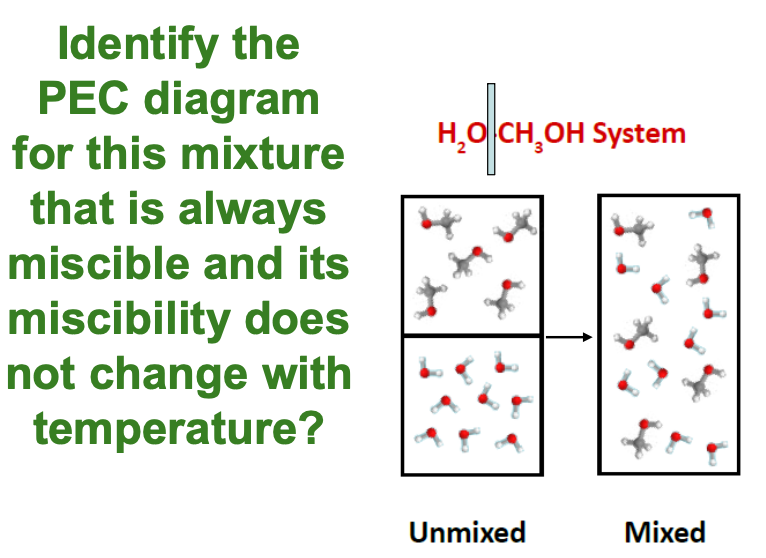
No net energy change because temperature doesn’t change mixing

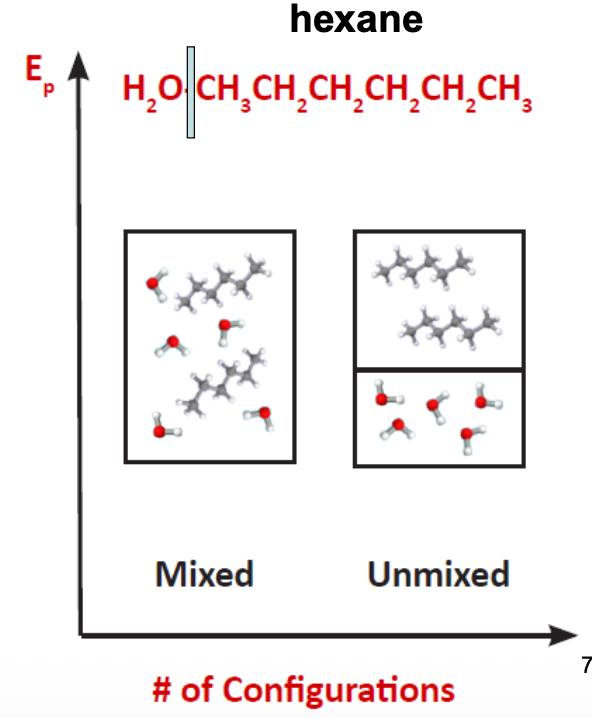
predict if th substances will mix and if they will mix more with increasing temperature
won’t mix because unmixed has more configs
won’t mix more with temperature because no net energy change means temperature has no effect
key ideas from molecular mixing
competing IMFs influence PE change
strong IMFs lead to good mixing and config options
more configs lead to miscible mixtures
molecules with similar IMFs are miscible
inter
between
intra
within
macromolecules
large molecules whose properties depend on functionality and structure
polymers
most common type of macromolecule that may be natural or synthetic; repeated units that are identical small pieces
monomers
make up polymers and are the repeating structural units connected by covalent bonds
addition polymerization
rearranging double bonds into single bonds

determine structural formula of the polymer and the molecular structure of the monomer
polymer formula - [CH2-CH-CH3]
monomer structure -


how to predict physical properties of polymers
structure - length and shape (chain scale)
composition - dispersion, polarity, H-bonding (IMF)
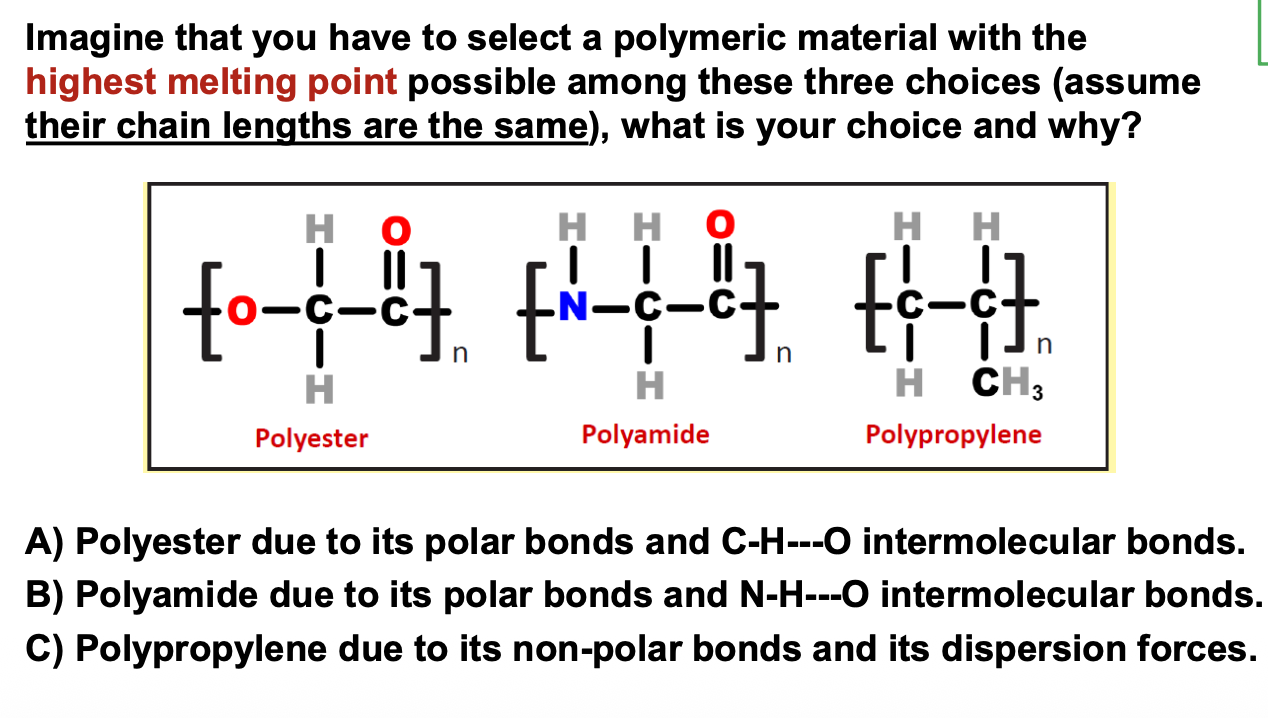
B because high meting points will be met with dispersion, dipole-dipole, and H-bonding
condensation polymerization
combining two different monomers and eliminating H2O by forming N-C or C-C bonds
polyamides
combines a carboxylic acid (-CO2H) + amine (C-N-H)
rugged and strong (nylon, Kevlar) – polar bonds and H-bonding
polyesters
combines carboxylic acid (-CO2H) + alcohol (C-O-H)
fabrics- can be spun with cotton, carpet – polar bonds
nylon
a polymeric silky material that can be processed into fibers, films, or shapes (combine diamine with dicarboxylic acid)
monomer structures
impact polymer physical properties because their functional groups are repeated along each polymer chain.
kevlar
a high strength polyamide (made from condensation) with many applications, from aerospace to body armor, has a stronger bond (not necessarily a chain) than nylon
why is kevlar stronger than nylon
kevlar has more hydrogen bonds and a rigid phenyl ring stacking and double bonds (nylon is more effective at dispersing energy)

C because it has an OH and Hydrogen bond which forms water making it soluble
little branching and longer chain lengths lead to…
higher melting points, density, viscosity, and rigidity
lower flexibility, elasticity, thermo-plasticity, and plasticity
opposite response to lots of branching and short chain lengths

B because 2 has the most surface area and most effective dispersion forces
polymer crosslinking
tuning the properties of polymeric materials by adding other substances where one molecular species can act like a binder (H-bond or covalent bond) between chains which increases strength and rigidity
proteins
natural polymers made by the combination of smaller molecular called amino acid monomers
primary structure
unique sequences of amino acids in a protein
residues
side chains originating from different amino acid monomers
how to determine 3D structure in a protein
backbond
peptide bonds
protein folding
Intermolecular interactions with water molecules and intramolecular interactions between amino acid residues in a chain lead them to “fold” into structural conformations (secondary 3-D structures) that are most energetically stable in that environment.

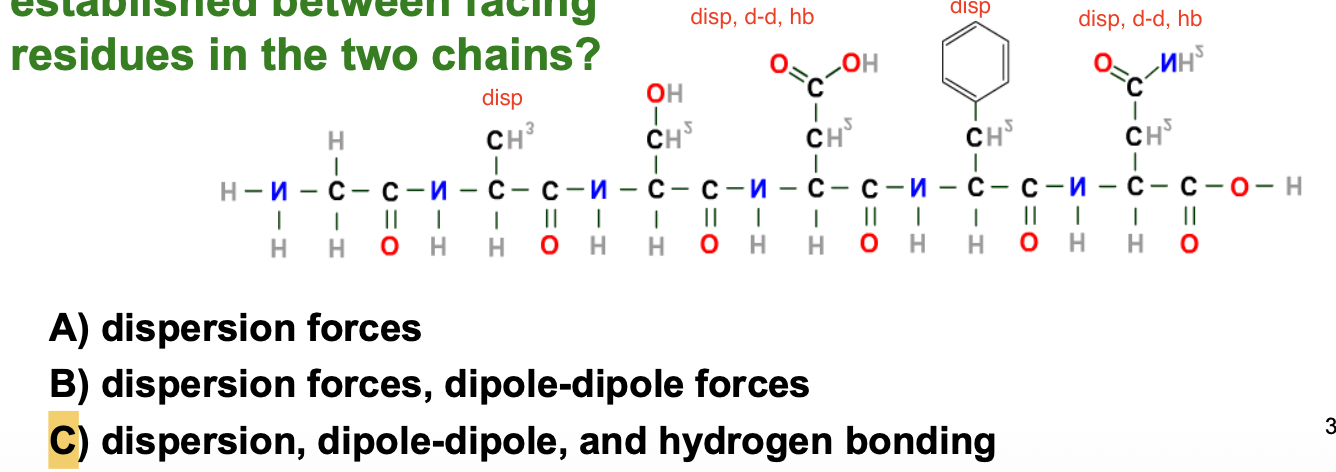


secondary structure/like with like
the residues of similar types tend to segregate with each other and have an intramolecular fold
fatty acids
long chain (non-polar) hydrocarbons with a polar end group
saturated
hydrocarbon chains with no double bonds between carbons
unsaturated
hydrocarbon chains with at least one double bond
unsaturated fats configurations
cis - same end
trans - opposite ends


triglyceride regions
heads work with water
tails work with dispersion (connecting other chains)
ionic compounds
combination of metal and nonmetal atoms comprised of independent ions (no shared bonding electrons)
cation
positive ion (metal)
anion
negative ion (nonmetal)

K-1e (4s lost) = Ar
F+1e (2p gain) = Ne
K+F = KF = potassium fluoride
ide
single nonmetal atom anion
ite
polyatomic ion with oxygen
ate
one more oxygen than polyatomic ion with oxygen

B
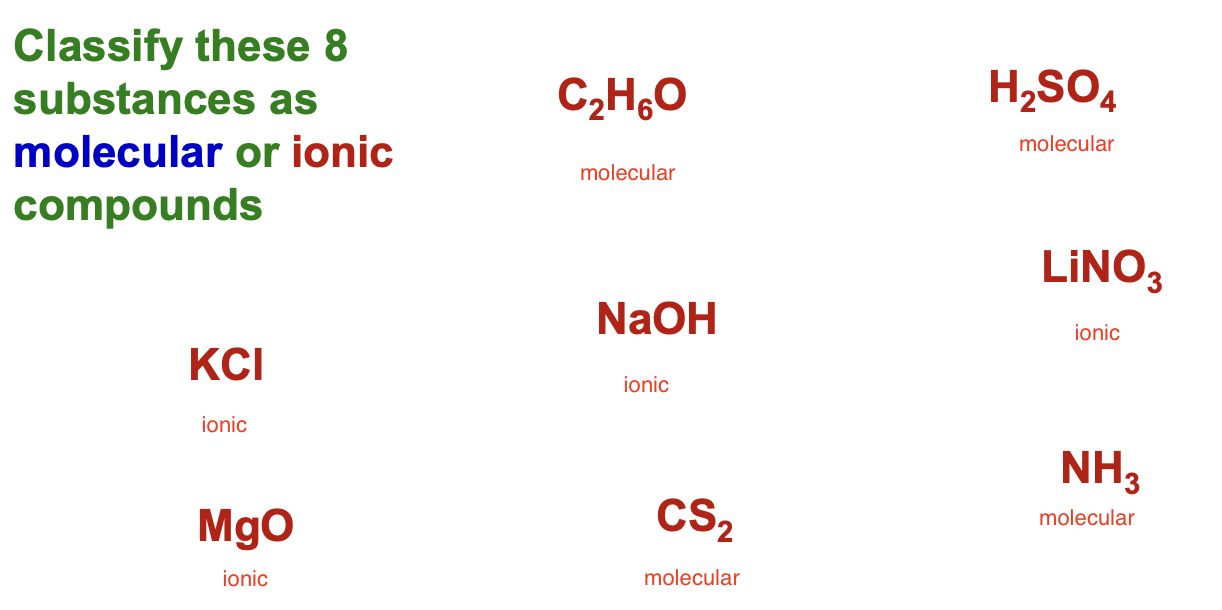

D because it has high pressure and tightly packed just like solid states are while maximizing density and attached to as many ions as possible
nitrate charge
NO3-
nitrite charge
NO2-
sulfate charge
(SO4)2-
sulfite charge
(SO3)2-
phosphate charge
(PO4)3-
phosphite charge
(PO3)3-
charge neutrality
an ionic network (usually solid) that forms no net charge
how does the transfer of electrons work across an ionic compound
from the metal to the nonmetal


C because ions with different charges (cations and anions) are closely associated while packed tightly together as a solid
properties of ionic compounds and ways to change properties
don’t conduct electricity (melting can cause the ions to move freely)
are brittle (rearranging ions to repel can make the crystal fall apart)
ionic compound physical properties
solids with high melting/boiling points
strong electrostatic forces
How would you expect the size of atom to change when they become cations or anions?
cations are smaller than the atom they came from
anions are larger than the atom they came from
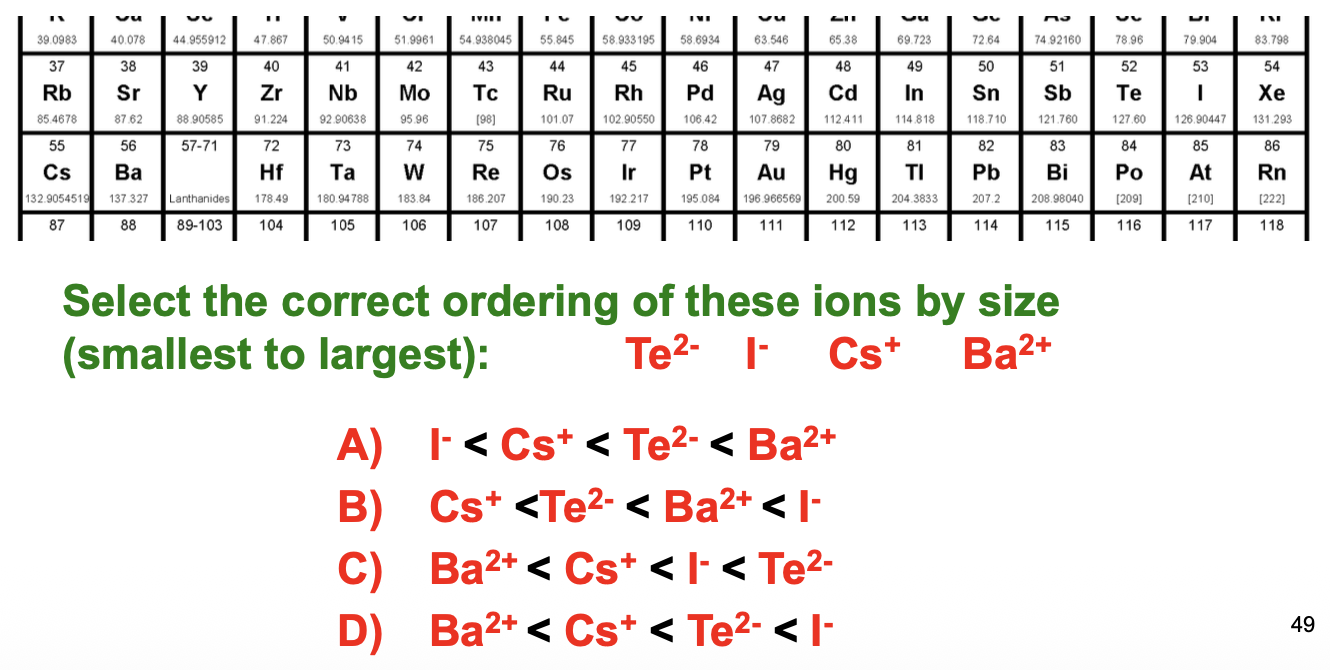

based on coulomb’s law, when should forces be stronger
with larger charges on the ions (q)
with smaller sizes of the ions (radius)

