Prenatal Assessment, Health promotion & Nutrition- Ch 10-12
 Call Kai
 Learn
 Practice Test
 Spaced Repetition
 Match
 Flashcards
 Knowt Play
1/16

There's no tags or description
Looks like no tags are added yet.
17 Terms
What are the initial prenatal visit: history & risk assessment?
Pregnancy history
LMP / dating
Prior pregnancies & outcomes
Fertility treatment / prior loss
Health history
Medical / surgical history
Medications, supplements, allergies
Family / genetic history
Exposure & safety
Substance use
Infection / travel / occupational risks
IPV and personal safety → intimate partner violencw (higher risk)
Social context
Food, housing, transportation
Work / caregiving demands
Supports, mental health, access to care
Nursing habit: ask without judgment → identify risk → connect to resources → document clearly
What are the baseline assessments that becomes comparsion point?
Maternal baseline
Blood pressure
Weight / prepregnancy BMI context
Focused physical assessment
Mental health / safety / social needs
Symptoms & current concerns
Pregnancy baseline
Confirm dating
Fetal viability / heart rate as appropriate
Review prior imaging / results
Establish gestational-age–specific expectations
Why it matters later
Is BP rising from baseline?
Is weight gain on an appropriate trajectory?
Is uterine growth consistent with gestational age?
Are new symptoms expected or concerning?
Has psychosocial risk changed?
“What finding today will matter when I compare it with a later visit?
Fundus: 12 weeks just rising above symphis pubis,14 weeks half way, 20 weeks at umbilicus, 36+ at zyphoid process
What are the routine initial prenatal labratory screening?
ABO / Rh + antibody screen: Transfusion compatibility; identify Rh-negative patients and existing alloantibodies
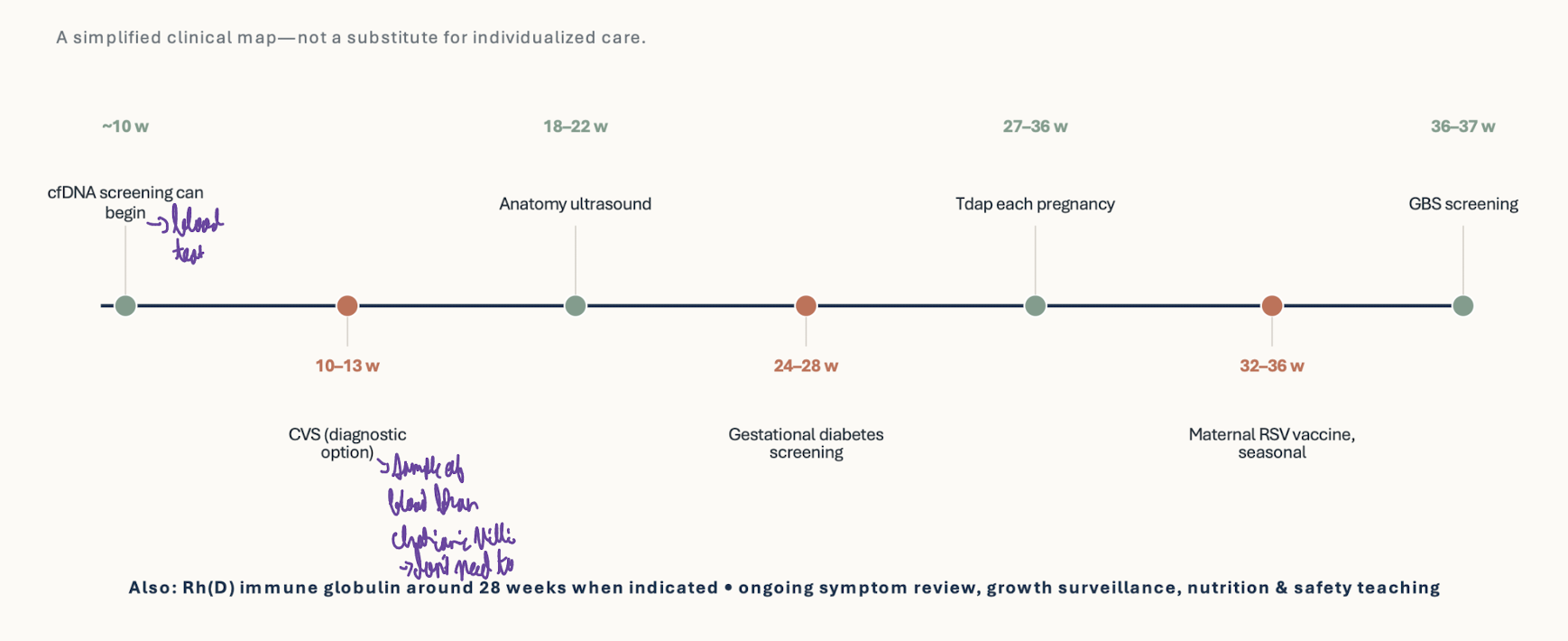
Rh immune globulin (brand name RhoGAM) is given at 28 weeks and after they deliver baby if thier blood type is positive (also if trauma or miscarrige occurs)
CBC: Screen for anemia and establish hematologic baseline
can have physiologic hemodilution
Urinalysis / urine culture: Identify bacteriuria / infection and establish baseline
Rubella immunity: Identify susceptibility; live vaccine is given postpartum, not during pregnancy
Rubella: german measels, can cause blindness to babies if Mom contracts during prgnancy
Hepatitis B & C, HIV, syphilis: Identify infection and guide treatment / perinatal prevention
Immunoglobin and vaccine given if Mom is positive (to baby after birth)
Other testing as indicated: STIs, TB, genetic carrier screening, immunity or disease-specific tests based on history/risk
Rh status & antibody screen
Rh-negative patient
Identify maternal blood type / Rh status → Antibody screen Is the patient already sensitized? → Rh(D) immune globulin Prevent sensitization when indicated
An unsensitized Rh-negative patient may receive Rh(D) immune globulin around 28 weeks
and after potential fetomaternal blood exposure / birth when indicated
What does ongoing prenatal care include?
At routine visits, think…
Maternal status: BP symptoms, weight trajectory
Fetal status: FHR, growth, movement when appropriate
Results: Review labs / imaging / screening
Teaching: What is next? What should prompt a call?
Access: Mental health, safety, resources, barriers
Traditional schedules are familiar, but current guidance emphasizes individualized prenatal care delivery.
Higher-risk findings → more surveillance
Some routine care may be delivered through tailored in-person / virtual approaches
The purpose of surveillance matters more than memorizing visit intervals
What is the routine surveillance of fetal growth & well being?
Fetal heart rate:
Assess as appropriate to gestational age and setting
Routine fetal status
Fundal height
Primary screening tool for fetal growth after ~24 weeks
Growth trend
Fetal movement
Teach awareness of the patient’s usual pattern later in pregnancy
Patient-reported well- being
Ultrasound
Dating, anatomy, placental location, growth or other indications
Structural / growth information
Abnormal growth, decreased movement, or concerning maternal symptoms → evaluate rather than “watch and wait.”
What are the prenatal testing & teaching milestones?
Women are offered screenings but it is up to the individual
GBS- group beta strep; can change so prevent baby being exposed as being delivered → normal part of microbiome but can be harmful to baby if they are exposed during birth thus why its tested for late and treated with antibiotics during labor to prevent exposure
Screening v diagnostic testing
Screening; estimates risk/probability
Does not confirm a diagnosis
May be blood-based, ultrasound-based, or combined
A positive result requires counseling and may lead to diagnostic testing
Patient may accept or decline after informed discussion
Diagnostic; Answers a more specific question, definitively diagnose abnormality
CVS or amniocentesis can diagnose many chromosomal/genetic conditions
Invasive tests have benefits, limits, and procedure- related risks
Results may affect pregnancy management and preparation
Nursing role: clarify, support, avoid directing the patient’s choice
Sceening ≠ diagnosis
What are the prenatal genetic screening?
Screen; cfDNA / NIPT- Most sensitive/specific common screening test for common aneuploidies; can begin around 10 weeks
Screen; First-trimester / serum approaches Estimate risk using blood tests ± ultrasound depending on approach
Screen / Image; Second-trimester anatomy ultrasound Structural assessment; ideally 18–22 weeks
Diagnostic; CVS Diagnostic procedure typically 10–13 weeks → sample of placenta
Diagnostic; Amniocentesis Diagnostic procedure typically from ~15 weeks
How is health promoted in pregnancy?
Move: For uncomplicated pregnancy: aim for ≥150 min/week moderate-intensity aerobic activity
Protect: Seatbelt low across hips + shoulder belt; avoid overheating / high-risk activities
Sleep / position Comfort strategies; later pregnancy may favor side-lying when symptomatic
Oral health: Routine dental care and oral hygiene remain important → oral issue will affect overall health (infection in mouth can get into heart)
Work / travel: Individualize around symptoms, exposures, mobility, and pregnancy risk
Mental health: Screen routinely; normalize help-seeking and connect to care
What are the medications, OTC, supplement & substance safety?
Medication safety
Review prescriptions, OTC products, herbals, and supplements at every transition
“Natural” does not mean pregnancy-safe
Do not advise abrupt discontinuation of a necessary prescription without prescriber guidance
Check the current plan when nausea, reflux, pain, allergies, or infection prompts OTC use
Substance screening
Ask about alcohol, nicotine/vaping, cannabis, and other substances without judgment
FASD can occur with alcohol consumption in pregnancy
Use clear language: no known safe amount of alcohol during pregnancy
Assess readiness, safety, withdrawal risk, and supports
Connect to treatment and harm-reduction resources when needed
Never let shame become a barrier to disclosure or care
What are the vaccines during pregnancy: protect parent + newborn?
Influenza; Inactivated / recombinant influenza vaccine during pregnancy; live nasal vaccine is contraindicated- Seasonal
Tdap; Recommended during every pregnancy; preferably early in 27–36 weeks- Each pregnancy
Maternal RSV (Abrysvo); 32 0/7–36 6/7 weeks, seasonally Sep–Jan in most of continental U.S.- Seasonal + gestational
Live vaccines; MMR and varicella are contraindicated during pregnancy; vaccinate postpartum when indicated- Avoid in pregnancy
Nutrition in pregnancy
Start with the plate; Build meals around
Protein-rich foods
Whole grains / high-fiber carbohydrates
Fruits and vegetables
Calcium-rich foods
Healthy fats + hydration
Energy needs
For many patients entering
pregnancy at a healthy weight:
1st trimester
Usually no extra calories
2nd trimester
~+340 kcal/day
3rd trimester
~+450 kcal/day
Individualize
Nausea / vomiting
Food insecurity
Cultural preferences
Vegetarian / vegan diets
Adolescence or multiple gestation
Diabetes / bariatric surgery / other conditions
Also wants to increase ater and food intake in breast feeding
**What is the expected weight gain; start with prepregnancy BMI?**
Use the range as a counseling guide—not a judgment.
Underweight: <18.5
28–40 lb
Healthy weight: 18.5–24.9
25–35 lb
Overweight: 25.0–29.9
15–25 lb
Obesity: ≥30
11–20 lb
Nursing focus: trend weight + nutrition + fetal growth together; avoid shame-based counseling.
What are the high- yield nutrients & supplements to support pregnancy?
Folic acid: ≥400 mcg/day before and during early pregnancy for most people
Neural tube development ex. myelomeningocele; spina bifida
Iron: Pregnancy need ≈27 mg/day
Maternal RBC expansion / fetal needs
Calcium: Support maternal bone health + fetal skeletal development
Bone / neuromuscular function
Vitamin D: Supports calcium metabolism and bone health
Bone / immune function
Choline: Pregnancy target ≈450 mg/day
Fetal brain / nervous system
Iodine / B12 / omega-3s: Assess diet pattern and prenatal vitamin content
May need individualized attention
What is the food safety for fish, caffeine & alcohol with pregnancy?
Food Safety
Avoid unpasteurized milk/cheese and raw or undercooked animal foods
Heat deli meats / hot dogs until steaming hot
Wash produce and avoid cross-contamination
Seafood
Choose lower-mercury fish
Aim for 8–12 oz/week from recommended choices
Avoid high-mercury fish → swordfish, tuna, macral
Caffeine
Keep intake <200 mg/day
Count coffee, tea, energy drinks, soda, chocolate, medications
Alcohol
No known safe amount or safe time during pregnancy
Use nonjudgmental screening and support
What are the warning signs in pregnancy?
Bleeding or fluid leakage; Vaginal bleeding • gush / persistent trickle of fluid
Can have bleeding in early pregnancy (implantation bleeding) and after coitus → but should still check with provider bc it may not be normal
Neurologic / BP symptoms; Severe headache • visual changes, fainting
Pain / contractions; Severe abdominal or pelvic pain, regular painful contractions before term
Respiratory / clot symptoms; Chest pain, dyspnea at rest, unilateral leg swelling/pain
Infection / hydration: Fever, dysuria with systemic symptoms, persistent vomiting / dehydration
Fetal concern: Decreased fetal movement once a usual pattern is established → when baby gets bigger less space to move, or baby is asleep can mean no fetal movement but should be able to wake baby up by giving sugar, sitting down after standing and walking for a while; if not need it is of concern and to notify provider
Patient teaching language: “This can be common, AND call us right away if…”