theatre - exam 1
 Call Kai
 Learn
 Practice Test
 Spaced Repetition
 Match
 Flashcards
 Knowt Play
1/20

There's no tags or description
Looks like no tags are added yet.
21 Terms
definition of theatre
a live event in which a performer or group of performers and an audience come together to participate in an experience that is different from everyday life.
different styles of stage
arena
thrust stage
proscenium
black box
found space
audience etiquette
prompt start time, often no late seating
❖ silencing devices & no talking
❖ staying seated
❖ not interacting with performers unless asked
❖ no food and drink
willing suspensions of disbelief
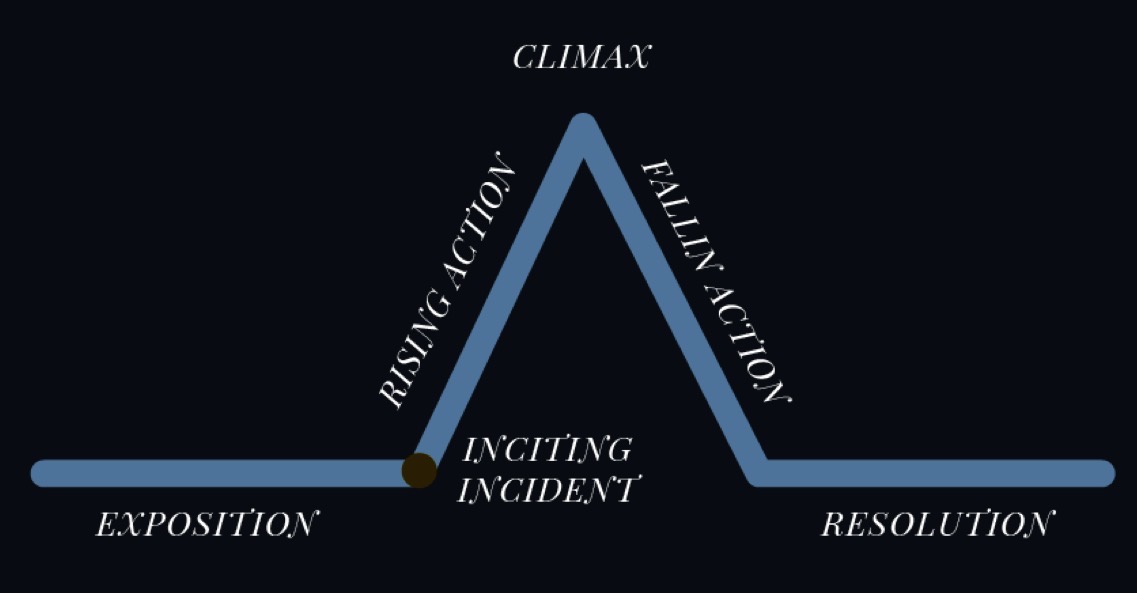
plot diagram
exposition
inciting incident
rising action
climax
falling action
resolution
parts of the stage/backstage
box office
control office
shops (scenic, costumes, electrics)
dressing room
green room
how to be a good critic
❖ Open mind
❖ Balance
❖ Constructive Criticism
❖ Opinions vs. Storytelling
❖ Production Aspects
❖ Audience
❖ Informed Experience
❖ Prior knowledge
audiences thru history
greece: men, civic duty
rome: men, women, slaves, kids
medieval: audience illiterate, religious duty
renaissance: rowdy audience, groundlings vs. dukes & lords
origins of greek theatre in ritual
began in athens
celebrating dionysus w/ dithyrambs (hymns celebrating the god)
parts of greek theatre space
theatron (origin of theatre) - the seeing place
orchestra - where chorus was
skene (origin of scene)
aristotle & tragedy
said the purpose of tragedy is to around “terror & pity”
catharsis is the purging of that pity and fear
audience’s experience thru the protag
greek theatre performers
greek chorus - performers who wore masks and provide commentary on the play
thespis (origin of thespian) - an actor of theatre artist
satyr plays
shorter comedic plays
actors dressed as satyrs (half man, half goat)
dionysian festival
golden age of theatre
4 plays (3 tragedies, 1 short comedy)
aeschylus
credited w/ adding a second actor plays
oresteia trilogy
sophocles
wrote more than 120 plays
introduced third actor
oedipus storyline, electra
euripedes
controversial, discussed brutality of warriors and mistreatment of women & kids
madea
aristophanes
comedic playwright
wrote socio political comedy
lysistrata
plautus
comic playwright (roman)
earliest latin plays to survive
terence
roman african, freed slave
followed plautus
comic playwright
seneca
tragic playwright (roman)
advisor to emperor Nero
redid greek plays, more graphic violence
hercules, trojan women, medea
common roman themes
generation gap
thwarted lovers
role reversal
mistaken identity
complex plan
comic irony