ECON 2310 Stationary Time Series
 Call Kai
 Learn
 Practice Test
 Spaced Repetition
 Match
 Flashcards
 Knowt Play
1/112

There's no tags or description
Looks like no tags are added yet.
113 Terms
Time series data
data collected on the same observational unit at multiple time periods
Examples of Time Series Data
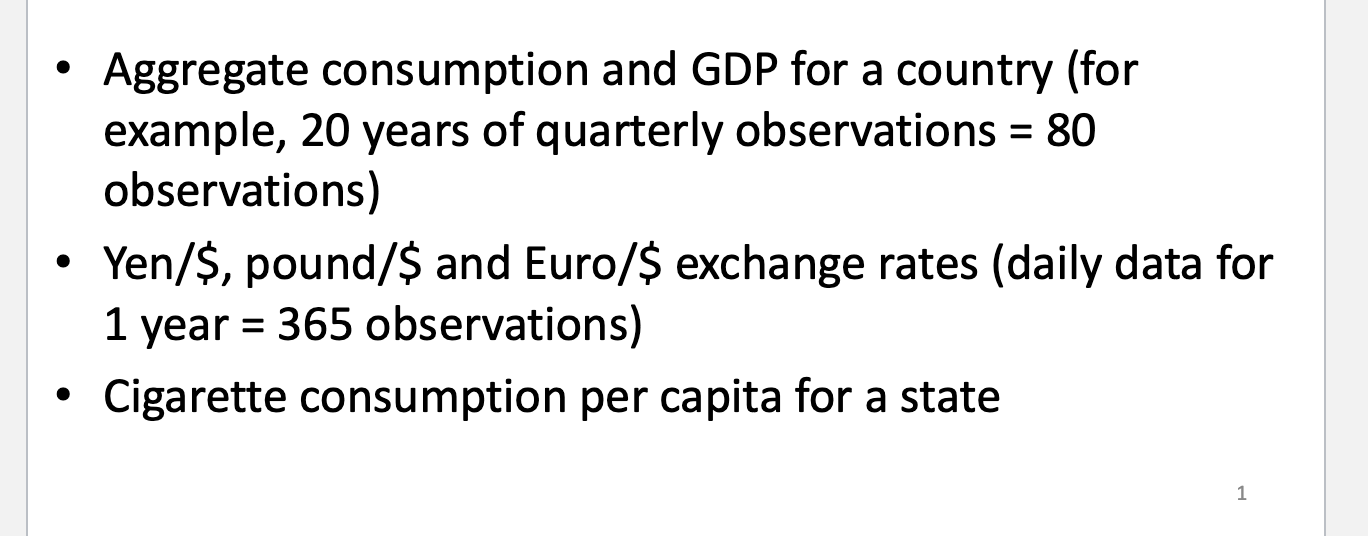
logarithm of real gdp in US

growth rate of real gdp in us

why use time series data
forecasting models, dynamic causal effects, lack of choice
forecasting models
What will the rate of inflation be next year?
to estimate dynamic causal effects
If the Fed increases the Federal Funds rate now, what will be the effect on the rates of inflation and unemployment in 3 months? in 12 months?
– What is the effect over time on cigarette consumption of a hike in the cigarette tax
Plus, sometimes you don’t have any choice…
Rates of inflation and unemployment in the US can be observed only over time
learning about time series

time series data and technical issues
time lags
correlation over time
forecasting models w/o causal interpretation
conditions under which dynamic effects can be estimated
calculation of standard errors
correlation over time
serial correlation / autocorrelation
Forecasting models that have no causal interpretation (specialized tools for forecasting):
autoregressive (AR) models
– autoregressive distributed lag (ADL) models
Conditions under which dynamic effects can be estimated, and
how to estimate them
Calculation of standard errors when
the errors are serially correlated
Forecasting and estimation of causal effects are quite
different objectives
for forecasting

Time series data and serial correlation:
Notation and terminology on the time series 𝑌:

Time Series Data and Serial Correlation
We only consider which observations?
We only consider consecutive, evenly-spaced observations (e.g.: daily, weekly, monthly, quarterly, yearly; with no missing periods)
We will transform time series variables using:
Lags, First Differences, Logarithms, Growth Rates
The first and jth lag of a time series are

the first difference of a series

the first difference of the logarithm is

the percentage change of a time series is

Illustrating lags, changes, percentage changes using U.S. GDP data
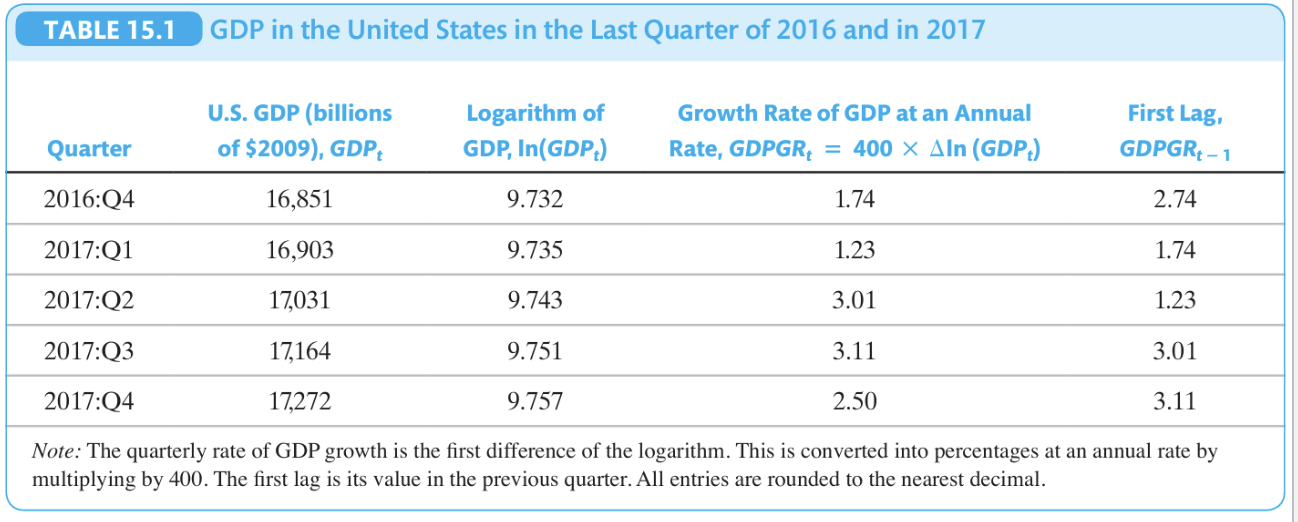
2016 Q4 and 2017 Q1


4th column

last column

first lag, taking value from previous period
The correlation of a series with its own lagged values is
autocorrelation or serial correlation.
first autocorrelation of Yt

First autocovariance of Yt

autocorrelation and autocovariance link
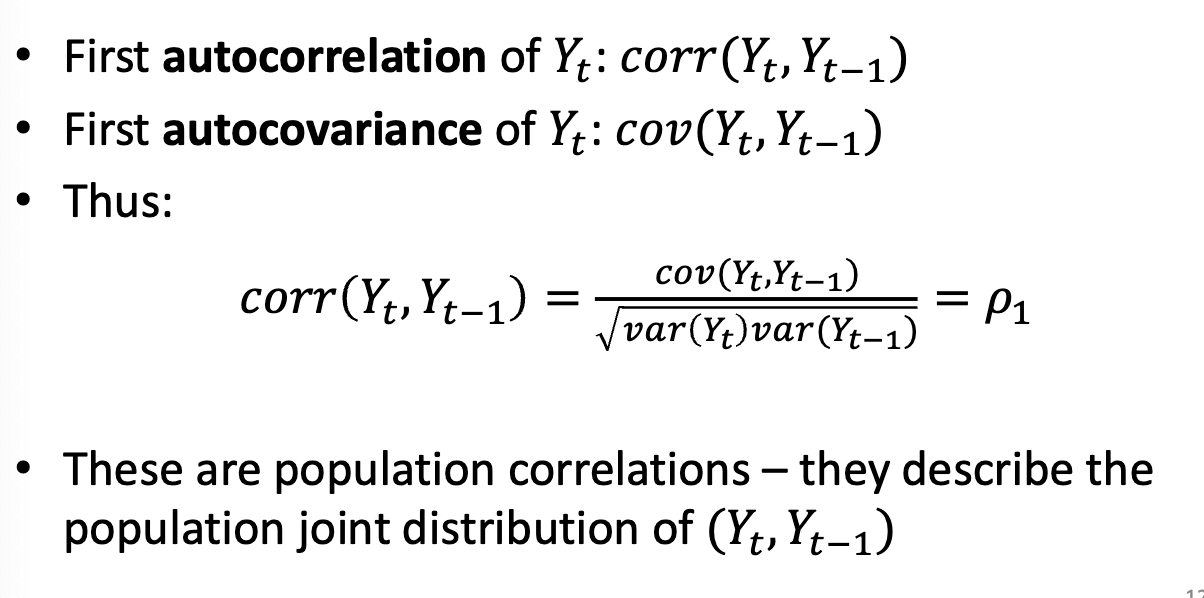
jth autocovariance/autocorrelation description

jth autocovariance/autocorrelation formulas

the jth autocorrelation coefficient is sometimes called

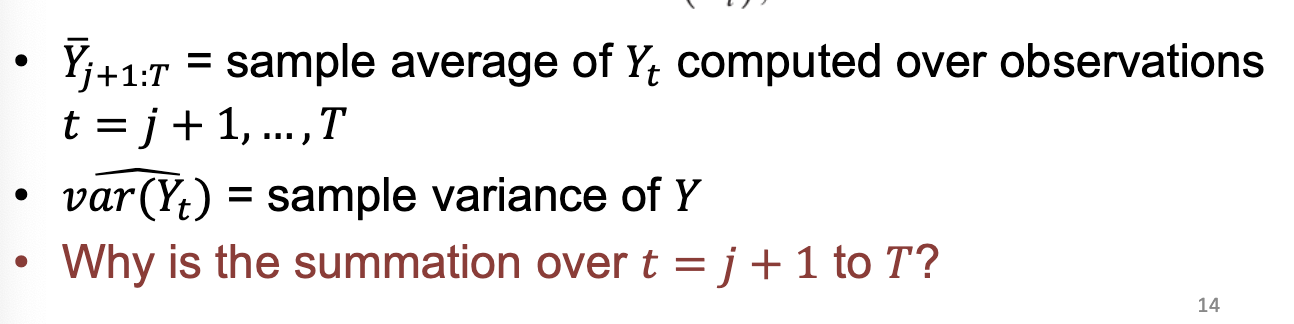
sample autocovariance/autocorrelation

sample autocovariance/autocorrelation formula

sample autocovariance/autocorrelation anatomy
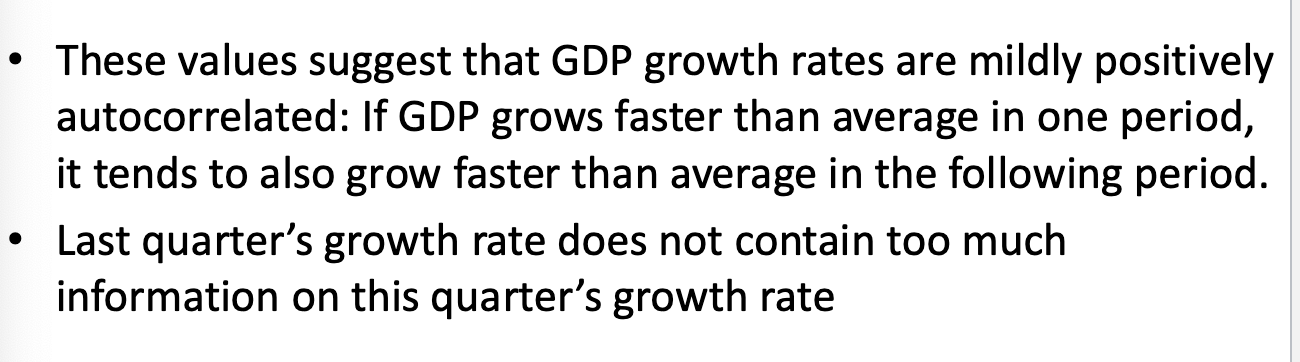
autocorrelation of the growth rate of US GDP example
1st four sample autocorrelations of GDP growth rate


notes on this
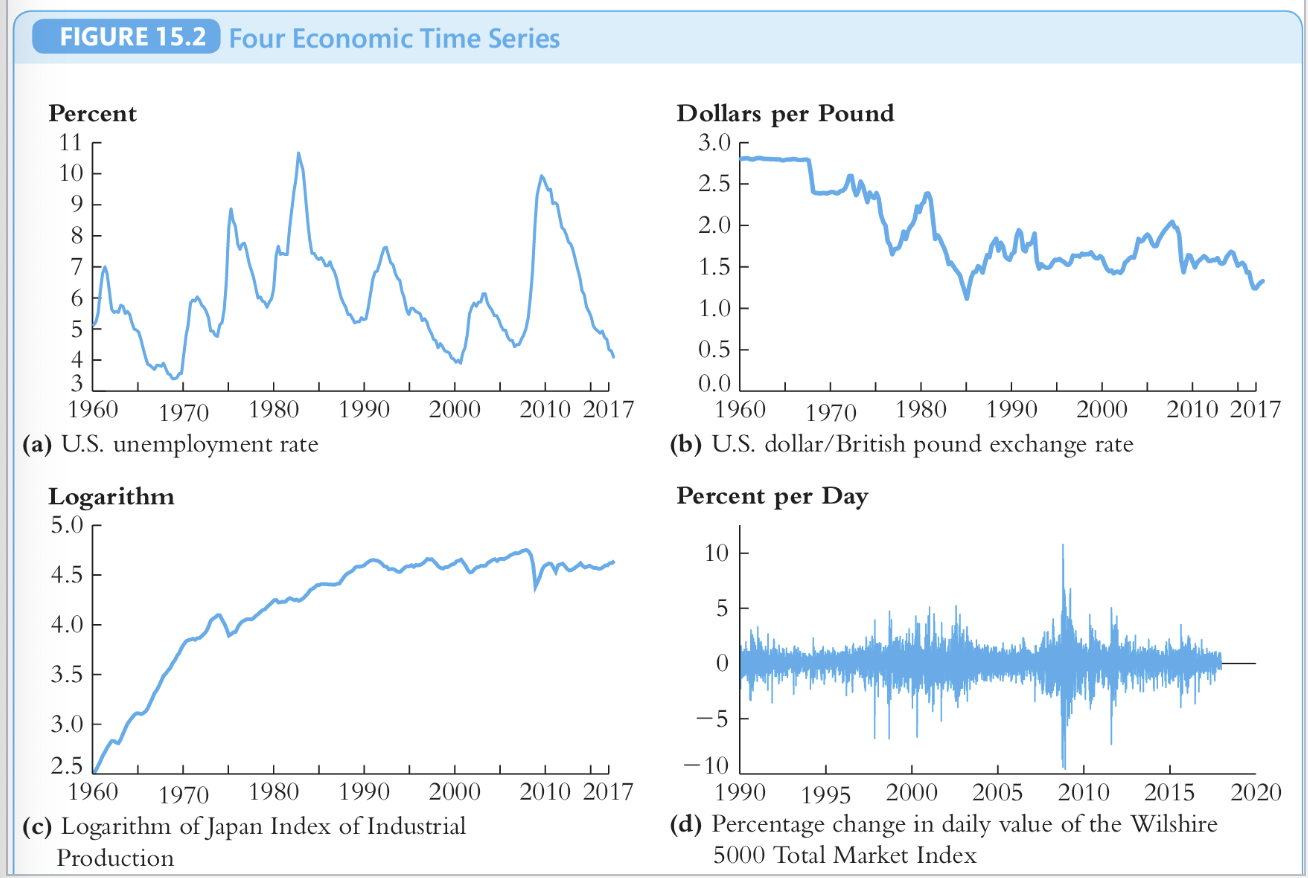
other examples
stationarity is the
key idea for external validity of time series regression
Historical relationships can be generalized to the future

stationarity definition

joint stationarity

stationarity requires the future to be
like the past, at least in a probabilistic sense

compute mean, variance, and jth autocovariance of Yt

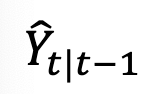
predicted value

forecast

one step ahead forecast



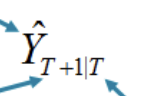
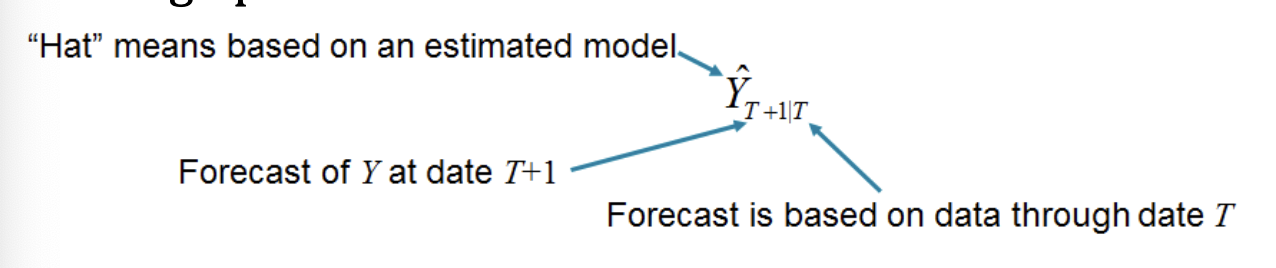
forecast error


root mean squared forecast error

more on RMSFE

A natural starting point for a forecasting model is to use

autoregression

autoregression order

first order autoregressive model

AR(1) notes

AR(1) notes cont




AR(p) notes
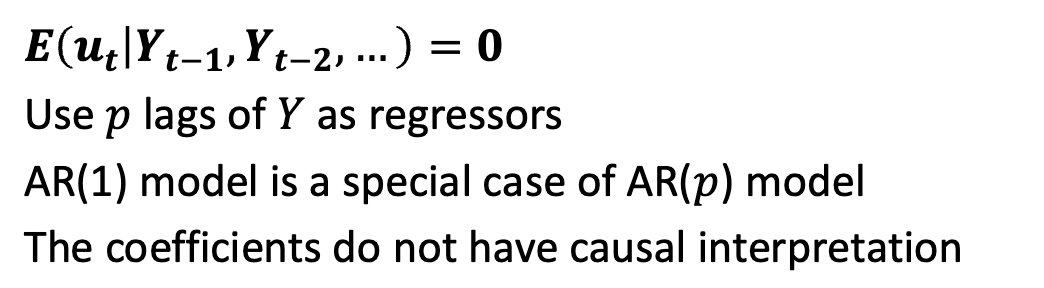
AR(p) notes cont


Autoregressive Distributed Lag (ADL) Model

notes on ADL model

Example: GDP growth rate and term spread

Term Spread:
difference between long-term and short-term interest rates
Short-term rates are generally
below long-term rates, but the gap narrows shortly before the start of a recession




coefficient on TSpreadt-1 and adjusted R2

exercise: compute forecast error


gdp growth rate and term spread coefficient on TSpreadt-2 and adjusted R2

f we know GDPGR in 2017:Q3 = 3.11, GDPGR in 2017

equations 15.14 and 15.15
Eq. (15.14) is an ADL(2,1) model, Eq. (15.15) is an ADL(2,2) model
general time series regression model definition

general time series regression model math

general time series regression model anatomy

Least Squares Assumptions for Forecasting with Multiple Predictors
They are time series counterparts of the four least squares assumptions for prediction with multiple regression using cross-sectional data
assumption 2 general time series regression
identically and independently distrubuted
identically distributed

independently distributed

estimate of MSFE can be used

MSFE AR(p) model


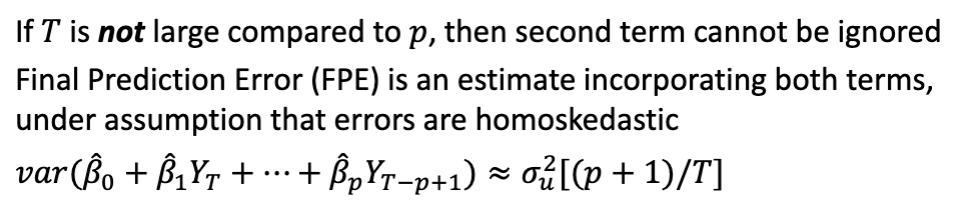
method 2 Substitution of this expression into MSFE gives us:


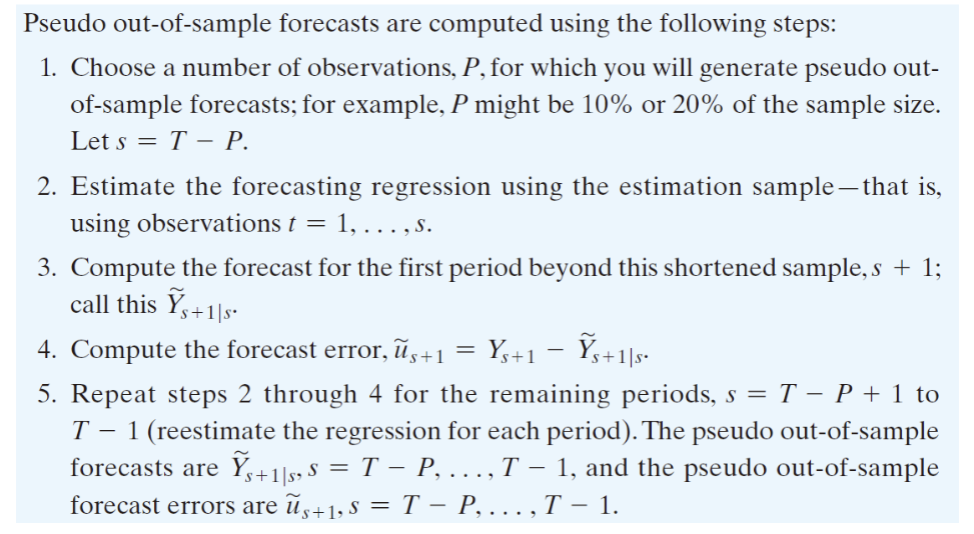
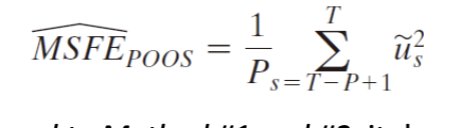
method 3 first 2 steps

method 3 second part


anatomy


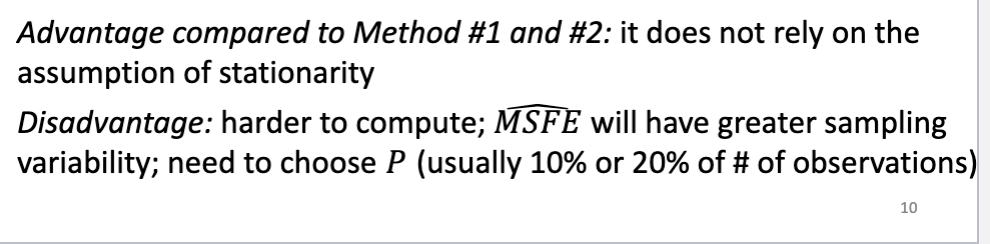
advantage/disadvantage of method 3
Example: Pseudo Out-Of-Sample MSFE estimator
step 1

Example: Pseudo Out-Of-Sample MSFE estimator
step 2-4
