CONTEMP. ARTS 12: Artifacts, Motifs, Art Forms & Categories
 Call Kai
 Learn
Learn Practice Test
 Spaced Repetition
 Match
Match Flashcards
 Knowt Play
1/19

There's no tags or description
Looks like no tags are added yet.
Name | Mastery | Learn | Test | Matching | Spaced | Call with Kai | Chat |
|---|
No analytics yet
Send a link to your students to track their progress
20 Terms
Burnay Jar
A large, unglazed clay jar traditionally handmade in Vigan, Ilocos Sur. It is used to store water, rice wine (basi), or fermented fish paste (bagoong)

Bulul
A carved wooden figure of the Ifugao people, representing an ancestral spirit or rice deity believed to guard the granary and bless the harvest.

Okir
An intricate, flowing carving motif of curling vines, leaves, and geometric forms used by the Maranao on wood, brass, and textiles.

Sarimanok
A legendary, brightly colored mythical bird of the Maranao, often shown with a fish in its beak or talons as a symbol of good fortune.

Naga
A serpent- or dragon-like figure found across Philippine indigenous art, often symbolizing water, protection, or spiritual power.

Binakol
An Ilocano weaving pattern of bold geometric, optical illusion designs believed to dizzy and ward off evil spirits.

Pinilian
An Ilocano “brocade” weaving technique that uses an extra weft thread to create raised, intricate decorative patterns.

Ikat
A resist-dyeing technique in which threads are tied and dyed before weaving, producing blurred, intricate patterns.

Basey Mat
A woven sleeping mat (banig) from Basey, Samar, traditionally made from dried tikog grass in colorful geometric designs.

Gador
A traditional unglazed clay water jar made by Cordillera communities, used for fetching and storing water in the household.

Panolong
The carved, wing-like beam ends projecting from a Maranao torogan (royal house), decorated with okir motifs to display the family's status.

Sunduk
A carved wooden grave marker, often topped with a human figure, used by the T'boli and Blaan to honor and remember the dead.

Pottery
The craft of shaping and firing clay into functional or decorative vessels such as jars, pots, and bowls.

Carving
The art of shaping wood, stone, or other materials by cutting away portions to form a figure, pattern, or design.

Weaving
The craft of interlacing fibers — threads, grass, or bamboo strips — on a loom or by hand to create cloth or mats.

Metalwork
The craft of shaping metals such as brass, bronze, silver, or iron into tools, weapons, utensils, or ornaments.

Brassware
Decorative or functional objects made of brass, often cast or engraved with intricate okir-like designs by Maranao artisans.

Jewelry
Ornamental pieces worn on the body, crafted from metal, beads, shells, or other materials to signify status or beauty.
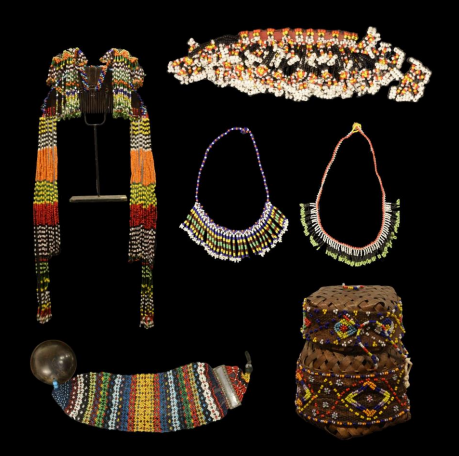
Basket
A container woven from natural fibers such as rattan, bamboo, or pandan, used for carrying, storing, or winnowing.

Backpack
A woven carrying bag worn on the back, such as the rattan pasiking of the Cordillera, used by farmers and travelers to carry goods.
