Lecture 5 - Self-Concept, Personality and Motivation
 Call Kai
 Learn
 Practice Test
 Spaced Repetition
 Match
 Flashcards
 Knowt Play
1/20

There's no tags or description
Looks like no tags are added yet.
21 Terms
Define self-concept.
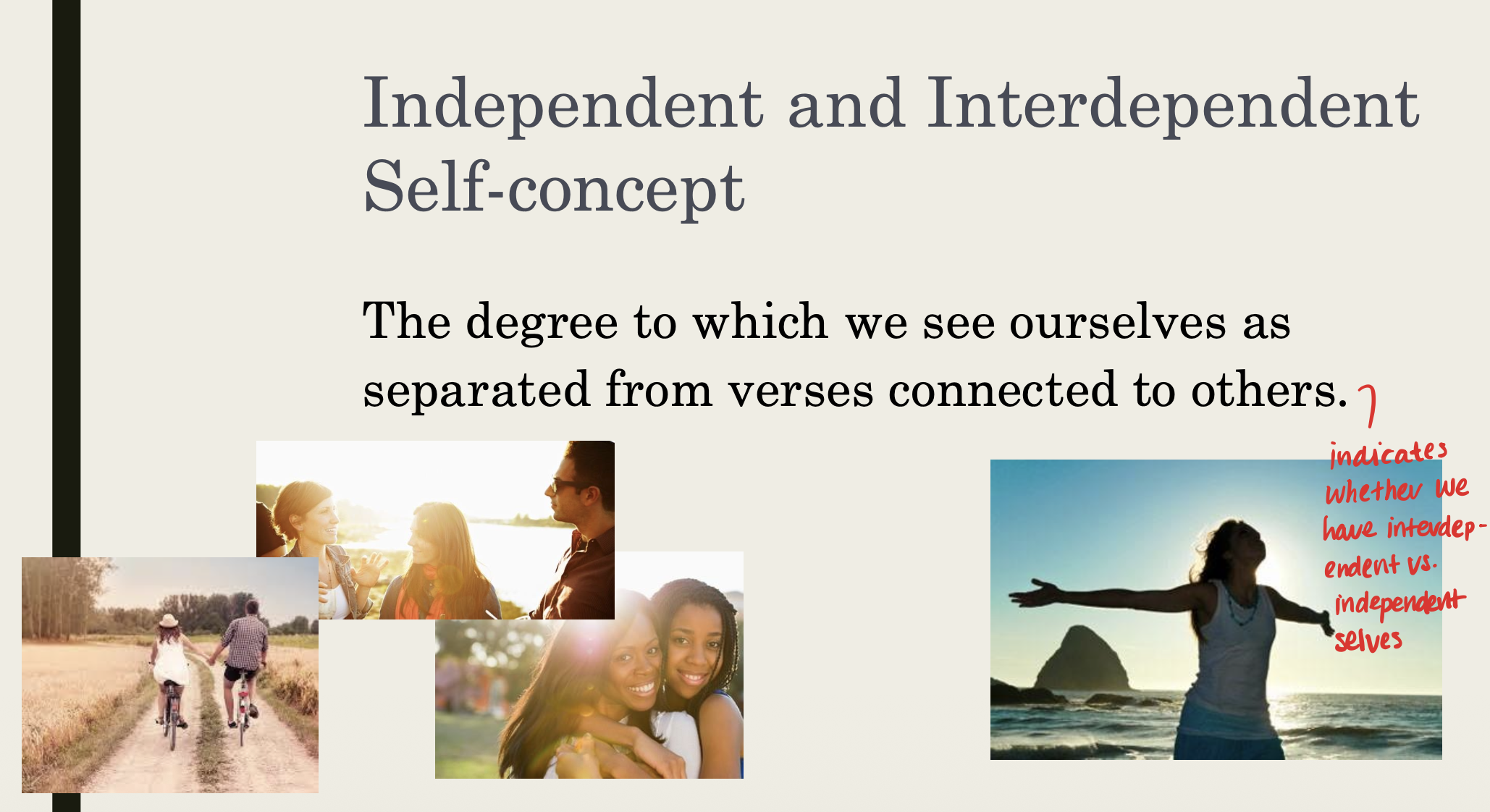
What determines whether we have an independent or interdependent self-concept?
Explain the characteristics of someone with an independent self-concept.

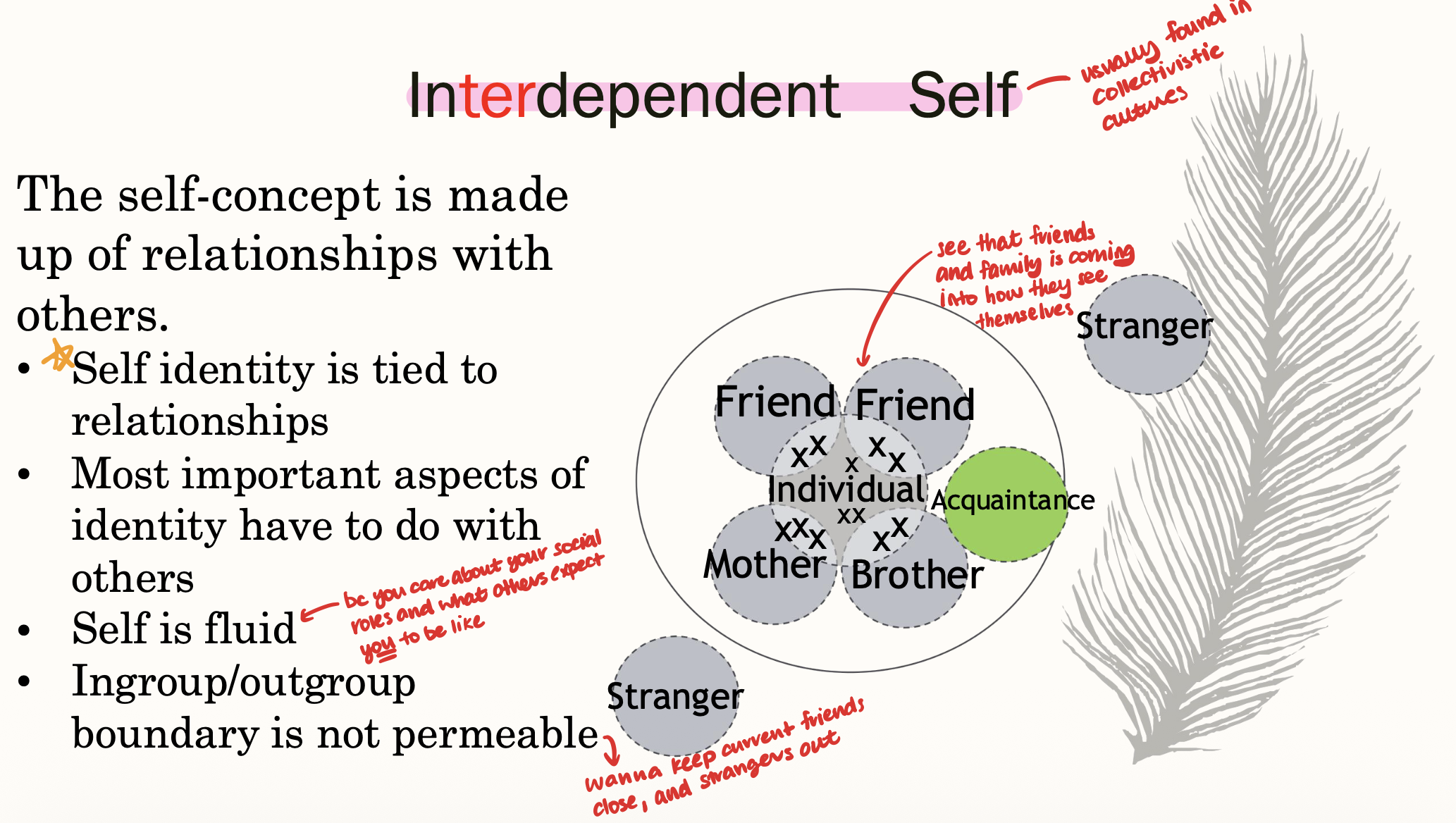
Explain the characteristics of someone with an interdependent self-concept.
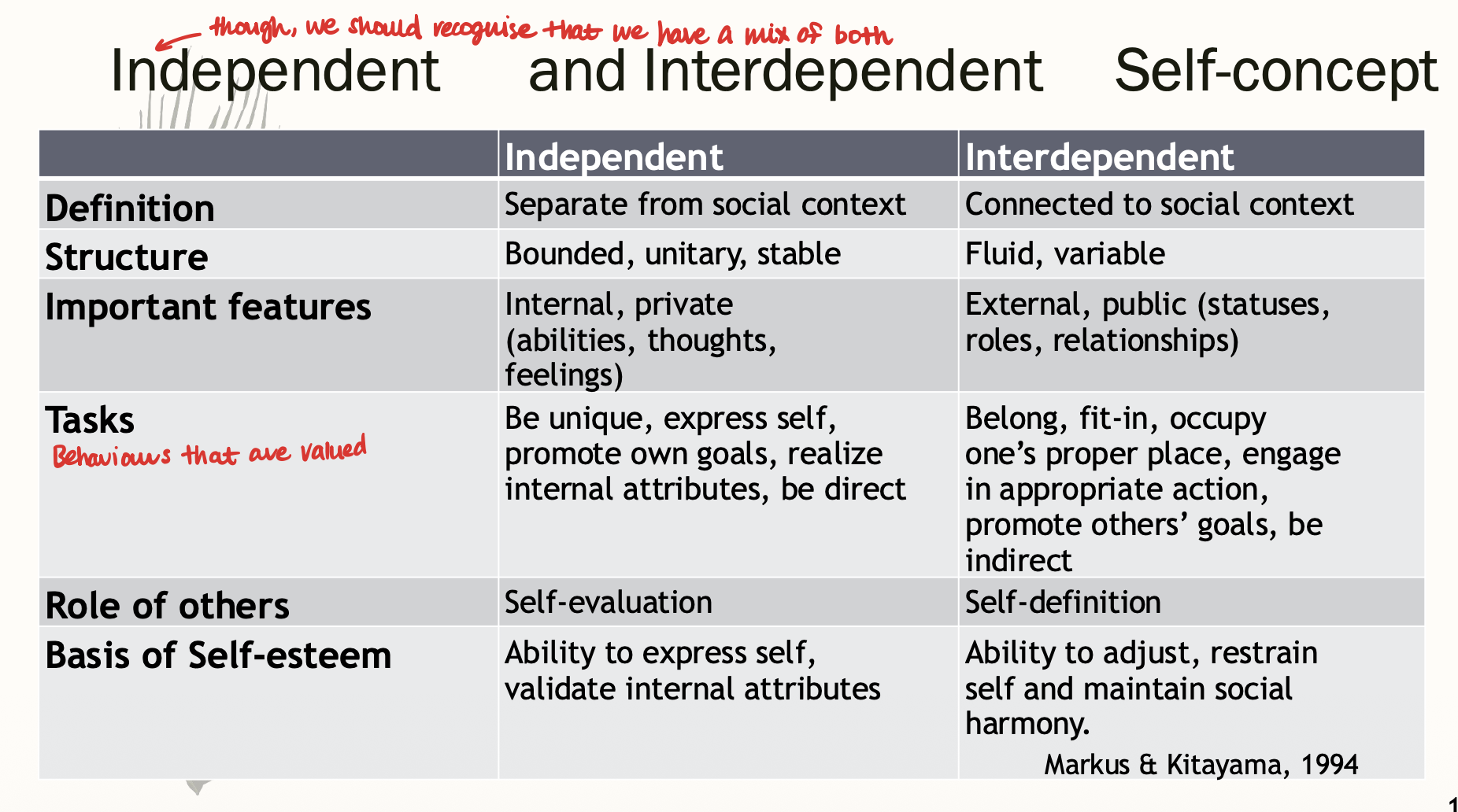
Compare and contrast the
definition
structure
important features
behaviours that are valued (tasks)
role of others
basis of self-esteem
for the independent and interdependent self-concept.
Why might there be cultural variation in people’s self-concepts?
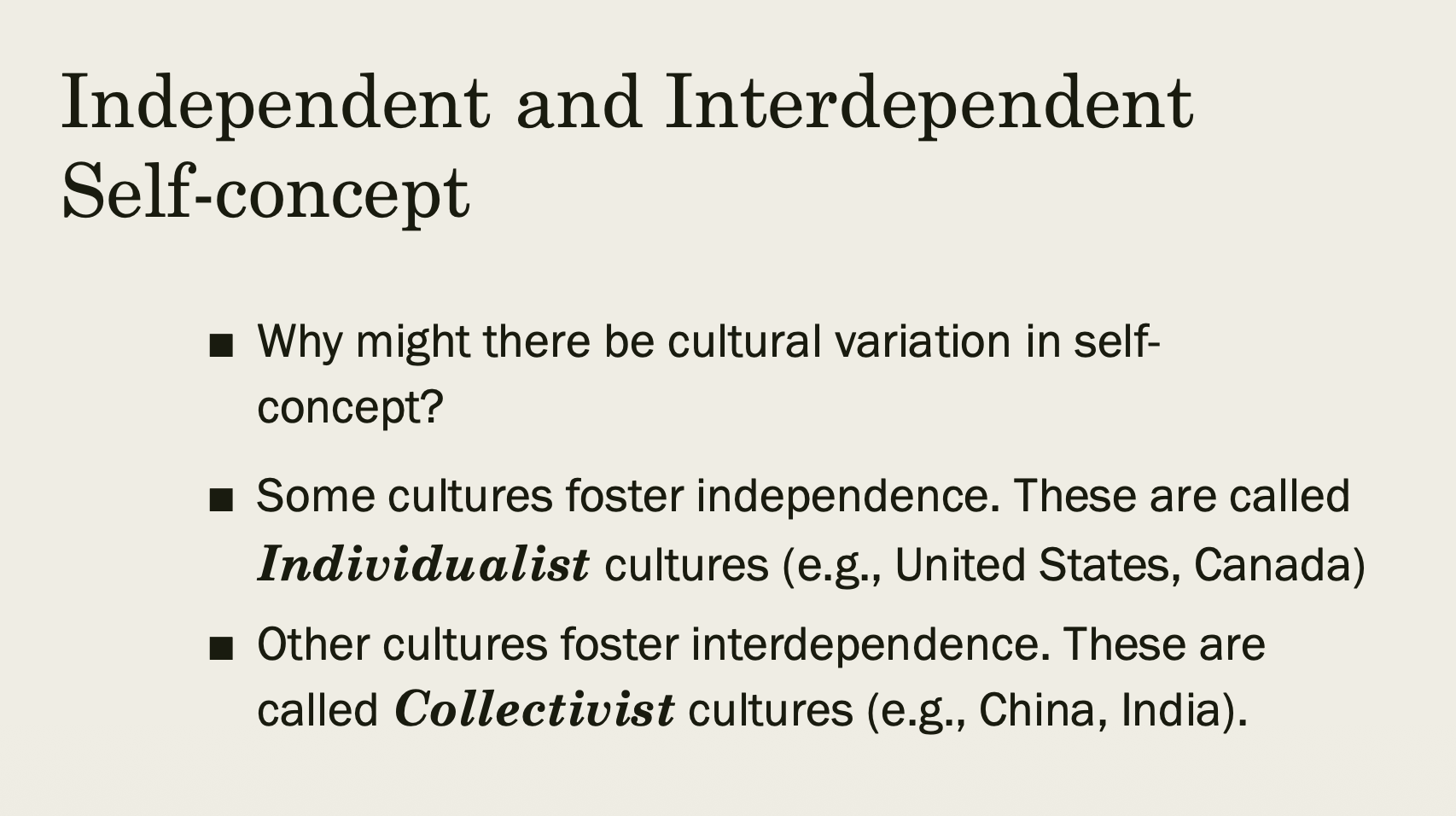
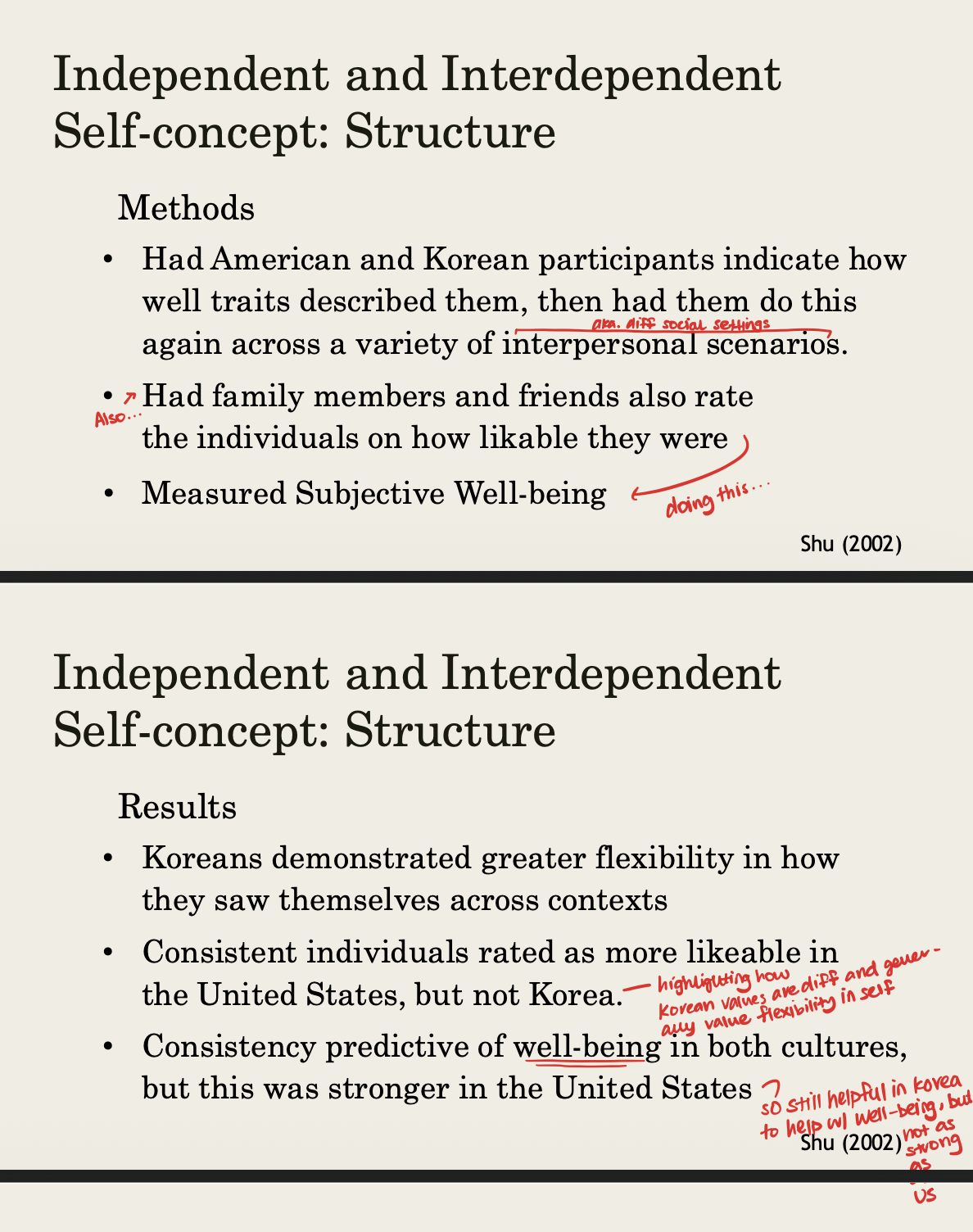
Explain the study by Shu (2002) that illustrates the implications cultural factors can play on the consistency of people’s self-concept.
Define cognitive dissonance.

Define Post Decision Dissonance.

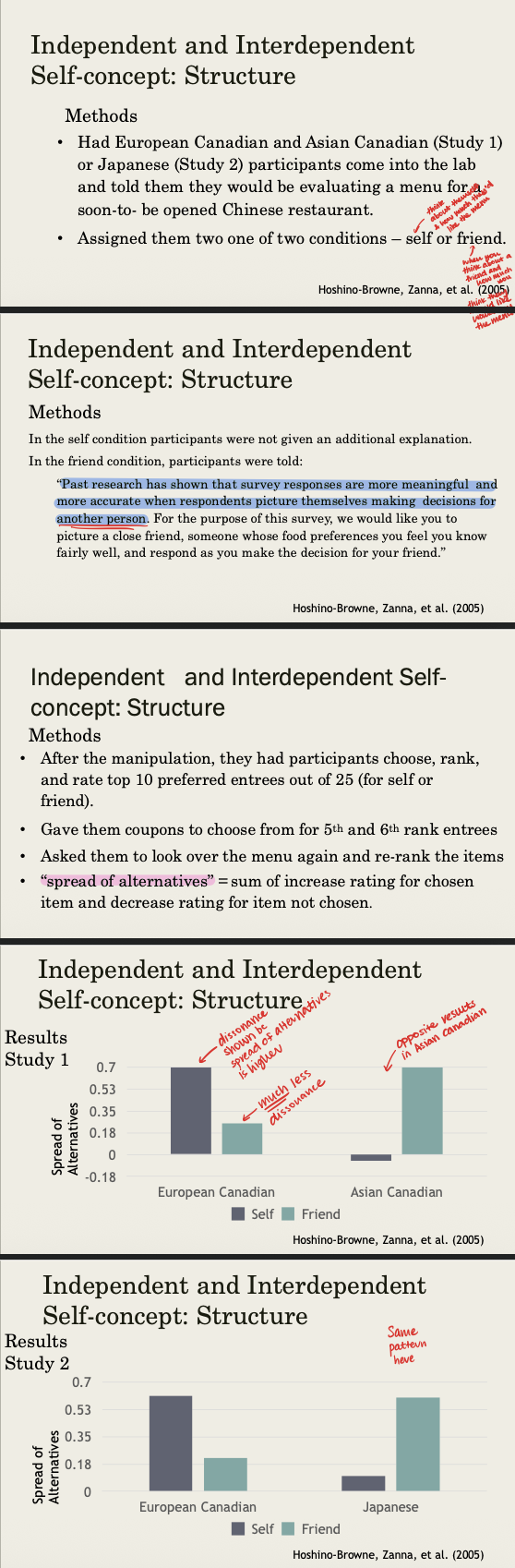
Explain the logic behind a study about the spread of alternatives.

Explain the cross-cultural variations in how dissonance is felt.

Explain Hoshino-Browne, Zanna, et al’s (2005) study about the cross-cultural variances in how and when dissonance is felt.
How does one’s independent or interdependent self-concept affect their motivation to view themselves positively?
In western regions, there is a tendency for self-enhancement motivation and promotion orientation to occur.
On the other hand, in East Asian regions people tend to place a lot of emphasis on face. Therefore, adopting a preventative orientation.
Define self-enhancement motivation.

Define Promotion Orientation.

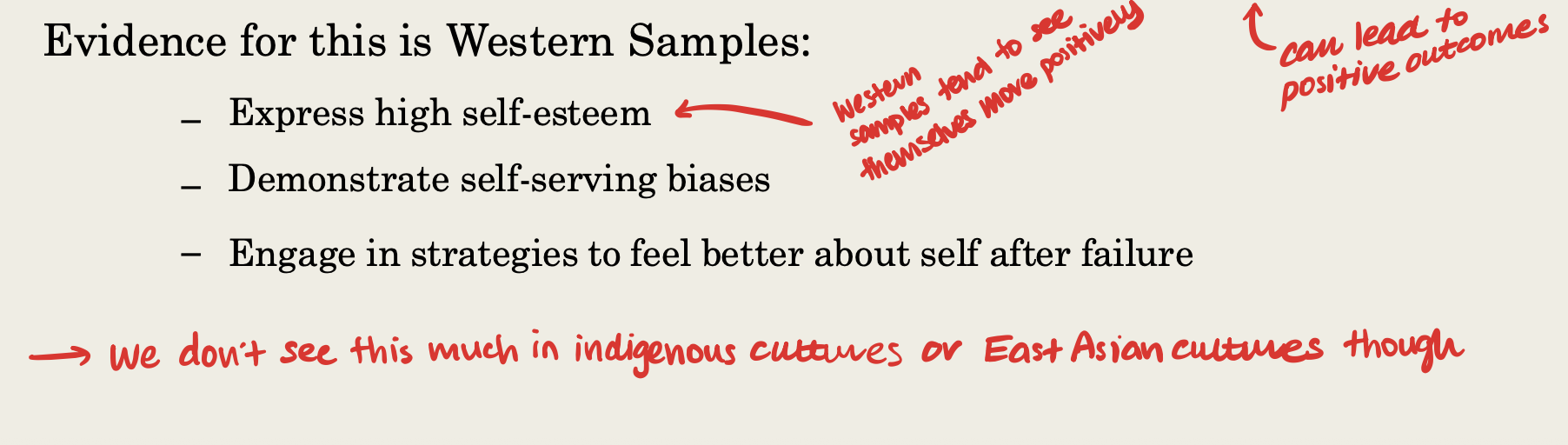
What is some evidence for western regions showing greater motivation to think positively about themselves?
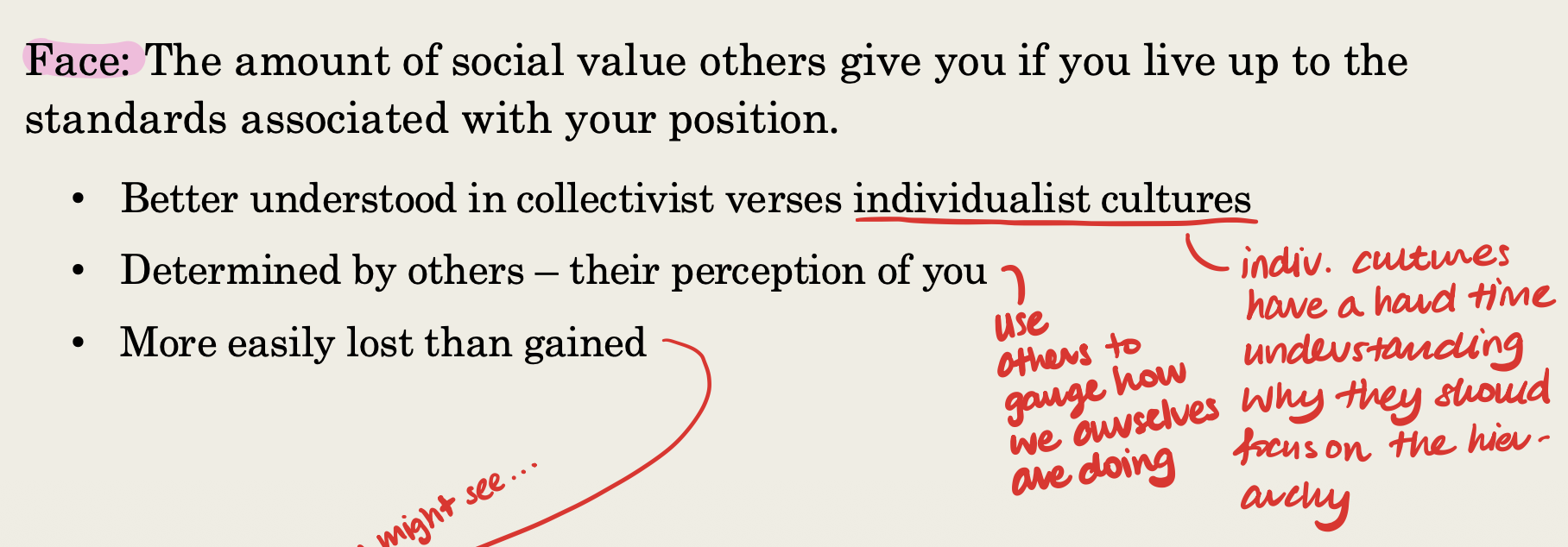
Define face and some of its characteristics. Do collectivists vs. individualistic cultures typically understand it more?
Define prevention orientation.

What are the 2 Implicit Theories of the Self?
Incremental Theory of Self
Entity Theory of Self
Define the Incremental Theory of Self.
