2 - Locke
 Call Kai
 Learn
 Practice Test
 Spaced Repetition
 Match
 Flashcards
 Knowt Play
1/19

There's no tags or description
Looks like no tags are added yet.
20 Terms
What does Locke posit nature’s law makes us oblige to?

What is liberty essential for according to Locke? Why?
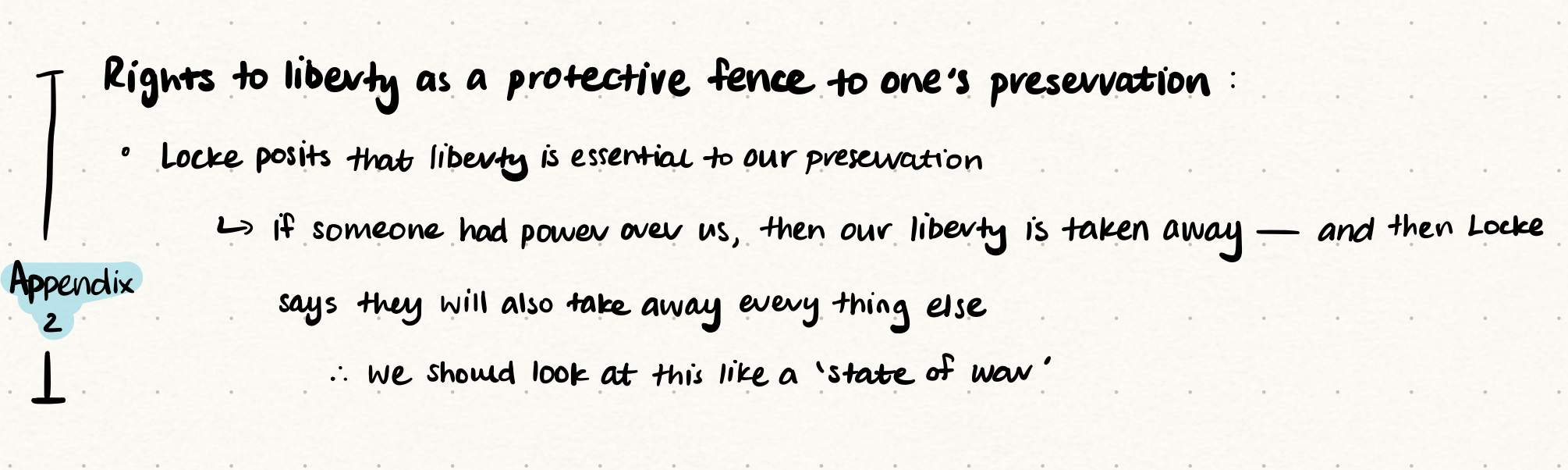
Compare and contrast how Locke defines natural vs. political liberty.

What is Locke’s Labour Theory of Property (LTP)?
*Appendix 4

What does Locke define as the Natural Right to Property?
*Appendix 4
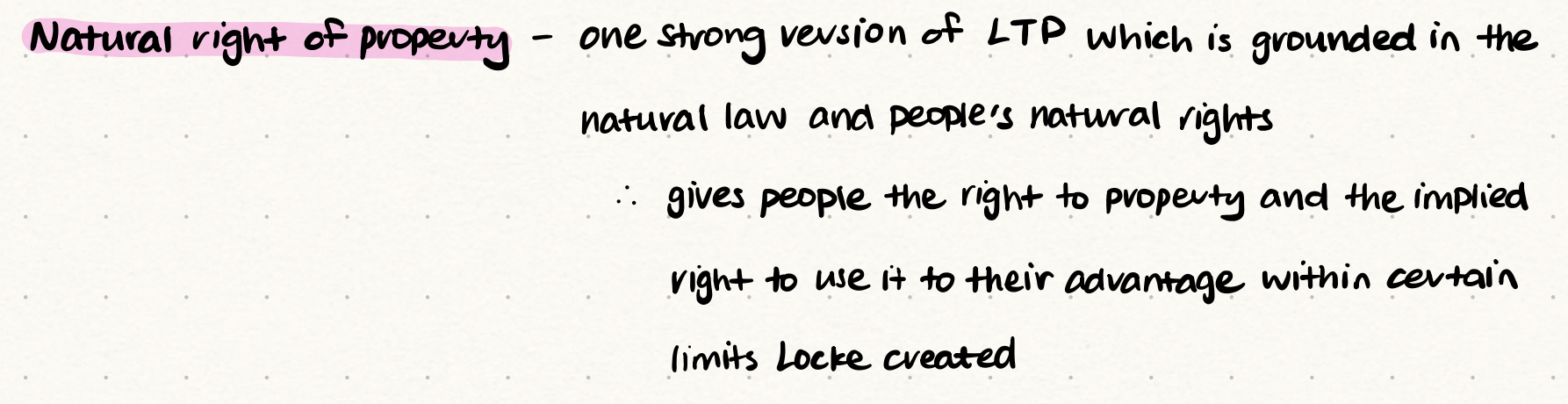
Why does Locke think that we have a natural right to nature?

What is Locke’s Labour Theory of Property? How does that theory tie in with our natural right to nature?

What are the 2 limitations Locke posits about property rights by labour according to the laws of nature?
*slide 4
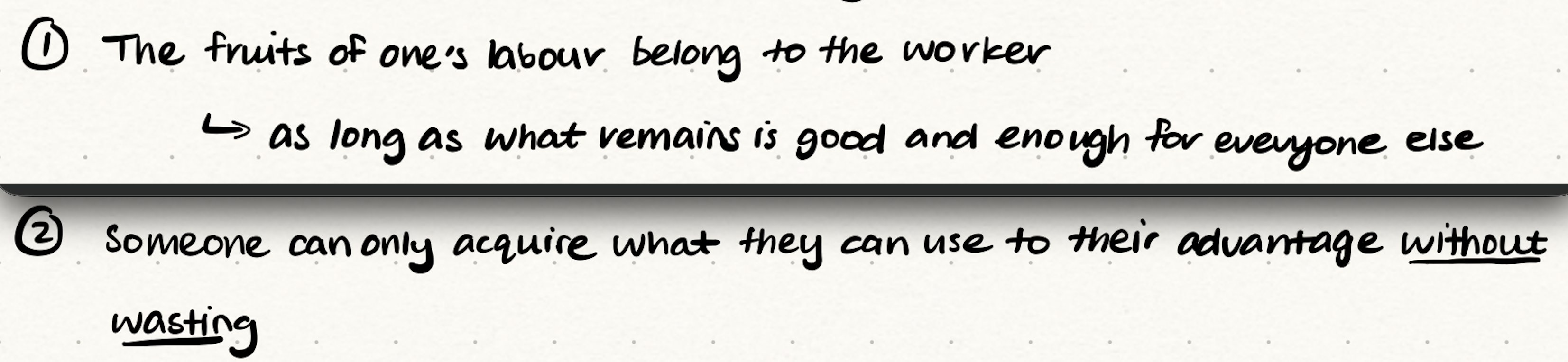
Why did Locke impose those 2 limits/conditions on property rights by labour?

What is a problem with Locke’s 2 limits/conditions on property rights by labour?
*slide 5

What are the different ways we can interpret the right to property in light of Locke’s limits/conditions?

How can Locke’s idea of ‘everyone having access to land’ be interpreted today? What does this make us question though?

Who does Locke believe land is given to specifically? Why?

What does Locke argue money did to the world?

Why does Locke posit that property rights and labour are good?

What does Locke’s Labour Theory of Value (LTV) posit?

According to Locke, how does labour create value?

What does Locke posit about the government and its role in trade? Also, how does Locke define ‘laws of liberty’?

According to Locke, how did people originally acquire land? And how has that changed since the emergence of money?

Why does Locke think that money has allowed for the acquisition for unequal amounts of wealth and land?
