Energy transition
 Call Kai
 Learn
 Practice Test
 Spaced Repetition
 Match
 Flashcards
 Knowt Play
1/4

There's no tags or description
Looks like no tags are added yet.
5 Terms
background
Energy sector responsible for almost 3/4 of global GHGs
Some increases in renewable energy and electricity but this is not enough to keep up with global demand
most renewable energy increases just contribute to an overall increase in energy use, rather than a shift away from FFs
Challenges of energy planning
Energy planning and development is not only about cost optimisation
Also about balancing the very complex stream of impact that is has on individuals, communities, ecosystems and more
Impacts can be both beneficial and harmful
Policy and decision makers rely to some extent on mathematical models
Criticisms for only having a techno-econ focus
Model results diverge from both reality and how people envision the future
Policy-makers have to choose something when nearly every option has some sort of negative impact
Varying support/opinions on energy infrastructure
Kallbekken et al
Support for energy infrastructure varies by technology
Solar panels on building most popular
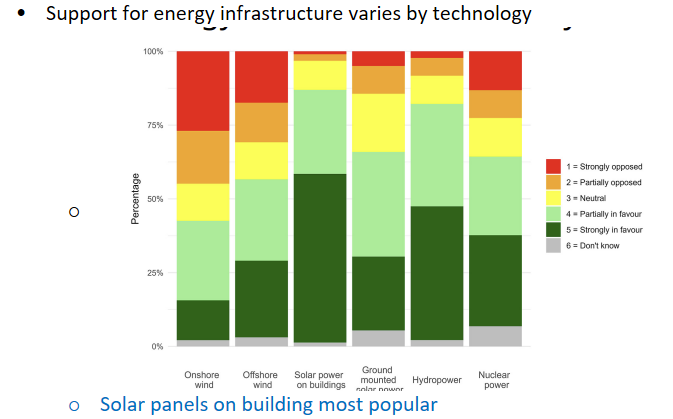
wind power least supported - nature loss, negative personal experiences, high land use etc
many think more expensive than it is - actually cheapest
hydropower strong support - jobs and price stability override nature loss
nuclear supported but uncertain - need more info and transparency
Policy makers need to develop strategies to mitigate negative impacts so they can use cheaper tech without backlash
e.g. internalising negative externalities from power generation e.g. pricing mechanisms or regulations
Improved communication and knowledge dissemination
Incorporating public's preferred portfolio into energy system model results in cost increase of 47% and price variability - trade-offs of aligning policy with public preferences

opinions of Swiss young people
No studies have included the preferences of the young gen even though they will bear most consequences
Before info - preference to solar PV, wind power, electricity savings and hydropower
Waste incineration and nuclear more negative
Rather cliché view
Drop in positive feelings towards solar - 82% down to 52% after info - most feeling neutral not negative
38% increase for waste incineration
Nuclear and energy imports most negative both pre and post
Quite different results to adults - youth need more input
Need more enviro education in schools
Our results
Hydropower: Somewhat polarised, where many of you either wants to use its maximum or minimum potential.
Nuclear: More balanced with the median slightly below its maximum potential, but also extremes at both ends.
PV: Relative agreement with high contributions.
Wind: Agreement with offshore wind, but variations for onshore wind.
