Lab 8: Digestive System
 Call Kai
 Learn
 Practice Test
 Spaced Repetition
 Match
 Flashcards
 Knowt Play
1/264

There's no tags or description
Looks like no tags are added yet.
265 Terms

What is this structure?
duodenum

What cell make of this structure?
simple columnar epithelium

What is A?
duodenum

What cell make of A?
simple columnar epithelium
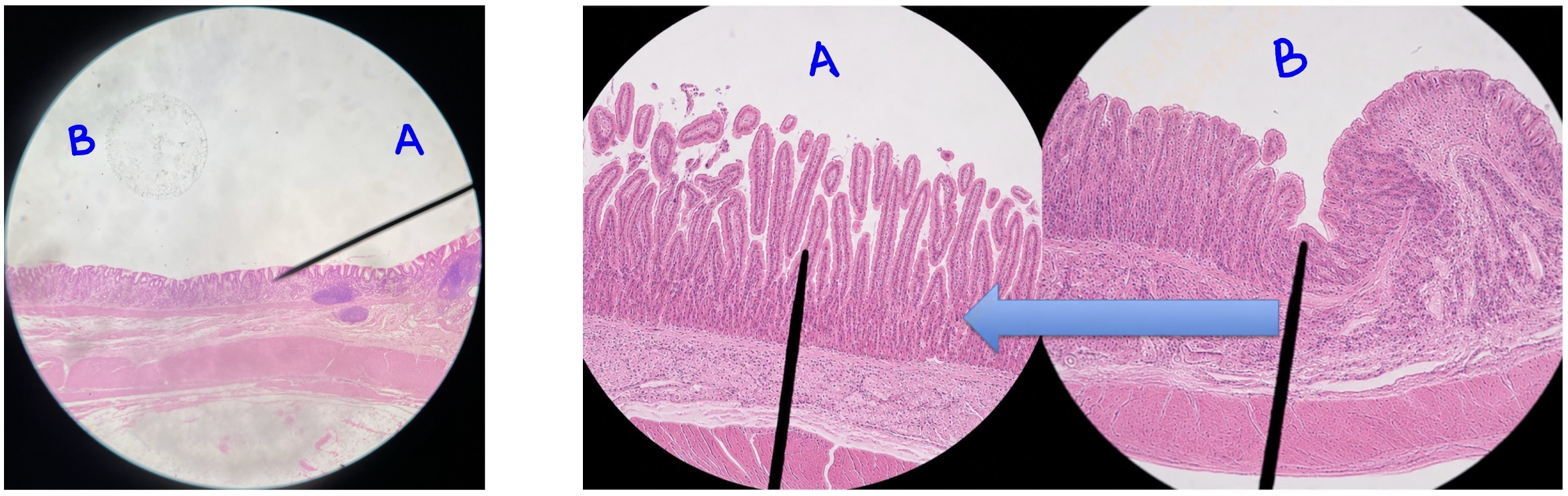
What is B?
stomach
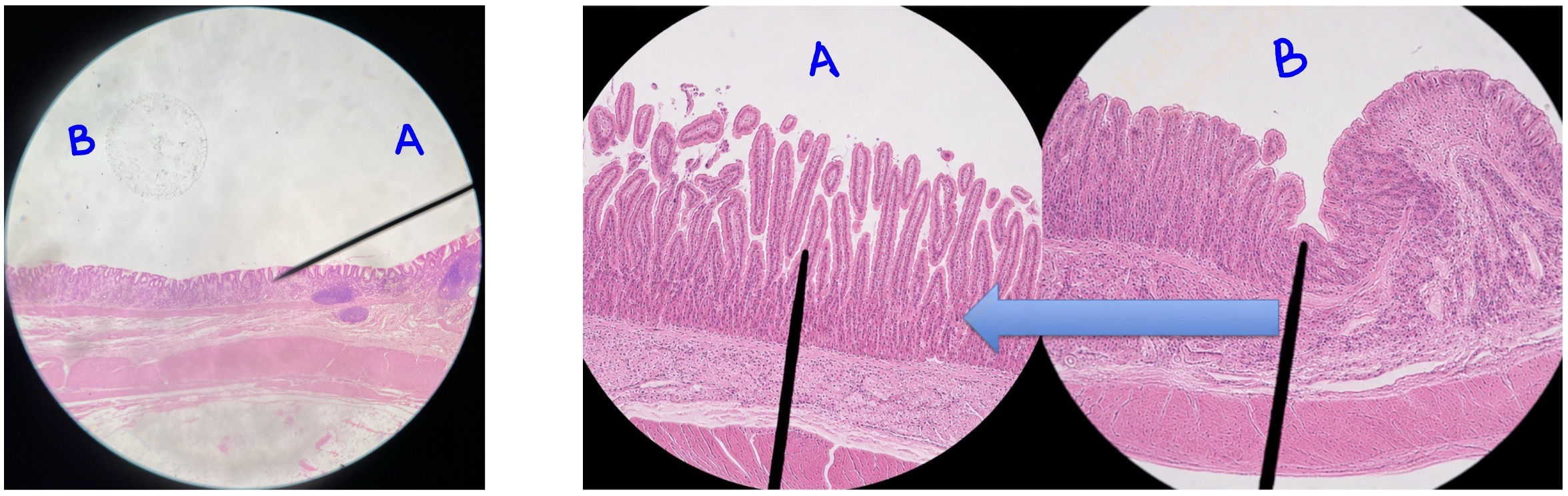
What cell make of B?
simple columnar epithelium

What is this structure?
jejunum

What is this structure?
colon
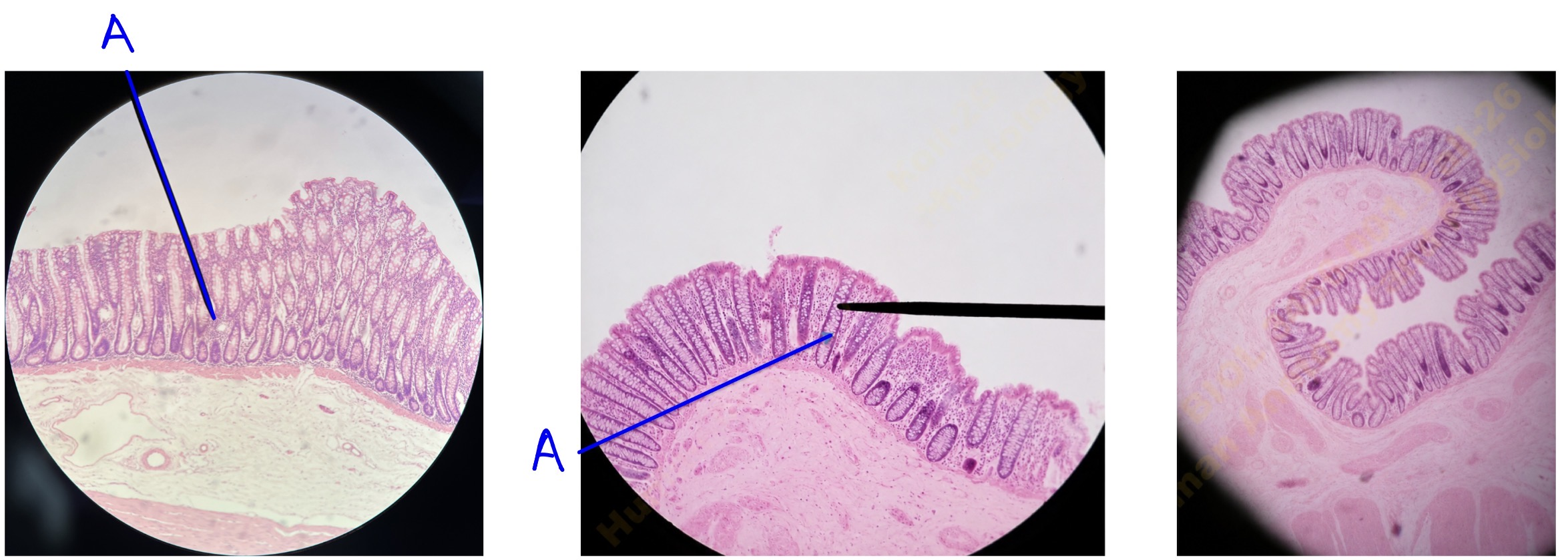
What is A?
goblet cell

What cell make of this structure?
simple columnar epithelium

What is this structure?
Peyer’s patch
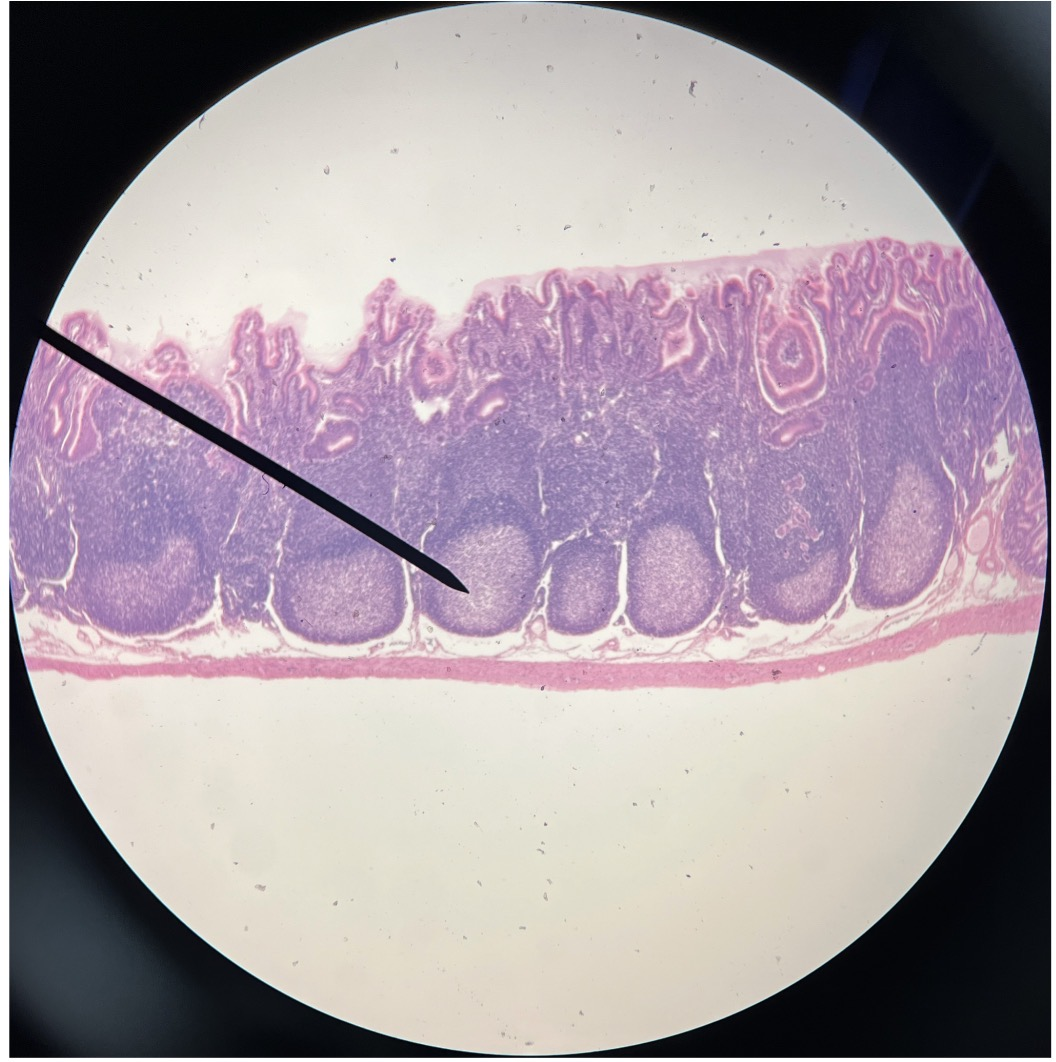
Where does this structure locate?
ileum
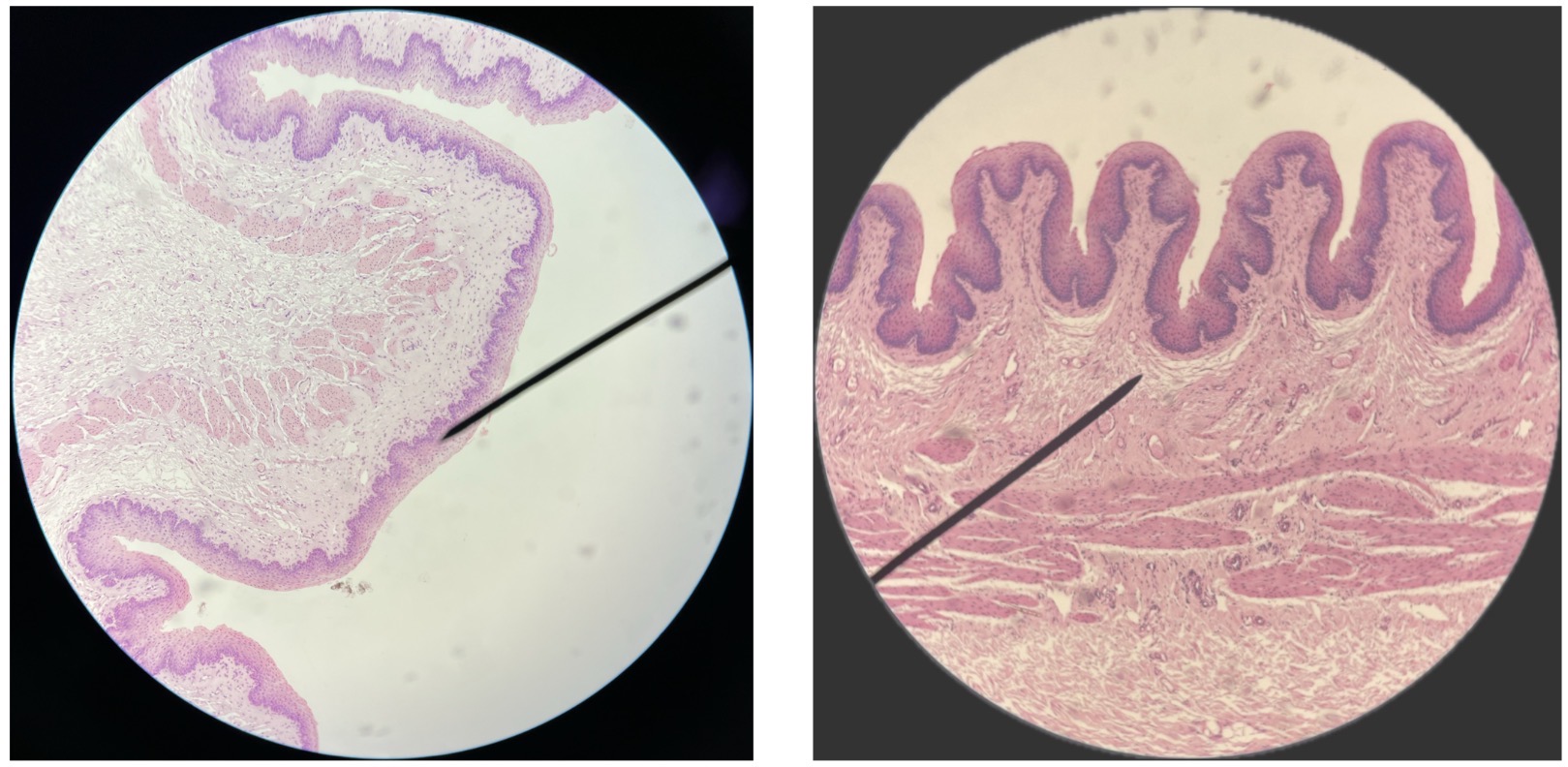
What is this structure?
esophagus
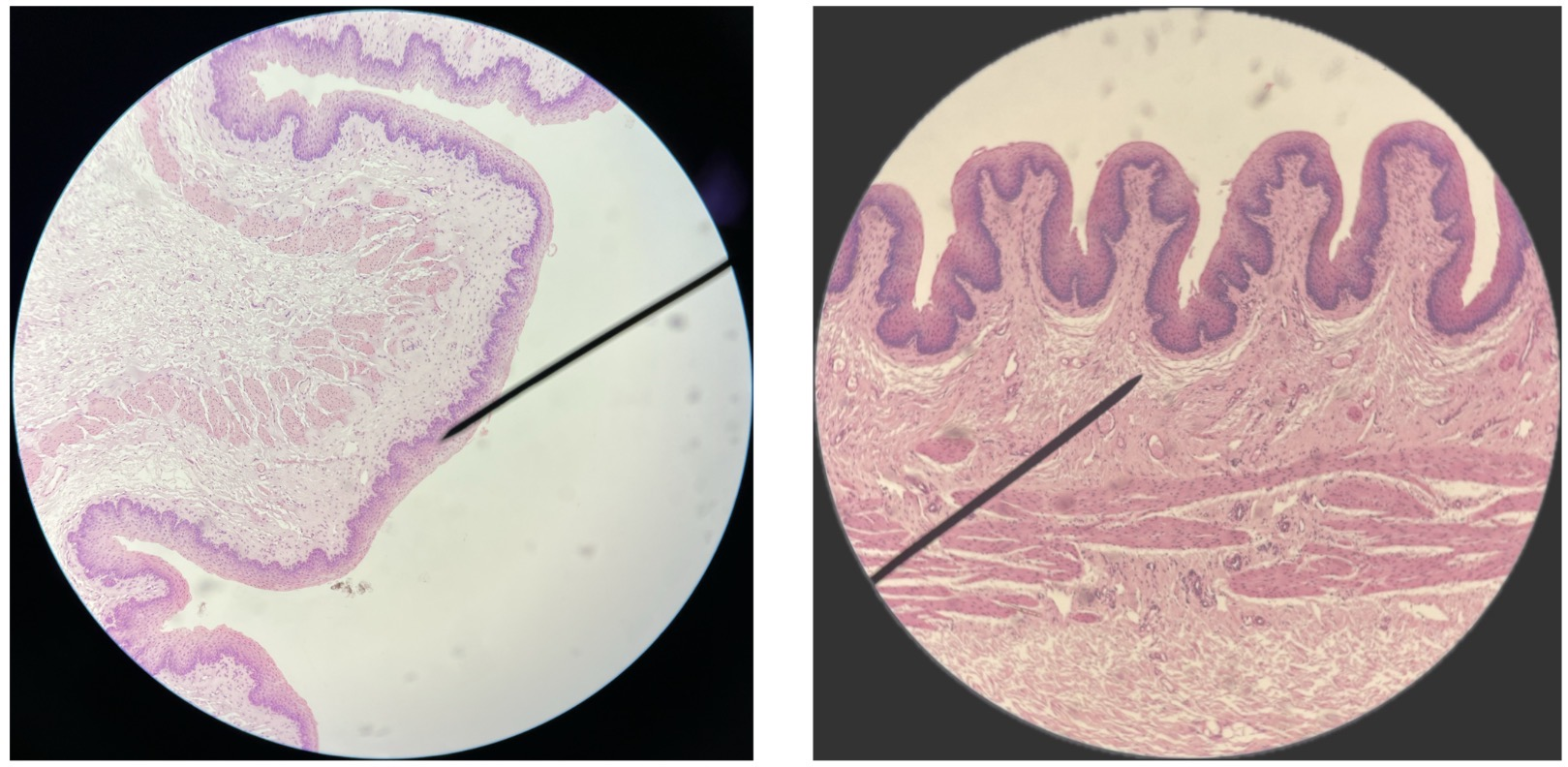
What cell make of this structure?
stratified squamous epithelium

What is this structure?
esophagus

What is A?
muscularis externa
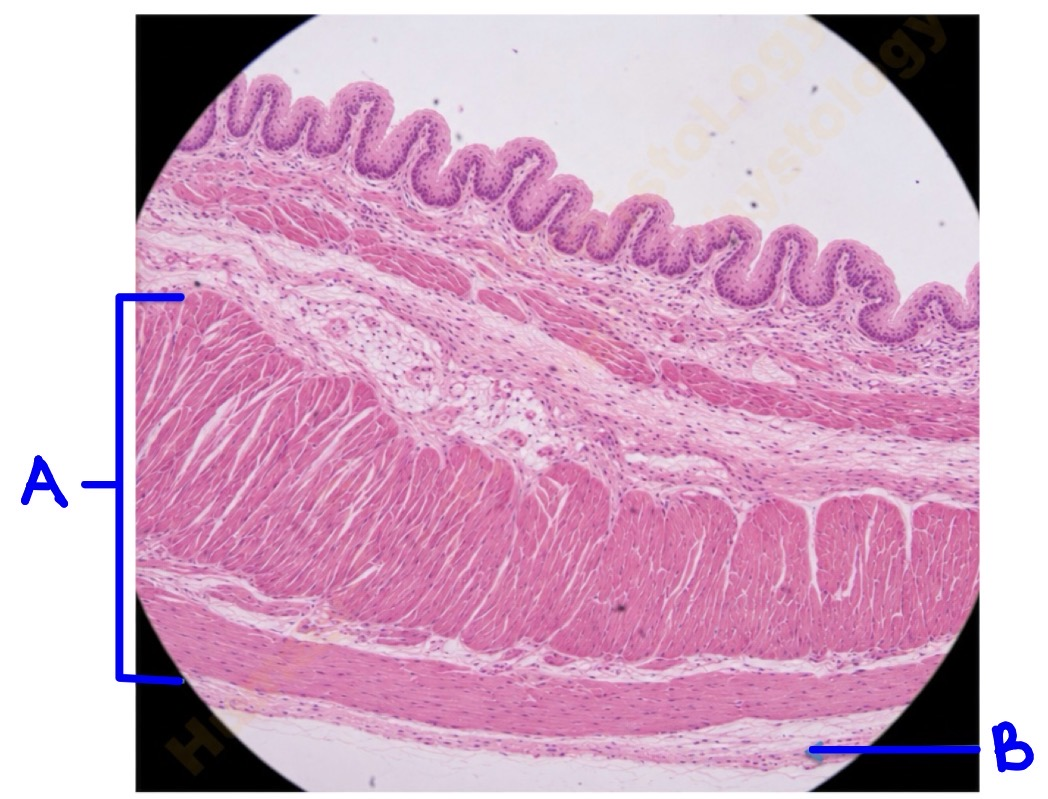
What muscle does A contain?
skeletal muscle, smooth muscle

What is B?
adventitia

What is A?
esophagus
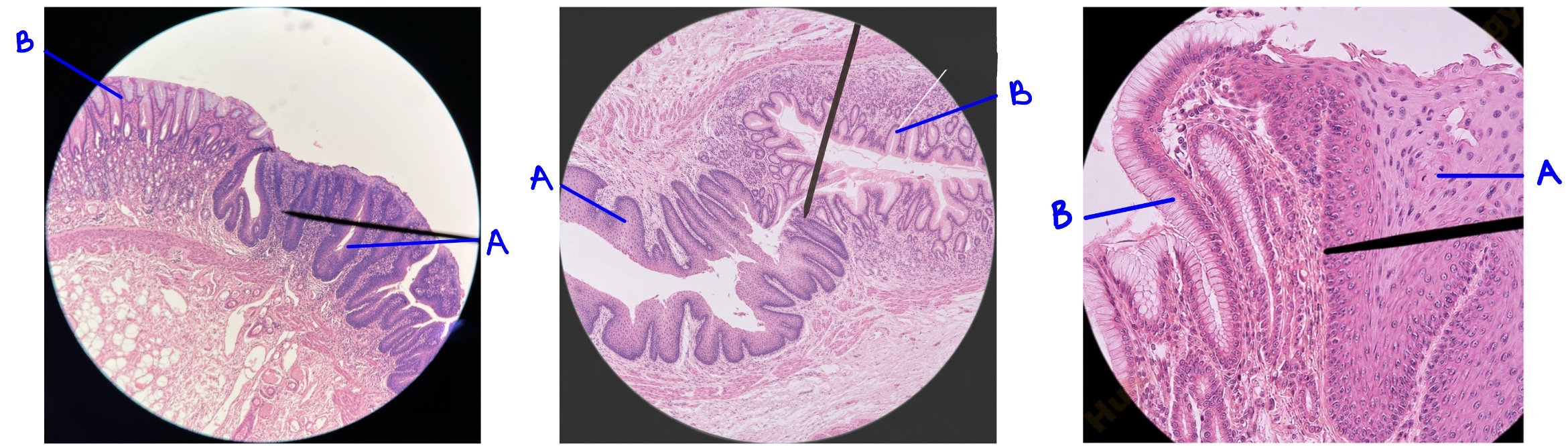
What cell make of A?
stratified squamous epithelium
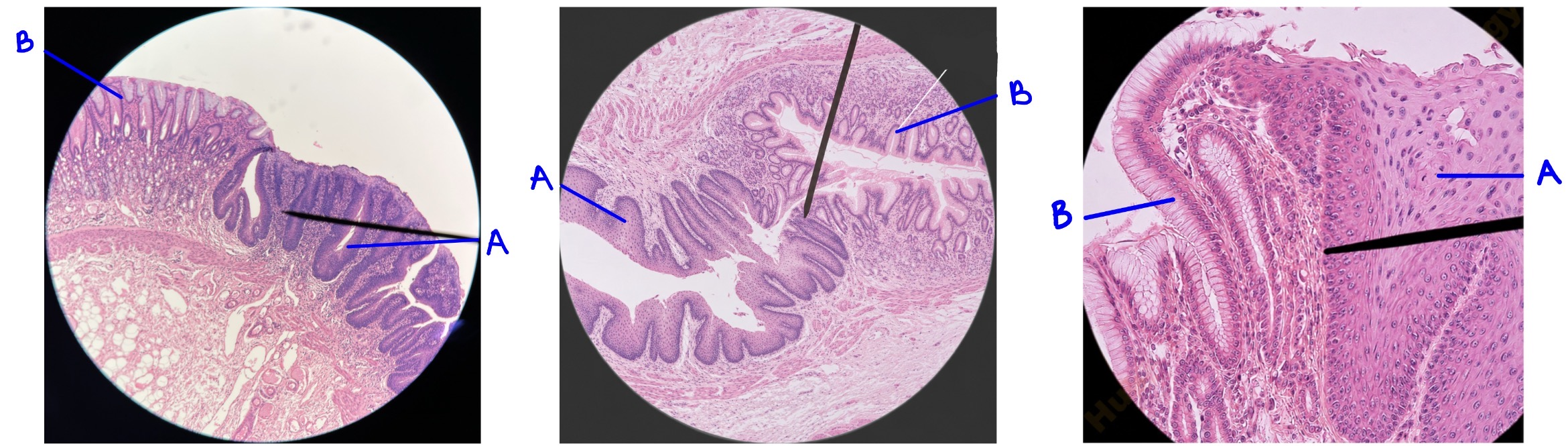
What is B?
stomach
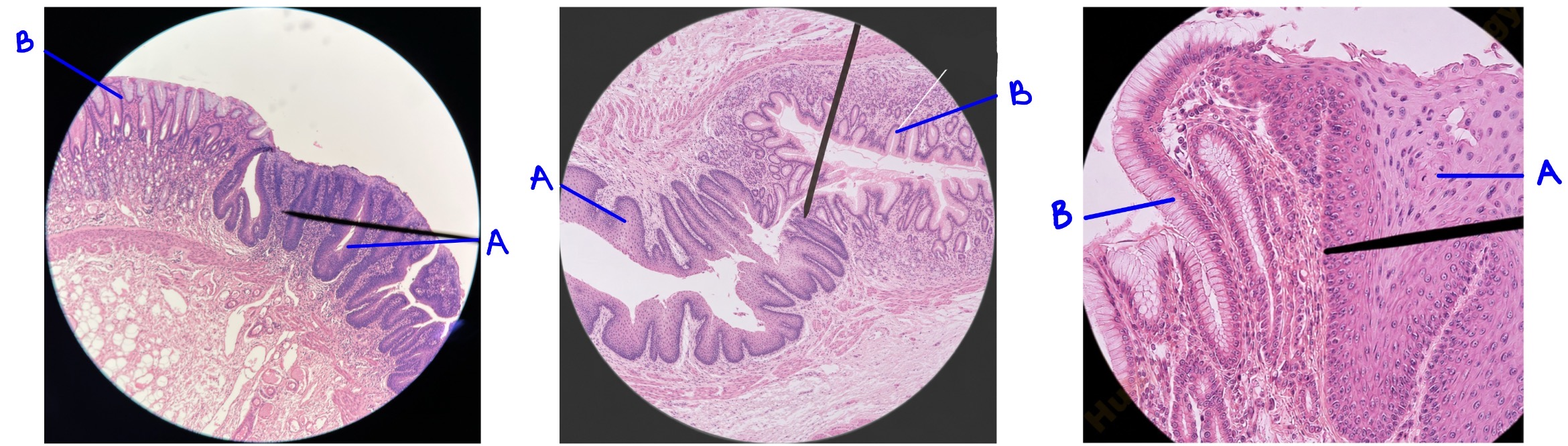
What cell make of B?
simple columnar epithelium

What is A?
central vein
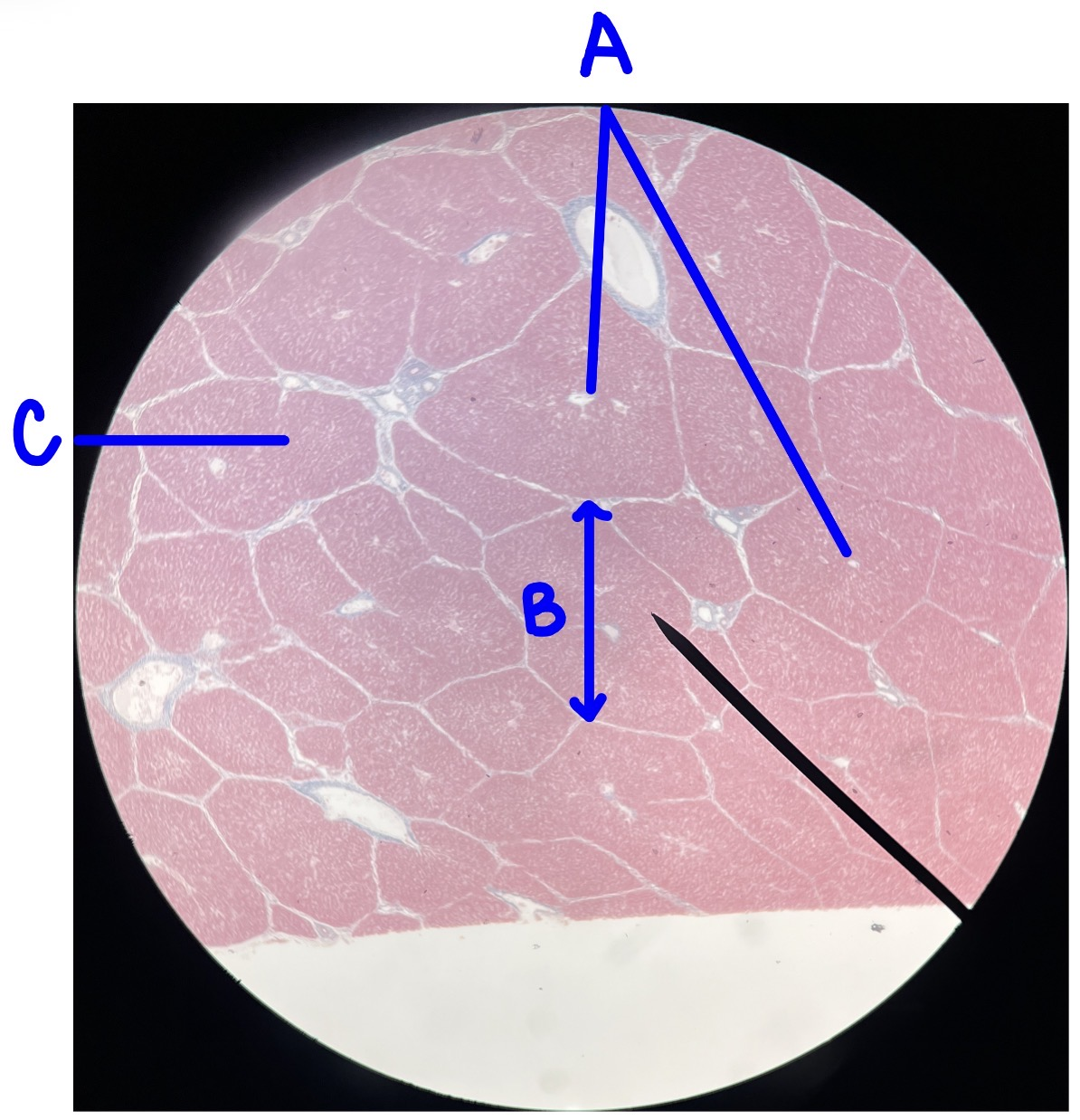
What is B?
hepatic lobule

What shape does B have?
hexagon
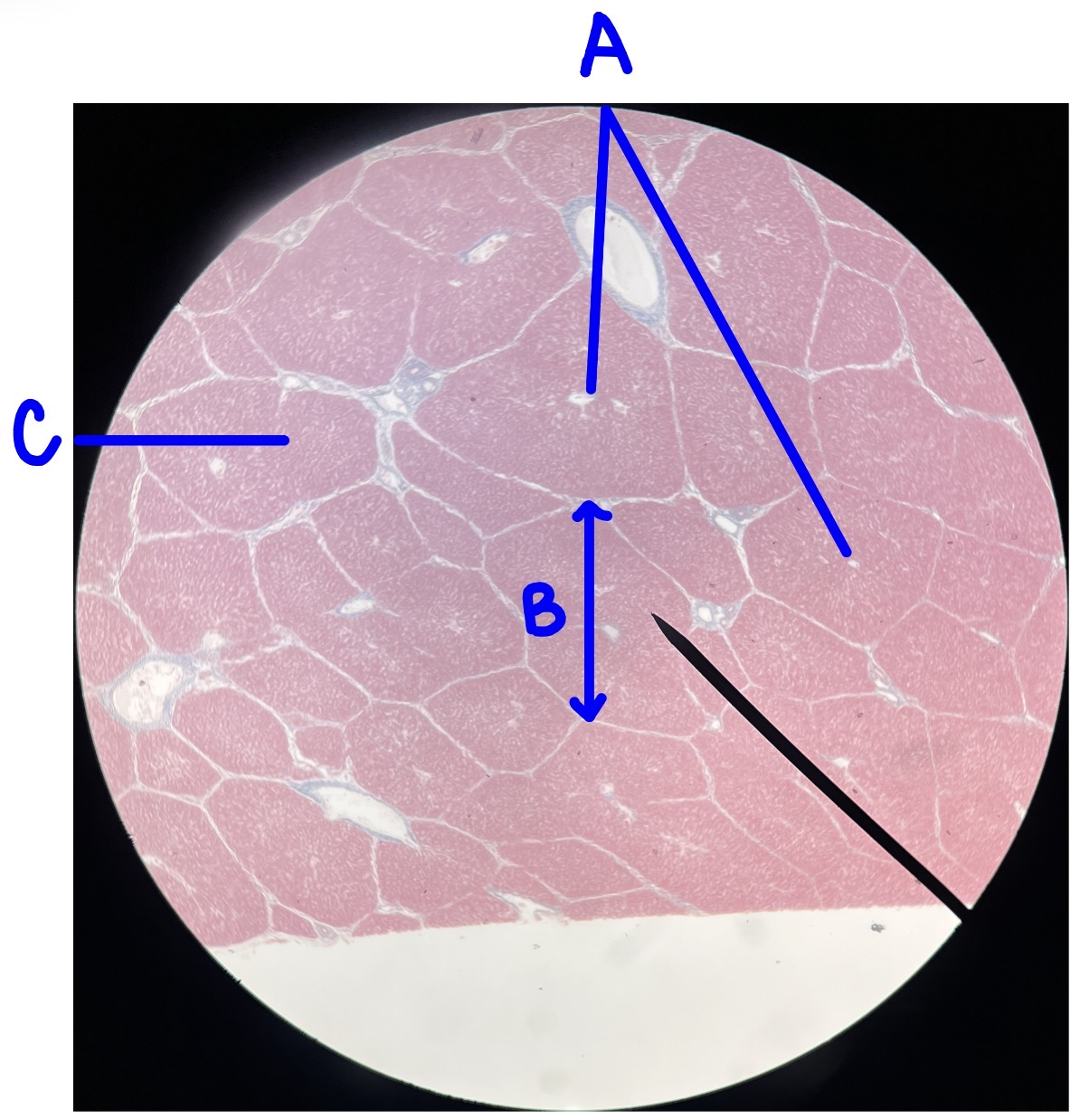
What is C?
hepatocyte
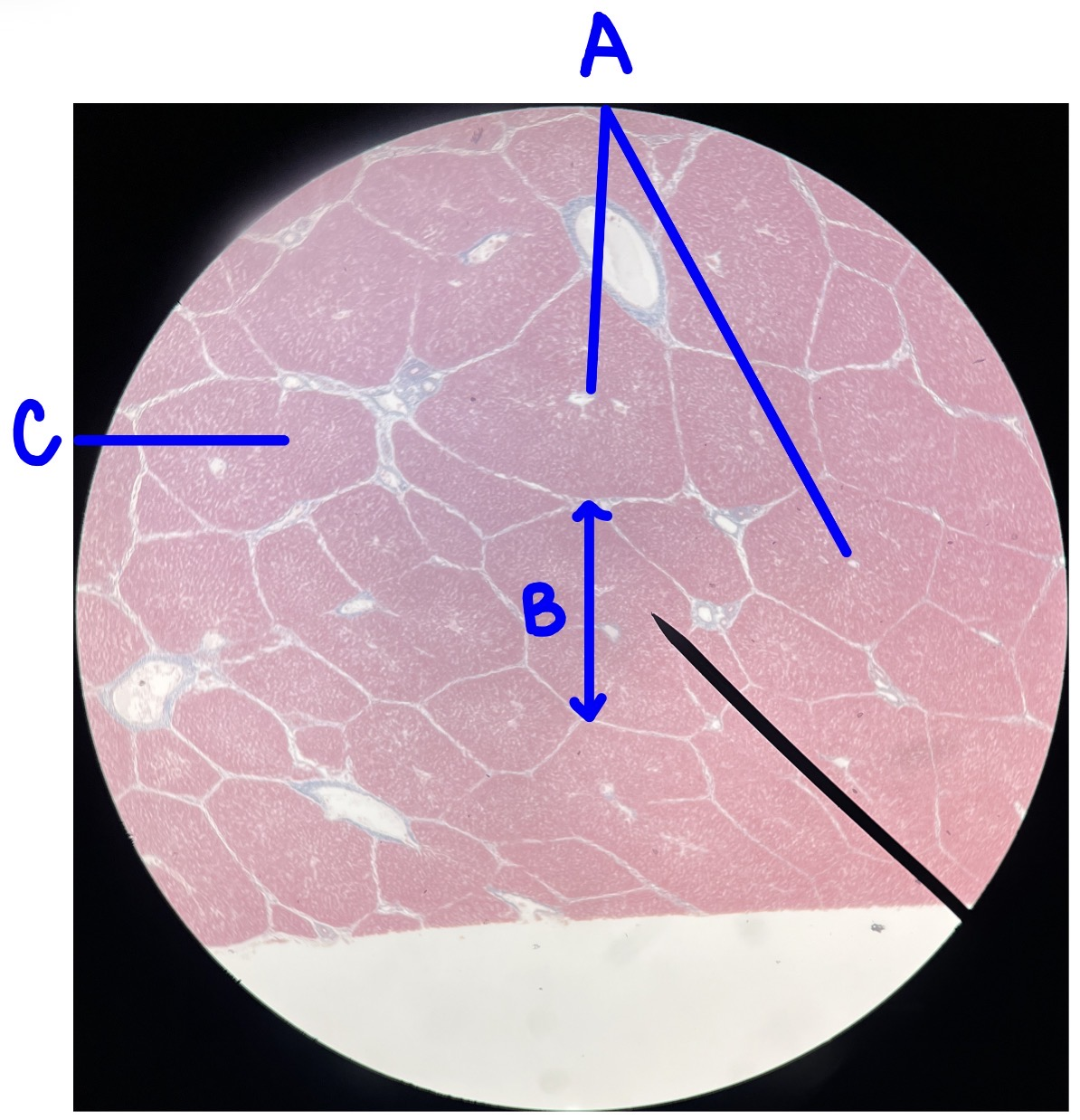
Function of C?
produce bile

What is this overall structure?
pancreas
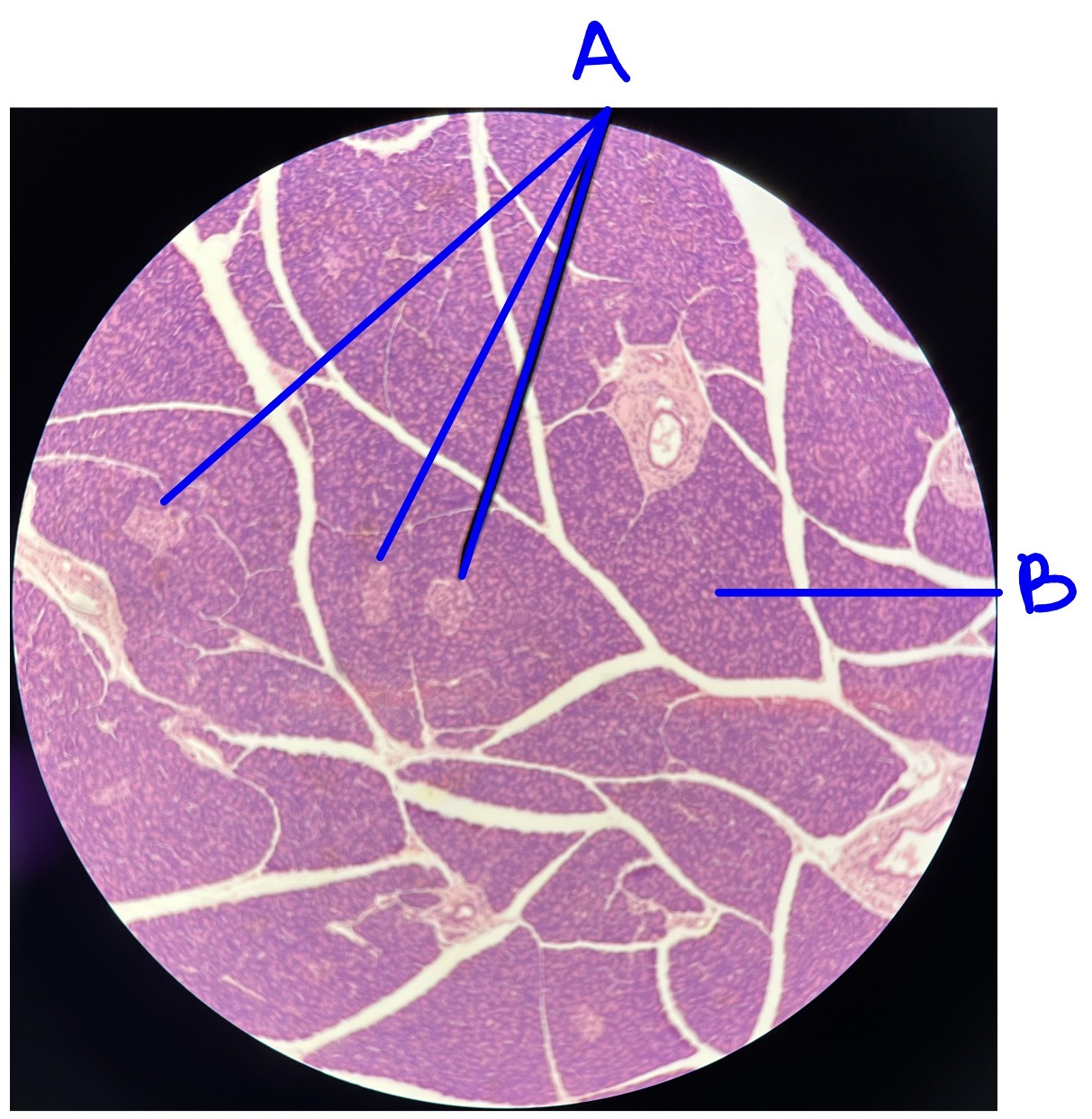
What is A?
pancreatic islet
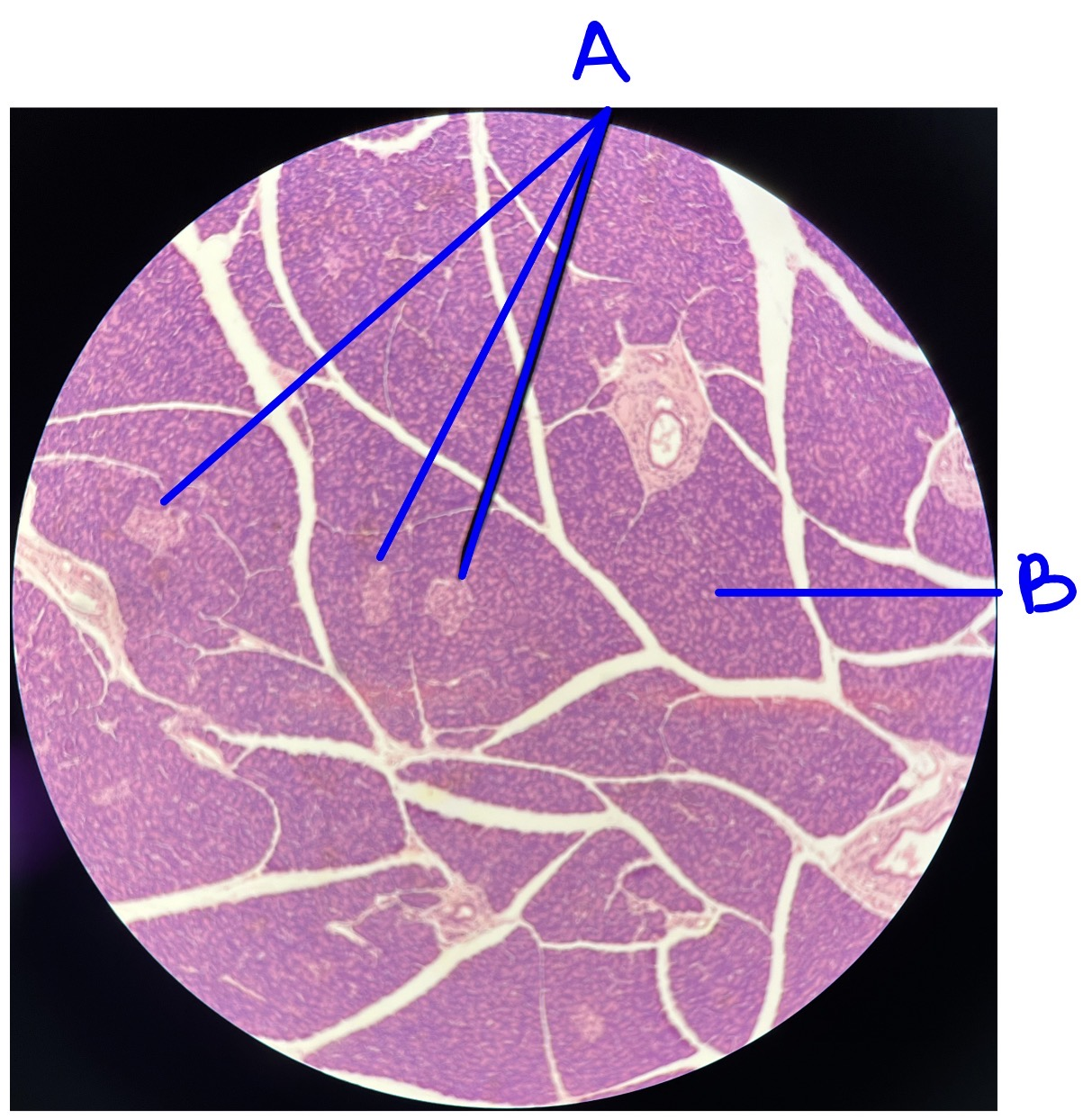
Percentage of A
1%
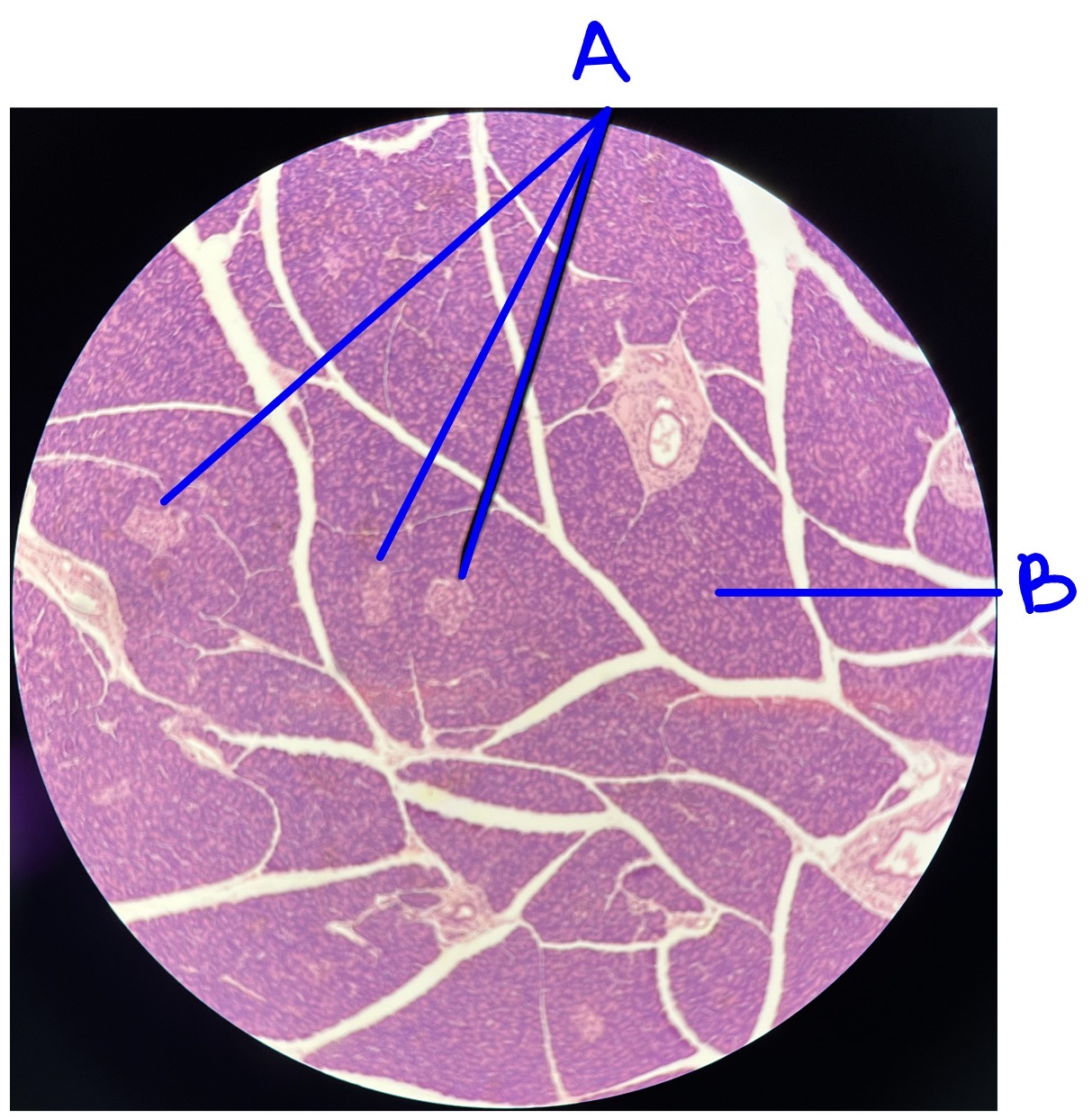
1 hormone that A produces
insulin
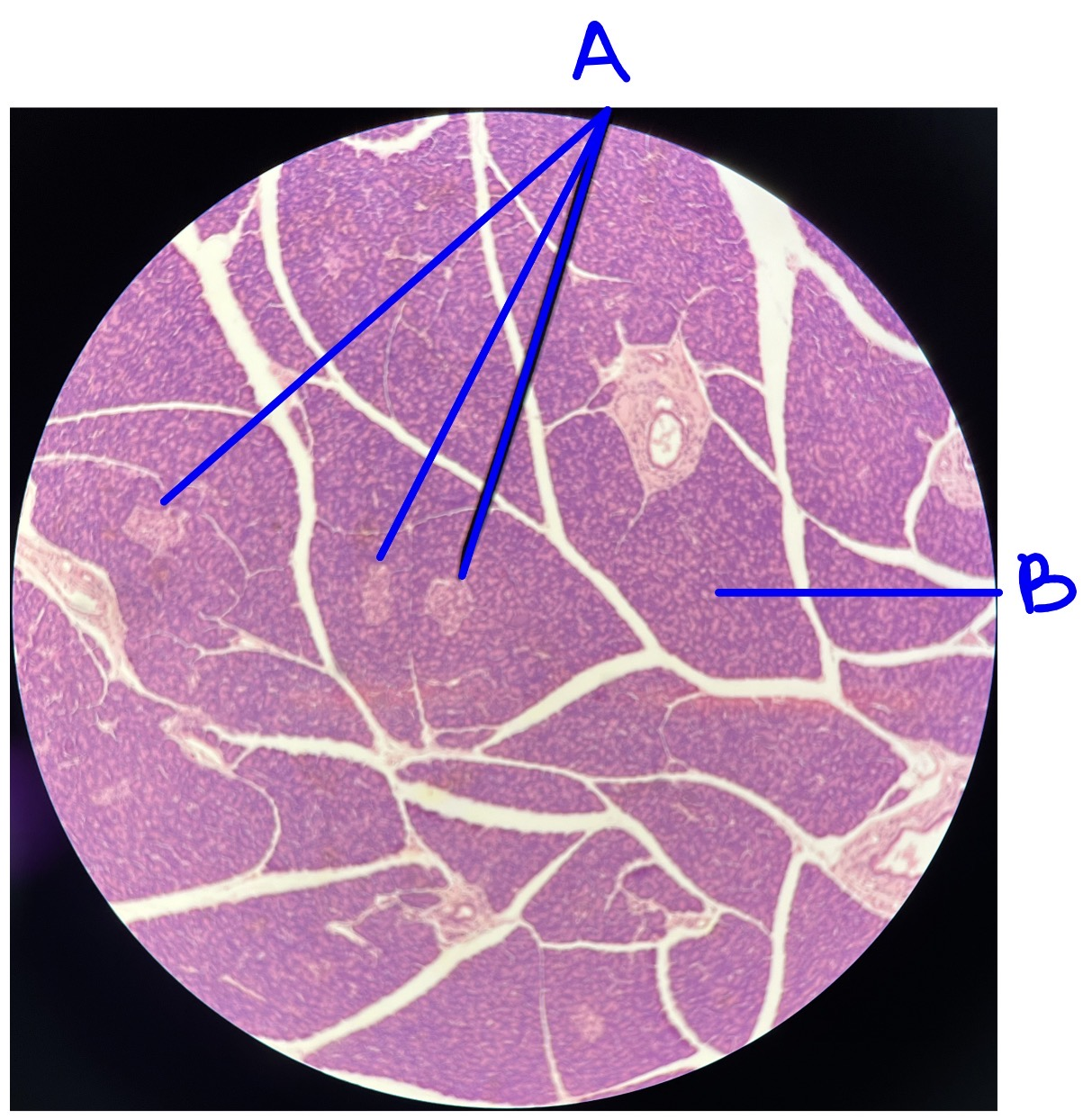
What is B?
pancreatic acini

Percentage of B
99%

What cell make of B?
simple cuboidal epithelium
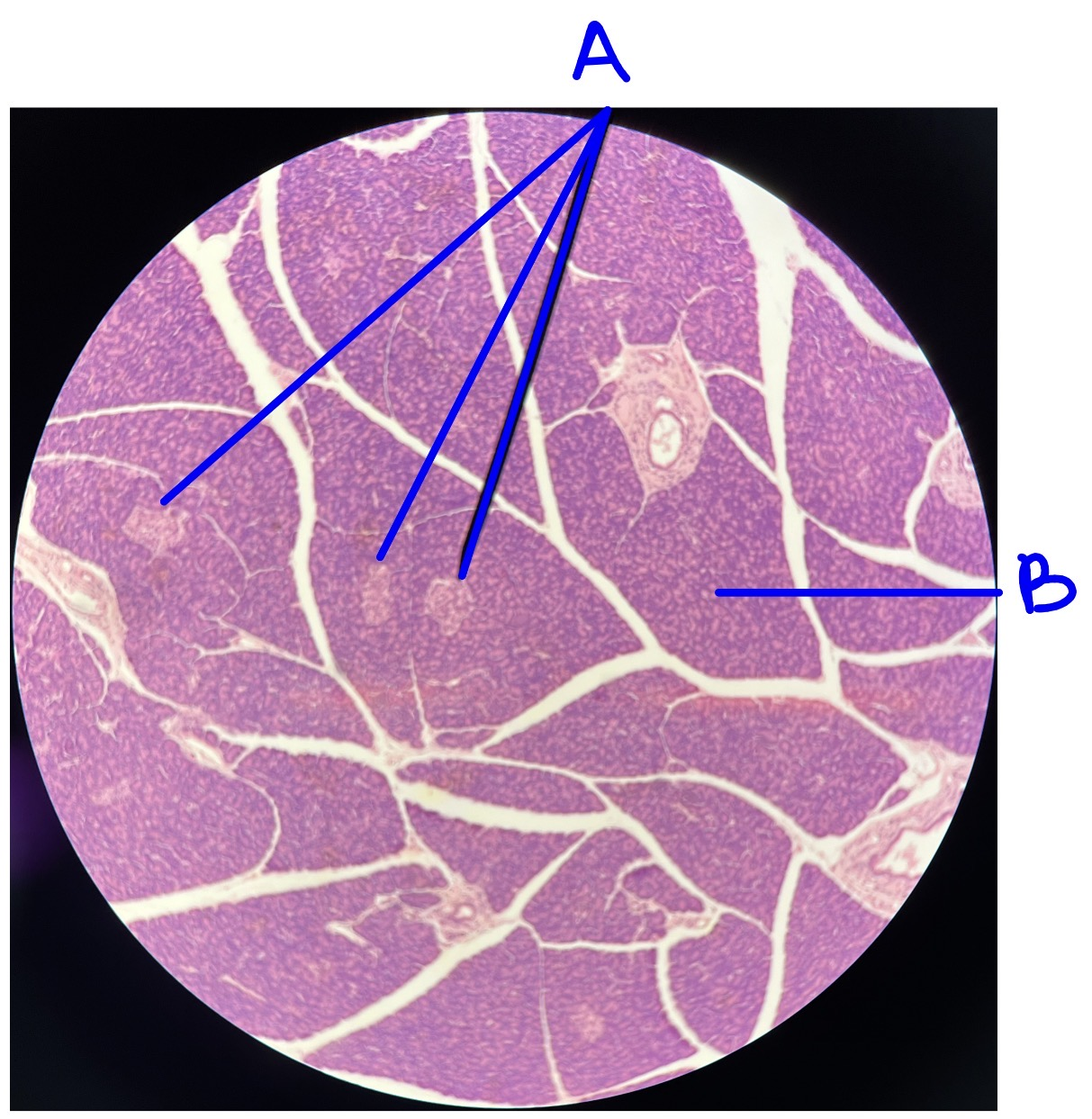
1 hormone that B produces
pancreatic lipase

What is A?
esophagus

What is B?
stomach
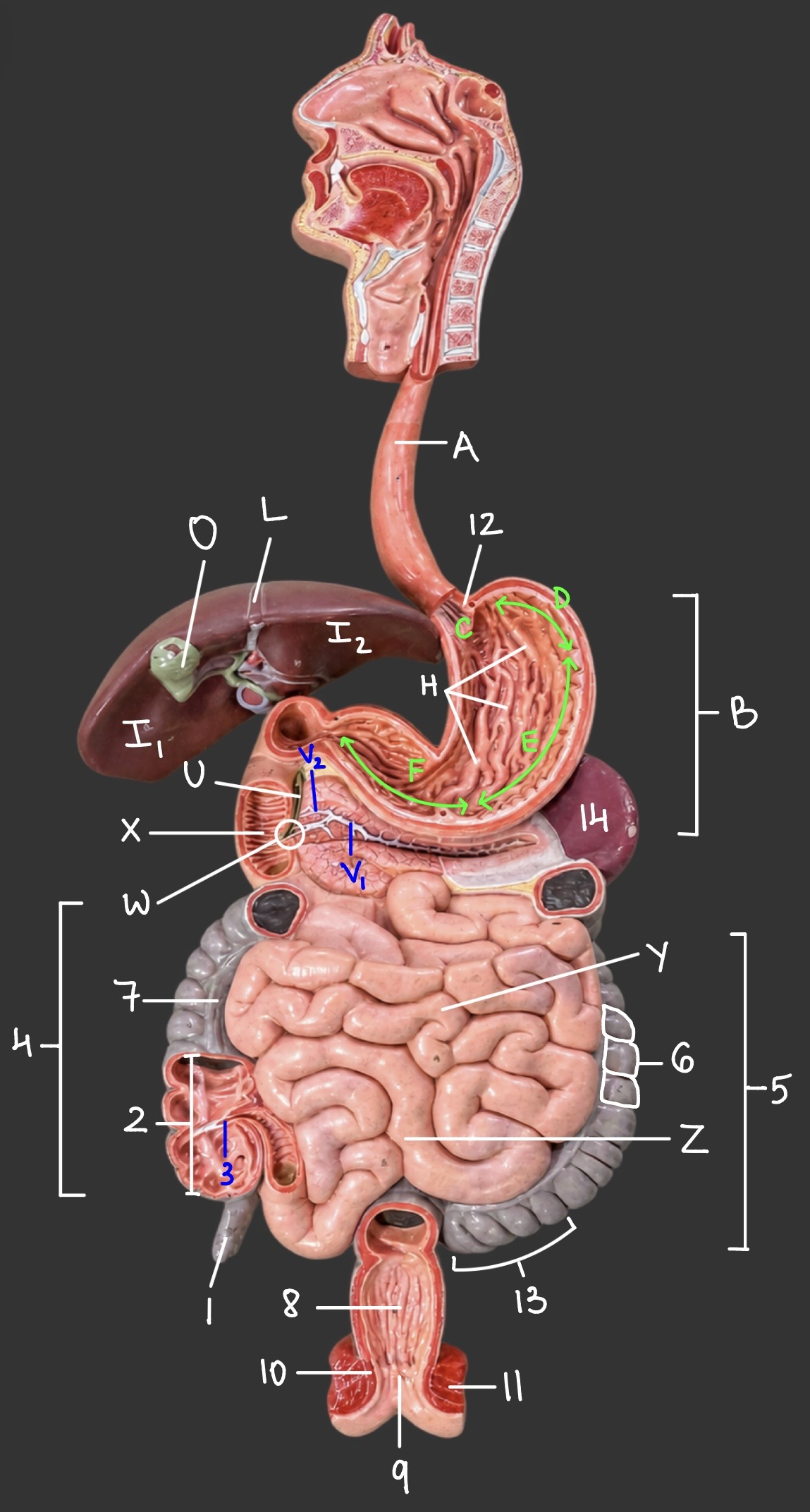
What is C?
cardia of stomach
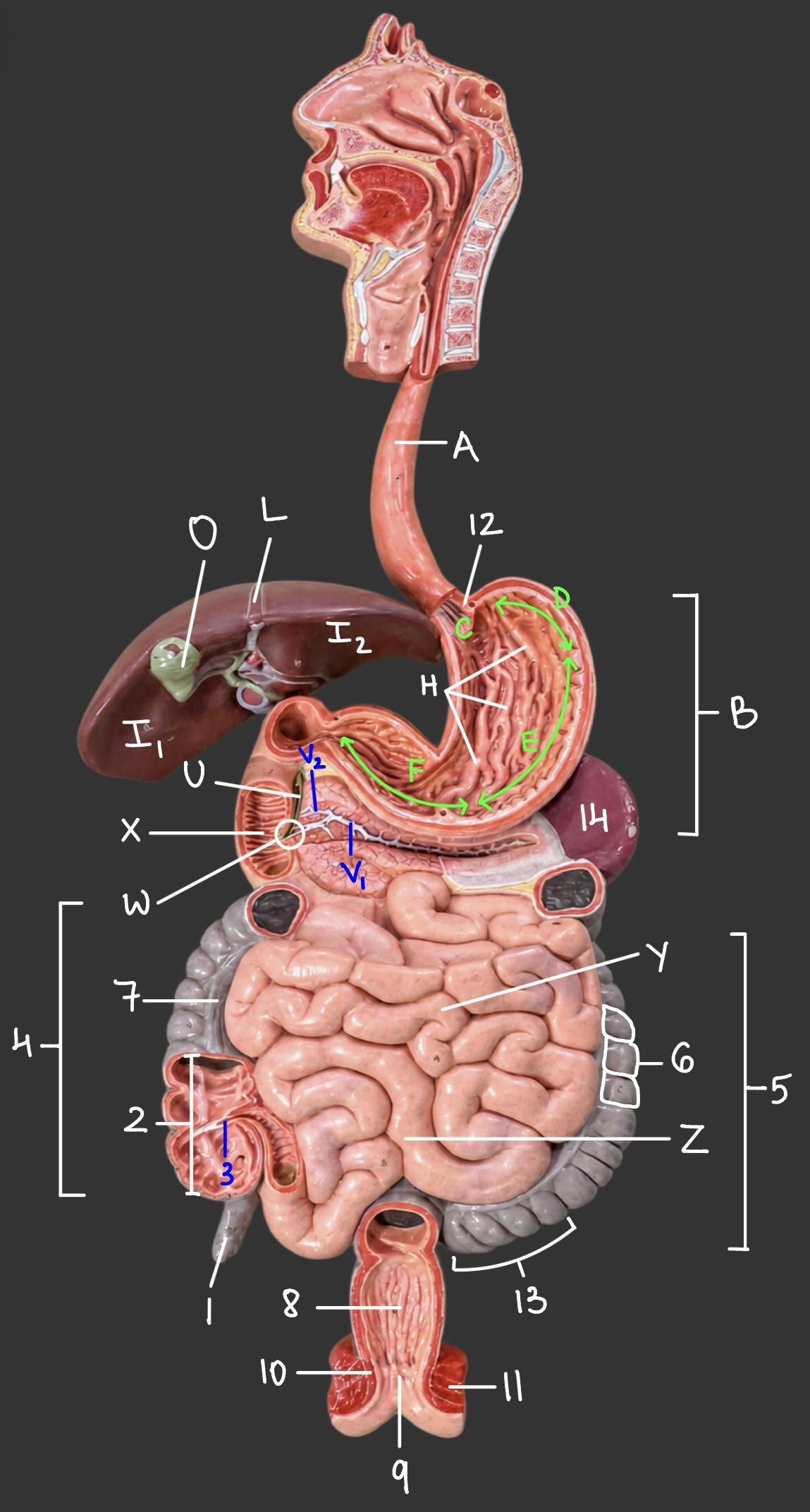
What is D?
fundus of stomach

What is E?
body of stomach
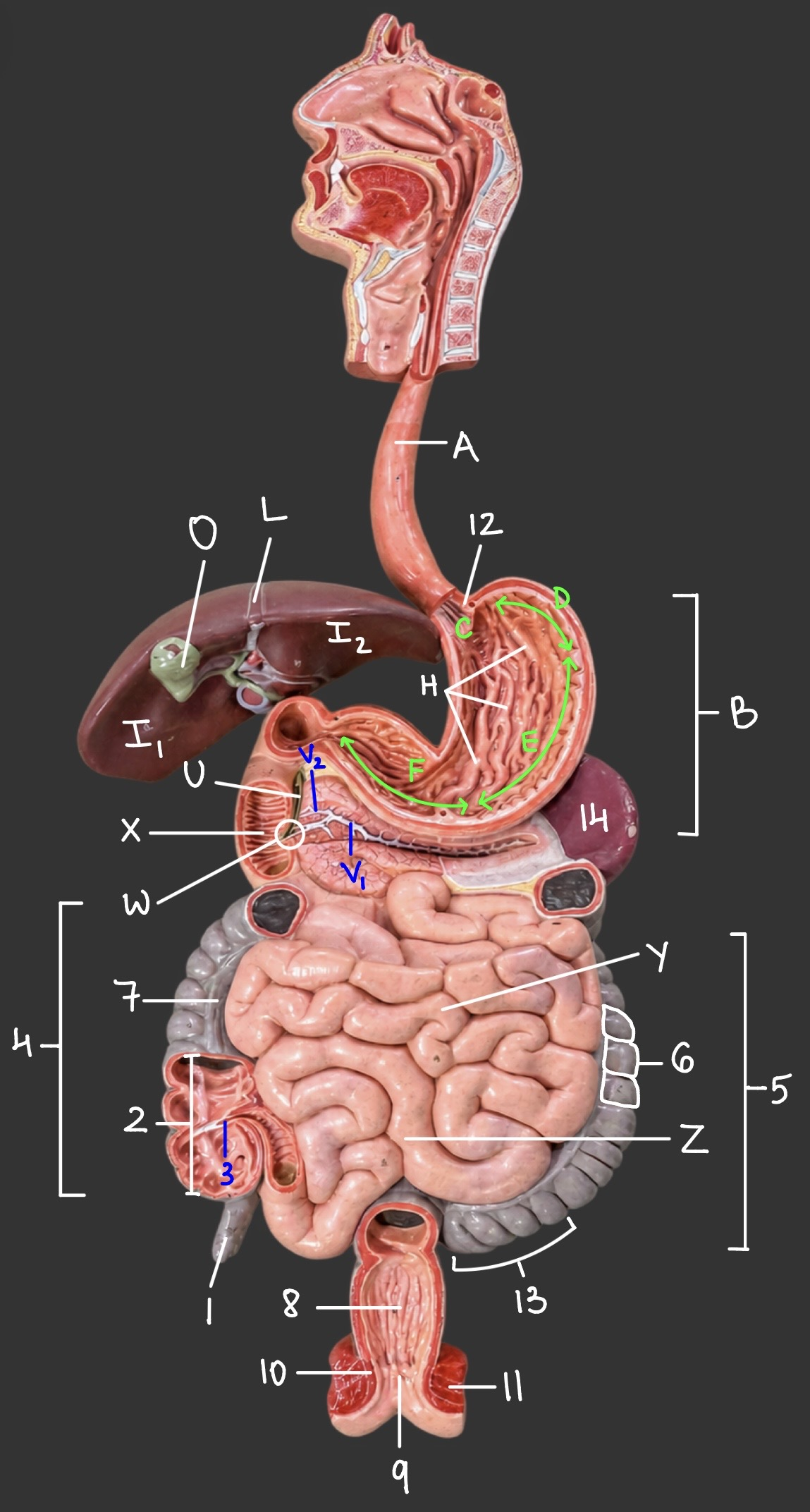
What is F?
pylorus of stomach
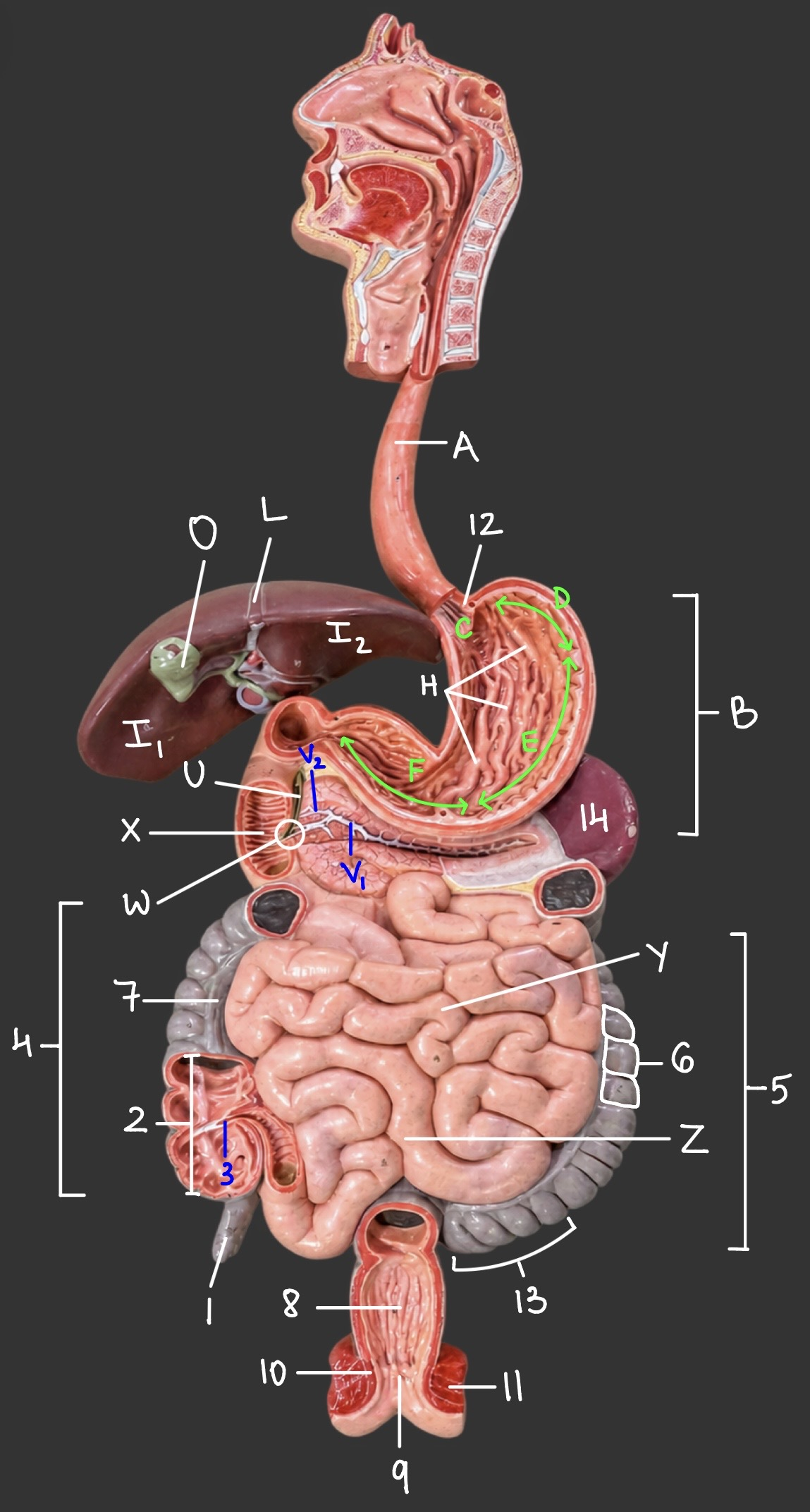
What is H?
rugae of stomach
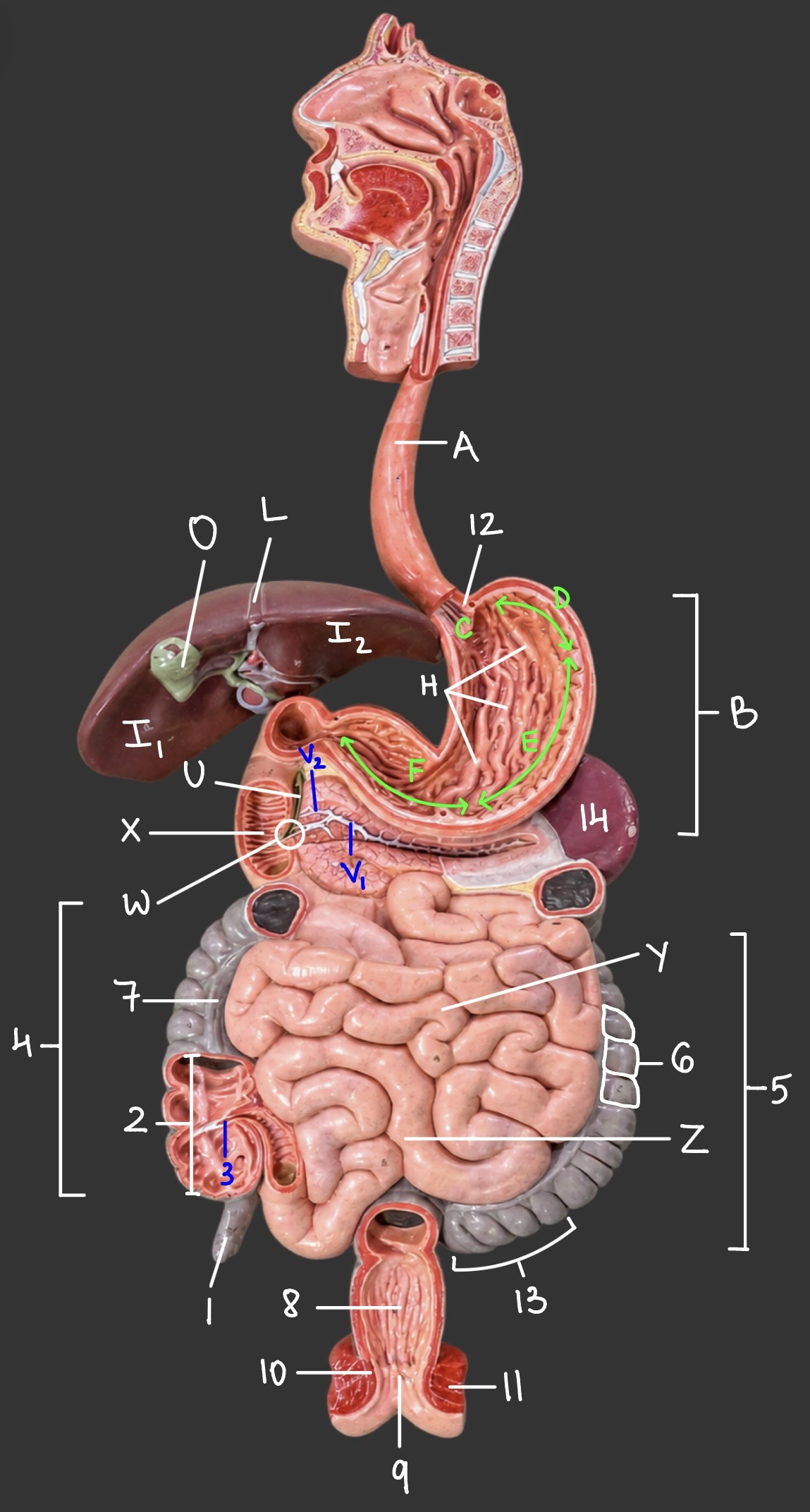
What is I1?
right lobe of liver

What is I2?
left lobe of liver

What is L?
falciform ligament

What is O?
gallbladder

What is U?
common bile duct
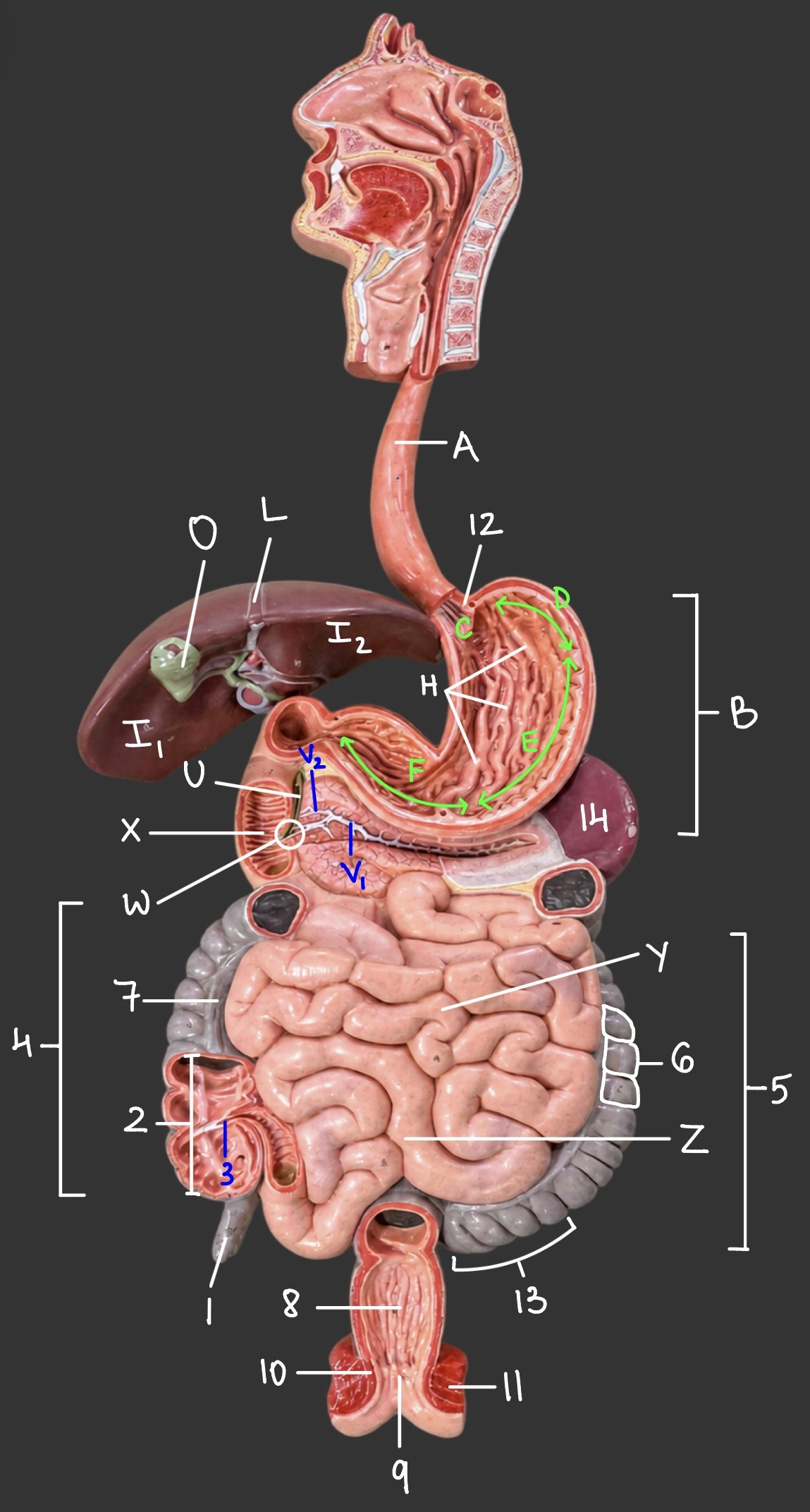
What is V1?
main pancreatic duct

What is V2?
accessory pancreatic duct

What is W?
sphincter of Oddi (hepatopancreatic sphincter)

What is X?
duodenum

What is Y?
jejunum

What is Z?
ileum

What is 1?
vermiform appendix

What is 2?
cecum
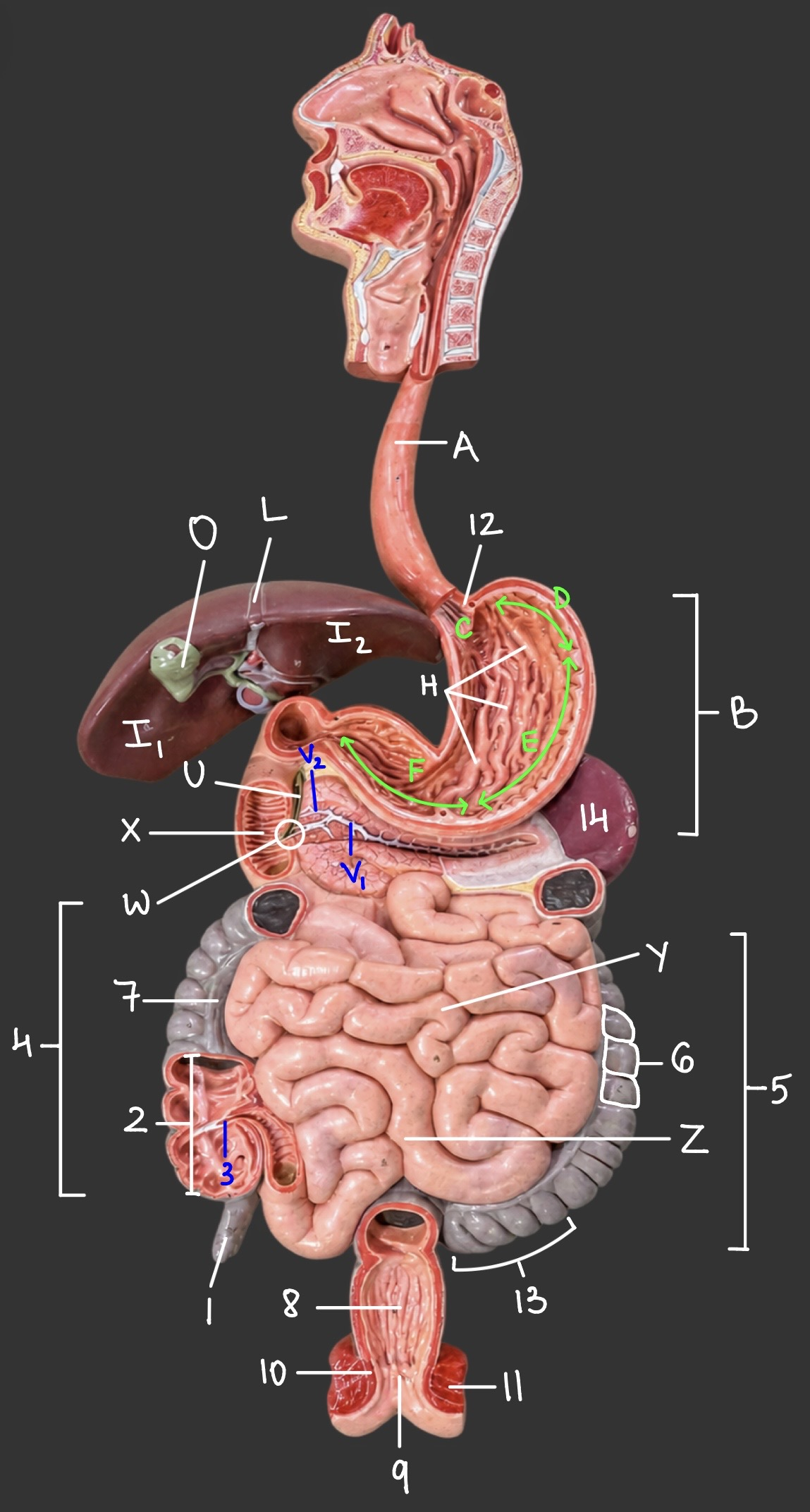
What is 3?
ileocecal valve
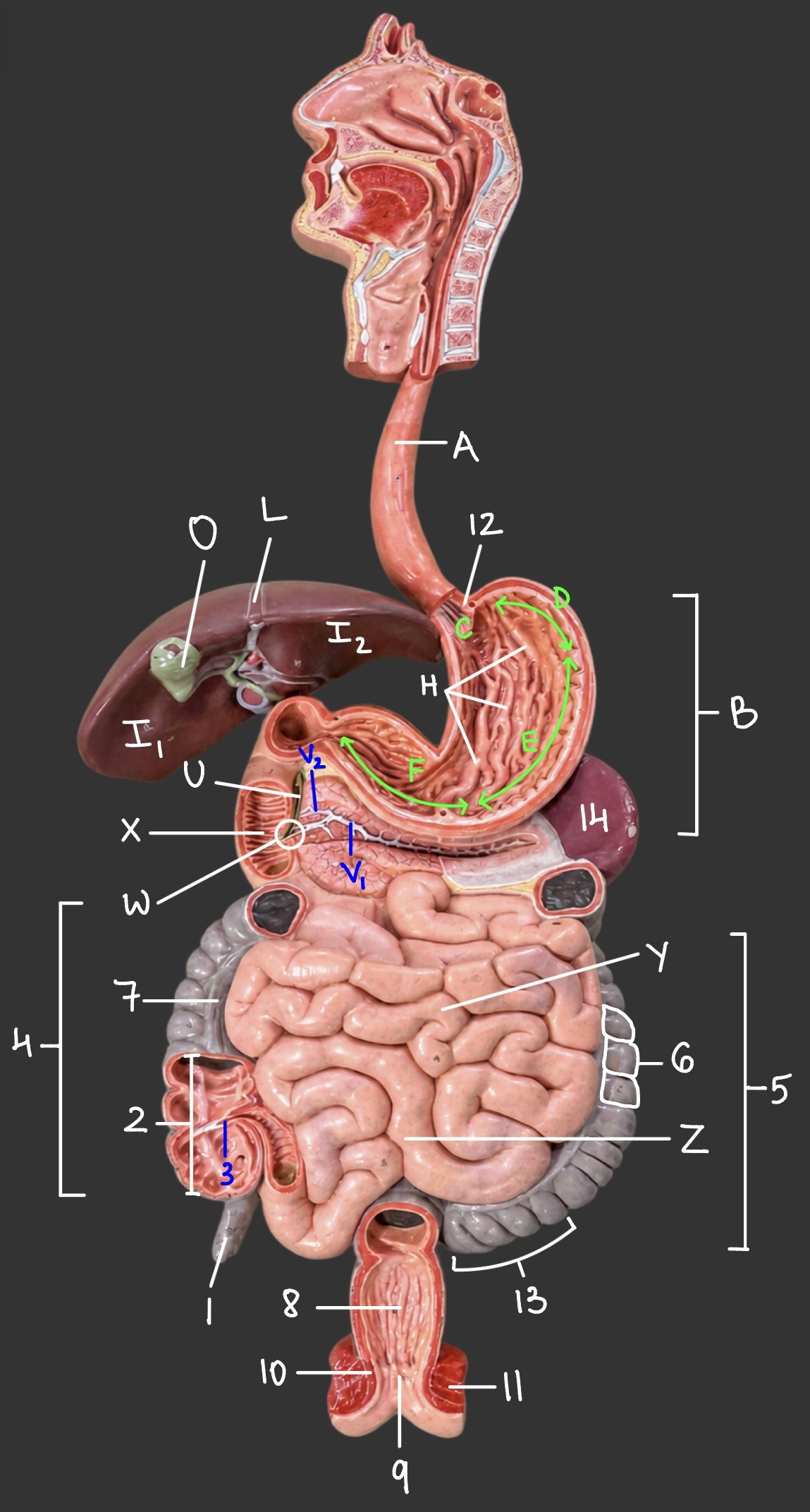
What is 4?
ascending colon

What is 5?
descending colon

What is 6?
haustra
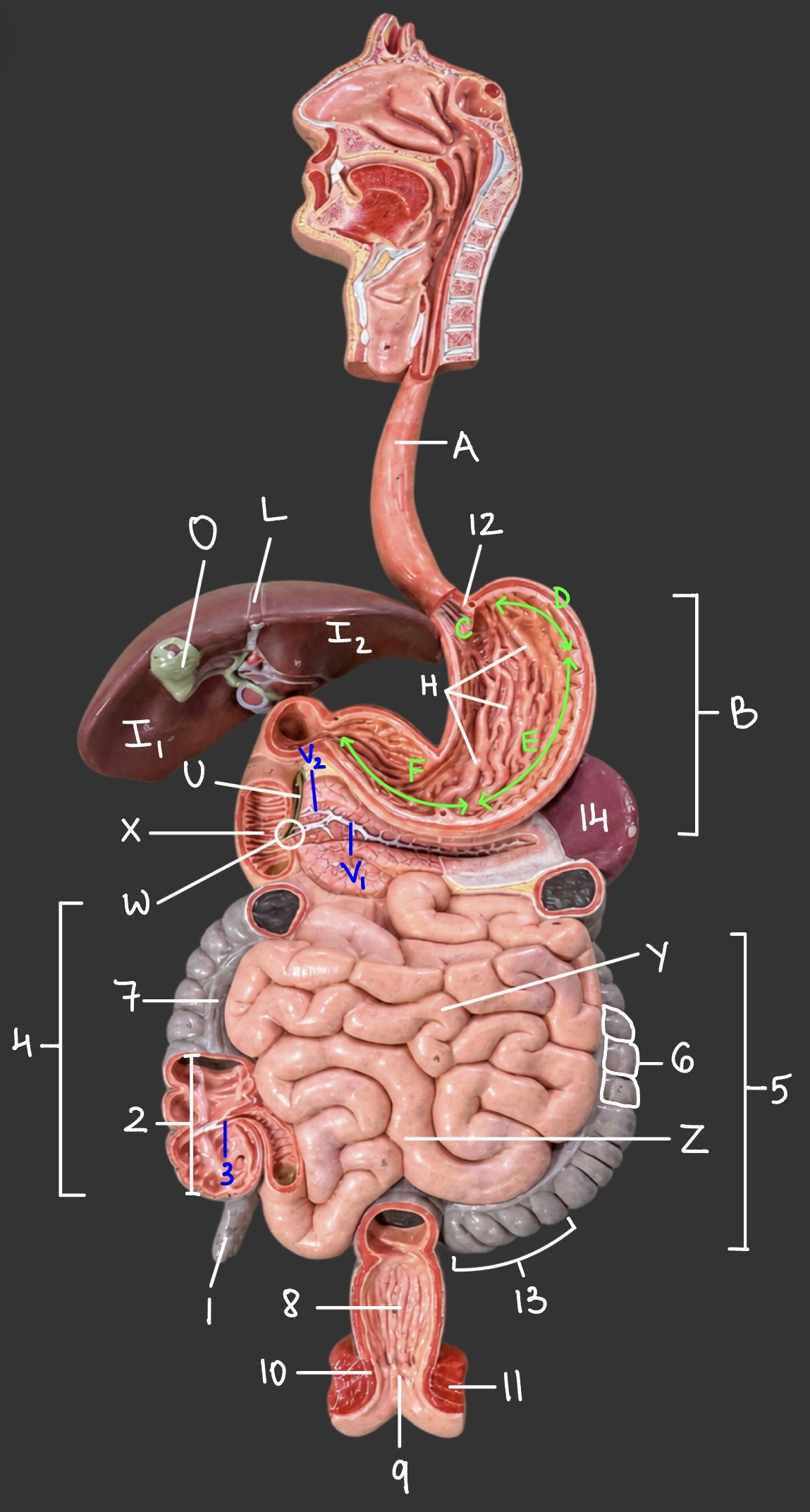
What is 7?
teniae coli

What is 8?
rectum

What is 9?
anus

What is 10?
internal anal sphincter

#10 is involuntary or voluntary
involuntary

What muscle does #10 have?
smooth muscle

What is 11?
external anal sphincter
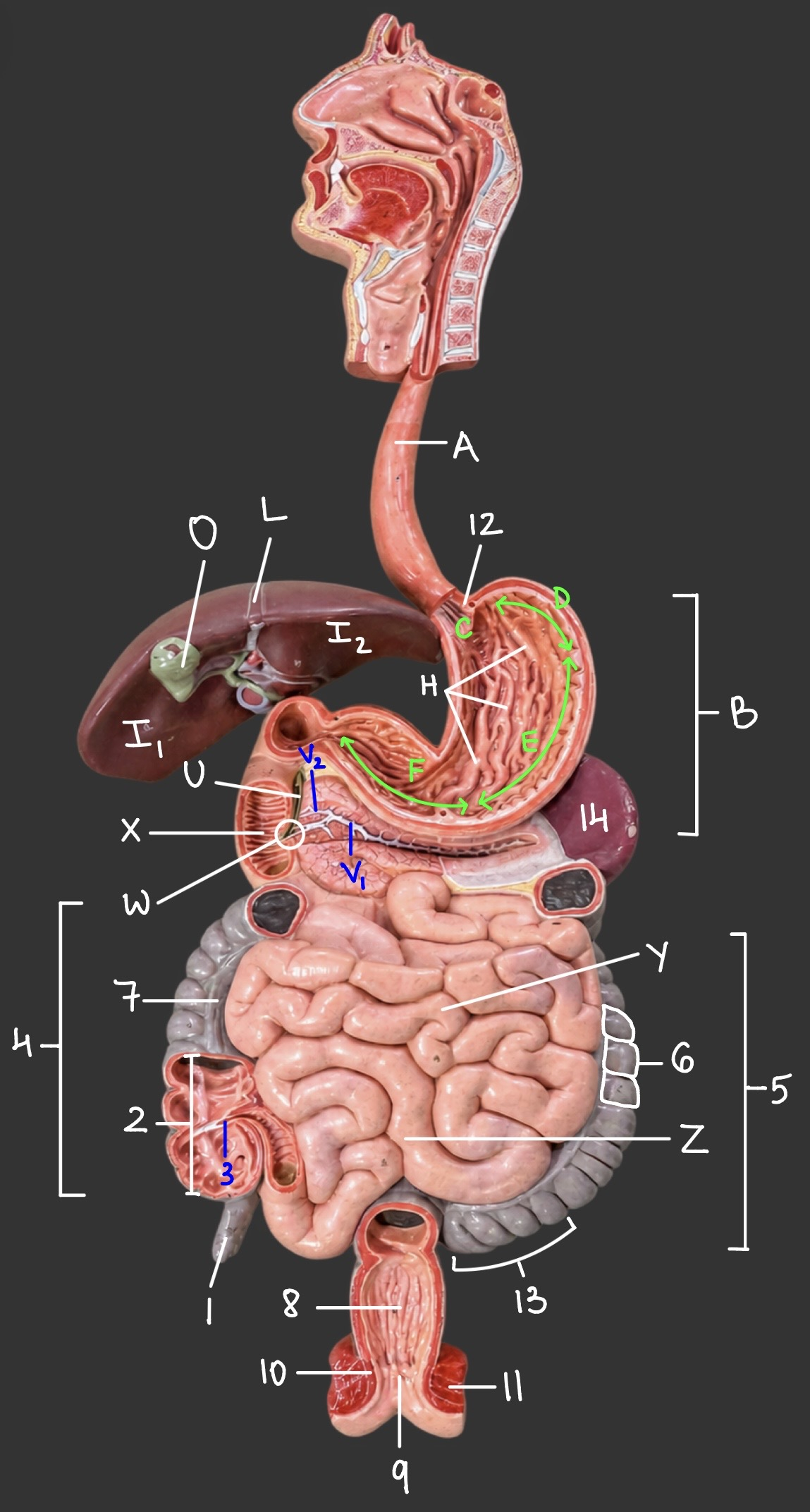
#11 is involuntary or voluntary
voluntary

What muscle does #11 have?
skeletal muscle
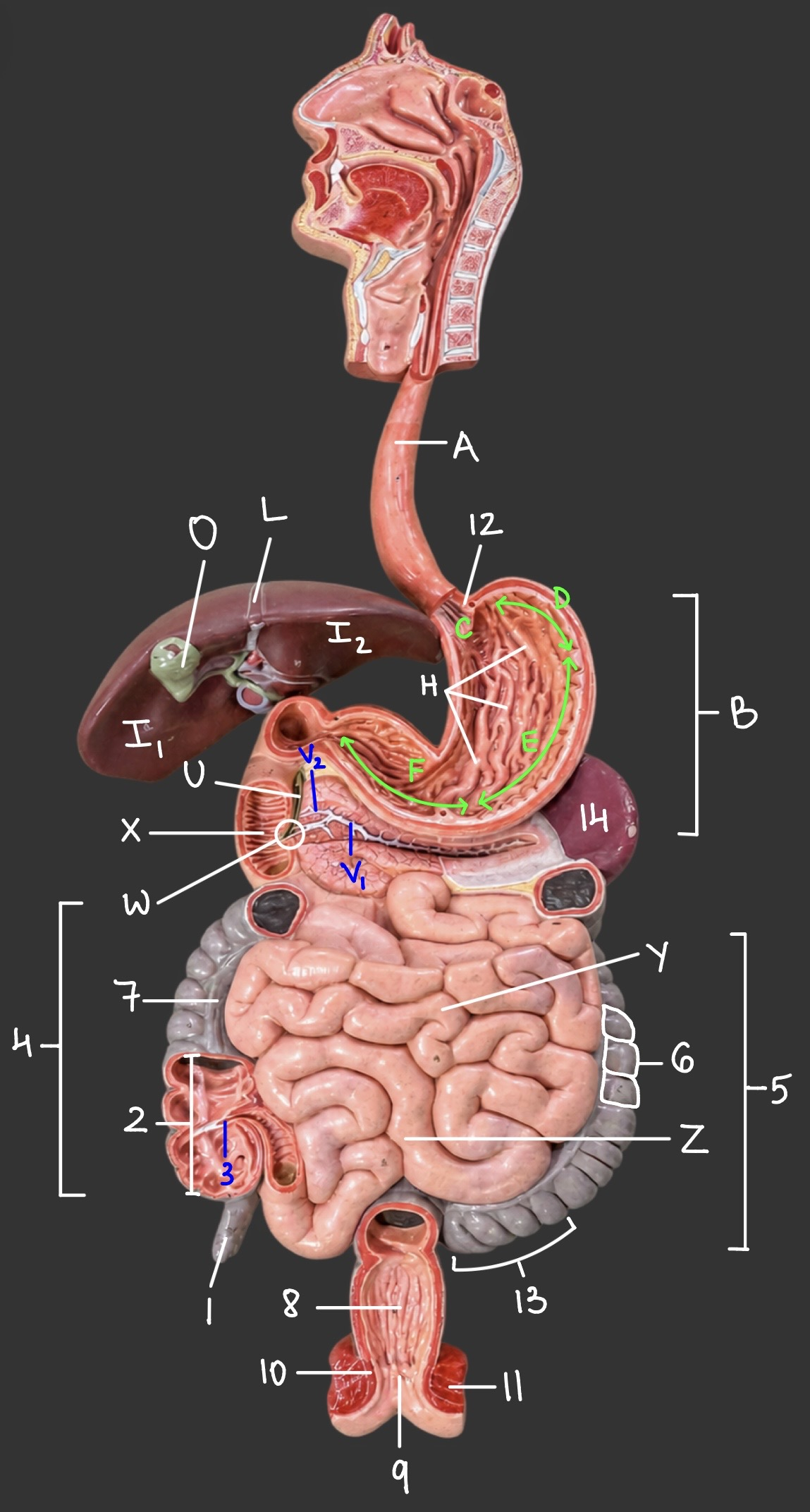
What is 12?
lower esophageal sphincter

What is 13?
sigmoid colon
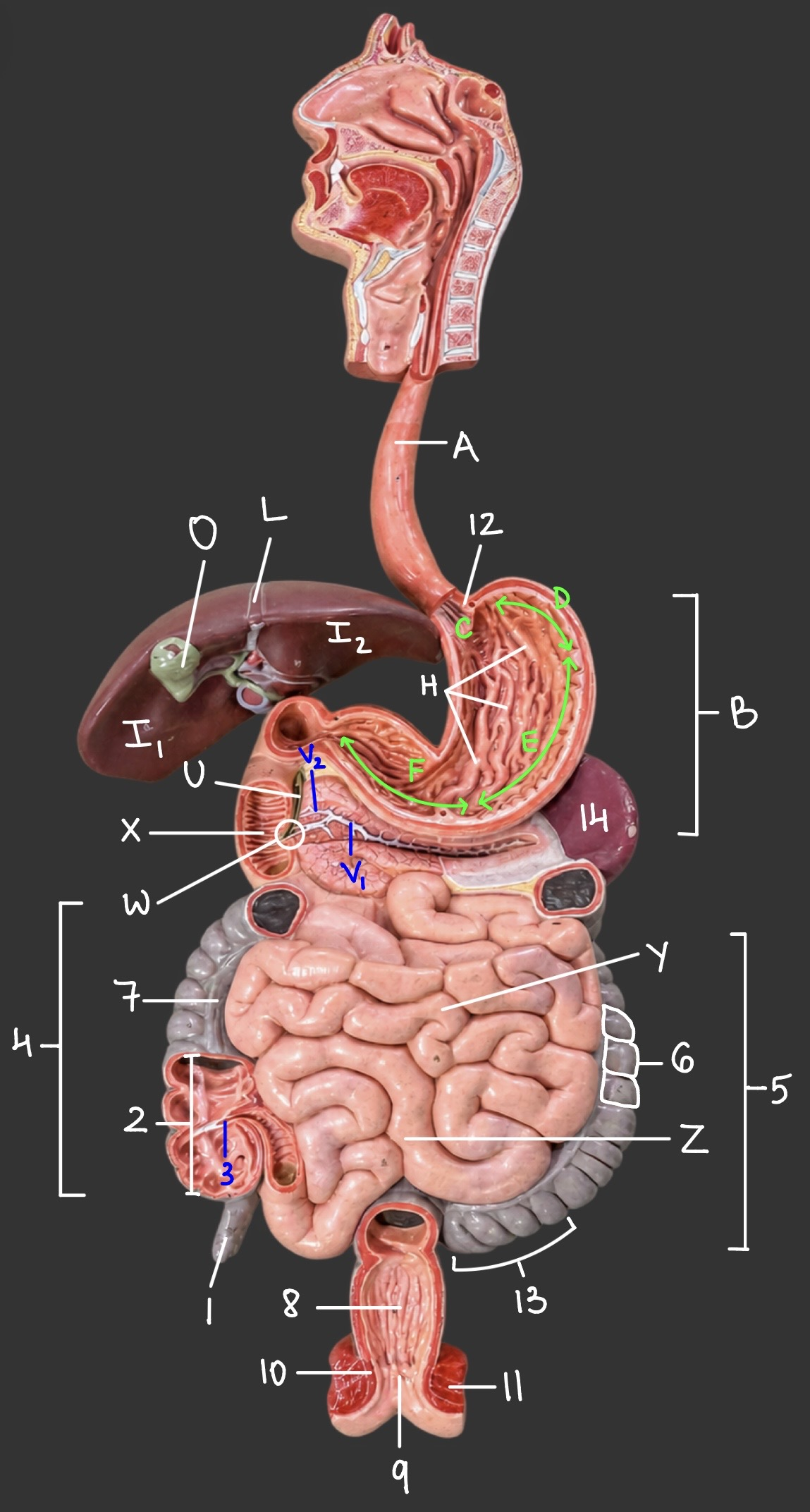
What is 14?
spleen

What is I1?
right lobe of liver
What is I2?
left lobe of liver
What is J?
quadrate lobe of liver
What is K?
caudate lobe of liver
What is M?
round ligament
What fetal structure does M come from?
ductus venosus
What is N?
inferior vena cava
What is P?
hepatic portal vein
What is Q?
hepatic artery proper
What is R1?
right hepatic duct
What is R2?
left hepatic duct
What is S?
common hepatic duct
What is T?
cystic duct
What is U?
common bile duct

What is A?
esophagus

What is C?
cardia of stomach

What is D?
fundus of stomach
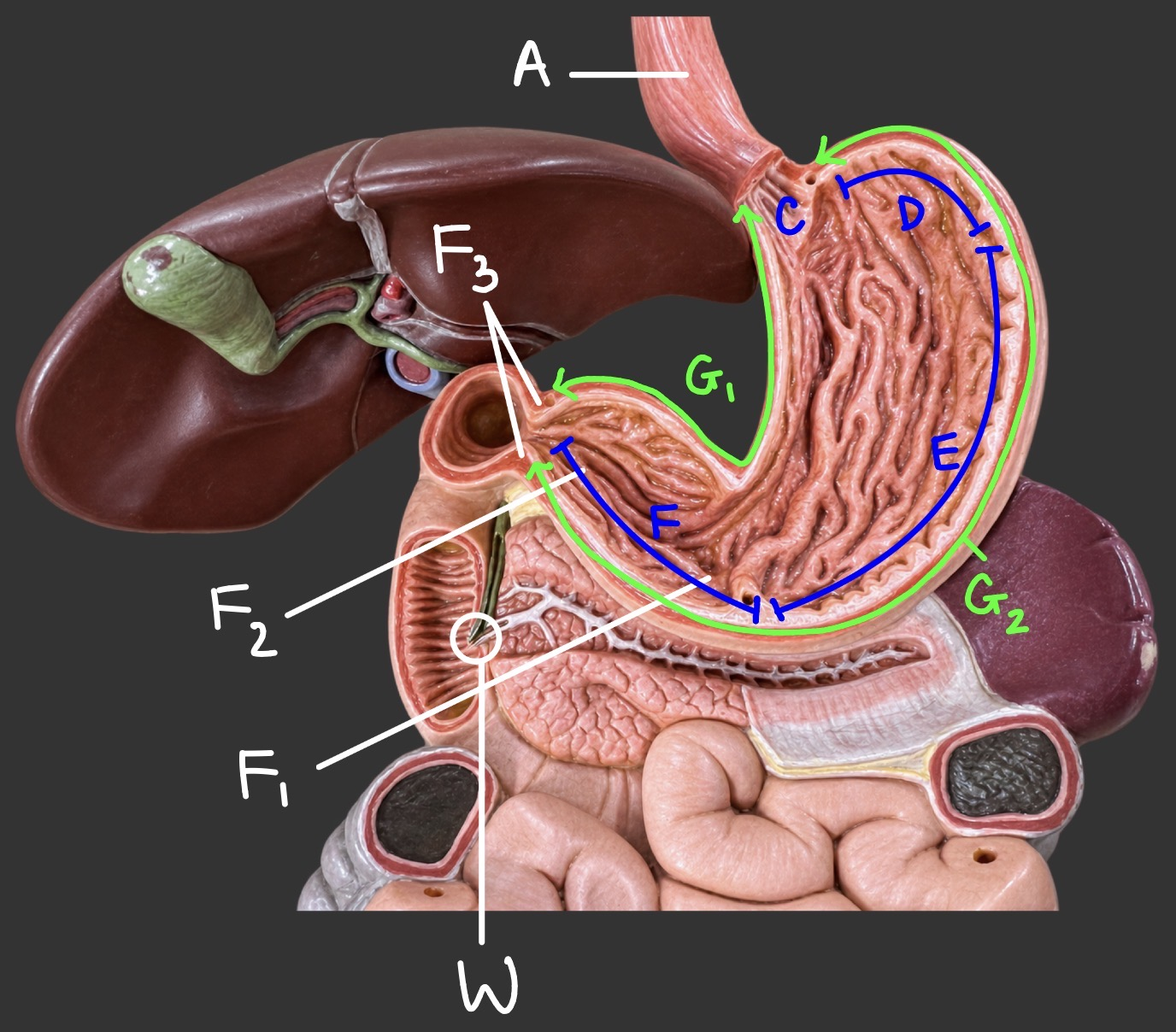
What is E?
body of stomach
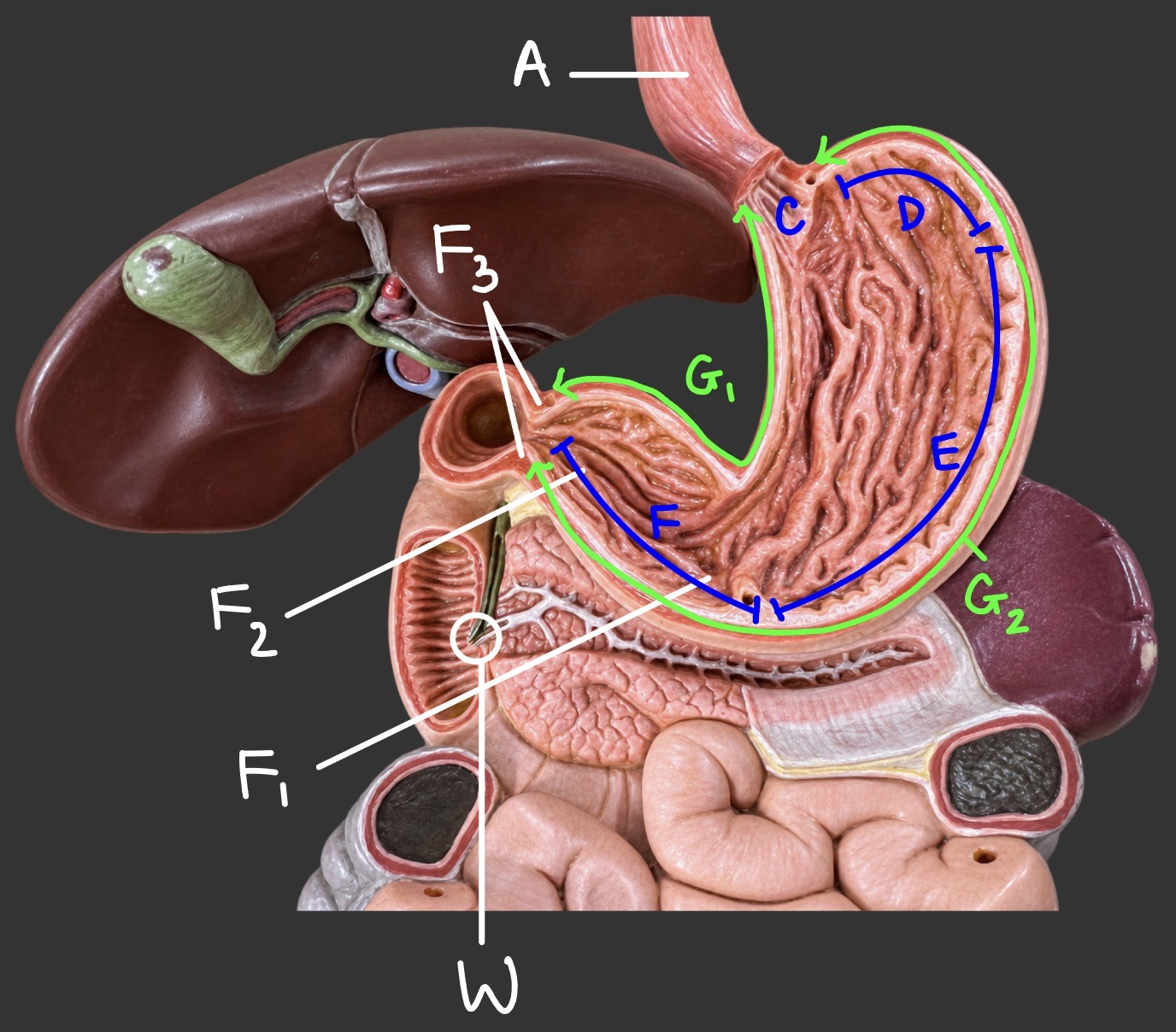
What is F?
pylorus of stomach

What is F1?
pyloric antrum
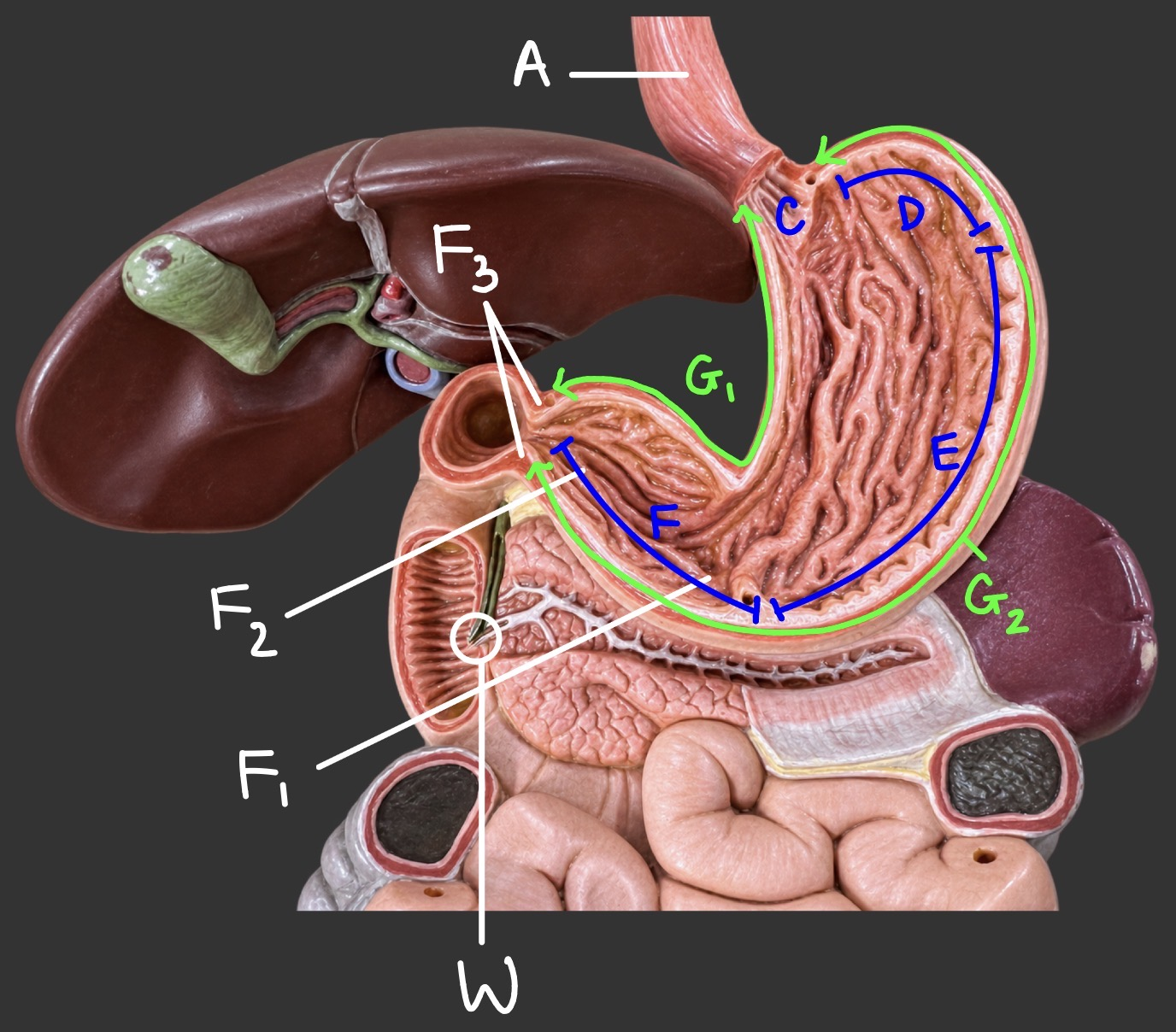
What is F2?
pyloric canal
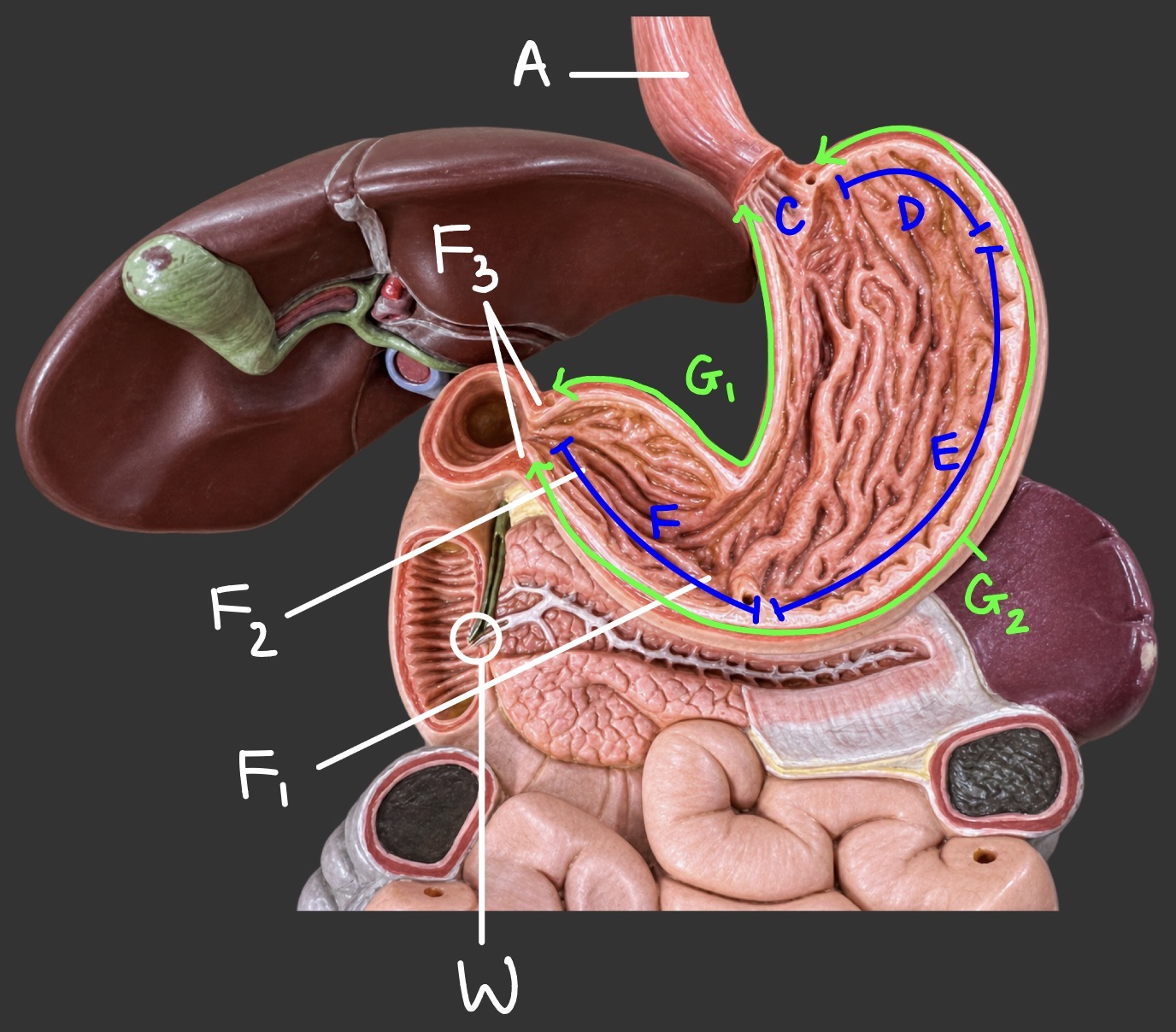
What is F3?
pyloric sphincter

What is G1?
lesser curvature
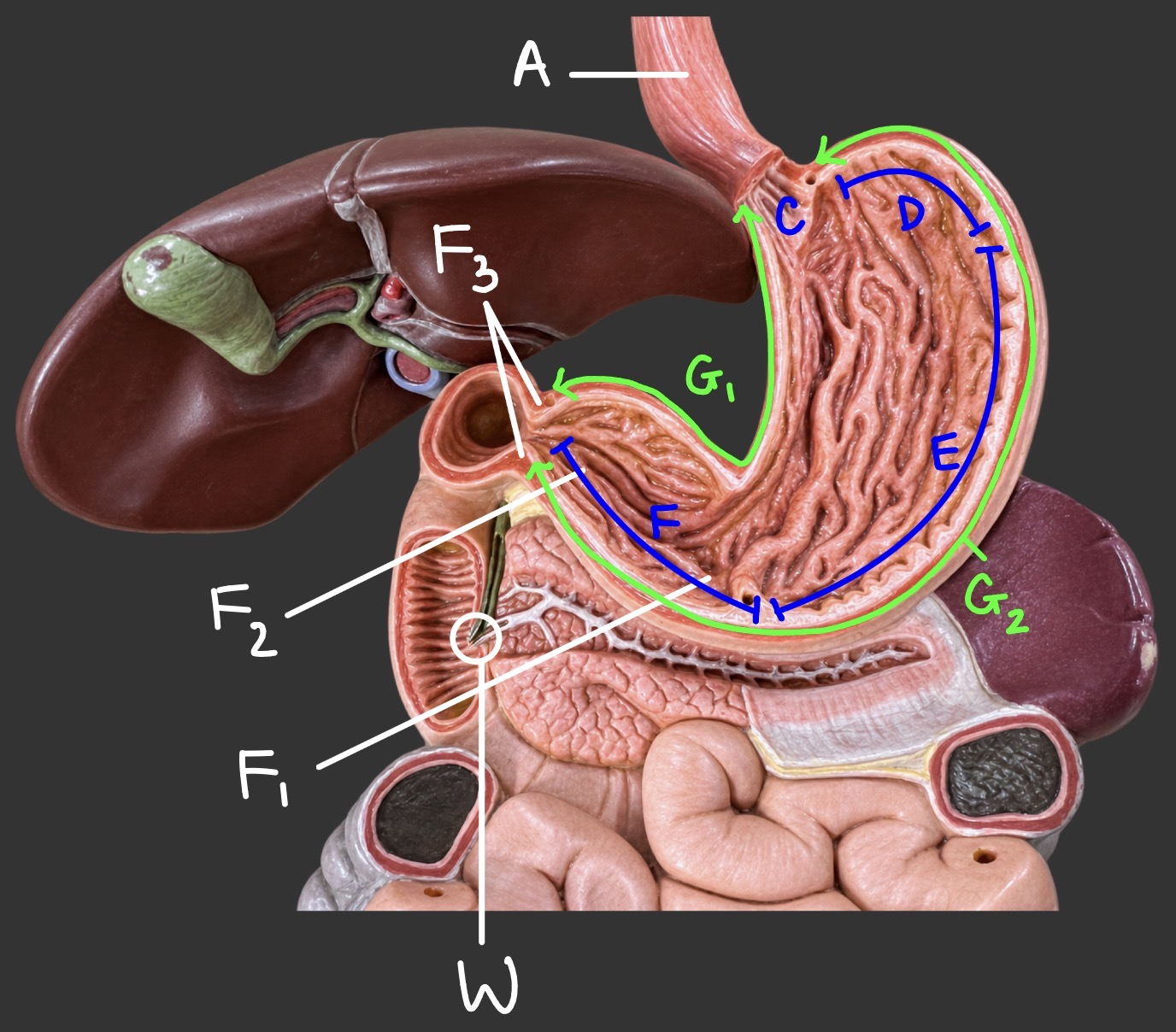
What is G2?
greater curvature

What is W?
sphincter of Oddi (hepatopancreatic sphincter)

What is A?
incisor
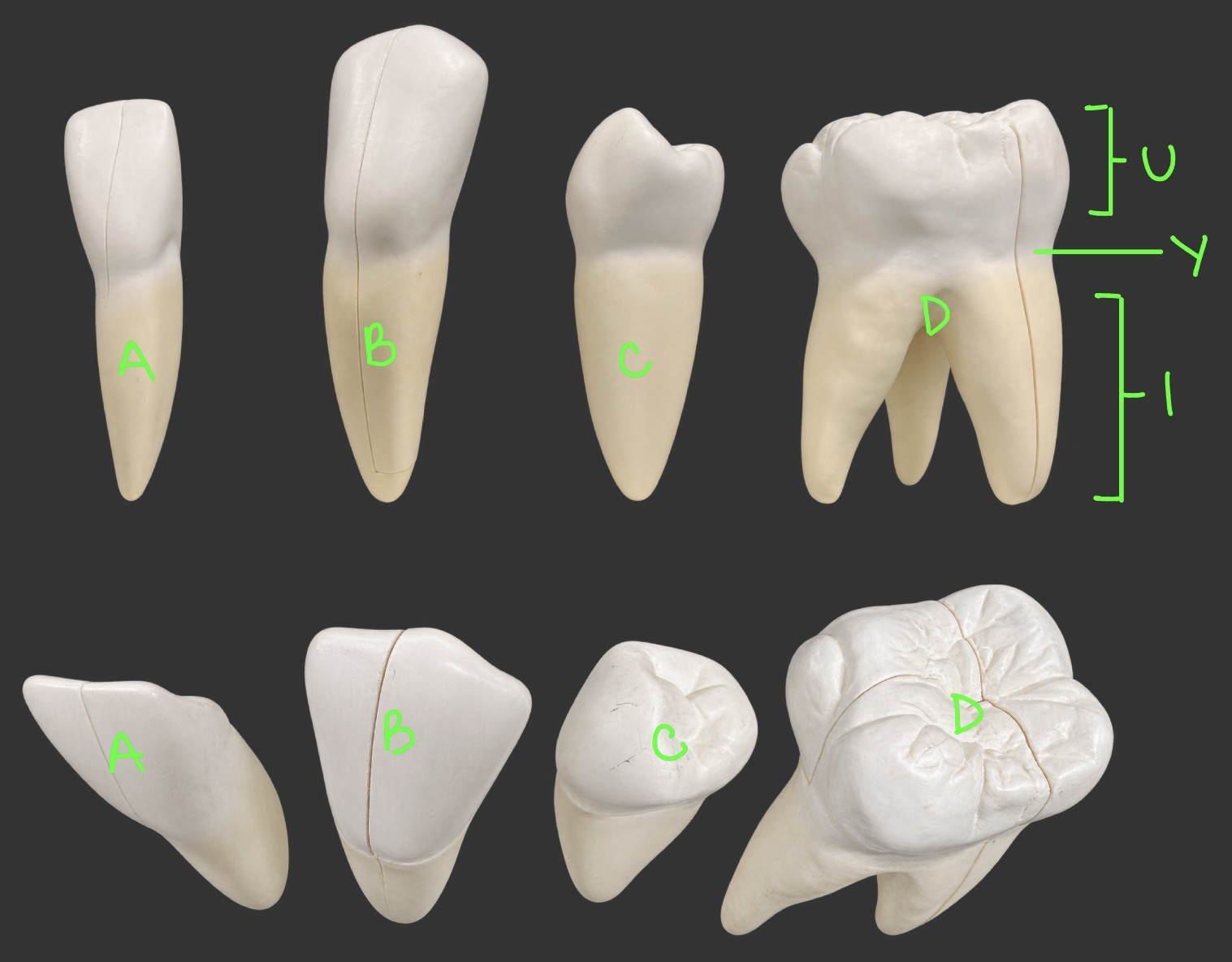
How many roots does A have?
1
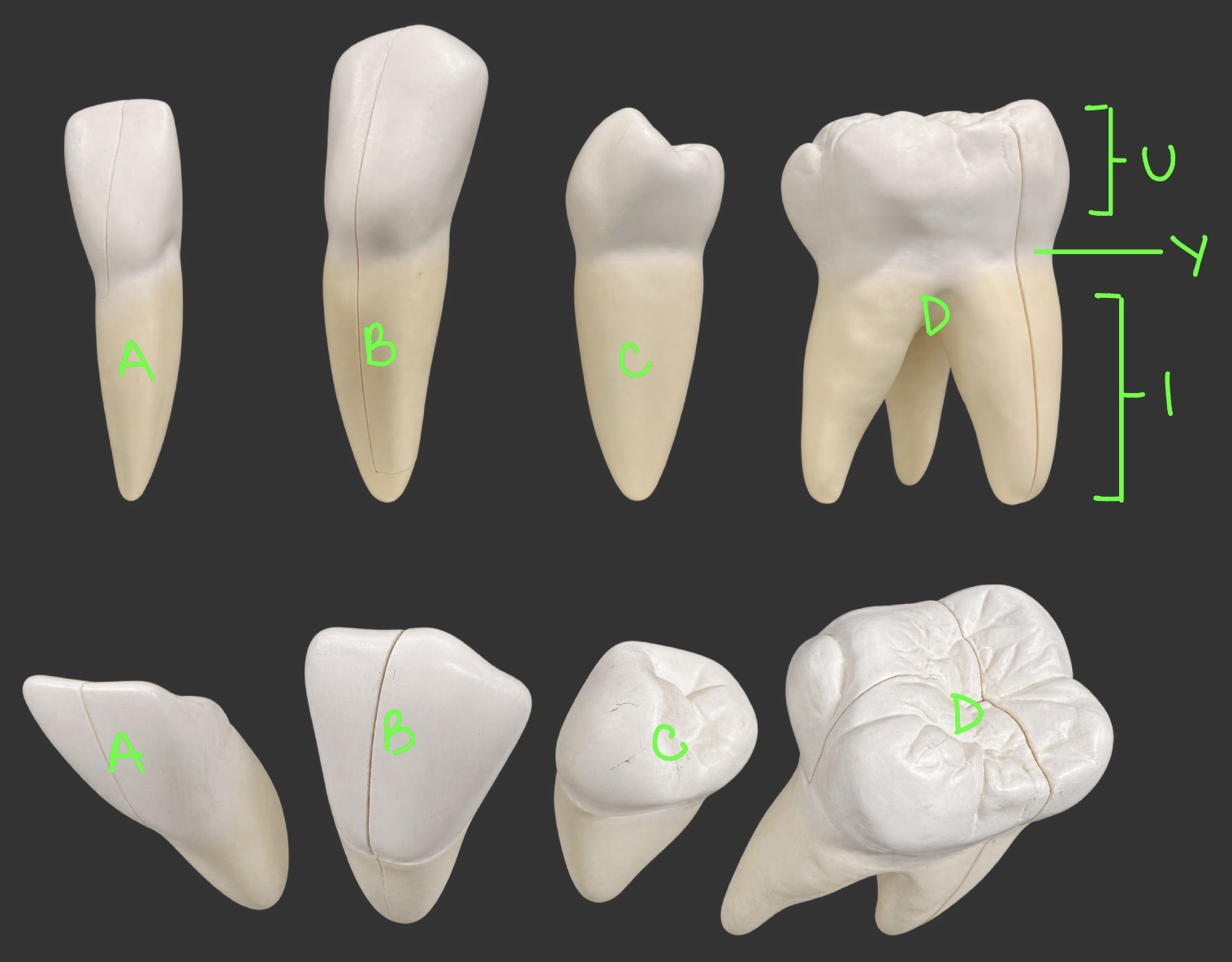
1 function of A
cut

What is B?
canine/cuspid