P&H UNIT 1 quizzez
 Call Kai
 Learn
Learn Practice Test
 Spaced Repetition
 Match
Match Flashcards
 Knowt Play
1/40

There's no tags or description
Looks like no tags are added yet.
Name | Mastery | Learn | Test | Matching | Spaced | Call with Kai | Chat |
|---|
No analytics yet
Send a link to your students to track their progress
41 Terms
In class, we discussed three goals for a healthcare system and how difficult it is to achieve all three. Some politicians have suggested Medicare for All as a way to improve the U.S. healthcare system. Which goal is that most focused on meeting?
Increased access
The Nebraska Board of Pharmacy may sanction a pharmacist for behavior that is not illegal. Which characteristic of a profession does this represent?
Ethical codes and internal control
The primary advantage of interdisciplinary care when compared to multidisciplinary care is:
Effective communication among the health care team
You are excited at the prospect of working in a new patient-centered medical home (PCMH) clinic after you graduate. Shortly after you start, you realize that the pharmacists in the clinic are not being utilized to their full potential. Which of the following is a likely barrier to changing the practice?
Lack of communication about the expectations
Healthcare in 19 th century looked much different than care today. Hospitals of the era are good example of that difference. What population was generally served by hospitals in the 19th century?
The poor
Whose report in 1910 which recommended numerous changes in the focus, education, and practice of medicine is credited with doing away with the apprentice model of medical education?
Flexner
Which branch of government allocates money for Medicaid?
The Legislative branch
Which level of government sets rules about transporting drugs from state-to-state?
The Federal Government
Which level of government licenses pharmacists?
The state government
What is required of you when counseling a patient?
That the patient understands what you are saying
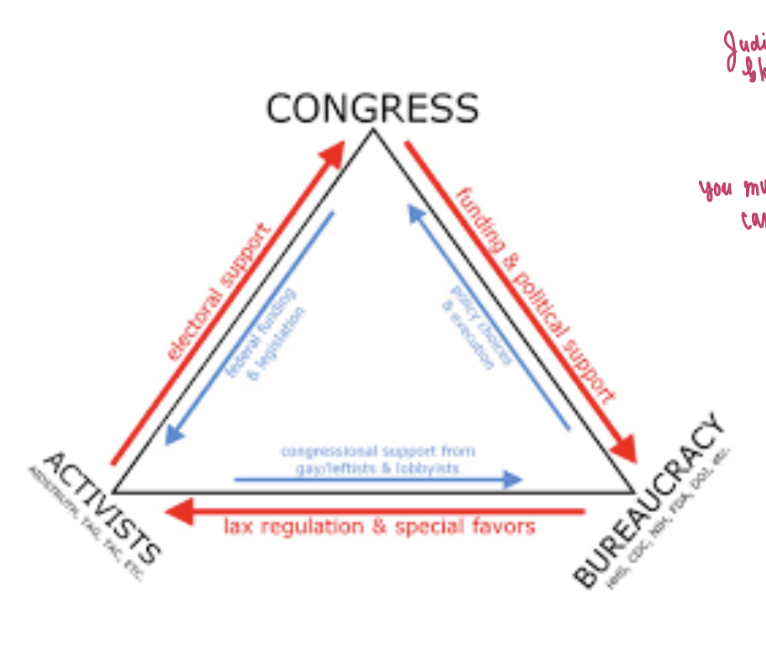
You were introduced to the concept of the "iron triangle" as possible way to
describe the functioning of government. Which of the following represent the 3 sides of the "iron triangle"?
Congress, Bureaucracy, & Activists
When considering issues that impact patient decisions. One of the issues of
concern is DTC. What does DTC mean, in this context?
Direct to Consumer
How does granting the patient autonomy improve outcomes?
Patients are more likely to follow plans they help develop
Which of the following statements reflects the patient being the center of care?
The patient reported missing 2 doses
True or False? A patient who cannot understand dosing instructions is illiterate.
False
Which of the following properly matches the person with the branch of
government
The Governor is a part of the Executive Branch
HERE
Identify the 3 eras of pharmacy in the United States during the 20th century
Drug Purity Era: Defined by the Pure Food and Drug Act of 1906, which focused primarily on product purity rather than safety or efficacy.
Drug Safety & Efficacy Era: Marked by legislation such as the Durham-Humphrey Amendment to the Food, Drug, and Cosmetic Act, which established distinct prescription versus over-the-counter categories and mandated proven safety and efficacy.
Quality of Care & Cost Containment Era: Focused on managed care, Medication Therapy Management (MTM), cost containment, and optimizing patient outcomes
Describe recent expansion of pharmacists’ professional roles
Immunization Administration: Serving as primary public vaccinators.
Point-of-Care Testing (POCT): Performing rapid diagnostic screening.
Medication Therapy Management (MTM): Conducting comprehensive medication reviews and optimizing regimens.
Pharmacogenomics: Tailoring drug therapy to individual genetic profiles.
Expanded Public Health Roles: Providing expanded clinical services and prescribing under statewide protocols (such as during the COVID-19 pandemic
What are the components of Nebraska’s definition of Pharmaceutical Care
the provision of drug therapy by a pharmacist to achieve specific therapeutic outcomes that improve a patient's quality of life
What is the difference between Licensure & Certification
Licensure: Required legally to protect public safety.
Certification: Voluntary
Describe the impact of the internet on the practice of pharmacy and on patients
Impact on Practice: Driven administrative and clinical technology through internet-based Prescription Drug Monitoring Programs (PDMPs), electronic prescribing, telehealth delivery, and instant access to drug information databases.
Impact on Patients: Increases patient access to information, leading to self-diagnosis via internet searches, ChatGPT, or AI tools
Can you describe the 4 statements used to determine adherence in the McHorny research for Merck?
The four statements include:
I am convinced of the importance of my prescription medicine
I worry that my prescription will do more harm than good to me
I feel financially burdened by my out-of-pocket expenses for my prescription medicine.
4th question: I believe and trust my dr. was right
How does our current healthcare crisis in financing relate to our past successes in healthcare?
Past public health and medical successes cured acute diseases and increased life expectancy.
Living longer with chronic conditions dramatically increases healthcare utilization and long-term costs.
How have patient expectations for healthcare outcomes changed over the years?
Patients demand patient-centered care, active decision-making, quality-of-life outcomes, and accessible communication
The models of healthcare delivery discuss classic issues of patient-practitioner relations. Can you describe them? You do NOT need to name the models.
Paternalistic vs. Collaborative Model: Moving from a traditional model where the practitioner dictates care to a collaborative partnership centered on patient autonomy.
Perceptions and Beliefs: Addressing patient perceptions regarding disease susceptibility, severity, treatment barriers, and perceived benefits to facilitate behavior change.
Communication & Trust: Emphasizing health literacy, active listening, and non-hierarchical communication to build trust and shared understanding
If I give you an adherence factor, can you tell me if it is likely to increase or decrease adherence?
INCREASE Adherence: High conviction of need, low worry about harm, manageable out-of-pocket costs.
DECREASE Adherence: Doubt of need, high worry about harm, high financial burden.
The government has 3 basic functions in healthcare. What are they?
Payer: Funding programs like Medicare and Medicaid.
Provider: Delivering direct care (Military, Indian Health, Public Health Clinics).
Regulator: Protecting public health and safety.
Do you know what the abbreviations from the Federal Executive Branch mean? CDC, CMS, DEA, FDA
CDC: Centers for Disease Control and Prevention.
CMS: Center for Medicare and Medicaid Services.
DEA: Drug Enforcement Agency.
FDA: Food and Drug Administration
What are the differences between Federal involvement and State involvement in healthcare regulation?
Federal: Regulates products, public policy, and national agencies (FDA, DEA, CDC, CMS).
State: Regulates people and practice (licenses health professionals, administers Medicaid).
What are the 3 components of the “iron triangle” as it relates to regulating healthcare?
congress, activists, bureaucracy
SA: Describe which duties you would assign to a pharmacy technician in a community pharmacy. Just as in the class activity, current law is not an issue, you are the monarch.
I would allow pharmacy technicians to enter and fill prescriptions, give vaccines, handle insurance problems, take transfers, and perform the final product check. This would allow the pharmacist to focus on counseling patients, catching drug-related problems, and making clinical decisions.
SA: List examples of the government as a healthcare provider and government as a healthcare purchaser.
The government is a healthcare provider through programs like Indian Health Services, where the government directly provides healthcare services to patients. It is a healthcare purchaser through programs like Medicare and Medicaid because the government pays healthcare providers for services provided to patients.
Explain the difference between literacy and health literacy
Literacy is the ability to read and understand basic information. Health literacy is the ability to understand and use information related to your health and healthcare.
We know there are more schools and colleges of pharmacy than ever before does this cause a concern for your future employment? Why?
No, because as time goes on, I feel like more specialized fields of pharmacy are being created for pharmacists. This creates more opportunities for pharmacists outside of traditional pharmacy roles.
Use 3 examples to describe how pharmacy practice will be different in 2030 than it was in 1960
In 2030, pharmacists will give more vaccines, provide more clinical services, and use more technology. In 1960, pharmacists were more focused on preparing and dispensing medications.
Write a concise letter to the editor of the Omaha World Herald explaining the value of disease prevention over disease treatment
Dear Editor, preventing disease can improve patients' quality of life and reduce healthcare costs. Healthcare should focus on vaccinations, screenings, and healthy lifestyles so diseases can be prevented or caught early.
If you regulated pharmaceutical advertising, would you allow DTC? Why?
Yes, I would allow direct-to-consumer advertising, but I would regulate it closely. Advertisements should clearly explain both the benefits and risks of the medication.
A pharmacist is angry that the Board of Pharmacy has taken an “anti-pharmacist action”. Explain to her the function of the Board and if you agree with her anger.
The Board of Pharmacy's job is to protect the public, not pharmacists. I understand why the pharmacist may be angry, but the Board must make decisions based on patient safety.
Some pharmacies have decided to stop selling tobacco products. In California it is illegal for pharmacies to sell tobacco products. Would you prefer to make your own decision to sell tobacco or not, or to have the government tell you if you can sell tobacco? Why?
I would prefer to make my own decision about whether to sell tobacco products. Even though tobacco is harmful, I think individual pharmacies should be able to decide what products they sell rather than having the government make that decision for them.
What are some factors that have
shaped our healthcare delivery system
from Colonial times through today?
Lack of formal training of colonial providers
• Rural and urban health
• Orthodox vs sectarian
• Rise of proprietary medications
• Role of hospitals over time