patho chapter 38: liver diseases
 Call Kai
 Learn
 Practice Test
 Spaced Repetition
 Match
 Flashcards
 Knowt Play
1/101

There's no tags or description
Looks like no tags are added yet.
102 Terms
where is the liver located?
right upper quadrant

what is unique about the liver's blood supply?
it has a dual blood supply (portal circulation and hepatic artery)

what other system is associated with the liver?
lymphatic drainage system
what is the primary function of the liver?
secretion of bile salts for fat digestion

how does the liver assist with nutrients as a digestive organ?
it processes and stores fats, carbohydrate, and proteins absorbed by the intestines
what role does the liver play in handling vitamins and minerals?
it processes and stores vitamins and minerals

what is the liver's primary function as an endocrine organ?
metabolism of glucocorticoids, mineralocorticoids, and sex hormones
true or false-the liver as an endocrine organ also regulaes carbohydrate, fat, and protein metabolism
true
what is the primary hematologic function of the liver?
temporary storage of blood

how does the liver handle bilirubin?
it removes bilirubin from the blood stream

what is the liver's role in blood cell production during certain disease states?
hematopoiesis

how does the liver contribute to blood clotting?
it synthesizes blood clotting factors

how does the liver excrete waste products through bile?
excretion of bile pigment and cholesterol via bile

what compound does the liver synthesize for nitrogen waste excretion?
urea

how does the liver handle drugs and foreign substances?
detoxifies drugs and foreign substances

true or false-the liver filters the blood
true
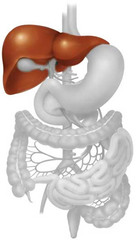
what is the function of bile?
emulsify fats by physically breaking large fat globules into smaller ones

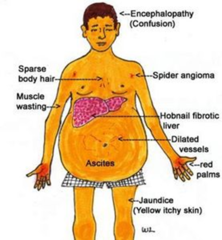
what type of discoloration is a common sign of hepatocellular failure?
jaundice

what are the 4 types of jaundice?
prehepatic, hepatic, posthepatic, or cholestatic

how does hepatocellular failure affect muscle mass?
leads to muscle wasting
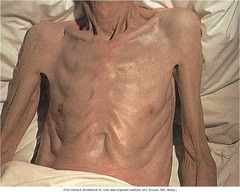
what fluid-related condition can result from hepatocellular failure?
ascites

how does hepatocellular failure impact blood clotting?
causes excessive bleeding due to impaired synthesis of clotting factors

what nutrient-related deficiencies occur with hepatocellular failure?
blood protein and vitamin deficiencies
how does hepatocellular failure affect glucose levels?
causes glucose imbalance
what hormonal issue arises due to hepatocellular failure?
impaired hormone production
what is portal hypertension?
increased pressure in the portal venous system

what causes portal hypertension?
impaired blood flow through the liver due to increased resistance from fibrosis and degeneration of liver tissue
what causes impaired blood flow through the liver?
increased resistance from fibrosis and degeneration of liver tissue
what is a common consequence of portal hypertension?
gastroesophageal varices
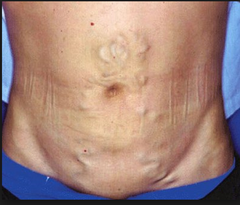
what is the primary cause of esophageal varices?
portal hypertension
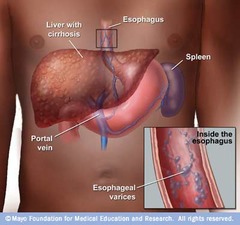
what is a major cause of portal hypertension?
cirrhosis

what is cirrhosis often caused by?
chronic alcoholism, viral hepatitis, or chronic infection with the schistosoma species of liver fluke

what is a liver fluke?
type of parasitic flatworm that can cause schistosomiasis

what is hepatic encephalophathy?
complex neuropsychiatric syndrome characterized by symptoms ranging from mild confusion and lethargy to stupor and coma, often due to liver dysfunction
how is is hepatic encephalopathy graded?
from 1-4, with increasing severity
what serious complication can occur in grade 3 or 4 hepatic encephalopathy?
cerebral edema

what does cerebral edema result from?
increased intracranial pressure
what are 3 complications of advanced liver disease?
ascites, spontaneous bacterial peritonitis, and hepatorenal syndrome

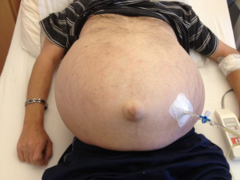
what is ascites?
pathologic accumulation of fluid in the peritoneal cavity
what is spontaneous bacterial peritonitis?
infection of ascitic fluid by a single organism, unrelated to bowel perforation or surgical procedures

what are common organisms that cause spontaneous bacterial peritonitis?
streptococcus pneumoniae and escherichia coli
what is hepatorenal syndrome?
type of functional renal failure caused by severe liver disease
how is the type and stage of viral hepatitis determined?
serologic testing
what is acute viral hepatitis?
inflammation of the liver parenchyma, often caused by viral infection

what is hepatitis A?
RNA virus that is spread through enteric means (fecal-oral route)
what is hepatitis B?
partially double-stranded DNA virus that can cause liver inflammation

what is hepatitis C?
single-stranded RNA virus belonging to the flaviviridae family
what is hepatitis D (delta)?
incomplete viral organism that requires the presence of Hepatitis B (HBV) for replication

what does hepatitis D require for replication?
presence of HBV (hepatitis B virus)

what is hepatitis E?
RNA virus spread via the fecal oral route
what is chronic hepatitis?
liver inflammation that lasts 6 months or more
what is chronic persistent hepatitis also called?
triaditis or transaminitis
what is chronic peristent hepatitis?
chronic, low-grade liver inflammation of any cause
what is chronic active hepatitis?
progressive, destructive inflammatory disease that extends beyond the portal triad to the hepatic lobule and can range from mild to severe
what is autoimmune hepatitis?
progressive liver inflammation characterized by the presence of several distinctive autoantibodies and polyclonal hypergammaglobulinemia
what is biliary cirrhosis the end result of?
ongoing inflammation of the bile ducts
what does persistent biliary obstruction result in?
liver inflammation, scarring, and obliteration of the bile ductules
how are biliary flukes diagnosed?
serial stool examinations for parasitic ova and serologic testing
what are biliary flukes?
parasitic worms that affect the bile ducts

what is primary sclerosing cholangitis?
autoimmune condition resulting in chronic thickening of the bile duct walls
primary sclerosis cholangitis is commonly seen in patients with what condition?
ulcerative colitis
what is alcoholic fatty liver also called?
alcoholic steatohepatitis
what is alcoholic fatty liver?
accumulation of fat in liver cells

what causes the accumulation of fat in liver cells in patients who have alcoholic fatty liver?
excessive delivery of fat to the hepatocyte or defects in fat metabolism within the cell
what is alcoholic hepatitis?
active inflammation of the centrilobular region of the liver

what is alcoholic hepatitis characterized by?
hepatocyte necrosis with neutrophilic infiltration and mallory bodies (intracellular inclusions)

what are mallory bodies?
damaged cytokeratin (intermediate) filaments that accumulate in hepatocytes in alcohol-mediated damage

what is hereditary hemochromatosis?
disease caused by a mutant HFE gene, which allows excessive and uncontrolled iron absorption by the GI tract
what does hereditary hemochromatosis allow for?
excessive and uncontrolled iron absorption in the GI tract
what is wilson disease?
rare autosomal recessive disorder where excessive copper accumulates in the liver and other organs

what is responsible for 39% of cases of acute hepatic failure in the united states?
acetaminophen poisoning

what is acetaminophen poisoning?
overdose of acetaminophen
how much acetaminophen causes potential liver damage?
acute ingestion of 140 mg/kg or more can overwhelm detoxification pathways and damage the liver
is oral acetaminophen slowly or rapidly absorbed and metabolized?
rapidly absorbed and metabolized
what toxic metabolite is formed in acetaminophen poisoning?
N-acetyl-p-benzoquinone imine
how is the toxic metabolite of acetaminophen detoxified?
detoxified by glutathione in the liver
what happens when acetaminophen overdose overwhelms detoxification?
leads to hepatic necrosis (liver cell death)
what are common causes of liver abscess?
ascending cholangitis, intra-abdominal infections, hematogenous seeding
what should be suspected with trauma to the upper abdomen?
hepatic trauma
true or false-damage or injury to the liver should be suspected when any upper abdominal or lower chest trauma is sustained
true
true or false-when hepatic trauma occurs, blood loss can be massive
true
what types of trauma can cause serious injury to the liver?
blunt trauma and penetrating trauma
true or false-malignancy can be primary or secondary
true
in the united states, is primary malignancy rare or more common?
rare in the united states
what types of primary liver malignancy (tumors) are there?
HCC, cholangiocarcinoma, angiosarcoma, and hepatoblastoma
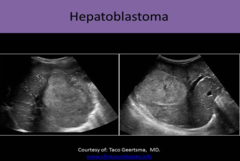
what is the most common primary liver tumor in children?
hepatoblastoma
what is secondary malignancy?
cancer that has spread to a secondary site, such as the liver
true or false-the liver is a common site for metastasis from primary cancers of the esophagus, stomach, colon, rectum, breast, and lung
true
how many liver transplants are done annually?
about 8,000,, although the waiting list contains approximately three times that number

what is evaluated in liver transplant patients?
physiologic and psychological evaluation
what is the main post-transplant management?
immunosuppression to prevent rejeciton, managing side effects, managing infections
when does liver transplant rejection typically occur?
post-op days 4 to 10
what are clinical manfiestations of acute liver transplant rejection?
-tachycardia
-fever
-RUQ or flank pain
-diminished bile flow through T tube drain
-change in bile color
-increasing jaundice
true or false-physiologic jaundice of the newborn is a harmless condition lasting up to 2 weeks after delivery
true

when is hyperbilirubinemia considered abnormal in newborns?
if bilirubin > 5 mg/dL on day 1, > 10 mg/dL on day 2, or > 13 mg/dL at any time
how does HAV (hepatitis A virus) affect children?
usually mild or asymptomatic, with prevalence related to sanitation
true or false-an acute hepatitis A virus infection's prevalence correlates inversely with the quality of sanitation and hygeine
true
what are examples of congenital liver diseases in children?
enzyme deficiencies, bilirubin metabolism disorders, inborn errors of metabolism, cholestatic condition (intrahepatic and extrahepatic)
true or false-some drugs may have a prolonged serum half life
true
what liver conditions are more common in older adults?
hepatocellular carcinoma and ischemic hepatitis