The Musculaskeletal System
 Call Kai
 Learn
 Practice Test
 Spaced Repetition
 Match
 Flashcards
 Knowt Play
1/64

There's no tags or description
Looks like no tags are added yet.
65 Terms
Anterior
The front of the body
Posterioir
The back of the body
Superior
A body part higher than another (closer to the head)
Inferior
A body part lower than another (further away from the head)
Medial
Closer to the midline of the body
Lateral
Further away from the midline of the body
Proximal
A body part closer to the trunk of the body
Distal
A body part further away from the trunk of the body
Superficial
Closer to the surface of the body
Deep
Away from the surface of the body
Palmer
The anterior surface of the hand
Dorsal
The posterior (back) of the body and top if the foot
Plantar
Bottom of the foot
Musculosketal System
Muscular + skeletal systems together
The Skeletal System is made up of
axial skeleton and appendicular skeleton

axial skeleton
protects organs (skull,vertebrae and ribs)

appendicular skeleton
use for movement (shoulder, gridle, arms, legs, hands, feet and pelvis)
Primary functions of the skeletal system
protection, movement, produce blood, support/structure, storage

Cranium (skull)

Clavicle (collar bone)

Mandible (jaw)

Scapula

Rib cage

Humerous

Stemum (breast bone)

Uina

radius

Carpal

Metacarapal bone

Phalanges

IIium

femur
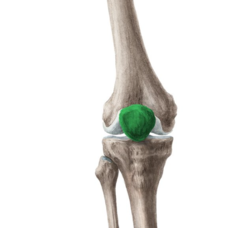
Pattela

Tibula

Fibula

metatarsal bones

phalanges

tarsal bone

Long bone
Long and thin (e.g humerous, radius, uina, femur, tibia, fibula, phalonges)

Short Bone
small, cube-shaped (e.g carpals, tarsaes)

Flat Bone
flattened, broad surface (e.g ribs, scapula, stermum, skull)

Irregular Bone
vary in shape, complex shape (e.g vertebrae)
Joint
any place where 2 or more bones meet

Fixed or fibrous
Immovable joint (e.g skull, pelvis, radioulnar and tibiofibular joints)

Cartilaginous
slightly movable joint (e.g ribs attached to sternum, lumbar vertebrae)
Synovial joints
are the most common and allow for movement. they are complex structures and hold bones together with ligaments
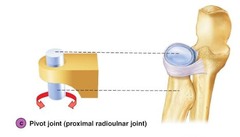
pivot joint
only rotation of one bone around another.

gliding joint
gliding movements as one bone slides on top of another

ball and socket joint
wide range of movements in all directions (e.g shoulder & hip)

Hinge
movement in one plane only (e.g knee and elbow)

saddle joint
movement occurs in two planes (e.g carpo-metacarpal joint of thumb)

condyloid joint
movement limited to a hinge motion in two planes (e.g wrist)
anatomical movement in jointes tells us how...
the joint is moving
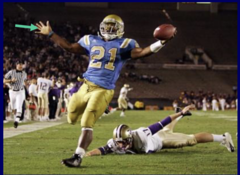
Abducation
when a limb is moved away from the midline of the body (e.g starjump upwards phase)

Adduction
when a limb is moved closer towards the midline of the body (e.g starjumb downwards phase - shoulder adduction) TIP: ADDuct = add to midline

Circumduction
occurs when an entire limb moves in a circle movement (e.g butterfly stroke - shoulder circumduction)

Extension
the angle between the bones increases, resulting in a joint angle increasing. (e.g bicep curl - elbow flexion)
Rotation
occurs when a bone turns on its own axis within a joint. (towards the body midline = internal rotation)(away from the body's midline = external rotation)
Pronation
when the forearm is rotated while the palm of the hand faces downward
Supination
when the forearm is rotated turning the hand upward
Inversion
occurs when the sole of the foot is turned downward

Eversion
when the sole of the foot is turned outward

Dorsiflexion
occurs at the ankle when the toes are pointed towards the ankle. TIP: dorsal fin points upward

Plantar flexion
Occurs at the ankle when the toes are pointed away from the ankle. TIP: planting your foot down to drive

when muscles recieve messages from the brain...
they contract to pull on bones and movement occurs