Week 10: Pharmacotherapy (Emetics + UGIB)
 Call Kai
 Learn
 Practice Test
 Spaced Repetition
 Match
 Flashcards
 Knowt Play
1/106

There's no tags or description
Looks like no tags are added yet.
107 Terms
Where is the vomiting center located, and what inputs does it receive?
brainstem (nucleus tractus solitarius); receives input from the chemoreceptor trigger zone (CTZ), GI tract via vagus nerve, and visual/vestibular systems
Why are multiple antiemetic drug classes effective for nausea and vomiting?
multiple receptors and pathways regulate emesis, including serotonin (5-HT3), dopamine (D2), histamine (H1), and muscarinic receptors
What are common causes of nausea/vomiting in hospitalized patients?
PONV, cannabis hyperemesis, drug adverse effects, gastroenteritis, gastroparesis, cyclic vomiting syndrome, and dehydration
What fluid and electrolyte abnormalities occur with prolonged vomiting?
hypovolemia, hypo/hypernatremia, hypokalemia, and metabolic alkalosis
Why does vomiting cause metabolic alkalosis?
Loss of gastric H+ increases pH. Urine Cl−
What complications can result from electrolyte imbalances?
arrhythmias, seizures, confusion, weakness, hypotension, and neuromuscular abnormalities
Which medications should be considered for temporary holding during severe vomiting/dehydration?
ACEIs/ARBs, diuretics, SGLT2 inhibitors, NSAIDs, metformin, sulfonylureas, antihypertensives, and narrow-therapeutic-index drugs
Why are these medications concerning during dehydration?
AKI risk (ACEIs/ARBs, NSAIDs, SGLT2i), hypovolemia (diuretics), hypoglycemia (sulfonylureas), hypotension, and toxicity (lithium/digoxin)
How should essential medications be managed when oral intake is impaired?
assess indication, risk of interruption, duration of action, and alternative routes (IV, feeding tube, rectal)
What alternatives should be considered for anticoagulants and antiepileptics?
Anticoagulants: consider parenteral bridging based on risk
Antiepileptics: use enteral or IV alternatives when needed to prevent seizures
How should insulin and transplant medications be managed during vomiting?
Insulin may still be required despite NPO status
Maintain transplant immunosuppression using alternative routes; consult transplant team

Which home medications should be held in the dehydrated 44-year-old patient with elevated SCr?
empagliflozin and spironolactone due to dehydration, hypovolemia, and AKI concerns

Which medications should be continued or substituted in this patient?
Prioritize lamotrigine for seizure prevention (IR via tube or alternative IV AED if needed)
Resume fluoxetine when feasible; assess retitration needs
Major antiemetic classes and examples?
5-HT3: ondansetron
D2: metoclopramide/prochlorperazine
H1: meclizine/promethazine
Anticholinergic: scopolamine
Steroid: dexamethasone
What other drug classes can be used as antiemetics?
NK1 antagonists, benzodiazepines, and certain antipsychotics (especially in oncology)
Ondansetron MOA and major adverse effects?
5-HT3 antagonist; headache, constipation, fatigue, dizziness, and QTc prolongation
Metoclopramide MOA and major adverse effects?
D2 antagonist/prokinetic; sedation, EPS, hyperprolactinemia, fluid retention, and depression/suicidality concerns
Prochlorperazine MOA and major adverse effects?
D2 antagonist; sedation, constipation, urinary retention, EPS, NMS, and QTc prolongation
Dexamethasone MOA and major adverse effects?
anti-inflammatory effects and reduced serotonin signaling; hyperglycemia, hypokalemia, and immunosuppression
What are the major adverse effects of meclizine and promethazine?
Meclizine: sedation, dry mouth, drowsiness
Promethazine: sedation, hypotension, anticholinergic effects, EPS, QTc prolongation, and extravasation
Scopolamine MOA and major adverse effects?
muscarinic antagonist; dizziness, dry mouth, blurred vision, confusion/delirium, and urinary retention
What formulations are available for ondansetron, and what is its QTc concern?
IV, PO tablet/liquid, ODT, oral film. QTc prolongation approximately 7-27 msec
What formulations and clinical pearls are important for metoclopramide?
IV, PO, ODT, rectal
Prokinetic; monitor EPS, depression/suicidality, and fluid retention (especially CHF)
What formulations and clinical pearls apply to prochlorperazine and dexamethasone?
Prochlorperazine: PO, injection, rectal; EPS and QTc risk
Dexamethasone: PO/injection; monitor hyperglycemia and immunosuppression
What are important clinical pearls for meclizine, promethazine, and scopolamine?
Meclizine: vertigo, Beers criteria
Promethazine: extravasation risk
Scopolamine: patch every 3 days, mainly preventive; delirium risk in elderly
Why is IV promethazine associated with tissue injury, and how can it be prevented?
acidic pH (4-5.5); ensure proper IV placement, prevent leaks, and dilute IV concentration to
What should be done if promethazine extravasation occurs?
stop administration, manage/remove the line per protocol, aspirate as appropriate, apply warm compress, and elevate the site
How do domperidone and droperidol differ?
Both D2 antagonists. Domperidone acts peripherally with limited EPS and prokinetic effects; droperidol acts centrally with sedation, EPS, and dose-dependent QTc ris
Why is QTc prolongation concerning with antiemetics?
can cause torsades de pointes, a potentially fatal ventricular arrhythmia
What should be assessed before starting QTc-prolonging antiemetics?
medication list, cardiac history, baseline ECG/QTc, electrolytes (K+, Mg2+, Ca2+), renal function, and hepatic function.
What QTc values define low, intermediate, and high risk?
Low:
How should intermediate-risk QTc prolongation be managed?
maintain K+ >4 mmol/L and Mg2+ >1 mg/dL per slide; minimize QT-prolonging drugs and repeat ECG at 48 and 96 hours if ongoing therapy.
How should high-risk QTc prolongation (>500 ms) be managed?
reconsider QT-prolonging antiemetics, correct electrolytes, discontinue other QT-prolonging drugs, and use telemetry/repeat ECG monitoring
Which antiemetics have the greatest QTc concerns?
ondansetron and D2 antagonists (especially droperidol); prochlorperazine has relatively lower risk per lecture; risk increases with dose/frequency
What nonpharmacologic strategies can reduce nausea/vomiting?
inhaled isopropyl alcohol, peppermint aromatherapy, ginger, small meals, avoiding triggers, and reducing emetogenic medications
What are major risk factors for postoperative nausea and vomiting (PONV)?
female sex, age
How is PONV typically prevented or treated?
risk-based institutional protocols, often combining dexamethasone with a 5-HT3 antagonist (ondansetron/granisetron)
What characterizes cannabis hyperemesis syndrome (CHS)?
recurrent abdominal pain, persistent nausea, and vomiting associated with continued cannabis use
How is cannabis hyperemesis treated?
Acute: topical capsaicin, hot showers/baths, IV droperidol/haloperidol, or benzodiazepines
Prevention: cannabis cessation
Why are standard antiemetics often ineffective in CHS?
ondansetron and metoclopramide are often ineffective; CHS may respond better to capsaicin or dopamine antagonists
How can medications cause nausea/vomiting?
direct adverse effects (metronidazole, mycophenolate), elevated peak concentrations (IV opioids), or dose-related GI intolerance
How is medication-induced nausea/vomiting managed?
identify offending medication, reduce dose/change route/discontinue if possible; consider 5-HT3 or D2 antagonists for acute relief.
Which medication classes commonly cause nausea/vomiting?
NSAIDs, opioids, antibiotics, antidepressants (SSRIs), metformin, GLP-1 agonists, iron, and chemotherapy agents
What medications may be used for antiemetic pretreatment?
5-HT3 antagonists, corticosteroids, D2 antagonists, and sometimes diphenhydramine; common before certain chemotherapies/infusions
What is gastroenteritis, and how is associated N/V treated?
Viral/bacterial GI inflammation; oral rehydration, electrolyte replacement, and 5-HT3 antagonists. Antibiotics if indicated
What are pediatric treatment considerations for gastroenteritis?
single-dose oral ondansetron is best studied; zinc supplementation may be considered
What is gastroparesis, and what are its common causes/symptoms?
delayed gastric emptying without obstruction; associated with longstanding diabetes/cystic fibrosis
causes N/V, bloating, pain, and reduced appetite
What are the three major treatment approaches for gastroparesis?
nutrition (small meals/liquids, enteral if needed), symptom relief (metoclopramide first-line), and improved motility (metoclopramide/erythromycin)
What other treatments may be considered for refractory gastroparesis?
domperidone, gastric electrical stimulation, or surgery; 5-HT3 antagonists may provide second-line symptom relief
What is cyclic vomiting syndrome (CVS)?
recurrent episodes of severe, persistent vomiting lasting hours or longer, alternating with periods of normal health; migraine-like features
How is cyclic vomiting syndrome treated acutely and prevented?
Acute: ondansetron, triptans, IV fluids, sedation/analgesia
Prevention: avoid triggers, TCAs (amitriptyline), or antiepileptics (topiramate)
How is dehydration-associated vomiting managed?
restore intravascular volume with IV fluids, preferably chloride-rich fluids when appropriate, and replace potassium to correct metabolic alkalosis
A patient is admitted to the hospital with considerable nausea and vomiting. They have been diagnosed with gastroparesis. Their QTc interval is 430 msec. Select necessary actions for treatment.
evaluate if enteral nutrition is needed while repleting fluids
give metoclopramide
consider erythromycin to help with motility
Treatment of N/V Types - Summary Chart

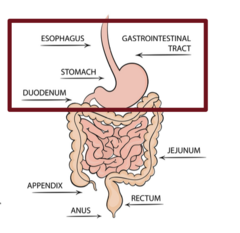
What structures make up the upper GI tract?
mouth through the duodenojejunal junction, above the ligament of Treitz
What is the normal stomach pH, and what stimulates gastric acid secretion?
pH ~2; gastrin stimulates acid and pepsin secretion
gastric juice contains HCl, lipase, and pepsin
What mechanisms protect the gastric mucosa from acid injury?
Pre-epithelial: mucus, bicarbonate, prostaglandins
Epithelial: tight junctions. Subepithelial: mucosal blood flow
What are the major causes of UGIB?
peptic ulcers, Mallory-Weiss tears, anastomotic ulcers, esophagitis, and variceal bleeding
What causes peptic ulcers and anastomotic ulcers?
Peptic: H. pylori, NSAIDs, excess acid
Anastomotic: ulceration at a surgical connection (e.g., Roux-en-Y bypass)
How do Mallory-Weiss tears, esophagitis, and varices cause UGIB?
Mallory-Weiss: forceful vomiting tears mucosa
Esophagitis: mucosal erosion
Varices: portal hypertension causes dilated veins to rupture.
What is the balance between aggressive and protective gastric factors?
Aggressive: acid, pepsin, H. pylori, NSAIDs
Protective: mucus, bicarbonate, prostaglandins, blood flow, and antioxidants
What are common causes and exacerbating factors for UGIB?
Causes: NSAIDs, H. pylori, surgery, stress
Exacerbating: anticoagulants, antiplatelets, alcohol, smoking, prior UGIB, reflux
How do NSAIDs cause gastric injury and bleeding?
COX-1 inhibition → ↓ protective prostaglandins; direct phospholipid damage → impaired mucosal barrier and ulcers
How does H. pylori cause peptic ulcer disease?
adheres to mucosa, forms biofilms, alters cell signaling, and causes chronic inflammation that weakens gastric defenses
What medications commonly cause pill-induced esophagitis?
doxycycline/tetracyclines, bisphosphonates, NSAIDs, potassium chloride, ferrous sulfate, and chemotherapy agents
A patient presents with an upper GI bleed (UGIB) that the care team suspects is due to a Mallory-Weiss tear. How does a MW tear happen?
forceful vomiting/retching increases intra-abdominal pressure, tearing the mucosa at the gastroesophageal junction
What would be signs of a MW tear?
hematemesis following repeated vomiting or retching; possible melena and lightheadedness
What are common signs and symptoms of UGIB?
hematemesis, melena, hematochezia (brisk bleed), abdominal pain, nausea, and lightheadedness
What laboratory findings support UGIB?
elevated BUN/BUN:Cr >30, decreased Hgb, possible CBC dilution after fluids, and positive H. pylori testing
What are the major stages of UGIB treatment without anticoagulation?
Pre-endoscopy: stabilize, NPO, hold offenders, consider PPI/RBCs/erythromycin
Endoscopy: hemostasis. Post: PPI and prevention
How does UGIB management change if the patient takes anticoagulants?
hold anticoagulants, assess reversal need, stabilize, perform endoscopy, and determine safe restart timing
What should be assessed before endoscopy in UGIB?
hemodynamics, Hgb, transfusion/reversal need, NPO status, offending medications, and adjunct therapies
What are the RBC transfusion thresholds in UGIB?
Hgb ≤7 g/dL; ≤8 g/dL with cardiovascular risk factors (CAD, prior MI/CABG, ACS)
What should be remembered about RBC transfusions and iron studies?
~200 mg iron/unit RBC; transfusion can alter iron labs. Recheck iron studies in 2-4 weeks
How does ISTH define major bleeding?
fatal bleeding, critical-site bleeding, Hgb drop ≥2 g/dL, or transfusion of ≥2 RBC units
What is clinically relevant non-major bleeding (CRNMB)?
bleeding not meeting major criteria but requiring medical intervention, hospitalization, or face-to-face evaluation
How is warfarin-associated bleeding reversed?
Mild/moderate: hold warfarin, give vitamin K based on INR
Severe/life-threatening: 4-factor PCC + vitamin K 10 mg IV
What reverses dabigatran (Pradaxa) in life-threatening UGIB?
idarucizumab (Praxbind); consider if taken within 24 hours
not routine due to cost/limited data
What reverses apixaban or rivaroxaban in life-threatening UGIB?
4-factor PCC (e.g., Kcentra) may be considered per institutional protocol
Andexanet alfa (Andexxa) was withdrawn from the U.S. market 12/25
What is the major clinical consideration when reversing DOACs?
reserve reversal for life-threatening bleeding; consider last dose, severity, cost, and institutional protocol
Should platelet transfusions routinely reverse aspirin or P2Y12 inhibitors?
No. Guidelines recommend against routine transfusion due to limited benefit and increased mortality; give if thrombocytopenic when indicated
Should aspirin be held during UGIB?
Primary prevention: hold
Secondary prevention: generally continue; if held, restart after endoscopic hemostasis
Are IV PPIs required before endoscopy for UGIB?
Guidelines are neutral; consider if endoscopy is delayed. Do not delay endoscopy to administer PPIs
What is the high-dose IV PPI regimen, and why is it used?
80 mg IV bolus → 8 mg/hr infusion. Raises gastric pH ≥6 to stabilize clots and reduce rebleeding
Why is erythromycin used before UGIB endoscopy?
motilin receptor agonist; improves gastric emptying/visualization and may reduce repeat endoscopy
What is the recommended erythromycin dose before endoscopy?
250 mg IV over 5-30 minutes; perform endoscopy 20-90 minutes after infusion
What additional medication is used for suspected variceal bleeding?
octreotide; start empirically with UGIB when variceal bleeding is suspected, especially with cirrhosis
A patient presents to the ED reporting melena (dark, tarry stool), hematemesis (bloody vomit), and lightheadedness. They were able to drive into the hospital on their own and their blood pressure is normal and stable. The care team suspects they have an UGIB. At home they are on lisinopril, apixaban, and levetiracetam.
Current labs include: BUN/Cr of 36, Hgb of 6.9 g/dL.
What would you recommend as a first step of treatment?
RBC transfusion, early endoscopy with erythromycin, and hold apixaban/lisinopril
When should endoscopy occur after UGIB?
within 24 hours after stabilization; consider within 12 hours for high-risk patients
What are the purposes of endoscopy in UGIB?
identify bleeding source, provide hemostasis (clips, thermal therapy, injection), and classify rebleeding risk
What should be addressed after UGIB endoscopy?
PPI dose/duration, restarting anticoagulants/antiplatelets, rebleeding prevention, and H. pylori/special populations
Which Forrest classifications indicate low rebleeding risk, and how are they treated?
FIIc (flat pigmented spot), FIII (clean base); standard-dose PO PPI daily, early diet, discharge often within 1-2 day
Which Forrest classifications indicate high rebleeding risk?
FIa (spurting), FIb (oozing), FIIa (visible vessel), FIIb (adherent clot)
What is the PPI regimen for high-risk UGIB after endoscopy?
Days 1-3: 80 mg IV bolus + 8 mg/hr ×72 hours
Days 4-14: PO BID. Day 15+: PO daily
What other management considerations apply to high-risk UGIB?
clear liquid diet initially; hospital discharge often ~3 days after endoscopy
How long should PPI therapy continue after UGIB?
usually 8 weeks uncomplicated; longer/indefinite for recurrent bleeds or chronic NSAIDs/antiplatelets
What is the typical PPI duration for anastomotic ulcers?
3-6 months, depending on healing and recurrence risk
When should warfarin be restarted after UGIB?
usually 7-15 days; earlier (
What factors guide DOAC restart after UGIB?
bleeding severity, reversibility, age, thrombotic risk, rapid onset, and cardiology input
When should aspirin be restarted after UGIB?
Primary prevention: reassess need
Secondary prevention: continue or restart once endoscopic hemostasis is confirmed