Research Methods pt 2
0.0(0)
Studied by 26 people Call Kai
 Learn
Learn Practice Test
 Spaced Repetition
 Match
Match Flashcards
 Knowt Play
Card Sorting
1/34

Earn XP
35 Terms
1
New cards
between subjects
compare across groups
2
New cards
within subjects
differences within a subject, within a group
3
New cards
mixed design
between and within
4
New cards
block design
using an extraneous variable as an independent to control or measure its effects
\
Ex: Everyone receives same treatment, researcher looks at severity as different groups
\
Ex: Everyone receives same treatment, researcher looks at severity as different groups
5
New cards
"True" Experimental Design
Control group
Randomized to groups
(Needs BOTH)
Randomized to groups
(Needs BOTH)
6
New cards
Quasi-Experimental Design
An experiment that does not require random assignment to conditions.
(lacks random assignment and/or comparison/control group)
(lacks random assignment and/or comparison/control group)
7
New cards
One group, pre-post test
Within subjects
No randomization
\
Ex: Kids with Dyslexia receive reading pre-test, complete 6 weeks of READRIGHT treatment, then receive same reading post-test immediately following treatment
No randomization
\
Ex: Kids with Dyslexia receive reading pre-test, complete 6 weeks of READRIGHT treatment, then receive same reading post-test immediately following treatment
8
New cards
One-way, repeated measures over time
Within subjects
No randomization
Must have three or more group means (i.e., must test participants 3+ occasions)
\
Ex: Test people with aphasia on the Boston Naming Test prior to treatment \[Time 1\], immediately post-treatment \[Time 2\], and three months post-treatment \[Time 3\].
No randomization
Must have three or more group means (i.e., must test participants 3+ occasions)
\
Ex: Test people with aphasia on the Boston Naming Test prior to treatment \[Time 1\], immediately post-treatment \[Time 2\], and three months post-treatment \[Time 3\].
9
New cards
Non-equivalent, control group (pre-post test)
Between subjects
No randomization
1+ treatment/experimental group AND control groups (s)
Used with populations that are intrinsically not comparable
\
Ex: Test auditory attention before and after 3 months on gluten-free diet in kids with ADHD, kids with auditory processing disorder, and typical kids (control group, matched for age)
No randomization
1+ treatment/experimental group AND control groups (s)
Used with populations that are intrinsically not comparable
\
Ex: Test auditory attention before and after 3 months on gluten-free diet in kids with ADHD, kids with auditory processing disorder, and typical kids (control group, matched for age)
10
New cards
Non-equivalent, post test
Between subjects
No randomization
With or without control group
Often when pretest is not possible
\
Ex: Anxiety scores among people with hypertension in affluent communication vs working class communities post COVID.
No randomization
With or without control group
Often when pretest is not possible
\
Ex: Anxiety scores among people with hypertension in affluent communication vs working class communities post COVID.
11
New cards
Factorial Designs
Two or more independent variables are manipulated simultaneously
\
Ex: Two treatments + how many times a week
\
Ex: Two treatments + how many times a week
12
New cards
Multivariate Design
Two or more dependent variables
\
Ex: Effect of Early Start Denver Model (ESDM) for toddlers with ASD on IQ, adaptive behavior and ASD Dx. Toddlers randomly assigned to 1 of 2 groups (EDSM or control \[standard care\]) for 2 years.
\
Ex: Effect of Early Start Denver Model (ESDM) for toddlers with ASD on IQ, adaptive behavior and ASD Dx. Toddlers randomly assigned to 1 of 2 groups (EDSM or control \[standard care\]) for 2 years.
![Two or more dependent variables
\
Ex: Effect of Early Start Denver Model (ESDM) for toddlers with ASD on IQ, adaptive behavior and ASD Dx. Toddlers randomly assigned to 1 of 2 groups (EDSM or control \[standard care\]) for 2 years.](https://knowt-user-attachments.s3.amazonaws.com/09a89ee449a6459791330b2142030313.jpeg)
13
New cards
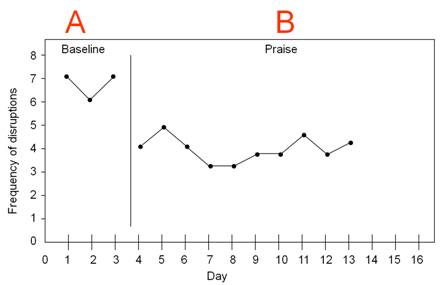
Single Subject Design
Individual performance even if there are multiple individuals
Considered "best" when measuring behavioral change or modification at individual level
Considered "best" when measuring behavioral change or modification at individual level
14
New cards
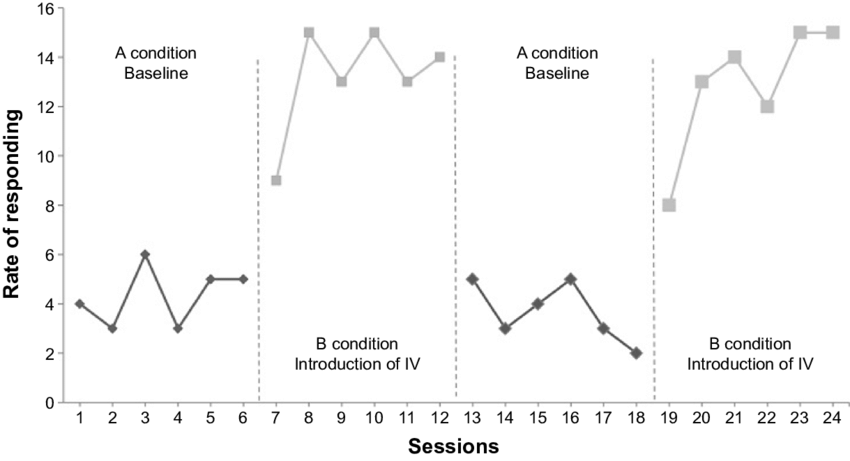
Withdrawal Design (Reversal Design)
Refers to the removal of intervention/treatment during one or more phases to demonstrate the effects that withdrawal has on target behavior
\
Allows researchers to demonstrate cause-effect relationships between behavior and intervention/treatment
\
Allows researchers to demonstrate cause-effect relationships between behavior and intervention/treatment
15
New cards
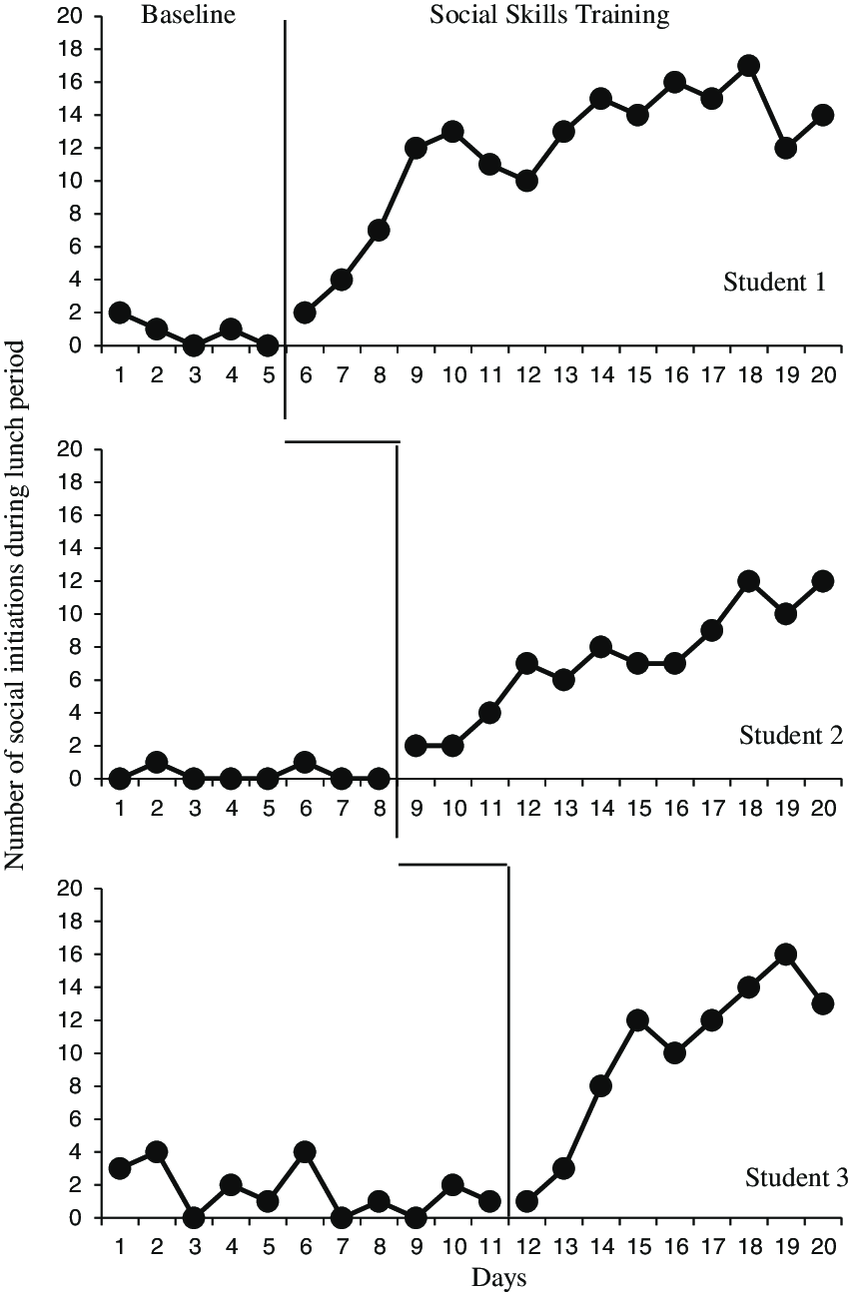
Multiple Baselines Design
a single-subject design in which the effectiveness of a treatment is assessed on two or more behaviors or across two or more situations
16
New cards
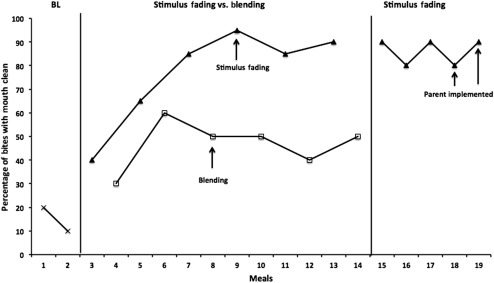
Alternating Treatments Design
Compare the events of two or more treatments on the same target behavior
Rapid alternation of two or more treatments
Rapid alternation of two or more treatments
17
New cards
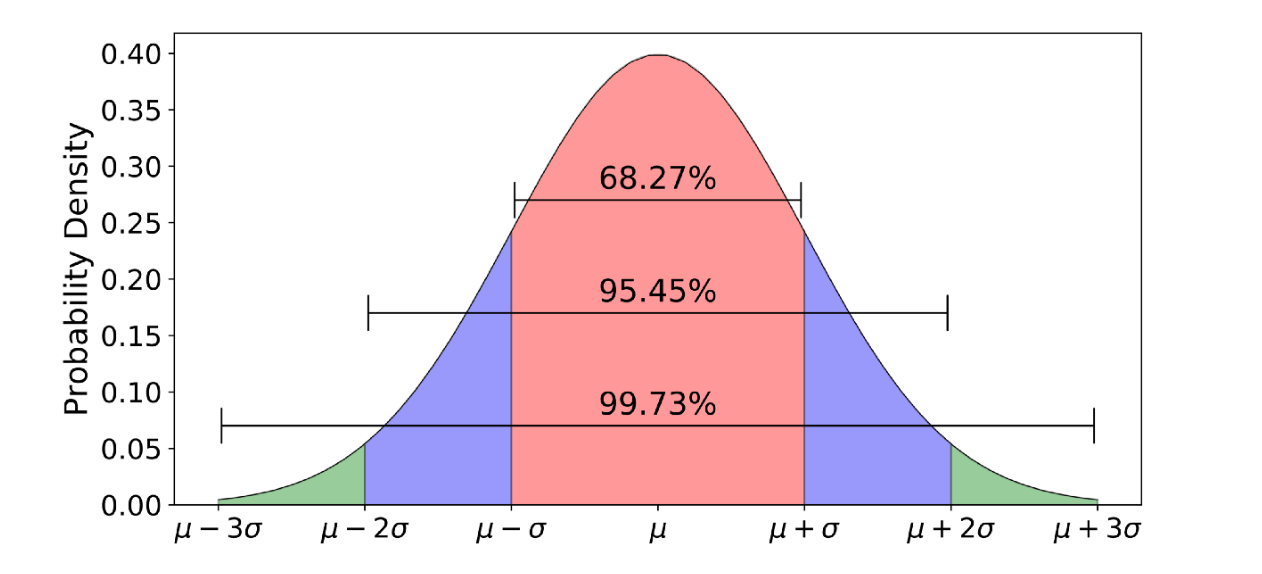
Distribution
Summary of the frequency of individual values or ranges of values for a variable
18
New cards
Central Tendency
An estimate of the center of a distribution of values
mean, median, mode
mean, median, mode
19
New cards
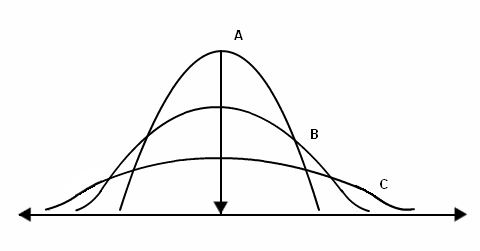
Dispersion or variability
Spread of values around the central tendency
20
New cards
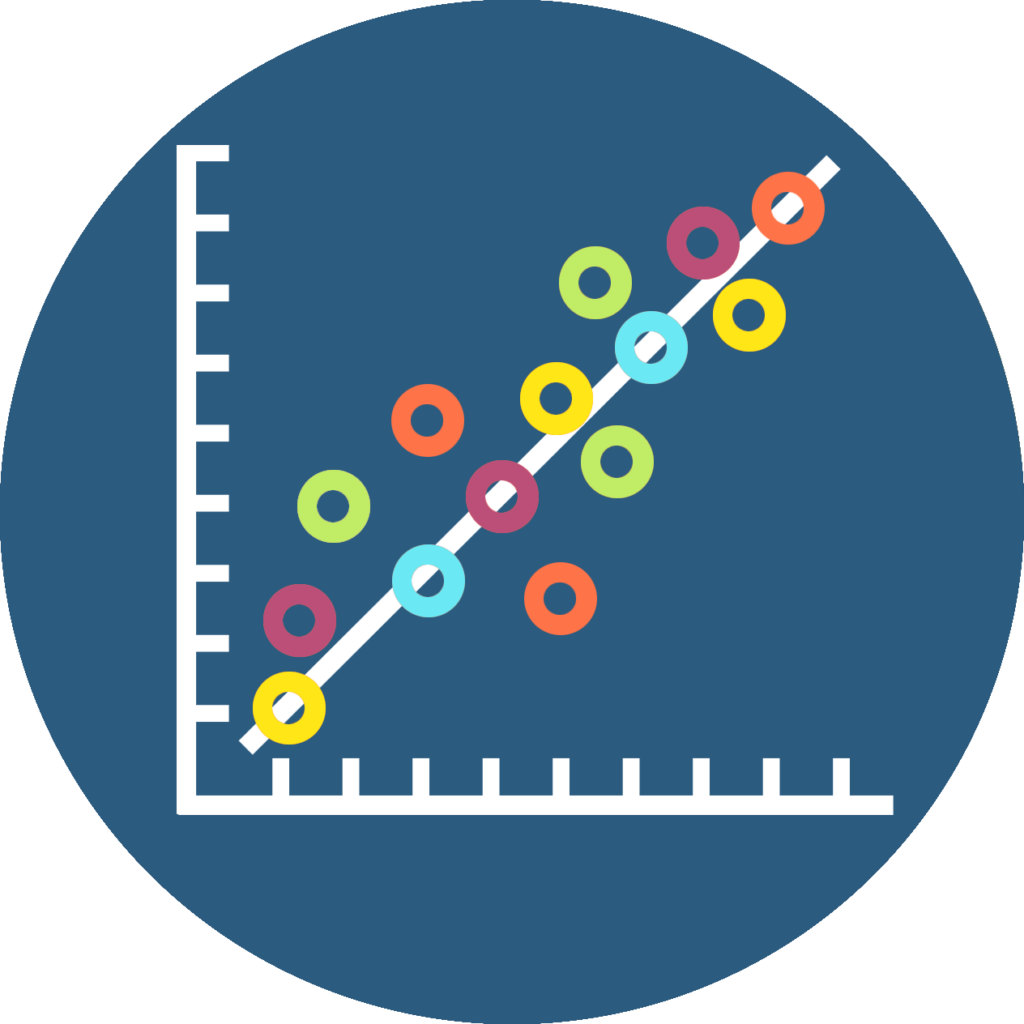
Correlation
A single value (r) that describes the degree of relationship between two variables
21
New cards
Significance (p-value)
If it is less than 0.05 (typically ≤ 0.05) is statistically significant
22
New cards
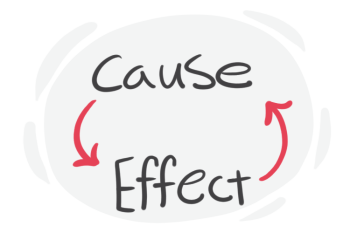
Conclusion Validity
Is there a relationship between the cause and effect?
23
New cards
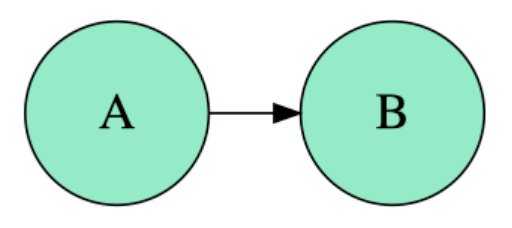
Internal Validity
Is the relationship causal?
24
New cards
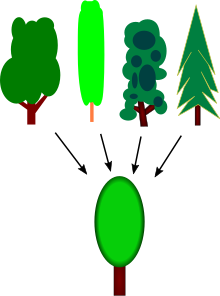
Construct Validity
Can we generalize to the constructs?
25
New cards
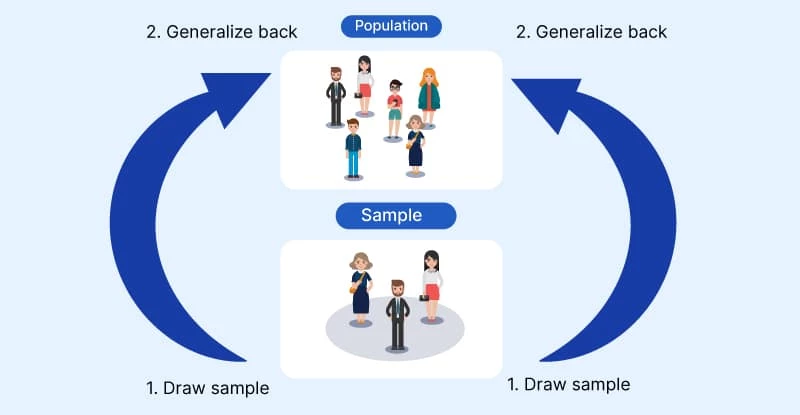
External Validity
Can we generalize to other persons, places, times?
26
New cards
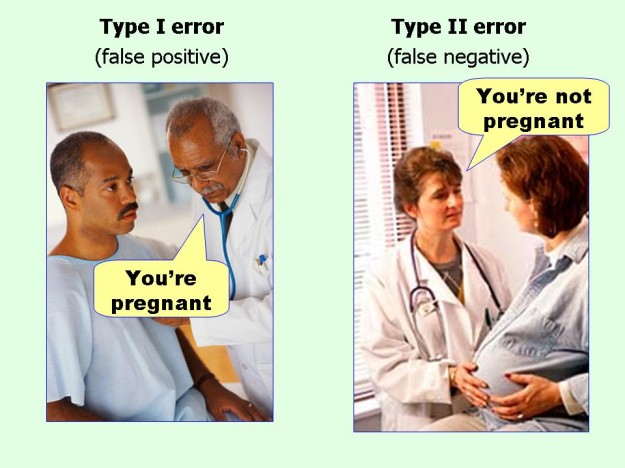
Type I Error
Concluding that is a relationship when in fact there is not (false positive)
Finding a Relationship Where There is NONE
Finding a Relationship Where There is NONE
27
New cards
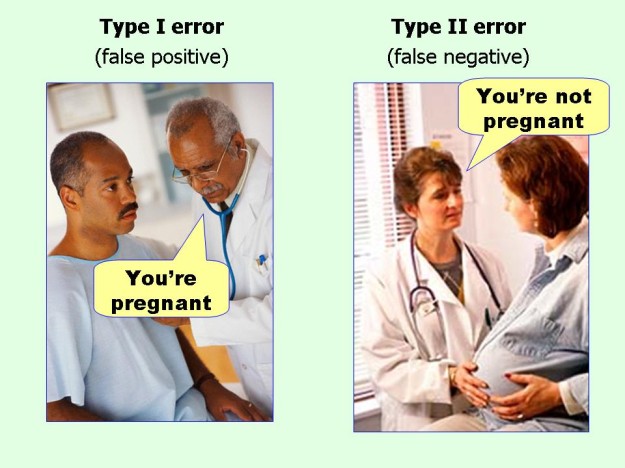
Type II Error
Concluding that there is no relationship when in fact there is (false negative)
Finding NO Relationship Where There IS One
Finding NO Relationship Where There IS One
28
New cards
Trustworthiness: Credibility
The research is an adequate representation of participants perspectives
Uses triangulation (of sources, methods, investigators)
Uses triangulation (of sources, methods, investigators)
29
New cards
Trustworthiness: Transferability
The researchers ask whether findings hold in other contexts (i.e., future participants)
Can results be "transferred" to your clients and/or setting
Can results be "transferred" to your clients and/or setting
30
New cards
Trustworthiness: Dependability
The researchers report the methods such that they can be replicated
31
New cards
Trustworthiness: Confirmability
The researchers attempted to void bias and remain as neutral as possible
Team of researchers check each other
Team of researchers check each other
32
New cards
Respect for Persons
treating persons as autonomous agents and protecting those with diminished autonomy

33
New cards
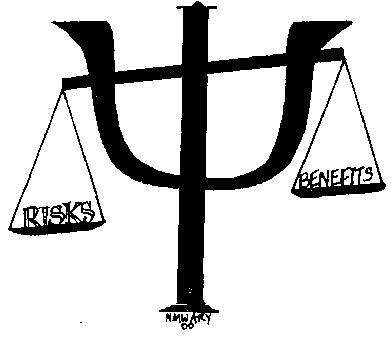
Beneficence
Investigators should design research studies to maximize benefits and minimize risks to individuals
34
New cards
Justice
The burdens and benefits of research should be fairly distributed among individuals, groups, societies, etc.

35
New cards
Institutional Review Board (IRB)
A panel of people who review research proposals with respect to ethical implications and decide whether additional actions need to be taken to assure the safety and rights of participants.