Unit 1: Levels of Organization and Homeostasis - Anatomical Language and Histology
 Call Kai
 Learn
 Practice Test
 Spaced Repetition
 Match
 Flashcards
 Knowt Play
1/34

There's no tags or description
Looks like no tags are added yet.
35 Terms
Anatomical Position
upright stance w/ head and eyes facing foward + arms extended at the side + palms facing foward + feet are flat on the ground, pointing forward
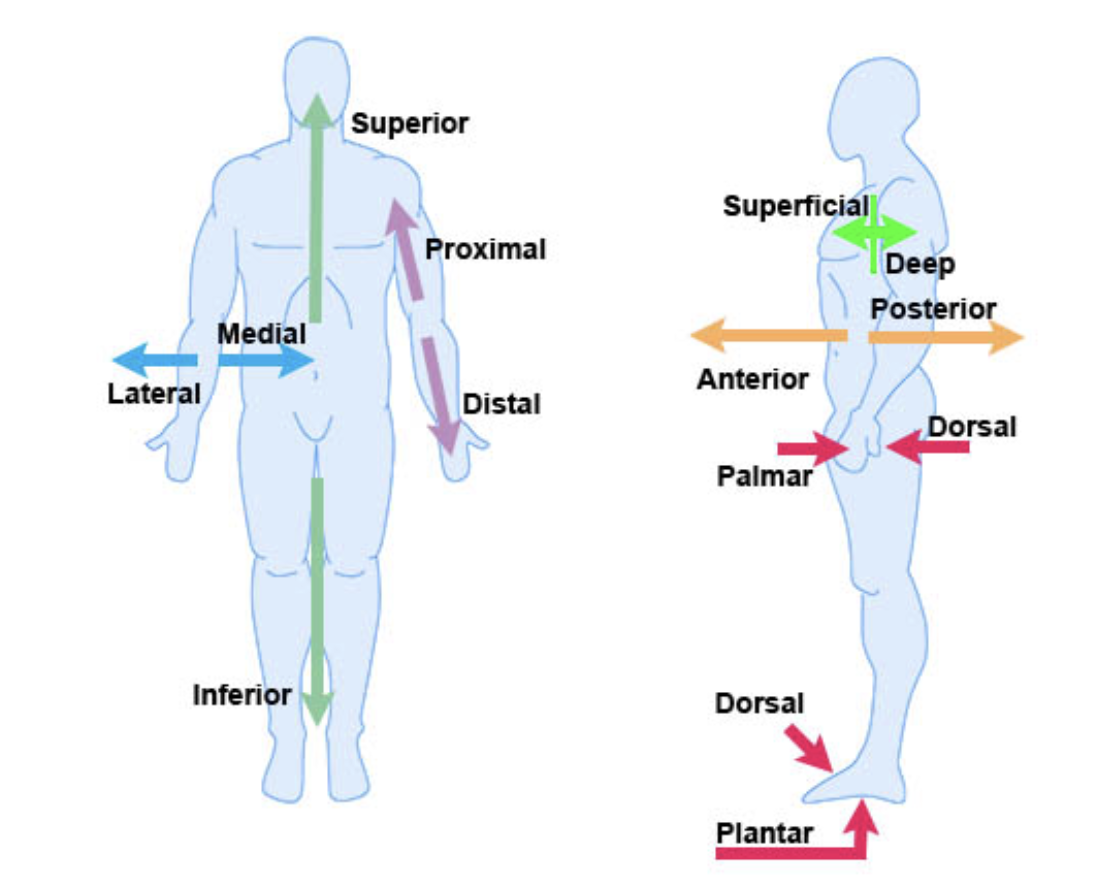
Superior
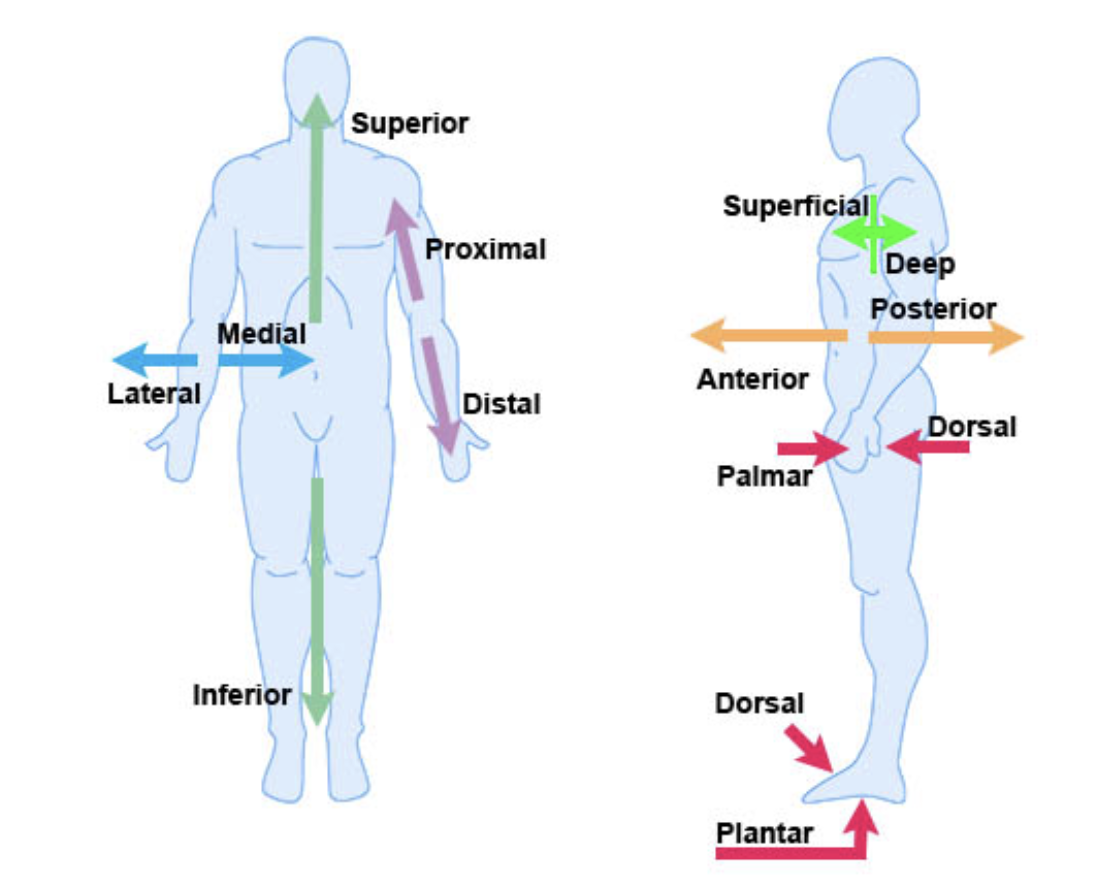
above a part
ex: the nose is superior to the mouth
Inferior
below a part
ex: the mouth is inferior to the nose
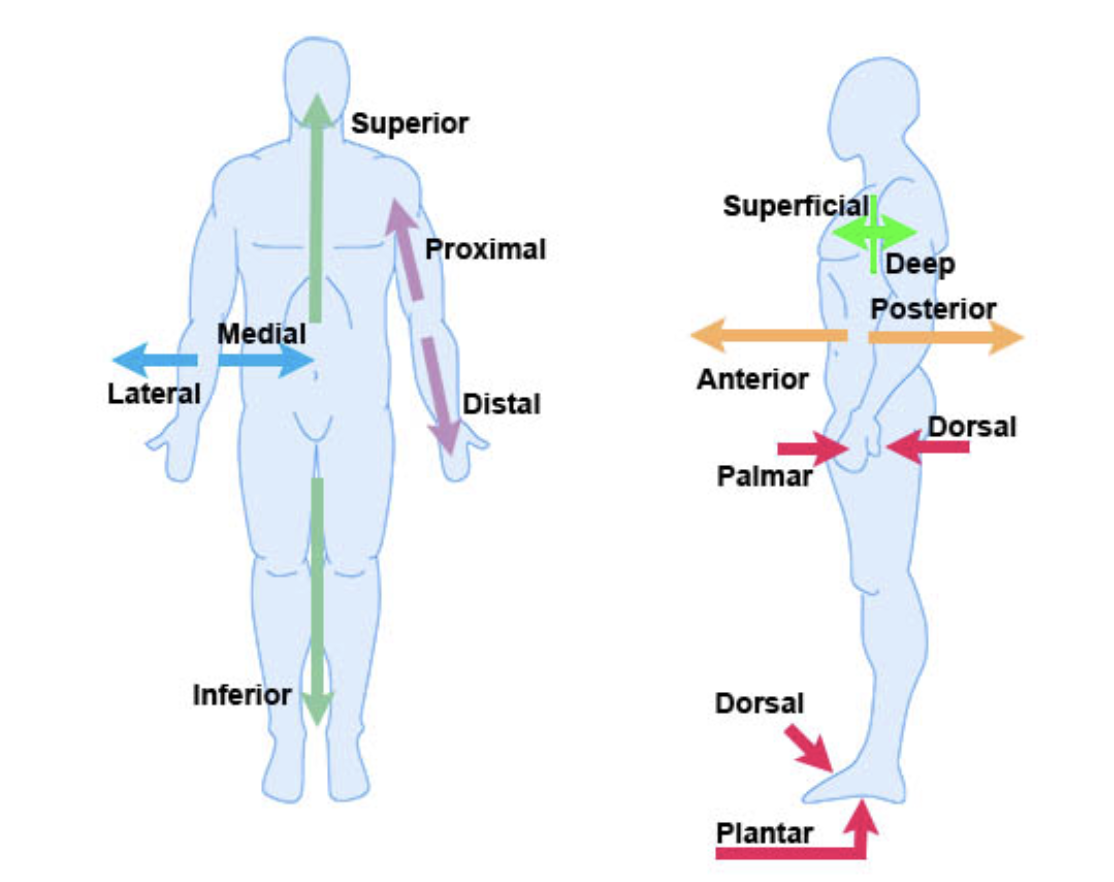
Anterior
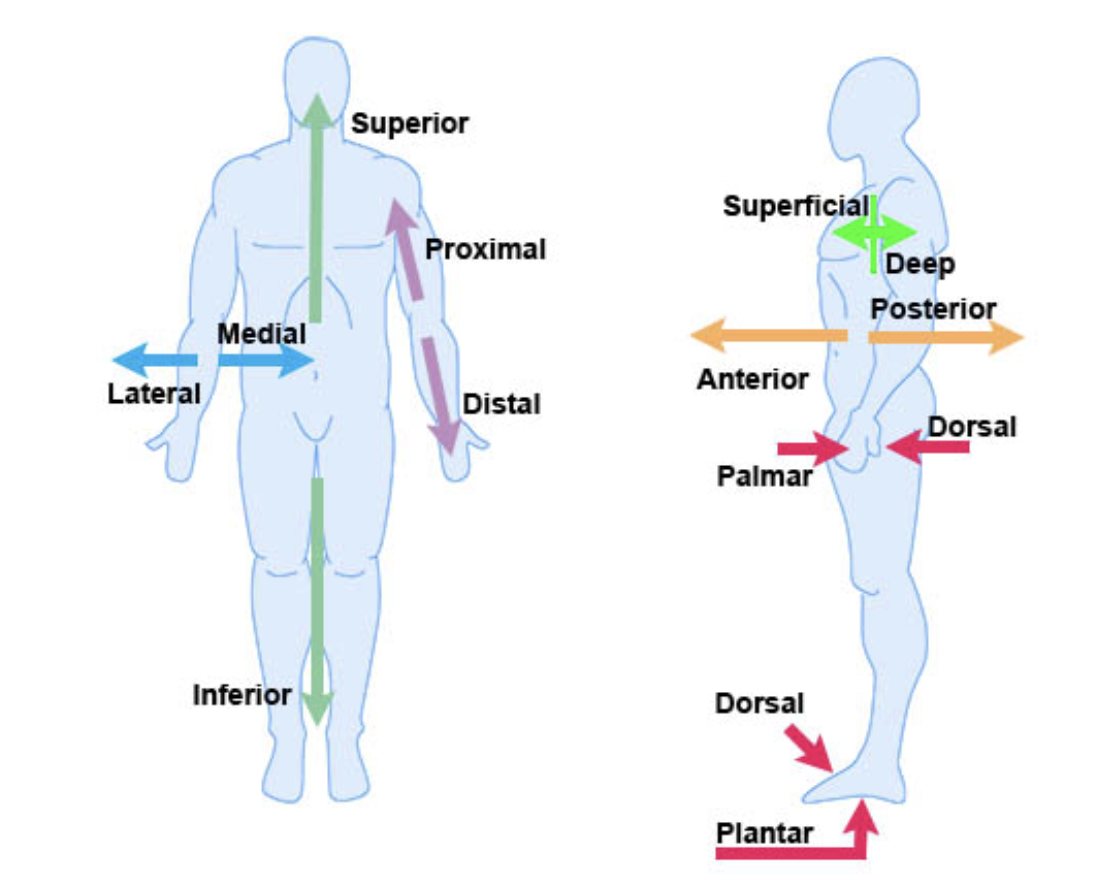
toward the front
ex: the anterior surface of the arm faces front
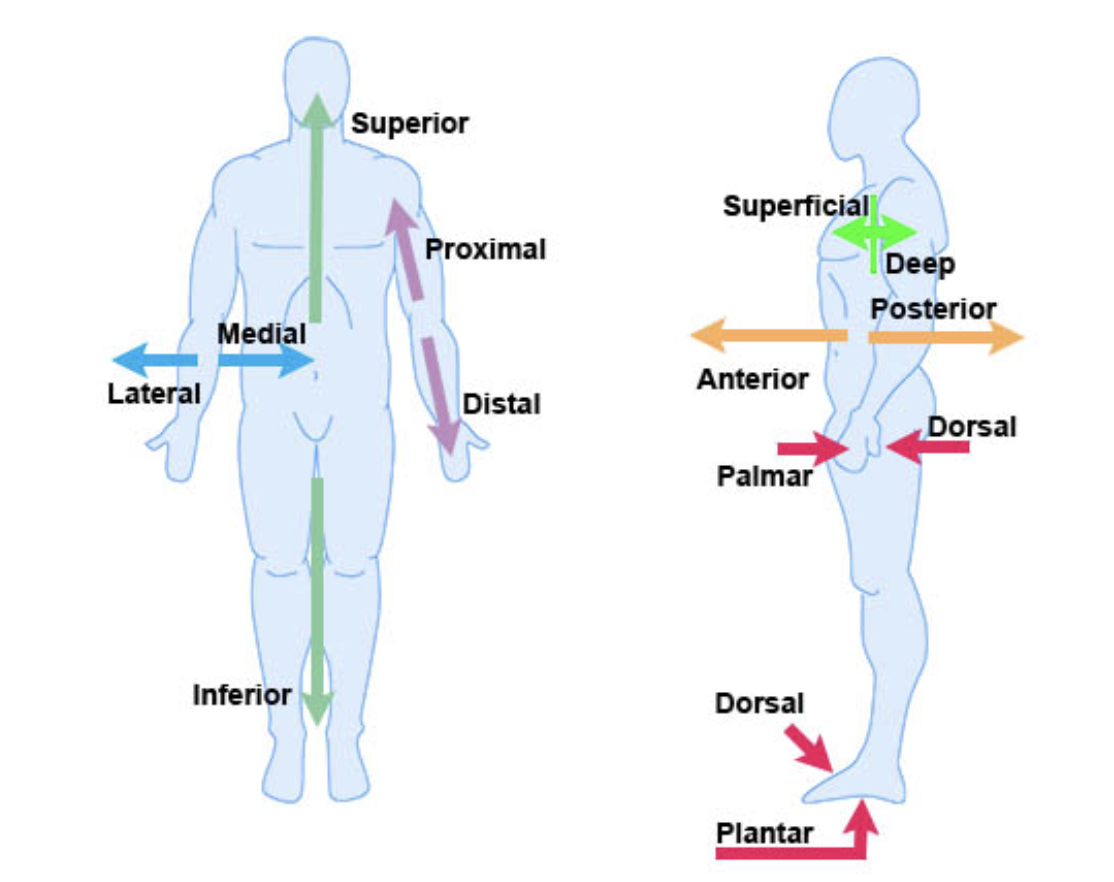
Posterior
toward the back
ex: the posterior surface of the arm faces back
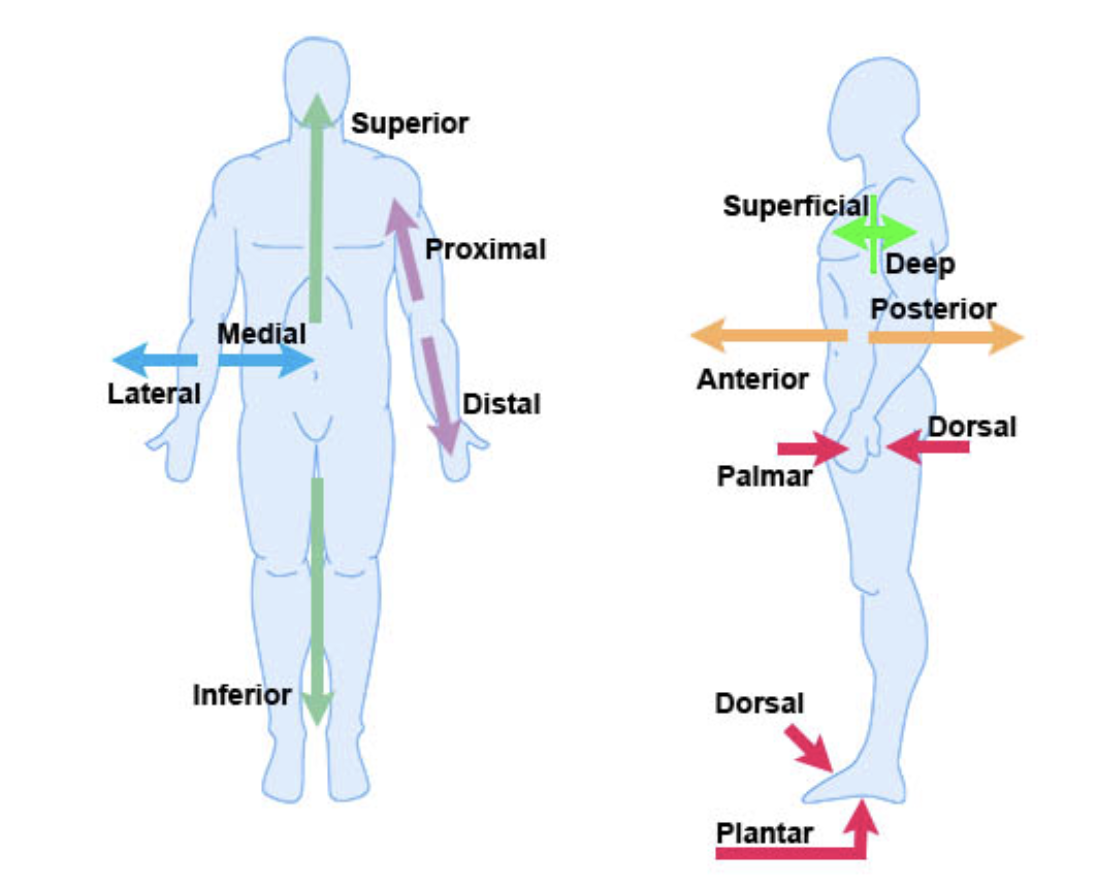
Medial
closer to the vertical midline of the body
ex: the eyes are medial to the ears + the heart is medial to the lungs
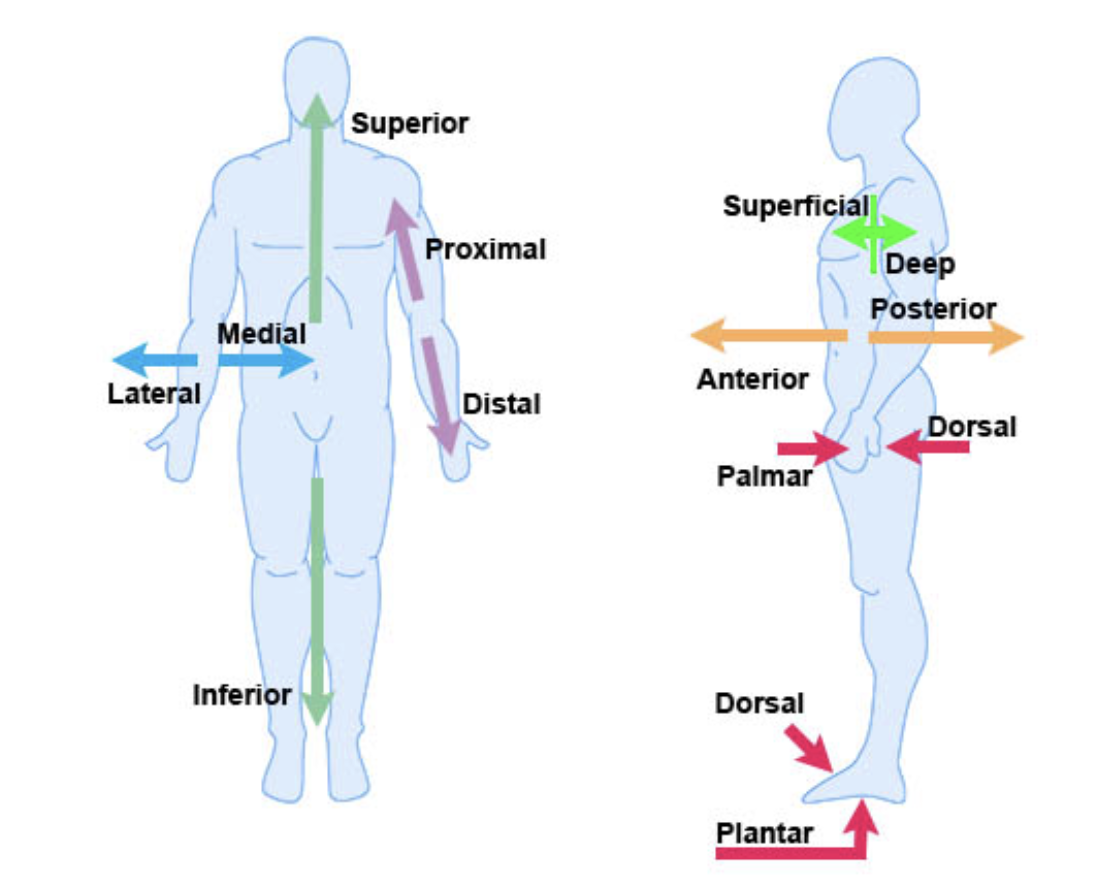
Lateral
farther to the vertical midline of the the body
ex: the ears are lateral to the ears + the ribs are lateral to the sternum
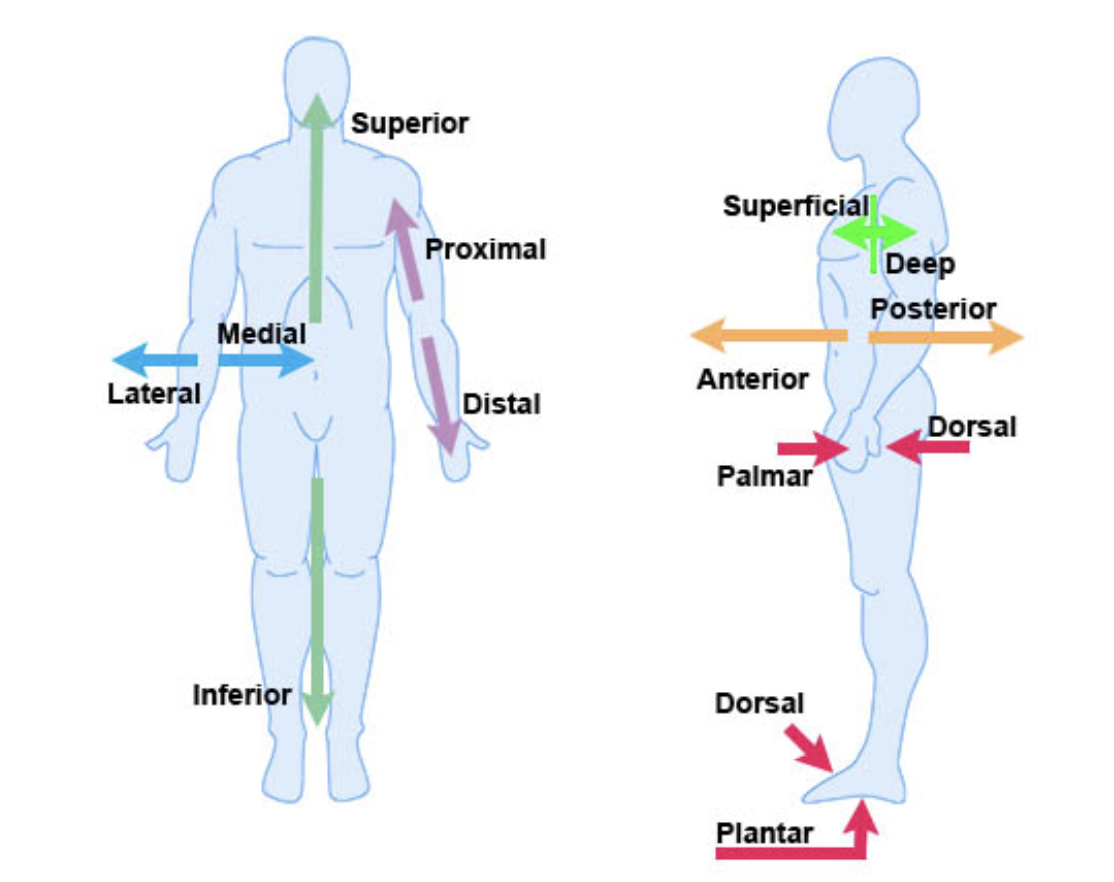
Proximal
closer to the point of attachment
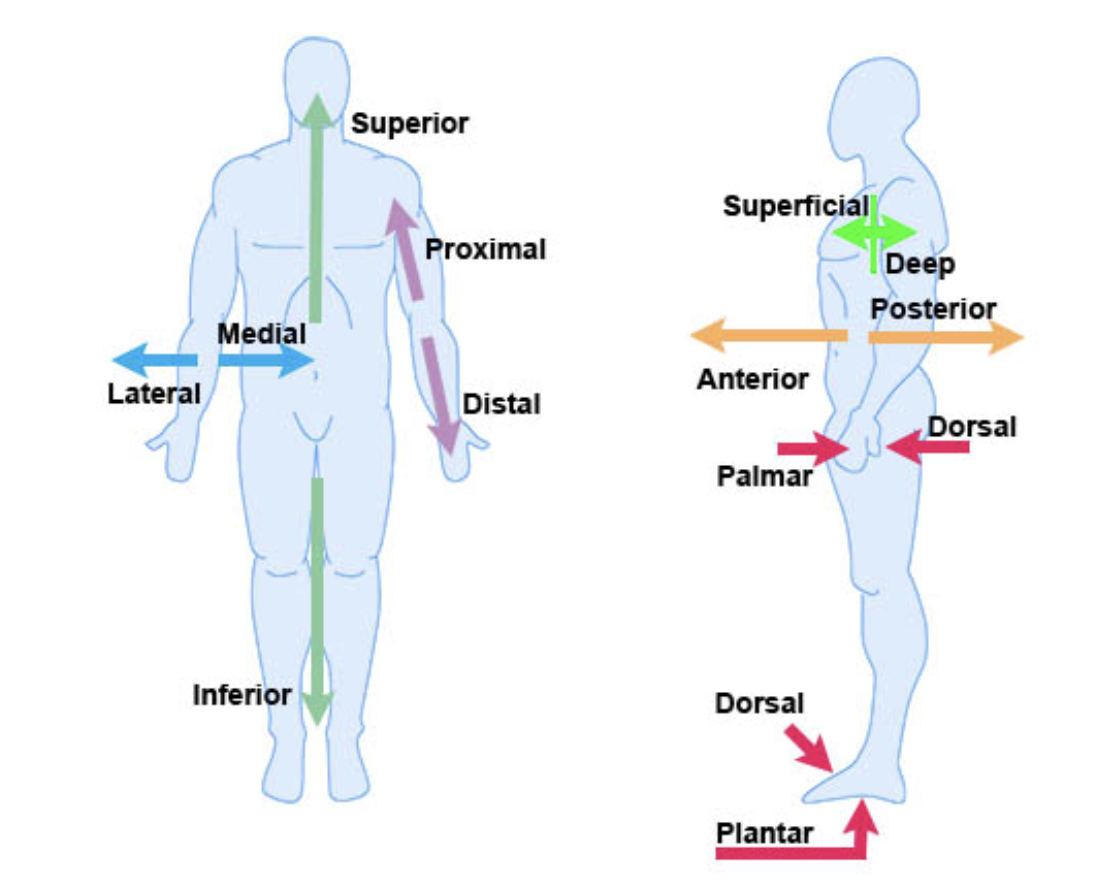
Distal
farther to the point of attachment
ex: the wrist is distal to the arm
ventral
pertaining to the front?
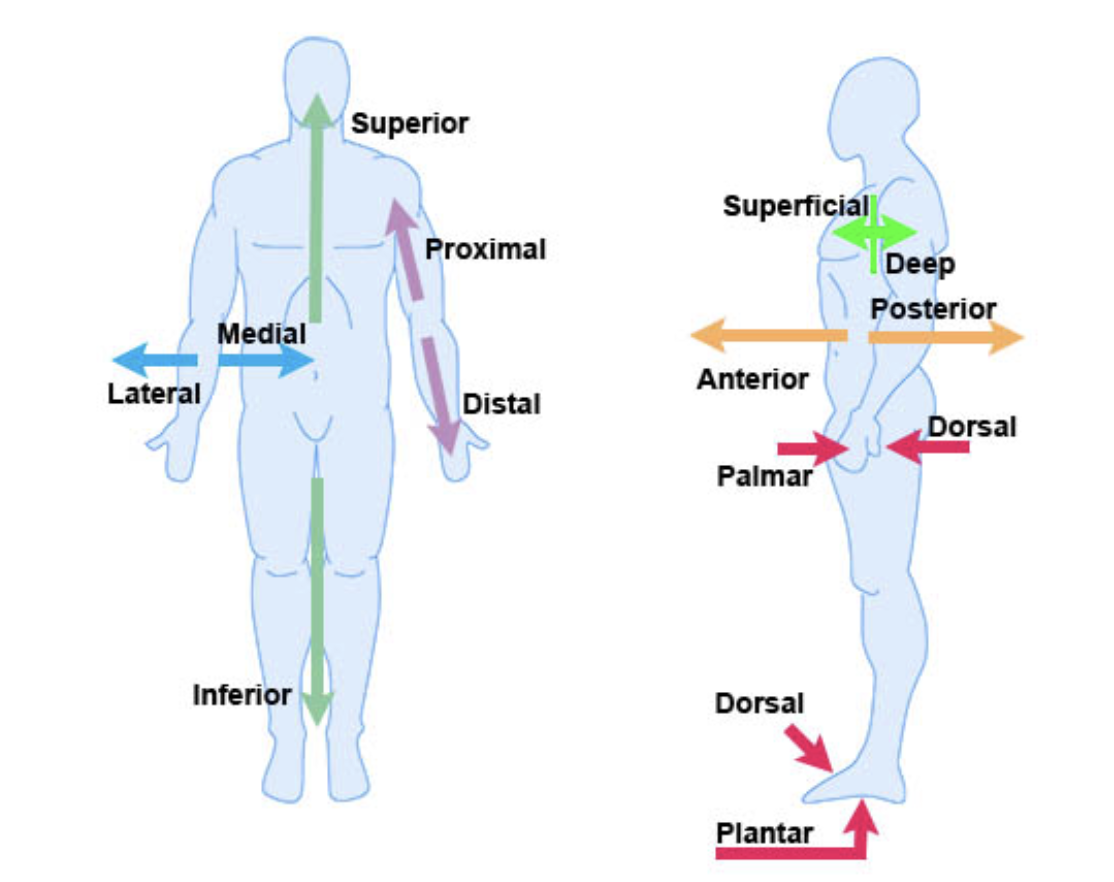
dorsal
pertaining to the back
Longitudinal cuts
Vertical cuts
Cross/Transverse Cuts
Horizontal cuts — dividing the body into top and bottom
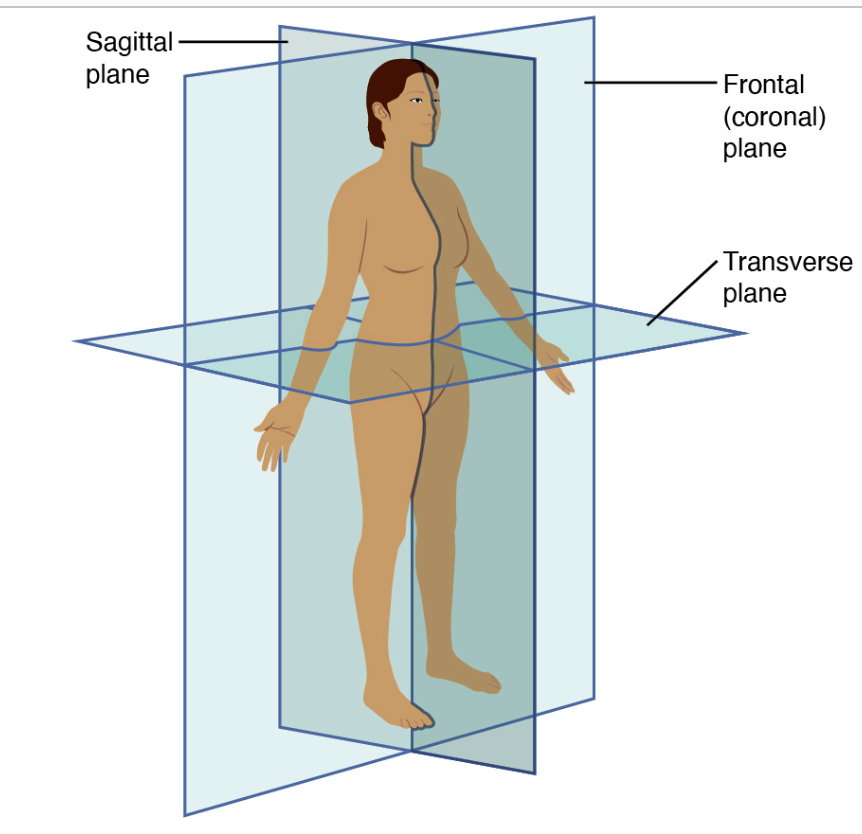
Sagittal/medial
vertical cut down the middle + splitting body into left and right
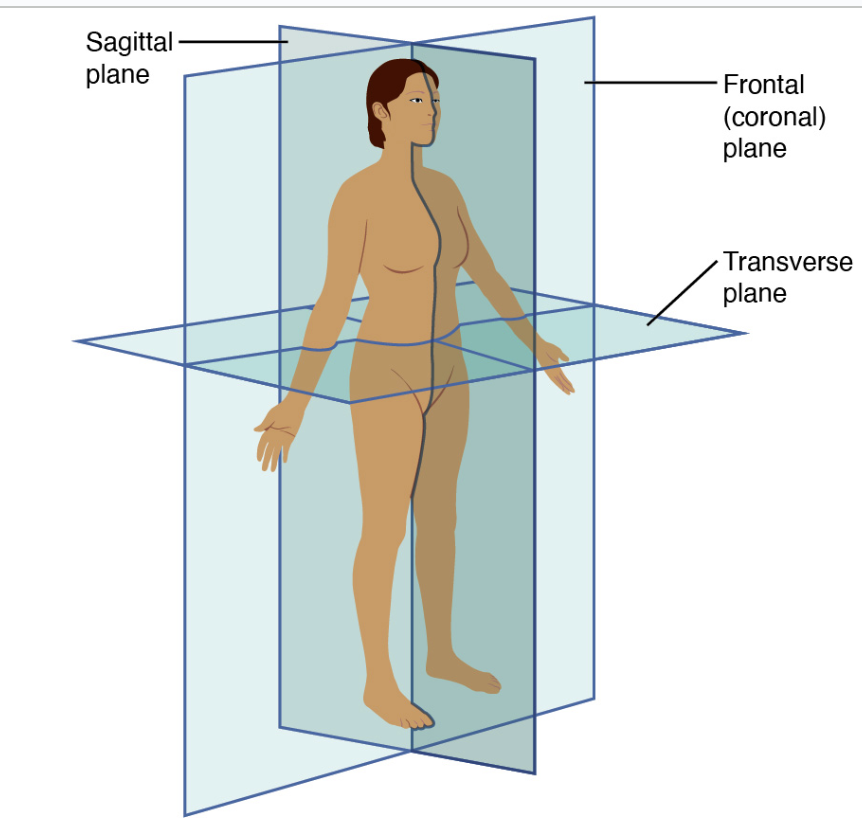
Coronal/frontal
cuts the body into front and back
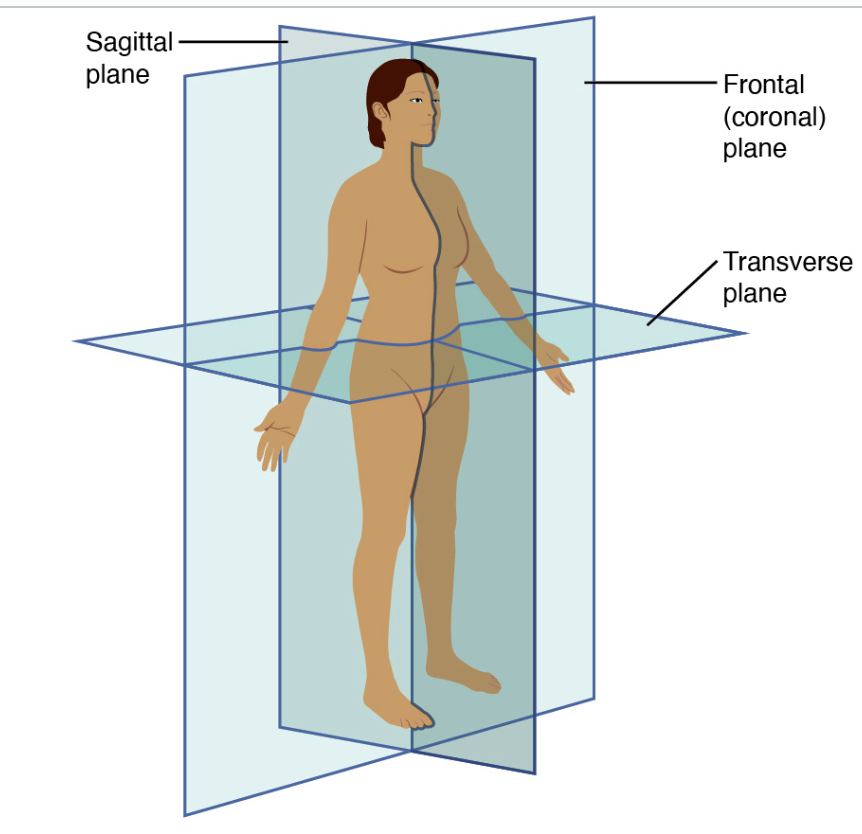
Parasagittal plane
vertical cut that is located to the left or right of the body’s midline
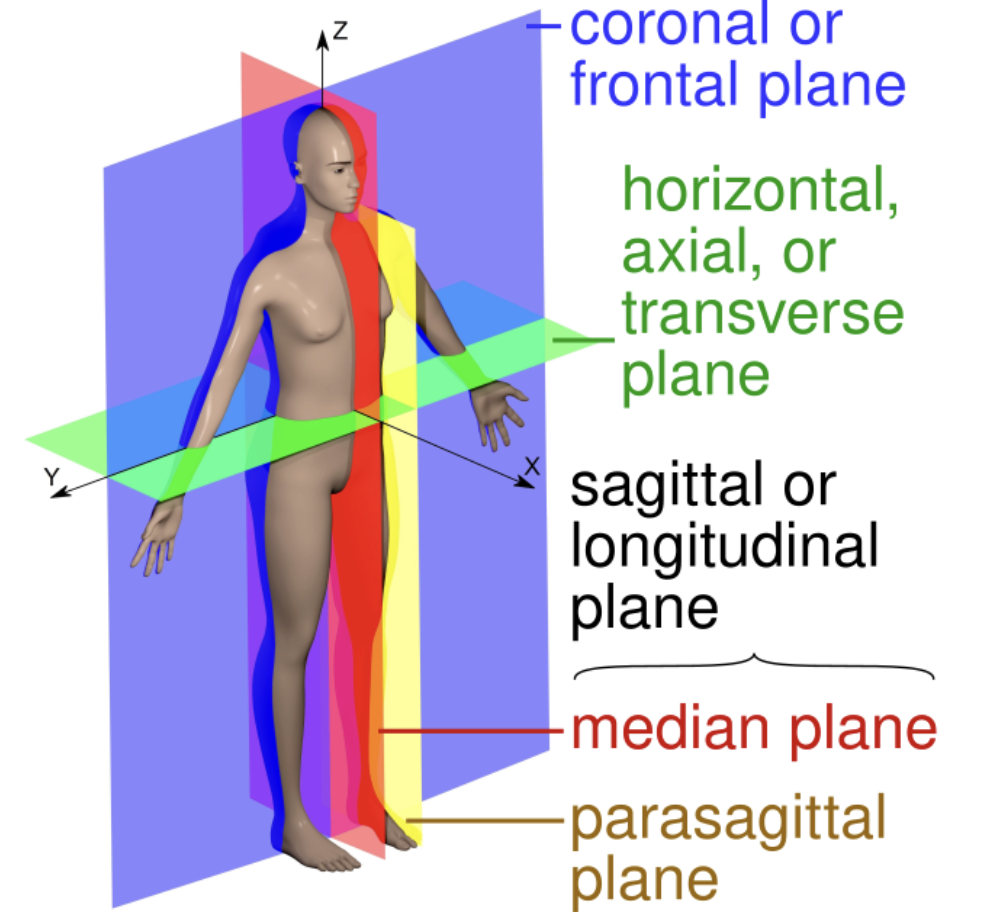
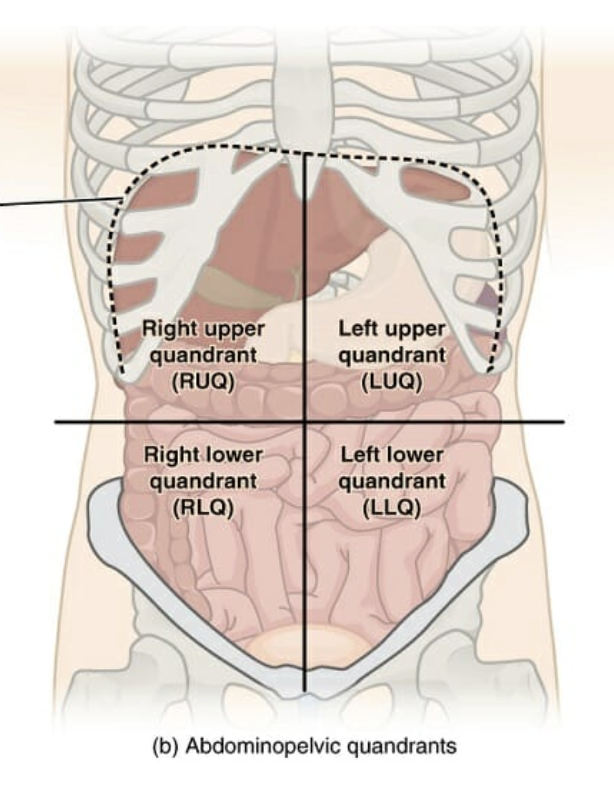
4 Abdominal Quadrants
You desribe the PERSON’S left or right, NOT yours when you are looking at them
Right upper quandrant (RUQ)
right lower quandrant (RLQ)
Left upper quandrant (LUQ)
left lower quandrant (LLQ)
9 Abominal Regions
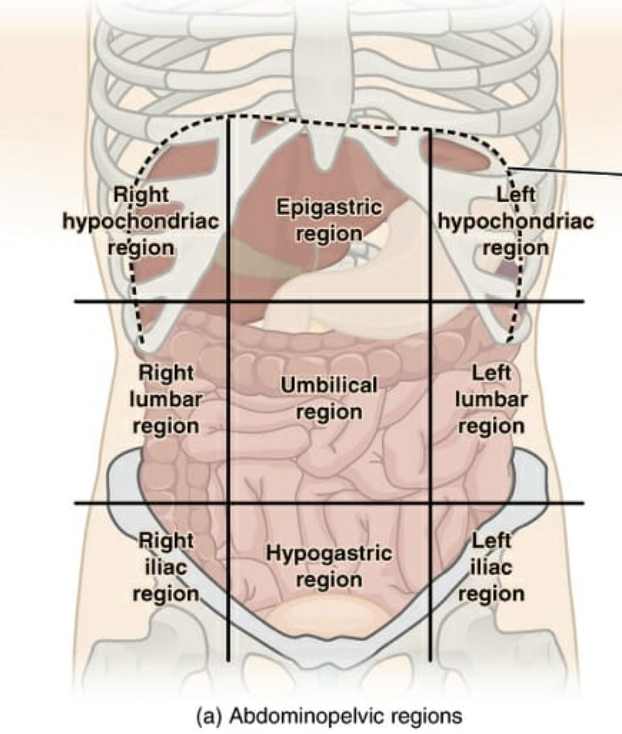
Right hypochondriac region
right lumbar region
right iliac region
epigastric region
umbilical region
hypogastric region
left hypochondriac region
left lumbar region
left iliac region
9 Body Cavities
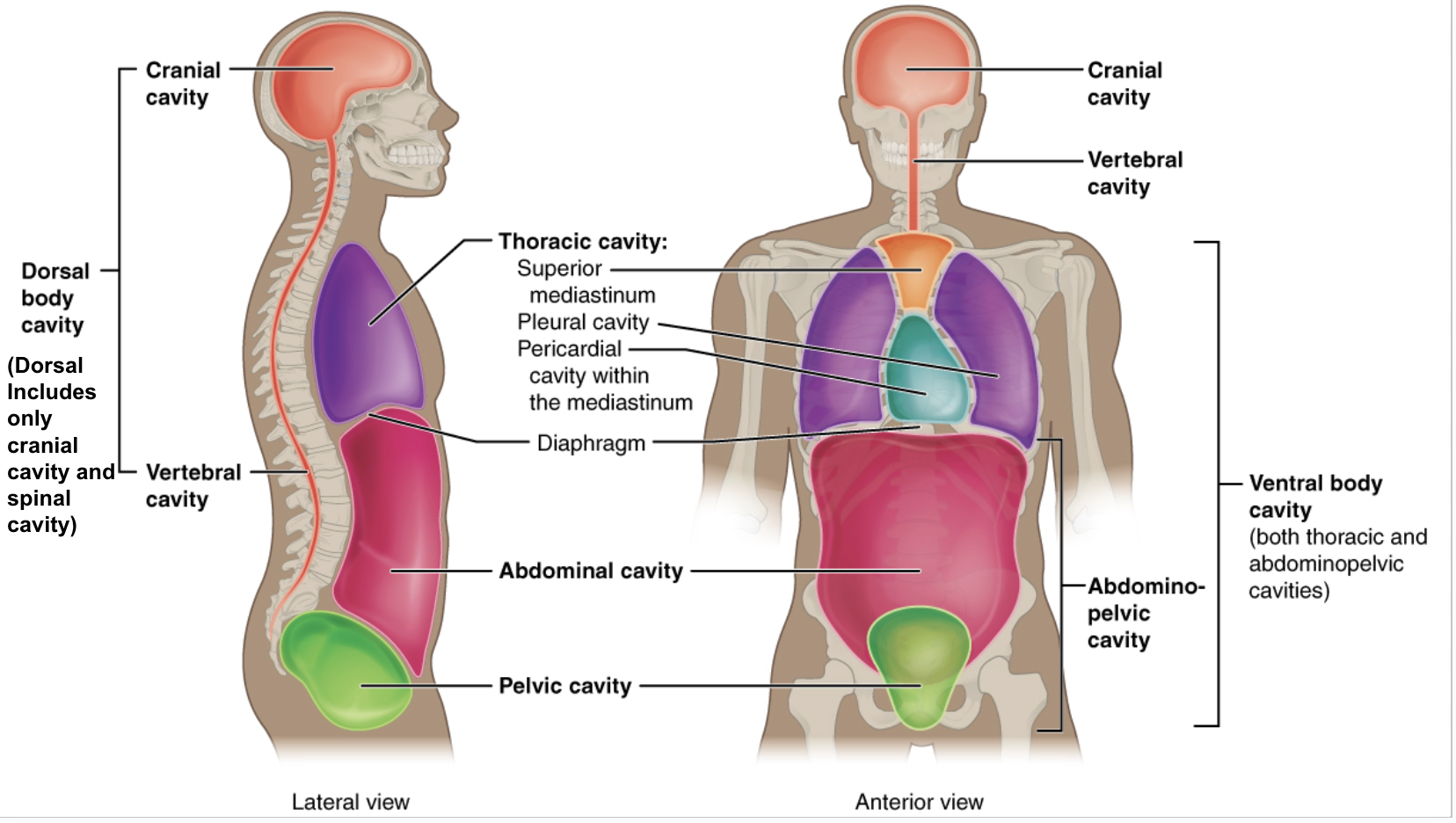
Cranial cavity → brain
vertebral cavity → spine
dorsal body cavity
thoracic cavity → heart + lungs
abdominal cavity → stomach, liver, gallbladder, pancreas, large+small intestine
pelvic cavity → bladder, reproductive organs, and rectum
(abdomino-pelvic cavity)
pleural cavity → lung
pericardial cavity → heart
ventral body cavity → thoracic cavity + abdomino-pelvic cavity
4 types of tissues
Epithelial tissue
Nervous tissue
Muscle tissue
Connective tissue
Epithelial Tissue Functions
covers inner and outer body + lines body cavities and organs
Protection → protects the tissues deeper in your body: blood vessels, muscle
Absorption → absorbs nutrients from the food you eat
Secretion → secrete enzymes, hormones, and fluids: cells in your saliva glands secrete saliva
Excretion → removal of waste from your body
Filtration → ex: cleans the air that you breathe in + filters your kidney’s blood
Epithelial Tissue Location
Cover body surface
Cover and line internal organs
Forms lining of body cavities
Composes glands
Defining Traits of Epithelial Cells
Lack blood vessel/Line all blood vessels in your body
Tightly packed
Readily divide
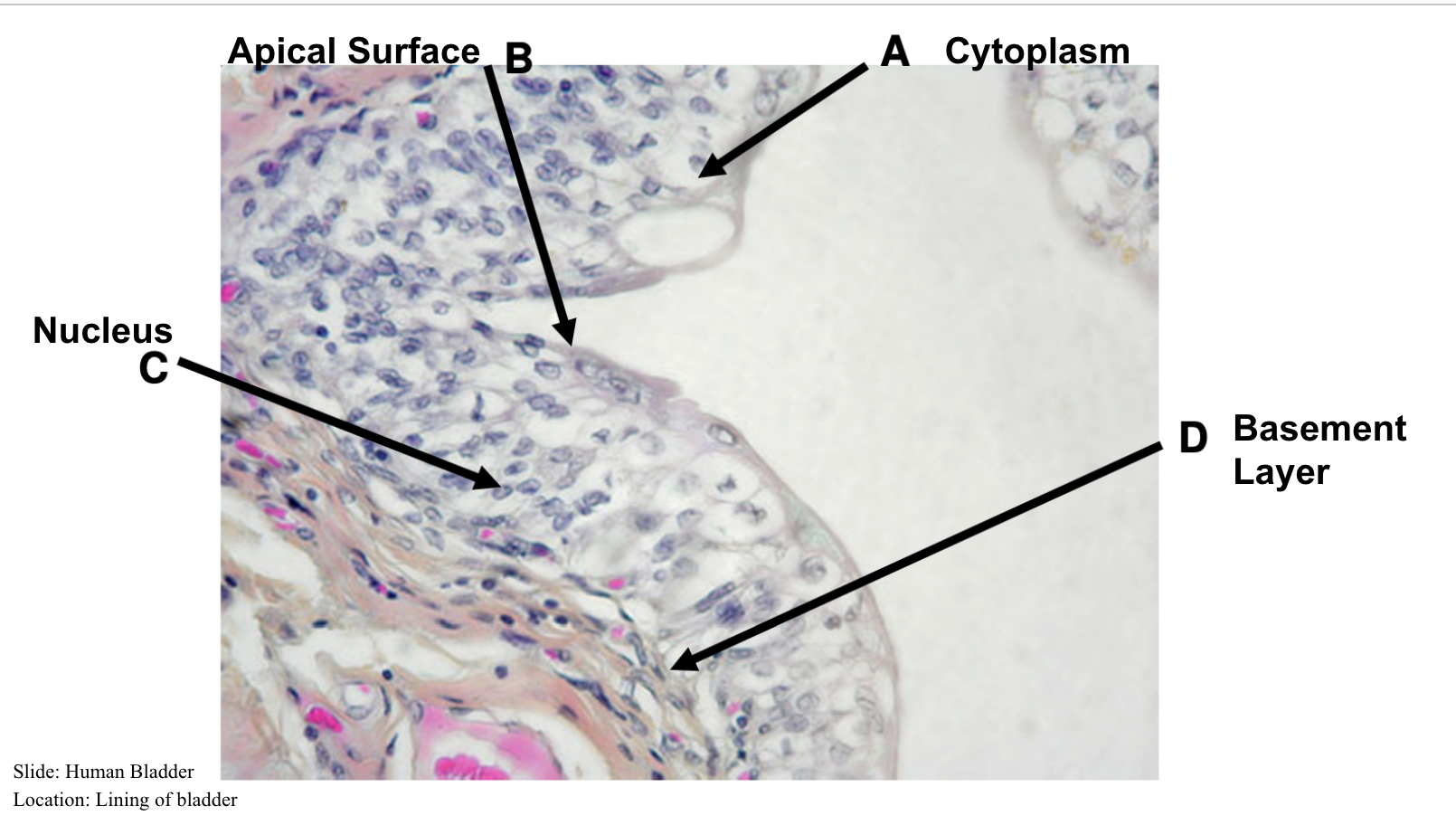
Faces the free (apical → exterior of the body) surface
Anchored by a basement membrane (that connects epithelium to connective tissue)
Layer Names to Classify Epithelial Tissue
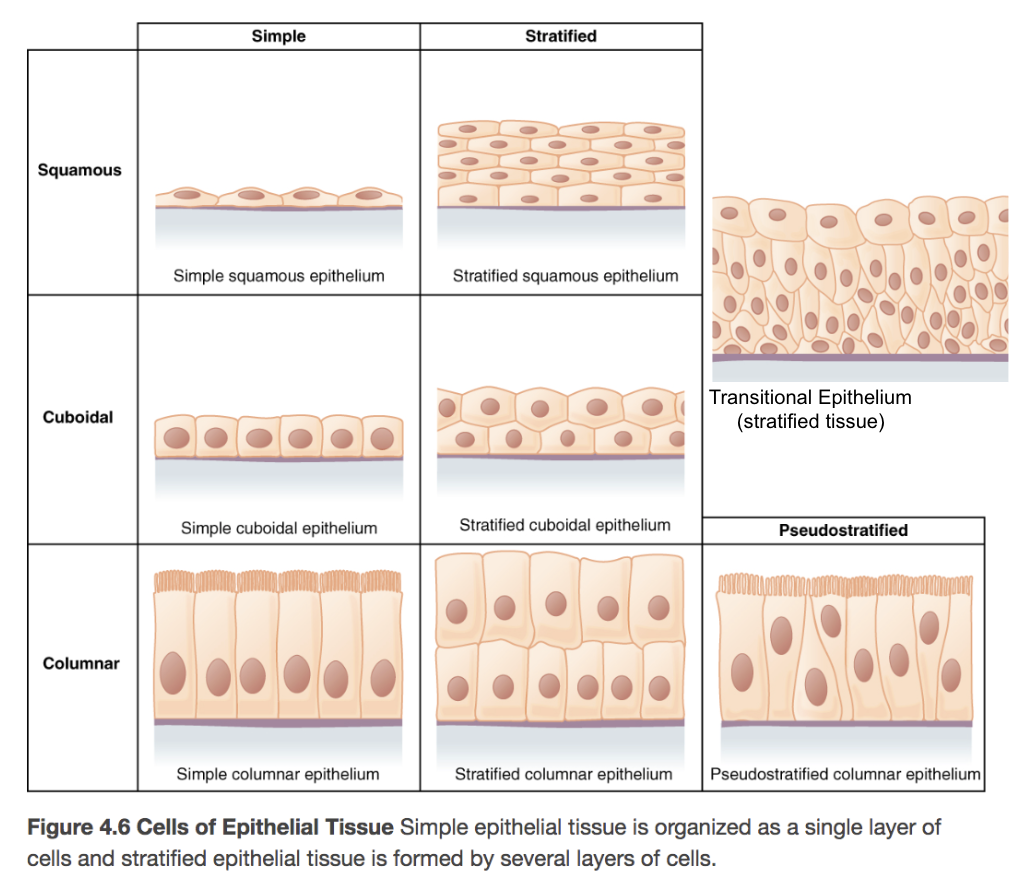
Simple → 1 layer + often found where absorption and filtration occur
Stratified → multiple layers + found where protection occur
Pseudostratified → 1 layer + cells can be diff. shapes and sizes + nuclei can be diff. heights
(looks multilayered, even though it is not)
Shape Names to Classify Epithelial Tissue
Squamous → flat
(name means scaled) looks like fish scales
Nucleus = flat
absorption + transportation is most important here
(flat makes it easy for materials, like oxygen, to move across quickly to the other side)
(places where you lose a lot of cells, you have squamous cells b/c they’re smaller, faltter, and cheaper (take less time + energy + raw materials to make THUS making more)
Cuboidal → cube
absorb nutrients + produce secretions, like sweat
nucleus = circle
Columnar → tall/long + thick + look like rectangular columns
Nuclei = oval
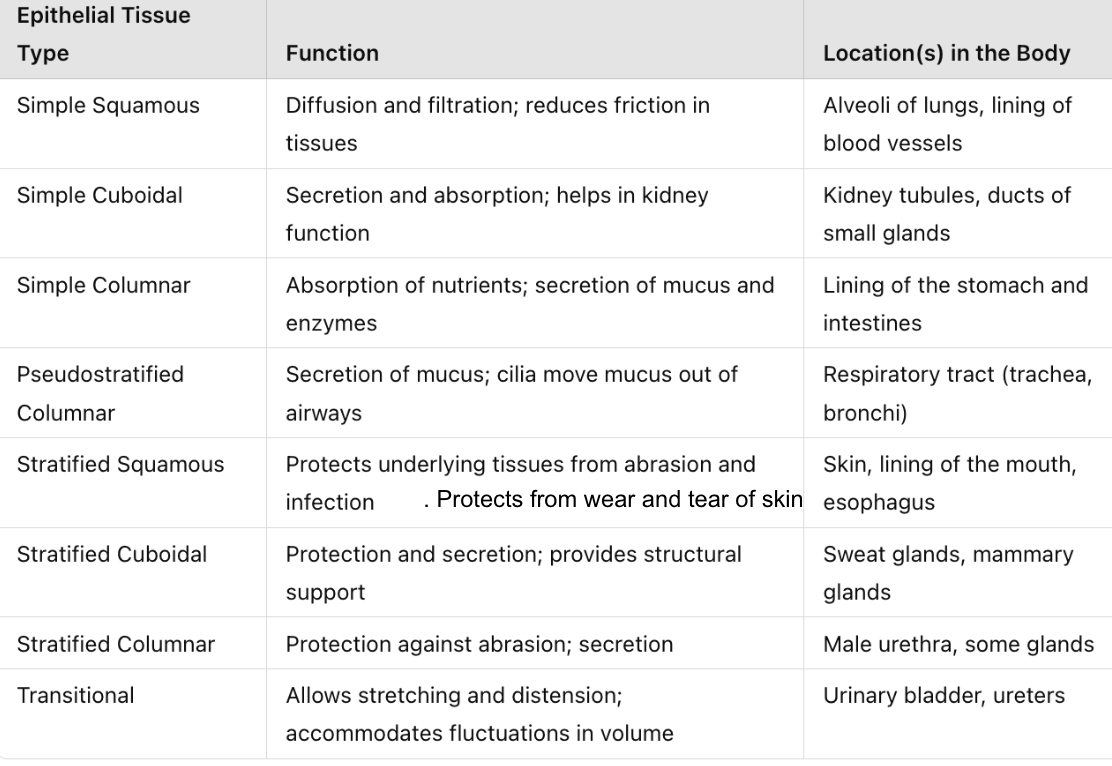
Steps of Naming Epithelial Tissues
Layers THEN Shape
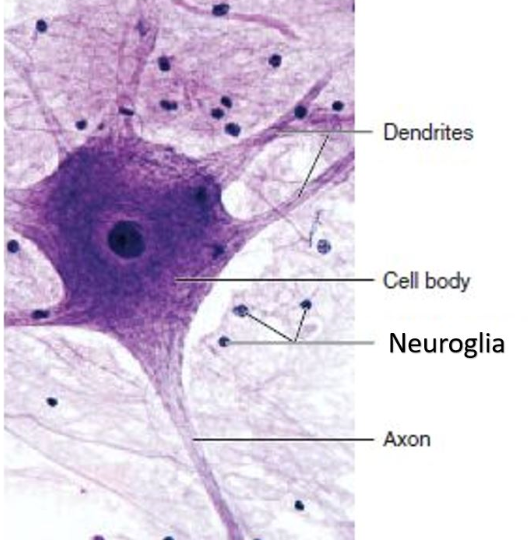
Nervous Tissue Functions
send electrochemical messages between your brain, spinal cord, and the rest of your body
Nervous Tissue is made of…
Nerve cells → conduct impulses to carry info from one part of your body to another
ex: telling your muscles to move
Glial cells → support, protect, insulate nerve cells + helps remove waste and dead cells around neurons (allowing neurons to work properly)
(located in your brain, spinal cord, peripheral nerves)
Defining Traits of Nervous Tissue
Cell body → life support – has nucleus, mitochondria, and DNA
Dendrites → look like trees + collect signals from other cells to send back to the cell body
Axon → long rope – carries messages to other neurons, muscles, and glands
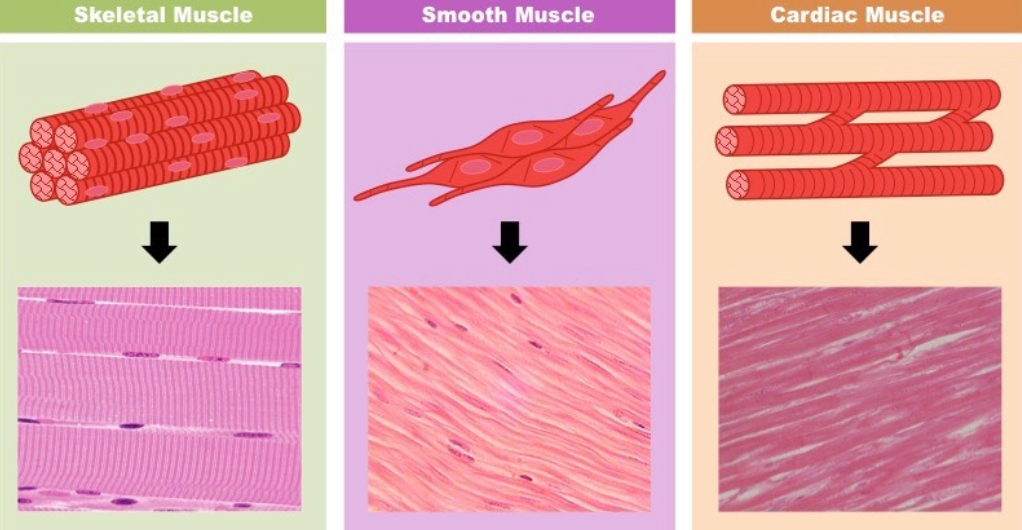
Muscle Tissue Functions
responsible for 3 types of body movements:
Skeletal Muscle → when muscles contract, they pull on bones or skin, causing movement
ex: your arm moves when your bicep muscle contracts
Long/cylindrical + straight/parallel cells
HAS striation (stripes)
(MULTIPLE nucleus)
Smooth Muscle → helps move things inside your body that you CANNOT control (digestive, urinary tracts, and uterus)
ex: blood vessels are lined with smooth muscle, which help move blood by squeezing and relaxing the blood vessels
cells are packed together + tapered at the ends
NO stripes
(1 nucleus)
Cardiac Muscle → ONLY FOUND in the heart + forms the walls of your heart
contracts and relaxes to push blood out of the heart and into the arteries
BRANCHING structure
HAS stripes
(1 nucleus)
Defining traits of Muscle Tissue
Ability to Contract → Muscles tissue can shorten and produce movement
Elongated Cells → need for contraction, increased force production and transmission
Connective Tissue Functions
Support and Structure → support and maintain the shape of various body parts
ex: bones provide a rigid framework for the body — helps us stand upright and move
Protection → protects vital organs and structures
ex: rib cage (made of bones) protects the heart and lungs
Binding and Connecting → Connective tissue binds diff. parts of the body together
ex: Tendons connect muscles to bones + ligaments connect bones to each other (allowing for stable and coordinated movements)
Transportation → Blood transports essential substances like oxygen, nutrients, and hormones through the body + helps remove waste products
Storage → stores important substances
ex: bone tissue stores minerals like calcium and phosphorus
Produce blood cells → bone marrow, is responsible for producing blood cells in the body
Defining Traits of Connective Tissue
cells are spaced apart and embedded in an extracellular matrix → fluid, gel-like, or solid + makes up significant portion of the tissue’s volume
ex: Extracellular matrix in ligaments have elastic fibers that allow for stretching and recoil
contains fixed or wandering cells
fixed → remain in one place w/in the connective tissue
ex: bone cells (osteocytes)
wandering → move through the tissue
ex: while blood cells (not red-they stay in vessels) can migrate into connective tissue to respond to infection or other immune issues
Locations of Connective Tissue - All Over The Body
Bone → Provides strong structural support. Bone marrow (inside the bone) makes blood cells.
Cartilage → Provides flexible support in joints
Tendons → Attach muscles to bones
Ligaments → Connect bones at joints
Blood → Transports oxygen and nutrients throughout the body
Adipose (fat) tissue → Stores fat for energy
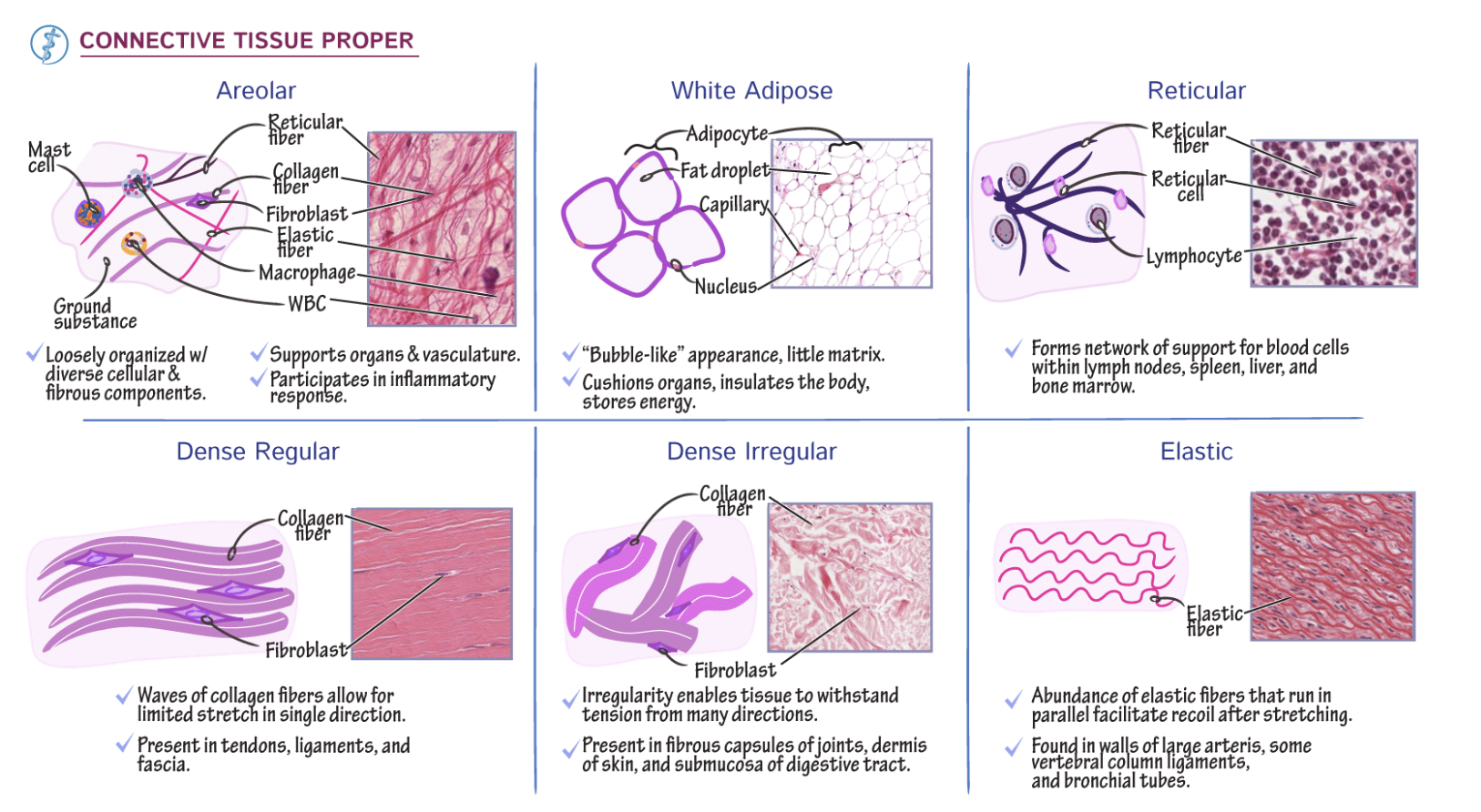
Connective Tissue Types
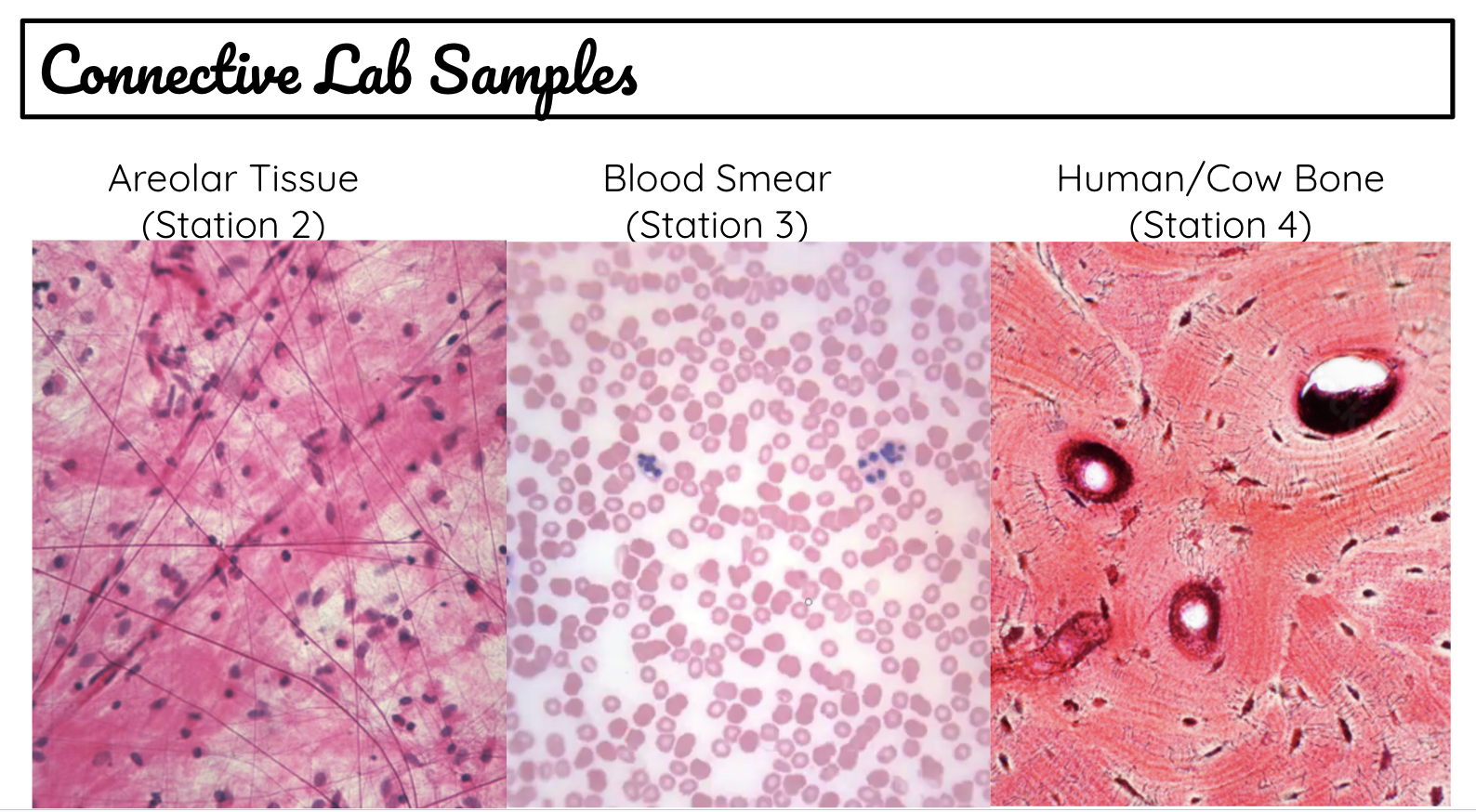
Dense Connective (tendons and ligaments)
Loose Connective (adipose and areolar → “loose connective tissue” + lots of collagen and elastic fibers + acts as “packing material” surrounding and supporting organs and other tissues)
Bone
Blood
Cartilage