Unit 1 Anatomy
 Call Kai
 Learn
Learn Practice Test
 Spaced Repetition
 Match
Match Flashcards
 Knowt Play
 Podcast
1/72

There's no tags or description
Looks like no tags are added yet.
Name | Mastery | Learn | Test | Matching | Spaced | Call with Kai | Chat |
|---|
No analytics yet
Send a link to your students to track their progress
73 Terms
Anatomy
study of structures of human body and its parts
Physiology
study of the functions of human body and its parts
what are the 10 Characteristics of Life
movement, responsiveness, growth, reproduction, respiration, digestion, absorption, circulation, assimiliation, and excretion.
metabolism
events inside body that obtain, release, utilize energy
what are the five environmental factors that life depends on?
water, food, oxygen, heat, pressure
water importance 4
most abundant in body, environment for metabolic process, required for transport of substance, helps regulate body temp
food importance
provide nutrients, supply energy and raw material to build tissue
oxygen importance
used to release energy from nutrient, cellular respiration and other process require oxygen
heat importance
maintains body temp, partly controls metabolic reaction rate
pressure importance
atm pressure needed to breathe, hydrostatic pressure keeps blood flowing
homeostasis
maintainence of stable internal environment
homeostatic mechanisms
self regulated system that maintains homeostasis
what are the 3 parts of homostatic mechanism
receptor (detect/provide info about stimuli), control center (decision maker, set point), effector (muscle/gland that responds to control center and causes necessary change)
negative feedback
effectors return condition to normal range (goes back to homeostasis)
body temp regulation, blood pressure glucose levels are controlled by what?
negative feedback
postive feedback
typically uncommon, the change is intensified or amplified. often short lived and produces unstable conditions
is blood clotting positive or negative feedback?
positive feedback
uterine contractions of childbirth positive or negative feedback?
positive
what are the two main portions of the human body
axial and appendicular portion
axial potion
head, neck, and trunk
appendicular portion
upper and lower limbs
major cavities of axial portion of the body
cranial cavity, vertebral cavity, thoracic cavity, abdominopelvic cavity
diaphragm cavity location and its function
seperates the thoracic and abdominal cavities. helps control breathing
mediastinum cavity location
region between lungs and thoracic cavity
what organs are in the mediastinum cavity?
heart, esophagus, trachea, and thymus gland
what are the two portions of the abominopelvic cavity
abdominal and pelvic cavity
abdominal cavity location
extends from diaphragm to top of pelvis
what organs do the abdominal cavity contain
stomach, liver, spleen, kidneys, small intestine and most of large intestine
pelvic cavity location
enclosed in pelvic bone
what organs do the pelvic cavity contain
end of large intestine, urinary bladder, and internal reproductive organs
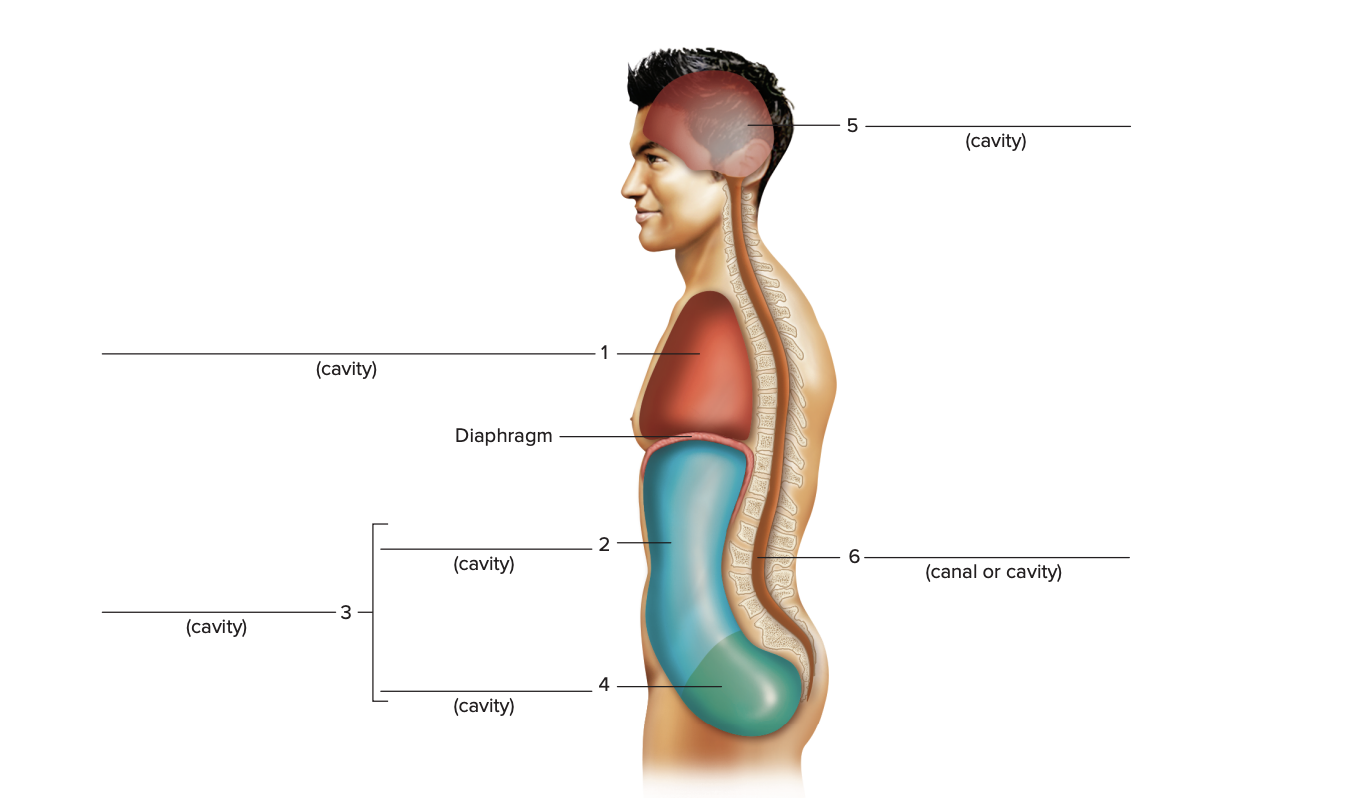
label cavities
.
small cavities of the head (4)
oral, nasal, orbital, middle ear
serous membranes function
secrete serous fluid that prevents friction between layers
serous membrane lines what cavities
thoracic and abdominopelvic
layers of serous membranes and differentiate them
visceral layer (inner layer, covers an organ directly on organ) parietal layer (outer layer lining the walls of the cavity)
visceral and parietal plura location
around lungs in thorax
visceral and parietal pericardium location
around the heart in the thorax. visceral = on heart, parietal = line the cavity
visceral and parietal peritoneum location
around abdominopelvic organs
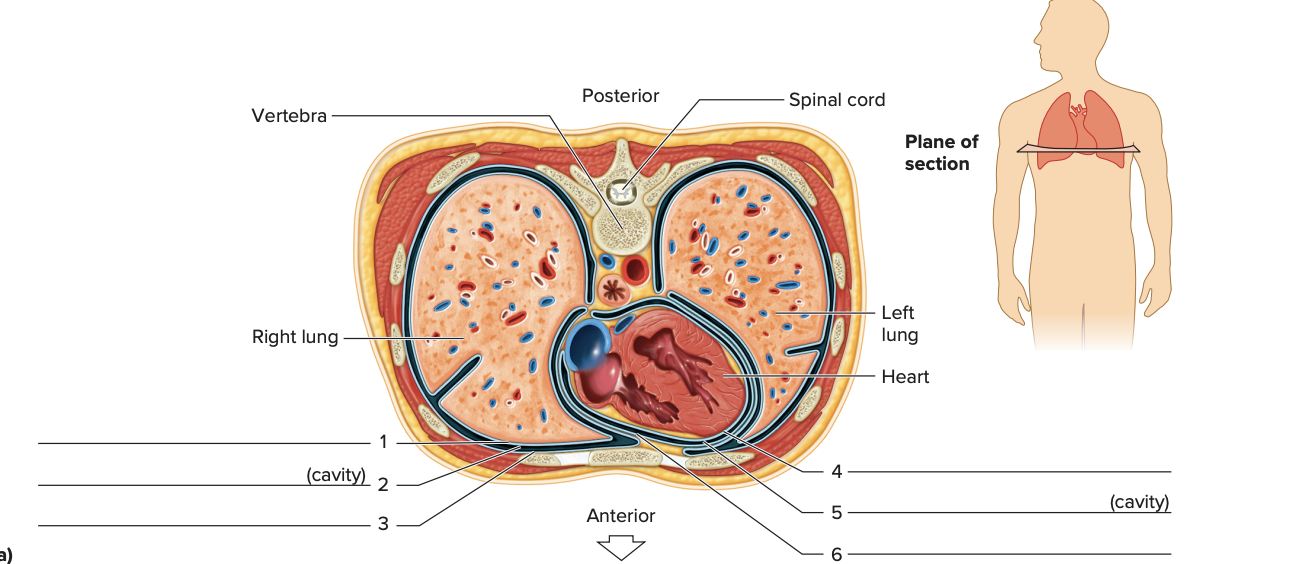
label
.
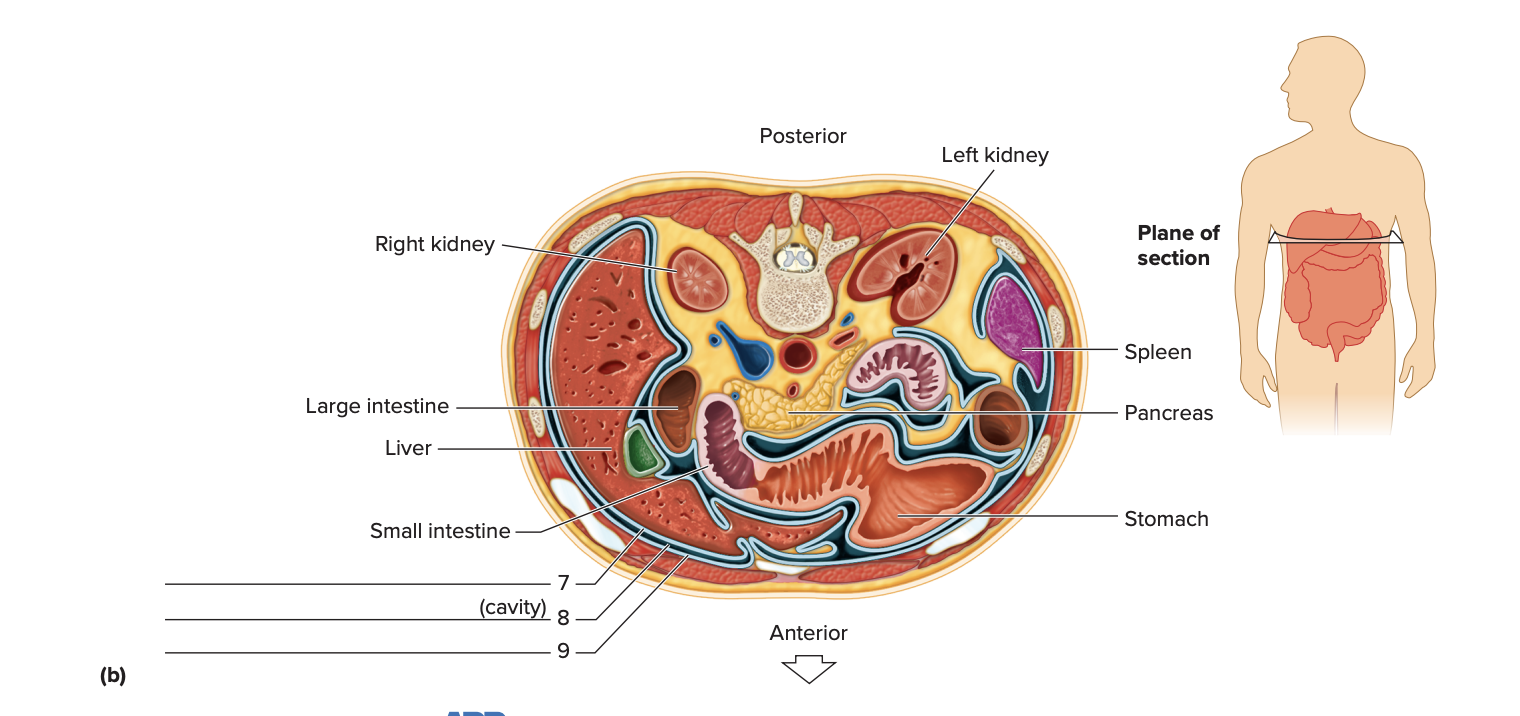
label
visceral peritoneum 8.peritoneal cavity 9.parietal peritoneum
integumentary system function
aids in protection, helps regulate body temperature, helps with sensory reception and production of vitamin D
muscular system function
Cause movements, maintain posture, produce body heat
nervous system function
Detect changes, receive and interpret sensory information, stimulate muscles and glands
endocrine system function
helps control hormones in body, metabolic activities of body structures
cardiovascular system function
Move blood through blood vessels and transport substances throughout body
lymphatic system function
transports fluids, produces lymphocytes like white blood cells, Return tissue fluid to the blood, carry certain absorbed food molecules, defend the body against infection
digestive system function
recieves food, breaks it down and excretes waste. contains stomach/intestines/liver/pancreas
respiratory system function
involved with exchange of gasses between air and blood, intake/ouput of air—breath in oxygen and breathe out co2
urinary system
removes waste from blood, maintain water and electrolyte balance, store and eleminate urine
skeletal system function
Provide framework, protect soft tissues, provide attachments for muscles, produce blood cells, store inorganic salts
reproductive system function
Produce and maintain sperm cells, transfer sperm cells into female reproductive tract Produce and maintain egg cells, receive sperm cells, support development of an embryo, and function in birth process
integumentary system organs
skin hair nails sweat-glands sebaceous-glands
skeletal system organs
bones ligaments cartilages
muscular system organs
muscles
nervous system organs
brain spinal-cord nerves sense-organs
endocrine system organs
Glands that secrete hormones (pituitary gland, thyroid gland, parathyroid glands, adrenal glands, pancreas, ovaries, testes, pineal gland, and thymus)
cardiovascular system organs
heart, arteries, capillaries, veins
lymphatic system organs
lymphatic vessels, lymph nodes, thymus, spleen
digestive system organs
Mouth, tongue, teeth, salivary glands, pharynx, esophagus, stomach, liver, gallbladder, pancreas, small and large intestines
respiratory system organs
nasal cavity, pharynx, larynx, tracheas, bronchi, lungs
urinary system organs
kidneys, ureters, urinary bladder, urethra
reproductive system organs
.
lifespan changes (aging)
hair loses pigment, skin wrinkles due to decrease in subcutaneous fat, skin stiffens due to decrease in collagen and elastin, percentage of fat in tissue increases, elevated blood pressure, metabolic rate decrease
bilateral
paired structure. example lungs or kidneys
ipsilateral
on same side
contralateral
on opposite side (arms)
sagittal
splits into left/right
transverse
horizontal cut, splits body into superior and inferior portion
coronal/frontal section
divides body into anterior and posterior
cross section
horizontal top bottomol
oblique section
top and bottom at an angle
longitudinal section
cut in half left and right
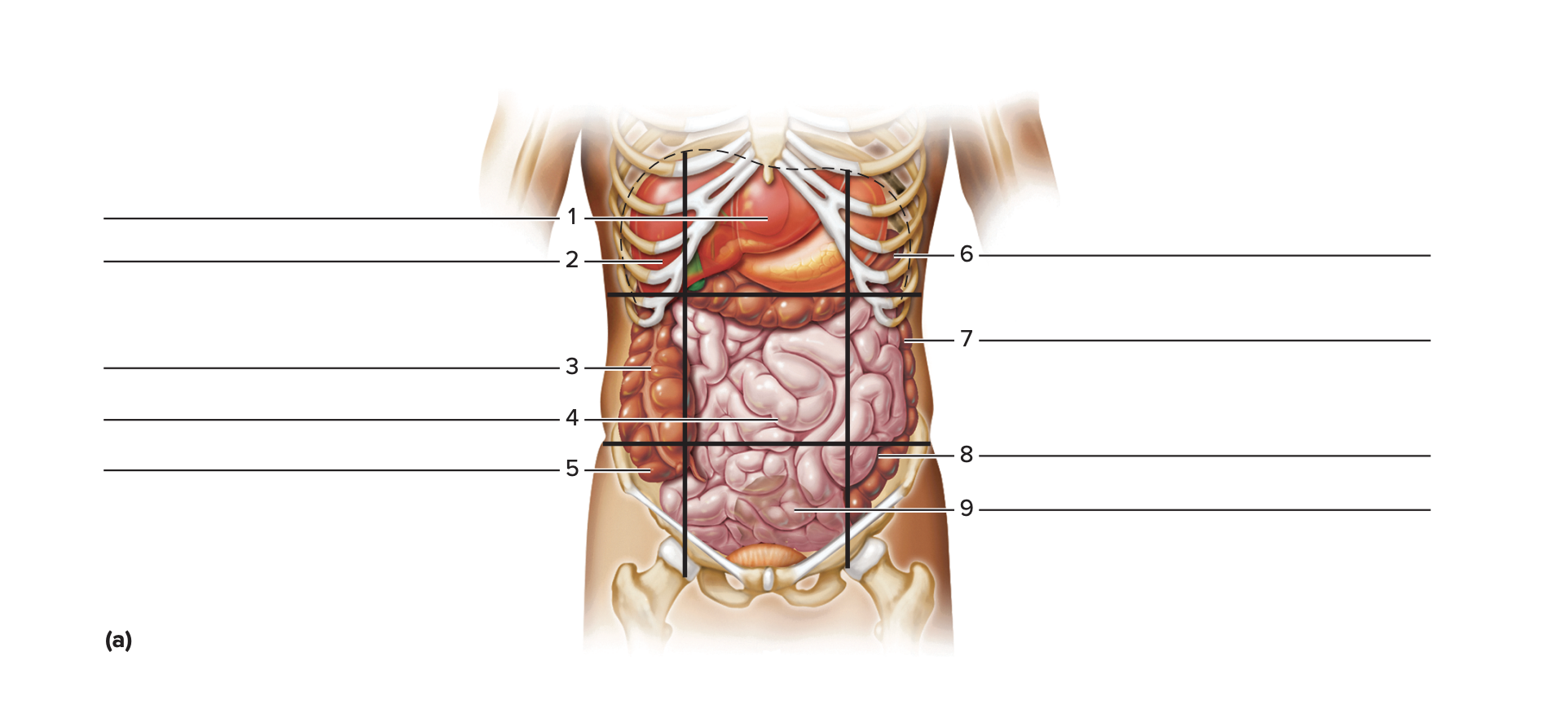
quad