History of Interior Design 2 - Exam 1
 Call Kai
 Learn
Learn Practice Test
 Spaced Repetition
 Match
Match Flashcards
 Knowt Play
1/55

There's no tags or description
Looks like no tags are added yet.
Name | Mastery | Learn | Test | Matching | Spaced | Call with Kai | Chat |
|---|
No analytics yet
Send a link to your students to track their progress
56 Terms

Wampanoag/ Algonquian
Basket donated to the Rhode Island Historical Society in 1842. Women took on the role of designers and manufacturers. Beginnings of factory lines

Slipware Dish
Samuel Malkin, beginnings of designers as potters sign their work (pride and ownership)

Crystal Palace
Joseph Paxton, 1851. Furniture exhibition, modern-day shopping mall. Epitome of mass production, glass and steel, held expositions, hot, humid, noisy
Territorial Transformations
No more city walls meant it was easier to expand, garden suburbs were introduced
Technological Transformations
Steam engines, railways, bridges
Gottfried Semper
Against cheap imitations of other materials, skeptical of recent advancements like industrialization and mass production
John Ruskin
Disapproves of mass production, wants to go back to earthly ways (Gothic), no material imitations, no layering motifs, no mass produced furniture
Gesamptkunstwerk
The total work of art
William Morris’s theoretical position on modernism
Wanted to bring artistry back to the world of design

The Red House, Bexley Heath
Looks back to English country architecture, no formal hierarchy, brings inside and outside together, simple ornamentation, Gothic-inspired arches and spires, built in furniture


The Orchards in Chorleywood, C.F.A Voysey
Imitates an English country house, connects the interior and exterior, white ceilings brighten the room, uses nature rather than technology, vertical slatting on stairs, simple, and expresses verticality

Gamble House, Greene and Greene, California
Tried to use vernacular styles and built for the environment, luxury comes through details (shingles), terraces connect rooms to the landscape, simplicity and decoration, form follows function

Baillie Scott, House of an Art Lover
Honesty of structure, celebrates nature, emphasis on verticality, gothic arches

Stickley Reclining Chair
Visible joints, oak wood, simple leather cushion, craftsman style

Peacock Room, James McNeill Whistler, 1923
Total work of art, rich tones, gilded shelving, designed to match a painting, feather motif ceiling


Cragside, Northumberland, Richard Norman Shaw
First building to be lit by hydro-electric power, stained glass windows, angle nook
Havanna Tobacco Shop, Henry Van de Velde, Berlin
Doesn’t fit a rigid grid, art is an expression of joy of the worker, whiplash curves


Hotel van Eetvelde and Hotel de Tassle, Victor Horta
Organized around the staircase, detailed ironwork mixes with glasswork

L’Art Nouveau Pavilion 1900
New femininity to design, available to everyone, soothing, soft, slender, enveloping interior retreat

Glasgow School of Art
Looking for symbolic expression, influenced by arts and crafts, gothic, emphasized craft, stone exterior

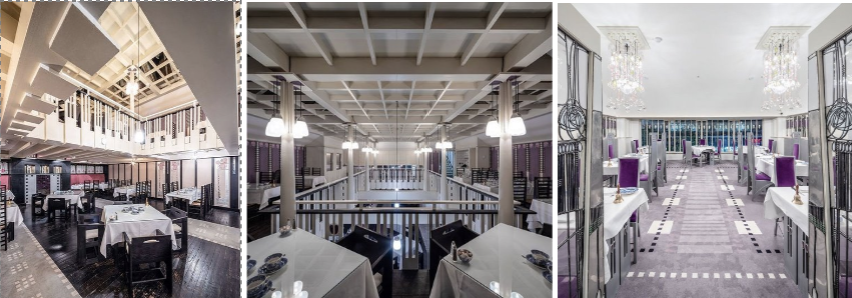
Willow Tea Rooms
Social mixing space, bright, white, clean compared to dirty, smoky, loud street, high backed chairs, mirrors

Hill House for W.W. Blackie, Charles Reinne Mackintosh
Moved in with the family to observe, flat, geometric surfaces, idiosyncratic windows, genkan entrance, Japanese zen-inspired, gothic bed, windows respond to interior context


Vienna Secession Building, Josef Olbrich, Vienna, Austria
Breaks away from the academy, wants to merge arts and design, gold leaf ball floats above planar mass (possible by art), dedicates a gallery to Beethoven, Gustave Klimt frieze, artistic struggle, symbolic imagery
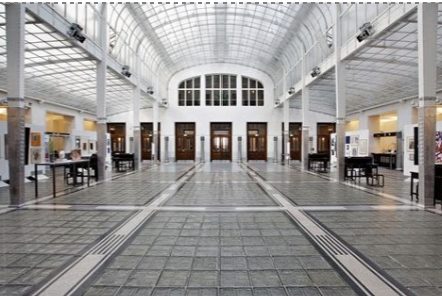
Postal Savings Bank Building, Otto Wagner, Vienna, Austria
Stone cladding shows rivets, exposed thickness of the facade, expresses differences between the inner kernel and the outer shell, and concedes to aesthetics

Villa Wagner, Otto Wagner, Vienna, Austria
Simple, rectilinear volume, both austere and elegantly proportioned, influenced by pupils
Elsie De Wolfe, The House in Good Taste
Her identity becomes her product, designs for women and femininity

Colony Club, Elsie De Wolfe, New York
Adult sorority club, first commercial project for an interior decorator, slender furniture, feels like a conservatory or in the country

Villa Trianon, Elsie de Wolfe, France
Dissolves interior and exterior

All White Room, Syrie Maugham
Folded mirror screen, different tones of beige, white and cream, sells individual pieces like fashion market

Rose Cummings
Caters to the rick and the famous, immersive environments, acidic, metallic colors
American Bar, Adolf Loos, Vienna, Austria
Coffered ceiling, frieze covered in mirrors, booths never show reflections of people - only the space

Villa Moller, Adolf Loos, Vienna, Austria
Small motif, no ornament, austere approach to interior - no molding or cornice, dark materials, symmetrical facade, complex floor plan - promotes interconnectivity
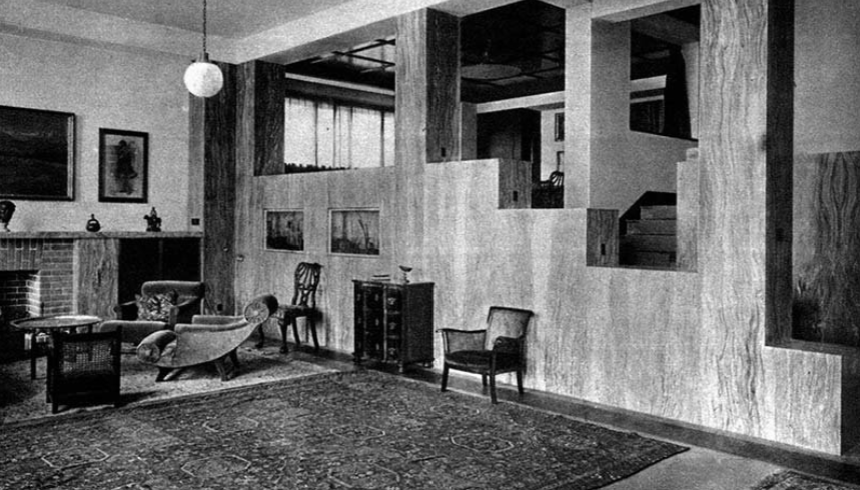
Villa Muller, Adolf Loos, Prague, Czech Republic
Abstract, volumetric exterior, thick interior, walls, rich color palette, antique furniture
Examples of German Expressionism
Berlin Grosses Schauspielhaus, Glass Pavilion (Bruno Taut), Einstein Observatory

Chicago Auditorium Building, Louis Sullivan, Chicago, Illinois
Arches hide mechanical systems, have acoustical properties and are beautiful
Ornamental vocabulary of Louis Sullivan
Form follows function, buildings are living creatures, follow the laws of nature, creative power comes from the individual aspects of the designer rather than classical styles

Sullivan Skyscraper (Wainwright Building)
Fully adorned, has to show that it is tall, tall column expressed on the facade, translated an idea from the past to create historical credibility, emphasizes the vertical lines.
The Arts and Crafts of the Machine, Frank Lloyd Wright, 1901
The machine should be a tool to be mastered by the artists, saw the machine as the forerunner of democracy (gave more people the ability to create)

Larkin Administration Building
Response to site, inwardly facing, open atrium, first example of climate control, exterior works around the HVAC, steel frame with brick, heated floors, women begin working in the office


Robie House, Frank Lloyd Wright, Chicago
Anchored on hearth, views direct outwards, horizontal expanse of landscape


Martin House, Frank Lloyd Wright, Buffalo
Total work of art, different ceiling heights, all oak wood


AEG Turbine Factory, Peter Behrens, Berlin
Accepts industry as the future of Germany, looks to classical for inspiration, no ornament, corner site, single story, tall, exposed column connection details, corners look structural (are not), subtle celebration of steel on windows, invokes vernacular countryside (barn roof) and celebrates industrialization


Fagus Factory, Walter Gropius, Alfeld
Glass corner, flat roof, expressed and recessed columns - play of volume, no ornament on interior

Deutsche Werkbund Exhibition, Cologne
Model Factory by Gropius & Meyer, Glass Pavilion by Bruno Taut, Werkbund Theatre, Austrian Building

Bauhaus, Walter Gropius, Dessau
Formed after World War 1 where all design had turned into tools of destruction, looking for spiritual foundation to uplift them and to bring back pre-industrial ideas

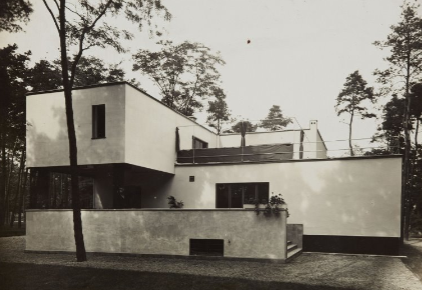
Bauhaus Master’s Houses, built by the residents
Combined of cubes, modern amenities (hot running water, heating, modern kitchen equipment, and the sequence of rooms planned according to function
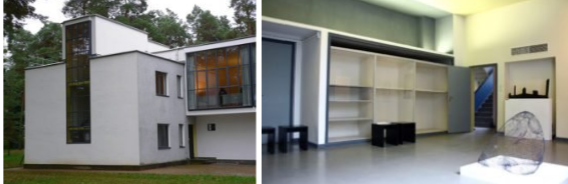

Experimental House (Haus Am Horn), Georg Muche, Weimar
Steel and concrete construction, simple cubic design, custom kitchen storage (inspired the Frankfurt kitchen), embodied Bauhaus principles


Frankfurt Kitchen, Grete Schutte-Lihotzky
Featured built in furniture, counters, cabinets, was able to be mass produced, mapped out steps needed to cook to maximize efficiency, no longer a social kitchen, aluminum rice and lentil drawers, overly descriptive and imposes a solution (bad), custom - not standard sizes
Bar Sous Le Toit & Perriand Dining Room
Designed metal curving banquet, card table, steel barstools, (uses reflective materials before men). Studies ergonomics; luxurious, economical, uses William Morris’ ideals

Cite Contemporaine, Le Corbusier
Attempt to plan The City of Tomorrow. Buildings raised on columns; no public vs. private, everything planned, no spontaneity, no fronts or backs; pedestrian movement at ground level is unobstructed
The Five Points of Architecture, Le Courbusier
Columns lift buildings off the ground to leave room for parking or gardens
Roof gardens should be used on buildings with flat roofs
Free Plan because columns can support the ceiling so walls don’t need to match from floor to floor
Ribbon windows to bathe the room in sunlight
Free facade means that the front of the building can be designed openly with glass without being structural
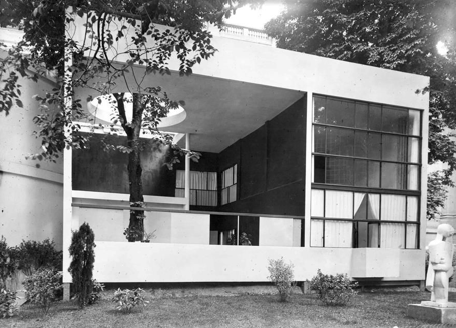
Pavilion d’Espirit Nouveau
Model house at Paris Exposition, free plan configuration, built-in furniture & mass-produced furniture, deliberately sparse, double height inside and out to create a spaciousness in a small site and allows for light to enter more deeply into the unit

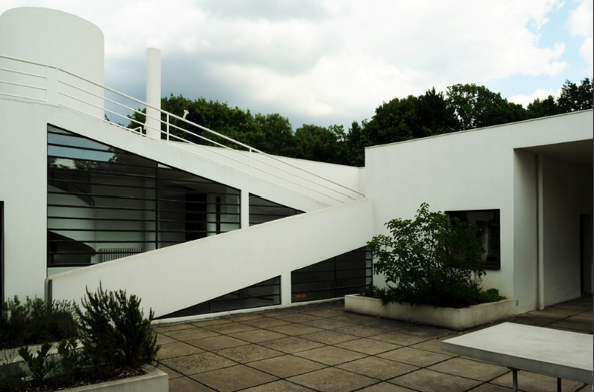
Villa Savoye, Le Courbusier
Corner kitchen, ribbon windows, dynamic route links spaces through ramps and stairs and ends in a framed view of the landscape beyond


Maison Domino
Pure expression of concrete uses in construction, domino construction, self referential, echoes classical form

E1027, Eileen Gray
To be experienced, not admired, windows oriented to sunrise, circulate slowly, living/bedroom combined, control light and air separately, Le Corbusier moves in uninvited, sense and experiences > mass production


Serpent Chair
Wood backing and arms looks like serpents