L5 - Accessory Organs
 Call Kai
 Learn
 Practice Test
 Spaced Repetition
 Match
 Flashcards
 Knowt Play
1/66

There's no tags or description
Looks like no tags are added yet.
67 Terms
Most absorption is done where in the GI tract
Small intestine
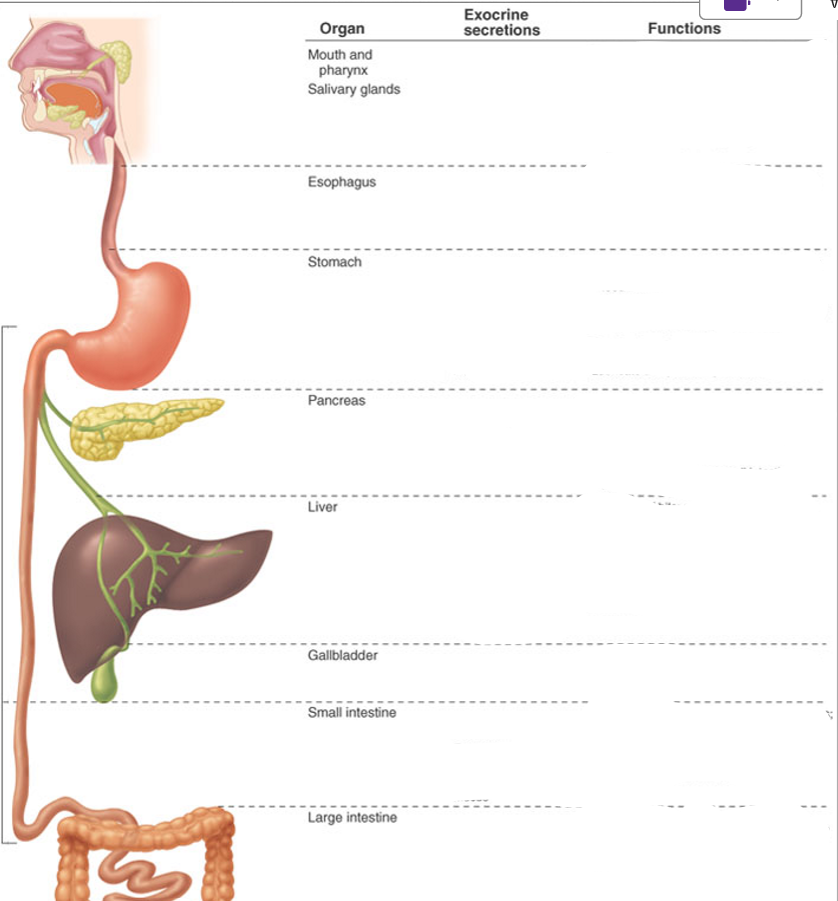
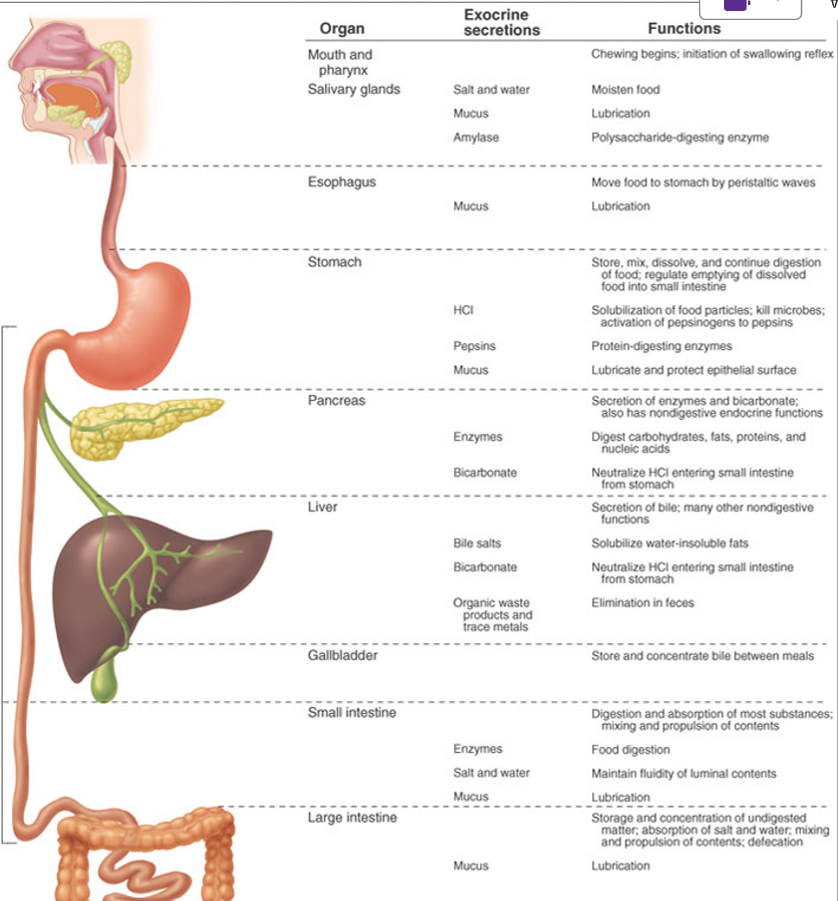
Chyme moves into small intestine how long after entering stomach
Chyme moves into small intestine 0-3 hr after entering stomach
How long does it take for chyme to move through the small intestine
Takes 1-6 hr for chyme to move through small intestine
Length of small intestine
6m
Function of small intestine
Digestion of carbohydrate, fat and protein
Role of each part of the small intestine
Duodenum: Digestion & Absorption
Jejunum: Digestion & Absorption
Ileum: Absorption
Conduction rate in small intestine
1 cm/ min
What is conduction through the small intestine influenced by
Nervous system
Hormone
What nervous system influences conduction through the small intestines
ANS
What hormones influence conduction through the small intestines
Gastrin
Cholecystokinin
Secretin
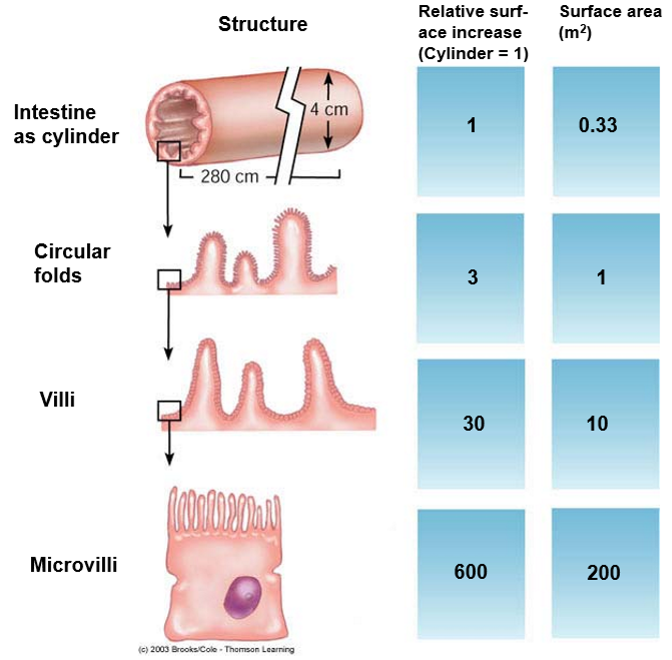
How does the surface area of the intestines change with the addition of circular folds, villi & microvilli
Surface area of intestines as a cylinder:
Surface area of intestines with circular folds:
Surface area of intestines with villi:
Surface area of intestines with microvilli:
Surface area of intestines as a cylinder: 0.33 m2
Surface area of intestines with circular folds: 1 m2
Surface area of intestines with villi: 10 m2
Surface area of intestines with microvilli: 200 m2
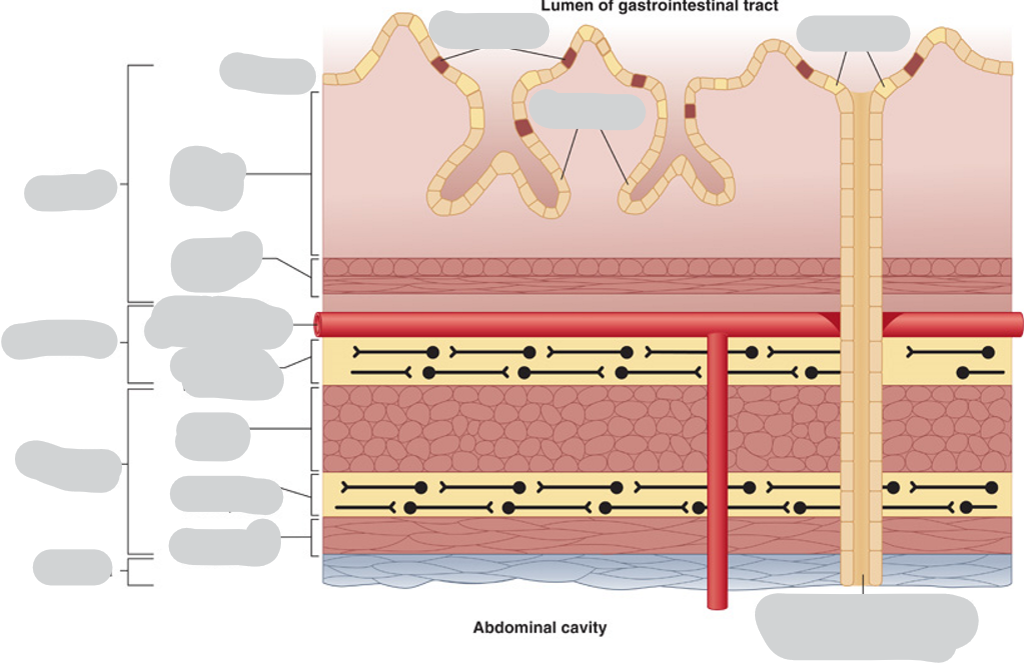
Explain the structure of the gut wall
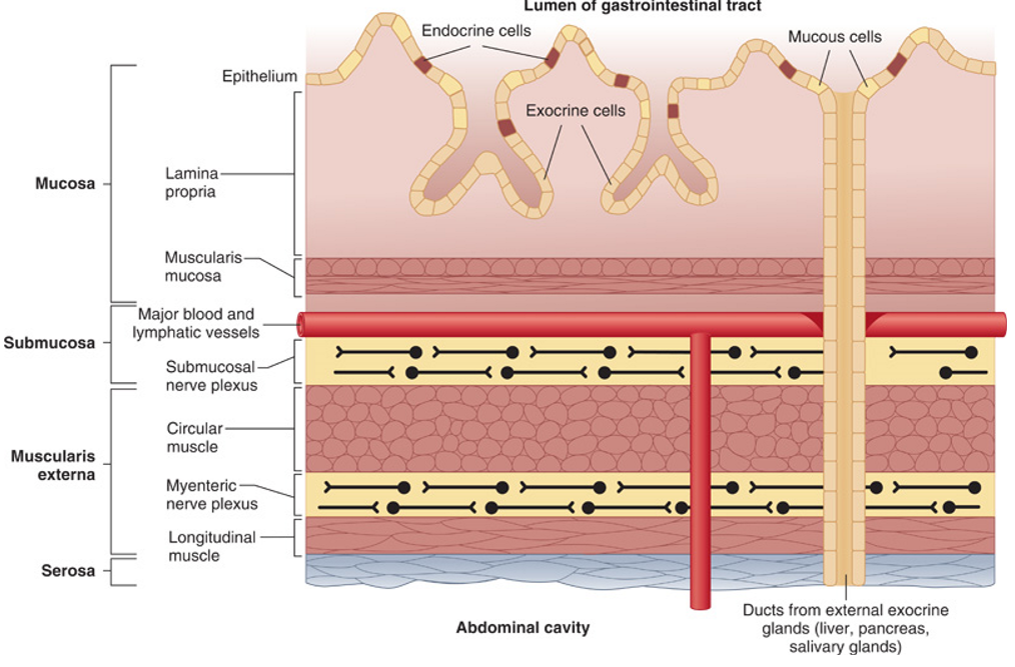
Role of microvilli
The form the brush border on villi to further increase surface area
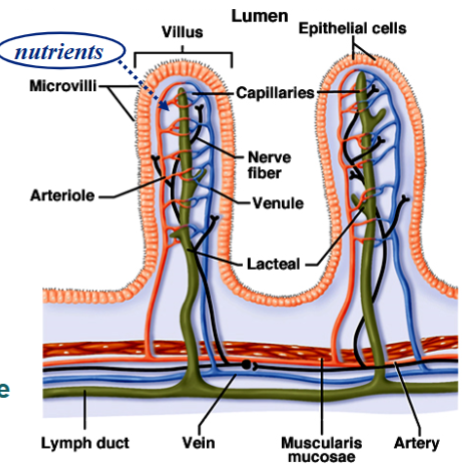
Villi & microvilli increase the surface area of the intestines by what fold
x600
What is the intestinal epithelial mucosa made up of
Absorptive cells & secretory cells
What do the secretory cells of the intestinal epithelial mucosa secrete
Enzymes, hormones, fluid, mucus
Is digestion in the small intestine affected b the pancreas
Yes - Digestion in the small intestine is aided by enzymes and fluid secreted by the pancreas
There are 3 different secretions that come from 3 different types of cells in the pancreas. What are the cells & their secretions
Endocrine cells secrete hormones (e.g. Insulin, glucagon, somatostatin)
Exocrine cells secrete enzymes
Duct cells secrete bicarbonate
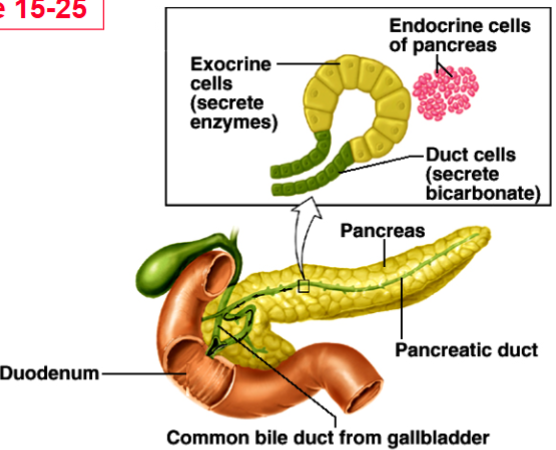
Digestive secretions from the liver and the pancreas are delivered into the duodenum of the small intestine through what sphincter
sphincter of Oddi
In the pancreas, there are 2 main exocrine cells. Name them
Acini
Ducts
Role of acini
Secrete enzymes
What stimulates acini
CCK (Cholecystokinin) and ACh (Acetylcholine)
Role of ducts in the pancreas
Secrete bicarbonate
What stimulates ducts in the pancreas
Secretin stimulates ducts
What is pancreatitis
Inflammation of the pancreas
Pancreatitis can lead to what
Autodigestion of the pancreas
How does the pancreas protect itself from autodigestion
It secretes kazal to protect itself
(Kazal is an inhibitor)
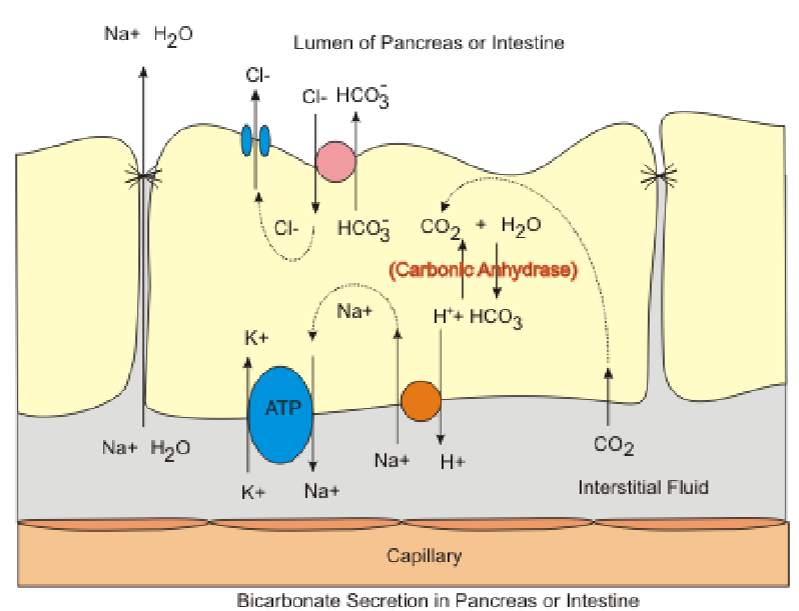
Explain how bicarbonate is formed and secreted into the lumen of the pancreas/intestines
CO₂ from the interstitial fluid diffuses into the epithelial cell.
Carbonic anhydrase catalyzes the reaction combining H2O & CO2 to make HCO3 & H+
HCO₃⁻ is transported into the lumen via a Cl⁻/HCO₃⁻ exchanger, where Cl⁻ moves in the opposite direction.
This allows bicarbonate-rich pancreatic secretions to neutralize stomach acid in the duodenum.
H⁺ is removed via the Na⁺/H⁺ exchanger (antiporter), ensuring pH balance.
Na⁺ moves paracellularly (between cells) to maintain electroneutrality. The Na⁺/K⁺ ATPase pump maintains low intracellular Na⁺, enabling Na⁺-dependent transport processes.
What is the main component secreted by the pancreas into intestinal fluid?
The pancreas secretes a NaHCO₃ (sodium bicarbonate) solution.
What is the role of the Cl⁻/HCO₃⁻ antiport co-transporter in pancreatic fluid secretion?
The Cl⁻/HCO₃⁻ antiport co-transporter on the apical membrane of pancreatic cells exchanges chloride ions for bicarbonate ions, allowing bicarbonate (HCO₃⁻) to enter the pancreatic duct.
How does sodium (Na⁺) get secreted into the intestinal fluid from pancreatic cells?
Sodium (Na⁺) is secreted through the cell junctions of pancreatic cells
Which organ, besides the pancreas, also secretes NaHCO₃?
Liver (in bile)
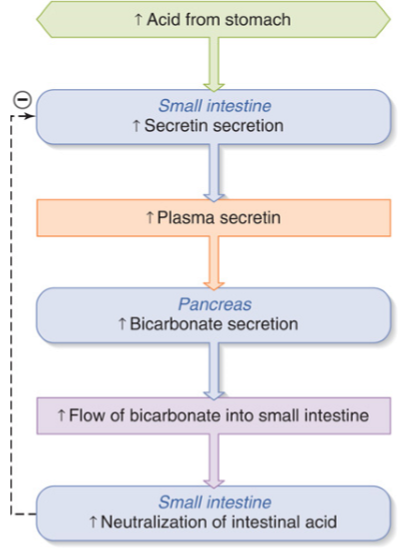
How is bicarbonate production of the pancreas regulated by the intestines
Secretin stimulates ducts in the pancreas to secrete bicarbonate
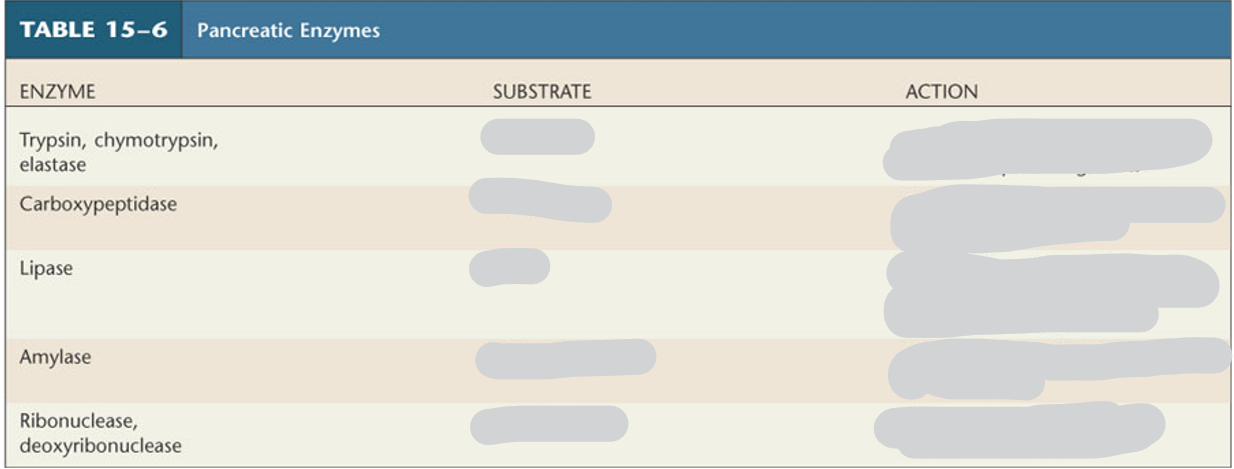
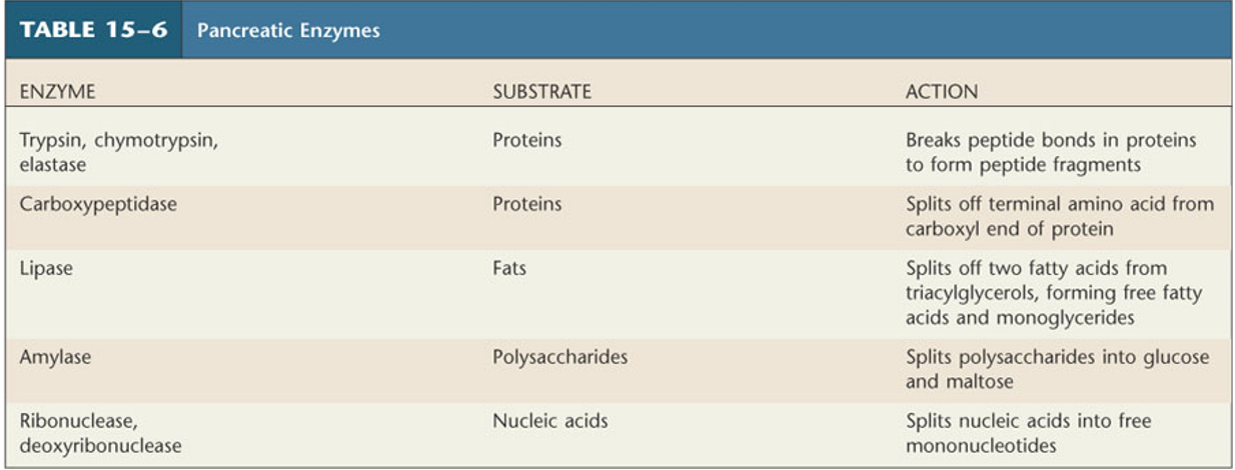
Name some pancreatic enzymes
Trypsin
Carboxypeptidase
Lipase
Amylase
Ribonuclease
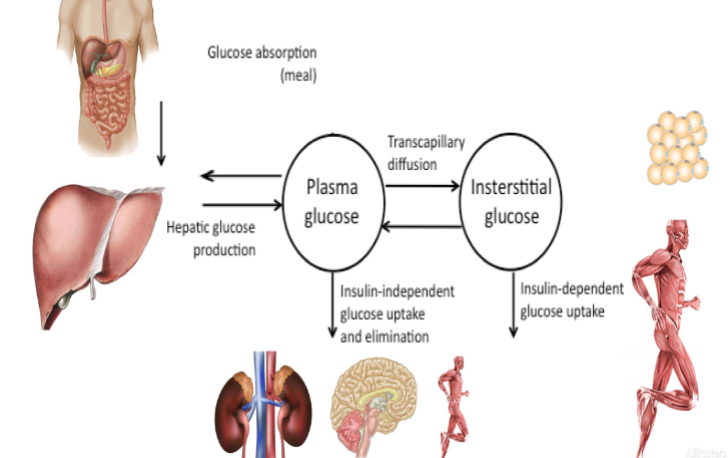
The whole body typically uses ___g of carbohydrates per day
The body typically uses 250g of carbohydrates per day
The brain typically uses ___g of carbohydrates per day
The brain typically uses 125g of carbohydrates per day
Average daily carb intake
250g/day
What are the two main sources of plasma glucose
Glucose absorption from meals and hepatic glucose production
What process allows glucose to move between plasma and interstitial compartments
Transcapillary diffusion
Is glucose uptake dependent on insulin
It can be
There are 2 types of glucose uptake - insulin dependent & insulin independent
What tissue types predominantly rely on insulin-dependent glucose uptake
Muscle and adipose (fat) tissue
Which organ is responsible for producing glucose in the absence of dietary intake
The liver (hepatic glucose production)
What are the two major glucose compartments in the body
Plasma glucose and interstitial glucose
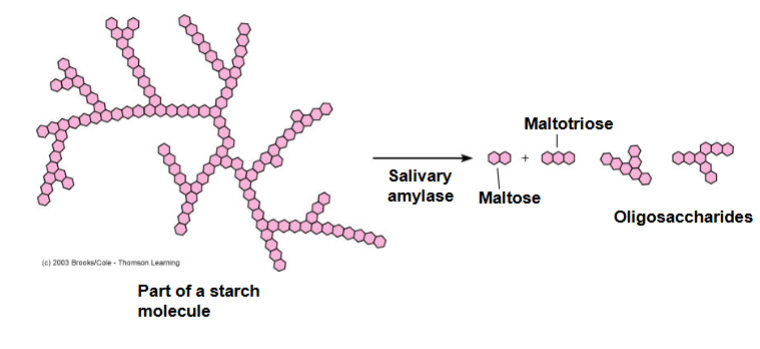
Starch is broken down to what in the mouth (& by what)
Name a monosaccharide with 3 carbons (triose)
Glyceraldehyde
Name a monosaccharide with 4 carbons (tetrose)
Erythrose
Name a monosaccharide with 5 carbons (pentose)
Ribose
Name a monosaccharide with 6 carbons (hexose)
fructose
Glucose can exist in 2 forms - what are they
Straight chain & ring form
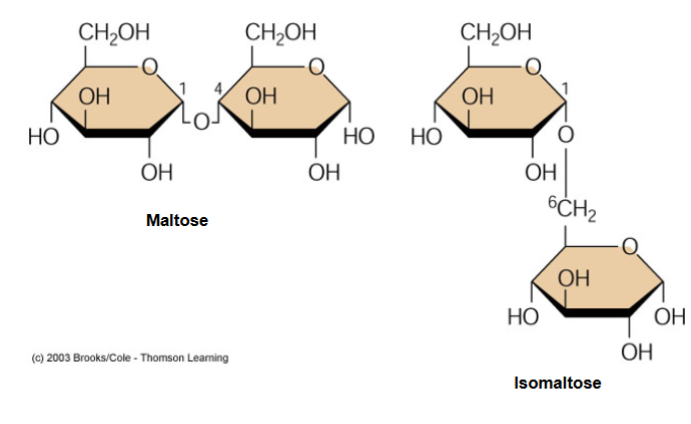
Maltose & isomaltose are both formed by 2 glucose molecules linked around an O in a glycosidic bond. How do they differ
Maltose: 2 glucose molecules linked by an α(1→4) glycosidic bond
Isomaltose: 2 glucose molecules but linked by an α(1→6) glycosidic bond
Where does carbohydrate absorption take place in the body
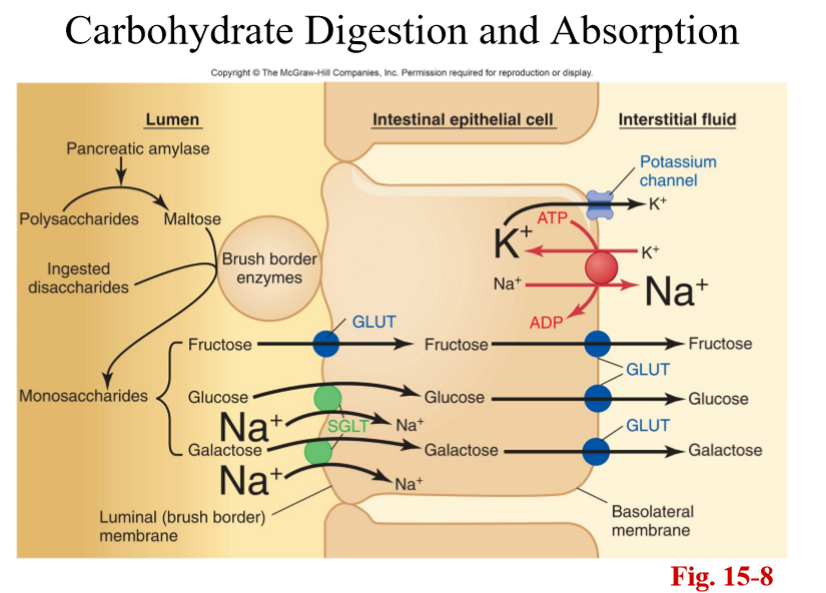
In the small intestine, specifically through intestinal absorptive cells (enterocytes)
Main mechanism for glucose absorption
Na⁺ moves down its concentration gradient, driving glucose (or galactose) into the cell.
Uses energy indirectly from the Na⁺/K⁺ ATPase pump, which maintains low intracellular Na⁺ levels.
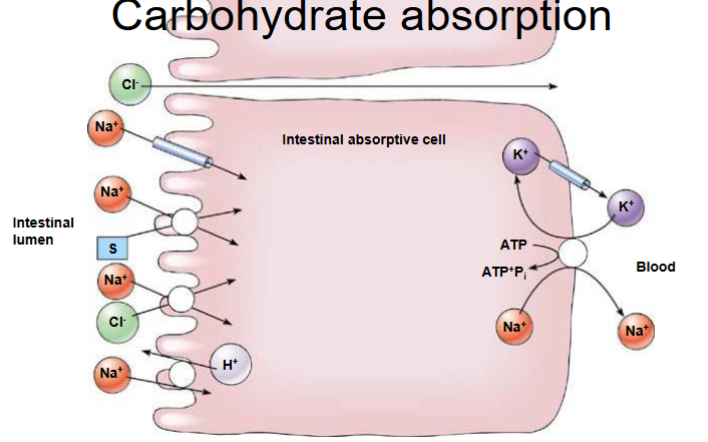
Is the fact that glucose, galactose & fructose are all polar molecules a help or a challenge in carb absorption
A challenge
what is SGLT1
SGLT1 (Sodium-Glucose Linked Transporter 1) is a protein found primarily in the small intestine and kidney. In the small intestine, SGLT1 actively transports glucose and sodium ions across the intestinal epithelial cells
The function of SGLT1 is dependent on what
dependent on the gradient of sodium
At low glucose concentrations, glucose absorption is primarily driven by
At high glucose concentrations, glucose absorption is primarily driven by
At low glucose concentrations, glucose absorption is primarily driven by SGLT1
At high glucose concentrations, glucose absorption is primarily driven by GLUT2
(GLUT2 is found in the liver - lots of glucose there!)
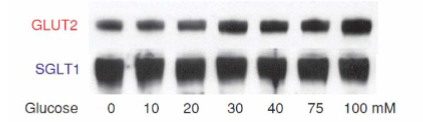
what does this show
GLUT2 expression increases with higher glucose concentrations, indicating that its role in glucose absorption becomes more significant at high glucose levels.
SGLT1 expression appears relatively constant across different glucose concentrations, suggesting it is always present at a basal level.
Where is glucose concentration highest in the digestive tract after meals?
The stomach and proximal small intestine have the highest glucose concentrations after meals.
GLUT2 is not always present at the brush-border membrane. When is it at the brush border membrane
when glucose levels are high
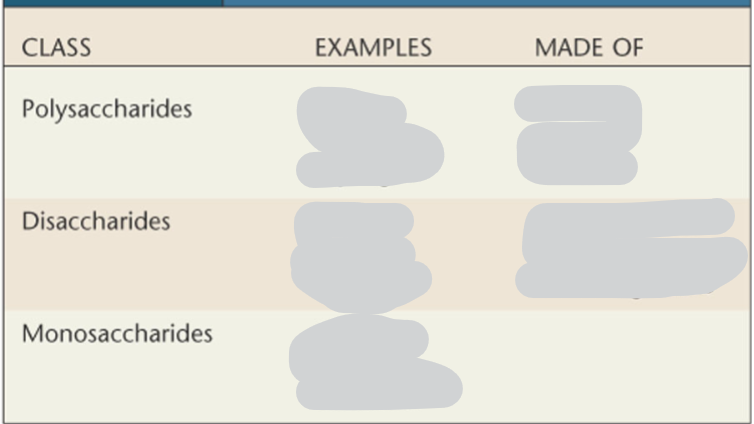
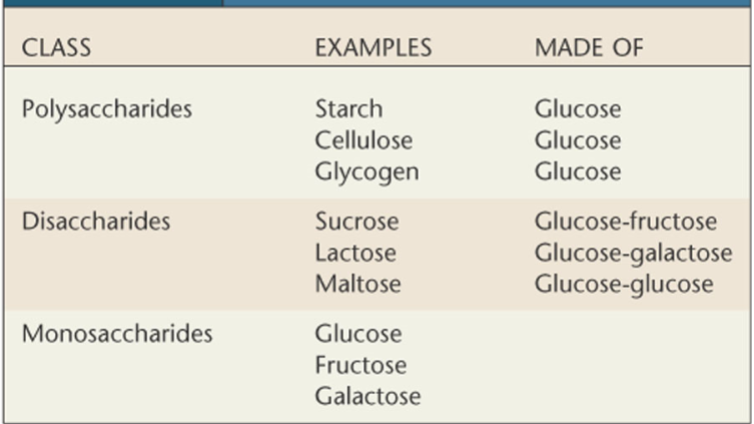
Most carbohydrates in the diet are consumed as mono/di/polysaccharides
disaccharides or polysaccharides:
– Sucrose
– Lactose
– Maltose
– Starch
– Glycogen
– Cellulose
Can mono/di/polysaccharides all be absorbed by the intestinal cells for use in the body
No. Only monosaccharides are absorbed by the intestinal cells for use in the body.
(Disaccharides and polysaccharides must be digested to monosaccharides before they can be absorbed)
Summary of carb digestion & absorption
Effect of GLP-1 on gastric emptying
GLP-1 (Glucagon-Like Peptide-1) delays gastric emptying.
is maltose or isomaltose more common
Maltose