Cell Bio Exam 2
 Call Kai
 Learn
 Practice Test
 Spaced Repetition
 Match
 Flashcards
 Knowt Play
1/315

Earn XP
Description and Tags
HELP
Name | Mastery | Learn | Test | Matching | Spaced | Call with Kai | Chat |
|---|
No analytics yet
Send a link to your students to track their progress
316 Terms
DNA
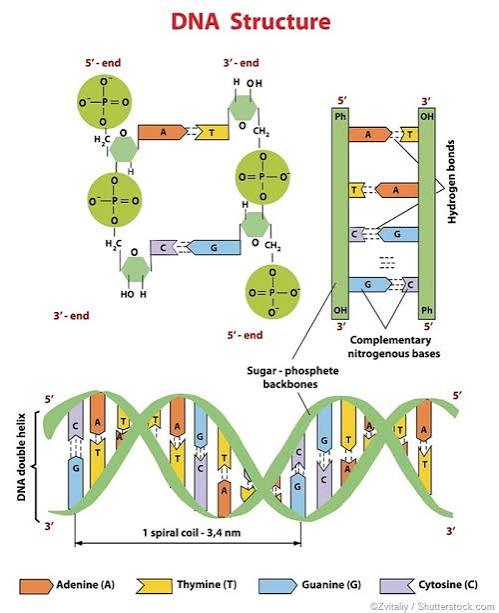
Deoxyribonucleic acid, a double-stranded polynucleotide that stores hereditary information in the sequence of its nucleotides. Its information is transmitted between generations and provides instructions for producing proteins and functional RNA molecules.
Gene
A segment of DNA that directs the production of a particular protein or functional RNA molecule. Genes are units of heredity that contribute to an organism’s characteristics, or phenotype.

Genome
The complete set of genetic information carried by an organism or cell, including all its chromosomes and the nucleotide sequences they contain.

Gene expression
The process by which information in a gene is used to produce a functional product, either a protein or an RNA molecule. Gene expression allows cells to perform specialized functions and respond to their environments.

Nucleotide
The basic subunit of DNA and RNA, consisting of a nitrogenous base, a five-carbon sugar, and one or more phosphate groups. DNA nucleotides contain deoxyribose, while RNA nucleotides contain ribose.
Deoxyribose
The five-carbon sugar found in DNA. It differs from ribose by having one fewer oxygen atom at the 2′ carbon.

Ribose
The five-carbon sugar found in RNA. Its additional hydroxyl group at the 2′ carbon distinguishes it from deoxyribose.

Nitrogenous base
The nitrogen-containing component of a nucleotide that carries sequence information. DNA contains adenine, thymine, guanine, and cytosine; RNA contains adenine, uracil, guanine, and cytosine.

Purine
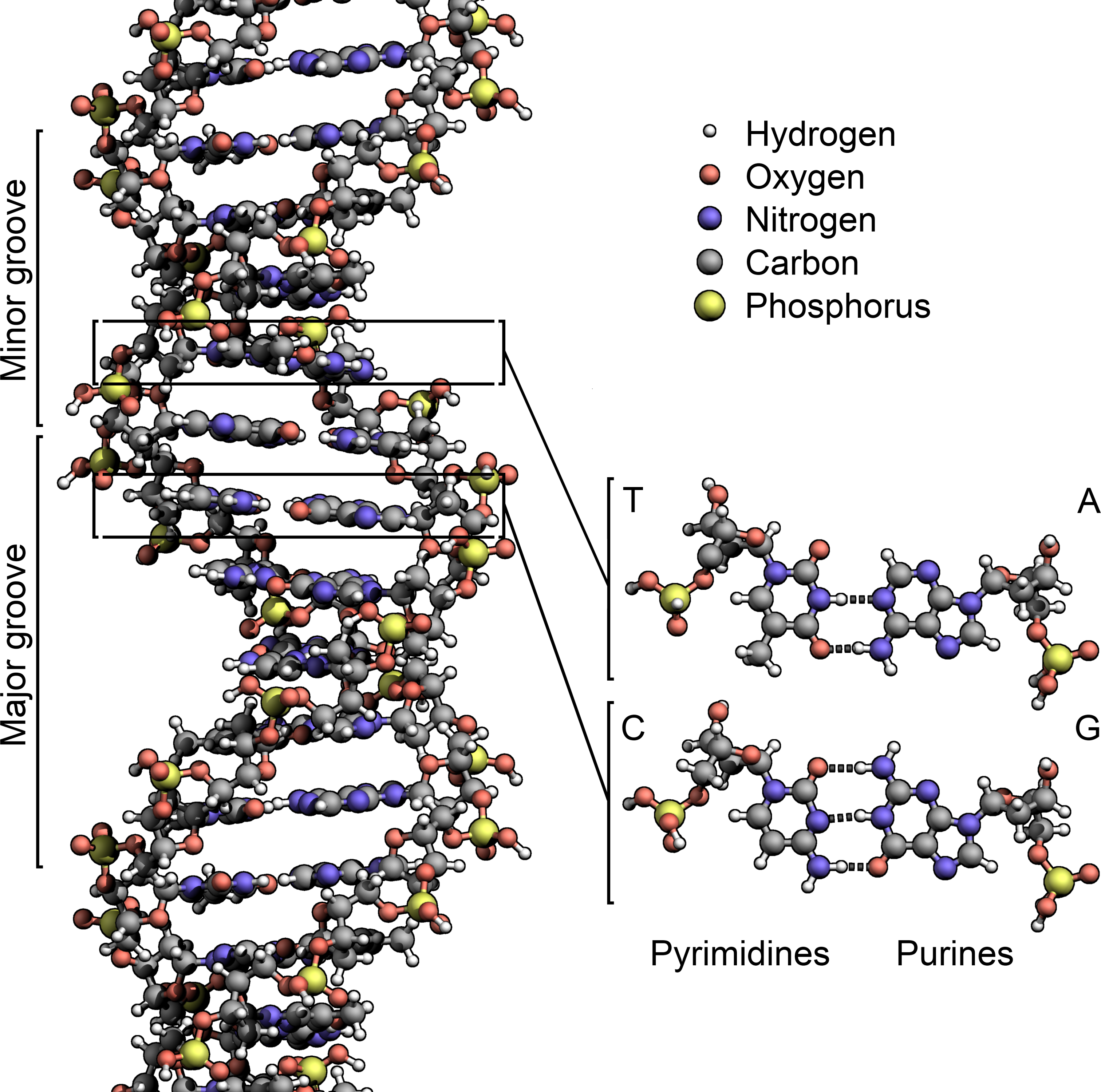
A nitrogenous base with a two-ring structure. Adenine (A) and guanine (G) are purines.

Pyrimidine
A nitrogenous base with a single-ring structure. Cytosine (C), thymine (T), and uracil (U) are pyrimidines.

Phosphodiester bond
A covalent bond connecting nucleotides in a nucleic acid backbone. It links the 3′ carbon of one sugar through a phosphate group to the 5′ carbon of the next sugar, giving the strand directionality.

Sugar-phosphate backbone
The repeating chain of sugars and phosphate groups that forms the structural outer portion of a DNA or RNA strand. The phosphate groups contribute negative charge.

5′ end and 3′ end
The two chemically distinct ends of a nucleic acid strand. The 5′ end corresponds to the sugar’s fifth carbon and commonly has a phosphate group; the 3′ end has a hydroxyl group. These ends determine strand direction.

Double helix
The characteristic DNA structure in which two complementary, antiparallel polynucleotide strands wind around each other. Their bases pair on the inside while the sugar-phosphate backbones face outward.

Antiparallel strands
Two DNA strands oriented in opposite directions

Complementary base pairing
Specific hydrogen bonding between bases
Base pair
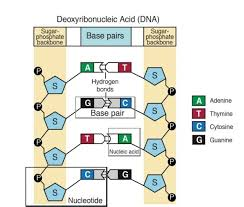
Two complementary nitrogenous bases on opposite strands of a nucleic acid, held together by hydrogen bonds. A–T pairs form two hydrogen bonds, whereas G–C pairs form three.

Hydrogen bond
A relatively weak, noncovalent attraction that helps hold complementary DNA bases together. Many hydrogen bonds collectively stabilize the double helix, while still allowing the strands to separate during replication and transcription.

DNA base stacking
The arrangement of adjacent bases approximately perpendicular to the DNA helix axis. Interactions between stacked bases help stabilize the double helix.

DNA dimensions
B-form DNA is approximately 2 nm in diameter, has about 10 base pairs per turn, extends approximately 3.4 nm per turn, and advances about 0.34 nm per base pair.

DNA sequence information
Genetic information is encoded by the order of the four nucleotide bases. A sequence of (N) nucleotides can theoretically have (4^N) possible arrangements.

Protein structure and function
A protein’s amino-acid sequence determines how it folds into a three-dimensional structure, and that structure strongly influences its function. Proteins provide structural support, catalyze reactions, regulate gene activity, enable movement, and support communication.

Genetic code
The set of rules that connects nucleotide triplets in mRNA with amino acids or translation start and stop signals. It allows nucleotide-sequence information to specify a protein’s amino-acid sequence.

Chromosome
A long DNA molecule associated with proteins that carries genes and other genetic sequences. Eukaryotic chromosomes are linear and become highly condensed during cell division; many bacteria carry their main chromosome as a circular DNA molecule.

Chromatin
The complex of DNA and associated proteins that makes up eukaryotic chromosomes. Its degree of packing affects chromosome organization and the accessibility of DNA for transcription, replication, and repair.

Histones
Small, abundant, highly conserved proteins around which DNA wraps to form nucleosomes. Histones package DNA and help regulate access to genetic information.

Nonhistone chromosomal proteins
Chromosome-associated proteins other than histones. They contribute to chromosome organization, DNA replication and repair, gene regulation, and structural functions.

Karyotype
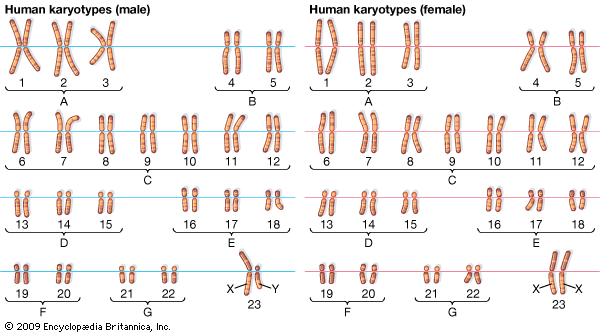
An ordered display of a cell’s complete chromosome set, usually arranged according to size, shape, and chromosome number. It is used to identify chromosome features and abnormalities.

Human genome and chromosome number
A typical human somatic cell has 46 chromosomes arranged in 23 pairs
Noncoding DNA
DNA sequences that do not encode proteins. Some have important regulatory or structural functions, while others have no established function. The older term “junk DNA” should not be taken to mean that all noncoding DNA is useless.

Interphase chromosomes
Chromosomes during the period between cell divisions. They are relatively extended and organized into distinct nuclear territories, allowing appropriate regions of DNA to be accessed for gene expression and replication.

Mitotic chromosome
A highly condensed chromosome visible during cell division. Its compact structure helps duplicated genetic material separate accurately.

Chromatid
One of the DNA-containing halves of a duplicated chromosome. Before sister chromatids separate, each contains one double-stranded DNA molecule; after separation, each is considered an individual chromosome.

Centromere
A specialized chromosome region where the kinetochore forms and spindle attachment occurs. It helps ensure that duplicated chromosomes are separated properly during cell division.

Cell cycle
The ordered series of events through which a cell grows, duplicates its DNA and other contents, and divides into two daughter cells. DNA replication occurs before chromosome segregation.

Interphase
The portion of the cell cycle during which the cell grows, performs normal functions, expresses genes, and replicates its DNA in preparation for division.

M phase
The cell-cycle phase that includes mitosis and usually cytokinesis. Chromosomes condense, the spindle separates chromosome sets, and the cell divides.

Mitotic spindle
A structure made primarily of microtubules that attaches to chromosomes and moves them toward opposite ends of the dividing cell.

Nucleolus
A prominent structure inside the nucleus where ribosomal RNA is transcribed and ribosomal subunits are assembled.

Replication origin
A specific DNA sequence or region where DNA replication begins. Initiator proteins bind there and help open the DNA to assemble replication machinery.

Telomere
A repetitive DNA sequence and associated protein structure that caps the end of a linear chromosome, protects it from inappropriate damage responses, and helps counteract chromosome shortening during replication.

Centromere versus telomere
A centromere supports chromosome segregation during cell division, whereas telomeres protect the ends of linear chromosomes and help address the end-replication problem.

Griffith’s transformation experiment
Frederick Griffith studied disease-causing and harmless strains of Streptococcus pneumoniae. Heat-killed pathogenic bacteria did not kill mice, and live harmless bacteria also did not kill mice. However, combining heat-killed pathogenic bacteria with live harmless bacteria killed mice and yielded live pathogenic bacteria. He concluded that a heritable “transforming principle” passed from the dead pathogenic bacteria to the harmless bacteria.

Avery–MacLeod–McCarty experiment
Oswald Avery, Colin MacLeod, and Maclyn McCarty investigated Griffith’s transforming principle by destroying different classes of molecules in extracts of pathogenic bacteria. Transformation continued when proteins or RNA were destroyed but stopped when DNA was destroyed. Their results showed that DNA was the transforming genetic material.

Hershey–Chase experiment
Alfred Hershey and Martha Chase used bacteriophages to test whether DNA or protein carried genetic information. They labeled DNA with radioactive phosphorus-32 and protein with radioactive sulfur-35. After infection, blending, and centrifugation, most DNA-associated radioactivity entered the bacterial cells, while most protein-associated radioactivity remained with the phage coats. This supported DNA as the genetic material.

Watson and Crick
James Watson and Francis Crick proposed the double-helical model of DNA in 1953. Their model explained how complementary base pairing could support accurate copying of genetic information.

Nucleosome
The basic structural unit of eukaryotic chromatin. Approximately 147 base pairs of DNA wrap around a core of eight histone proteins, with linker DNA connecting neighboring nucleosomes.

Histone octamer
The eight-protein core of a nucleosome, consisting of two copies each of histones H2A, H2B, H3, and H4.

Linker DNA
The stretch of DNA between neighboring nucleosome core particles. It connects nucleosomes into a chromatin chain.

Histone tails
Flexible extensions of histone proteins that protrude from the nucleosome core. Chemical modifications to these tails can alter chromatin packing and recruit regulatory proteins.

Higher-order chromatin packing
The folding and organization of nucleosomes into more compact structures, loops, and larger chromosome arrangements. This enables long DNA molecules to fit inside the nucleus.

SMC protein complexes
Structural Maintenance of Chromosomes protein complexes that use ATP-dependent mechanisms to organize, loop, or compact chromosomes. Cohesin and condensin are major examples.
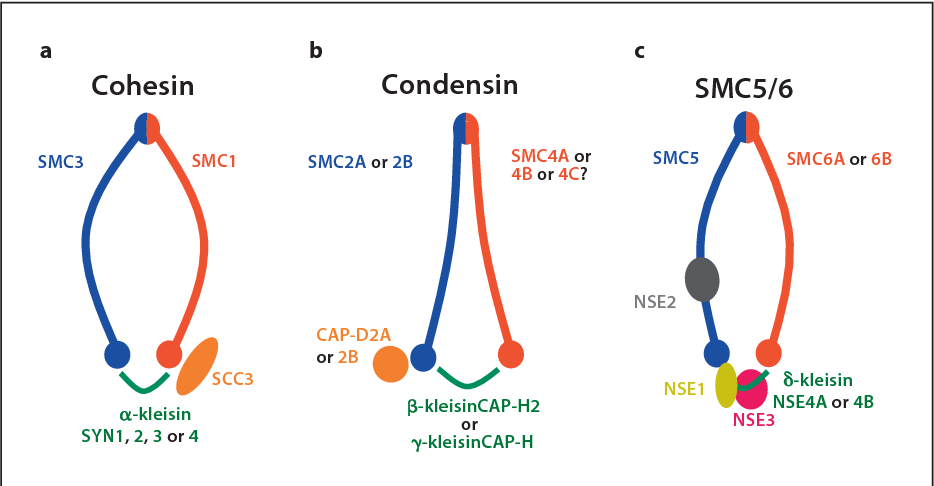
Cohesin
An SMC protein complex that helps organize interphase chromosomes into loops and holds sister chromatids together after DNA replication until their separation during cell division.
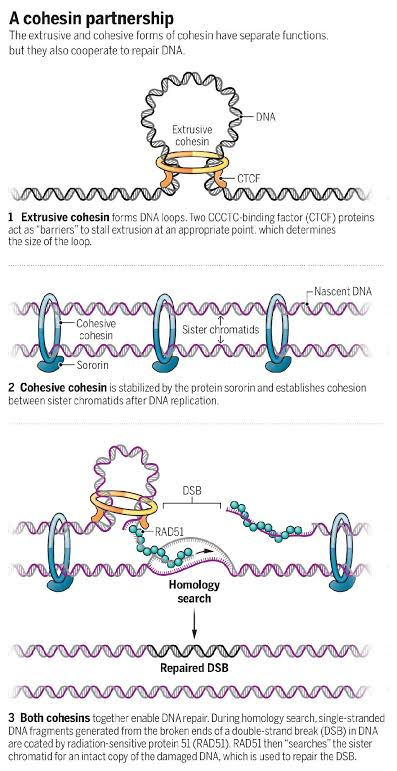
Condensin
An SMC protein complex that promotes the compaction and organization of duplicated chromosomes into loops and nested loops, helping prepare chromosomes for segregation during mitosis.
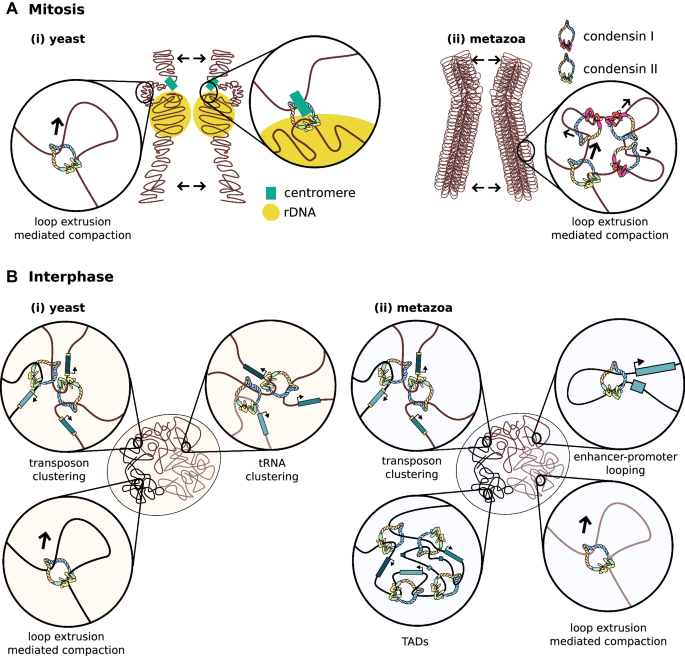
Chromatin-remodeling complexes
Usually multisubunit enzyme complexes that use ATP hydrolysis to reposition, remove, or reorganize nucleosomes. They change how accessible DNA is to transcription factors, polymerases, and other proteins.

Histone-modifying enzymes
Enzymes that add or remove chemical groups on particular histone amino-acid residues. These modifications can change chromatin interactions or provide binding sites for regulatory proteins.

Histone acetylation
The addition of acetyl groups, often to lysine residues in histone tails. It reduces lysine’s positive charge, typically weakening histone–DNA attraction and making DNA more accessible; it is commonly associated with active transcription.

Histone methylation
The addition of methyl groups to histone residues. Depending on the specific residue and degree of modification, it can be associated with either transcriptional activation or repression.
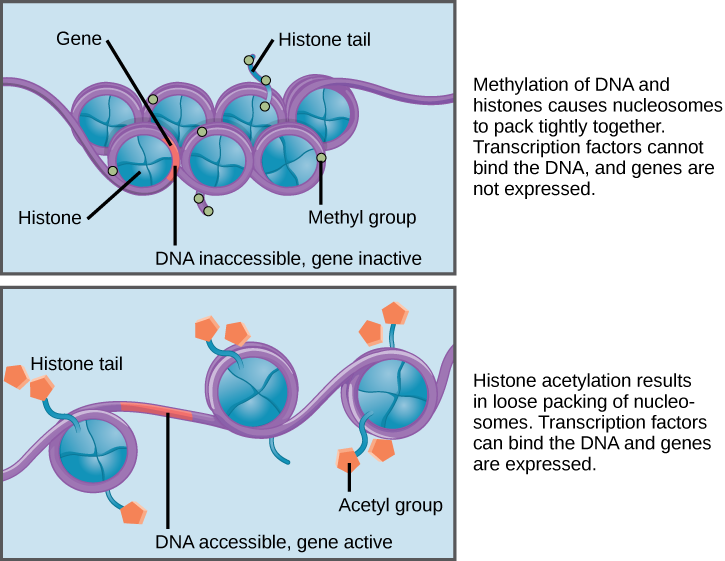
Histone phosphorylation
The addition of phosphate groups to histones. Because phosphate groups carry negative charge, phosphorylation can change interactions and recruit proteins involved in chromosome regulation.

Euchromatin
Relatively less-condensed chromatin that is generally more accessible to proteins involved in transcription. It is often enriched in actively expressed genes.

Heterochromatin
Highly condensed chromatin that is generally less accessible to transcription machinery and often transcriptionally inactive. It is commonly associated with gene silencing.

Chromatin spreading
The propagation of a repressive chromatin state from one region into neighboring regions. Histone-modifying complexes can recruit additional complexes, allowing silencing to spread until it encounters a boundary or barrier sequence.

Epigenetic inheritance
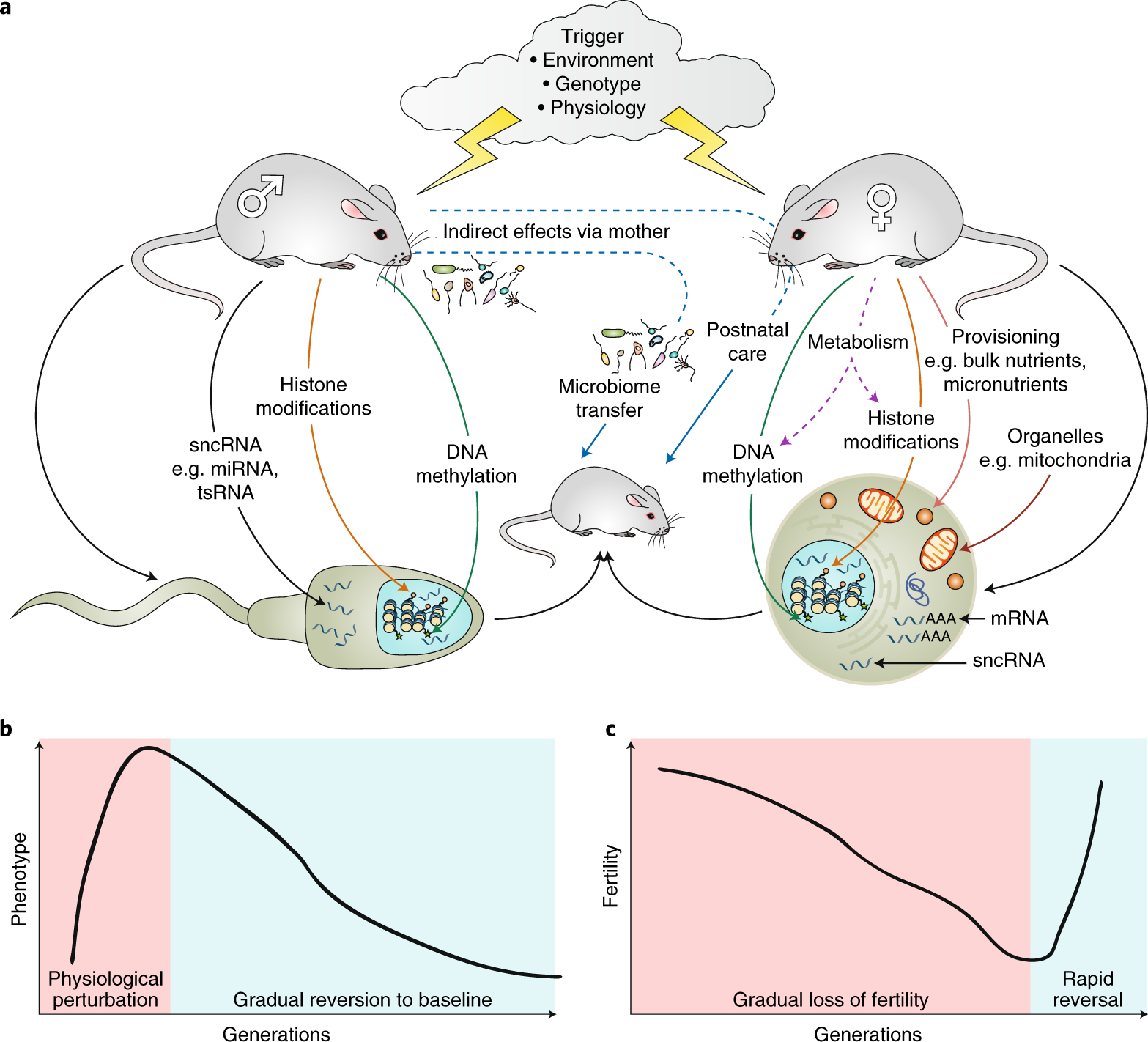
The transmission of a pattern of gene expression or chromatin state to daughter cells without changing the underlying DNA nucleotide sequence. Histone modifications and other regulatory mechanisms can help maintain these patterns.
X-chromosome inactivation
The process in which one X chromosome in each typical female mammalian somatic cell becomes largely transcriptionally inactive. It provides dosage compensation by reducing the difference in X-linked gene expression between XX and XY cells

Barr body
The highly condensed, largely inactive X chromosome visible in the nuclei of many cells of typical female mammals.

DNA replication
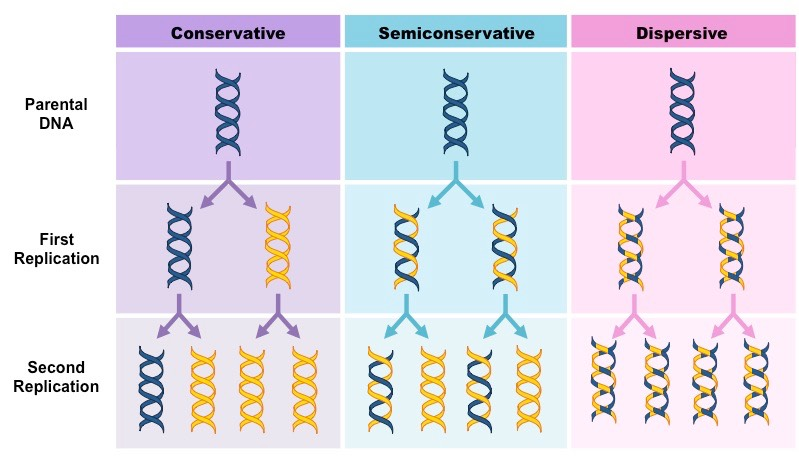
The process by which a cell makes a copy of its DNA before cell division. Each parental DNA strand serves as a template for a new complementary strand.

Semiconservative replication
A model of DNA replication in which each daughter DNA double helix contains one original parental strand and one newly synthesized strand.
Replication bubble
A locally opened region of DNA around a replication origin where DNA synthesis is occurring. Two replication forks typically move away from the origin in opposite directions.

Replication fork
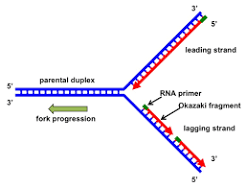
The Y-shaped junction where the DNA double helix is being unwound and new DNA strands are being synthesized.
Initiator proteins
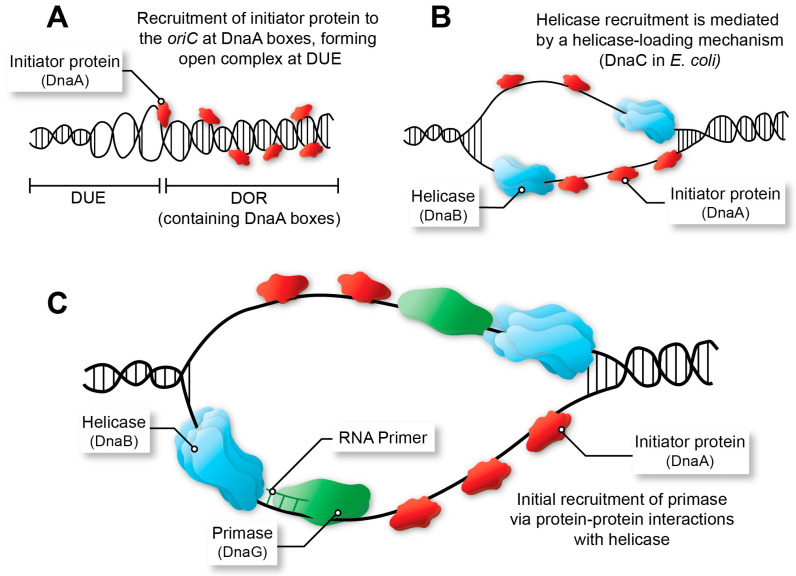
Proteins that recognize and bind replication origins, helping open the DNA and recruit the proteins needed for replication.
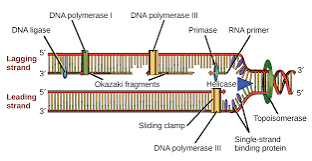
DNA polymerase 3
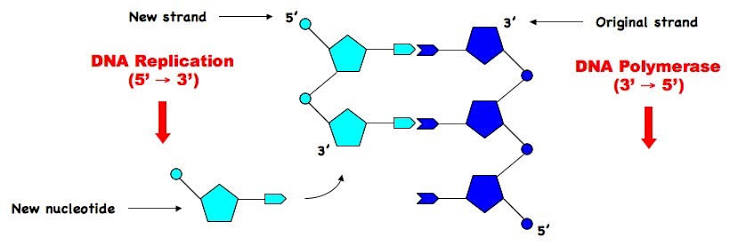
An enzyme that synthesizes DNA by adding deoxyribonucleotides to the free 3′-OH end of a growing strand, using a DNA template and nucleotide precursors. It synthesizes DNA 5′ to 3′ and normally requires a primer.

DNA Polymerase 1
A prokaryotic enzyme that mainly helps with RNA primer removal especially on the lagging strand and replacing the primers with DNA nucleotides to fill the gap between Okazaki fragments.
DNA template strand
The existing DNA strand whose sequence directs synthesis of a complementary nucleic acid strand through base pairing. Look for the TATA box to identify it.

Deoxyribonucleoside triphosphates (dNTPs)
The activated building blocks used by DNA polymerases to synthesize DNA. Their triphosphate groups supply energy for nucleotide incorporation.

5′-to-3′ DNA synthesis
The direction in which DNA polymerase extends a new DNA strand. Each new nucleotide is attached to the strand’s free 3′-OH group.
DNA polymerase proofreading
The ability of many DNA polymerases to detect and remove incorrectly incorporated nucleotides, typically using 3′-to-5′ exonuclease activity. Proofreading improves replication accuracy.

Leading strand
The new DNA strand synthesized continuously in the 5′-to-3′ direction as the replication fork advances. Its growing 3′ end points toward the fork.

Lagging strand
The new DNA strand synthesized discontinuously in short fragments because DNA polymerase can only synthesize 5′ to 3′. Its fragments are made away from the advancing fork and later joined.

Okazaki fragments
Short DNA segments synthesized on the lagging strand. Each begins from an RNA primer; after primer removal and replacement with DNA, DNA ligase joins neighboring fragments.

Primase
An RNA polymerase that synthesizes short RNA primers using DNA as a template. It can initiate synthesis without a pre-existing primer.

RNA primer
A short RNA segment base-paired to the DNA template that provides a free 3′-OH group for DNA polymerase to extend.

DNA ligase
An enzyme that seals breaks, or nicks, in the sugar-phosphate backbone by forming phosphodiester bonds. During replication it joins Okazaki fragments into a continuous strand.

DNA helicase
An enzyme that uses energy, typically from ATP hydrolysis, to unwind the DNA double helix and expose the template strands.

Single-strand DNA-binding proteins
Proteins that bind exposed single-stranded DNA during replication and related processes, protecting it and preventing the strands from reannealing prematurely.

Supercoiling
Extra twisting or strain that develops in DNA as the double helix is unwound. If not relieved, this strain interferes with replication and transcription.

Topoisomerase
An enzyme that temporarily breaks one or both DNA strands, allows DNA to rotate or pass through another DNA segment, and reseals the break. It relieves torsional strain and supercoiling.

Replication end problem
The difficulty of fully replicating the ends of linear chromosomes. After the terminal RNA primer on the lagging strand is removed, DNA polymerase cannot fill the remaining gap because no upstream 3′-OH is available, causing potential chromosome shortening.

Telomeric repeat sequence
A repeated DNA sequence found at chromosome ends. Vertebrate telomeres commonly contain the sequence TTAGGG repeated thousands of times.

Telomerase
A ribonucleoprotein enzyme that extends telomeres. It carries an internal RNA template and uses reverse-transcriptase activity to add telomeric DNA repeats to the 3′ end, allowing the complementary strand to be synthesized by ordinary replication machinery.

Reverse transcriptase
An enzyme that synthesizes DNA using an RNA template. Telomerase has this type of catalytic activity.

Transcription
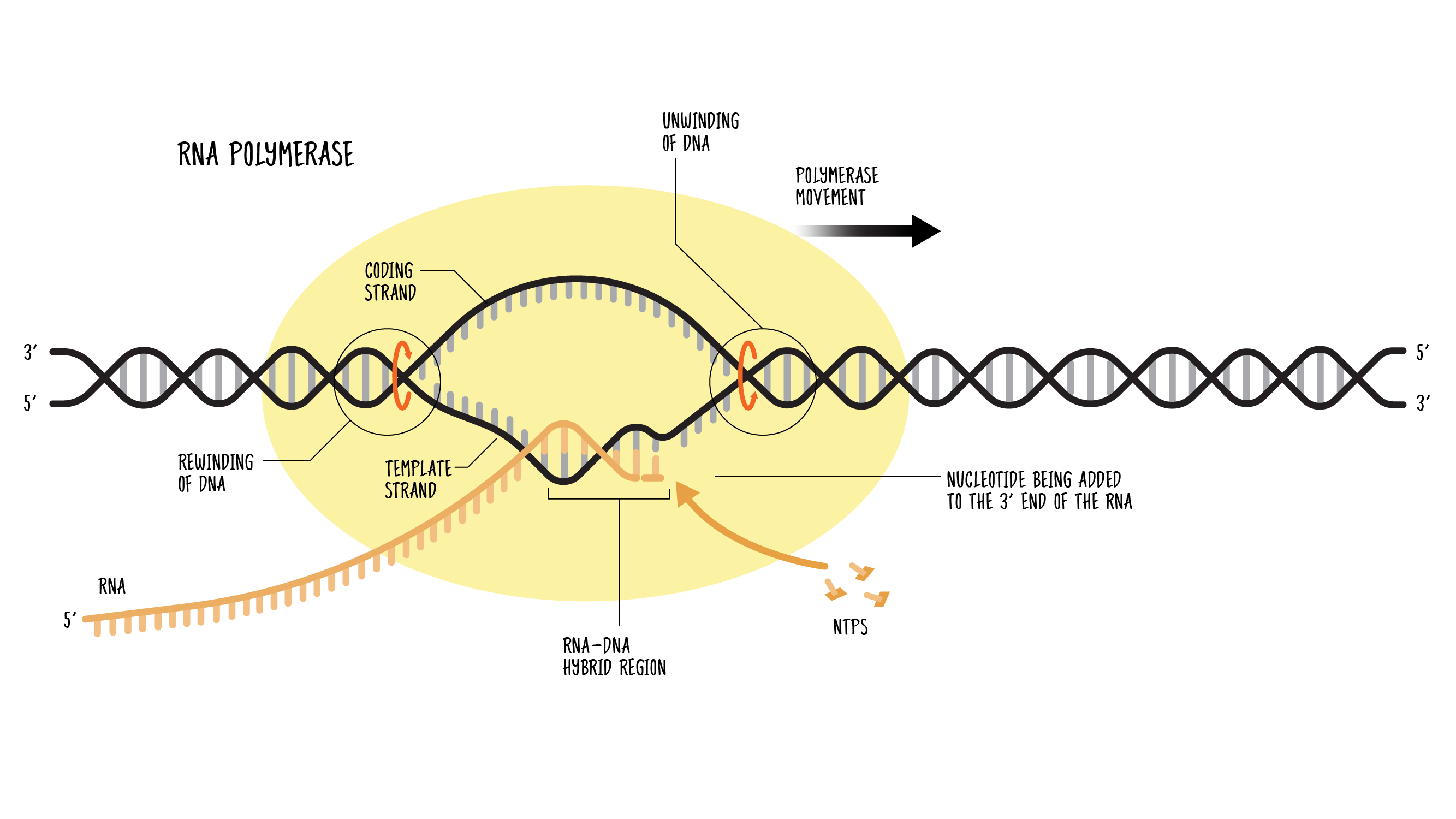
The process of synthesizing RNA from a DNA template. RNA polymerase reads the DNA template strand 3′ to 5′ and builds RNA 5′ to 3′. Unlike DNA polymerase, RNA polymerase can begin synthesis without a primer.

RNA
A nucleic acid usually composed of a single polynucleotide strand containing ribose and the bases A, U, G, and C. RNA can fold into complex three-dimensional shapes and function in information transfer, catalysis, structure, and gene regulation.

RNA polymerase
An enzyme that links ribonucleotides through phosphodiester bonds to synthesize RNA from a DNA template. It reads the template 3′ to 5′ and produces RNA 5′ to 3′ without needing a primer.
RNA transcript
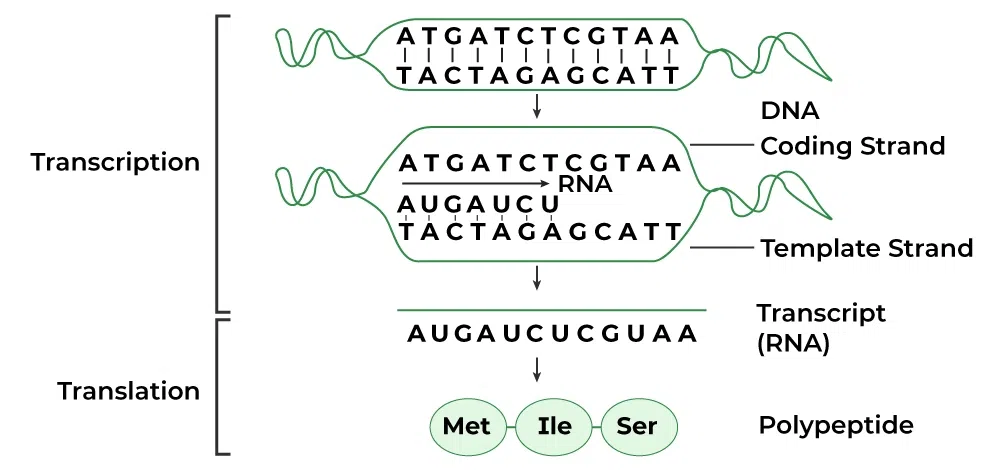
An RNA molecule produced by transcription. Its sequence is complementary to the DNA template strand, with uracil used in place of thymine.

Coding DNA strand
The DNA strand whose sequence matches the RNA transcript, except that DNA contains thymine where RNA contains uracil. It is not the strand directly read by RNA polymerase.
Template DNA strand
The DNA strand directly read by RNA polymerase during transcription. It is complementary and antiparallel to the RNA being synthesized.

Promoter
A DNA sequence near the beginning of a gene that helps recruit and correctly position RNA polymerase and its accessory proteins to initiate transcription.

Transcription initiation
The stage when RNA polymerase and required proteins assemble at a promoter, open a region of DNA, and begin RNA synthesis.

Terminator
A DNA sequence or associated signal that causes transcription to end and the RNA transcript to be released from the transcription machinery.

General transcription factors
Proteins that assemble at eukaryotic gene promoters and help position RNA polymerase correctly and initiate transcription.
