L26- kidney structure and filtration
 Call Kai
 Learn
Learn Practice Test
 Spaced Repetition
 Match
Match Flashcards
 Knowt Play
1/7

There's no tags or description
Looks like no tags are added yet.
Name | Mastery | Learn | Test | Matching | Spaced | Call with Kai | Chat |
|---|
No analytics yet
Send a link to your students to track their progress
8 Terms
what are the functions of the kidney
regulation of water, salts, and acid base balance
the removal of metabolic waste and foreign chemicals
production of hormones and enzymes
gluconeogenesis ( formation of glucose )
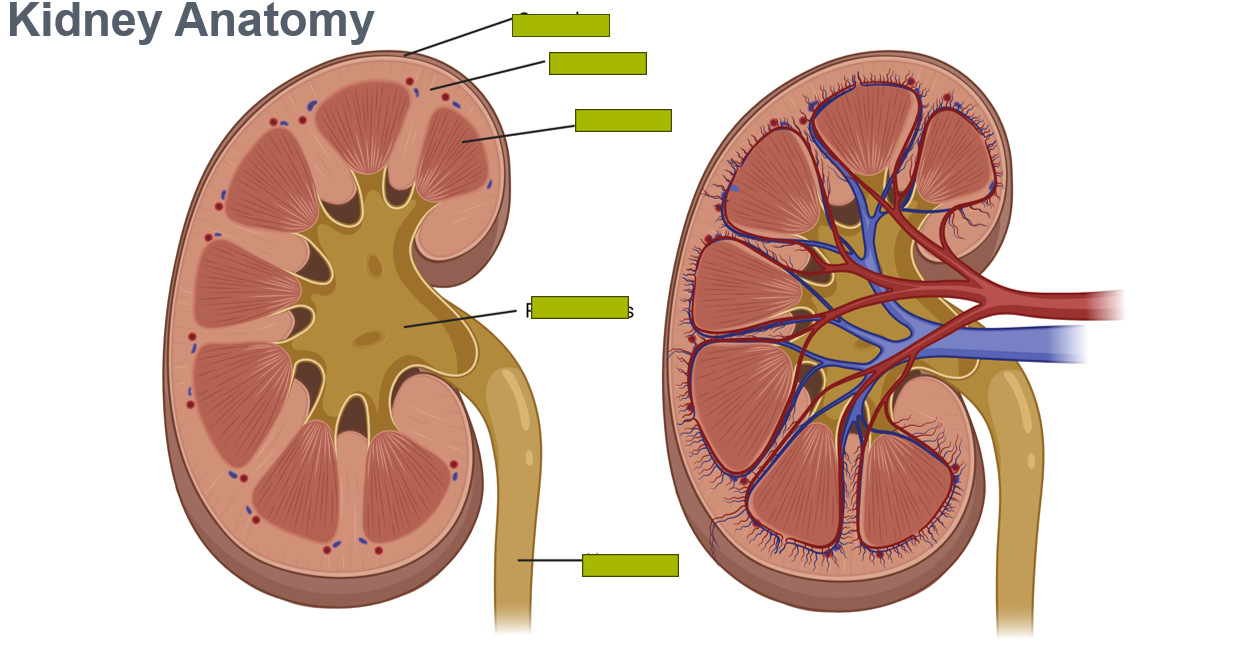
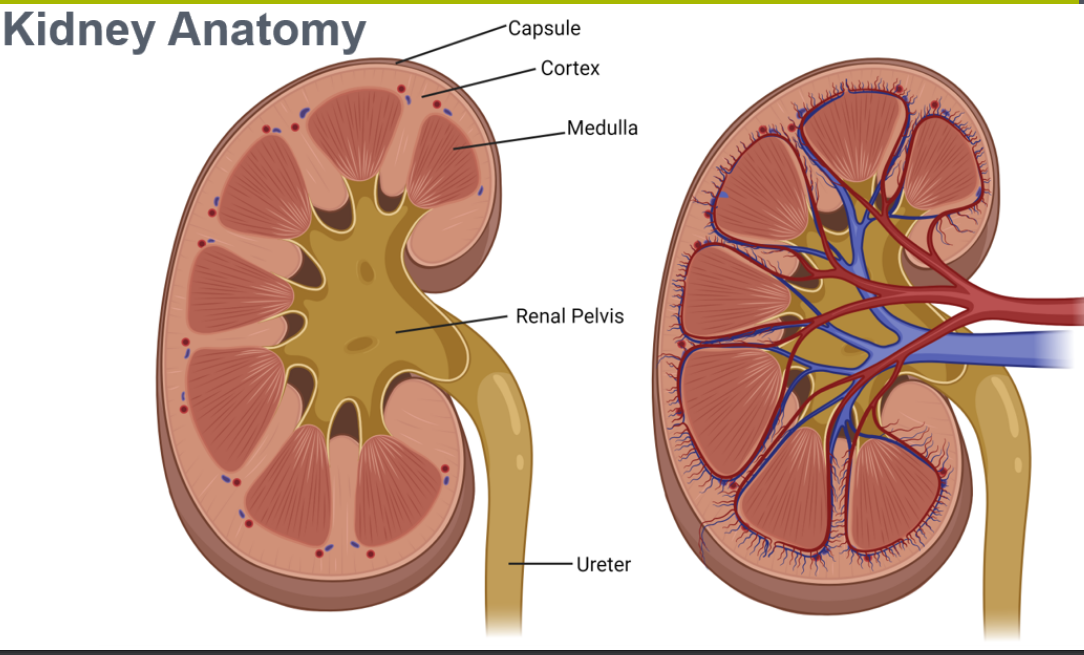
what are the structures in the kidney
explain why its crucial that the kidney has an extensive blood capillary network
as it need to filter blood and also
it needs to be able to reabsorb needed substances back into the body
this make the kidney efficient
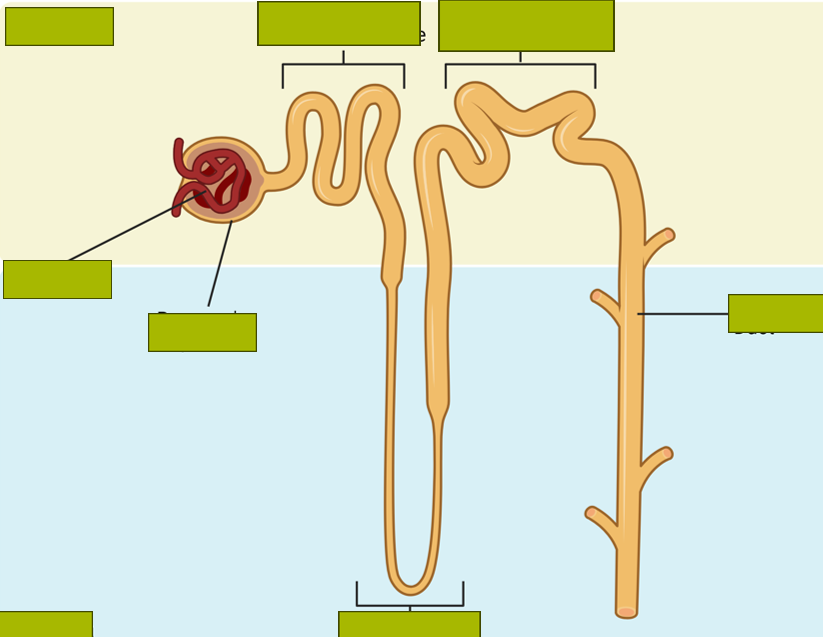
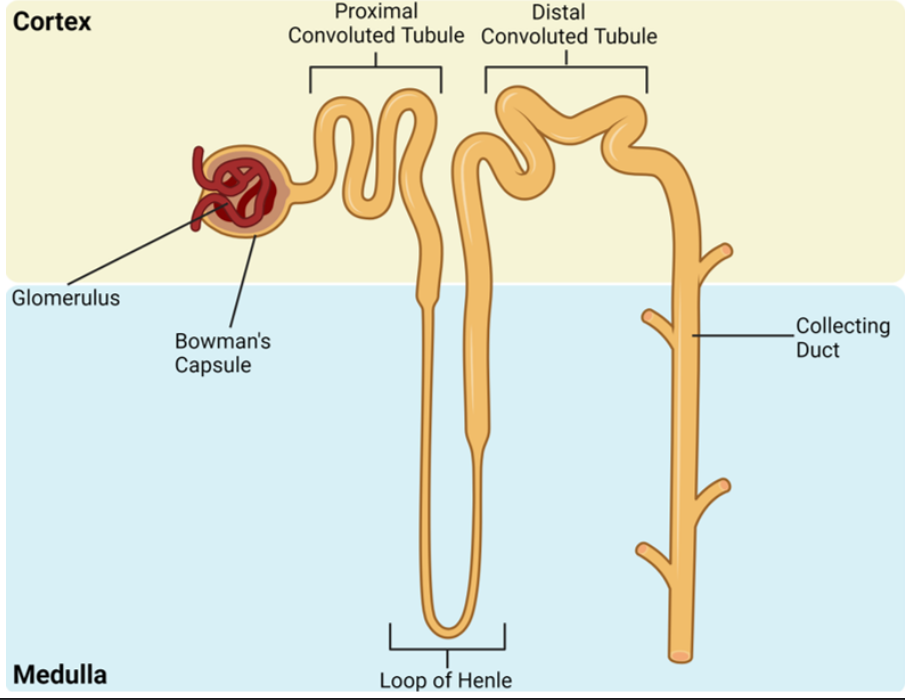
what are the key function of the nephron
glomerular filtration - blood → nephron
tubular secretion- blood → tubules
tubular reabsorption - tubules→ blood
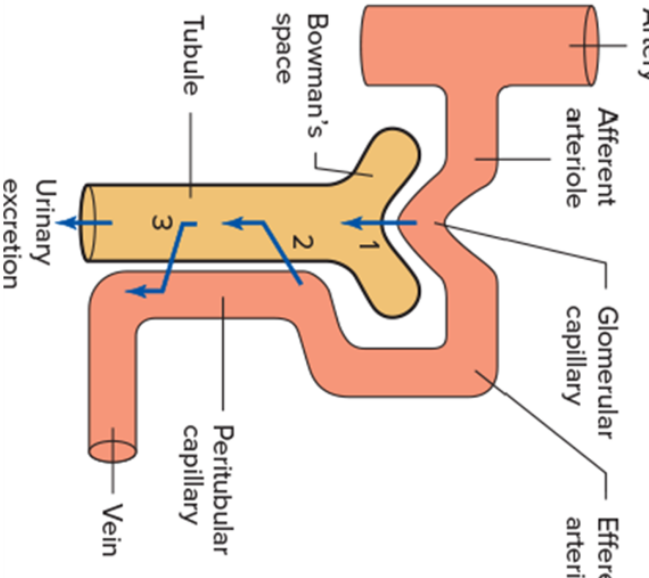
what are the key features of the glomerulus which allow it to carry out its function of filtration
high surface area of blood vessel to glomerulus for filtration to happen
the endothelial cells that make up the blood vessel are fenestrated- this allows substances to pass through
the podocyte cells which contains pedicles projections on the glomerulus and wraps its self around the blood vessel - small molecules like water, salts urea amino acids and small drug can pass through
sieve like structure is created
what is the GFR
its the glomerular filtration rate
its the volume of fluid filtered from the glomerulus into the bowman’s space per unit time
it controls the water and salt balance
what regulates the GFR
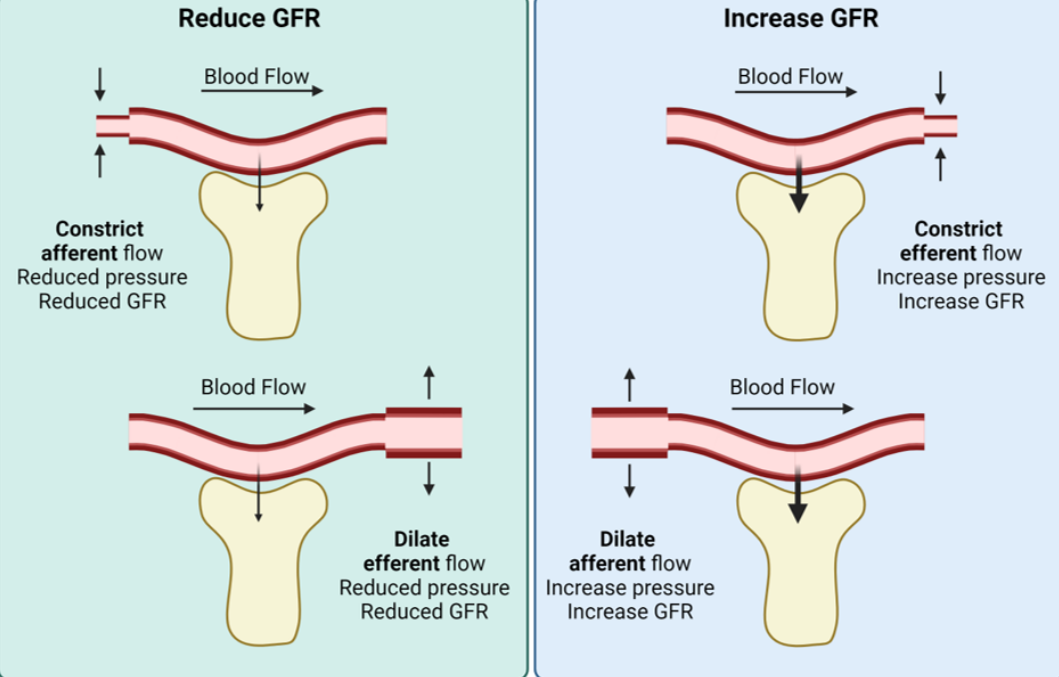
by adjusting the blood pressure either side of the glomerulus
in order to increase the GFR the afferent blood vessel needs to be dilated- allowing high blood pressure flow and the efferent needs to be constricted
this increases/ decreases water and salt loss through excretion