EXAM 5 SOLO
 Call Kai
 Learn
Learn Practice Test
 Spaced Repetition
 Match
Match Flashcards
 Knowt Play
1/164

There's no tags or description
Looks like no tags are added yet.
Name | Mastery | Learn | Test | Matching | Spaced | Call with Kai | Chat |
|---|
No analytics yet
Send a link to your students to track their progress
165 Terms

Consider requesting a rendezvous with an ALS unit
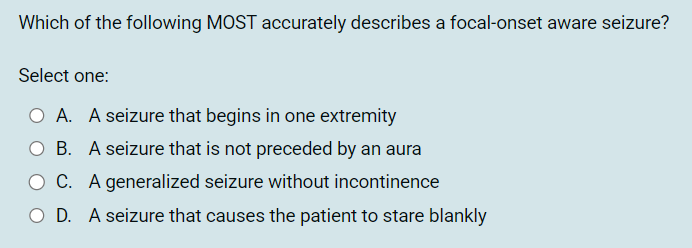
A seizure that begins in one extremity
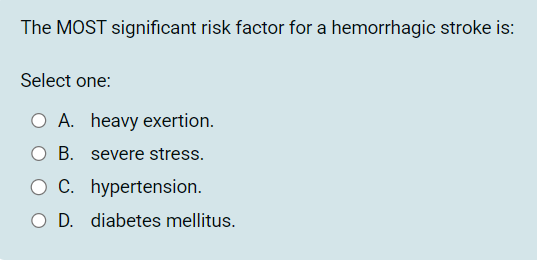
Hypertension
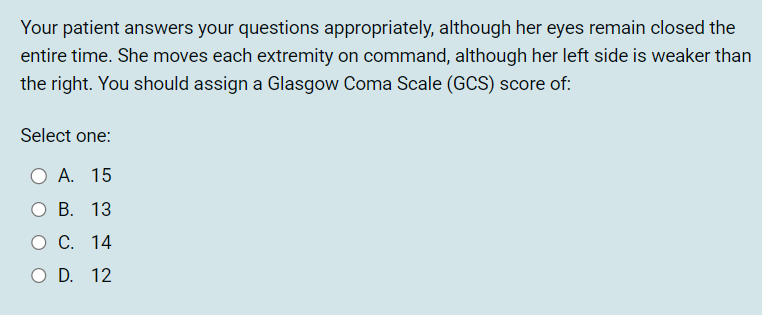
12
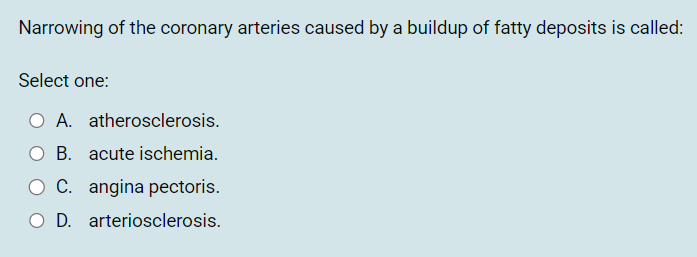
Atherosclerosis

Performing a rapid exam and obtaining vital signs

Substances in the stomach increase the risk of aspiration

Fluid shifts from the bloodstream into body tissues

Loses its blood supply due to compression by local tissues

With one pad to the right of the upper sternum and the other pad to the left lower
chest below the armpit

Excess glucose in the blood is excreted by the kidneys

He has hemophilia A

Anginal pain typically subsides with rest

Burning or gnawing stomach pain that subsides immediately after eating
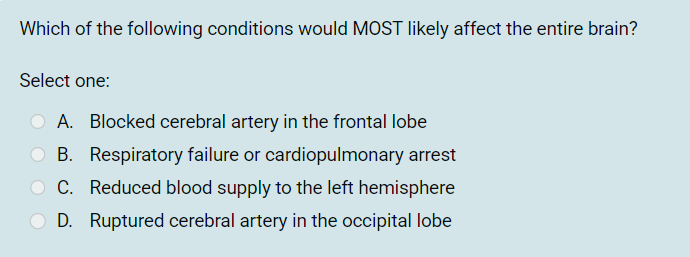
Respiratory failure or cardiopulmonary arrest

Pediatric pads and an energy-reducing device are available

Disorder of glucose metabolism

Levetiracetam (Keppra)
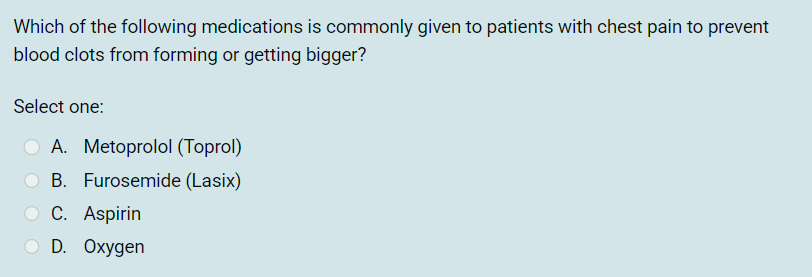
Aspirin

Has an altered mental status and a history of diabetes
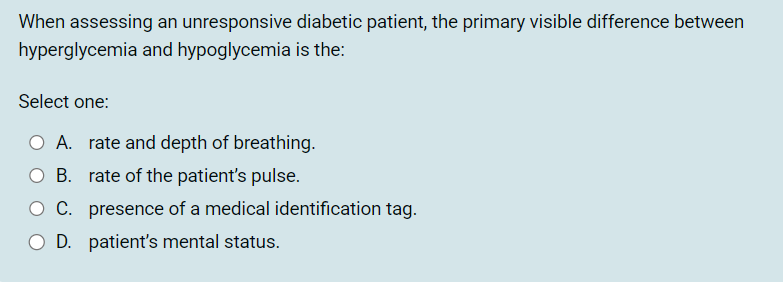
Rate and depth of breathing

Ensure a patent airway and support ventilation as needed

On the thighs or ankles

The brain requires glucose as much as it requires oxygen

PANCREAS

Administer oxygen and prepare for immediate transport

CEREBRUM, CEREBELLUM AND BRAIN STEM

DRY THE CHEST IF IT IS WET

KIDNEY

Pumps blood into the aorta and systemic circulation

Behind the medial malleolus, on the inside of the ankle

Pulmonary embolism

Found within the red blood cells and is responsible for carrying oxygen
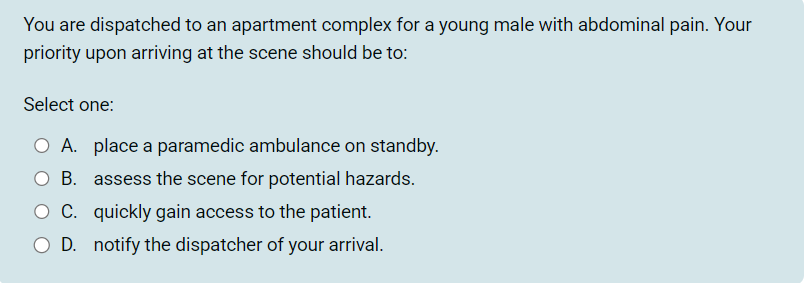
Assess the scene 4 potential hazards

Polyphagia

Epilepsy

Walls of the abdominal cavity

Hypotension

Recumbent position with the paralyzed side up

Saphenous

Attempting to eliminate acids from the blood

EMOTION
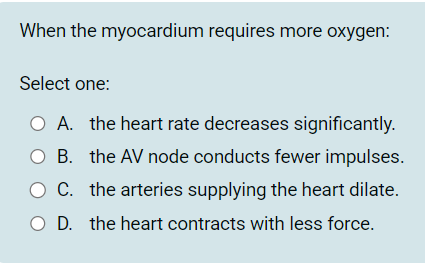
The arteries supplying the heart dilate

Myocardial oxygen demand exceeds supply

Is supplied by nerves of the autonomic nervous system, which are less able to
localize pain or sensation

Deep and rapid breathing

Lie on their side with their knees drawn into the abdomen

Leave him in a sitting position, keep him warm, and prepare for immediate transport

If he or she has had any recent illnesses or excessive stress

Nitroglycerin usually relieves anginal chest pain within 5 minutes

A group of symptoms that are caused by myocardial ischemia

An aortic aneurysm

Normal level of consciousness
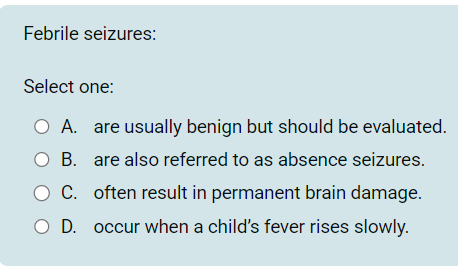
Are usually benign but should be evaluated

Is a condition in which no insulin is produced by the body

A confused 55-year-old male with tachycardia and pallor
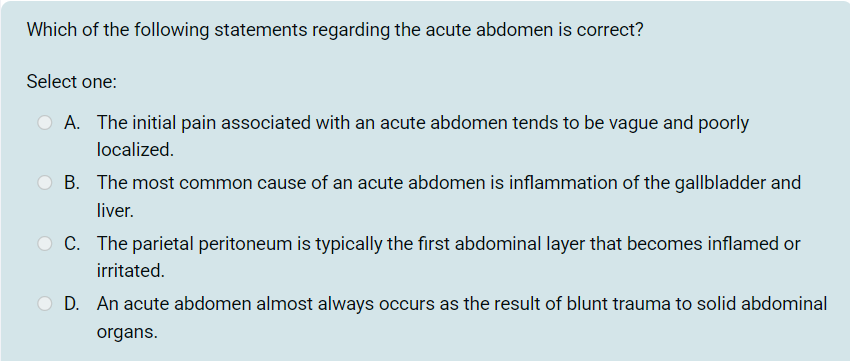
The initial pain associated with an acute abdomen tends to be vague and poorly
localized

Monitor her airway and breathing status and assess her blood glucose level

Who have experienced a head injury

REFERRED PAIN
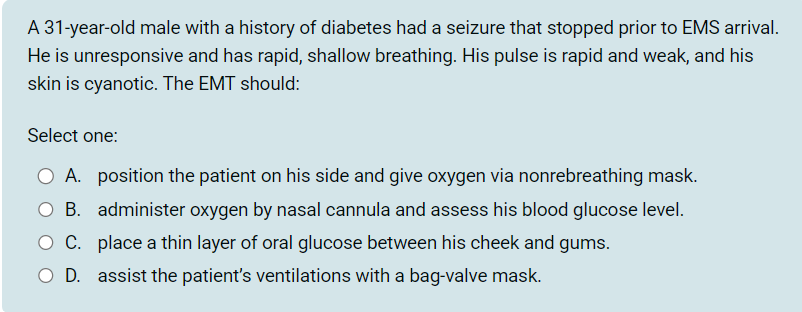
Assist the patient's ventilations with a bag-valve mask
Femoral arteries

Flows into the pulmonary arteries

Pulmonary veins
The pain is worse when bending over

PULMONARY EMBOLISM

DEEP VEIN THROMBOSIS

Be alert for signs and symptoms of shock

Hypotension and flat jugular veins

Suction her oropharynx and transport immediately
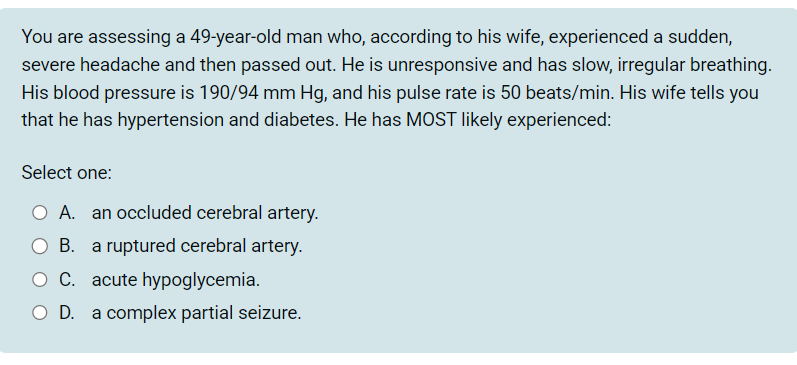
A ruptured cerebral artery

Protect her airway from aspiration

Weight loss and polyuria

Has bleeding within the brain
LIVER

Assess the heart rate and strength of the pulse

AN ULCER
Transporting the patient without delay

Assess the adequacy of his respirations

Spleen, kidneys, and pancreas

Unable to produce or understand speech

Secretion of bile and filtration of toxic substances
In sickle cell disease, the red blood cells are abnormally shaped and are less able to carry oxygen

Slows the heart and respiratory rates

Enabling glucose to enter the cells

Dependent edema

Cystitis
Sudden, severe headache

Combativeness

Ventricular fibrillation

Is likely to improve over a period of 5 to 30 minutes

Initiate CPR and attach an AED as soon as possible

Takes too much of his or her prescribed insulin

Acute cholecystitis

Transport the child to the hospital and reassure the mother en route

80 AND 120 MG/DL

Age-related deterioration of their sensory systems

THREE

Palpate the abdomen in a clockwise direction, beginning with the quadrant after the one
the patient indicates is painful

GLUCOTROL