Surgery of the Female Repro Tract
 Call Kai
 Learn
 Practice Test
 Spaced Repetition
 Match
 Flashcards
 Knowt Play
1/35

There's no tags or description
Looks like no tags are added yet.
36 Terms
List the anatomical barriers of the reproductive anatomy/ conformation
Vulva
Vestibulovaginal fold
Cervix
Failure= contamination, reduced fertility
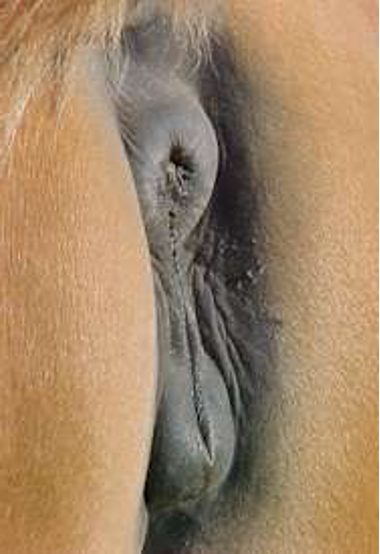
What are the features of good reproductive conformation?
labia
Vertically orientated
2/3rd vulvar opening below floor of pelvis
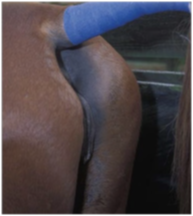
If horizontal orientation of vestibular opening – contamination
Good:
Bad:
List some of the problems that can arise from conformation problems and the procedure used to treat them?
Pneumovagina
Caslicks
Perineal reconstruction (Gadds)
Urovagina
Urethral extension (urine more likely to exit)
Cervical incompetency
Cervical repair
Delayed uterine clearance
Uterine suspension/uteropexy
Oviduct blockage
Oviduct lavage
Prostaglandin
How do you perform a Caslicks Procedure?
Bandage tail out the way
Wash perineum
Local anaesthesia
Excise thin band of mucosa each side (3-4mm)
has to be repeated
Include dorsal commissure
Level with ischiatic tuber
Do not over suture
Usually 0USP (3.5M) non-absorbable monofilament suture
Remove sutures 10-14 days later (before foal)
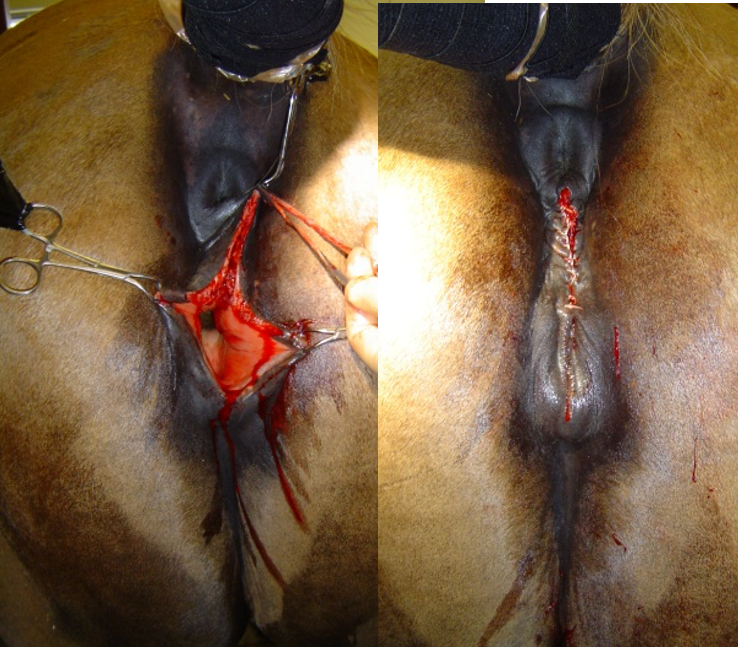
Improved vulvar competence; reduced pneumovagina
When should you remove sutures after a Caslicks procedure?
10-14 days after
Before foaling
When would perineal body reconstrusction be performed?
More severe cases of pneumovagina
Second degree perineal lacerations
How is perineal body reconstrusction performed?
Gadds procedure
Older mares
Loss of perineal body
Straight vestibule

When is urovagina generally seen?
seen in old, multiparous mares
Often with pneumovagina

At what stage of the cycle is urovagina usually diagnosed?
Oestrus
How is urovagina diagnosed? What is your Ddx?
Cytology
Ectopic ureter in young fillies
How can urovagina be sx tx?
Caudal relocation of the transverse fold
Urethral extension
(Uterine suspension/uteropexy)
At what stage of the oestrus cycle should you perform surgery for cervical incompetence/lacerations?
Dioestrus (3 weeks post partum)
What are some post op complications when tx cervical lacerations?
adhesions
incompetence
What can delayed uterine clearance lead to?
Endometritis
Post mating persistent endometritis
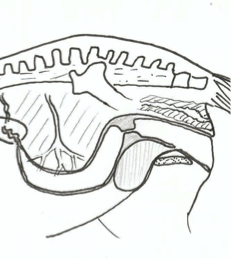
Uterus sitting too low
How is delayed uterine clearance tx?
uterine suspension (uteropexy)
Restoration of horizontal orientation of uterine horns
Improves uterine clearance
Improves perineal conformation
May reduce urine pooling
How do you diagnose oviduct blockage?
Ovulation but no embryo/ oocyte in uterus
How do you treat oviduct blockage?
Laparoscopic injection of prostaglandin:
Relaxes smooth muscle of oviduct
Modulates oviductal transport
What are the different grades of perineal laceration?
occur during unassisted foalings in primiparous mares
1st degree: Mucosal damage
2nd degree: Mucosa, submucosa and perineal muscles
3rd degree: Complete disruption of rectovestibular shelf, perineal body and anus
How do you treat each degree of perineal tear?
1st: caslick/ no surgery required
2nd: Caslicks + reconstrution of perineal body
3rd: Surgical repair; Delay for 4-6 weeks
What can cause a rectovestibular fistula?
Penetration of foals foot into rectum without progression to 3rd degree perineal laceration
Unsuccessful repair of 3rd degree laceration
What is this showing?
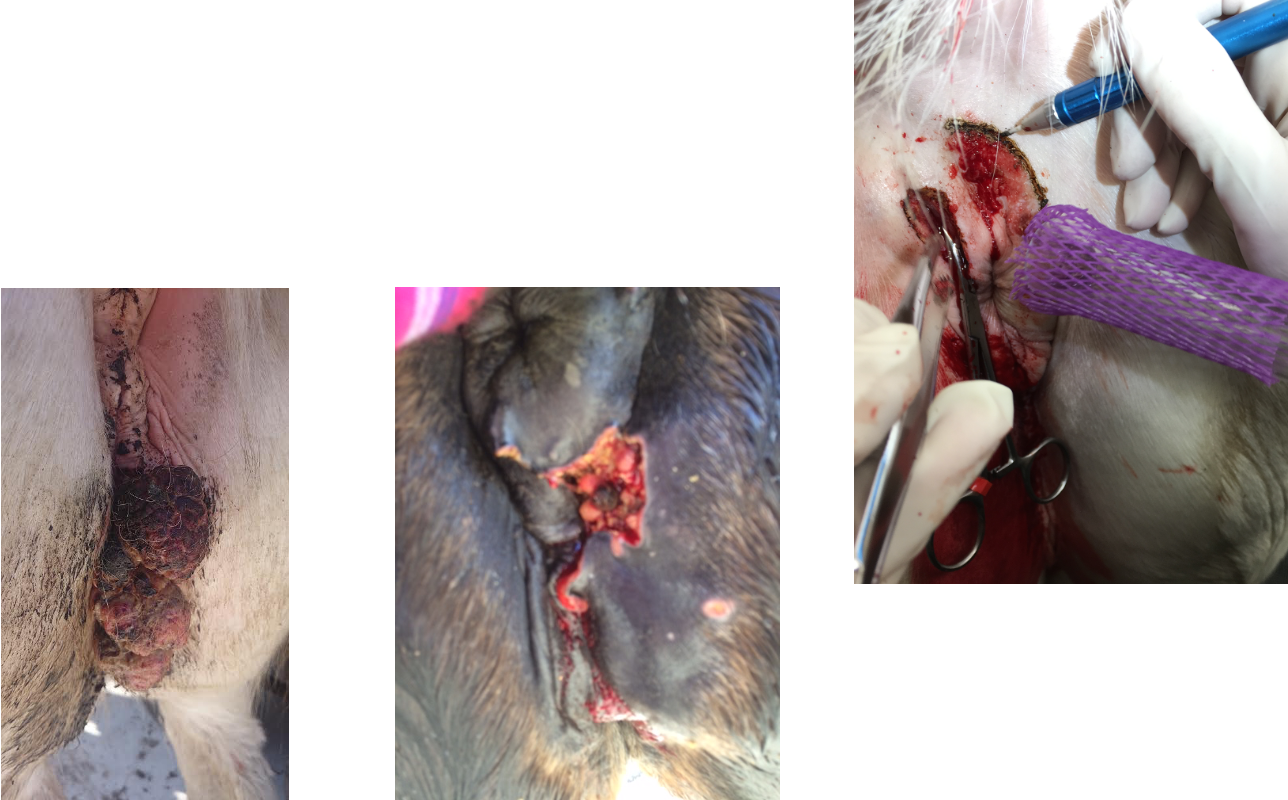
SCC of vulva and clitoris
Poor prognosis even with radical resection
How do varicosities present?
Intermittent vulvar bleeding
Blood pooling
Worst at oestrus
Most commonly at vestibulo-vaginal junction
How are varicosities treated?
Not always necessary
Topical treatment with astringent creams
Ligation (either side where vessel exits tissue)
Cautery
Laser photocoagulation
What is the most common neoplastic disorder of the ovaries in mare?
Granulosa (Theca) Cell Tumour (GCT)

What are the features of GCT?
Unilateral (can be bilateral)
Rarely metastasise
Good prognosis after removal
Behavioural signs
Anooestrus/continuous oestrus
Stallion like behaviour/ aggression
How is GCT diagnosed?
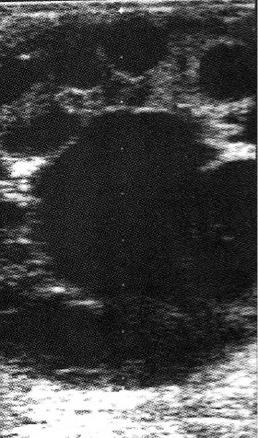
Rectal exam: enlarge ovary on affected side, contralateral usually smaller
Transrectal U/S- honeycomb like appearance
Endocrinology
↑Testosterone in 50%
↑Inhibin in 85%
↑ Anti-Müllerian Hormone (AMH) in 98% (also used for cryptorchids in male)
What endocrinology tests can be used for GCT diagnosis?
Anti-Mullerian Hormone
Inhibiin
Testosterone
How is GCT treated?
Ovariectomy
laproscopic
Standing or GA
Removal of GCT
Removal of other tumours / haematomas
laparotomy (particularly large tumours)
What are the risks of colpotomy (ovariectomy technique)?
Haemorrhage
Failure to remove ovary
What is the difference between assisted vaginal delivery and controlled vaginal delivery?
Assisted:
conscious (usually standing),
traction and ropes,
sedation & epidural if mare straining excessively
Controlled:
anaesthesised +/- hindlimbs elevated
prep for caecarean at same time
How long should the mare remain hospitalised post caecarean? What are some possible risks?
Approximately 1 week in hospital post-operatively
Retained placenta is common following any dystocia
When may a terminal caesarean section be performed?
Foal more important than saving the mare (foal priority)
Chronic disease in the mare
Deliver foal under anaesthesia then euthanise the mare
When would you perform a foetotomy?
Very last resort
Only if certain foal is dead
Can cause considerable trauma
easier under GA + hindlimbs elevated
List some of the complications that can occur following dystocia/ parturition?
Uterine prolapse
Uterine rupture
Uterine haemorrhage
Invagination / retroflexion of the uterine horn
Retained foetal membranes
Cervical tears
Perineal lacerations / rectovaginal tears
List the uterine disorders to be aware of
Uterine prolapse
Post dystocia / straining
Replacement under standing sedation / GA
Uterine artery haemmorrhage
Older mares
Colic & evidence of haemorrhagic shock
haematoma in broad ligament (long tubular, cranial end wider)
Uterine torsion
dx on rectal palp
ID L broad lig commonly
occur last 2 months gestation / at parturition
Colic / dystocia
Uterine rupture
signs 24 – 72 days post foaling
colic, peritonitis, decr milk prod
incr WBC count
Uterine neoplasia
Partial / total ovariohysterectomy
laproscopic (2 stage technique)
Pyometra (different to SA)
Drainage of uterine contents pre-surgery
Ovariohysterectomy (laparotomy +/- laparoscopy)
more chronic than retained placenta
List the mammary disorders to be aware of
Mastitis (AB)
Neoplasia (Poor prognosis, treat asap)