lecture 5
 Call Kai
 Learn
Learn Practice Test
 Spaced Repetition
 Match
Match Flashcards
 Knowt Play
1/60

There's no tags or description
Looks like no tags are added yet.
Name | Mastery | Learn | Test | Matching | Spaced | Call with Kai | Chat |
|---|
No analytics yet
Send a link to your students to track their progress
61 Terms
a patient’s blood glucose rises from 90 mg/dL to 270 mg/dL after a meal. assume the patient has 5.0 L of blood, glucose is uniformly distributed and ignore glucose movement into tissues. approximately how many additional glucose molecules are present in the blood at 270 mg/dL compared with 90 mg/dL?
molecular weight of glucose = 180 g/mol
avogadro’s number = 6.0 × 10²³ molecules/mol
a) 3.0 × 10^21 molecules
b) 6.0 × 10^21 molecules
c) 4.5 × 10^22 molecules
d) 3.0 × 10^22 molecules
d
270mg/dL - 90mg/dL = 180mg/dL
180mg/dL → 1800mg/L
1800mg/L * 5L = 9000mg
9000mg → 9g
glucose = C6H12O6 = 180 = Mw
180g = 1mol
1 mol = 6E23 molecules
180g = 6E23 molecules
18g = 6E22 molecules
9g = 3E22 molecules
starch and cellulose are both polymers of what carbohydrate?
glucose
what is lactose intolerance?
the inability to digest lactose, the sugar in milk
as we get older and older, we are less able to process lactose like we once did when we were younger
what are carbohydrates often referred to as?
saccharides
carbohydrates do more than provide energy
what is an example of fuel?
glucose
carbohydrates do more than provide energy
what is are examples of energy storage?
glycogen (in humans)
starch (in plants)
carbohydrates do more than provide energy
what are examples of structures?
GAGs (Glycosaminoglycans) [in humans]
cellulose [in plants]
carbohydrates do more than provide energy
what is an example of cell recognition?
ABO antigens
RBC’s plasma membrane contain carbohydrates
those carbohydrates make the difference between blood groups A and B
carbohydrates do more than provide energy
what are examples of protein/lipid modification?
glycoproteins: proteins get modified by carbohydrate molecules
glycolipids: lipids that get modified by carbohydrate molecules
when you see the prefix “glyco-” you should think of ___________
carbohydrates
carbohydrates do more than provide energy
what are examples of drug/clinical relevance?
HbA1c: hemoglobin A1c; a blood test that measures the amount of glucose attached to hemoglobin
heparin: blood thinner
acarbose
what are examples of monosaccharides?
glucose, fructose, galactose
what are examples of disaccharides?
lactose, sucrose, maltose
what are examples of oligosaccharide?
short carbohydrate chains on proteins/lipids
what are examples of polysaccharides?
glycogen, starch, cellulose, GAGs
if there are five carbons, what is that molecule considered as?
a pentose
if there are six carbons, what is that molecule considered as?
a hexose
what are enantiomers?
nonsuperimposable mirror images
what are epimers?
differ at one stereocenter

what do glucose, mannose and galactose all have in common?
all have 6 carbons (hexose)
all have aldehyde group
what molecule is considered a ketohexose?
fructose
has a ketone group
monosaccharides of four or more carbon atoms are typically more stable when adopting what kind of structures?
when adopting cyclic or ring structures

α and β anomers differ only at the anomeric carbon

C1 = anomeric carbon
what does anomeric carbon mean?
carbon connected to two oxygens in the ring
what is glucose most commonly shown in?
chair conformation

what do cells frequently modify?
monosaccharides

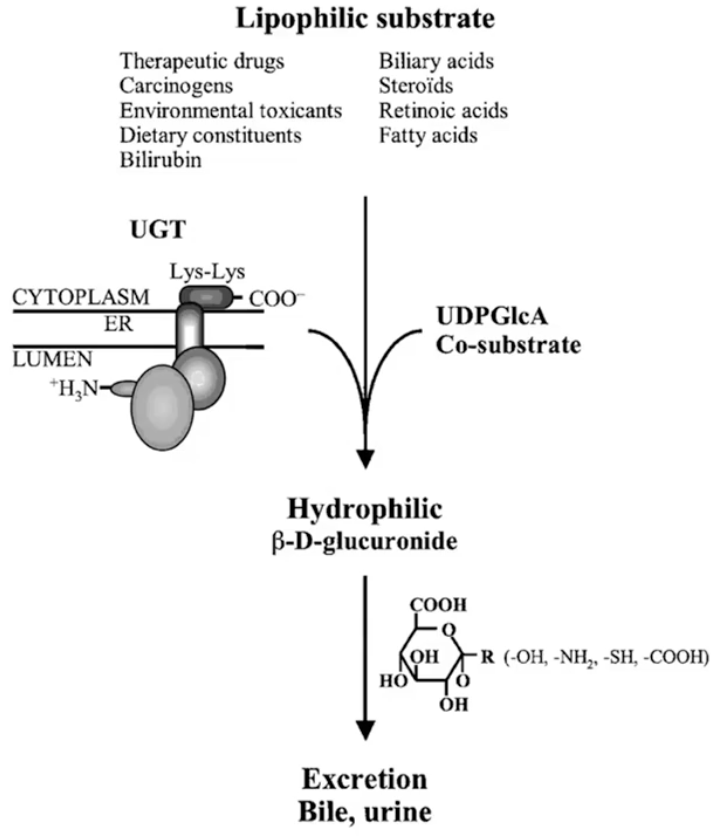
what does the enzyme UDP-glucuronosyltransferase (UGT) do?
catalyzes glucuronic acid conjugation to help detoxify and eliminate diverse endogenous and exogenous compounds
a lot of molecules are modified by this enzyme to go out of our body
say you are taking a drug that happens to block the UGT enzyme, what happens?
you will slow down or halt glucuronic acid conjugation
that means that there will be little to no detoxification and elimination of diverse endogenous and exogenous compounds
what two monosaccharides joined together make the disaccharide lactose?
glucose + galactose
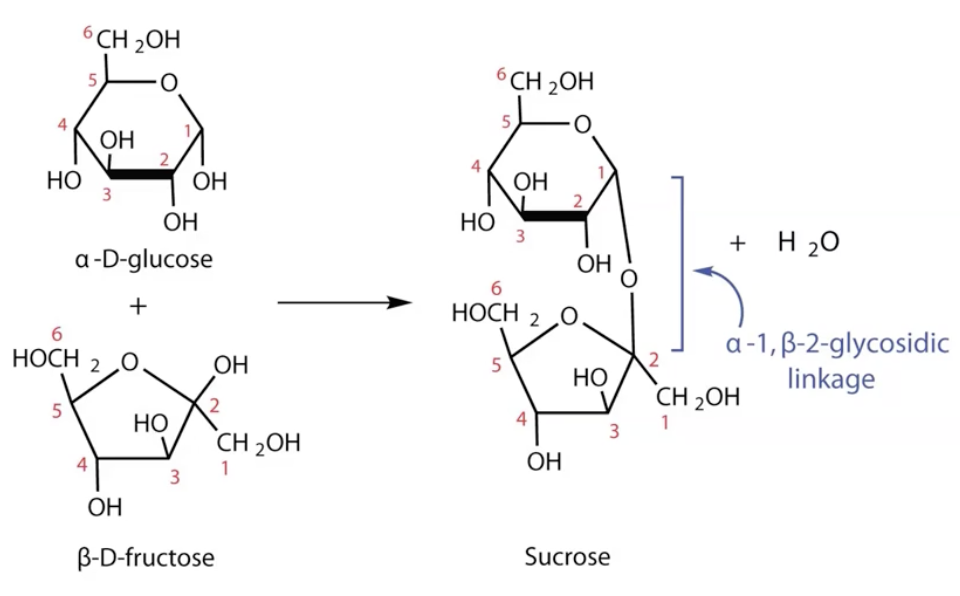
what two monosaccharides joined together make the disaccharide sucrose?
glucose + fructose
what two monosaccharides joined together make the disaccharide maltose?
glucose + glucose
what kind of bond joins sugars? and do different or the same enzymes hydrolyze different glycosidic bonds?
glycosidic bonds join sugars
different enzymes hydrolyze different glycosidic bonds
what kind of glycosidic bond joins together glucose and galactose to make lactose?
β(1-4) glycosidic bond
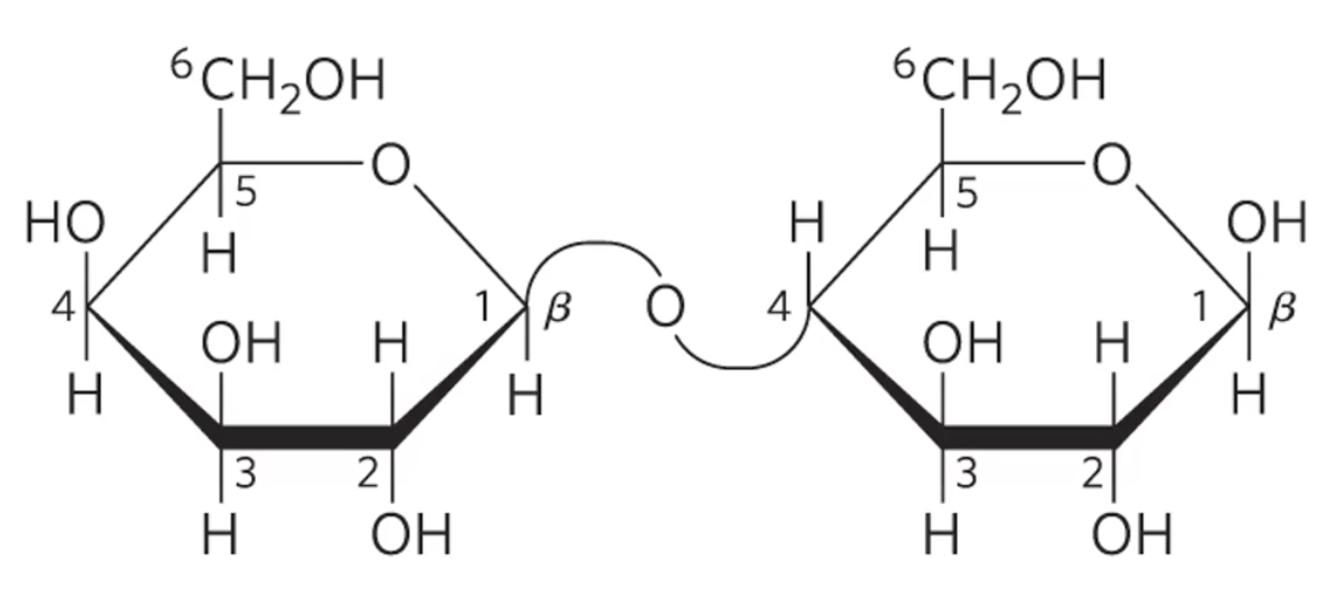
the enzyme that breaks down a lactose bond is lactase
what are polysaccharides also known as?
glycans
are large polymers composed of hundreds of monosaccharide monomers
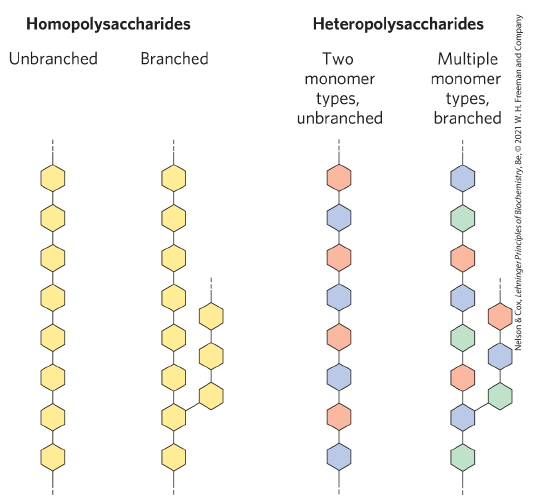
what are three of the most important polysaccharides?
starch, glycogen and cellulose

what happens after you’ve run a marathon?
when running a marathon, all your glycogen gets broken down. it’s called hitting a brick wall.
what is the linkage for starch?
⍺-linked glucose polymer

what is the linkage for cellulose?
β-linked glucose polymer
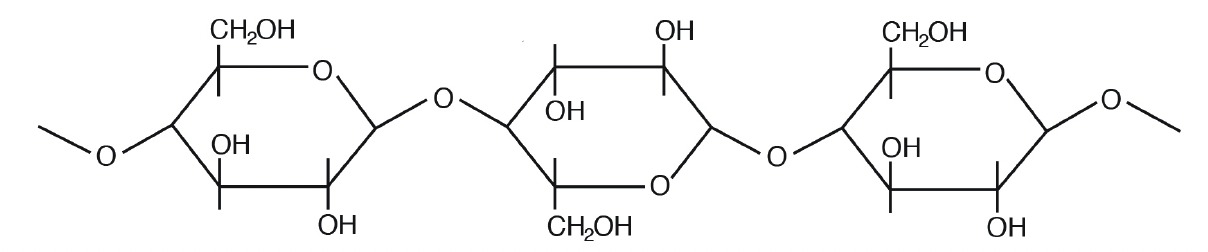
do humans have enzymes that can break down β-linked glucose polymers?
no we do not
that’s why we are not able to eat our shirts that contain cellulose
starch and cellulose are both made entirely of glucose. why can humans digest starch but not cellulose?
a) cellulose contains a different form of glucose
b) cellulose molecules are too large
c) the glucose units are connected by different glycosidic bonds
d) cellulose contains fewer glucose molecules
c
starch is connected by ⍺-linked glucose polymer bonds
cellulose is connected by β-linked glucose polymer bonds
humans do not possess enzymes that can break down β-linked glucose polymer bonds
what is glycation?
nonenzymatic
proportional to glucose concentration
modifies proteins over time
what is glycosylation?
enzyme-mediated
regulated
templated by glycosyltransferases
what is HbA1c?
you have a hemoglobin molecule. a glucose goes to attach to the hemoglobin molecule. that’s HbA1c
if there’s lot of glucose molecules binding to hemoglobin, that indicates that something is wrong (perhaps diabetes)
what do glucose meters measure?
blood glucose levels using a small blood sample on a test strip
why is lactose broken down?
lactose must be broken down into glucose and galactose before it can be absorbed.
if not broken down, the lactose will absorb a lot of water and cause side effects (flatulence and constipation)
what do acarbose and miglitol inhibit?
they inhibit intestinal brush-border ⍺-glucosidases, slowing carbohydrate digestion and delaying glucose absorption
are carbohydrates able to attach to other molecules?
yes

can attach to proteins (glycoproteins and proteoglycans) and lipids (glycolipids)
glycoprotens have covalently attached oligosaccharides
what are the two types of attachments?
O-linked = a glycoside bond joins carbohydrate to the -OH of a Ser or Thr residue
N-linked = an N-glycosyl bond joins sugar to the amide nitrogen of an Asn residue
what is ABO identity determined by?
terminal carbohydrate structures on the RBC surface
what is heparin?
a highly sulfated glycosaminoglycan
its specific carbohydrate sequence binds antithrombin and enhances anticoagulant activity (blood thinner)
is a pentamer that is important for coagulant activity
natural substance isolated from cows and pigs
what is glycoconjugate?
carbohydrate joined to a protein or lipid
irinotecan’s active metabolite, SN-38, can cause neutropenia and diarrhea. UDP-glucuronosyltransferase inactivates SN-38 by attaching glucuronic acid, and the conjugated product is eliminated in bile. a patient has markedly reduced UGT1A1 activity. compared with a patient with normal UGT1A1 activity, what is most likely?
a) less toxicity because less SN-38 glucuronide is formed
b) faster elimination because unconjugated SN-38 is more water-soluble
c) greater SN-38 exposure and a higher risk of toxicity
d) no change because glucuronidation does not affect drug exposure
c
freshly dissolved crystalline alpha-D-glucose has a specific optical rotation of +112 degrees. freshly dissolved beta-D-glucose starts at +18.7 degrees. over several hours, both solutions reach the same stable value of +52.7 degrees. which process best explains these changes?
a) the alpha and beta anomers interconvert through the open-chain form until equilibrium
b) glucose epimerizes C4 and partially becomes galactose
c) D-glucose partially converts to its enantiomer, L-glucose
d) the ring opens and the open-chain form becomes predominant
a
a patient on peritoneal dialysis receives icodextrin, which can be broken down to maltose and other short glucose carbohydrates that accumulate in blood. a particular glucose meter reacts with any reducing sugar, so maltose can produce a falsely high glucose reading. if each of the following carbohydrates accumulated instead of maltose, which would NOT be expected to interfere with this meter?
a) lactose
b) maltotriose, a three-glucose chain with one free anomeric carbon
c) galactose
d) sucrose
d
HbA1c forms when glucose attaches nonenzymatically to hemoglobin during the life of a RBC. normal red cells survive about 120 days. a patient with chronic hemolysis has red cells that survive only about 35 days. her home glucose measurements are consistently elevated, but her HbA1c is unexpectedly low. what best explains the discrepancy?
a) young red cells contain fewer glycosylating enzymes
b) short-lived red cells have less time to accumulate nonenzymatic glycation
c) attached glucose is rapidly removed whenever blood glucose falls
d) hemolysis converts glycated hemoglobin back to normal hemoglobin
b
glycogen and cellulose are both polymers made from glucose. which feature best distinguishes glycogen from cellulose?
a) a highly branched polymer of ⍺-linked glucose
b) an unbranched polymer of β-linked glucose
c) a highly branched polymer of β-linked glucose
d) an unbranched polymer of ⍺-linked glucose
a
lactase hydrolyzes the beta(1→4) glycosidic bond joining galactose in lactose. cellulose is an unbranched polymer of glucose joined by beta(1→4) bonds, yet humans cannot digest it. what best explains the difference?
a) digestive enzymes recognize specific substrate structures, and humans lack an enzyme that hydrolyzes cellulose’s beta(1→4) glucose-glucose linkages
b) lactose’s beta linkage changes to an alpha linkage during mutarotation before digestion
c) lactase can hydrolyze cellulose, but cellulose passes through the intestine too rapidly
d) cellulose is highly branched, which prevents digestive enzymes from reaching its bonds
a
a person with low intestinal lactase activity develops bloating, gas, cramps, and diarrhea within a few hours of drinking a large amount of milk. which mechanism best explains these symptoms?
a) an IgE-mediated immune reaction to milk proteins damages the intestinal lining
b) galactose accumulates in the blood because it cannot be metabolized
c) lactose is absorbed intact and excreted in the urine
d) undigested lactose draws water into the intestinal lumen and is fermented by colonic bacteria
d
a patient takes acarbose, an intestinal alpha-glucosidase inhibitor, together with glipizide and develops symptomatic hypoglycemia. acarbose slows the digestion of sucrose and starch-derived carbohydrates. which is the best oral treatment for the hypoglycemia?
a) table sugar (sucrose) dissolved in water
b) glucose (dextrose) tablets
c) crackers or bread
d) a glass of milk
b
red-cell ABO antigens are built on a carbohydrate precursor. a fucosyltransferase adds fucose to form the H antigen. the A transferase then adds N-acetylgalactosamine to H, whereas the B transferase adds galactose. in forward ABO typing, a patient’s red cells are mixed with anti-A and anti-B reagents; agglutination occurs when the corresponding A or B antigen is present on the red cells. a person inherits a functional B transferase but has no functional fucosyltransferase, so H antigen is not formed. how will the red cells react in forward typing?
a) agglutinate with anti-B only, because the B transferase is functional
b) agglutinate with neither reagent, because no H antigen is available to modify
c) agglutinate with both reagents, because both recognize the unmodified precursor
d) agglutinate weakly with anti-B, because galactose is added to the precursor more slowly
b
heparin contains a specific five-sugar sequence that binds antithrombin. fondaparinux is a synthetic anticoagulant consisting only of this five-sugar sequence. why can fondaparinux act as an anticoagulant despite being much shorter than heparin?
a) any strongly negatively charged carbohydrate activates antithrombin equally
b) it inhibits coagulation proteases directly without requiring antithrombin
c) it breaks down fibrin in clots that have already formed
d) its five residues contain the specific sulfated sequence required for antithrombin binding and activation
d