Speech Science- respiration lec 6
 Call Kai
 Learn
Learn Practice Test
 Spaced Repetition
 Match
Match Flashcards
 Knowt Play
1/43

There's no tags or description
Looks like no tags are added yet.
Name | Mastery | Learn | Test | Matching | Spaced | Call with Kai | Chat |
|---|
No analytics yet
Send a link to your students to track their progress
44 Terms
respiratory upper airways
nose, mouth, pharynx, larynx
respiratory lower airways
bronchial tree:
trachea
bronchi
bronchioles
alveoli
lungs

boyles law
higher the volume the lower the pressure; the volume of a gas is increased, given a constant temperature, thee pressure will decrease (vice versa)

balloon vs breathing
ballon: air pressure forces balloon to stretch and expand
breathing: lungs expand and pressure drops leading to inward rush of air
air flows from ___ pressure to ___ pressure?
air flows from greater pressure to lesser pressure
lung expansion leads to ?
pressure DROP within lungs
pressure in lungs is NEGATIVE relative to the pressure outside lungs in atmosphere
lung expansion leads to ?
INCREASE pressure within lungs
pressure in lungs is POSITIVE, causing air to flow outward
relative pressure
the difference between 2 air pressures; difference between air pressure in the lungs and atmospheric pressure
zero pressure
no difference between lung pressure vs outside pressure
positive pressure
lung pressure HIGHER than outside pressure
negative pressure
lung pressure LOWER than outside pressure
thoracic cage
true ribs 1-7, false ribs 8-10, floating ribs 10-12
lungs/thoracic cage: expand in 3 ways
front to back
lower to higher
laterally/sideways
pleural linkage connects?
lungs to rib cage and diaphragm
costal/parietal pleura: lines rib cage
pulmonary/visceral pleura: surrounds lungs
lungs
-contain no muscle
-spongy texture
-composed of 90% air and 10% solid tissue
alveoli
aprox 7 million within the adult lung
0.25 mm in diameter
highly elastic
diaphragm
Primary muscle of inspiration, involved in sneexing and hiccups
when contracted it flattens and spreads outwards pulling ribcage down and forward
2 muscle groups for breathing
inhalation:
diaphragm
external intercostals
exhalation
internal intercostals
external intercostal muscles-inhalation
superficial to internal intercostal muscles
connect osseous portions of ribs to each other
run downward toward sternum
contraction raises and expands rib cage
internal intercostal muscles
run downward away from sternum
connect both osseous and cartilaginous portions of ribs
interosseous portion: lower and compress rib cage-exhalation
interchondral portion: raise and expand rib cage-inhalation
upper ribs move in what motion?
“pump-handle”

lower ribs move in what motion?
“bucket-handle”

torquing-inspiration
rib cage is elevated during inspiration ribs are torqued or twisted
detorquing-exhalation
cartilage tends to return to its og state; untwisting
muscles of forced expiration: anterior
interal intercostal
transverse thoracis
internal oblique
external oblique
transevrse abdominis
rectus abdominis

muscles of forced expiration: posterior
subcostals
serratus posterior inferios
quadratus lumborum
2 forces enable lungs to change volume
pleural linkage: maintains expansion of lungs & compression of rib cage
restorative forces: elastic recoil forces (not muscle contraction)
passive forces of breathing
torque: ribs are semi-flexible and have a preferred rest position
elasticity: the internal elasticity of the soft tissues and rib torque oppose each other resulting in a rest position that keeps the lungs partially inflated
gravity
description of breathing cycle
starts at equilibrium point of opposing restorative forces
diaphragm contracts (flattens downwards)
pleural membranes stretched causing drop in intrapleural pressure
lungs expand, drop in pressure relative to atmosphere
abdominal structures are compressed, and abdomen protudes outward (helps pull outward the lower rib)
extrenal intercostals contract a bot of stiffen walls of thorax which increases efficency of diaphragm (large movement of external intercostals not necessary in tidal breathing)
air rushes inward to equalize pressure
expansion of lungs and the lowered intraplueral pressure increase elastic recoil force
diphragm & external intercostals relax and with recoil forces lungs & thoracic cavity decrease in volume and air rushes out
whats the average breath in tidal breathing?
12-15(20) breaths per min
exhalation is ___ in tidal breathing?
exhalation is passive in tidal breathing (no active muscle contraction)
vital capacity
maximum volume of air that lungs can hold. depends on gender/age/size/health/breathing habits
average human vital
5L
residual volume
after maximum exhalation, a volume of air remains in the lungs, approximately 25% of the total vital capicity
tidal volume
volume of air that is exchanged during any particular cycle of inhalation/exhalation
will vary, depending upon the respiratory needs of the individual at any given movement
approximately 15% of VC in quiet tidal breathing
4 lung volumes and capacities
each volume is distinct with no overlap
lung capacities described 2 or more voumes
Resting expiratory level
REL
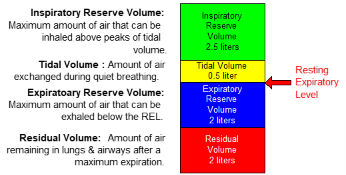
lung volumes
inspiratory reserve: max amount of air that can be inhaled above peaks of TV
tidal volume: amount air exchanged during quiet breathing
expiratory reserve volume: max amount of air that can be exhaled below the REL
residual volume: amount of air remaining in lungs & airways after max expiration
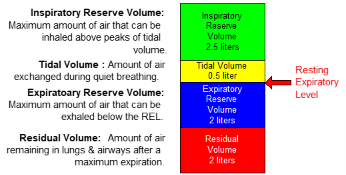
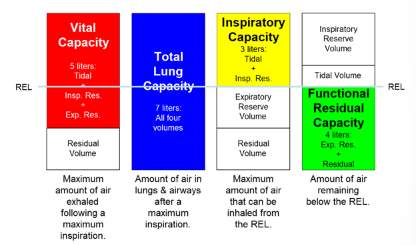
lung capacities
vital capacity: max amount air exhaled follwed a maximum inspiration
total lung capacity: amount of air in lungs and airways after max inspiration
inspiratory capacity: max amount of air that can be inhaled from the REL
functional residual capacity: amount of air remaining below the REL

forced inhalation
occurs when a greater volume of air is inspired than during tidal breathing
•Occurs at volumes above approximately 60% of VC
forced exhalation
occurs when the volume of air in the lungs is moved out at a rate faster than during tidal breathing and/or a greater volume of air is exhaled than during tidal breathing (below resting expiratory level)
speech breathing
Most running speech occupies the area between approximately 35% and 60% of vital capacity
Each cycle represents one Phrase Breath Group

phase breath group
words/syllables per breathe
5 changes for speech breathing (not done edit card)
