OB exam 1 (day 1)
 Call Kai
 Learn
 Practice Test
 Spaced Repetition
 Match
 Flashcards
 Knowt Play
1/145

There's no tags or description
Looks like no tags are added yet.
146 Terms
what age does menarche (period) begin?
approximately 13 years of age.
The average duration of menstrual flow and amount loss
5 days and the average blood loss is 50 mL
phases of Endometrial Cycle
Menstrual phase
Proliferative phase
Secretory phase
ischemic phase

menstrual phase
Day one of the cycle (important so we can calculate moms due date).
Estrogen is low
proliferative phase
5th day of the cycle to the time of ovulation.
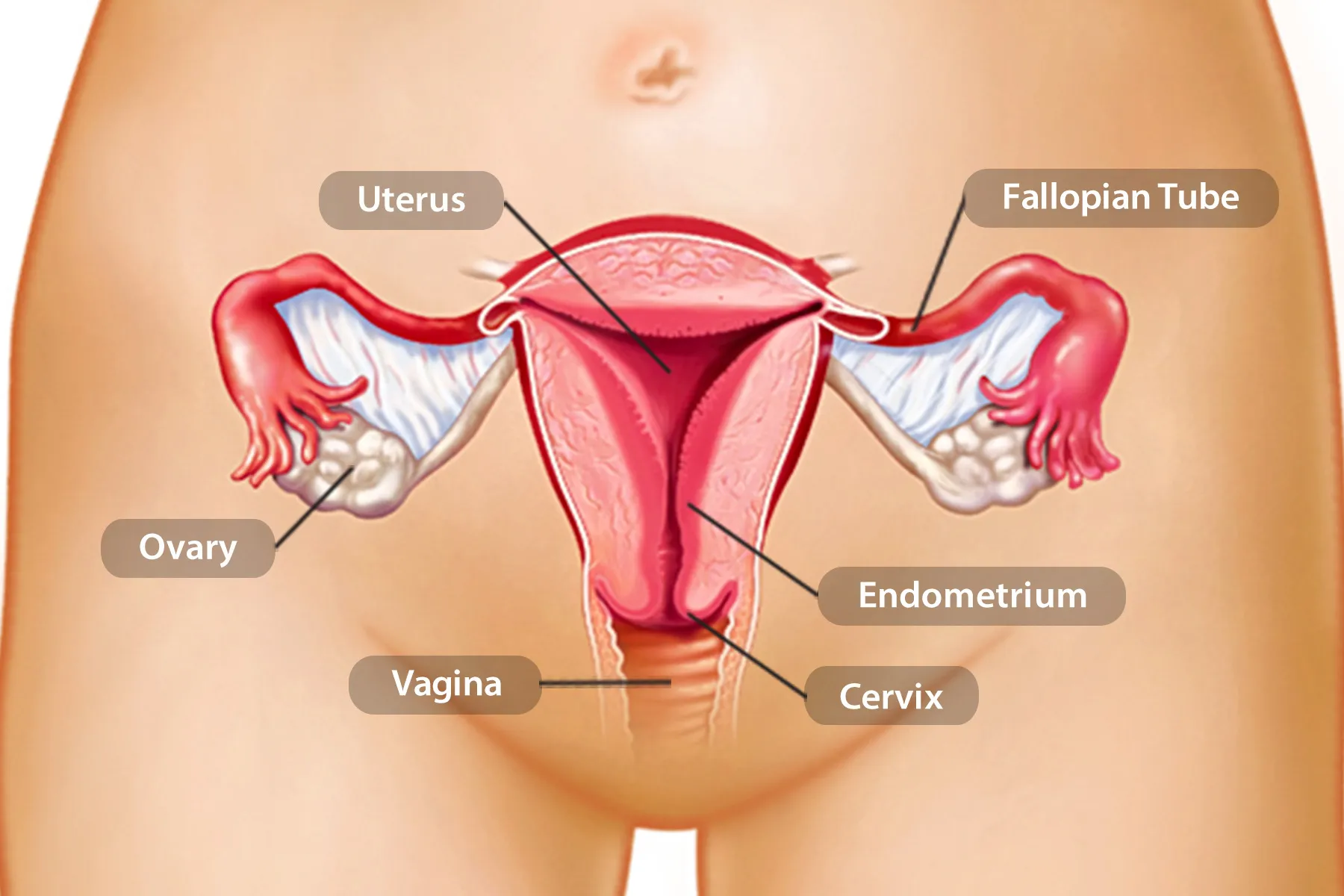
Vascularity of the uterus increases, and the endometrium becomes prepared for a fertilized ovum (proliferates).
Estrogen peaks just prior to ovulation because it is secreted by the ovaries and is crucial for the development and maturation of the follicle.
secretory phase
Day of ovulation (day 14 of cycle) to approximately 3 days before the next menstrual period.
Secretes small qualities of endometrial fluid in preparation for a fertilized ovum.
Endometrium reaches the thickness of heavy, soft velvet.
Estrogen drops sharply and progesterone dominates because it is secreted by the corpus luteum
Corpus luteum
A small yellow body that develops within a ruptured ovarian follicle.
Supplies most of the estrogen and progesterone in the first two gestational months before the placenta is fully developed at 8 weeks
Placenta will then secrete hormones when it’s developed
ischemic phase
Days 27-28 (last 2 days).
If fertilization does not occur, the ischemic phase begins.
Blood supply to the endometrium is reduced.
The corpus luteum begins to degenerate bc she’s not pregnant, and as a result both estrogen and progesterone levels drop.

Hypothalamic-pituitary cycle
At puberty, the hypothalamus synthesizes and releases GnRh (a hormone that stimulates the gonads-ovaries or the testes).
GnRh is transmitted to the anterior pituitary, where it causes the synthesis and secretion of the gonadotropins: FSH (stimulates the follicle or ovum sac to mature) and LH (stimulates the release of the ovum from the ovary).
Ovaries increase secretion of estrogen and progesterone.
phases of ovulation cycle
folicular
luteal
Ovarian Cycle
Before ovulation (day 14), follicles begin to mature in each ovary under the influence of FSH and estrogen.
The preovulatory surge of LH affects a selected follicle.
Ovarian Cycle: folicular phase
Varies in length from woman to woman and accounts for almost all variations in ovarian cycle length
this is why some months your period comes a few days early or late; starts at menstruation and ends at ovulation).
Ovarian Cycle: luteal phase
Begins immediately after ovulation and ends with the start of menstruation.
If no implantation occurs, the corpus luteum regresses, steroid levels drop, and menstruation occurs.

why should all new moms know how to do Kegel Exercises?
bc they’re at risk for stress incontinence (pee while sneezing)
kegel exercises
Technique used to strengthen the muscles that support the pelvic floor.
Teach the woman to pretend that she is trying to prevent the passage of intestinal gas. Have her use this tightening motion on the muscles around her vagina and the upper pelvis.
Another suggestion is to have the woman pretend she is trying to stop the flow of urine in midstream.
Contractions should be held for at least 10 seconds.
implications of UTIs and STIs during pregnancy
Uti and STI can cause preterm labor so we always do STI tests on mom when baby is born preterm
bacterial STIs
Chlamydia
Gonorrhea
Syphilis
Chlamydia
Most common and fastest-spreading STI
Infections often silent and highly destructive
Difficult to diagnose bc woman usually presents w no s/s
what can chlamydia result in
Pelvic Inflammatory Disease (needs abx)
what are Past chlamydial infections associated with?
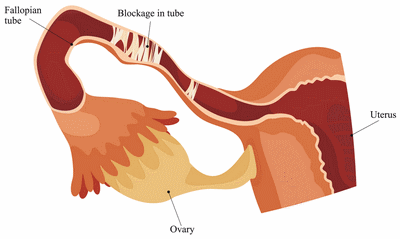
increased risk of ectopic pregnancy (plants into fallopian tube= can result in infertility) and tubal factor infertility.

tubal factor infertility
damage, scarring, or blockages in the fallopian tubes prevent sperm from reaching an egg or stop a fertilized egg from traveling to the uterus
screening and dx of chlamydia
Screening is done on asymptomatic and pregnant women
dx: Culture
s/s of chlamydia
Although infection is usually asymptomatic, some women may experience
spotting or postcoital bleeding
mucoid or purulent cervical discharge
dysuria
tx of chlamydia
If the woman is pregnant, azithromycin (if they have health insurance) (single dose) or amoxicillin (if they don’t have insurance) is used.
All exposed sexual partners should be treated within 30 days.
what happens is chlamydia goes untreated
newborn can be born with pneumonia and conjunctivitis
can turn into ophthalmia neonatorum and can go blind so all babies get erythromycin at birth

bacteria that causes gonorrhea
Neisseria gonorrhoeae
transmission of gonorrhea
Main way: genital-to-genital contact; however, it is also spread by oral-to-genital and anal-to-genital contact.
Transmitted through Mother to newborn
can also be transmitted to the newborn in the form of ophthalmia neonatorum during birth by direct contact with gonococcal organisms in the cervix.
age group most at risk for gonorrhea
20-24 years old
s/s of gonorrhea
Women are often asymptomatic
But when they are symptomatic, they may have a greenish-yellow purulent endocervical discharge or may experience menstrual irregularities.
Pelvic or abdominal pain (signs of PID)
Rectal complications (usually if they got it thru anal sex)
Screening and Diagnosis of gonorrhea
Thayer-Martin Culture
red culture dish
swab the cervix then the culture

tx of gonorrhea
Ceftriaxone 500 mg single dose IM.
treatment for chlamydia if this infection is not ruled out bc they usually present together.
Recent (previous 30 days) sexual partners should be examined, cultured, and treated with appropriate regimens.
Legal tip: Reporting a communicable disease
Syphilis, gonorrhea, chlamydia, chancroid (ulcers of perineum), HIV and AIDS are reported disease in every state
Health care providers are legally responsible for reporting all cases to the health authorities, usually the local health department in the woman’s county of residence
Inform women that the case will be reported, told why, and informed of the possibility of being contacted by the health department epidemiologist.
bacteria that causes syphilis
Treponema pallidum
transmission of syphilis
Transmission by entry in subcutaneous tissue through microscopic abrasions that can occur during sexual intercourse
Also transmitted through kissing, biting, or oral-genital sex
Transplacental transmission may occur at any time during pregnancy
mother to child but before the baby is born
what can syphilis lead to
serious systemic disease and even death
primary syphilis
chancre sore
Secondary syphilis (s/s)
If primary is not tx they progress to this
Maculopapular rash on the palms and soles of feet and generalized lymphadenopathy
The infected individual also may experience fever, headache, and malaise.
Tertiary syphilis (s/s)
If secondary is not tx they progress to this
Neurologic and cardiovascular, and musculoskeletal or multiorgan system complications can develop
who gets screened for syphilis
pregnant women
dx of syphilis
Serologic tests done of first prenatal visit (blood test)
Types: VDRL (venereal disease research lab) or Rapid Plasma Reagin. .
No syphilis= negative or nonreactive
Syphilis= positive or reactive
false positives with syphilis
False-positive results are not unusual, particularly when conditions such as acute infection, autoimmune disorders, malignancy, pregnancy, and substance use disorder exist and after immunization or vaccination
tx of syphilis
PCN G IM
Women who have a history of allergy to penicillin should be desensitized and treated with penicillin
give them small doses and build them up until they become immune to reaction
viral STIs
Human Papillomavirus (HPV)
Genital Herpes Simplex Virus
HIV
virus that causes Human Papillomavirus (HPV)
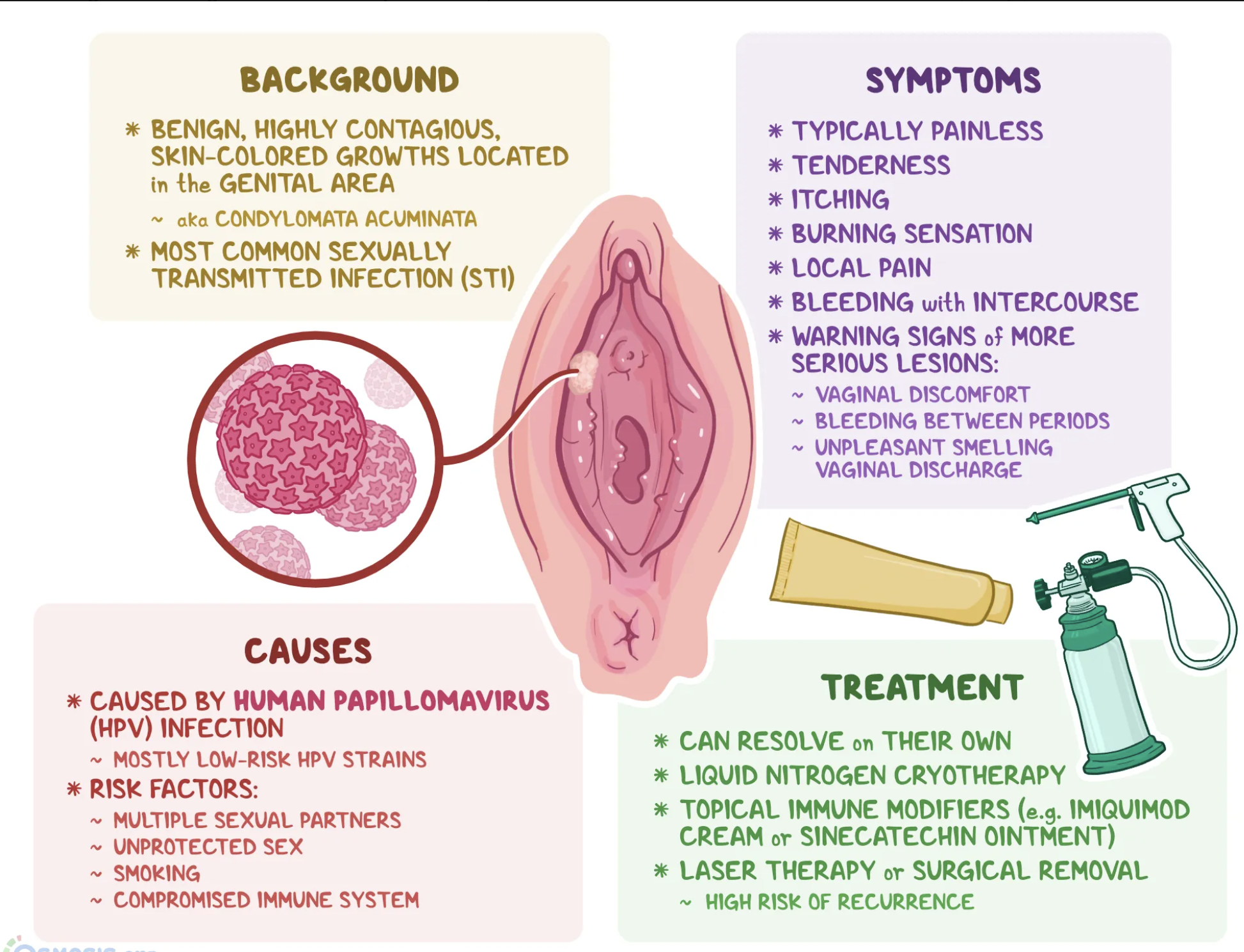
Condylomata acuminata
Human Papillomavirus (HPV)
Most prevalent viral STI seen in ambulatory health care settings
what does HPV cause and education
the primary cause of cervical neoplasia (cervical cancer)
education: Needs regular pap smears (once a year)
s/s of HPV
Vaginal lesions are often multiple.
Flat-topped papules, 1 to 4 mm in diameter, occur most often on the cervix
screening and dx in HPV
History of known exposure
Physical inspection
Pap smear
The only definitive diagnostic test for presence of HPV is histologic evaluation of a biopsy specimen (best way)
care management of HPV
No therapy has been show to eradicate it bc it’s permanent
Removal of the warts may be considered; however, it is recommended to wait until the pregnancy has ended.
we usually tx symptoms
ways to tx symptoms in HPV
Bathing with an oatmeal solution
drying the area with a hair dryer on a cool or low setting
cotton underwear
loose-fitting clothes
Diet, rest, stress reduction, and exercise.
types and transmission of Herpes Simplex Virus
Herpes simplex virus 1 (HSV-1)
Transmitted nonsexually (kissing)
Herpes simplex virus 2 (HSV-2)
Transmitted sexually
s/s of genital Herpes Simplex Virus
Pruritus and paresthesia (tingling)
redness of the genital area are prodromal symptoms of recurrent herpes infection
screening and dx of HSV
suspected from the history and physical examination
confirmed by viral tissue cultures.
tx of HSV
Acyclovir and valacyclovir is safe during pregnancy
there is no published data on famcicloviruse during pregnancy, and therefore it is not use.
management: Wear loose cotton underwear
if mom has active lesions, she CANNOT have a vaginal birth
what happens if mom does give birth vaginally with active lesions
baby will have herpes all over body
thats why if mom tells u they have herpes, first thing you do is examine genital area
transmission of Human Immunodeficiency Virus (HIV)
Transmission of HIV occurs primarily through exchange of body fluids (semen and blood)
Seroconversion in 6 to 12 weeks (aka how long it will take symptoms to show up after exposure)
screening for HIV in pregnancy
All moms are screened for HIV as early as possible in pregnancy and a second test in the third trimester
especially important for women known to be at high risk for HIV infection.
if HIV screening is positive…
Perinatal transmission has decreased due to antiretroviral therapy (ART)
reduces chance for baby to get it
antiretroviral therapy (ART) for HIV
Administered orally and continued throughout pregnancy
Treatment of HIV-infected women with ART during pregnancy has been reported to decrease the mother-to-child transmission to less than 2%
ART is administered IV 3 hours before the scheduled cesarean birth and is continued until the baby is born
It should be given during labor and birth if the woman is having a vaginal birth.
ART prophylaxis should be started orally preferably within 12 hours of life. The newborn is usually treated for 6 weeks (p. 781)***
considerations with ART therapy for HIV
Major side effect is bone marrow suppression
Periodic HCT, WBC count, and PLT count assessments should be performed
c section vs vaginal birth with HIV
dependent on the degree of viral load
breastfeeding w HIV
Breastfeeding is not recommended in the United States and most developed countries bc virus is in breastmilk
however, underdeveloped countries do allow breastfeeding (Africa) bc of no access to formula
vaginal infections
bacterial vaginosis (not an STI)
candidiasis (yeast infection)
Trichomoniasis (STI)
bacterial vaginosis
Most common type of vaginitis
Associated with preterm labor and birth
s/s and dx of bacterial vaginosis
*Woman reports of fishy odor and increased thin vaginal discharge are most significant.
dx: The fishy odor of BV will be released when KOH is added to vaginal secretions on the lip of the withdrawn speculum.
tx of Bacterial vaginosis
oral metronidazole (Flagyl) is most effective.
In the past, women were counseled to not consume alcohol while taking metronidazole, but the CDC found not data to support this practice and it was removed from their 2021 STI Treatment guidelines.
partner tx is not needed bc its not an STI
candidiasis and organism
Vulvovaginal candidiasis, or yeast infection, is second most common type of vaginal infection
Most common organism is Candida albicans
Factors affecting predisposal of candidiasis
Antibiotic therapy
Diabetes
Pregnancy
Obesity
Diets high in refined sugars
Use of Corticosteroids
Immunosuppressed states
common symptoms of candidiasis
Vulvar and vaginal pruritus (itching)
White discharge
If baby gets it in mouth during birth, they’ll have thrush
screening and dx of candidiasis
Physical examination
Vaginal pH
Saline and KOH wet smear and vaginal ph.
Vaginal pH is normal (less than 4.5) with a yeast infection
tx and comfort management in candidiasis
tx: OTC Miconazole (Monistat)
management
Sitz baths
Adding colloidal oatmeal powder to the bath
Not wearing underpants to bed may help decrease symptoms and prevent recurrences.
Trichomoniasis (STI)
Trichomonas vaginalis
an STI
Common cause of vaginal infection
transmission of trichomoniasis
sexually transmitted
s/s of trichomoniasis
may be asymptomatic, but women commonly experience:
characteristically yellowish to greenish, frothy, mucopurulent, copious, malodorous discharge
screening and diagnosis of trichomoniasis
Speculum examination
Pap smear
Reliable samples for testing are clinician-collected endocervical swabs, clinician-collected vaginal swabs, urine samples, and liquid Pap specimens collected in PreservCyt Solution
tx of trichomoniasis
Metronidazole orally twice per day for 7 days
Although the male partner is usually asymptomatic, he should receive treatment also because men often harbors the trichomonads in the urethra or prostate.
TORCH Infections
Toxoplasmosis
other infections
Rubella
Cytomegalovirus
Herpes simplex
TORCH: toxoplasmosis prevention
Good handwashing
Avoid raw or rare meat and exposure to cat litter
ask if mom has a cat, if yes, she CANNOT handle their feces
If she gardens, she MUST wash her hands and wear gloves
adverse affects of toxoplasmosis
Fetal injury is greatest when maternal infection occurs during the first trimester.
Baby can be born w birth defects
TORCH: other infections
Hepatitis A
Hepatitis B
TORCH: Rubella
screen on mom’s first visit
Approximately 50%-80% of fetuses exposed to the virus within 12 weeks after conception will show signs of congenital infection.
Vaccine is only given post-partum even if they’ve just been exposed bc it can cause birth defects
TORCH: Cytomegalovirus
The fetus can be infected transplacentally.
The virus is transmitted by infected organ transplant, blood, sex, saliva, or urine.
Causes congenital infections
Wash hands after handling infant toys and diapers.
Daycare workers are at risk
Wear gloves when changing baby diapers, wash hands, and clean babies toys
TORCH: herpes simplex
Risk of transmission is greatest during vaginal birth if woman has active lesions; thus cesarean birth is recommended.
Fertility Awareness-Based (FAB) Methods
Calendar rhythm method
Cervical mucus ovulation-detection method
Basal body temperature (BBT) method
affectiveness of Fertility Awareness-Based (FAB) Methods
FAB methods have decreased effectiveness in women with irregular cycles (particularly adolescents and menopause who have not established regular ovulatory patterns).
NFP methods are the only contraceptive practices acceptable to the Roman Catholic Church.
NFP methods (non-family planning)
daily observation of biological signs—such as cervical mucus, basal body temperature, and hormone levels—to track a woman's fertile window and either achieve or avoid pregnancy
Calendar rhythm method
The human ovum can be fertilized no later than 12 to 24 hours after ovulation.
The sperm’s ability to fertilize the ovum probably lasts no longer than 24 to 48 hours.
If the woman has a very regular cycle of 28 days, pregnancy is unlikely to occur if a couple abstains from intercourse for 4 days before and for 3 or 4 days after ovulation.
Practice of the calendar rhythm method is based on the number of days in each cycle counting from the first day of menses.
considerations for Calendar rhythm method
With this method, the woman determines the fertile period after accurately recording the lengths of menstrual cycles for 6 months
only do after monitoring period for 6 months
Cervical mucus ovulation-detection method
The cervical mucus ovulation-detection method (also called the Billings method) requires that the woman recognize and interpret the cyclic changes in the amount and consistency of cervical mucus that characterize her own unique pattern of change.
Women check the quantity and character of mucus on the vulva or introitus with fingers or tissue paper each day for several months to learn the cycle.
Intercourse is considered safe without restriction beginning 4 days after the last day of wet, clear, slippery mucus (post ovulation).
Cervical mucus ovulation-detection method: ovulation mucus
Ovulation mucus: clear, wet, sticky, slippery
It feels similar to a lubricant and can be stretched 5+ cm between the thumb and forefinger; this quality of mucus is called spinnbarkeit
don’t have sex for next 4 days if you see spinnbarkeit

Basal body temperature (BBT) method
Mittelschmerz
May see a slight drop in temperature about the time of ovulation.
Temperature will rise (at least 0.2° C) around the time of ovulation and stay elevated until just before the next menses (increases bc of progesterone).
Basal body temperature (BBT) method: Mittelschmerz
some women can feel a twinge (ovum released from ovary) when they ovulate
how to measure Basal body temperature (BBT)
Take BBT using a special calibrated thermometer every morning at the same time before you get out of bed.
Record temperature daily on a graph and connect the dots.

considerations with Basal body temperature (BBT)
Avoid intercourse until 3 days of higher temperatures occur.
things that can affect temp when doing the Basal body temperature (BBT)
Infection
fatigue
less than 3 hours sleep per night
awakening late
anxiety (stress)
Jet lag
alcohol taken the evening before
sleeping in a heated waterbed
barrier methods
condoms
diaphragms
cervical caps
considerations with condoms
Condoms lubricated with N-9 are not recommended for preventing STIs or HIV.
Latex condoms will break down with oil-based lubricants and should be used only with water-based or silicone lubricants (KY jelly).
Spermicide-coated condoms cause ejaculated sperm to be immobilized rapidly, thus increasing contraceptive effectiveness.
Failure rate: 13%.
safety alert with condoms
contraindicated with latex sensitivity.
Store unused condoms in a cool, dry place.
Not in wallet or glove compartment
diaphragms
A shallow, dome-shaped latex or silicone device with a flexible rim that covers the cervix.
Need to be fitted by HCP and it will need to be refitted for a 20% weight fluctuation, after any abdominal or pelvic surgery, and after every term pregnancy.
SE of diaphragms
irritation of tissues related to contact with spermicides