arch test two part three
 Call Kai
 Learn
 Practice Test
 Spaced Repetition
 Match
 Flashcards
 Knowt Play
1/19

There's no tags or description
Looks like no tags are added yet.
20 Terms

Image 14: Identify this city.
Cusco, Peru.

Cusco: date, location, and function?
15th century; Peru; Inca imperial capital and ceremonial center.

How did Cusco's layout express Inca spiritual and social values?
Its central plazas, sacred sites, and planned districts connected religion, government, and community.

What were important districts and buildings in Cusco?
The central plaza, royal compounds, roads, and Qorikancha Temple.

What materials and techniques characterize Inca buildings?
Precisely cut polygonal stone fitted tightly without mortar.

What happened to Cusco and Qorikancha after the Spanish conquest?
Spanish colonizers reshaped the city and built a church and convent over Qorikancha.

Image 14: What are the key facts about Cusco?
15th century; Cusco, Peru; Inca imperial capital and ceremonial city.

Cusco: who commissioned or designed it?
Built and expanded under Inca rulers, especially Pachacuti

Cusco: what style and materials are important?
Inca urban and stone architecture; Precisely fitted polygonal stone masonry, plazas, roads, terraces.

Cusco: what does it teach us about its culture?
Urban planning connected political authority, religion, and landscape

Image 15: Identify this place.
Great Enclosure, Great Zimbabwe.

Great Zimbabwe: date, location, and function?
Monumental complex developed over centuries; Zimbabwe; likely elite, residential, and ceremonial uses.

What can the word 'zimbabwe' mean?
Often interpreted as 'houses of stone' or a royal/elite residence.

Who built Great Zimbabwe?
Ancestors of the Shona people.
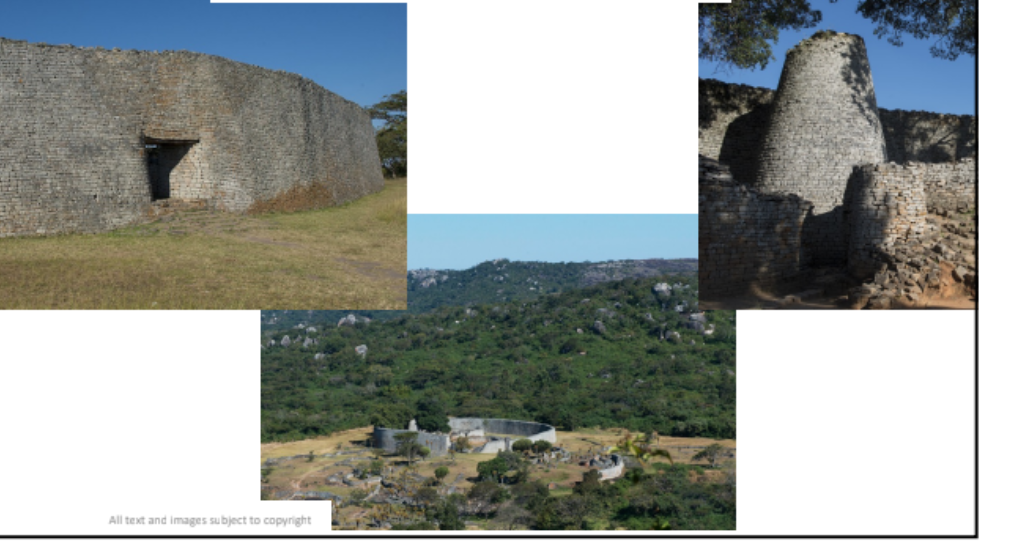
What materials and techniques were used?
Granite blocks were carefully stacked without mortar (dry-stone masonry).

What might the Great Enclosure have been used for?
Possibly elite residence, ritual space, or a place marking status; its exact function is debated.

Image 15: What are the key facts about Great Enclosure, Great Zimbabwe?
15th century (site developed over several centuries); Great Zimbabwe, Zimbabwe; Monumental stone enclosure, likely elite/ceremonial and residential uses.

Great Enclosure, Great Zimbabwe: who commissioned or designed it?
Built by Shona-speaking ancestors of the region's inhabitants

Great Enclosure, Great Zimbabwe: what style and materials are important?
Great Zimbabwe dry-stone architecture; Granite blocks laid without mortar, curved walls, narrow passages.

Great Enclosure, Great Zimbabwe: what does it teach us about its culture?
Skilled engineering, political power, trade, and social hierarchy