ob exam 2 day 2
 Call Kai
 Learn
 Practice Test
 Spaced Repetition
 Match
 Flashcards
 Knowt Play
1/164

There's no tags or description
Looks like no tags are added yet.
165 Terms
Rh sensitivity
The Rh (-) pregnant mother is exposed to fetus’ Rh (+) blood and may produce antibodies to her fetus’ Rh (+) blood.
what to give to an Rh (-) mom with an Rh (+) baby
Rh Immune Globulin
Rhogam
Gamulin Rh
HypRho-D
Rhophylac
-typically IM but Rhophylac can be given IM or IV push.
what do the Rh meds do
Clears the maternal circulation of Rh (+) cells.
Blocks maternal antibody production of Rh (+) cells before sensitization can occur.
dosage of Rh meds for antepartum moms
Give 50 mcg to mother with actual or threatened termination of pregnancy up to and including 12 weeks (microdose)
ALL NEGATIVE MOMS Give 300 mcg to mother at 26 to 28 weeks of gestation as prophylaxis or other potential maternal exposure to fetal blood cells (bc mom and babies blood can mix) (e.g. miscarriage, pregnancy termination, abdominal trauma, ectopic pregnancy, amniocentesis, version, or chorionic villi sampling).
Rh meds postpartum
Give 300 mcg again within 72 hours after birth
nursing considerations for Rh meds
Verify that the woman is Rh (-), Coombs test is (-), and baby is Rh (+).
This is given when mom and baby’s blood mix
Coomb’s test on mom
Rh negative Indirect Coombs’ test is negative
THIS TEST IS DONE ON MOM
IF NEGATIVE THERE ARE NO ANTIBODIES PRESENT (which we want)
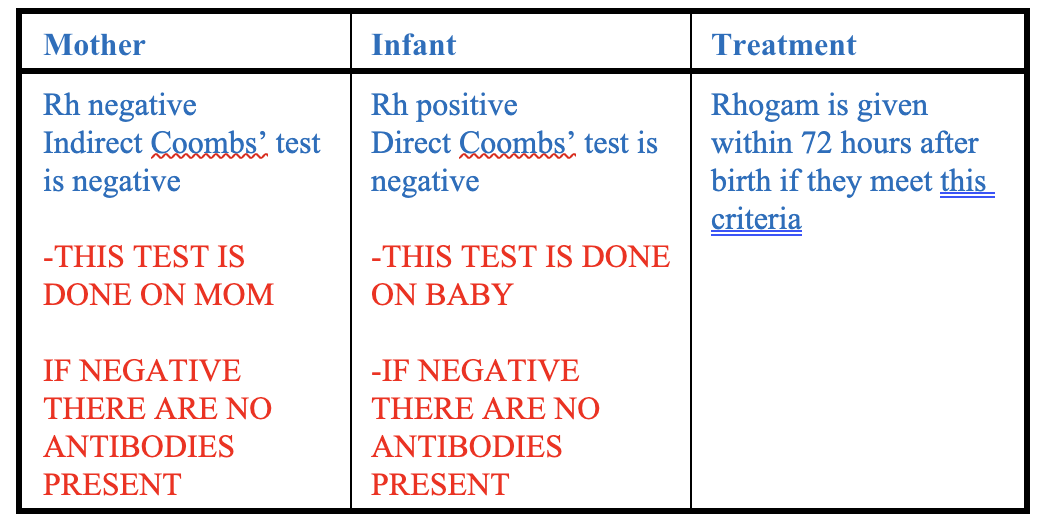
Coomb’s test on baby
Rh positive Direct Coombs’ test is negative
THIS TEST IS DONE ON BABY
IF NEGATIVE THERE ARE NO ANTIBODIES PRESENT
tx if both Coomb’s tests are negative
Rhogam is given within 72 hours after birth if they meet this criteria
If indirect or direct are positive= antibodies are present= DO NOT GIVE BC IT WON’T DO ANYTHING
after Rh med administration
Observe patient for at least 20 minutes after administration for allergic response bc it’s a blood product.
The medication is made from human plasma
a consideration if the woman is a Jehovah's Witness
if they refuse baby can have Rh sensitization
safety alert w Rhogam
it suppresses the immune response
therefore, the woman who receives both Rhogam and rubella vaccine must be tested at 3 months to see if she has developed rubella immunity.
safety alert with meds (in general)
Any medication that may cause drowsiness should not be administered to the mother before discharge if she is the one who will be holding the baby on the way out of the hospital.
Sexual Activity and Contraception post partum
You can safely resume sexual intercourse by the 2-4 week after birth when bleeding has stopped and the perineum is healed.
Episiotomy has to have healed 2-4 weeks
Locia had to have stopped
postpartum assessment on mom
Breast
Uterus
Bowels
Bladder
Lochia
Episiotomy
Homan’s Sign
Emotions
bonding
Emotions and feelings experienced by the mother (or parent) in relation to the infant
attachment
Two-way interaction between the mother and the infant that develops during the first year of the infant’s life.
timing of bonding
Bonding occurs more readily with the infant whose temperament, social capabilities, appearance, and gender fit the parent's expectations
timing of bonding: temperament
babies’ personality (cranky, chill)
timing of bonding: social capabilities
ex: baby being in wheelchair
quiet-alert
best time to bond
pick up baby, turn off lights, and tell mom to hold baby
early parent infant contact
Early skin-to-skin contact between the mother and newborn immediately after birth and during the first hour facilitates maternal attachment behaviors.
Breastfeeding enhances bonding
skin-to-skin also promotes breastfeeding
extended parent infant contact
Rooming-in is common in family-centered care.
infant stays in the room with the mother
In some facilities the newborn never leaves the mother's presence; nursery nurses perform the initial assessment and care in the room with the parents.
bonding with touch
Once the infant is close, the mother begins the exploration process with her fingertips, one of the most touch-sensitive areas of the body
Within a short time she uses her palm to caress the baby's trunk and eventually enfolds (holds baby close) the infant.
bonding with eye contact
En face position
To promote eye contact, instillation of prophylactic antibiotic ointment (erythromycin) in the infant's eyes can be delayed until the infant and parents have had some time together in the first hour after birth.
If they’re not bonding, call SW
bonding with eye contact: en face position
The parent's face and the infant's face are approximately 8 inches apart and on the same plane
next to heart
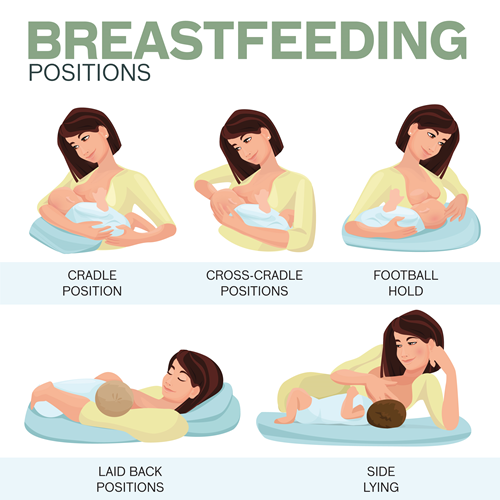
bonding with voice
As the parents speak, the infant is alerted and turns toward them.
Infants respond to higher-pitched voices and can distinguish their mother's voice from others soon after birth.
Strategies for Facilitating Sibling Acceptance of a New Baby
Involve the child in preparation for the infant, such as helping to decorate the child’s room or bringing them a gift
Take the child sibling preparation class, including a hospital tour.
Arrange a special time for the child to be alone with each parent
signs of sibling rivalry
toddler wanting to sleep back in a crib
Stages of Transition to Extrauterine Life
Transition period
First period of reactivity
Second period of reactivity
Stages of Transition to Extrauterine Life: transition period
Between intrauterine and extrauterine existence
Consists of the first 6 to 8 hours of life.
Stages of Transition to Extrauterine Life: first period of reactivity
Lasts up to 30 minutes after birth
Newborn’s heart rate increases to 160 to 180 beats/min
Decreases after 30 minutes
Respirations are irregular at 60 to 80 breaths/min
Decrease in motor activity after period followed by 60 to 100 min of deep sleep
The infant is ALERT after they wake up. (encourage bonding at this time)
Bowel sounds are audible, and meconium may be passed.
normal newborn HR
120-160
normal newborn RR
30-60
Stages of Transition to Extrauterine Life: second period of reactivity
Occurs 2 to 8 hours after birth
Lasts from 10 minutes to several hours.
Tachycardia, tachypnea occur
Increased muscle tone, changes in skin color (cyanosis), and mucous production
meconium passes
Stages of Transition to Extrauterine Life: second period of reactivity (mucous production)
BABY CAN CHOKE ON MUCUS** (SHOW MOM HOW TO USE BULB SYRINGE
chemical factors of newborn resp system
Decrease levels of oxygen and increase levels of carbon dioxide initiate the newborn breathing
mechanical factors of newborn resp system
Chest compression
thoracic squeeze w vaginal squeeze encourages baby to take first breath
no thoracic squeeze w c section
thermal factors of newborn resp system
Colder environment in delivery room encourages baby to take first breath
sensory factors of newborn resp system
Suctioning nose and drying infant. Environment (lights, sounds, smells). encourages baby to take first breath
surfactant
prevents alveolar collapse on exhalation
preemies no have surfactant= risk for RDS
establishing respiration as a newborn
Once respirations are established, breaths are shallow and irregular, ranging from 30 to 60 breaths/minute, with periods of periodic breathing that include pauses in respirations lasting less than 20 seconds.
Preferential nose breather
Abdominal breathing is characteristic of newborns.
The newborn infant's chest and abdomen rise simultaneously with inspiration, but because of the large size of the abdomen, chest movement is not as visible
If baby stops breathing for >20 secs
apnea
NOT NORMAL
establishing respiration as a newborn: Preferential nose breather
Bc they breastfeed so they NEED to rely on nose
Signs of Respiratory Distress
Nasal flaring
intercostal or subcostal retractions
grunting with respirations
Seesaw respirations
Tachypnea (RR>60)
***REPORT ALL TO HCP
Signs of Respiratory Distress: seesaw respirations
Exaggerated rise in abdomen, with respiration, as the chest falls
signs of Respiratory Distress: tachypnea (RR>60)
may result from inadequate clearance of lung fluid
cardiovascular system of newborns
In term infants, the ductus arteriosus closes within the first 24 hours after birth
permanent closure usually occurs within 2 to 3 months, and the ductus arteriosus becomes a ligament.
HR in newborn
The heart rate averages 120 to 160 beats/minutes.
during sleep: 80-100
during crying: 180 bpm
Most heart murmurs heard during the first few days of life have no pathologic significance, and more than one half of the murmurs disappear by 6 months
HR and sounds in newborn: during crying
let them such on finger then reassess
murmurs in newborns
Most heart murmurs heard during the first few days of life have no pathologic significance, and more than one half of the murmurs disappear by 6 months.
The presence of a murmur and accompanying signs such as poor feeding, apnea, cyanosis, or pallor are considered abnormal and should be further investigated.
PMI in newborn
located at the third to fourth intercostal space and to the left of the midclavicular line.
often visible and easily palpable because of the thin chest wall.
BP of newborns at birth
75-95/37-55
blood volume of newborn
ACOG recommends delayed cord clamping for at least 30 to 60 seconds for term and preterm infants
Benefits include increased blood volume and BP and reduced risk for intraventricular hemorrhage and necrotizing enterocolitis.
platelets in newborns
Clotting factors are decreased during the first few days of life because the newborn cannot synthesize Vitamin K
give it to them
blood groups in newborns
Cord blood samples may be used to identify the infant’s blood type and Rh status
thermoregulation in newborns
The maintenance of balance between heat loss and heat production
Babies keep themselves warm by
The flexed position
Baby can’t shiver so they use… brown fat
brown fat
Source of heat unique to neonates that is capable of greater thermogenic activity than ordinary fat; deposits are found around the adrenals, kidneys, and neck; between the scapulae; and behind the sternum for several weeks after birth
full-term newborn has greater stores than a preterm infant. (more at risk for cold stres)
priorities in newborns
#!: ABCs
#2: keep baby warm
types of heat loss
convection
radiation
evaporation
conduction
convection heat loss
Flow of heat from the body surface to cooler ambient air
to prevent: Newborns in open bassinets are wrapped to protect them from the cold.
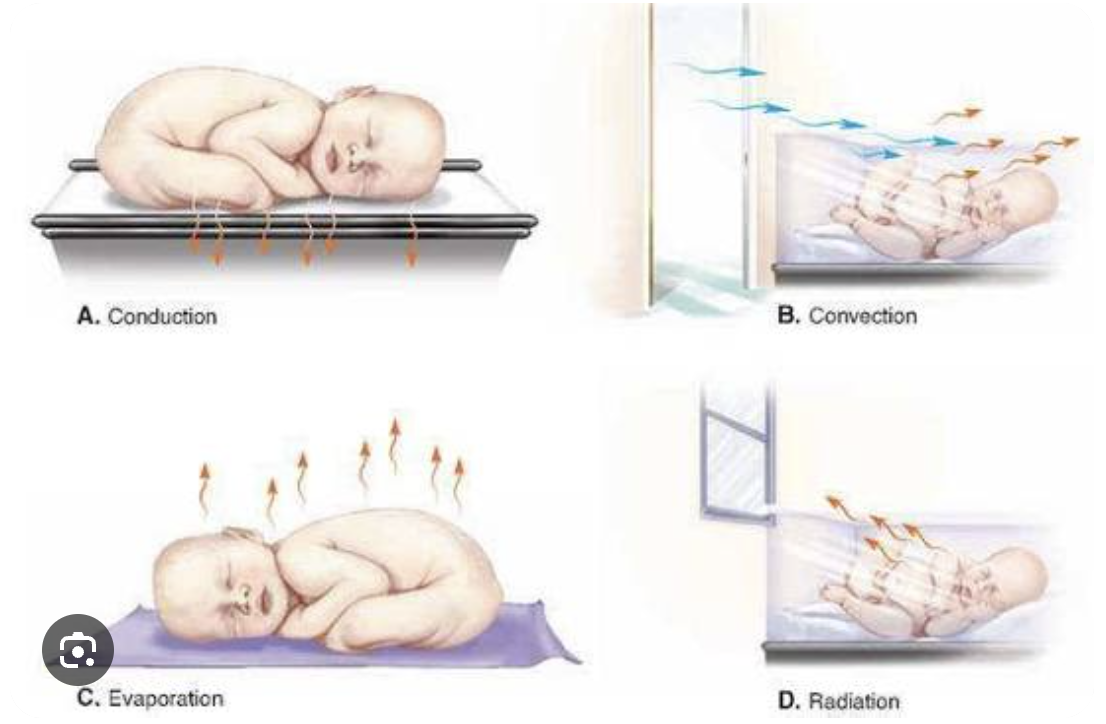
radiation heat loss
Loss of heat from the body surface to a cooler solid surface not in direct contact but in relative proximity
To prevent: Nursery cribs and examining tables are placed away from outside windows, and care is taken to avoid direct air drafts.

evaporation heat loss
Loss of heat that occurs when a liquid is converted to a vapor
To prevent: Drying infant after birth and bathing.
conduction heat loss
Loss of heat from the body surface to cooler surfaces in direct contact
To prevent: When admitted to the nursery the newborn is placed in a prewarmed crib to minimize heat loss. The scales used for weighing the newborn should have a protective cover to minimize conductive heat losses as well. Warm up hands and stethoscope

hypertehermia in newborns
Develops more rapidly in the newborn than in the adult because of the relatively large surface area of an infant.
Sweat glands do not function well so they can’t cool down
Can increase risk for seizures which result in heat stroke and death
renal system of newborns
void 2-6xper day during the first and second days of life
after first 4 days: six to eight voidings per day of pale straw-colored urine are indicative of adequate fluid intake
Call pediatrician if not
The health care provider should be notified if the infant does not void within first 24 hours.
color of newborn urine
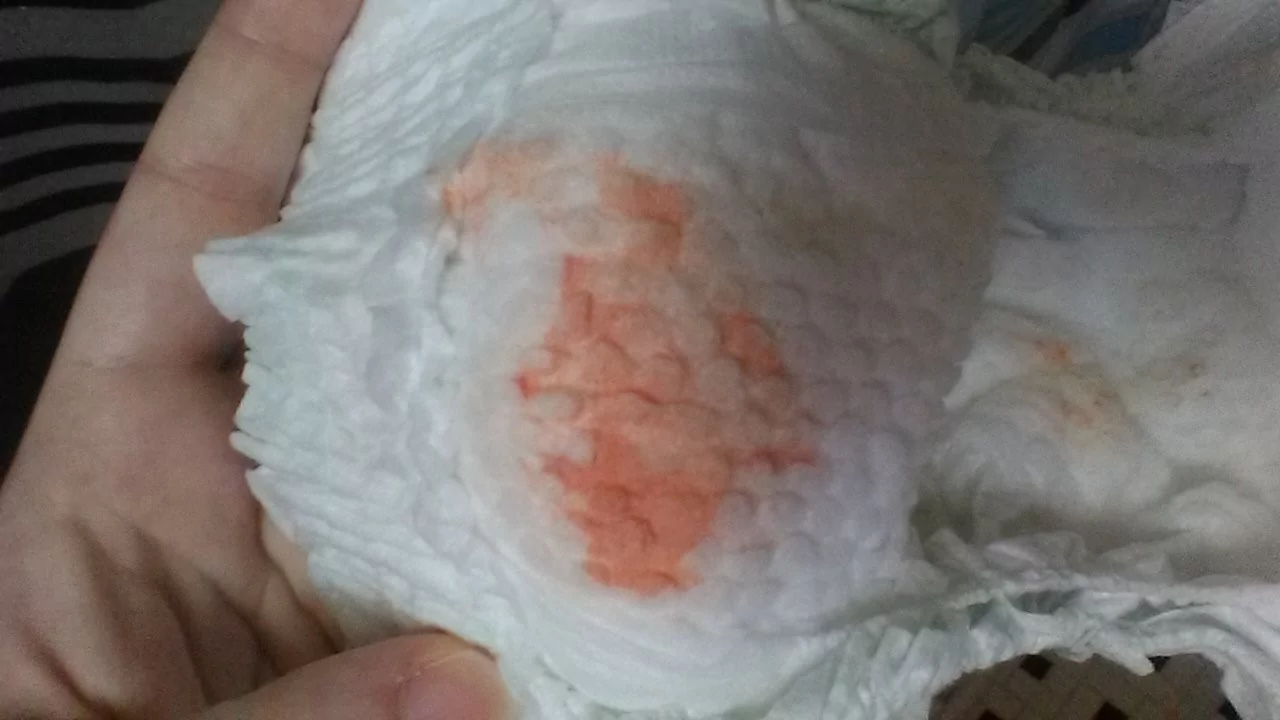
first week: urine contains an abundance of uric acid crystals that may appear as pink or orange stains (“brick dust”) on the diaper
normal and will go away
newborn weight flucuations
It is common for newborns to lose 5% to 10% of their birth weight during the first 3 to 5 days of life. This is the result of fluid loss through urine, feces, and lungs, as well as an increased metabolic rate and limited fluid intake
Weight baby every day
The neonate should regain the birth weight within 10 to 14 days, depending on the feeding method (breast or bottle).
GI system of newborns
epstein pearls
precocious teeth
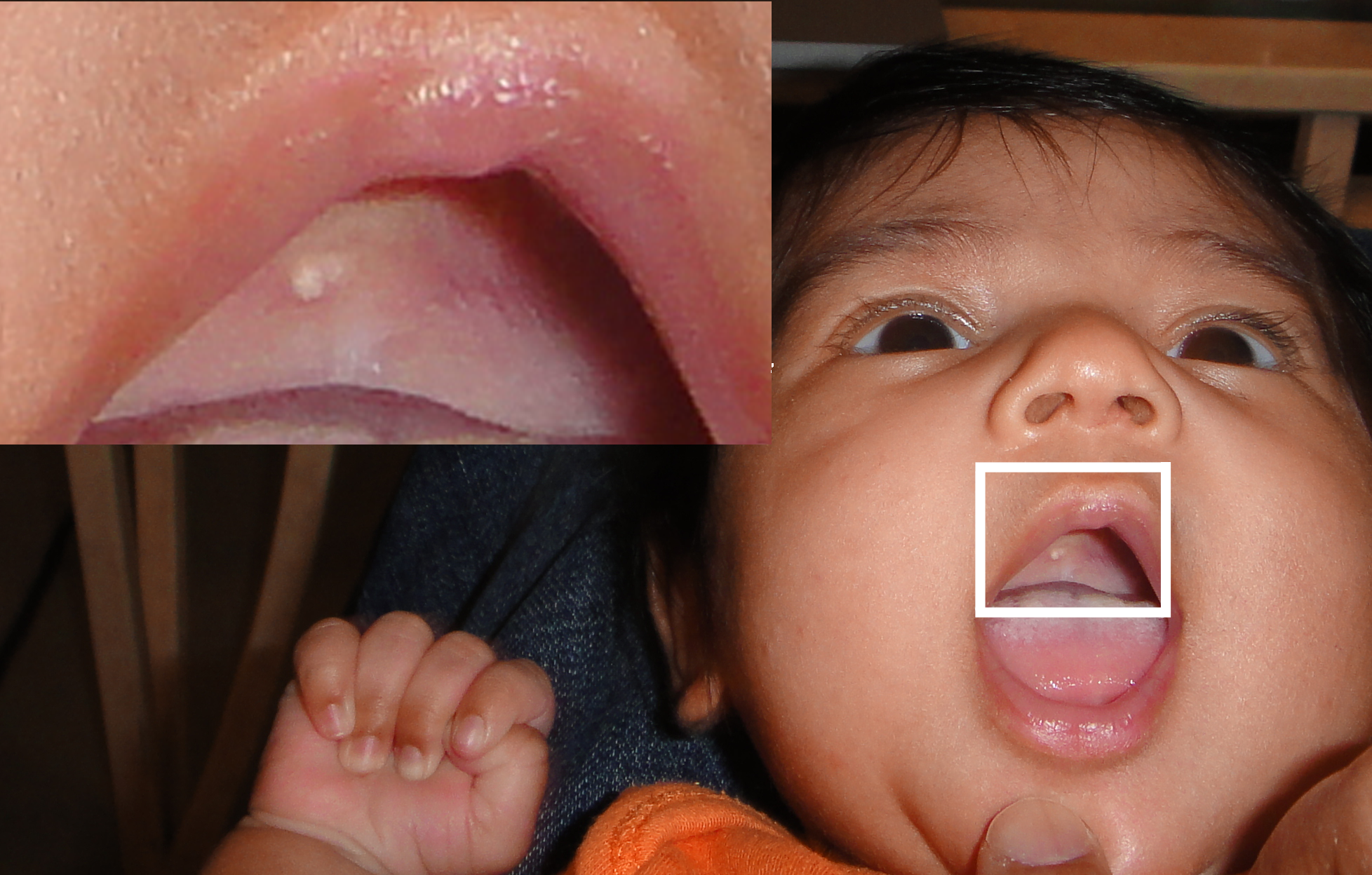
GI system of newborns: epstein pearls
small whitish areas may be found on the gum margins and at the juncture of the hard and soft palate.
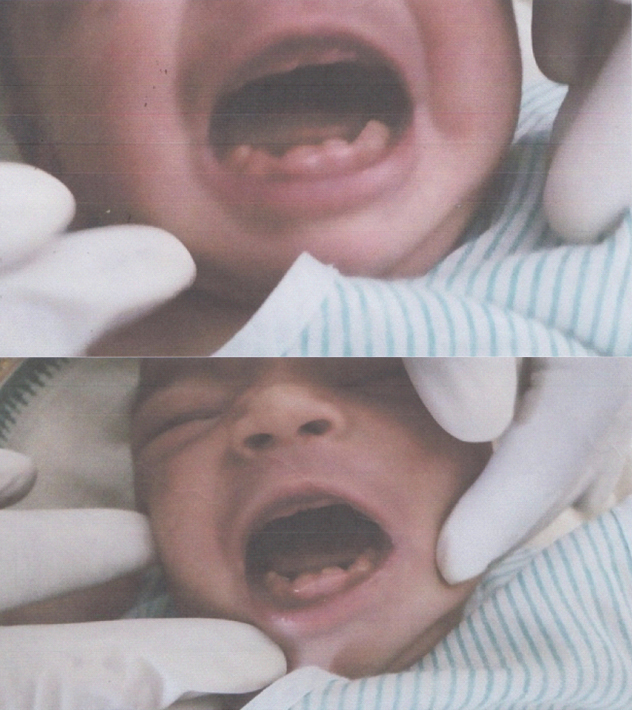
GI system of newborns: precocious teeth
Occasionally an infant may be born with one or more teeth
Tell HCP bc they can come loose and choke
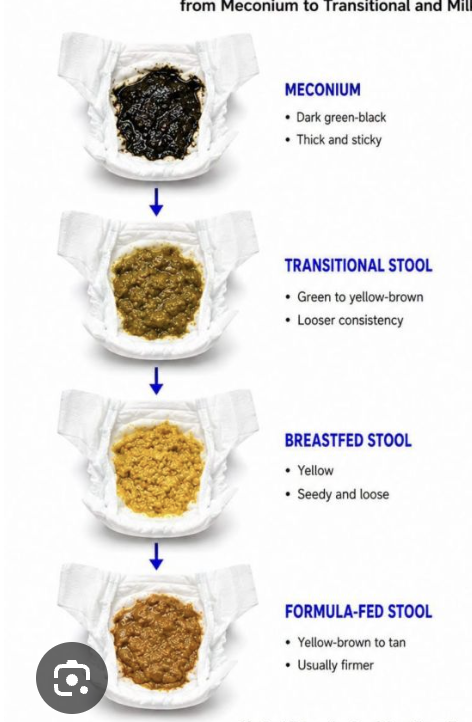
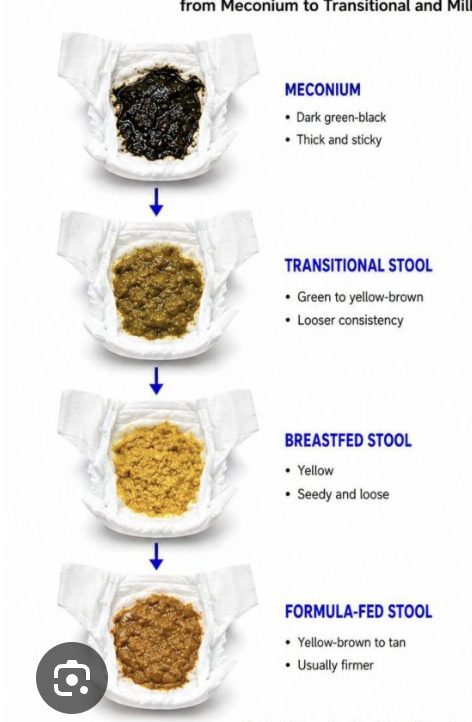
Changing in Stooling Patterns of Newborns
meconium
transitional stools
milk stool
Changing in Stooling Patterns of Newborns: meconium
passage of meconium should occur within the first 24 to 48 hours, although it may be delayed up to 7 days in very low-birth-weight infants (3lb- 4oz= very LBW)
No stool (obstruction)

Changing in Stooling Patterns of Newborns: transitional stools
Usually appear by third day after initiation of feeding; greenish brown to yellowish brown, thin, and less sticky than meconium
may contain some milk curds
Changing in Stooling Patterns of Newborns: milk stool
Usually appears by fourth day
Breastfed infants: stools yellow to golden (yellow mustard), pasty in consistency, with an odor similar to that of sour milk.
Commercial infant formula: stools pale yellow to light brown, firmer in consistency, stronger odor than breast milk stools. (More at risk for constipation)
hepatic system of newborn
iron storage
glucose homeostasis
bilirubin synthesis
hepatic system of newborn: iron storage
At birth, the term infant has an iron store sufficient to last 4 months.
hepatic system of newborn: glucose homeostasis
At birth, the newborn is cut off from its maternal glucose supply and, as a result, has an initial decrease in serum glucose levels
risk after cord is clamped
who is most at risk for glucose homeostasis
Small gestational weight
Large gestational age
Babies moms who had diabetes
hepatic system of newborn: bilirubin synthesis
Jaundice does not usually appear until the bilirubin level reaches 6 to 7 mg/dl.
integumentary system of newborn
he epidermis and dermis are loosely bound and extremely thin (reason for cold stress)
Mottling
acrocyanosis
edema of face is seen w vaginal birth
simian crease

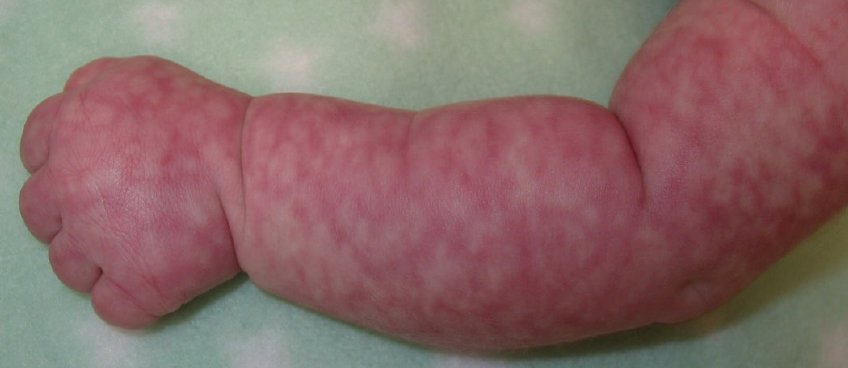
integumentary system of newborn: mottling
he skin often appears blotchy or mottled, especially over the extremities
can be normal or abnormal
Lace like pattern
integumentary system of newborn: acrocyanosis
Peripheral cyanosis; blue color of hands and feet in most infants at birth that may persist for 7 to 10 days
Caused by sluggish peripheral circulation

integumentary system of newborn: simian crease
A single palmar crease, is often found in Asian infants or in infants with Down syndrome

signs of down syndrome
Low set ears
protruding tongue
fat pad on back of neck
simian crease
****CALL HCP AND GET GENETIC STUDIES DONE

sweat glands in newborn
milia
Small, white sebaceous glands, appearing as tiny, white, pinpoint papules on the newborn’s face. (seen on nose and chin, clogged sebaceous glands, aka baby acne)

Desquamation
Large generalized areas of skin desquamation (peeling) present at birth may be an indication of post maturity.
Seen in baby over 40 weeks gestation (post mature)

types of nevi
Telangiectatic nevi (Stork bites)
Nevus flammeus (port wine stain)
Slate gray nevi (Mongolian spots)
telangiectanic nevi (stork bites)
Pink and easily blanched
appear on the upper eyelids, nose, upper lip, lower occipital area, and nape of the neck
have no clinical significance and fade by the second year of life.

nevus flammeus (port wine stain)
Red to purple
Do not blanch on pressure or disappear.
They are most commonly found on the face and neck
Permanent (unless laser therapy is done)

slate gray nevi (mongolian spots)
Areas of pigmentation, may appear over any part of the exterior surface of the body, including the extremities.
They are more commonly noted on the back and buttocks.
These pigmented areas are most frequently noted in newborns whose ethnic origins are in the Mediterranean area, Latin America, Asia, or Africa.
They fade gradually over months or years.

nursing alert w mongolian spots
Document in medical record so they are not confused with child abuse
infantile hemangioma
Dilated, newly formed capillaries
Raised, sharply demarcated, bright- or dark-red, rough-surfaced swelling.
Common sites are the scalp, face, back, and anterior chest.
Most lesions reach maximum growth in approximately 6 months and then begin a slow process of involution. (will absorb and go away)

Erythema toxicum
“newborn rash or flea bite rash”
Very common
A transient rash and it is found in term neonates during the first 3 weeks of life.
The rash is thought to be an inflammatory response.
The rash requires no treatment.
Goes away

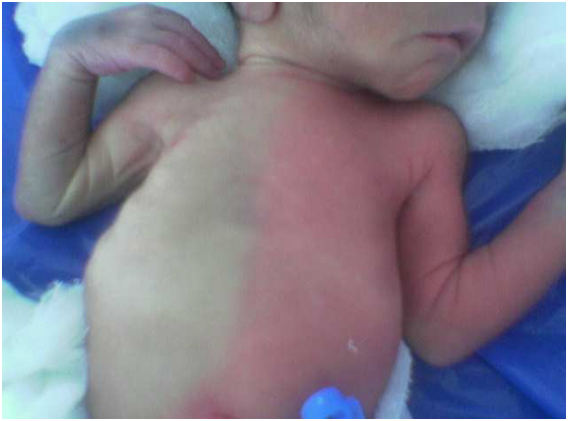
Harlequin Sign
normal
½ of the body displays erythema and the other ½ pallor (page 491).
Usually occurs between 2 to 5 days of age
Color fades away in 30 seconds to 20 minutes.
newborn female reproductive system
in term infants the labia majora and minora cover the vestibule.
In preterm infants, the clitoris is prominent, and the labia majora are small and widely separated.
Smegma
Some vernix caseosa between labia possible
No need to remove during bathing bc it’ll absorb into skin
White discharge in boys and girls
Pseudomenstruation
An increase of estrogen during pregnancy followed by a decrease after birth results in a mucoid vaginal discharge and even some slight bloody spotting (p. 496).
Caused by withdrawal of placental hormones (estrogen)
hymenal tags
Common findings and have no clinical significance

newborn male reproductive system
At 36 to 40 weeks of gestation the testes are palpable in the upper scrotum, and rugae appear on the anterior portion
If testes are distended then baby has to be at least 36 weeks
If the male infant is born in a breech presentation, the scrotum can be very edematous and bruised.