disorders of blood flow in systemic circulation
 Call Kai
 Learn
 Practice Test
 Spaced Repetition
 Match
 Flashcards
 Knowt Play
1/26

There's no tags or description
Looks like no tags are added yet.
27 Terms
what is the primary function of endothelial cells?
- controls the transfer of molecules across the vascular wall
- platelet adhesion
- blood clotting
- blood flow modulation
- hormone metabolism
- immune regulation
- cell growth influence.

what does endothelial dysfunction refer to?
potentially reversible changes in endothelial function due to environmental stimuli
endothelial dysfunction examples:
- inflammation
- cytokines
- hemodynamic stresse
- hypoxia
what is the role of vascular smooth muscle cells?
- regulate vasoconstriction or dilation of blood vessels
- influenced by the autonomic nervous system
- contribute to healing and pathological processes
what are triglycerides used for?
energy metabolism
what is the function of phospholipids?
- structural constituents of lipoproteins
- blood clotting components
- myelin sheath
- cell membranes.
what is hyperlipidemia?
elevated levels of triglycerides, phospholipids, or cholesterol
what are the types of lipoproteins classified by density?
- chylomicrons
- very-low-density lipoprotein (VLDL)
- intermediate-density lipoprotein (IDL)
- low-density lipoprotein (LDL)
- high-density lipoprotein (HDL)

what does a lipid panel typically include?
- total cholesterol
- HDL cholesterol (good cholesterol)
- LDL cholesterol (bad cholesterol)
- triglycerides
what are lipoprotein receptors?
membrane proteins that facilitate the cellular uptake of LDL, VLDL, chylomicrons, and IDL proteins
what is hypercholesterolemia?
serum cholesterol levels of 240 mg/dL or greater, which can contribute to cardiovascular events
what are the types of lesions associated with atherosclerosis?
- fatty streaks
- fibrous atheromatous plaques
- complicated lesions.
what are major risk factors for atherosclerosis?
- hypercholesterolemia
- cigarette smoking
- hypertension
- family history of premature CHD
- age
- low HDL cholesterol, CRP levels, and homocysteine levels
what are the clinical manifestations of atherosclerosis?
- ischemic heart disease
- stroke
- peripheral vascular disease
- thrombosis
- aneurysm formation.
what are the seven 'P's of acute arterial embolism?
- Pistol shot (acute onset)
- Pallor,
- Polar (cold)
- Pulselessness
- Pain
- Paresthesia
- Paralysis.
what are the three types on aneurysms?
saccular, fusiform, dissecting
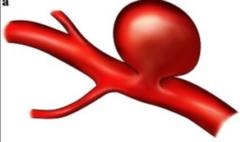
what type of aneurysm is this?
saccular
what characterizes a saccular aneurysm?
bulges off on one side
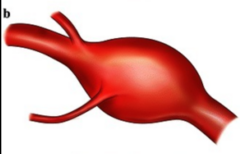
what type of aneurysm is this?
fusiform
what characterizes a fusiform aneurysm?
artery wall bulges / balloons out symmetrically around the entire circumference of the blood vessel (shaped like a football)

what type of aneurysm is this?
dissecting
what characterizes dissecting aneurysms?
an acute, life-threatening condition involving hemorrhage into the vessel wall with longitudinal tearing
what are the characteristics of venous circulation?
- one-way valves in large veins
- limited contractility
- skeletal muscle pump
- decreased driving pressure
- thin-walled vessels
what are common disorders of the venous circulation?
varicose veins, thrombophlebitis, and deep vein thrombosis (DVT)
what is virchow's triad?
the three essential elements associated with venous thrombosis: stasis of blood, increased blood coagulability, and vessel wall injury
what risk factors are associated with venous stasis?
- bed rest
- immobility
- spinal cord injury
- acute myocardial infarction
- congestive heart failure
- shock
- venous obstruction
what is venous insufficiency?
a condition that causes deformity of valve leaflets, leading to stasis dermatitis, venous ulcers, and valvular incompetence