Intro to Cell Part 1
 Call Kai
 Learn
 Practice Test
 Spaced Repetition
 Match
 Flashcards
 Knowt Play
1/83

Earn XP
Description and Tags
Proverbs 16:3
84 Terms
DNA alone is not life.
DNA is just the instruction manual.
To actually make something living, you need a whole working system that can read those instructions, copy them, express them, produce proteins, generate energy, divide, and grow.
If DNA is all you need, then can we really bring an extinct organism back just by having its DNA?
Cellular organization
Metabolism and energy utilization
Homeostasis
Growth and development
Response to stimuli
Reproduction
Heredity
Adaptation and evolution at the population level
How do you know you are alive?
Characteristic of Living Organisms:
Cellular organization

[Characteristic of Living Organisms]
_____ means that living organisms are composed of one or more cells
Metabolism

[Characteristic of Living Organisms]
_______ is the total set of life-sustaining chemical reactions that happen inside your body's cells.
Homeostasis
Example:
Sweating
Shivering
Goosebupms
[Characteristic of Living Organisms]
________ refers to the ability of living organisms to maintain internal stability and balance despite external changes.
Growth and development
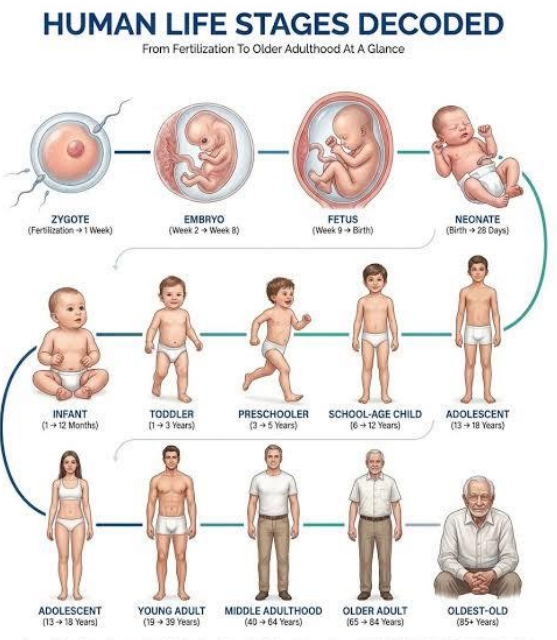
Mitosis — for somatic cells
Meiosis — for sex cells
[Characteristic of Living Organisms]
_____ involves changes in form and function as an organism matures.
Response to stimuli
Example: Makahiya

[Characteristic of Living Organisms]
Organisms respond to changes within their bodies or in the external environment.
Reproduction

[Characteristic of Living Organisms]
______ is the process by which organisms produce new organisms.
Heredity
Example: Baldness
[Characteristic of Living Organisms]
The transmission of genetic information from parents to offspring is called ______

Adaptation
[Characteristic of Living Organisms]
An_____ is an inherited characteristic that improves survival or reproduction in a particular environment.
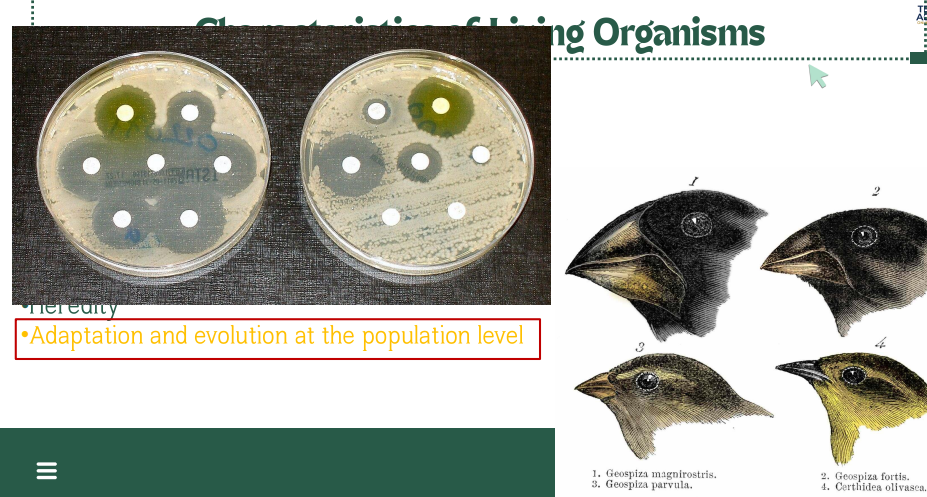
Evolution
[Characteristic of Living Organisms]
_______ is a change in the inherited characteristics of populations over successive generations
Viruses: At the boundary of life
Acellular (not made of cells) infectious agentsContain DNA or RNA genomes
Lack independent metabolism
Require host cells for replication
Can evolve through genetic variation and selection
Are Viruses Alive?
Cell
[Viruses and Cell Theory]
_______ is the basic structural, functional, and biological unit of all living organisms.
Virus
[Viruses and Cell Theory]
A_________ is an acellular infectious agent with a DNA or RNA genome that depends on a host cell for replication.
unicellular organism
[Viruses and Cell Theory]
A ______organism consists of one cell
Examples include bacteria and amoebae.
multicellular organism
[Viruses and Cell Theory]
A _______ organism consists of many cells, often with specialized functions
Example: Octopus
Viruses
[Viruses and Cell Theory]
______ are acellular, which means that they are not composed of cells
DNA or RNA
[Viruses and Cell Theory]
A viral genome consists of ________
Viruses
[Viruses and Cell Theory]
_______ lack independent metabolism and require host cells for replication.
genetic variation
selection
[Viruses and Cell Theory]
Viruses can evolve through ______ (2)
B. Heritable variants with greater survival under treatment become more frequent.
[Viruses and Cell Theory]
Two genetically identical bacterial populations are grown in identical media except that one receives a nonlethal antibiotic. After several generations, resistant descendants become common only in the treated population. Which explanation best describes biological evolution?
A. The antibiotic intentionally directs individual cells to make useful mutations.
B. Heritable variants with greater survival under treatment become more frequent.
C. All cells become resistant through short-term acclimation without inheritance.
D. The treated cells must have developed membrane-bound nuclei ..
All living organisms consist of one or more cells.
The cell is the basic unit of life.
All cells arise from pre -existing cells.
[Cell Types and Three Domains]
Cell theory (3)
B. It performs all essential functions of life independently.
[Cell Types and Three Domains]
A scientist discovered a new microscopic organism living in deep-sea volcanic vents. The organism can grow, reproduce, produce energy, and respond to environmental changes, but it does not have a nucleus or membrane-bound organelles. Which statement BEST explains why this organism is still considered a living cell according to the Cell Theory?
A. It contains a rigid cell wall made of cellulose
B. It performs all essential functions of life independently.
C. It possesses membrane-bound organelles for metabolism.
D. It can only survive by attaching to multicellular organisms.
Prokaryotic Cell
Eukaryotic Cell
Plant Cell
📌NOTE: Prokaryotic does not mean primitive, defective , or less evolved
[Cell Types and Three Domains]
Tree of Life (3)

[Cell Types and Three Domains]
Tree of Life:
protein
[Cell Types and Three Domains]
DNA stores instructions, but a functioning _____ is needed to carry out cellular life processes
nucleus
[Cell Types and Three Domains]
A living organism can lack a membrane-bound _______ and still grow, reproduce, and use energy through its cellular machinery.
prokaryotic cell
[Cell Types and Three Domains]
A _______ cell lacks a membrane-bound nucleus and the membrane-bound organelles characteristic of eukaryotes.

[Cell Types and Three Domains]
Prokaryotic vs. Eukaryotic cells:
Bacteria
Archea
Eukarya
[Cell Types and Three Domains]
3 Domains include _____
Bacteria
Archaea
[Cell Types and Three Domains]
Examples of Prokaryotic cells (2)
Animals
Plants
Fungi
Protist
[Cell Types and Three Domains]
Examples of Eukaryotic cells (4)
eukaryotic
[Cell Types and Three Domains]
An amoeba is unicellular, but its cell type is _______
No. A cell without a membrane-bound nucleus can still have DNA; it simply isn’t enclosed in a nuclear envelope.
[Cell Types and Three Domains]
Does the absence of a nucleus mean that a cell has no DNA? Explain briefly
Nucleoid
[Parts of Prokaryotic Cell]
_____ is a region within the cell where the genetic material (DNA) is located , usually the form of a circular chromosome.
Cell membrane
[Parts of Prokaryotic Cell]
________ thin layer of lipid proteins that encloses the cell and regulates the passage of molecules into and out of the cell.
Cell wall
[Parts of Prokaryotic Cell]
______ protects the cell membrane and provides structural support for cell
Cytoplasm
[Parts of Prokaryotic Cell]
_____ is a gel-like substance that fills the cell and contains enzymes, ribosomes, and other molecular compounds.
Plasmids
[Parts of Prokaryotic Cell]
_______ are small, circular pieces of DNA that are separate from the chromosome and often contain genes that confer specific traits, such as antibiotic resistance.
Flagella
[Parts of Prokaryotic Cell]
_____ are long, whip -like structures that protrude from the cell and are used for locomotion.
Pili
[Parts of Prokaryotic Cell]
______ thin, hair-like structures that protrude from the cell and are used for attachment to surfaces and other cells.
Fimbrae
[Parts of Prokaryotic Cell]
______ shorter and more numerous than flagella, another type of bacterial surface structure that is used for movement
Nucleus
[Parts of Eukaryotic Cell]
Large, membrane -bound organelle that contains the cell's genetic material (DNA) and is responsible for controlling gene expression and cell division.
Nucleolus
[Parts of Eukaryotic Cell]
________ is a dense region within the nucleus that is involved in synthesizing ribosomal RNA and assembling ribosomes.
Chromatin
[Parts of Eukaryotic Cell]
________ is a mixture of DNA and proteins.
DNA
[Parts of Eukaryotic Cell]
________ is the genetic material of the cell
Mitochondria
[Parts of Eukaryotic Cell]
________ is a membrane-bound organelles that are responsible for energy production through aerobic respiration.
Mitochondria
[Parts of Eukaryotic Cell]
________
They generate ATP (adenosine triphosphate)
The main energy currency of the cell
Endoplasmic reticulum
[Parts of Eukaryotic Cell]
________ is a network of membranous tubes and sacs that are involved in protein and lipid synthesis, as well as the detoxification of drugs and other harmful substances.
Rough ER — for protein synthesis
Smooth ER — for lipid synthesis
Types of Endoplasmic Reticulum (2)
Golgi Apparatus
[Parts of Eukaryotic Cell]
______ is a stack of flattened membranes that receive and modify proteins and lipids from the ER, sort them into vesicles, and send them to their final destination.
Vesicles
[Parts of Eukaryotic Cell]
_____ are membrane-bound sacs that transport molecules between different parts of the cell, as well as to the plasma membrane for secretion outside the cell.
Lysosomes
[Parts of Eukaryotic Cell]
______ membrane-bound organelles that contain digestive enzymes that break down macromolecules such as proteins, nucleic acids, and lipids.
Peroxisomes
[Parts of Eukaryotic Cell]
______ are membrane-bound organelles that contain enzymes that are involved in breaking down fatty acids and other metabolic processes.
Plasma membrane
[Parts of Eukaryotic Cell]
______ is a thin layer of lipids and proteins that encloses the cell and regulates the passage of molecules into and out of the cell
Microtubules
[Parts of Eukaryotic Cell - Animal Cells]
_____ is the thickest components of the cytoskeleton and are made up of the protein tubulin.
Functions include:
cell division
intracellular transport of organelles and vesicles
maintenance of cell shape
cell movement (Cilia and Flagella)
Intermediate filaments
[Parts of Eukaryotic Cell - Animal Cells]
_____ are intermediate in size between microfilaments and microtubules. They are made up of various proteins, such as keratin, vimentin, and lamin, and are found in different cell types, such as skin cells and muscle cells.
Intermediate filaments
[Parts of Eukaryotic Cell - Animal Cells]
______ provide structural support and maintain cell shape for the cell
Microfilaments
[Parts of Eukaryotic Cell - Animal Cells]
______ is the thinnest components of the cytoskeleton and are made up of the protein actin.
Function include:
cell movement
cytokinesis (division of the cytoplasm during cell division)
maintenance of cell shape
Chloroplast
[Parts of Eukaryotic Cell - Plant Cells]
______membrane-bound organelles that carry out photosynthesis, the process by which plants convert light energy into chemical energy
Photosynthesis
____ is the process by which plants convert light energy into chemical energy.
Cell wall
[Parts of Eukaryotic Cell - Plant Cells]
______ is a rigid layer that surrounds the cell membrane and provides support and protection.
Large Vacuoles
[Part of Plant Cells]
Large membrane -bound sacs that store water, nutrients, and waste products.
Yes. Plants need both organelles because they do different jobs.
Chloroplasts carry out photosynthesis, converting light energy into glucose (chemical energy).
Mitochondria carry out cellular respiration, breaking glucose down to make ATP, the form of energy cells can actually use.
A plant has chloroplast . Does it still need mitochondria?
Ergosterol
[Parts of Eukaryotic Cell - Fungal Cells]
_____ is a unique sterol found in fungal plasma membrane. Functions similarly to cholesterol in animal cells
Cell wall
NOTE:
Cellulose — plant cell
Chitin and glucan — fungal cell
[Parts of Eukaryotic Cell - Fungal Cells]
_______ is a major unique feature of fungal cell similar to plants but differ n composition. Composed primarily of chitin and glucan
Septa
[Parts of Eukaryotic Cell - Fungal Cells]
Cross walls dividing hyphae into compartments
Hyphae
[Parts of Eukaryotic Cell - Fungal Cells]
________-
Long, thread -like filamentous structures.
Responsible for nutrient absorption and growth
Nucleus – genetic control
Mitochondria – ATP production
Endoplasmic Reticulum – transport and synthesis of proteins (rough ER) and lipids (smooth
ER)
Golgi apparatus – packaging and secretion
Ribosomes – protein synthesis
Lysosomes – intracellular digestion
Peroxisomes - detoxification
Vacuoles – storage
Chloroplasts – photosynthesis (plants)
Cell wall – support and protection
Cell membrane – encloses the cell
Cytoskeleton – structural support and internal organization
Remember These:
Archaea
[Bacteria vs. Archaea]
Are microorganism similar to bacteria in size and simple structure but very different in molecular organization.
Bacteria
[Bacteria vs. Archaea]
Are large group of unicellular microorganism with cell walls that lack membrane-bound organelles and defined-nucleus, including some that can cause disease.
Archaea
[Bacteria vs. Archaea]
Cell wall is made of pseudopeptidoglycan ( a distinct type of cell wall)
Bacteria
[Bacteria vs. Archaea]
Cell wall is made of peptidoglycan or lipopolysaccharide
Archaea
[Bacteria vs. Archaea]
Have a unique membrane lipids, including either -linked lipids ( such as archaeols).
Bacteria
[Bacteria vs. Archaea]
Do not have either-linked lipids in their cell membrane (typically have ester-linked lipids)
Archaea
[Bacteria vs. Archaea]
Carry out carbon fixation ( convert CO2 into organic compounds)
Bacteria
[Bacteria vs. Archaea]
Carry out nitrogen fixation ( convert N2 into forms usable by cells)
Archaea
[Bacteria vs. Archaea]
Do not produce endospores
Bacteria
[Bacteria vs. Archaea]
Produce endospores (dormant, highly resistant forms)
Archaea
[Bacteria vs. Archaea]
Generally do not act as pathogens or parasites
Bacteria
[Bacteria vs. Archaea]
Can include pathogenic species that causes diseases (e.g. foodborne or respiratory infections.)

ARCHAEA vs BACTERIA vs EUKARYA:
B. Archaea
NOTE: Bacteria contains ester-inked membrane lipids
A newly isolated microbe has no nucleus, contains ether-linked membrane lipids, and possesses molecular machinery for transcription that resembles that of eukaryotes. Its most likely domain is
A. Bacteria
B. Archaea
C. Eukarya
D. Viruses
B. Y is referring to archaea, while Z is referring to eukarya.
[Rationale]
X = Bacteria: no nucleus, has a cell wall, and the wall contains peptidoglycan, which is the defining feature of bacterial cell walls.
Y = Archaea: no nucleus and has a cell wall, but no peptidoglycan. Archaeal walls are made of other materials, such as pseudopeptidoglycan or S-layer proteins.
Z = Eukarya: has a nucleus. Only some eukaryotes have cell walls (plants use cellulose and fungi use chitin, while animals have none), and none contain peptidoglycan.
Which of the following statements is correct based on the table given below:
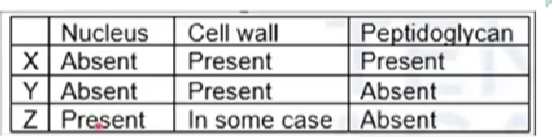
A. X is referring to archaea, while Y is referring to bacteria.
B. Y is referring to archaea, while Z is referring to eukarya.
C. X is referring to eukarya, while Y is referring to bacteria.
D. Y is referring to bacteria, while Z is referring to eukarya