Chapter 4 and 5
 Call Kai
 Learn
Learn Practice Test
 Spaced Repetition
 Match
Match Flashcards
 Knowt Play
1/48

There's no tags or description
Looks like no tags are added yet.
Name | Mastery | Learn | Test | Matching | Spaced | Call with Kai | Chat |
|---|
No analytics yet
Send a link to your students to track their progress
49 Terms
Concentration
how much of dissolved in a solution
Molarity
Moles of solute / liters of solyte
what does like dissolve like mean?
"Like dissolves like" is a rule of thumb in chemistry: substances with similar polarity tend to dissolve in each other. Polar solvents dissolve polar (and ionic) solutes, and nonpolar solvents dissolve nonpolar solutes.
What is the universal solvent
Water
water reacts with a lot of molecules
what is an electrolyte and what does it need
An electrolyte is a substance that produces an electrically conducting solution when dissolved in a polar solvent like water. It conducts electricity because it breaks apart (dissociates) into positively and negatively charged ions that can move freely through the solution.
it needs charge and movement
Charged but not mobile (solid salt): no current.
Mobile but not charged (sugar water): no current.
Charged and mobile (salt water, molten salt): current flows.
This is why dissolving matters so much. Water does two jobs at once: it pulls ionic compounds apart into charged ions, and it gives those ions a liquid to move through.
what does it mean by a compound dissociating
Dissociation is when an ionic compound separates into its individual ions as it dissolves. The ions were already there in the solid crystal; dissolving just pulls them apart so they move independently in the solution.
What are strong electrolytes
Strong acids, strong bases and soluble salts
what are weak electrolytes
weak acids, weak bases and insoluable salts
what is a nonelectrolyte
does not dissociate in a solution
what are the two parts of an ionic compound
cation - positive
anion - negative
precipitation reaction
two soluable ionic compounds react to form an insoluble product known as a precipitate and another product
what is a double displacement
A double displacement reaction (also called a double replacement or metathesis reaction) is a reaction where two ionic compounds swap partners.
what is dillution
Dilution is the process of lowering a solution's concentration by adding more solvent (usually water). The amount of solute stays the same, but it spreads out through a larger volume, so each unit of volume contains less of it.
Soluble salts vs insoluble salts
Soluble salts dissolve in water in significant amounts, breaking apart into free ions. Insoluble salts dissolve so little that almost all of the solid stays intact, often settling out as a precipitate.
what is a salt
First, what is a salt?
A salt is an ionic compound made of a cation (other than H⁺) and an anion (other than OH⁻ or O²⁻).
Salts are often formed when an acid reacts with a base: HCl + NaOH → NaCl + H₂O.
"Salt" does not only mean table salt. CuSO₄, KNO₃, CaCO₃, and AgCl are all salts.
What is an arrhenius acid and base
arrhenius acid
a substance that produces H+ ions when dissolved in water
a strong affinity of water molecules
arrhenius base
produces OH- ions when dissolved in water
how is strength of an acid/base relate to dissasociation
the stringer an acid/base the more it dissociates
what is a neutralization reaction
A neutralization reaction is a reaction between an acid and a base that produces a salt and (usually) water.
Strengths vs molarity
Strength and molarity describe two different things. Strength is about how completely an acid or base breaks into ions. Molarity is about how much of it is dissolved in a given volume. They are independent: a solution can be strong and dilute, or weak and concentrated.
two types of acids in a solution
binary acid
hydrogen and a nonmetal
hydro - ic acid
oxyacid
has hydrogen and an oxyanion (polyatomic anion with oxygens)
ate - ic acid
ite - ous acid
what are the strong acids
HCL, HBr, HI, HNO3, HCLO4, and H2SO4
So i brought no clean clothes
Strong bases
LiOH, NaOH, KOH, RbOH, CsOH, Ca(OH)2, Ba(OH)2, and Sr(OH)2
Little Nancy Kicked Ruby's Cat. Can Sally Bake?
Bronsted lowry acid
species that gives up a H+ to another substacne
a proton donor
Bonsted lowry base
a species that accepts H+ from another substance
Molecular equation
the normal equation we write
Total ionic equation
shows how all ionic compounds dissociate into compoonet ions
make sure charges are balanced
dont seperate weak acids and bases
dont seperate insoluable compounds
net ionic equation
main reaction or charge in the overall requation when we remove the spectator ions
no balancing
Acid base titrations
technique used by sicentists to find out the necessary amount of acid/base required to neutralize an acid/base solution
concentration of one solution used to find concentration of other solutions
What is the equivalence point and end point, and what’s the difference between them
The equivalence point is the moment in a titration when the added titrant has exactly reacted with all of the analyte, in the correct mole ratio from the balanced equation.
The endpoint is the moment you actually see a signal, usually an indicator changing color, and stop adding titrant. The equivalence point is the theoretical target; the endpoint is your experimental estimate of it.
oxidation numbers
charge of an atom would have if the electrons were transferred completely; not shared
oxidation state is assigned to each individual atom
oxidation numbers rules
Free elements are 0 (Na, O₂, Cl₂, P₄)
Monatomic ions equal their charge (Na⁺ = +1, O²⁻ = −2)
The sum equals 0 in a neutral compound, or the ion's charge in a polyatomic ion
Group 1 metals are +1, Group 2 metals are +2
Fluorine is always −1
Hydrogen is +1 with nonmetals, −1 with metals (NaH)
Oxygen is −2, except −1 in peroxides (H₂O₂) and positive with fluorine (OF₂)
Cl, Br, and I are −1, except when bonded to oxygen or a more electronegative halogen
Solve for any remaining atom using the sum rule
If rules conflict, the higher rule on this list wins
An increase is oxidation; a decrease is reduction
Redox reactions
transfer of electrons from one reactant to another
loss of eletrons is oxidation, gain of electrons is reduction
LEO the lion goes GER
reducing agent
if it loses elections and gets a more positive charge
oxidizing agent
if it gains electrons and gets a less positive charge
formula for presure
force/unit area
what is atmospheric pressure
result of gas molecules exerting pressure on their surroundings
what is barometer
device used to measure atmospheric pressure

what is a manometer
pressure measuring device used to determine pressures close to atmospheric presser
An open tube manometer there is mercury in the tube between the gas and atmn
manometer problems must be in mmHg

what does the gas laws depend on
pressure
volume
number of moles
temperature
what is an ideal gas and when is a gas most like an ideal gas
theoretical gas made of tiny particles that move randomly and do not attract or push away from each other
doesn’t exist
most like ideal gas when low external pressure and high temperature
what does temperature have to be for the gas laws
kelvin
what units for ideal gas law
ATm
liters
moles
ideal gas constant
kelvin
STP
temp is 273
pressure is 1 atm
in this condutions 1 mol of gas is equal to 22.1414 L
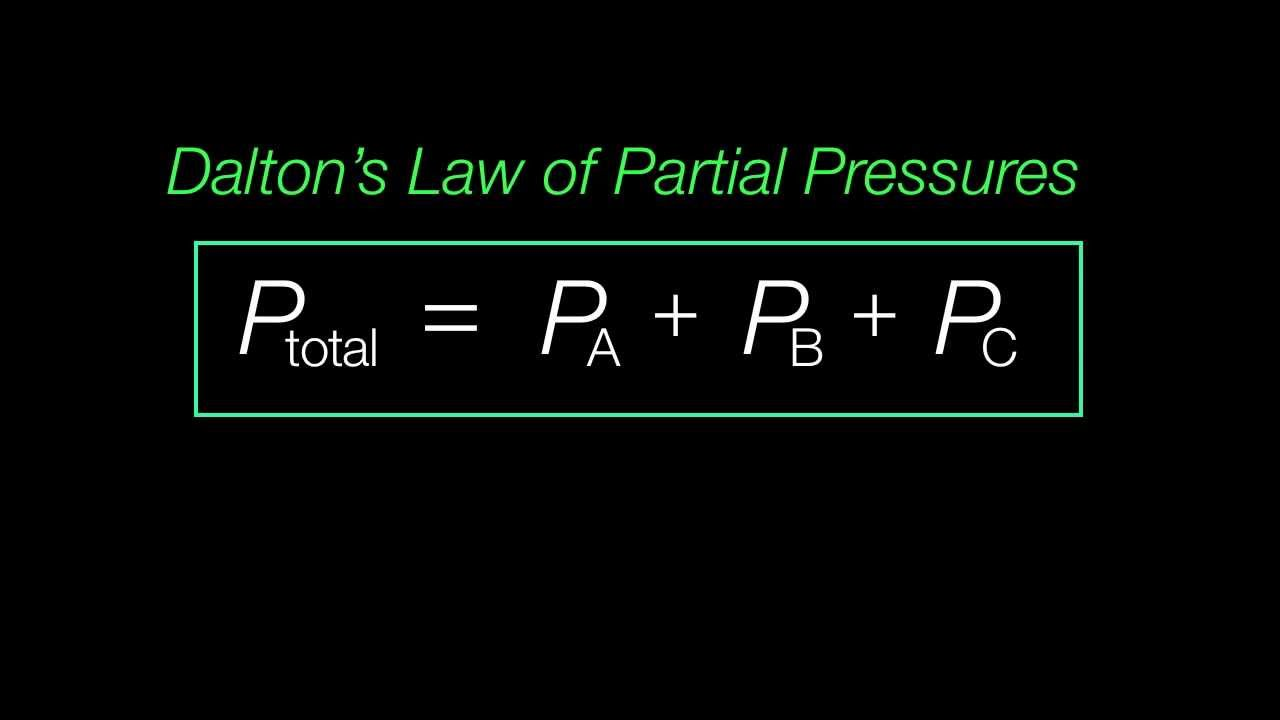
partial gas pressure
pressure exerted by a gas whem more than one gas is in a container
Pa = Xa * Ptotal
Mole fraction
Xa = moles of A/Total moles
Daltons law of partial pressures
collecting gas over water
when collecting gas over water you must subtract the vapor pressure of water
effusion
the abikuty of molecules to flow from a container through a hole to the outside world or into another ocntainer'
the heavier the gas the slower the effuson rate

Kinestic molecular theory of gases
describve behavior on an atomic level
gases consist of particles
constant libear motion
average kinetic eneergy deepdns on temperature