CHM 115 HM 5 Review
 Call Kai
 Learn
Learn Practice Test
 Spaced Repetition
 Match
Match Flashcards
 Knowt Play
1/11

Earn XP
Name | Mastery | Learn | Test | Matching | Spaced | Call with Kai | Chat |
|---|
No analytics yet
Send a link to your students to track their progress
12 Terms
How to calculate the heat that was released by a solution given the molar mass (can be calculated by hand), amount in grams of the molecule, the amount of water in grams, and ΔT of the solution:
The heat released by the solution, 𝑞soln , is found using the equation: 𝑞soln=𝑚𝑐Δ𝑇 (mcat) where:
m = total mass of the solution
c = The specific heat of the solution (if not given, assume c is the specific heat of water, or 4.184 J/(g·°C))
Δ𝑇 = The change in the temperature.
Substitute the values from the problem into the equation.
Calcium chloride:
Exothermic solution process.
Sodium hydroxide:
Exothermic solution process.
Potassium hydroxide:
Exothermic solution process.
Sodium chloride:
Endothermic solution process.
Sodium nitrate:
Endothermic solution process.
Ammonium nitrate:
Endothermic solution process.
How to solve for the amount of a substance, in grams, needed to produce an amount in kJ:
Use the value for Δ𝐻 as a conversion factor between kilojoules of heat and the moles of the substance.
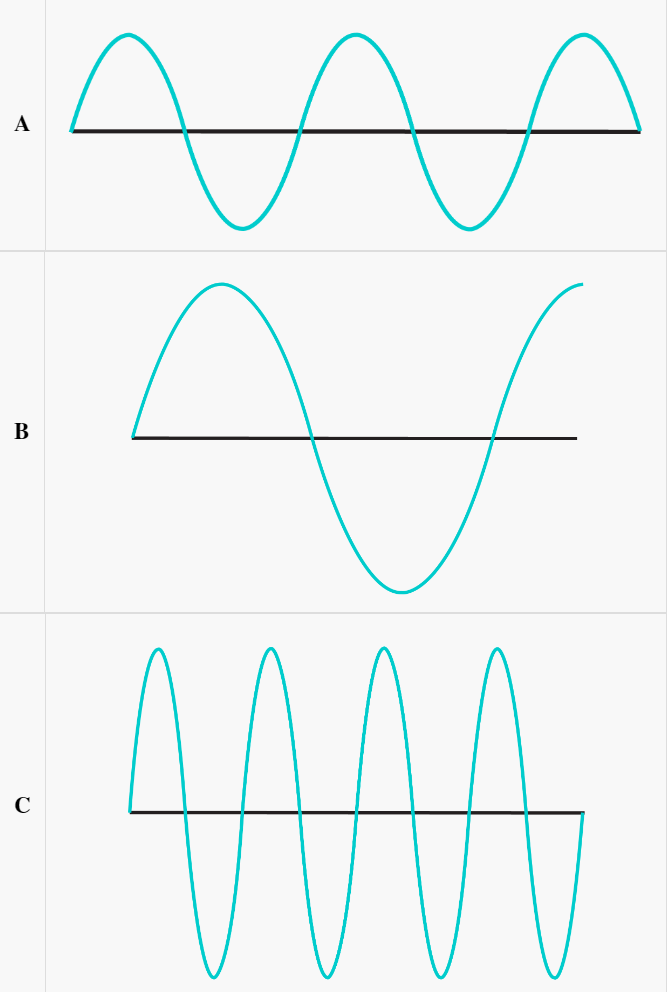
Out of these electromagnetic waves, which as the longest wavelength?
B.
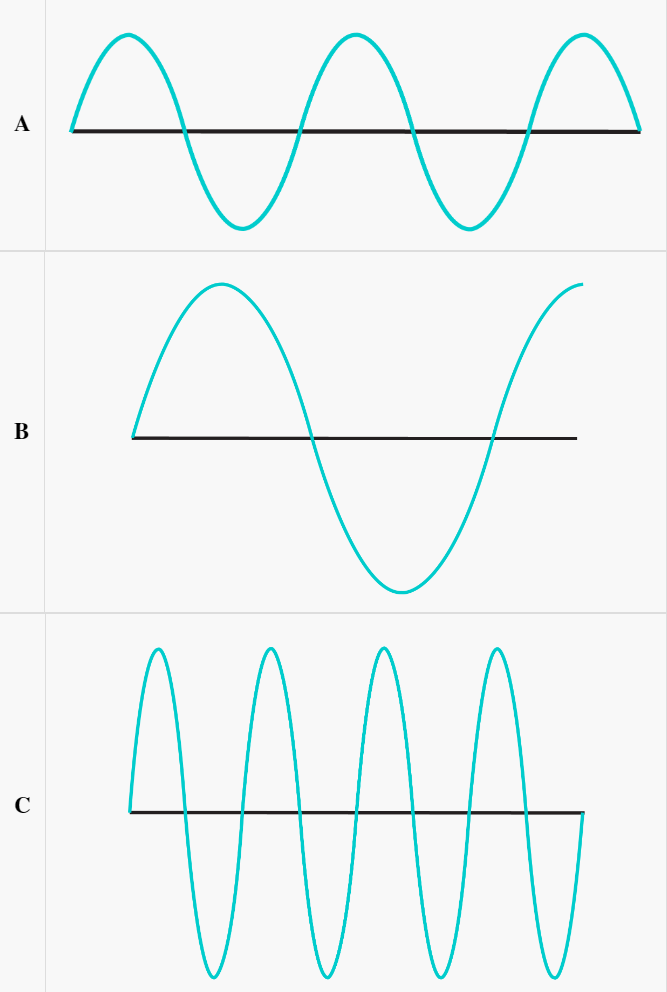
Out of these electromagnetic waves, which has the greatest frequency?
C.
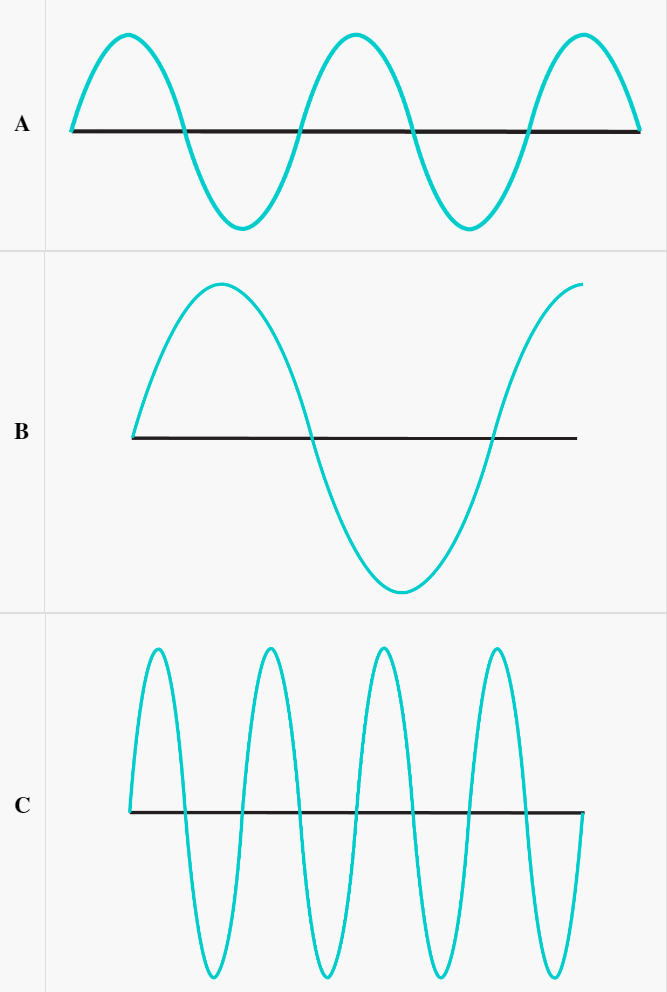
Out of the electromagnetic waves, which has the greatest frequency?
B.
Arrange the forms of electromagnetic radiation in order of decreasing energy (from highest energy to lowest).
Gamma rays
X-rays
Ultraviolet
Visible
Infrared
Microwaves
Radio waves