QUIZ 1- buddhist arts of asia
 Call Kai
 Learn
 Practice Test
 Spaced Repetition
 Match
 Flashcards
 Knowt Play
1/8

There's no tags or description
Looks like no tags are added yet.
9 Terms

Lion Capital
Sandstone
India
3rd C. BCE
Originally stood on top of a large pillar marking the site of the first sermon performed by the Historical Buddha. The aniconic nature of the work is common to the time period.

The Great Stupa
Sandstone
India
1st C. BCE
The aniconic nature of this work shows the time period, as all Buddhist works of this time didn't show the Buddha in his physical form. Commissioned by Ashoka.

Shakyamuni
Sandstone
India
2nd C. CE
The red colored standstone is typical of the location in India, along with the sense of breath in the style of the body, which is common in 2nd-century sculpture.

Siddhartha as an ascetic
Schist
Pakistan
3rd C. CE
The Silk Road ran through this part of Pakistan, which influenced the style of work at the time to adopt Greco-Roman styles.

Shakyamuni
Sandstone
India
5th C. CE
One of the most famous depictions of the Buddha in Asian Art. This piece set the classic style of the Buddha in Buddhist art for the centuries to come.

Interior of Cave 19, Ajanta
Sandstone
India
5th C. CE
Located in the Ajanta cave complex, which was a monastery and worship center for monks. Cave 19 is called a relic hall, where typically the most important icon would be located.
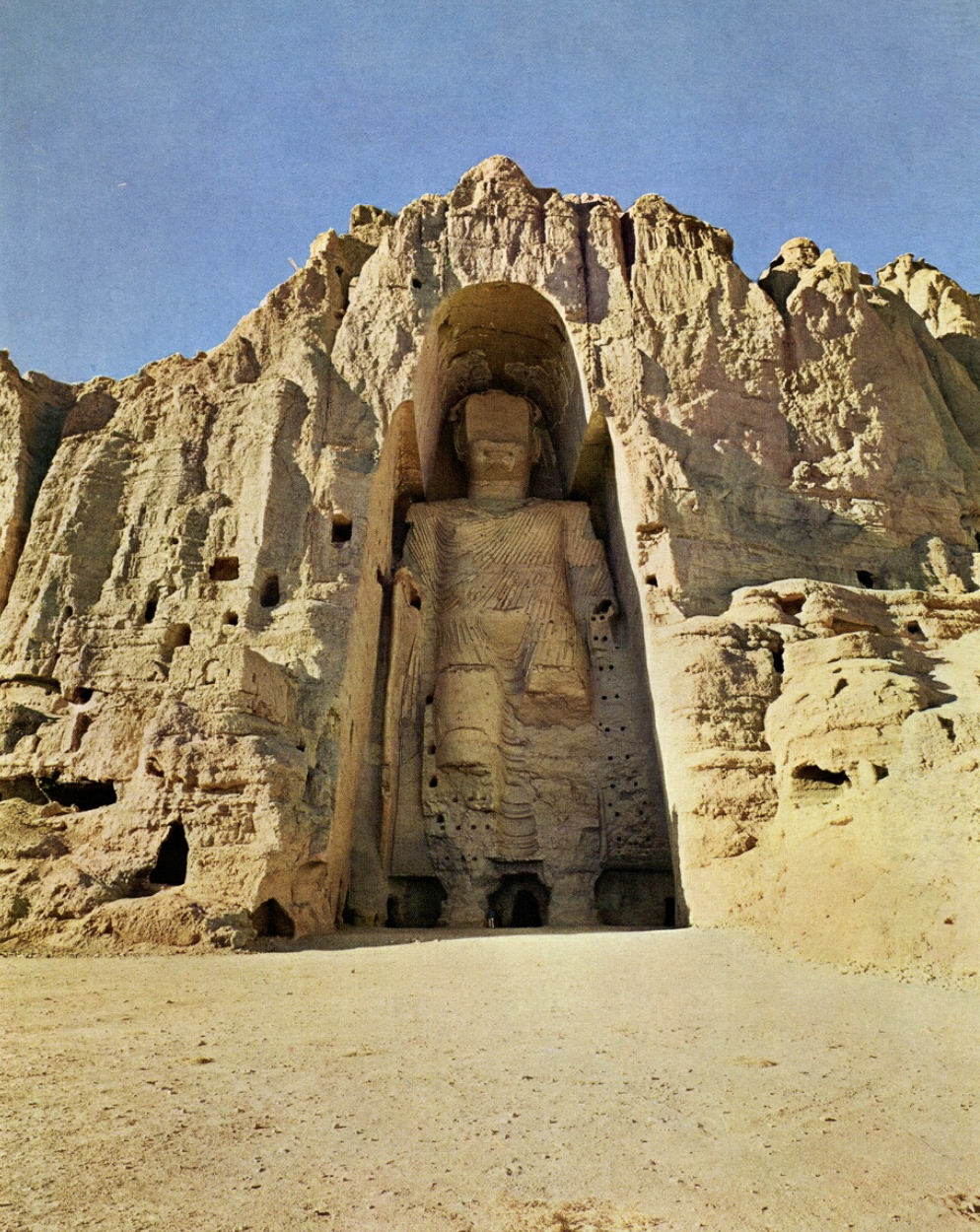
A Buddha- Bamiyan
Sandstone
Afganistan
6th C. CE
This work stood as an important site for pilgrims traveling along the Silk Road through Afghanistan. Was later destroyed by the Taliban in 2001.

Pensive Bodhisattva- Maitreya
Gilt Bronze
Korea
7th C. CE
This pensive pose is very common in works of this time in Korea. The pose is associated with flower boys, a group of boys from aristocratic families who became warriors and scholars.

Horyuji Temple
Wooden Buildings
Japan
7th C. CE
Built next to Prince Shotoku’s house, who was responsible for the spread of Buddhism within Japan. Oldest wooden buildings in the world.