LS7A AOL 1
 Call Kai
 Learn
 Practice Test
 Spaced Repetition
 Match
 Flashcards
 Knowt Play
1/258

There's no tags or description
Looks like no tags are added yet.
259 Terms
Proton
A subatomic particle that has a positive charge and that is found in the nucleus of an atom
Neutron
A subatomic particle that has no charge and that is found in the nucleus of an atom
Electron
A subatomic particle that has a negative charge, found in the orbitals
Electronegativity
the ability of a molecule to attract electrons
Polarity
A lack of electrical symmetry in a molecule. Charge differences on opposite ends of a structure.
nonpolar covalent bond
a covalent bond in which the electrons are shared equally by the two atoms
Polar Covalent Bond
A covalent bond in which electrons are not shared equally
What are the four main elements of life?
carbon, oxygen, hydrogen, nitrogen
Which elements are highly electronegative?
Oxygen (O) and Nitrogen (N)
Which elements will create nonpolar covalent bonds if bonded together
Carbon (C) and Hydrogen (H)
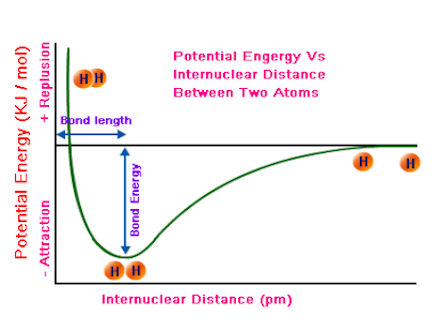
Potential energy and intermolecular distance graph
A graph that illustrates bond strength based on distance between bonds

How much potential energy does the strongest bond have on the Potential energy and intermolecular distance graph?
The lowest amount

What does it mean to be positive on the potential energy and intermolecular distance graph?
The molecules are repulsed (repulsion)
covalent bond
A chemical bond that involves sharing a pair of electrons between atoms in a molecule
Ionic Bond
Formed when one or more electrons are transferred from one atom to another
hydrogen bond
weak attraction between a hydrogen atom and another electronegative atom
van der Waals Interactions
A temporary negative charge from the accumulation of electrons that gives a molecule the ability to interact with other molecules
Which bond/interaction is the strongest? (in biology)
Covalent Bond
Which bond/interaction is the weakest?
Van Der Waals
intermolecular bonds
bonds between molecules
hydrophilic
water loving (polar)
hydrophobic
water fearing (nonpolar)
What does a molecule need in order to hydrigen bond with itself?
it must have a polar bond with a partially negative electronegative molecule (usually O or N) and a partially positive hydrogen
What does a molecule need in order to bond with water (H2O)
it must have a polar bond with a partially negative electronegative molecule (usually O or N) (it does not need a partially positive hydrogen because the water already has one)
prokaryotic cell
cell that does not have a nucleus or other membrane-bound organelles. Has a cell wall. Typically smaller than eukaryotic cells.
Eukaryotic cells
cells that contain a nucleus and other membrane-bound organelles. Usually much larger than prokaryotic cells.
What are the differences between plant and animal cells?
Plant cells have chloroplasts, a cell wall (and a central vacuole)
Organelle
specialized structure that performs important cellular functions within a eukaryotic cell
cytoplasm
the portion of the cell outside the nucleus
cytosol
Fluid portion of cytoplasm
mitochondria
organelle that is the site of ATP (energy) production
chloroplast
Site of photosynthesis
nucleus
A part of the cell containing DNA and RNA and responsible for growth and reproduction
Endoplasmic Reticulum (ER)
A system of membranes that is found in a cell's cytoplasm and that assists in the production, processing, and transport of proteins and in the production of lipids.
Smooth ER
makes lipids
Rough ER
That portion of the endoplasmic reticulum studded with ribosomes, creates proteins
ribosome
site of protein synthesis
Triglycerides
an energy-rich compound made up of a single molecule of glycerol and three molecules of fatty acid.

fatty acid
hydrocarbon chain often bonded to glycerol in a lipid

phospholipid
a lipid that contains a phosphate head and fatty acid tail; is a structural component in cell membranes
Cholesterol
A lipid that forms an essential component of animal cell membranes

Fluid mosaic
the membrane is a fluid structure with a "mosaic" of various proteins embedded in or attached to a double layer (bilayer) of phospholipids
What is the effect of cholesterol on membrane fluidity?
Cholesterol is a buffer, in low temperatures, it increases fluidity by preventing the phospholipids from pacing, and in high temperatures it decreases fluidity by forming van der waals interactions with the fatty acid tails of the phospholipids which make up the cell.
What is the effect of longer fatty acid tails on membrane fluidity?
Increases stability, since there is more surface area for van der waals interactions
unsaturated fatty acid
A fatty acid with double bonds, has a kinked shape
saturated fatty acid
a fatty acid with no double bonds, straight shape
what is the effect of unsaturated fatty acids on membrane fluidity?
the unsaturated fatty acids increase fluidity because their shape prevents compaction of the phospholipids
phospholipid bilayer
A double layer of phospholipids that makes up plasma and organelle membranes.
amphipathic
having both a hydrophilic region and a hydrophobic region
phospholipid heads are:
hydrophilic
Phospholipid tails are:
hydrophobic
transmembrane protein
An integral membrane protein that spans the phospholipid bilayer.
integral proteins
proteins embedded in the phospholipid bilayer.
peripheral proteins
The proteins of a membrane that are not embedded in the lipid bilayer; they are appendages loosely bound to the surface of the membrane.
channel proteins and carrier proteins
Two types of transport proteins facilitate the movement of molecules or ions across membranes:
passive transport
the movement of substances across a cell membrane without the use of energy by the cell
facilitated diffusion
Movement of specific molecules across cell membranes through protein channels
Diffusion
Movement of molecules from an area of higher concentration to an area of lower concentration.
osmosis
Diffusion of water
hypertonic
Having a higher concentration of solute than another solution.
hypotonic
Having a lower concentration of solute than another solution
isotonic
when the concentration of two solutions is the same
tonicity
the ability of a surrounding solution to cause a cell to gain or lose water
active transport
Energy-requiring process that moves material across a cell membrane against a concentration difference
secondary active transport
Form of active transport which does not use ATP as an energy source; rather, transport is coupled to ion diffusion down a concentration gradient established by primary active transport.
primary active transport
Active transport that directly relies directly on the hydrolysis of ATP.
electrochemical gradient
The combination of chemical and electric forces that creates a powerful gradient
Co-Transporter
gradient generated by one molecule drives active transport of another (one goes with the gradient, the other goes against)
pump
active transport mechanism that works against electrochemical gradients
Which molecule is most likely to diffuse across a membrane?
a nonpolar molecule
which molecule is least likely to diffuse across a membrane (with no assistance)?
an ion (Charged Molecule)
Rank the following molecules by their likelihood of diffusing through the cell: a large uncharged polar molecule, a small uncharged polar molecule, an ion, and a nonpolar molecule
1. nonpolar 2. small, uncharged, polar molecule 3. a large uncharged, polar molecule 4. an ion
metabolism
All of the chemical reactions that occur within an organism or cell
anabolism
Metabolic pathways that construct molecules, requiring energy.
Catabolism
Metabolic pathways that break down molecules, releasing energy.
breaking bonds ________ energy
requires
kinetic energy
energy of motion
Examples of kinetic energy
light, thermal energy/heat, electricity
potential energy
stored energy that results from the position or shape of an object
Gibbs free energy
the energy of a system that is available to do work
ΔG
Gibbs Free energy
Enthalpy
total energy of a system (including unusable energy)
ΔH
Enthalpy
Entropy
a measure of the disorder of a system
ΔS
Entropy
Gibbs free energy equation
ΔG = ΔH - TΔS
Gibbs free energy, nonstandard conditions
ΔG=ΔG°+RTln(Q)
What does Q mean in the nonstandard gibbs free energy equation?
Products/reactants
exergonic
releases energy, has a negative ΔG
endergonic
requires energy, has a positive ΔG
spontaneous reaction
A reaction that occurs without the input of energy (exergonic)
non-spontaneous reaction
a reaction that needs an input of energy to occur (endergonic)
reaction coupling
an endergonic reaction occurs because it is paired with an exergonic reaction

pH
measurement of the concentration of H+ ions in a solution. (More H+ means more acidic which means lower pH)
enzyme
A type of protein that speeds up a chemical reaction in a living thing
substrate
reactant of an enzyme-catalyzed reaction
active site
The part of an enzyme where the substrate bonds to and the chemical reaction occurs.
reaction rate
the rate at which reactants change into products over time
activation energy
the minimum amount of energy required to start a chemical reaction
What do enzymes do?
They stabilize the transition state to lower the activation energy