l-19 Proteolysis 2 - latency and activation
 Call Kai
 Learn
Learn Practice Test
 Spaced Repetition
 Match
Match Flashcards
 Knowt Play
1/25

Earn XP
Description and Tags
Objectives 1)Appreciate that some proteins are synthesized as inactive species that need to be activated by proteolytic processing by cellular proteases to perform their biological functions 2) Consider role of three different families of proteolytic enzymes in latency and activation i) Proprotein Convertases Subtilisin/Kexin (PCSKs) protein maturation receptor recycling exploitation by pathogens ii) Metalloproteinases cell surface cleavage cancer invasion iii) Secretases cell surface activation of proteins role in Alzheimer’s
Name | Mastery | Learn | Test | Matching | Spaced | Call with Kai | Chat |
|---|
No analytics yet
Send a link to your students to track their progress
26 Terms
When are signal peptides (pre peptides) removed
after sorting by proteolysis
where are signal peptides on the secretory proteins
at the N terminus
where does protein activation occur
In vesicles and organelles
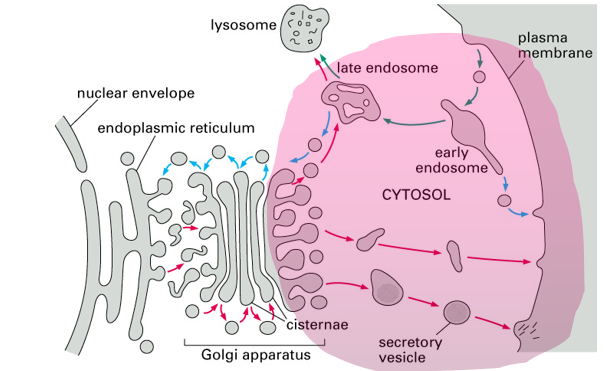
What must be removed in order for protein activity to occur
Pro-peptides
most bioactive polypeptides must be inactive within what pathway
the secretory pathway
what do removal of pro-peptides allow for
rapid response to cellular need
cleavage sites must contain how many basic residues at least
2
Propeptides serve a variety of purposes but must be removed for what
•full activity
Most propeptides are cleaved by PCSKs at sites containing how many basic residues
2-5
Cleavage can act as what type of mechanism
post-translational control mechanism
•Targeting of LDL receptors to lysosomes- use of _________ for hypercholesterolemia
inhibitors
Why do pathogens exploit PCSKs
cell entry
give an out come for Matrix metalloproteinases act on the ECM
–Wound healing
–Tissue remodelling
–Ovulation
–Pregnancy
–Cancer metastasis
what do secretases do
liberate active domains from membrane-bound proteins
what is a potential use for secretase inhibitors
therepeutics - Alzheimers
what does BACE stand for in terms of BETA secretases
beta-site amyloid cleaving enzyme
what family is alpha secretase part of
ADAMs
what does alpha secretase possess
metalloprotease and transmembrane domains
What is ADAM17 known as
TACE
Alpha secretase is responsible for
a wide range of ‘sheddase’ activities
where is APP expressed
in both neuronal cells and extra-neuronal tissues
Role of APP
cell adhesion, migration and gene expression
Where is Ab found
Amyloid plaques
Subtilisin-related serine proteases cleave where
at basic sequences to remove propeptides
Cleavage is exploited by toxins, viruses (e.g. SARS-CoV-2)
Metalloproteinases (MMPs) act where
cell surface
Secretases play a central role in the activity
surface proteins