L6-kidneys and diuretics
 Call Kai
 Learn
Learn Practice Test
 Spaced Repetition
 Match
Match Flashcards
 Knowt Play
1/17

There's no tags or description
Looks like no tags are added yet.
Name | Mastery | Learn | Test | Matching | Spaced | Call with Kai | Chat |
|---|
No analytics yet
Send a link to your students to track their progress
18 Terms
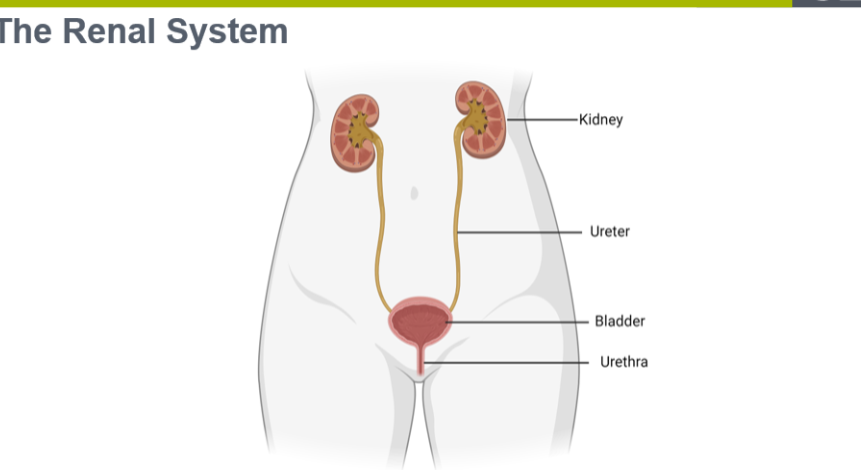
what are the key structures of the renal system
list the 5 roles of the kidney
regulation of water,slats and acid-base balance
removal or metaboic waste
removal of foreign chemicals
gluconeogenesis ( formation of glucose )
production of homromes and enzymes e.g. erythropoetin,renin,activates vitamin d
whata re the key stuctures that ake up the anatomy of the kidney

what are the three key functions of the nephron
glomerular filtration
tubular secretion
tubular reabsorption

what are features of the glomerulus/bowmans capsule that allow effective filtration
good blood supply with high surface area
fenestrated blood vessles allows substances to move in and out
podecyte cells with extensions called pedicles which wrap around blood vessles within the glomerulus
basementwhat is membrane
what is glomerular filtration rate + how is it regulated
its the volume of fluid filtered from the glomeruli to bowmans space per unit time and it can be regulated by adjusting blood pressure within the glomerulus
what is diuresis
it is the increased production and passage of urine by the kidneys
describe the control of glomerular filtration and water and salt retention
when theres increased diuresis ( increased sodium and water loss dues to loss of urine ) the plasma volume decreases
this leads to a decreases in blood pressure
this also leads to a decrease in renal sympathetic nerve activity which causes an increase in the constriction of the afferent renal arterioles
both of these thigs leads to an overall reduced glomerular filtration pressure and a decreased glomerular filtration rate
so a decrease in sodium and water excretion

how do diuretics work in the kidney
they affect how the nephron retains water and salt
what part of the nephron does carbonic anhydrase inhibitors work on
the proximal convoluted tubule- this is where carbonic anhydrase functions
where in the nephron does osmotic diuretics work
it works on any water permeable part of the nephron
so the proximal convoluted tubule, descending loop of Henle and the collecting duct
explain how osmotic diuretics work e.g. mannitol
they enter the nephron through filtration
and they effect osmosis so effect how much water is retianed or lost
mannitol enters the tubule fluid and increases the osmolarity of the fluid
the means it decreases the concnetration of water in the tubule fluid
so theres less drive for water to leave the tubule fluid as concnetration gradient has decreased and more water is excreted

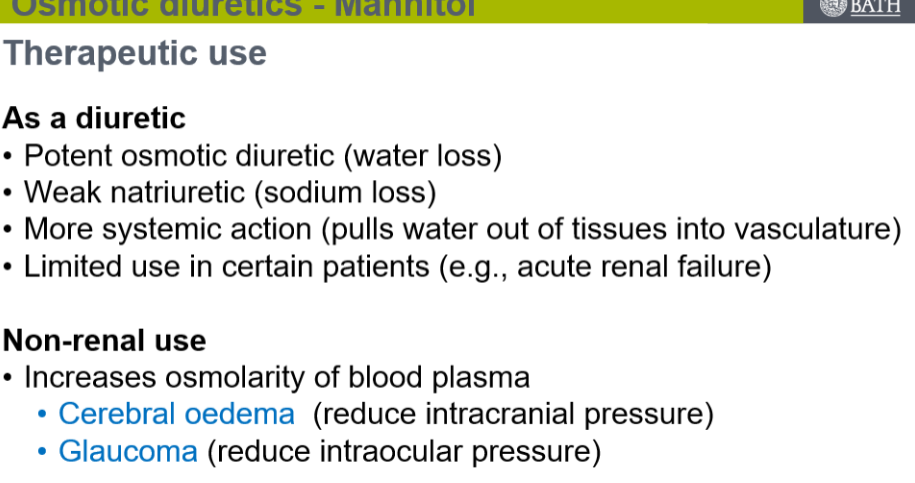
what are the theraputic uses of osmotic diuretics e.g. mannitol
describe sodium reabsorption in the proximal convoluted tubule
sodium moves into the tubule cells through sodium and hydrogen ion counter transporters
when inside the tubule cells it can be moved from there into the interstitial space and then blood through sodium/potassium atpase pumps

describe the secretion/production of H+ in the proximal convoluted tubule
inside the tubule cells carbonic anhydrase produces carbonic acid from h2o and co2
this carbonic acid breaks down into H+ and HCO3
the hydrogen ion produced from this drives the sodium/hydrogen ion counter transporter
and the carbonate ion /HCO3 is reabsorbed which helps the body control acid base balance
explain how carbonic anhydrase inhibitors work e.g. acetazolamide
acetazolamide works by inhibiting carbonic anhydrase
this means there will no longer be hydogen ions in the tubule cells of the proximal conveluted tubule
this means the sodium/hydrogen ion counter transporter cant function and there isnt rebsoption of sodium ions
due to this there isnt reabsoption of water and more water is retained in the tubules and its excreted
theres also a loss of carbonate ions whic effects the regulation of acid -base
as theres still loss of carbonate from the filtrate it causes mild plasma acidosis as theres no carbonate but theres still hydrogen ions and in the urine theres alkalosis as theres a loss of hydrogen ions but still carbonate ions from the filtrate

describe the therapeutic uses of acetazolamide/carbonic anhydrase inhibitors+ why are they seen as weak diuretics
