Chapter Three: Cellular Biology 1
 Call Kai
 Learn
Learn Practice Test
 Spaced Repetition
 Match
Match Flashcards
 Knowt Play
1/122

There's no tags or description
Looks like no tags are added yet.
Name | Mastery | Learn | Test | Matching | Spaced | Call with Kai | Chat |
|---|
No analytics yet
Send a link to your students to track their progress
123 Terms
Cells
The smallest basic structural and functional unit of all living organisms
Diverse in size, structure, and function (many characteristics)
Ex: Humans, animals

Cell Theory
Stating all living organisms are made up of cells


Function of a Cell
Cell Metabolism & Energy Use: All the chemical reactions happening inside a cell that keep it alive and functioning
Breaking down nutrients to get energy
Building molecules it needs
Synthesis Molecules: Produce proteins, nucleic acids, and lipids
Communication: Cell communicate through electrical and chemical signals
Reproduction: Contains DNA that determines the structural and functional characteristics of the cell
Maintaining homeostasis
Autophagy
To eat oneself; old cells get eaten
AKA Cellular Recycling
Also corrects mutations with certain cells

Integral Membrane Proteins
Penetrates deeply into the lipid bilayer, in many cases extending from one surface to the other
Hydrophobic & Hydrophilic
Function: Transport proteins, enzymes, receptors
Ex: Sodium-Potassium Pump (Na⁺/K⁺)

Peripheral Membrane Proteins
Are attached to either the inner or outer surfaces of the lipid bilayer
Function: Enzymes, motor proteins, cell to cell connections
Ex: G proteins

Membrane Proteins
Marker Molecules
Attachment Proteins
Channel Proteins
Carrier Proteins (Transporters)
ATP-Powered Pumps
Receptor Proteins
Enzymes

Marker Molecules
Are surface molecules (Peripheral Membrane Protein) that allow cells to identify other cells/molecules
Immune ID: Identify body cells vs. foreign cells
Cell adhesion: Help cells stick together
Fertilization: Help sperm recognize the egg
Tissue typing: Determine transplant compatibility
Ex: glycoproteins, glycolipids

Glycoproteins
Proteins with attached carbohydrates
Ex: antibodies, hormones

Glycolipids
Lipids with attached carbohydrates

Attachment Proteins
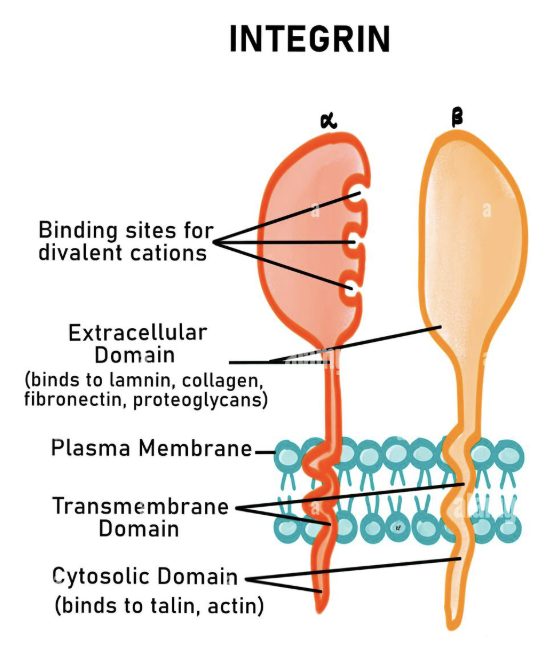
Anchor cells to other cells (cadherins) or to extracellular molecules (integrins)
Integral membrane proteins (deeply penetrates)
Ex: Cadherins, integrins

Cadherins
A group of proteins that attach cells to other cells
Acts like cellular glue

Integrins
Proteins that attach cells to extracellular molecules
A bridge that connects inside cell to outside the cell
Transport Proteins
Allow ions/molecules to move from one side of the plasma membrane to the other
Integral membrane proteins (deeply penetrates)
Types:
Channel Proteins
Carrier Proteins
ATP-powered pumps
Characteristics:
Specificity: each transport protein binds to and transport only a certain type of molecule/ion
Competition: two or more similar molecules try to bind to the same active spot on the protein
Saturation: The rate of movement molecules across the membrane is limited by the number of available transport proteins

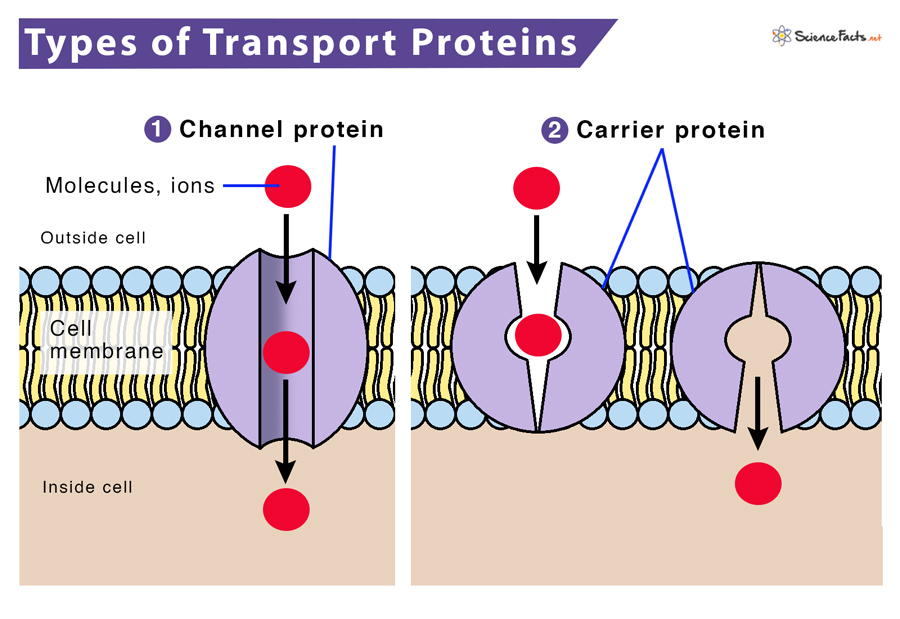
Channel Proteins
Form tunnel passageways through the plasma membrane, allowing specific ions/molecules to enter or exit the cell; may be leaked or gated
Integral membrane proteins (deeply penetrates)
Leaked: things can pass through with ease
Gated: things only pass through when gate opens

Leak Ion Channel
An ungated channel in cell membranes that remains constantly open to let specific ions pass through via simple diffusion
Ex: Sodium/Potassium leak channels

Gated Ion Channel
Open and close depending on certain conditions of the cell
Some open or close in response to chemical signals binding to the channel
Ex: Ligand gated channel (chemical signal molecule), Voltage-gated channel

Ligand Gated Ion Channel
Channel only opens when a specific chemical molecule (ligand) binds to protein

Voltage-gated Ion Channel
Channel open or close in response to changes in electrical charge or voltage across the cell membrane

Carrier Proteins (Transporters)
Move ions/molecules from one side of the plasma membrane to the other
Down gradient (High to low)
Passive (No ATP)
Integral membrane proteins (deeply penetrates)
Specific molecule enters carrier
The molecule attaches to a binding site
The binding of the molecule causes changes in the shape of the protein; the carrier proteins then move the specific chemical across the plasma membrane
Resumes original shape and transports more
Ex: Uniport, Symport, Antiport
Uniport (Carrier Protein)
Is the movement of one specific ion or molecule across the membrane

Symport (Carrier Protein)
Is the movement of two different ions or molecules in the SAME direction across the membrane

Antiport (Carrier Protein)
Is the movement of two different ions or molecules in the OPPOSITE direction across the membrane

ATP-Powered Pumps
Are transport proteins that require ATP to move specific ions/molecules across the plasma membrane
Against the gradient (low to high)
Integral membrane proteins (deeply penetrates)
ATP-powered pumps have binding sites, specific ions/molecules bind to
The breakdown (hydrolysis) of ATP to ADP releases energy, changing the shape of the protein, which moves the ion/molecule across the membrane
The ion and phosphate are released from pump, and it resumes original shape

Receptor Proteins
Function as binding sites for chemical signals in the extracellular fluid; binding of chemical signals to receptors triggers cellular responses
Integral membrane proteins (deeply penetrates)
Ex: Acetylcholine binds to the receptor site linked to a Na+ channel, when receptor sites are not occupied by acetylcholine the channel is closed

Enzymes
Catalyze (speeds up) chemical reactions either inside or outside the cell
Integral Membrane Protein & Peripheral Membrane Protein

Fluid Mosaic Model
Tails (hydrophobic lipids) and Heads (hydrophilic) make up phospholipid bilayer
Selective permeability: a process that allows certain molecules/ions to pass through the cell membrane while blocking others

Selective Permeability
A process that allows certain molecules/ions to pass through the cell membrane while blocking others
Maintains homeostasis
Lipids molecules (O2, CO2, and steroids) pass through the membrane
Large, non-lipid molecules need transport proteins or vesicles to pass through membrane

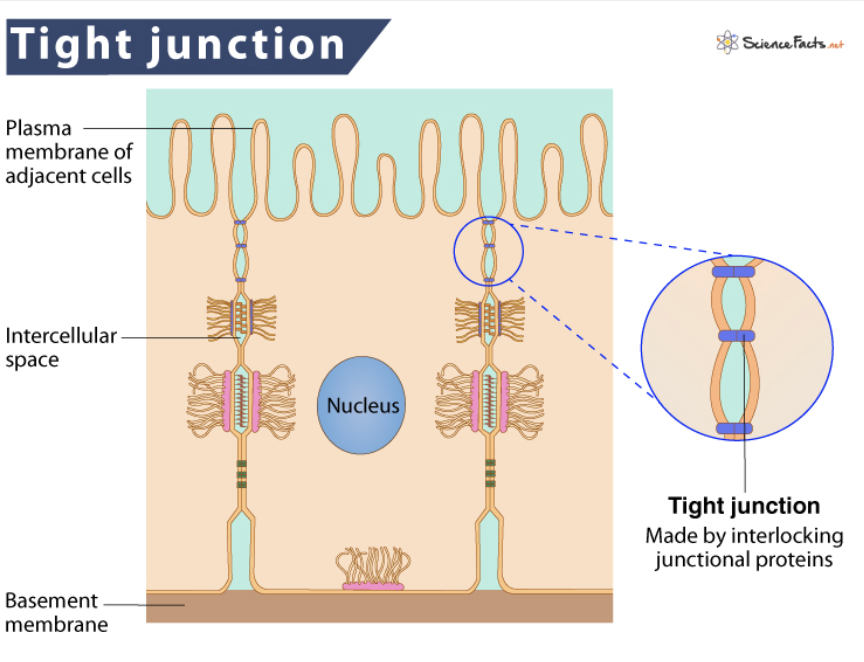
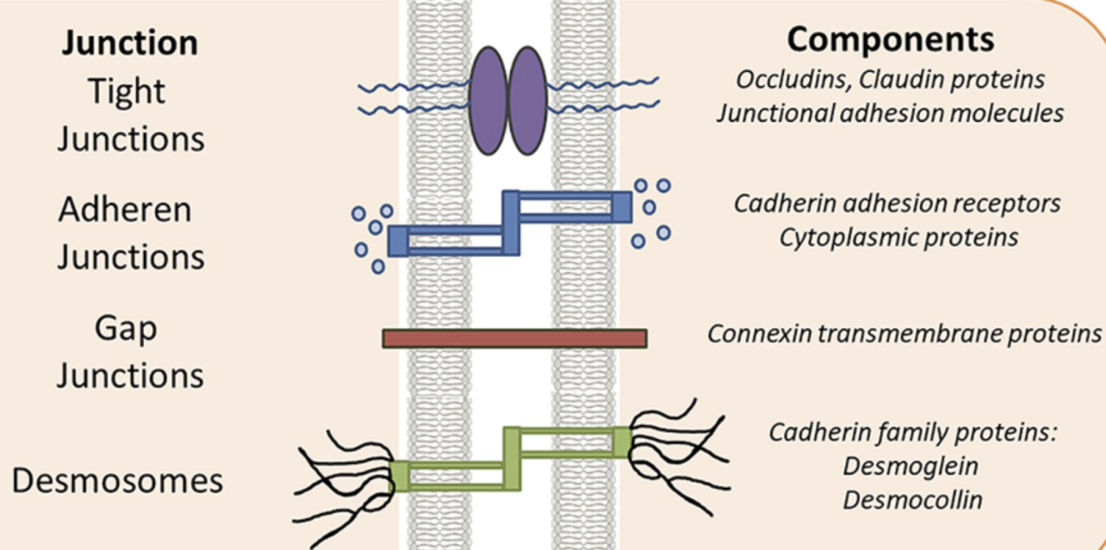
Tight Junction
Cells are tightly joined together so substances can’t pass easily between them
Function: Prevents fluid and molecules from moving between cells
Desmosome
Strong anchors neighboring cells together
Function: Prevent cells from tearing apart

Gap Junction
Creates little channels between cells allows ions, small molecules and electrical signals to move from one cell to another
Gap = goes between cells/communication
Solute
The substance being dissolved
Ex: salt or sugar

Solvent
The liquid doing the dissolving
Ex: warm water

Solution
A uniform, liquid mixture formed when one substance completely dissolves into another
Ex: saltwater

Transport Mechanisms
Passive Transport
Active Transport

Passive Transport
Moves substances down their concentration gradient (high concentration → low concentration) without using ATP
Ex: Diffusion, Facilitated diffusion, Osmosis

Diffusion
Substances move directly through the phospholipid bilayer (higher to lower concentration)
Transports: Small, non-polar (uncharged) molecules
Ex: Oxygen (O₂), Carbon Dioxide (CO₂), and Lipids

Facilitated Diffusion
Substances moves high → low but needs a membrane protein to help
Transports: Large, polar, or electrical charge molecules
Steps:
A glucose molecule enters a carrier protein from the extracellular fluid. The glucose binds to the carrier protein
The carrier protein changes shape and releases the glucose molecule into the cell. The carrier protein then resumes its original shape to transport additional glucose molecules.
Ex: Channel & Carrier proteins

Osmosis
Water diffuses across a selectively permeable membrane
High to low concentration
Passive transport
Ex: Water moves from intestines into blood

Osmolarity
The measure of total solute concentration in a solution
If solute concentration increases, water concentration decreases
Water moves from low solute → high solute
Osmotic Pressure
The exact amount of physical pressure required to completely stop osmosis

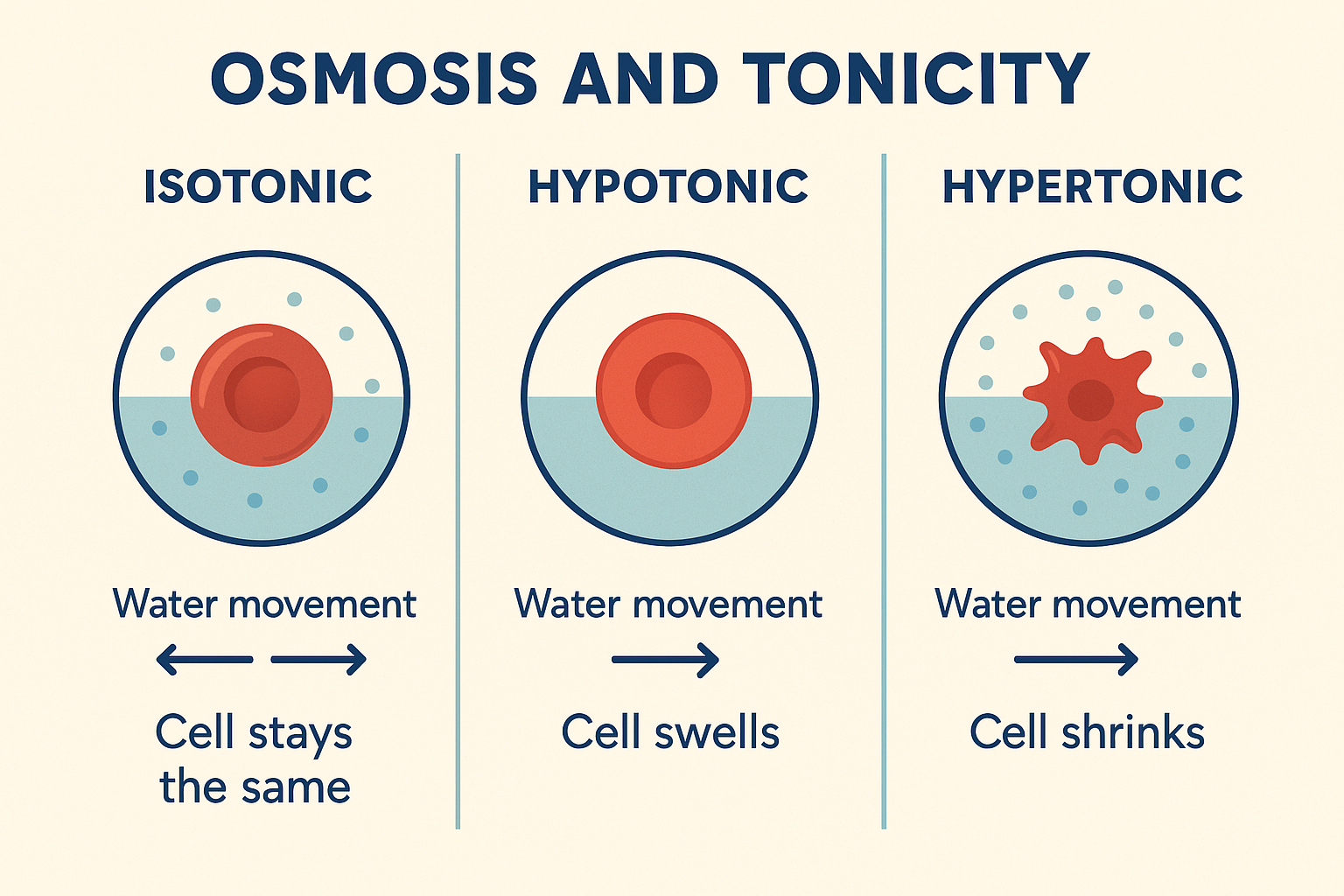
Hypertonic Solution
Cell shrinks from losing water
More solute (dissolved particles) outside the cell
Crenation: Cell shrinks
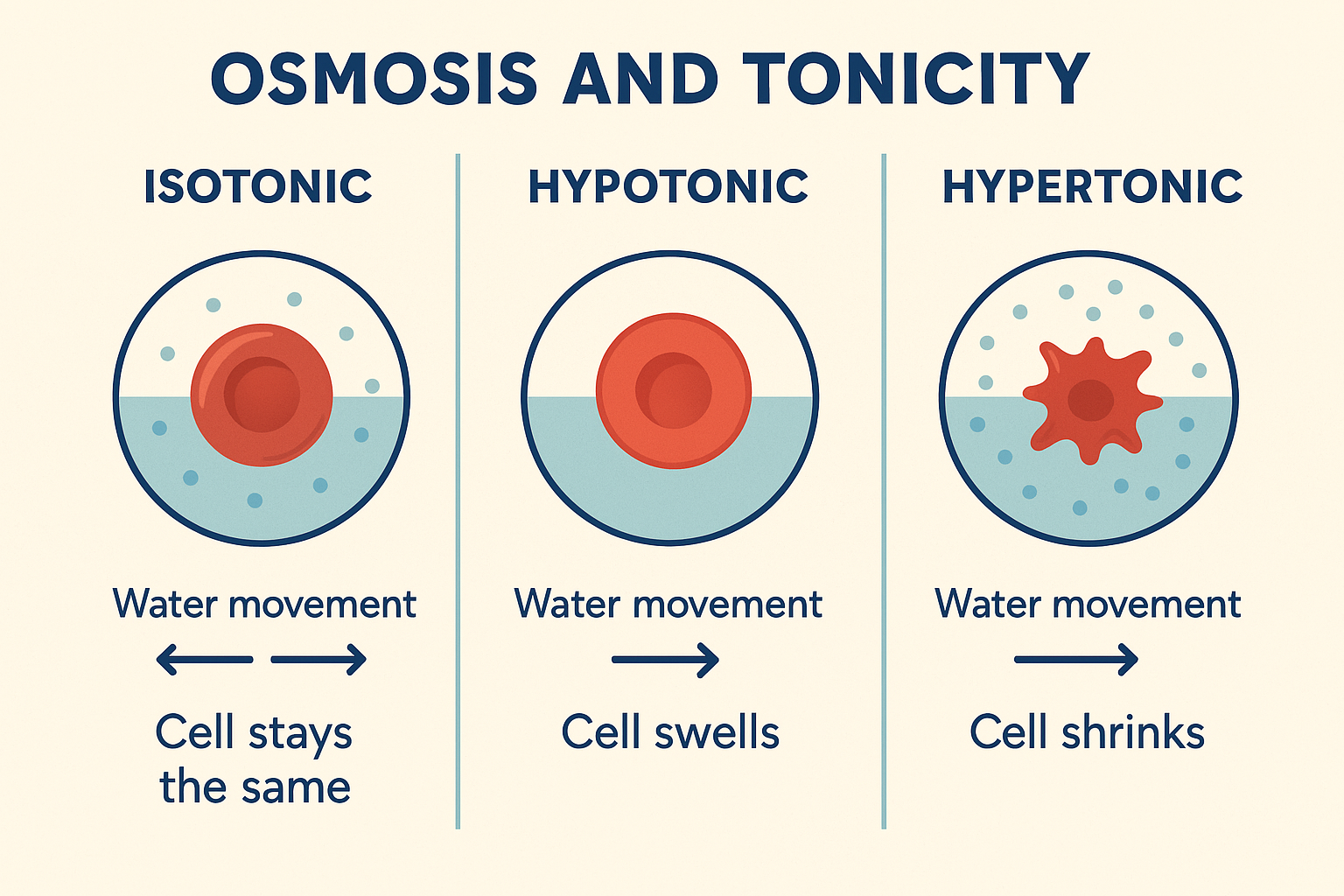
Hypotonic Solution
Cell expands from gaining water
Lysis: Cell bursts
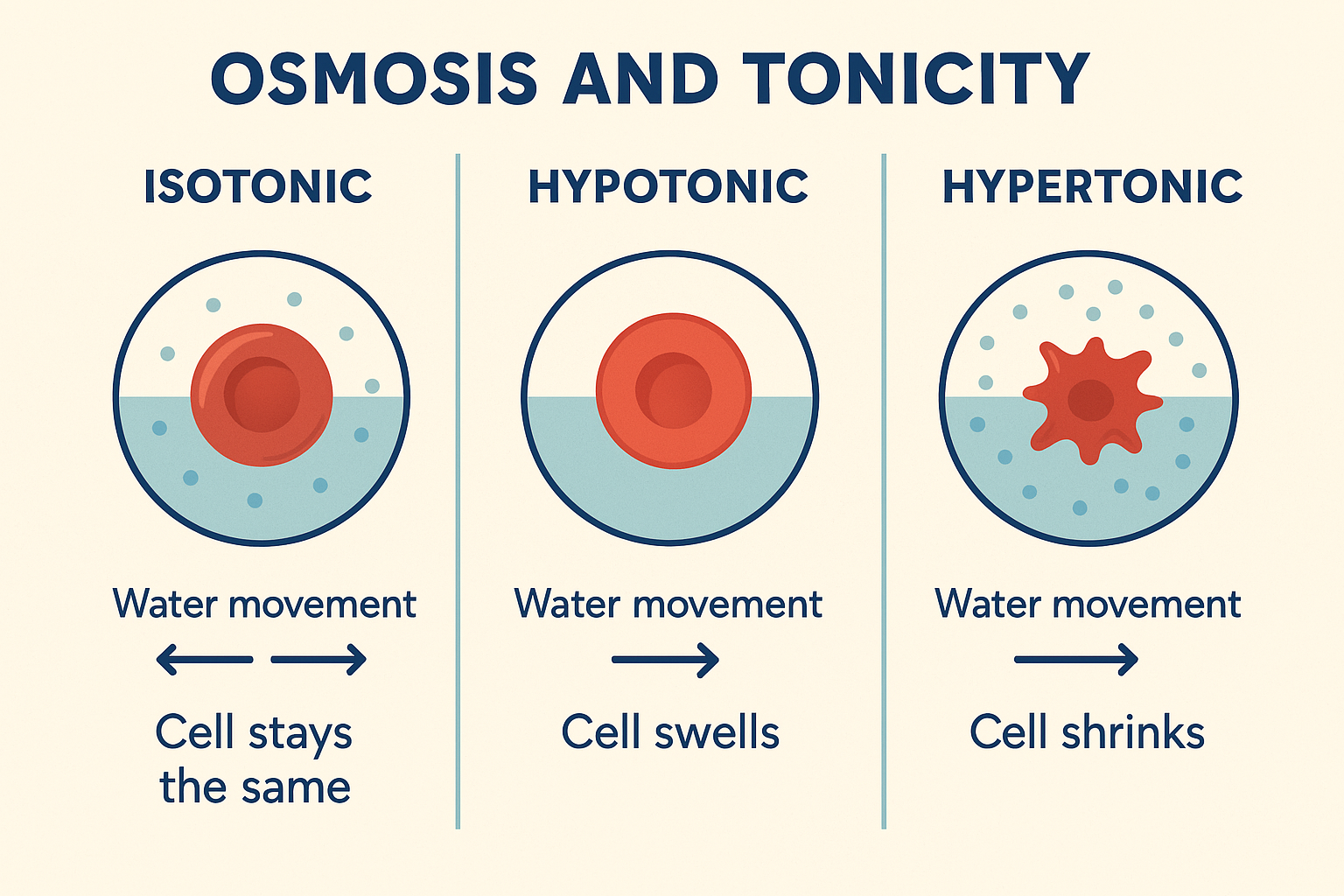
Isotonic Solution
Same amount of salt inside and outside the cell; no net movement of water in or out of the cell
Active Transport
Substances moved against their concentration gradients (low to high), while using ATP
Rate of transport depends on the concentration of substrate, the number of ATP pumps, and the amount of ATP
Ex: Secondary Active Transport & Vesicular Transport

Secondary Active Transport
Moves molecules across cell membranes by using stored energy from an concentration gradient of another substance (Na⁺) instead of directly breaking down ATP (like active transport)
One substance goes downhill to help another substance go uphill

Vesicular Transport
Involves membrane-bound sacs (vesicles) that move substances in and out of the cell; requires ATP
Ex: Endocytosis, Exocytosis, Transcytosis

Endocytosis
A cell engulfs a substance from outside by folding its membrane inward to create a vesicle
Active transport
Ex: Phagocytosis & Pinocytosis
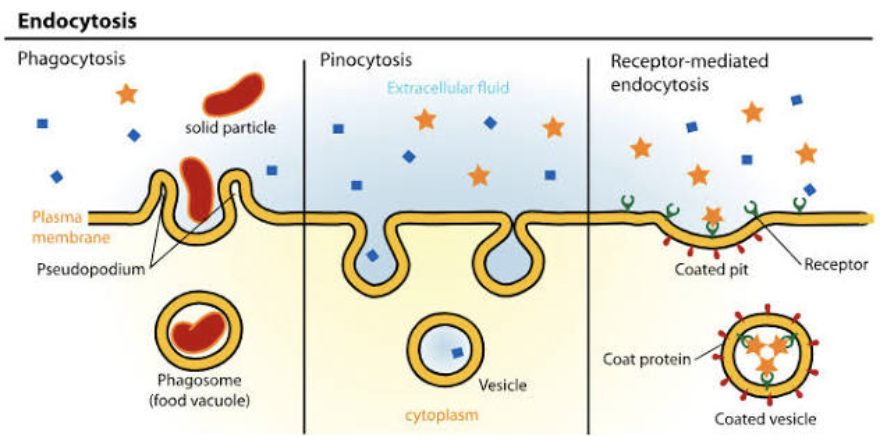
Phagocytosis
The cell engulfs a solid particle and a large vesicle is formed
Important to eliminating harmful substances in the body
“Cell eating”
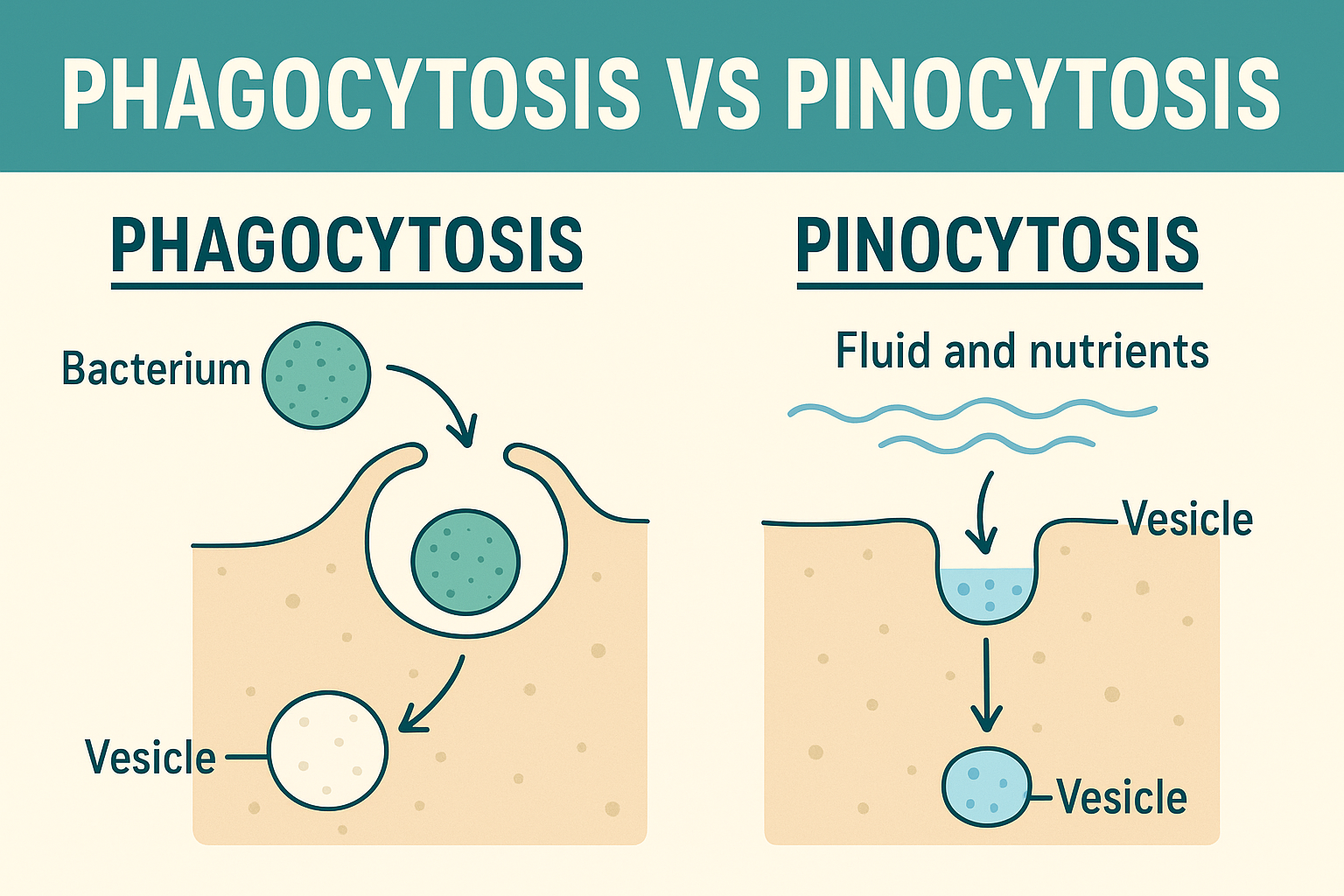
Pinocytosis
The cell engulfs extracellular fluid and dissolved molecules ingested and small vesicles are formed
"Cell Drinking"
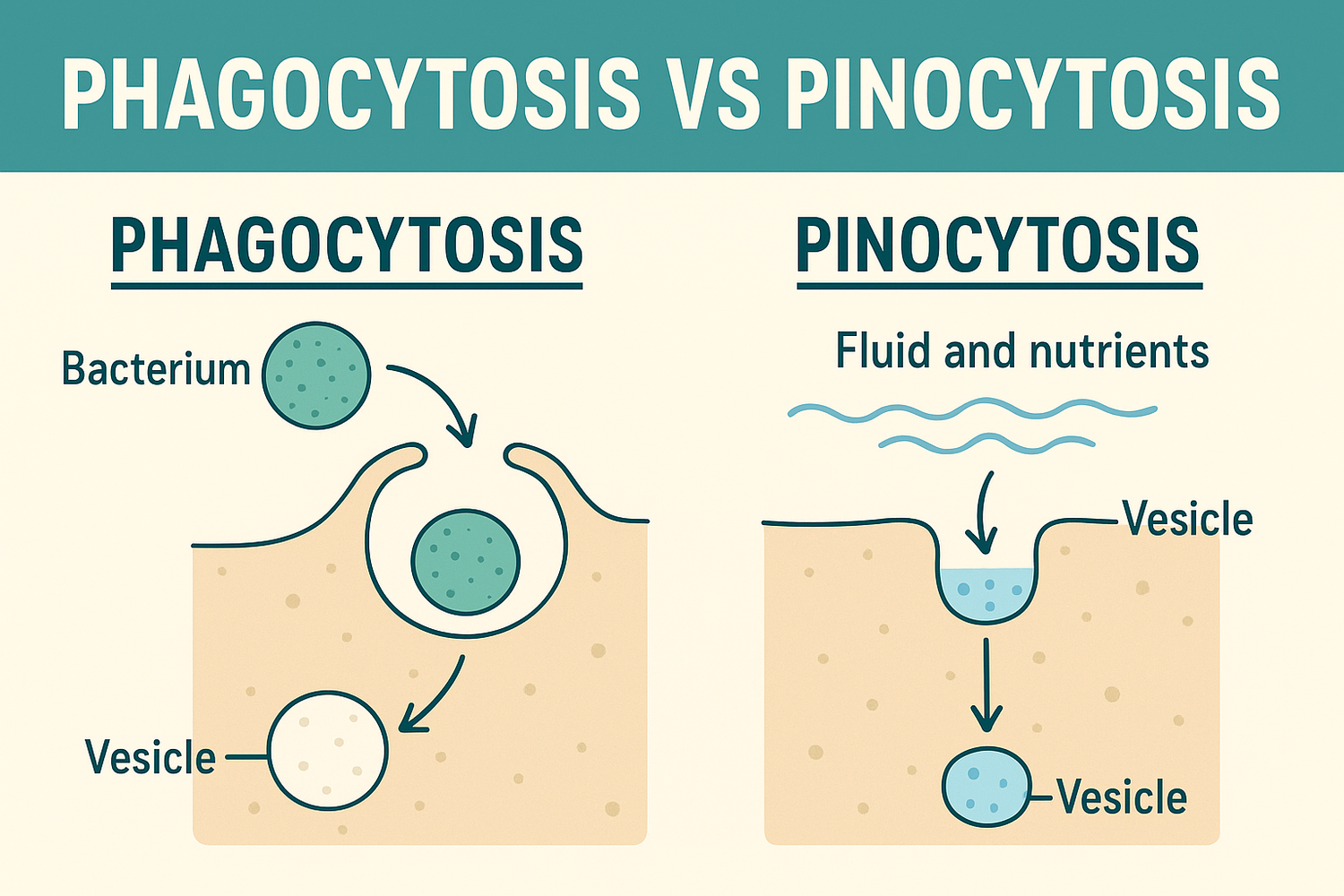
Exocytosis
A cell transports materials/waste out of the cell with internal vesicles to release their contents into the extracellular space
Active transport

Transcytosis
Movement through a cell by a combination of endocytosis on one surface and exocytosis on the opposite surface

Cytoplasm
The cellular material outside nucleus but inside plasma membrane
Contains: cytosol, cytoskeleton, cytoplasmic inclusions, organelles

Cytosol
The fluid portion of the cytoplasm
Dissolved molecules, ions, and suspended molecules of proteins, give especially enzymes

Organelles
Are small, specialized structures that perform specific jobs
Most have membranes that separate interior of organelles from cytoplasm
There are 8 types of organelles

Mitochondria
Produce most of the cell’s ATP through cellular respiration, which the cell uses for energy
Function: Perform cellular respiration, using nutrients like glucose to produce ATP
Contains:
Outer Membrane: smooth, outer boundary covering the organelle
Intermembrane Space: narrow fluid region between outer & inner membrane
Key role in cellular respiration
Inner Membrane: Lies inside the outer membrane
Selective; only lets specific molecules pass through
Cristae: Folds of the inner membrane
Matrix: Gel-like fluid space enclosed in inner membrane
Key role in Krebs cycle; holds mitochondrial DNA

Ribosomes
Site of protein synthesis
Made of ribosomal RNA (rRNA)
Types:
Free Ribosomes: Make proteins used inside the cell
Bound Ribosomes: Ribosomes attached to ER

Rough Endoplasmic Reticulum
Ribosomes attached; protein synthesis, folding, and modifying proteins

Smooth Endoplasmic Reticulum:
No ribosomes, is responsible for producing lipids, steroids hormones, and detoxifying harmful substances

Golgi Apparatus
“Post office”; Receives proteins/lipids from ER, modifies them, sorts them, packages them, and sends them to their destinations
Material from the ER enters the Golgi apparatus on the cis face, and exits on the trans face

Cis face
On this side of, same side of Endoplasmic Reticulum

Trans face
Across, on the other side, Endoplasmic Reticulum

Lysosomes
Recycling/Digestive center; Membrane-bound vesicles that contain digestive enzymes
Function: Digest bacteria/viruses/toxins, break down damaged organelles, and recycle cellular materials
Action of Lysosomes:
Vesicle forms and enters cytoplasm
Lysosome fuses with vesicle
Lysosome enzymes mix with material in vesicle and digest the material

Hydrolytic Enzymes
Use water to break larger molecules into smaller molecules (digestive enzymes)

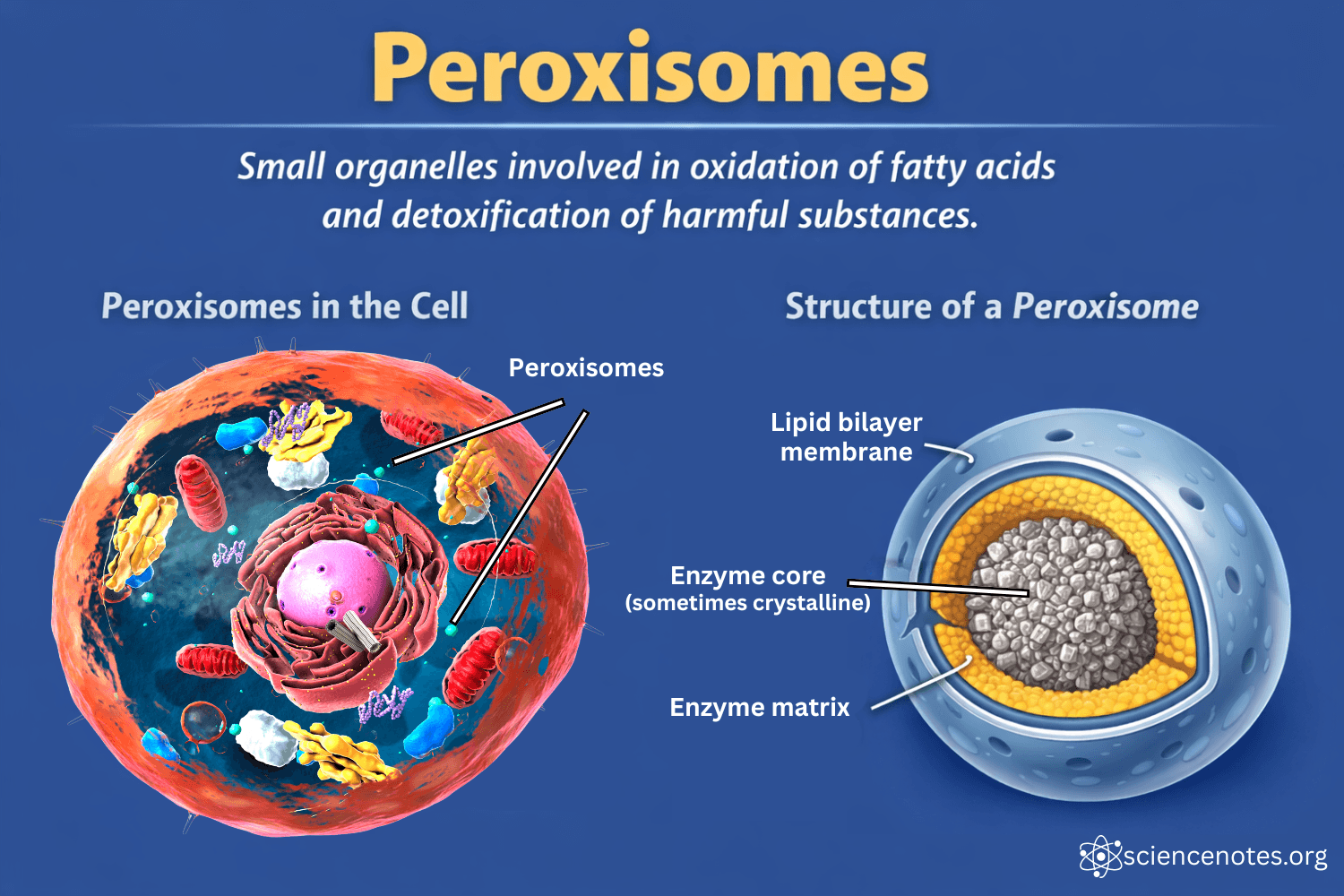
Peroxisomes
Membrane-bound vesicles that detoxifies substances; smaller than lysosomes
Function: Neutralize harmful substances
Contain enzymes that break down fatty acids and amino acids
By-product of breakdown is Hydrogen peroxide (toxic)
Catalase: an enzyme that breaks down hydrogen peroxide into water and oxygen
Secretory Vesicles
Membrane-bound vesicles that stores and transports materials to the outside of the cell
Function: Transport materials like: hormones, enzymes, and neurotransmitters
Pinch off from Golgi Apparatus

Proteasomes
Are large proteins complexes that contain enzymes that break down/recycle other proteins within the cell
Free Radical
An electron that doesn't bond with oxygen (dangerous)
Occurs in Mitochondria, ER, Peroxisomes, Cell Membrane, and Cytoplasm

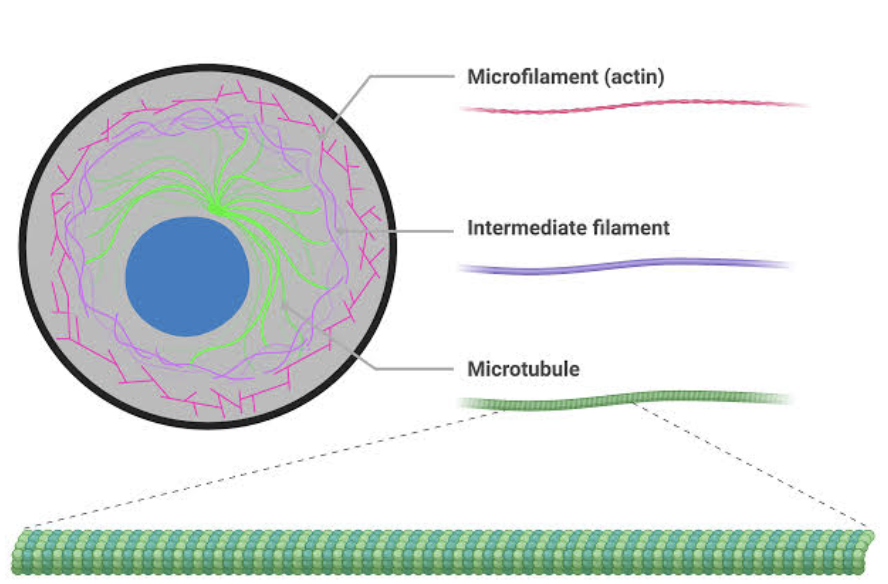
Cytoskeleton
A network of protein fibers that gives the cell shape, support, organization, and movement
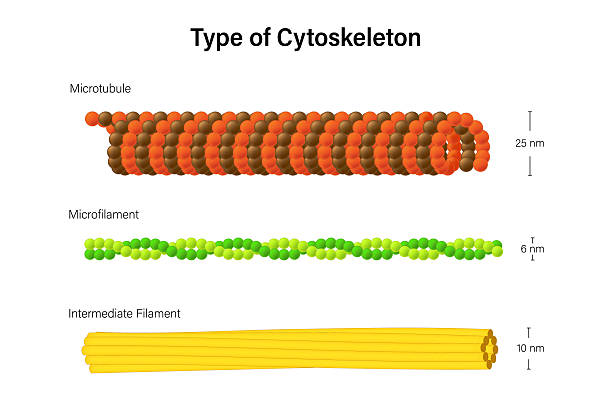
3 Main Protein Fibers: Microfilaments, Microtubules, Intermediate Filaments
Microfilaments
Made of actin; cell movement and shape changes, participate in cell division
Smallest/thinnest type of cytoskeletal fiber

Microtubules
Made of tubulin; gives cell shape, organelles movement, chromosome movement during cell division
Large, hollow tube shaped protein fibers

Intermediate Filaments
Strong rope like fibers, resist pulling forces
Centrosomes
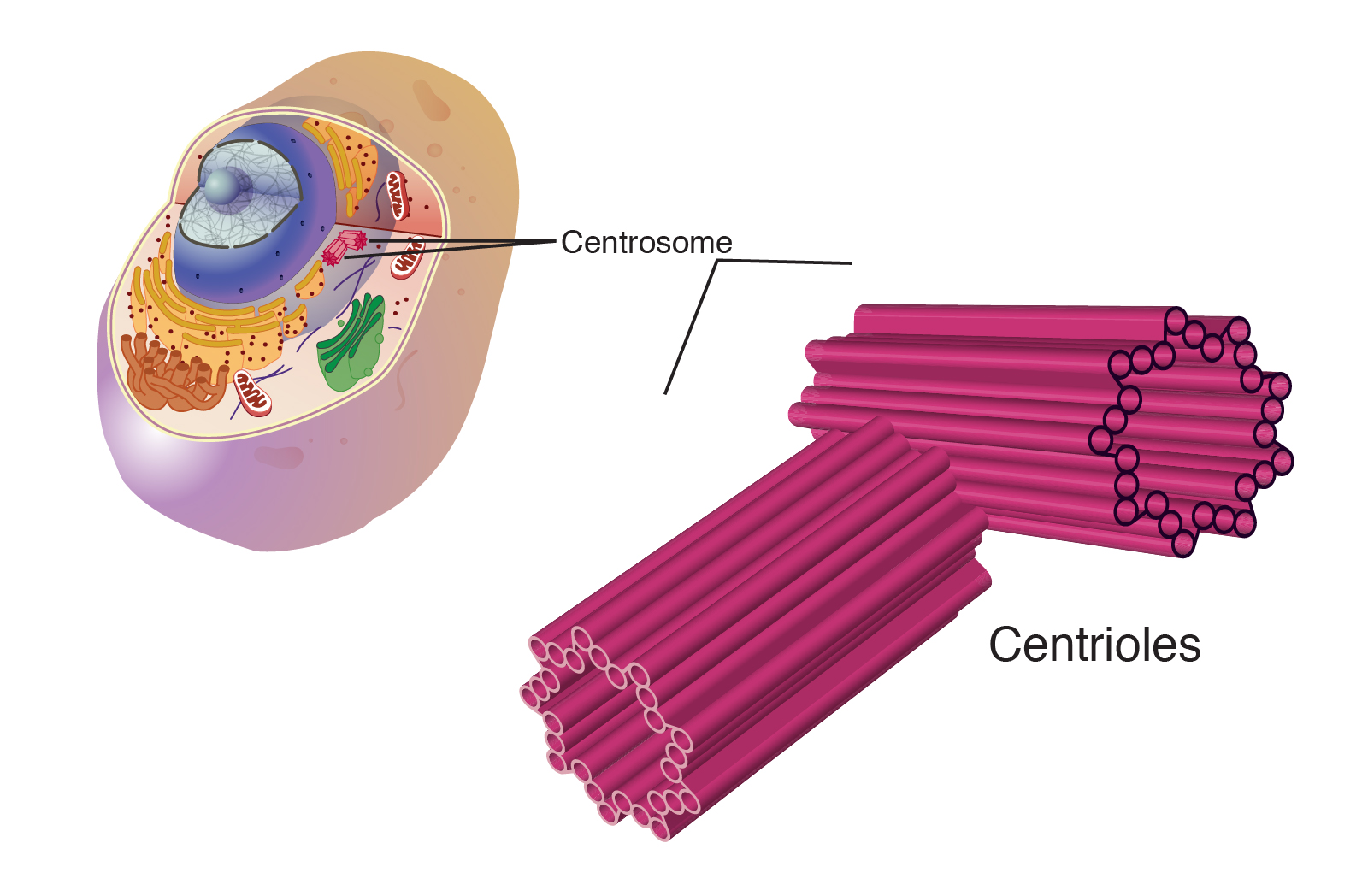
A region near the nucleus that organizes microtubules
Function: Organizes microtubules which helps with cell division

Centrioles
Located within the centrosome
Function: Organizes microtubules, help form mitotic spindle, help with cell division, form the bases of cilia and flagella
Before cell division, centrioles divide, move to the ends of the cell and organize microtubules called spindle fibers
Cilia
Short, hair like extensions on the cells surface
Function: They move substances across the surface of the cell

Flagellum
Long, tail like extension that helps the cell move
Ex: Sperm cell; uses its flagellum for movement

Microvilli
Tiny (microscopic) finger like projections
Function: Increase surface area for absorption
Difference (Cilia & Microvilli): Cilia moves, Microvilli absorbs

Nucleus
Cells control center, contains DNA and instructions for making proteins
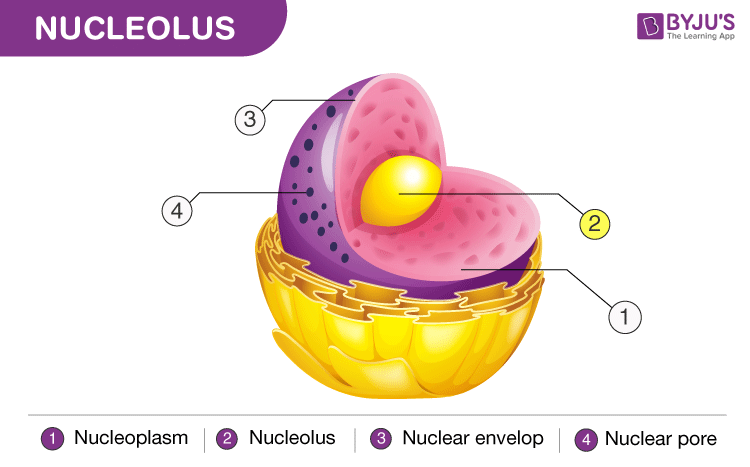
Contains Nuclear envelope, Nucleolus, and Chromatin

Nuclear Envelope
A double layered membrane that surrounds and protects the nucleus, separating the DNA from the cytoplasm
Function: Physical barrier that separates the DNA from the cytoplasm, and contains Nuclear pores that controls what enters/exits the nucleus

Nuclear Pores
Little openings inside the nuclear envelope that allows specific molecules to move between the nucleus and the cytoplasm
Function: Selective gateways that control what enters/exits the nucleus. Allows RNA and proteins in/out of the nucleus

Nucleolus
A dense region located inside the nucleus that contains DNA
Function: Primary site for ribosomes synthesis and RNA
Chromatin
Complex mixture of DNA, RNA, and histone proteins found in the nucleus
DNA wraps around histones to form nucleosomes, when chromatin becomes highly condensed it forms chromosomes
During much of cell cycle chromosomes are dispersed as chromatin
During cell division chromatin condenses into compact chromosomes

Nucleosomes
Are structural units of chromosomes consisting of DNA wrapped around histones
Function: Keep the DNA organized but accessible for transcription and replication

Histone
Proteins that DNA wraps around
Function: Helps package DNA tightly so it can fit inside the nucleus

Chromosomes
Long, organized structures made of DNA wrapped around proteins called histones
Function: Store and organize genetic information and make sure DNA can be accurately passed to new cells during cell division

DNA (deoxyribonucleic acid)
A double stranded nucleic acid molecule that contain the cell’s genetic information and instructions
Function: Genetic blueprint for development, functioning, and reproduction of all living organisms
Cannot leave the nucleus

RNA (ribonucleic acid)
A single stranded nucleic acid molecule copied directly from sections of DNA
Function: Carries and uses genetic instructions for protein production
Can leave the nucleus

Gene Expression
The process of using information in a gene to make a functional product, usually a protein
Analogy
DNA = the cookbook
Gene = one recipe in the cookbook
mRNA = a copy of the recipe
Ribosome = the chef
Protein = the finish meal

Transcription
Making the copy of the recipe; DNA → mRNA
The cell takes the information stored in a gene in the DNA and makes an mRNA copy of it

Translation
Using the recipe to make the meal; mRNA → Protein
Steps:
The mRNA travels outside the nucleus and attaches to a ribosome
The ribosome reads the mRNA instructions and connects amino acids together to make a protein

mRNA (Messager RNA)
A copy of genetic instructions from DNA
Function: To carry the instructions from DNA to the ribosome (Process: transcription)

tRNA (Transfer RNA)
Brings amino acids to the ribosome
Anticodon: matches a codon to mRNA; Ex: AUG - UAC
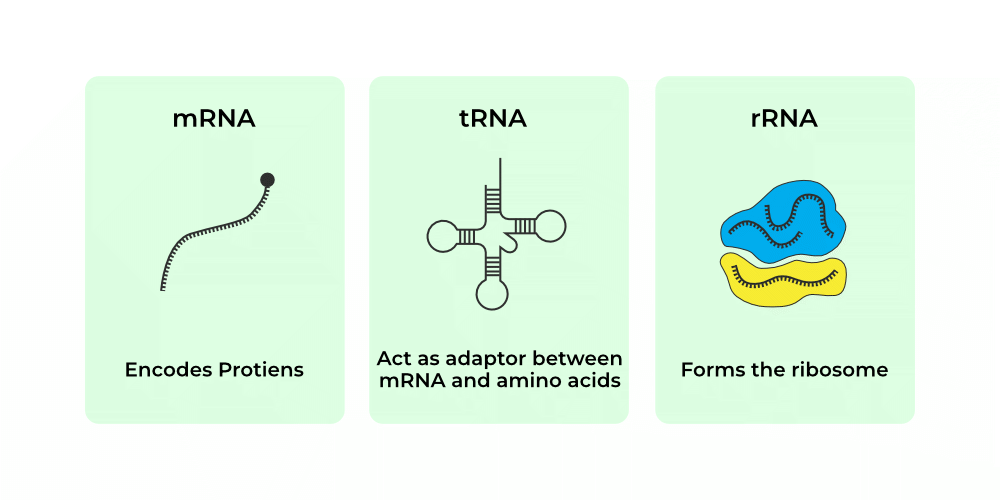
rRNA (Ribosomal RNA)
Helps makeup the ribosome and helps with protein production

Cell Cycle
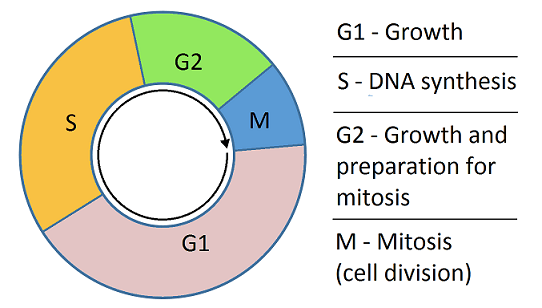
Is the series of changes a cell goes through from formation until reproduction: 2 major phases:
Interphase: Cell grows and prepares for division
Mitotic Phase: Cell divides

Interphase
The phase between cell divisions (occurs before both mitosis & meiosis)
3 stages: G1 Phase, S Phase, G2 Phase

G0 Phase
A resting/inactive stage where a cell exits cell cycle
Stops dividing; doesn’t go through cell cycle

G1 Phase
Growth; cell grows, makes proteins/organelles

S Phase
Synthesis; DNA replicates (copies), 1 chromosome → 2 sister chromatids

G2 Phase
Preparation; cell prepares for division
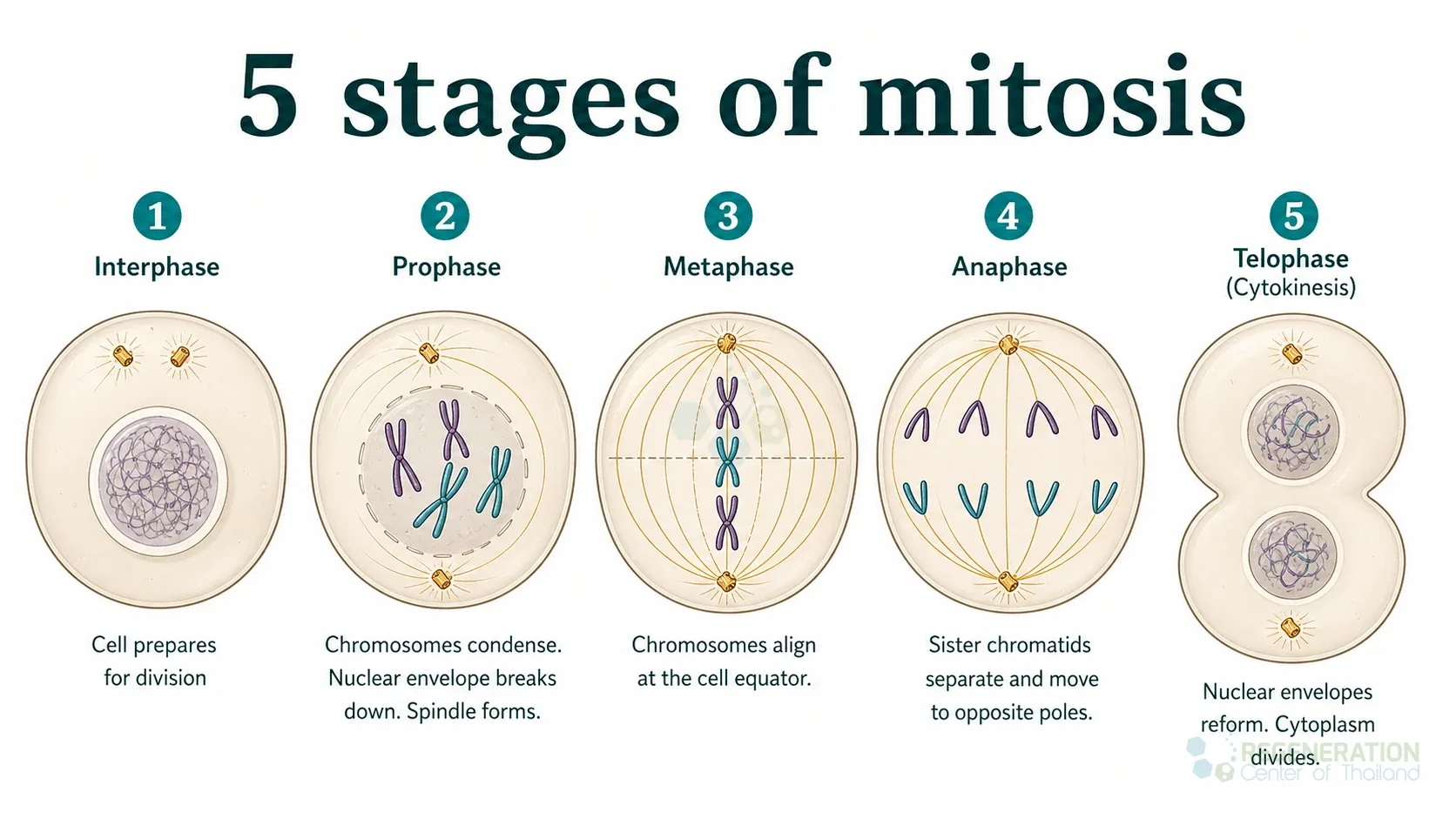
Mitosis
Division of the nucleus that produces two identical daughter nuclei
SISTER CHROMATIDS SEPARATE
(Diploid → Diploid, 1 cell → 2 cells)