Unit Ops 3 Exam 2 - Lecture 9
 Call Kai
 Learn
 Practice Test
 Spaced Repetition
 Match
 Flashcards
 Knowt Play
1/14

Earn XP
Description and Tags
Valves, pipe, and tubing
15 Terms
valves
used to stop, start, or control flow
different situations call for different types of valves
on/off (start/stop) or throttling (control)
quarter turn (90 deg) or multi-turn (crank)
Gate valve
multi-turn - prevents fluid hammer
operate in fully open or fully closed positions (on/off, not throttling)
flat plate - does not take up much space in line
no obstruction in flow path, low pressure drop
do not want partially open - plate will erode
most common type of valve in large diameter pipes
provides positive seal under pressure. can have light seepage under low pressure
visually - top must have room to store gate in open position

Fluid hammer
fluid has inertia, sudden change in open/closed will create a shock wave
globe valve
multi-turn - prevents fluid hammer
will not leak under low pressure when in closed configuration
designed for control - excellent for throttling
higher pressure drop than many other types of valves

Needle valve
used to make relatively fine adjustments in fluid flow - throttling (control)
long, tapered, needle-like point on the end of the valve stem
linear flow characteristics (number of turns can be directly correlated to the amount of flow)
Multi-turn - prevents fluid hammer

Ball valve
most common generally (smaller diameter)
designed for fully open/closed configurations (on/off)
Can be used to throttle flow, but doesn’t offer the same control as the globe valve
low pressure drop
opens and closes quickly - can cause fluid hammer
simple construction, reliable
quarter-turn (open = parallel with pipe, closed = perpendicular)
hole in the center of the ball allows flow when parallel to flow

butterfly valve
used to stop, start, and control fluid flow
quarter turn - 90 deg rotation moves disk from fully open to fully closed
may also be gear operator type
doesn’t take up much length (flat) - advantages in applications requiring large size
higher pressure drop than gate valve - seals are always in the flow path
disk can get damaged, material can collect - may stick out into pipe itself

Opening/closing multi-turn valves
may be difficult to tell position just by looking
when opening, turn the handle all the way until it stops and then turn it back the other way a quarter-turn - this will leave the handle feeling “loose” and will prevent someone from assuming it is closed just because it is tight

Check valves
allow flow in one direction, but prevent flow in the other direction
Lift (has a spring), ball, or swing
ball check valve is little and will have an arrow pointing in flow direction

Pipe vs. tubing
pipe = relatively large diameter, comes in moderate lengths of 20-40 ft, is heavy walled, can be threaded, slightly rough walls, joined by screwed, flanged, or welded fittings, made by welding, casting, or piercing a billet in a piercing mill
tubing = thin-walled, comes in coiled several hundred feet long, cannot be threaded, smooth walls, joined by compression fittings, flare fittings, or soldered fittings, made by extrusion or cold-drawn
Pipe basics
made in various discrete sizes
designated by the diameter, wall thickness, and material of construction
most common pipe material is low-carbon steel, black iron pipe
Pipe sizes
specified in terms of diameter and pipe schedule
for large pipes (14”+ diameter), nominal diameters are true outside diameters
regardless of wall thickness, the outer diameter (OD) for any given size is always the same to ensure interchangeability of fittings
Nominal is what the pipe is called, OD is outer diameter, rest gives you wall thickness and can find inside diameter (ID)
Schedule 40 is the most common type of pipe - pressure rating (higher schedule = thicker wall)

Tubing sizes
typically specified by actual inside or outside diameter
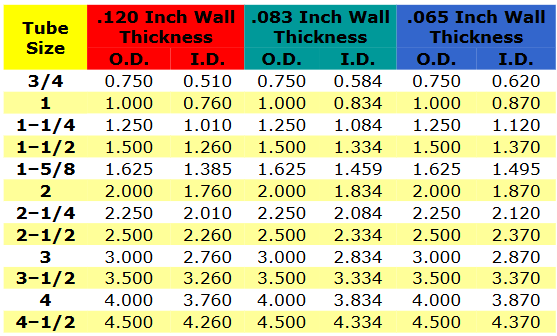

Joining pipes
Threaded fittings, flanges, or welds
National pipe thread (NPT) is the standard in the USA for pipe threads
Threads are tapered fittings - the seal between threads, often Teflon tape or thread sealant (“pipe dope”) (or both), is added to ensure leak-proof connection
Do not want to over-tighten threaded fittings - damaging the threads can lead to leaks
Flanged connections are very common - require two flanged piped sections and a gasket - full-face gasket (has holes for bolts) or seal ring (smaller, sits inside only between pipes)

Joining tubing
Soldering (“sweat” connections) or Swagelok compression fittings
Soldering
requires clean, dry surfaces
apply flux (acid-based goo, makes solder wire want to flow in) inside of sitting and outside of tube with acid brush, heat fitting, and touch solder wire to joint
Solder flows into the joint and forms and airtight seal after cooling
for copper - flame turns greenish when hot enough
Swagelok
Expensive
two ferrule fitting
swaging is a forging process in which the dimensions of an item are altered using dies to which the item is formed
Swagelok (or other -loks) fittings and valves are common in the lab
Less turns required for smaller ferrules, more for larger
ferrule goes into tube, tuns pull the two together, nut is still loose
Front ferrule is tapered, rear ferrule is smaller and skinny
