Chpt 3 - Cell Biology part 1
 Call Kai
 Learn
Learn Practice Test
 Spaced Repetition
 Match
Match Flashcards
 Knowt Play
1/30

Earn XP
Description and Tags
Generalized Cell, Plasma Membrane, Cell-Environment interactions
Name | Mastery | Learn | Test | Matching | Spaced | Call with Kai | Chat |
|---|
No analytics yet
Send a link to your students to track their progress
31 Terms
functions of cell
cell metabolism, energy use, synthesis of molecules, communication (chemical and electrical signals), reproduction and inheritance, autophagy
fluid membrane
-how cells create boundary for themselves
-fluid mosaic model of different proteins embedded in the phospholipid bilayer, hydrophilic portions maximally exposed to water, hydrophobic portions in nonaqueous environment inside membrane
-creates potential because of gradient
example of electrochemical gradient
sodium gradient because there is a difference in both teh chemical concentration and the electrical charge of sodium (Na+) ions across the cell membrane, with much more outside than inside
example of electrical gradient
movement of sodium (Na+) across membrane of a resting neuron because negative interior of cell strongly attracts sodium ions inward
function of membrane proteins
attachment to itself, regulate movement in and out of cell, communication
marker molecules
allow cells to identify other cells or other molecules (ex: different marker molecule in organ transplant)

attachment proteins
anchor cells to other cells

examples of transport proteins
channel proteins, receptor proteins, ATP-powered pumps
channel proteins (transport protein)
form passageways, allowing specific ions or molecules to enter or exit; may be leaked or gated; ex: Potassium K+ channels are always open while ligand-gated sodium Na+ channels are closed until ligand bonds

carrier proteins
integral proteins that move ions from one side to the other, changes shape when specific chemical attaches to binding site and then moves chemical across membrane; resumes original shape
ATP-powered pumps
move specific ions or molecules across membrane using breakdown of ATP; have binding sites for specific ions, and hydrolysis of ATP to ADP release ennergy to chaneg shape to move substance; releases ion and phosphate
receptor proteins
function as binding sites for chemical signals in the extracellular fluid; binding of chemical signals to receptors triggers cellular response

enzymes
catalyze chemical reactions either inside or outside cells

why are plasma membranes selectively permeable
maintain homeostasis, so lipid soluble molecules can dissolve but large, nonlipid solubule molecules and ions need transport proteins or vesicles to pass through
lipid soluble molecules that can dissolve through bilayer
O2, CO2, and steroids
non-lipid soluble molecules and ions that need transport
potassium, glucose, sodium
transport mechanisms
passive transport, active transport, vesicular transport
passive transport
movement of substance from high to low concentration (diffusion, osmosis, facilitated diffusion)
active transport
movement of substances against concentration gradient (low to high) requiring ATP (ex: sodium-potassium pump)
what does the rate of active transport depend on
-concentration of substate
-number of ATP pumps
-amount of ATP
describe steps of Sodium-Potassium pump
3 sodium and 1 ATP bind to pump
sodium binding stimulates hydrolysis of ATP and pump changes shape
3 sodium released to extracellular fluid
2 potassium ions bind to changed pump shape
triggered release of phosphate
pump resumes shape, 2 potassium ejected

secondary active transport
use of potential energy in concentration gradient of one substance to help move another substance against its gradient (ex: more sodium outside cell than inside cell in sodium/potassium pump, and sodium moves back into cell with transport protein, but concentration gradient strong enough to move glucose against its concentration gradient)
vesicular transport
movement of larger substances by formation or release of membrane-bound vesicle; requires ATP (ex: endocytosis, exocytosis, transcytosis)
endocytosis
large substances movement into cell by being enclosed by membrane (ex: phagocytosis, pinocytosis)
phagocytosis
solid particle ingested and large vesicle is formed
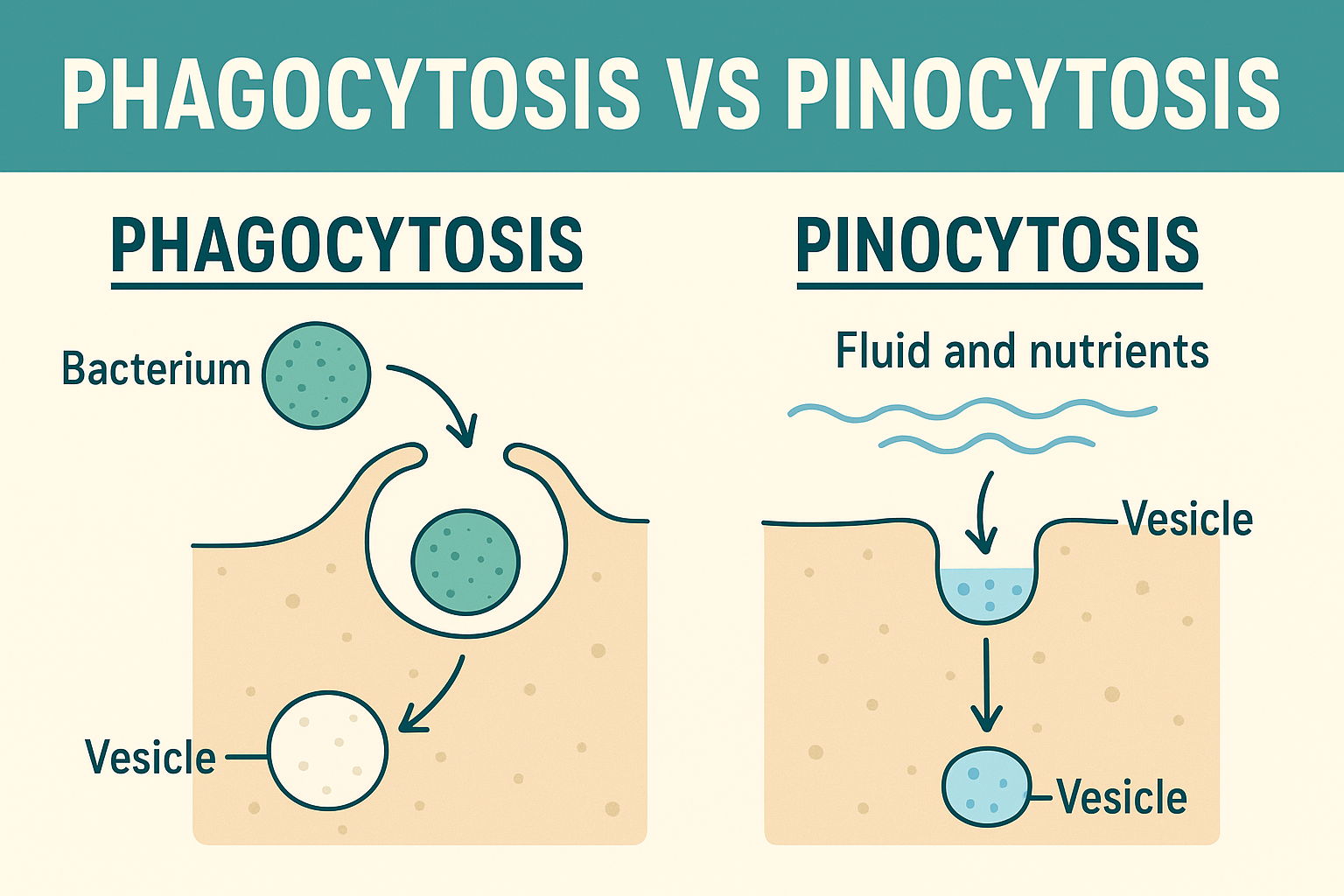
pinocytosis
dissolved molecules ingested and small vesicles are formed

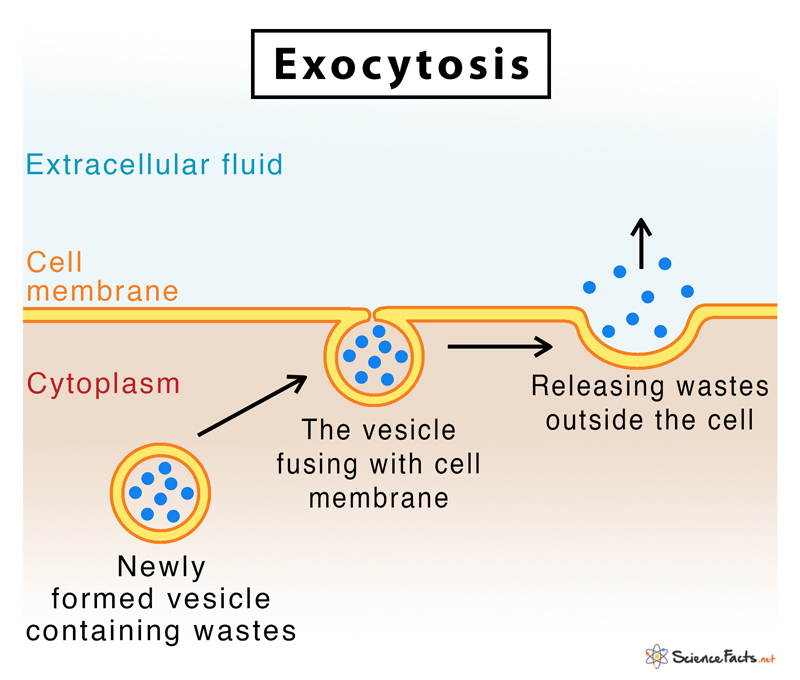
exocytosis
movement out of cell, sacs fuse with membrane and release contents to outside
transcytosis
movement through a cell by a combination of endocytosis on one surface and exocytosis on opposite surface

pressure required to prevent net movement of water into a solution
osmotic pressure
hypertonic solution
solution with greater solute concentration than inside a cell
hypotonic solution
solution with a lower solute concentration than inside a cell