NPB module 1 (cells, tissues, organs, and integumentary system)
 Call Kai
 Learn
 Practice Test
 Spaced Repetition
 Match
 Flashcards
 Knowt Play
1/134

There's no tags or description
Looks like no tags are added yet.
135 Terms

#1
Superior

#2
Anterior

#3
Posterior

#4
Inferior

#1
Cranial

#2
Ventral

#3
Dorsal

#4
Caudal

#1
Sagittal Plane

#2
Coronal Plane

#3
Transverse Plane
Sagittal Plane Definition
Left and right halves
Coronal Plane Definition
“Face off” or back vs. front
Transverse Plane Definition
Cranial to caudal or inferior to superior
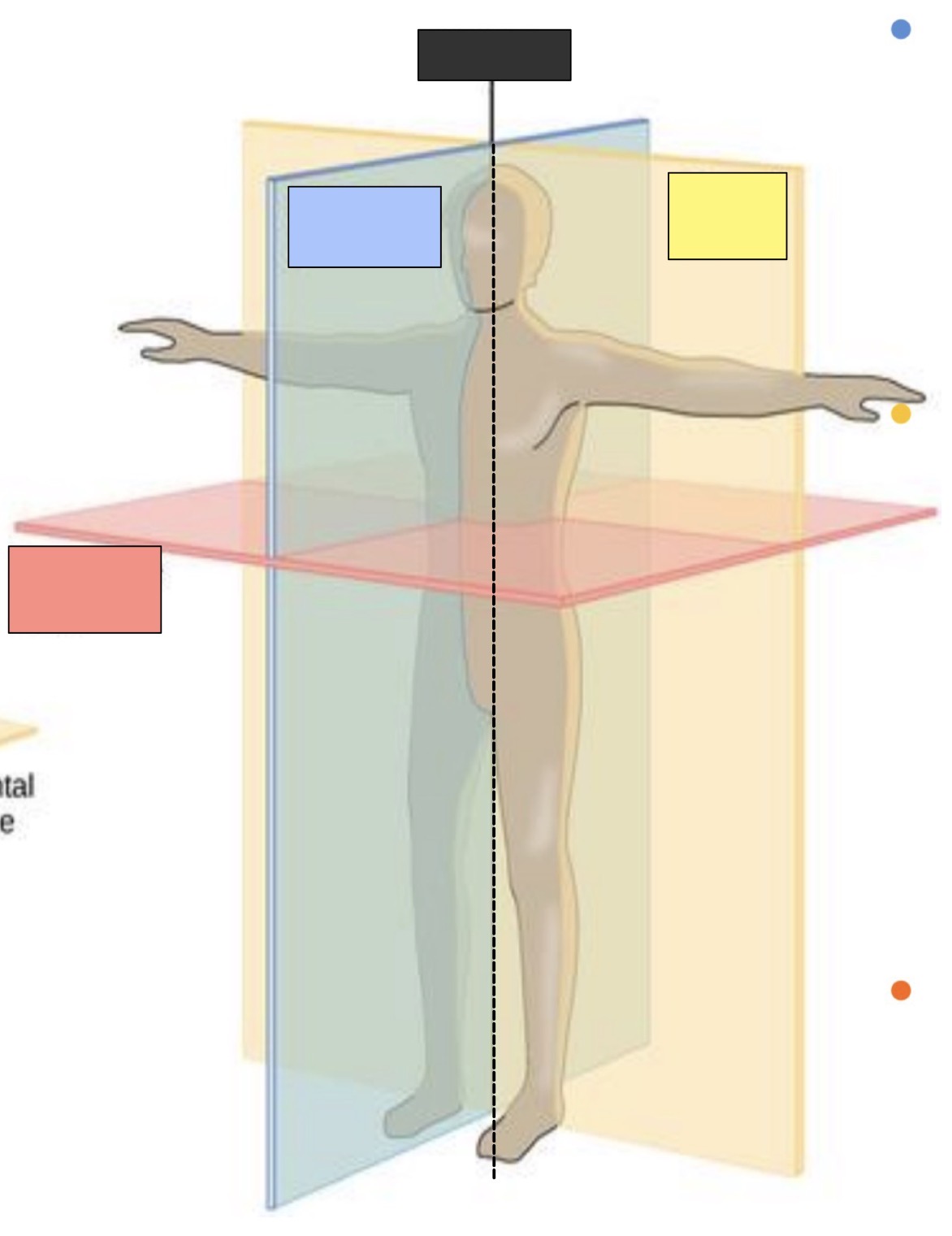
Black Box
Midline

Yellow Box
Frontal Plane

Blue Box
Midsagittal Plane

Red Box
Transverse Plane

#1
Midsagittal Plane

#2
Transverse Plane

#3
Frontal Plane

#1
Medial

#2
Lateral

#3
Proximal

#4
Distal

#5
Superior

#6
Inferior
The knee is ____ to the hip
Distal
The knee is ____ to the ankle
Proximal
The shoulder is ____ to the wrist
Proximal
The elbow is ____ to the shoulder
Distal
The nose is ____ to the chin
superior
The stomach is ____ to the chest
Inferior
The neck is ____ to the belly button
Superior

#1
Connective Tissue

#2
Epithelial Tissue
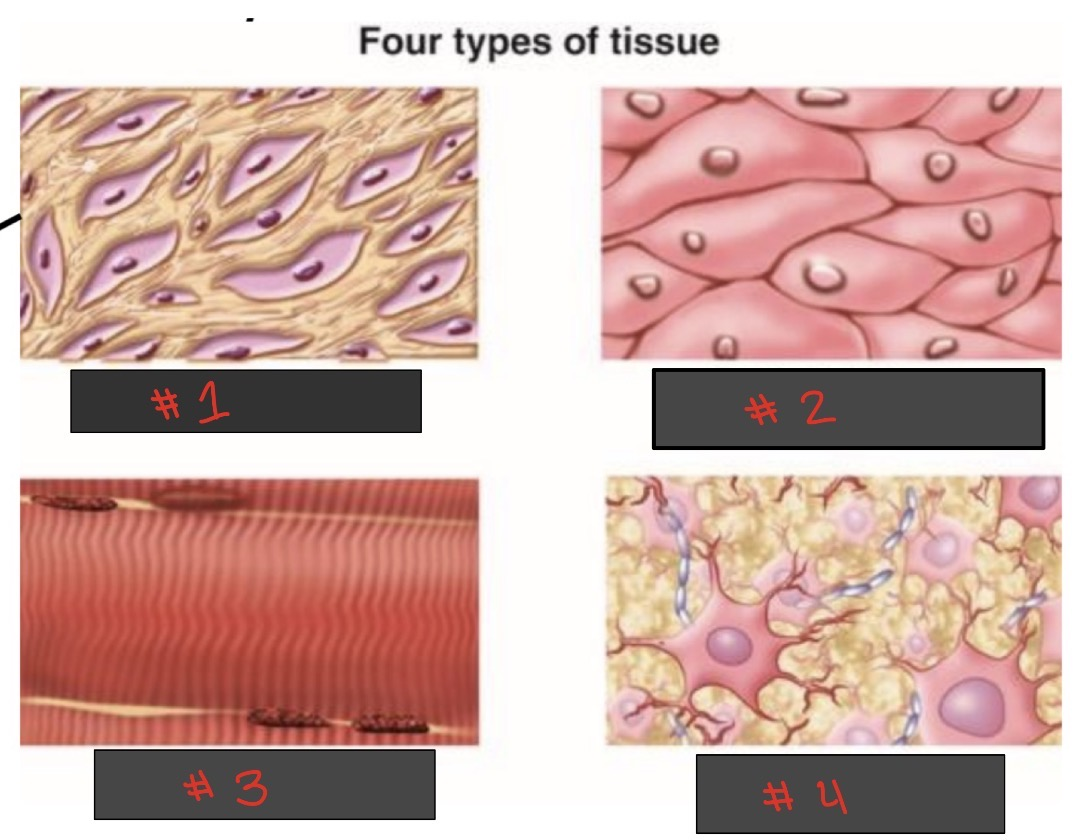
#3
Muscle Tissue

#4
Nervous Tissue
Types of connective tissue: Loose
most widely distributed
Reticular
Areolar (small open area)
Adipose
Types of connective tissue: Dense
Found in tendons and ligaments
irregular (found in dermis)
Elastic (found in lungs and arteries)
Types of connective tissue: Cartilage
Hyaline
Elastic
Fibrous
Types of connective tissue: Bone
Dermal
Endochondral
Types of connective tissue: Hematopoietic tissue
bone marrow
Peripheral Blood
Specialized cells: Osteoblasts
Cells that create bone (osseous tissue)
Specialized cells: Osteocytes
cells that maintain the bone
Specialized cells: Osteoclasts
Cells that break down bone

#1
Skeletal muscle

#2
Cardiac muscle

#3
Smooth muscle
Muscle cells: Skeletal Muscle cells
long multi-nucleated cells that contract to move the skeleton
Muscle cells: Cardiac muscle cells
branches of cells that contract to mobilize blood through the heart
Muscle cells: Smooth muscle cells
found in many organs to slowly move material through in rhythmic contractions

#1
Central Nervous system

#2
Peripheral Nervous System
Central Nervous System
Made up of the:
brain
spinal cord
Cordinates’s incoming information from the body to make decisions
Peripheral Nervous System
give and receives information to send to the body

#1
Cell Body
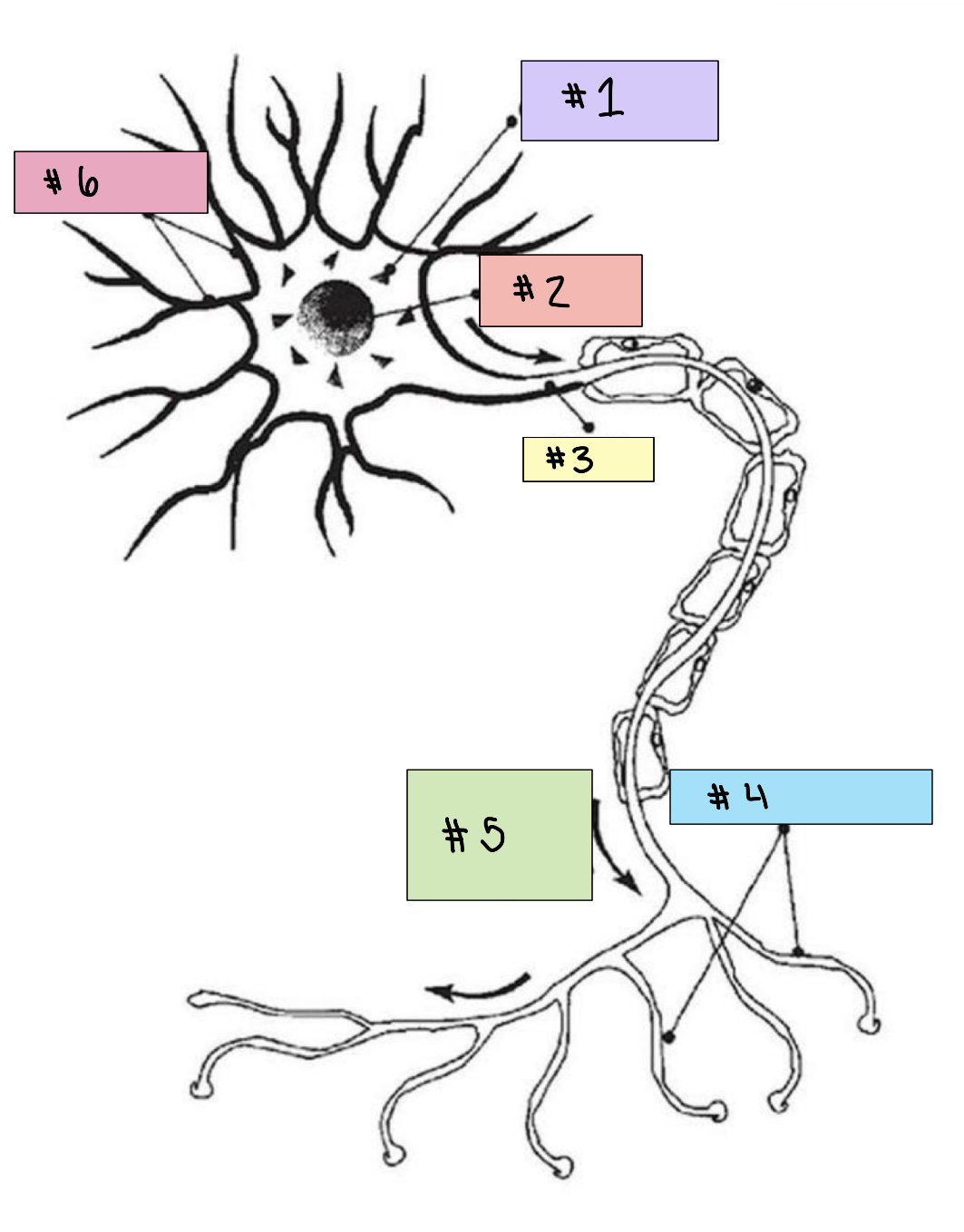
#2
Nucleus

#3
Axon

#4
Axon Terminals
#5
Direction of impulse

#6
Dendrites
Nerve Cells: Dendrites
collect the impulse from neighboring cells and transmit them to the cell body
Nerve Cells: Soma
also the cell body, determines if the impulse is to pass to the axon terminals
Nerve Cells: Axon Terminals
transmit the impulse to other neurons or cells (i.e muscle cells)
Cell junctions: Tight Junctions
control the passage of ions and the solutes on apical portion of cell membrane
Cell junctions: Zonula adherens
cell to cell adhesion
associated with actin filaments
Cell junctions: Macula Adherens (desmosomes)
Cell to cell adhesion
associated with intermediate filaments
Cell junctions: Gap juntions
cell to cell communication
Not associated with cytoskeletal components
Cell junctions: Hemidesmosomes
on the basal portion of cell and critically important for adherence of epithelial sheets to matrix

#1
Tight junctions

#2
Zonula Adherens

#3
Macula Adherens
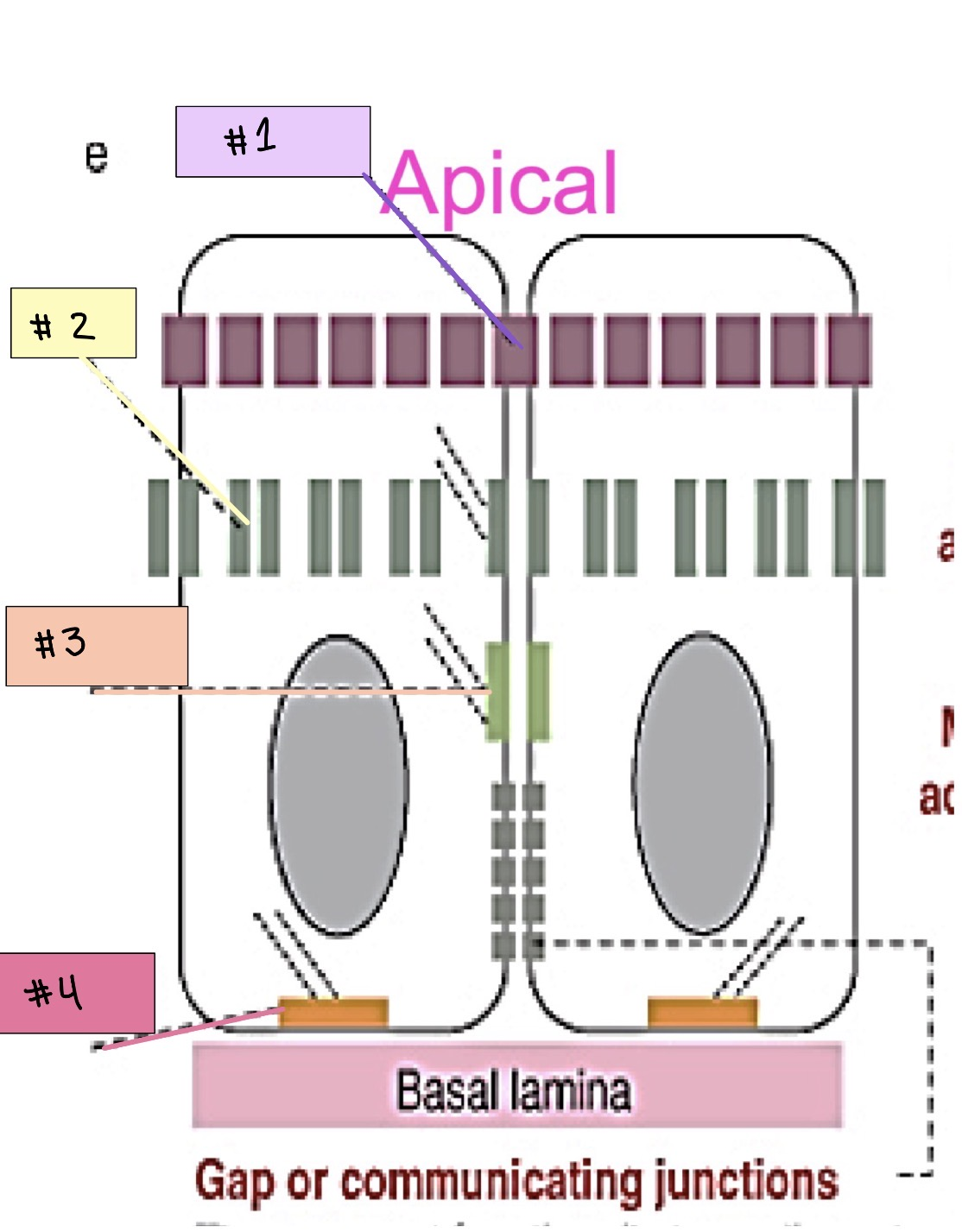
#4
Hemidesmosome

#1
Tight Junctions
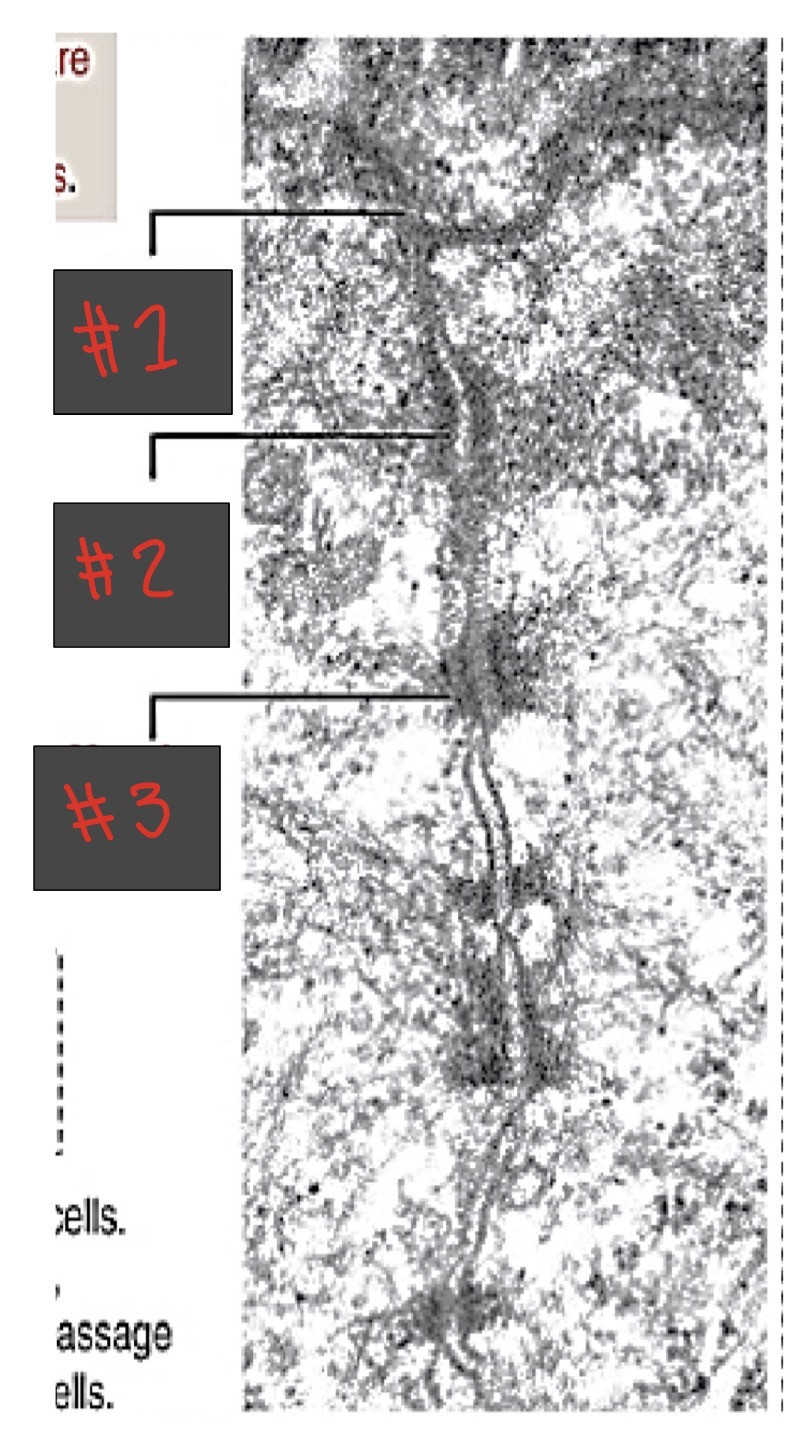
#2
Zonula adherens

#3
Macula adherens
Types of organs: Hollow Organs
Organs that have cavities/lumens for transport or storage of liquids and other materials
stomach
intestines
bladder
Types of organs: Solid Organs
Dense organs with a firm tissue texture and do not have large cavities
Kidney
liver
pancreas
brest
lung

#1
Epidermis

#2
Dermis

#3
Hypodermis
Epidermis
epithelial barrier
Dermis
connective tissue support
Hypodermis
Underlying support of the skin
Integument
skin and its derivatives
functions of the integument: Protect
helps resist mechanical damage
limits water loss
provides protection from UV
chemical release
camouflage
functions of the integument: Thermoregulation
evaporation
cutaneous blood flow
insulation
functions of the integument: Gas exchange
some animals exchange respiratory gases
functions of the integument: Secretion, excretion & metabolism
release of a substance
removal of a substance
sunlight converts to D3
functions of the integument: Sensation
Skin detects the environment
touch, pressure and movement
temperature
functions of the integument: Coloration
camouflage —- avoid detection
thermal effects —— influence heat absorption
communication —— attract mares or signal to rivals
Melanophore
contains melanin —— dark coloration
Xanthophore
contains carotenoids and or pteridines
—→ yellow, orange, or red
Iridophore
Contains reflective structures that interact with light
iridescent or metalic colors

#1
Hair shaft

#2
Hair root

#3
Hair bulb
Hair follicle: Hair bulb
enlarged base of the hair root. hair matrix produces new hair cells