KPER 1200 L14: Tobacco
 Call Kai
 Learn
 Practice Test
 Spaced Repetition
 Match
 Flashcards
 Knowt Play
1/59

There's no tags or description
Looks like no tags are added yet.
60 Terms
Has smoking rates in Canada increased or decreased?
Declined substantially
What contributed to Canada’s decline in smoking rates? (2)
Public health policies and awareness campaigns
Rates remain higher in what income populations?
Lower-income
Youth cigarette smoklng has decrease but
Nicotine use is evolving
Spit tobacco compared to cigarettes
Not safer than cigarettes
Spit tobacco health effects (3)
oral cancer
gum disease
tooth loss
Cigars, pipes, and hookah compared to cigarettes
Produce more smoke and carcinogens; hookah produces high carbon monoxide exposure
Cigars, pipes, and hookah associated cancers (3)
lung
mouth
throat
Oral nicotine pouches and how they work
Small pouches containing nicotine (without tobacco leaf) placed between the gum and lip; deliver nicotine directly into the bloodstream through the tissues
When were oral nicotine pouches legalized in Canada?
2023
When do most people start using tobacco?
During adolescence
Early initiation of tobacco use increase the risk of what?
Long-term nicotine dependence
What contributes to tobacco experimentation (3)
curiosity
peer influence
perceived social benefits
Risk factors of initiation of tobacco use (6)
peer tobacco use
parental or household tobacco use
advertising and media portrayals normalize use
social norms and access
socioeconomic stressors
positive attitudes toward tobacco
Tobacco industry advertisement strategies (4)
use targeted marketing strategies
link tobacco use to independence, success, and social status
product placement and branding influence youth perceptions
strategies have historically downplayed health risks
What do youth often obtain tobacco through?
Social sources
Nicotine activates what system in the brain?
The brain’s reward system, increasing dopamine release
Repeated use of nicotine lead to (2)
Tolerance and dependence
Repeated use is often driven by what?
Avoiding withdrawal rather than seeking pleasure
Withdrawal symptoms (3)
irritability
anxiety
strong cravings
Immediate effects of smoking nicotine (6)
nicotine reaches the rain within seconds (10s) of inhalation
stimulates the release of neurotransmitters, including dopamine and epinephrine
increases heart rate and blood pressure
causes blood vessel constriction, reducing oxygen delivery
may increase alertness while also producing feelings of nausea or dizziness in new users
suppresses appetite and can alter mood
What’s in a cigarette? (image)

How many chemicals are contained in tobacco smoke?
7000 chemicals - at least 70 known carcinogens
Carcinogens
Substances that can cause cancer by damaging DNA and altering cell growth (e.g. benzene, formaldehyde, nitrosamines)
How does carbon monoxide reduce oxygen delivery?
By binding to hemoglobin in red blood cells (where oxygen is supposed to bind)
What irritates lung tissue and contribute to respiratory disease?
Toxic gases and fine particles
What level of exposure to tobacco smoke is safe?
No level
Additives in cigarettes (3)
flavour
smoothness
nicotine delivery
Additives effects (4)
increase nicotine absorption in the bloodstream (ammonia)
produce additional toxic compounds when burned
flavours/sugars increase the appeal of cigarettes, especially to youth
contribute to overall harmful effects of cigarette smoke
Long-term effects of smoking (6)
premature aging and reduced life expectancy
cardiovascular diseases
cancer
chronic respiratory disease (COPD, emphysema, bronchitis)
reproductive and developmental harm
reduced lung function and increased infections
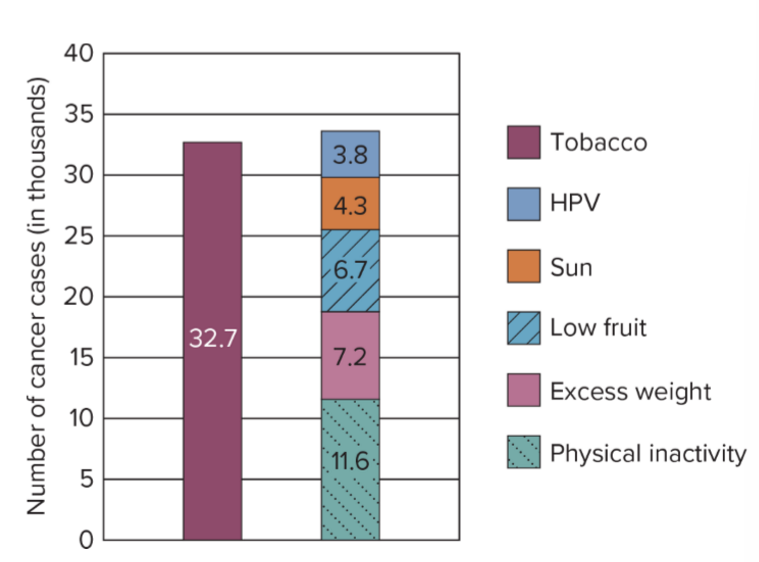
Number of preventable cancer cases in Canada associated with tobacco equals next five risk factors combined (graph)
Second-hand smoke
Mainstream and sidestream smoke
Third-hand smoke
Toxic residue that settles on surfaces and dust
Non-smokers exposed to second-hand smoke face increase risk of?
Lung cancer and heart disease
Who are especially vulnerable to respiratory illness and SIDS?
Infants and children
Environmental Tobacco Smoke (ETS) is associated to
Sudden Infant Death Syndrome (SIDS)
Children exposed to tobacco smoke have an increase risk of (5)
bronchitis
pneumonia
asthma
ear infections
chronic respiratory disease - later in life
Maternal smoking is associated with increased risk of (6)
ectopic pregnancy
placental complications
premature delivery
low birth weight
reduced oxygen delivery to fetus
fetus developmental and health problems
Aerosol in e-cigarettes contain what substances? (4)
nicotine
heavy metals
volatile organic compounds
other potentially harmful chemicals
Components of an E-cigarette (5)
nicotine - varies widely across products
carrier solutions (propylene glycol and vegetable glycerin) - create the aerosol
flavouring chemicals - make products more appealing, especially to youth
heating elements - release metals into aerosol
device components - battery, heating coil and cartridge/refillable tank
Environmental impacts of e-cigarettes (5)
disposables contribute to electronic waste and plastic pollution
devices contain lithium batteries and heavy metals that can leach into the environment
improper disposal increase environmental contamination
single-use devices (rising popularity) increase cumulative waste
public health concerns extend beyond to environmental impact
Sex and gender and tobacco and nicotine (4)
patterns of nicotine and tobacco use differ by sex and gender
biological sex differences may influence nicotine metabolism and addiction vulnerability
hormonal factors can affect craving, withdrawal and quit success
gender norms and social roles influence initiative and continued use
Public health action at the local level (4)
municipal bylaws restrict smoking in public and shared spaces
smoke-free policies in workplaces and multi-unit housing
restrictions in outdoor areas (parks, playgrounds, and transit stops)
local enforcement and public education supporting smoke-free environments
Action at the individual level (4)
follow smoke-free laws and avoid exposing others to second-hand smoke
support friends and family who are trying to quit
learn about tobacco industry marketing tactics
use credible cessation resources and advocate for stronger policies
Public health responses in Canada (5)
smoke-free legislation in public, spaces, workplaces, and multi-unit housing
graphic health warnings and plain packaging requirements
restriction on advertising sponsorship, and promotion
tobacco taxation
regulation of vaping and emerging nicotine products
Policy milestones in reducing tobacco use in Canada (image)

Ongoing challenges (4)
emergence of alternative nicotine products
industry adaptation to regulatory changes
continued disparities in smoking rates among vulnerable populations
need for updated regulations and enforcement
Action at the international level (4)
WHO Framework Convention on Tobacco Control (FCTC)
Global agreements to reduce tobacco use and exposure
international coordination to address cross-border marketing
World No Tobacco Day promotes global awareness
Benefits of quitting (5)
immediate improvements in heart rate and blood pressure
lung function and circulation improve over time
risk of cardiovascular disease and cancer declines
sensory function (taste and smell) improves
overall quality of life and life expectancy increase
Benefits after quitting smoking for: 20 minutes
Heart and blood pressure decrease
Benefits after quitting smoking for: a few days
Body’s carbon monoxide levels return to healthy levels
Benefits after quitting smoking for: 2-9 weeks
Circulation and lung functionality improve
Benefits after quitting smoking for: 1-12 months
Lungs continue to improve and heal, reducing coughing and shortness of breath
Benefits after quitting smoking for: 1-2 years
The risk of coronary heart disease and heart attack is reduced
Benefits after quitting smoking for: 5-10 years
The risk of mouth, throat, and voice box cancer are decreased by half; the risk of cervical cancer and stroke decline to that of a nonsmoker
Benefits after quitting smoking for: 10 years
The risk of mortality from lung cancer is about 50% less likely compared with a current smoker’s risk; the risk of cancers of the bladder, esophagus, and kidney decreases; pancreas and larynx cancer risks are also decreased
Benefits after quitting smoking for: 15 years
The risk of coronary disease is close to that of a nonsmoker’s
Pharmacological treatments (4)
nicotine replacement therapy (patches, gum, inhalers, nasal spray) - reduces withdrawal symptoms
bupropion - reduces cravings by affecting neurotransmitters
varenicline - reduces cravings and blocks nicotine's rewarding effects
medication combined with behavioural support improves quit success
Behavioural treatments (5)
identify triggers and develop alternative coping strategies
set a quit date and create a structured quit plan
cognitive-behavioural therapy (BCT) - helps change thought and behaviour patterns
motivational interviewing - strengthens readiness and commitment
social support and counselling - increase long-term success
Barriers to quitting (4)
withdrawal symptoms and cravings
habitual routines and social triggers
misperceptions about vaping as “safer”
stress and co-occurring mental health challenges